
The Best Mouthwash for Sensitive Gums a Soothing Guide
If you just want the quick answer, here it is: The best mouthwash for sensitive gums is almost always one that's alcohol-free. It should also contain soothing ingredients like aloe vera and include fluoride to help protect your tooth enamel. At the end of the day, a gentle, therapeutic formula is your best bet for comfort and long-term gum health.
Your Quick Guide to Soothing Sensitive Gums

Think about using a harsh, alcohol-based rinse on sensitive gums. It's like scrubbing sunburned skin with a rough towel—it just causes more irritation and pain. A gentle, therapeutic formula, on the other hand, is like applying a calming lotion. It soothes, protects, and gives your gums a chance to heal without that agonizing sting.
This guide will give you the essential information right up front. Gum sensitivity isn't just a minor annoyance; it's often a sign that your oral care routine needs a tweak. Once you understand the basics, you'll be in a much better position to find a real solution.
Why Therapeutic Mouthwash is Gaining Popularity
Shoppers are getting smarter. They're looking for more than just fresh breath these days; they want products that actually solve specific oral health problems. This shift is obvious when you look at market trends, where therapeutic mouthwashes designed for issues like gum sensitivity are taking center stage.
In fact, therapeutic mouthwashes grabbed 33.6% of the total market share in 2024, and that number is only expected to climb. The demand for gentler, more effective solutions is pushing some serious innovation in the oral care aisle. You can dig into more details on these market trends and see how they're changing what's available to you.
Key Takeaway: The boom in therapeutic rinses means you have more effective, targeted options than ever before. Choosing a product designed for sensitivity is no longer a niche move—it's a mainstream, dentist-approved approach to better oral health.
What to Look For vs. What to Avoid
To make your search for the right mouthwash a little easier, just focus on a few key things. The goal is simple: find a formula that actively soothes while dodging ingredients known to cause irritation.
Here’s a quick-glance table to help you spot the good from the bad on your next shopping trip.
Key Features of a Mouthwash for Sensitive Gums
| What to Look For (The Good Stuff) | What to Avoid (The Irritants) |
|---|---|
| Alcohol-Free Formulas: This is non-negotiable. It prevents dryness and that painful stinging sensation. | High Alcohol Content: This is the number one offender. It dries out your mouth and is incredibly harsh on sore gums. |
| Soothing Ingredients: Look for natural calmers like aloe vera or chamomile for immediate comfort. | Harsh Flavoring Agents: Super-strong mint or cinnamon flavors can be way too intense for sensitive tissue. |
| Fluoride: It helps strengthen your tooth enamel, which can reduce overall sensitivity from all sources. | Abrasive Ingredients: A mouthwash doesn't need abrasives. They're unnecessary and can make things worse. |
This simple checklist can be your guide when you're standing in the dental aisle, overwhelmed by choices. Stick to the "Good Stuff" column, and your gums will thank you.
Getting to the Root of Gum Sensitivity
Before you can find the right fix, you need to understand what’s making your gums so tender in the first place. Gum sensitivity isn't some random annoyance; it's a clear signal from your body that something is out of balance.
Think of your gums as a protective shoreline for your teeth. When that shoreline starts to wear away—a process known as gum recession—it exposes the more delicate, sensitive areas underneath. Just like a coastline erodes from constant waves, your gum line can pull back due to things like brushing too hard or the first signs of gum disease. This uncovers the tooth roots, which don't have the tough enamel that your tooth crowns do, leading to those sharp, sudden twinges of pain.
Figuring out these triggers is the first step toward relief. It makes it obvious why choosing the best mouthwash for sensitive gums is about a lot more than just picking a flavor you like.
Common Triggers for Gum Irritation
A few different things can cause that sore, tender feeling along your gum line. Some are tied to everyday habits, while others might be linked to underlying health issues or even hormonal shifts. The point here isn't to play dentist, but to get familiar with the usual suspects.
Here are some of the most frequent reasons your gums might be acting up:
- Gingivitis: This is the earliest stage of gum disease, and it’s all about plaque. When plaque builds up along the gum line, the bacteria in it release toxins that irritate your gums, making them swollen, red, and prone to bleeding.
- Brushing Too Hard: If you're using a hard-bristled toothbrush or just applying way too much muscle, you can physically wear down your gum tissue over time. This can lead directly to recession and sensitivity.
- Harsh Oral Care Products: Some toothpastes and mouthwashes are loaded with harsh detergents, overpowering artificial flavors, or a high alcohol content. These ingredients can directly irritate sensitive gum tissue, kind of like using a strong chemical cleaner on a delicate piece of clothing.
- Hormonal Fluctuations: Big hormonal shifts during puberty, menstruation, pregnancy, and menopause can make your gums much more susceptible to inflammation and tenderness.
Recognizing these potential causes helps you see gum sensitivity for what it is: not a permanent problem, but a condition you can manage with the right approach. It’s all about creating a gentler, more supportive environment for your mouth.
People are definitely catching on. The global market for anti-sensitive mouthwash is on track to hit USD 3,500 million by 2025, a jump fueled by a huge increase in consumer awareness about oral health. This isn't just a trend; it shows a real shift toward proactive care, with millions now making specialized mouthwashes a part of their daily routine to find relief. You can dig into more of the anti-sensitive mouthwash market growth data to see for yourself.
Decoding Ingredients: What Soothes Gums and What Irritates Them
Picking out the best mouthwash for sensitive gums can feel a lot like trying to decipher a complicated food label. You're faced with a long list of chemical names, and it's easy to feel lost. But here's the good news: you only need to understand a few key players to become a savvy shopper who can confidently choose a formula that soothes, not stings.
When it comes down to it, the ingredients in your mouthwash really fall into two main camps. You have the ones that heal and protect, and then you have the ones that can aggravate already tender gum tissue. Knowing the difference is the single most important step in finding lasting relief.
Healing and Protective Ingredients
Think of these ingredients as the ultimate support team for your gums. Their job is to reduce inflammation, strengthen your teeth's natural defenses, and gently get a handle on the bacteria causing all the trouble in the first place.
Here are the heroes you want to see on the label:
- Fluoride: This is your enamel's bodyguard. It helps remineralize and harden the tooth surface, which makes your teeth less vulnerable to the sensitivity that so often comes along with gum problems.
- Cetylpyridinium Chloride (CPC): Think of this as the friendly bouncer for your mouth. It's a really effective antiseptic that helps cut down on plaque and gingivitis, but without the harshness of alcohol.
- Aloe Vera & Chamomile: These are nature's soothers. They're well-known for their anti-inflammatory and calming properties, offering immediate, gentle relief for gums that are red and swollen.
Fluoride mouthwashes, in particular, are really leading the charge for people with sensitive gums. In fact, they are projected to command a massive 40% share of the global mouthwash market in 2025, largely because they're so effective at fighting decay and reinforcing enamel. That widespread trust from dentists makes them a reliable go-to for your at-home routine.
This diagram helps break down what's actually causing that sensitivity.
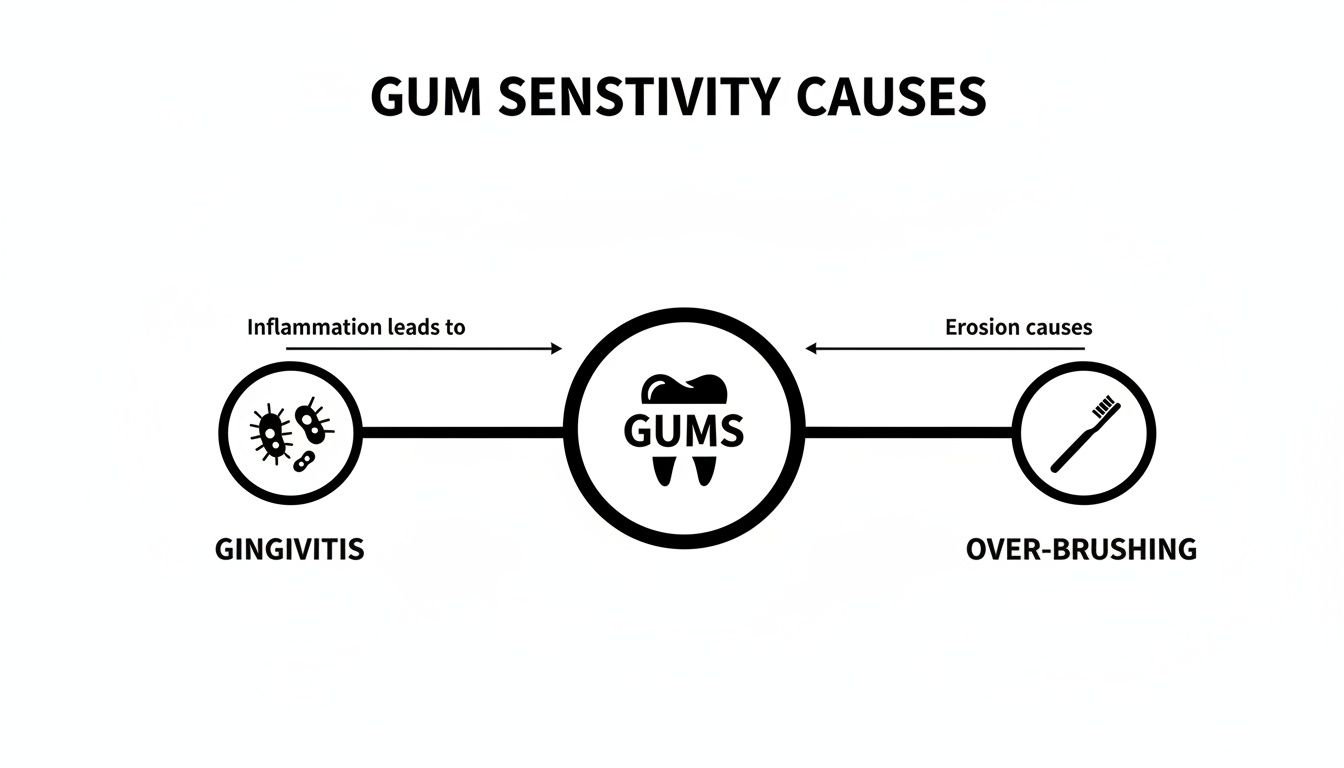
As you can see, it's often a mix of bacterial buildup from gingivitis and physical habits, like brushing too hard, that leads to gum irritation.
Mouthwash Ingredient Cheat Sheet for Sensitive Gums
To make things even clearer, I've put together this quick cheat sheet. It breaks down the most common ingredients you'll see on a mouthwash label so you can see what they do and whether they're a friend or foe to sensitive gums.
| Ingredient | What It Does | Good for Sensitivity? |
|---|---|---|
| Alcohol (Ethanol) | Kills bacteria, but is very harsh and drying. | No - Avoid |
| Fluoride | Strengthens tooth enamel and reduces sensitivity. | Yes - Recommended |
| Cetylpyridinium Chloride (CPC) | A gentle antiseptic that fights plaque and gingivitis without alcohol. | Yes - Recommended |
| Aloe Vera | A natural plant extract that soothes inflammation and calms irritated gums. | Yes - Excellent |
| Chamomile | Another natural anti-inflammatory known for its gentle, calming effects. | Yes - Excellent |
| Hydrogen Peroxide | Whitens teeth and kills bacteria, but can be irritating for sensitive gums. | Use with caution |
| Sodium Lauryl Sulfate (SLS) | A detergent that creates foam but can irritate sensitive oral tissues. | No - Avoid |
| Strong Flavorings | Intense mint or cinnamon flavors can be too abrasive for inflamed gums. | No - Opt for mild |
| Xylitol | A natural sweetener that helps prevent cavities and doesn't irritate. | Yes - Good |
| Potassium Nitrate | A desensitizing agent that blocks pain signals from the tooth nerve. | Yes - Recommended |
Having this handy will make your next trip down the dental care aisle a whole lot simpler. You'll be able to spot the good stuff and sidestep the ingredients that could make your sensitivity worse.
Common Irritants to Avoid
Just as important as knowing what to look for is knowing what to stay away from. Certain ingredients can really aggravate sensitive tissue, turning what should be a soothing daily rinse into a painful experience.
The single most common irritant in mouthwash is alcohol. While it’s a powerful antiseptic, it also dries out the mouth, which can worsen irritation and create an environment where harmful bacteria thrive.
Here are the primary culprits you'll want to avoid:
- Alcohol (Ethanol): This is the number one offender. It’s what causes that all-too-familiar burning sensation and can dehydrate your oral tissues, making sensitivity much worse over time. Always look for "alcohol-free" on the bottle.
- Strong Artificial Flavorings: An intense blast of mint or cinnamon might feel fresh, but those strong flavors can be too abrasive for inflamed gums. It's better to opt for milder, more natural flavors.
- Harsh Detergents: Ingredients like Sodium Lauryl Sulfate (SLS) are sometimes thrown in to create that foamy feeling, but they are known to irritate sensitive mouths.
By prioritizing soothing ingredients and actively avoiding these known irritants, you can find a mouthwash that truly supports your gum health instead of working against it. If you're leaning towards fluoride-based options, our guide on a popular ACT Anticavity Fluoride Rinse Mouthwash offers more detailed insights. It's also worth noting that some supplements, like CoQ10 for gum health, have been recognized for their potential to support gums and reduce inflammation, which can help soothe sensitivity from the inside out.
How to Use Mouthwash for Maximum Soothing Relief
Picking out the right mouthwash is a huge first step, but it’s how you use it that really delivers that soothing relief for sensitive gums. It doesn’t matter how amazing the formula is if you don't give it a chance to do its job.
Think of it like fertilizing a garden—if you immediately water it down, you wash away all the nutrients before they can soak into the soil. The same idea applies here. Your timing and technique are just as important as the ingredients in the bottle. A simple, consistent routine is what allows those active ingredients to stay in contact with your gums long enough to calm inflammation and work their magic.
Your Simple Three-Step Routine
For the best results, you need to follow this specific order. It’s all about clearing the way first so the mouthwash can make direct contact with your teeth and gums where it's needed most. This little sequence makes any therapeutic rinse, especially the best mouthwash for sensitive gums, so much more effective.
- Brush First: Start by thoroughly brushing your teeth for a full two minutes. Use a soft-bristled brush to gently lift away the bulk of the plaque and any food particles sitting on the surfaces of your teeth.
- Floss Next: Now it's time to clear out those tight spaces between your teeth and just below the gumline. This is where your toothbrush can't reach, and it’s a critical step for keeping plaque from building up in those extra-sensitive areas.
- Rinse Last: Finally, it's time for the mouthwash. With all the major debris out of the way, the liquid can now perfectly coat your gums and teeth, delivering its soothing and protective ingredients right where you need them.
Following this order ensures you’re actually removing plaque, not just swishing it around, before you apply that final, healing rinse.
Crucial Tip: After you spit, do not rinse your mouth with water. Rinsing right away just dilutes all those helpful ingredients like fluoride and soothing agents, washing away the benefits before they have a chance to work. Let them linger!
Common Mistakes to Avoid
Even with the perfect product, a few common slip-ups can easily undermine all your efforts. Paying attention to these small details can make a massive difference in your comfort and overall oral health.
The biggest mistake by far is rinsing with water immediately after using mouthwash—it literally washes all that good work down the drain. Another common error is using too much or too little. Always measure out the recommended amount, which is typically around 20 milliliters. This ensures you get the right concentration of active ingredients without just wasting product.
And don't forget to swish vigorously for at least 30 to 60 seconds. You want to make sure the liquid reaches every single corner of your mouth.
By building the right routine and sidestepping these simple mistakes, you'll finally get the maximum soothing relief you're looking for. If you're ready to explore different formulas, you can browse a great collection of oral care mouthwash designed for all sorts of needs, including sensitivity.
Holistic Habits for Long-Term Gum Health
While the best mouthwash for sensitive gums is a fantastic tool, it can’t do all the heavy lifting on its own. True, lasting relief comes from building a foundation of healthy habits that support your gums from every possible angle. Think of it like caring for a delicate plant—you can't just add the perfect fertilizer and forget about water and sunlight.
Your oral care routine needs that same kind of balanced approach. The goal isn't just for your gums to survive; it's to create an environment where they can truly thrive. This means pairing your mouthwash with gentle cleaning techniques and a mindful diet to lock in those benefits for the long haul.
Rethinking Your Daily Tools and Techniques
The tools you use every day matter just as much as your rinse. It’s surprisingly easy to undo the soothing effects of a good mouthwash with an overly aggressive brushing or flossing technique.
Here are a couple of simple tweaks that can make a world of difference:
- Switch to a Soft-Bristled Brush: This one is non-negotiable for sensitive gums. A soft brush is more than capable of removing plaque without being abrasive, cleaning your teeth effectively while protecting that delicate gum tissue from damage.
- Master Gentle Flossing: Ditch the snapping. Proper flossing involves carefully guiding the floss between your teeth and curving it into a "C" shape against each tooth. This method cleans below the gumline without causing cuts or inflammation.
These small shifts in your daily routine are fundamental to heading off gum irritation before it even starts.
For anyone already dealing with discomfort, understanding how certain products work is a big plus. You can learn more about specific formulas and how they provide relief in our guide on how Fluoridex can help reduce tooth sensitivity.
The Connection Between Diet and Gum Health
What you eat has a direct line to your oral health. Sugary and acidic foods are basically a party invitation for the harmful bacteria that cause plaque buildup and gum inflammation. Cutting back is a crucial first step.
But it goes deeper than that. Your diet can also help manage inflammation throughout your body, which in turn benefits your gums. Looking into anti-inflammatory foods is a great way to support your body's natural healing abilities. It’s a powerful reminder that a healthy mouth is deeply connected to your overall wellness, setting you up for lasting comfort and success.
When to See a Dentist About Sensitive Gums
Using a good mouthwash for sensitive gums is a fantastic first step for managing mild irritation at home, but it’s no substitute for professional dental care. Think of it like this: mouthwash is your oral health first-aid kit. It's perfect for handling minor scrapes and soreness, but you wouldn't use it to treat a serious injury.
Knowing when to put down the bottle and pick up the phone to call your dentist is one of the most important things you can do for your long-term health. While a gentle rinse can soothe temporary soreness, some symptoms are major red flags. They signal a deeper problem that no amount of swishing can fix. Ignoring them can allow a small issue like gingivitis to snowball into severe periodontitis, which can cause irreversible damage.
Red Flags You Should Not Ignore
If you experience any of the symptoms below, it’s time to schedule an appointment. These are clear signs that you need a professional to take a look and figure out what’s really going on.
- Persistent Bleeding: If your gums bleed every single time you brush or floss for more than a week, that's a classic sign of inflammation that needs a dentist's attention.
- Swollen or Puffy Gums: Healthy gums are pale pink and firm. Gums that look bright red, purplish, or puffy are actively inflamed and likely dealing with an infection.
- Receding Gums: Do your teeth seem to be getting longer? That’s not an optical illusion. It means your gums are pulling away from your teeth, exposing the highly sensitive roots underneath.
- Chronic Bad Breath: If you have persistent bad breath (halitosis) that mouthwash and brushing can't seem to touch, it could be caused by bacteria trapped in deep gum pockets that you can't reach.
- Pain or Tenderness: Simple sensitivity is one thing, but sharp, lingering pain or gums that are sore to the touch point to a bigger problem.
- Loose Teeth or Changes in Bite: This is a big one. Any movement in your adult teeth is a serious warning that the underlying bone supporting them might be compromised.
Your dentist has the tools and expertise to find the root cause of your sensitivity, whether it's early-stage gingivitis, an aggressive infection, or something else entirely. Getting in early is the absolute best way to protect your smile and stop a minor gum issue from turning into a major health problem.
A Few Common Questions About Mouthwash for Sensitive Gums
Even when you know what to look for, trying a new oral care product can bring up some practical questions. Getting straight answers helps you feel confident you're making the right call for your comfort and long-term gum health.
We’ve tackled some of the most frequent questions people ask when they're on the hunt for the best mouthwash for sensitive gums.
Can I Use Mouthwash for Sensitive Gums Every Day?
Yes, you absolutely should! For the best results, daily use isn't just okay—it's highly recommended. The whole point is to choose a gentle, alcohol-free formula designed for daily care.
Think of it like a daily calming conditioner for your gums. Consistent use allows the active ingredients to do their job, soothing irritation and gradually building up your gums' resilience over time. It's not a one-and-done treatment.
Consistency is Key: Just like any healthy habit, the real benefits of a good mouthwash compound over time. Daily rinsing lets ingredients like fluoride continually strengthen your enamel while soothing agents work to keep inflammation under control.
Will a Sensitive Gum Mouthwash Whiten My Teeth?
Probably not, and that’s by design. Most mouthwashes formulated for sensitivity are focused on soothing gums and strengthening enamel, not bleaching your teeth. Their main job is to reduce irritation, so they usually skip the strong whitening agents like hydrogen peroxide.
While some might help lift minor, fresh surface stains from your daily coffee or tea, you won't see the dramatic results you'd get from a dedicated whitening treatment. The best approach is always to get your sensitivity under control first. Once your gums are happy, you can look into a separate whitening system.
How Long Until I Notice a Difference?
That's a great question, and there are really two parts to the answer. You might feel some immediate, soothing relief right after you rinse, especially if the formula has natural ingredients like aloe vera or chamomile. This can be a nice, instant comfort for irritated tissues.
But the more significant, long-term benefits take a bit more patience. For active ingredients like fluoride or potassium nitrate to really strengthen enamel and quiet down nerve sensitivity, you need to use the mouthwash consistently for anywhere from a few days to a few weeks. It takes time to build up that protective effect.
Is a More Expensive Mouthwash Better for My Gums?
Not at all. A high price tag doesn't automatically equal a better product, especially when it comes to sensitive gums. What really matters is the ingredient list, not the brand name or the cost.
A truly effective best mouthwash for sensitive gums is defined by what’s inside—like fluoride and soothing agents—and what’s not inside, like alcohol and other harsh chemicals. Many affordable, dentist-backed brands are formulated to get the job done right, proving you don’t need to break the bank to find real relief.
Ready to find the perfect soothing rinse for your routine? At DentalHealth.com, we stock a curated selection of professional-grade oral care products designed to tackle sensitivity and support healthy gums. Explore our dentist-recommended brands and enjoy free shipping on all USA orders today. https://dentalhealth.com