
Best Toothpaste for Sensitive Teeth: Relief, Protection & Comfort
That zing of pain you get from a sip of hot coffee or a spoonful of ice cream? It’s the all-too-familiar calling card of tooth sensitivity. The best toothpaste for sensitive teeth tackles this problem in one of two ways: by calming the tooth's nerve with an ingredient like potassium nitrate, or by physically blocking the tiny pathways to the nerve with minerals like stannous fluoride.
Finding Fast Relief for Sensitive Teeth
When your teeth hurt, you just want the pain to stop. It’s that simple. But to fix it, it helps to know what's actually happening inside your tooth.
This issue, which dentists call dentin hypersensitivity, happens when the hard, protective outer layers of your teeth—the enamel and cementum—wear away. This exposes a softer, more porous layer called dentin. Think of this dentin layer as being full of thousands of microscopic tunnels that lead straight to the nerve center of your tooth.
When something hot, cold, or even sweet hits that exposed dentin, the sensation zips through those tiny tunnels and zaps the nerve. That’s the jolt of pain you feel. Specialized toothpastes are designed to get in the way of that process.
The Two Main Paths to Relief
The active ingredients in these toothpastes have two very different jobs. One is like a "nerve calmer," while the other acts as a "tunnel blocker."
-
Nerve-Calming Agents: Ingredients like potassium nitrate work by quieting down the tooth's nerve over time. With consistent use, it makes the nerve less excitable and less likely to fire off pain signals. It essentially turns down the volume on your sensitivity.
-
Tubule-Blocking Minerals: Ingredients such as stannous fluoride, arginine, and hydroxyapatite work like microscopic plugs. They physically block off the openings of those tiny dentin tunnels, creating a shield that stops triggers from ever reaching the nerve.
Understanding which strategy a toothpaste uses helps you know what to expect. Nerve-calming agents build up deep, lasting relief with regular use, while tunnel blockers offer more immediate, physical protection.
To make picking the right product easier, we've put together a quick guide to the most common and effective active ingredients you'll find on the shelf. This table breaks down what they are, how they work, and some of the leading brands that use them.
Quick Guide to Top Active Ingredients for Sensitive Teeth
| Active Ingredient | How It Works | Common Brands |
|---|---|---|
| Potassium Nitrate | Calms the tooth's nerve, making it less reactive to stimuli. | Sensodyne, Colgate Sensitive |
| Stannous Fluoride | Blocks the microscopic tubules in dentin and strengthens enamel. | Crest Pro-Health, Sensodyne Repair & Protect |
| Arginine | Works with calcium carbonate to plug and seal open dentin tubules. | Colgate Sensitive Pro-Relief |
This gives you a clear starting point for comparing labels and finding the best formula to bring you lasting comfort.
Why Do My Teeth Hurt? Getting to the Root of Sensitivity
To find real, lasting relief from tooth sensitivity, you have to know what you’re up against. That sharp, sudden zing you feel is actually a distress signal coming from deep inside your tooth. It’s a sign that your tooth's natural defense system has been breached.
This incredibly common problem, which dentists call dentin hypersensitivity, is your body's way of telling you that the most vulnerable part of your tooth is now exposed to the elements.
Think of your tooth enamel as the tough outer shell of a nut, protecting the delicate kernel inside. Its main job is to shield the inner pulp and nerve from everything happening in your mouth. When that enamel gets worn down, it exposes the layer underneath it, called dentin. This isn't a solid layer; it's filled with thousands of microscopic channels, or tubules, that act like tiny straws leading straight to the nerve.
When something like a cold drink, hot coffee, or even a sugary treat hits those exposed tubules, the sensation shoots down these little pathways and zaps the nerve. That's the "zing" of pain. Understanding this is crucial, because the best toothpastes for sensitive teeth tackle this problem from different angles.
Common Culprits Behind Enamel Wear and Gum Recession
So, what causes this breakdown in the first place? Several factors can weaken your tooth's protective layers, making you more likely to experience that jolt of pain. Knowing the cause can help stop sensitivity from getting worse.
- Aggressive Brushing: It might feel like you're getting a better clean, but using a hard-bristled brush or just scrubbing way too hard can physically wear away your enamel and push your gums back over time.
- Acidic Diet: If your diet is heavy on acidic foods and drinks—think citrus fruits, soda, and wine—you're essentially giving your enamel a chemical bath that softens and dissolves it.
- Gum Recession: As gums pull away from the teeth, they expose the root surfaces. Unlike the crown of your tooth, roots aren't covered by that tough enamel, making them far more sensitive. This naturally becomes more common as we get older.
These issues are becoming so widespread that the sensitive toothpaste market is booming. It's projected to hit USD 10.07 billion by 2030, a surge driven largely by enamel erosion from modern diets and gum troubles, which are responsible for sensitivity in up to 57% of adults.
The real problem isn't the ice cream or hot tea. It's the exposed pathways that let those temperatures get to the nerve. An effective treatment has to either block those pathways or calm the nerve down.
Figuring out what's causing your specific sensitivity is the first step toward relief. You can get a much deeper look into the mechanics of this in our guide on what causes tooth sensitivity to cold. This knowledge is power—it helps you choose the right product and build habits that will protect your smile for years to come.
How Desensitizing Toothpastes Really Work
The relief you get from a good sensitive toothpaste isn't just a temporary cover-up—it's targeted science working deep inside your tooth structure. These formulas stop that sharp, sudden pain using two main strategies, each one tackling the problem from a completely different angle.
Think of an exposed tooth nerve as an overly sensitive microphone that picks up every little stimulus—a sip of cold water, a breath of cool air—and blasts it as pain. To fix this, you have two options.
Strategy 1: Calm the Nerve Signal
One approach is to just turn the microphone’s volume down. This is exactly what ingredients like potassium nitrate do. You can think of them as "nerve soothers."
Potassium nitrate doesn’t physically block anything. Instead, it gradually builds up around the nerve inside your tooth's pulp. Over time, this makes it harder for the nerve to send a pain signal to your brain. It basically raises the threshold for what your nerve considers painful.
This isn't a one-and-done solution. The relief is cumulative. You won’t feel a dramatic difference after just one brush, but with consistent use (twice a day, every day), that nerve becomes less and less reactive to triggers.
Strategy 2: Block the Pathways to Pain
The second strategy is more like a microscopic construction project. This is where "tubule blockers" like stannous fluoride come in. They’re like tiny plumbers sealing off the thousands of microscopic channels (dentinal tubules) that lead directly to the nerve.
By plugging these pathways, a physical barrier is created. This stops triggers like cold, heat, or sugar from ever reaching the nerve in the first place. Stannous fluoride is a powerhouse ingredient because it not only plugs these tubules but also strengthens your enamel, giving you a one-two punch against both sensitivity and cavities.
The core idea is simple: these toothpastes either calm the nerve's over-the-top reaction or they block the path to the nerve entirely. Your choice often comes down to whether you need deep, long-term calming or more of an immediate physical shield.
To give you a clearer picture, let's break down how these two types of ingredients stack up.
Comparing Nerve Soothers vs Tubule Blockers
| Mechanism Type | Key Ingredients | Primary Function | Best For |
|---|---|---|---|
| Nerve Soother | Potassium Nitrate | Intercepts the pain signal, preventing it from reaching the brain. | Gradual, long-term relief from generalized sensitivity. |
| Tubule Blocker | Stannous Fluoride, Arginine | Physically plugs the microscopic tubules in the dentin. | Faster relief from sensitivity caused by specific triggers like cold or sweet things. |
Ultimately, both approaches are highly effective. Many of the best formulas today combine these strategies for comprehensive relief. One of the earliest pioneers, Sensodyne, first brought potassium nitrate to the mainstream in the 1980s and now frequently includes stannous fluoride for dual-action benefits. Clinical data shows that consistent use can lead to significant relief in as little as 14 days.
This concept map breaks down the common culprits that lead to exposed dentin in the first place.
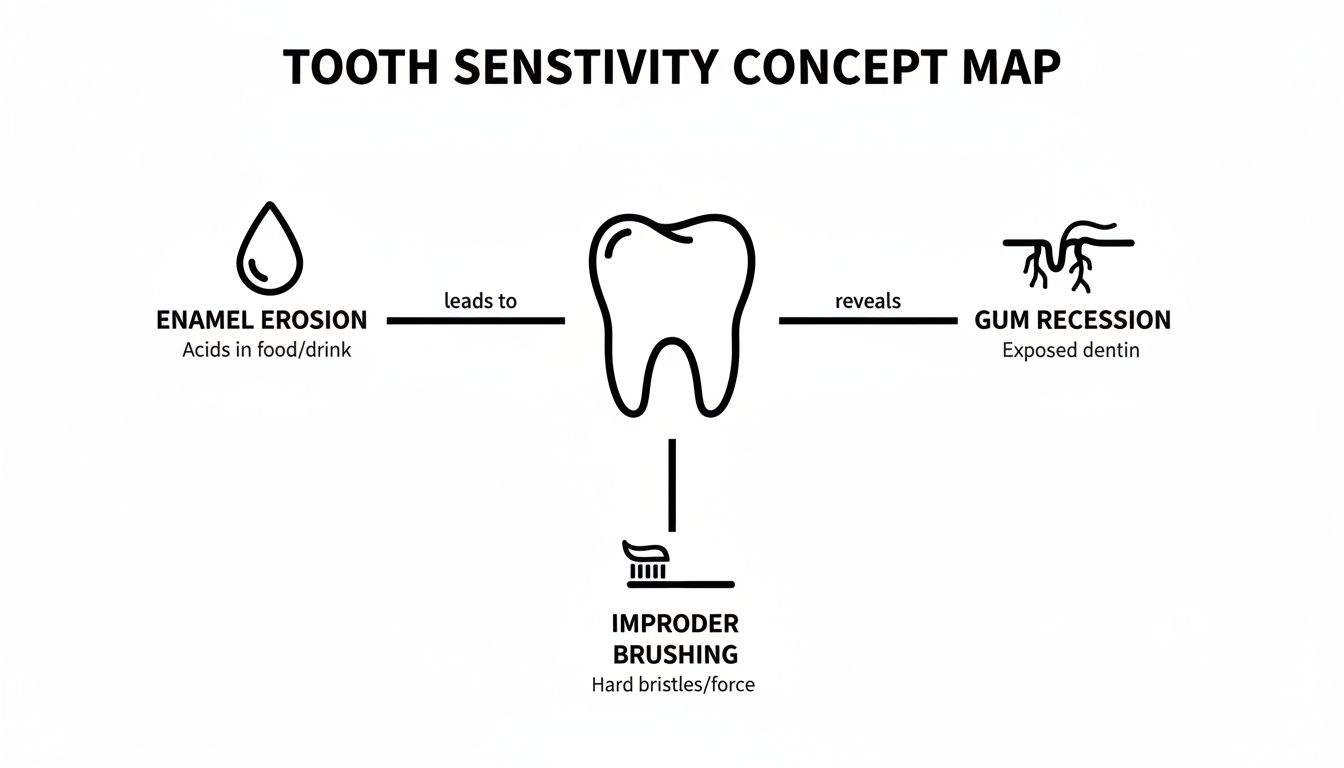
As you can see, things like enamel erosion, receding gums, or even just brushing too aggressively are what expose that sensitive dentin layer. Both nerve-soothing and tubule-blocking ingredients are designed to counteract the painful effects of this exposure. For a deeper look at how these ingredients bring you comfort, you can learn more about how Fluoridex Sensitivity Relief helps reduce tooth sensitivity in our detailed guide.
How to Choose the Right Toothpaste for You
Walking down the oral care aisle can feel like a pop quiz you didn't study for. With dozens of boxes all promising relief, how do you find the one that actually works? The secret is learning to read the label like a pro, focusing on a few key details.
Your first step should always be to identify the active ingredient. This is the powerhouse component responsible for calming your sensitivity. On the drug facts panel, look for either potassium nitrate (the nerve soother) or stannous fluoride (the tubule blocker) listed under "Active Ingredients."
These ingredients are what make or break a formula. It’s no surprise that sensitive toothpaste is a leading solution for dentin hypersensitivity, a condition that affects more than 1 in 4 Americans with untreated dental issues. The best brands use clinically proven ingredients to both reinforce enamel and block those pain pathways, delivering relief that generic options just can't match.
Check the RDA Score for Gentle Cleaning
Beyond the active ingredient, another crucial factor is the toothpaste's abrasiveness. The Relative Dentin Abrasivity (RDA) score measures how rough a toothpaste is on your teeth. When you have sensitive teeth, a lower number is always better.
An RDA score below 70 is considered low abrasive and is ideal for protecting vulnerable enamel and dentin. The frustrating part? Most brands don't print this score right on the box. A quick online search for "[Brand Name] toothpaste RDA" usually turns up the answer you need.
A low RDA score ensures you aren't accidentally scrubbing away more enamel while trying to treat your sensitivity. Gentle cleaning is just as important as the active ingredient for long-term comfort.
What to Look For and What to Avoid
To make your choice easier, here's a quick checklist. The best toothpaste for sensitive teeth will have the right ingredients without adding others that could cause more irritation.
-
Look for:
- Potassium Nitrate or Stannous Fluoride: One of these must be the primary active ingredient for proven sensitivity relief.
- ADA Seal of Acceptance: This seal confirms the American Dental Association has tested the product for safety and effectiveness.
- Low RDA Value: Aim for a score under 70 to prevent further enamel erosion.
-
Avoid:
- Harsh Abrasives: Many whitening toothpastes use rough ingredients like hydrated silica that can make sensitivity even worse.
- Sodium Lauryl Sulfate (SLS): This is a foaming agent that can cause irritation and canker sores in some people.
By focusing on these key elements, you can confidently pick a product that provides effective relief without causing more harm. You can explore a curated selection of professional-grade options in our collection of products for tooth sensitivity.
Habits and Products for Lasting Relief
Picking the right toothpaste is a huge first step, but for real, lasting comfort, your daily habits matter just as much. A solid routine protects your enamel and gums, stopping sensitivity in its tracks and letting your specialized toothpaste do its best work.
Think of your toothpaste as the medicine and your brushing technique as the way you deliver it. Using a hard-bristled brush or scrubbing aggressively is like trying to fix a delicate watch with a hammer—it just causes more damage by wearing away enamel and irritating your gums.
The most important change you can make? Switch to a soft-bristled toothbrush. This one simple swap cleans your teeth effectively without causing more harm.
Building a Complete Sensitivity Toolkit
While toothpaste is your main tool, other products can add an extra layer of defense and really boost your results. Adding just one or two of these to your routine can make a massive difference in managing those painful zings.
These products are designed to work hand-in-hand with your toothpaste, each offering its own special benefit:
- Desensitizing Mouthwashes: Rinses with potassium nitrate are great for soothing nerves throughout the day, especially after meals when you can’t brush right away.
- Remineralizing Gels or Pastes: Products like MI Paste deliver bio-available calcium and phosphate to help rebuild and fortify weakened enamel, making your teeth tougher overall.
- Fluoride Rinses: An extra hit of fluoride helps armor your teeth against acid attacks, cutting down the risk of cavities and further erosion.
The goal here is to create a supportive environment for your teeth. For instance, pairing a tubule-blocking toothpaste with a remineralizing gel gives you a one-two punch: you seal off the existing nerve pathways while also strengthening the tooth’s entire structure from within.
Knowing When to Call in a Professional
For most people, at-home care gets the job done beautifully. But sometimes, you need a dentist's expertise. If your sensitivity just won't quit despite using the right products, or if you get a sudden, sharp pain in one specific tooth, it’s time to make an appointment.
Those kinds of symptoms can point to a deeper problem that no toothpaste can fix, like a cavity, a cracked tooth, or significant gum disease. While over-the-counter products offer relief, getting to the root of the problem sometimes requires a professional eye. When you do need help, finding a reputable dental professional is key to getting quality care that's right for you.
A dentist can offer in-office treatments like a high-concentration fluoride varnish, which acts like a powerful protective shield, or even dental bonding to cover exposed root surfaces for immediate, long-lasting relief.
Your Top Questions About Sensitive Teeth, Answered
Let's dive into some of the most common questions we hear about tooth sensitivity. Think of this as your go-to guide for clear, expert-backed answers to help you finally find the relief you've been looking for.
How Long Does It Take for Sensitive Toothpaste to Work?
Most people start to feel a bit of relief within the first few days of consistent, twice-a-day brushing. But for the active ingredients like potassium nitrate or stannous fluoride to really work their magic, you'll need to give it about two to four weeks.
That's how long it takes for them to build up and provide their full protective or nerve-calming effects. Sticking with it is everything—skipping a brushing session can really slow down your progress.
Can I Use Whitening Toothpaste If I Have Sensitive Teeth?
Absolutely, but you have to be smart about it. Many top brands now make fantastic formulas that are specifically for sensitive teeth but also include gentle whitening agents.
The key is to avoid toothpastes with harsh, gritty whiteners. These can actually make sensitivity worse by physically scrubbing away more precious enamel. Instead, look for products that lift stains with chemical agents and have a low RDA (Relative Dentin Abrasivity) value—ideally, look for one under 70.
Pro Tip: Keep in mind, the relief you get from a desensitizing toothpaste isn't a permanent fix. If you stop using it, the protective layer over the dentin tubules will eventually wear away, and the calming effect on the nerve will fade. For lasting comfort, you'll want to make it a permanent part of your routine.
When Should I See a Dentist About My Tooth Sensitivity?
While a good sensitive toothpaste is a great first step, there are times when you absolutely need to book an appointment with your dentist. If your sensitivity is sudden, severe, or seems to be coming from just one tooth, it's time to get it checked out.
These can be red flags for a bigger issue that a toothpaste just can't fix. A dentist can get to the bottom of what's really going on and recommend the right treatment. Some common culprits include:
- A hidden cavity
- A cracked or chipped tooth
- Gum disease or significant gum recession
- A failing dental filling or crown
Getting a professional evaluation means you’re treating the actual problem, not just covering up a symptom. Your dentist can also offer in-office treatments, like a fluoride varnish, for more powerful and immediate relief.
For professional-grade products designed to provide lasting relief, explore the curated selection at DentalHealth.com. Find dentist-recommended solutions for sensitivity, whitening, and complete oral wellness, all delivered right to your door. Shop now at DentalHealth.com.