
Can You Wear Teeth Whitening Trays Overnight Safely
Overnight wear can be appropriate, but only when the specific gel and dentist's instructions authorize it. Dentist-supervised home whitening commonly lasts around 2 to 6 weeks, and more hours in a single night don't automatically mean a whiter smile.
You've brushed your teeth, filled the trays, and settled into bed. Then the question arrives: should you take them out, or can you just sleep with them in?
The answer depends on the gel formulation, peroxide concentration, tray design, and product protocol. A tray made for overnight use isn't interchangeable with one intended for a short daytime session. Extending the recommended wear time can expose your teeth and gums to more peroxide than intended without reliably improving the result.
The Short Answer on Sleeping in Whitening Trays
Yes, you may be able to wear teeth whitening trays overnight, but only if the specific product instructions and your dentist authorize overnight wear. The American Dental Association explains that dentist-made trays may be worn for short periods during the day or overnight. It also warns that excessive wear can irritate the teeth and gums and may even damage enamel. The ADA's whitening guidance supports a product-specific approach rather than a blanket yes or no.
That distinction matters because whitening gels don't all work at the same strength or speed. One product may be designed for a short daytime session, while another may release peroxide gradually during sleep. Even a custom tray that fits well shouldn't be worn longer than the gel's instructions allow.
Practical rule: If the label or dentist says “daytime use,” don't turn it into an overnight treatment because you want faster results.
A safe decision starts with four questions:
- What gel are you using? Check whether it contains hydrogen peroxide or carbamide peroxide and whether the instructions specify overnight wear.
- How strong is the formulation? Stronger gels generally require shorter exposure.
- Does the tray fit properly? A poor fit can push gel onto the gums and increase irritation.
- How do your teeth and gums feel? Sensitivity, burning, redness, or mouth sores are reasons to stop or shorten treatment.
The rest of the process is straightforward. Follow the exact wear schedule, use only the recommended amount of gel, remove excess from the gums, and stop once you reach the desired shade or whitening no longer progresses.
Why Wear Time Depends on Concentration and Product Design
Overnight whitening isn't a universal rule because the gel controls how quickly peroxide interacts with the tooth. A higher-concentration formulation may be intended for a shorter session, while a lower or slower-acting formulation may be suitable for extended contact. The same tray shape can therefore have very different instructions depending on the gel placed inside it.
The tray itself also matters. Dentist-made trays are shaped to your teeth and should hold the gel close to the enamel while limiting overflow onto the gums. If the tray is loose, too deep, or poorly adapted, gel can leak into soft tissue during the night. That can create irritation even when the product would otherwise be appropriate.
A simple comparison
The table below gives a general way to interpret instructions. It isn't a substitute for the directions supplied with your product.
| Approach | Typical Wear Time | Best Suited For |
|---|---|---|
| Stronger peroxide gel | Short daytime sessions | Users following a dentist's shorter exposure protocol |
| Lower or slower-acting gel | Extended wear or overnight, if authorized | Users whose product specifically permits sleeping in trays |
| Dentist-supervised home whitening | A gradual course commonly lasting around 2 to 6 weeks | People who can follow a planned schedule and attend fit or progress checks |
The NHS describes dentist-supervised home whitening as a gradual process commonly lasting around 2 to 6 weeks, with the dentist checking tray fit and explaining how often to wear the trays. The outcome comes from following the schedule consistently, not from turning each session into a marathon.
If you're trying to understand how the active ingredient works, this guide to how carbamide peroxide whitens teeth can help clarify why different gels have different wear schedules.
Never convert daytime instructions into overnight instructions. If your product says to wear the trays for a limited period, removing them on time is part of using the product correctly. Longer contact can increase exposure to peroxide and raise the chance of sensitivity or gum irritation without guaranteeing a brighter shade.
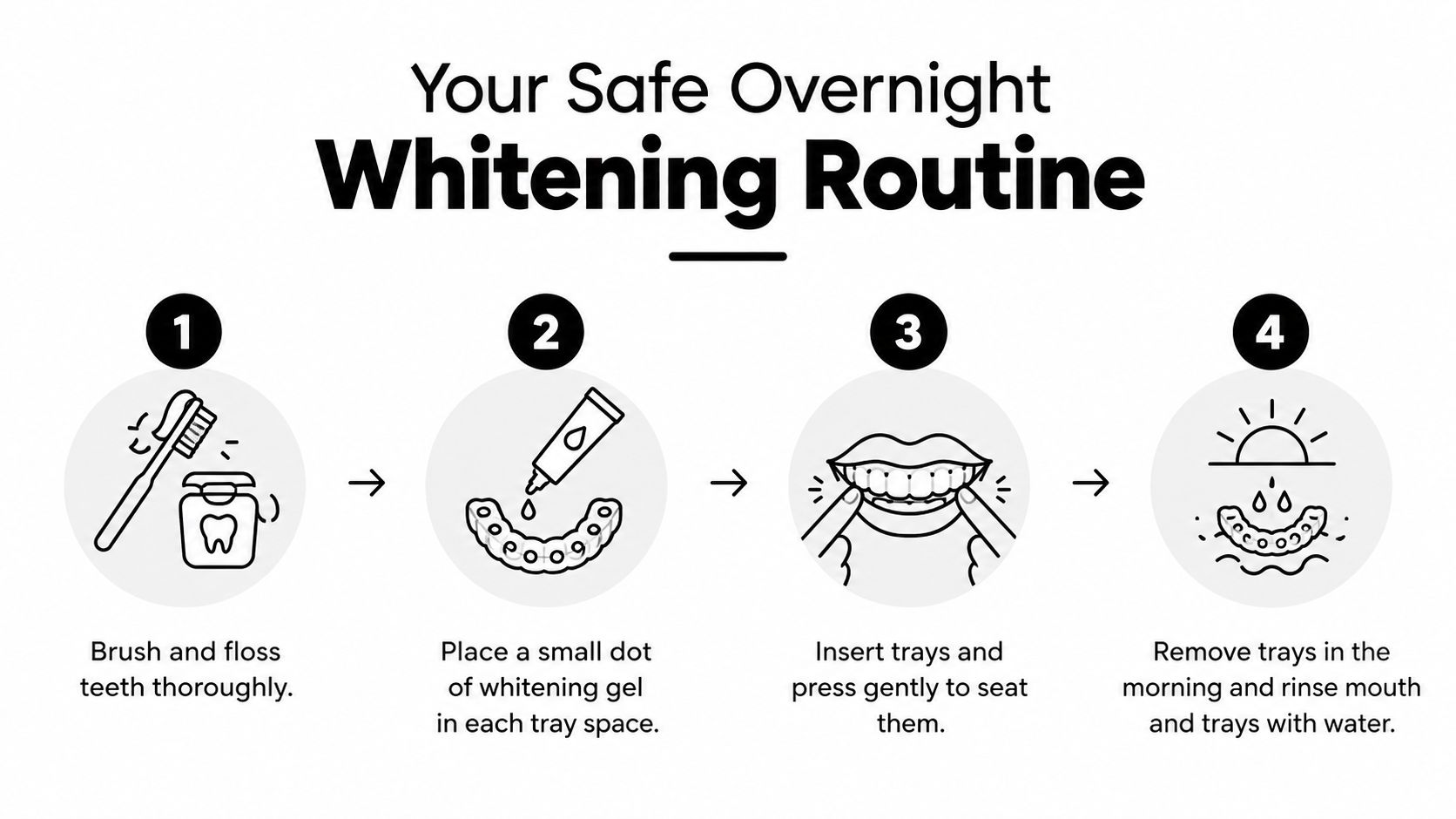
Your Safe Overnight Whitening Routine
Only use this routine when your dentist or the product instructions specifically approve overnight wear. The aim is to keep the gel on the tooth surfaces and away from the gums, while making the morning cleanup simple.
Prepare your mouth and trays
Clean your teeth thoroughly before inserting the trays. Brush carefully and floss so plaque or food debris doesn't block contact between the gel and enamel. Clean trays help the gel spread more evenly, and a clean mouth makes it easier to notice whether irritation is coming from the product or from trapped debris.
Check the trays before adding gel. They should be clean, intact, and positioned for the teeth they were made to cover. Don't use a night guard as a whitening tray. The two appliances have different purposes and aren't designed to hold whitening gel in the same way.
Use a small amount of gel
Place a small dot of gel in each tray space, generally where the visible front surface of each tooth will sit. More gel doesn't mean more whitening. It mostly creates more material that can squeeze over the tray edge and sit against your gums.
Insert the trays gently and press them into place. If gel appears around the gumline, remove it with a clean finger, cotton swab, or tissue. This small cleanup step matters because excess gel is a common source of soft-tissue irritation.
For more detail on placement and handling, review this guide to how to use carbamide peroxide gel.
Remove everything in the morning
When you wake, remove the trays and rinse your mouth with water. Rinse the trays as well, following any cleaning instructions supplied with the product, then brush your teeth as directed.
Don't keep whitening just because the routine has become a habit. Stop when you reach the shade you want or when the color stops progressing. If your teeth feel unusually sore in the morning, or your gums look irritated, don't repeat the same overnight session until you've checked the instructions and, if needed, spoken with a dentist.
When Overnight Wear Is a Bad Idea
Overnight whitening is a poor choice when your mouth already shows signs that it may not tolerate prolonged peroxide exposure. The most common problems are tooth sensitivity and gum irritation, and the risk tends to be greater with higher peroxide concentrations. The ADA reports that temporary mild-to-moderate sensitivity can affect up to two-thirds of users during the early stages of vital tooth whitening. The ADA's clinical overview also explains that irritation is generally temporary, but that doesn't make severe or persistent symptoms something to ignore.
Stop or shorten treatment if you experience persistent pain, burning gums, or ulceration. A mild, brief reaction may improve after a pause, but symptoms that continue or worsen deserve professional assessment.
Get checked before whitening
Don't begin overnight treatment if you have untreated decay, inflamed gums, exposed roots, worn enamel, or trays that don't fit properly. Whitening gel can reach vulnerable areas more easily, and a poor-fitting tray can cause leakage, pressure, and soft-tissue injury.
Pregnancy or lactation is another reason to avoid overnight whitening unless a dental professional gives you specific advice. The same caution applies if you've had a reaction to peroxide, wear orthodontic appliances, or have extensive restorations that need individual evaluation. Clinical whitening studies often exclude people with these conditions, so the evidence for applying an overnight protocol to them is limited. This clinical review discusses the importance of considering oral health, concentration, exposure, and adverse effects together.
Burning is not proof that the gel is working. It's a signal to remove the trays and assess what went wrong.
Know what whitening can't change
Whitening changes the color of natural tooth structure. It doesn't whiten crowns, fillings, veneers, or other restorations. If those materials are already visible in your smile, whitening the surrounding teeth may create a shade mismatch rather than an even result.
Tray fit deserves equal attention. A tray that leaves gaps or presses against the gumline can release gel where it isn't wanted. If you also grind or clench your teeth during sleep, you can learn practical strategies to relax jaw clenching before deciding whether sleeping in a whitening tray is comfortable.
For additional guidance on keeping gel away from soft tissue, see how to manage teeth whitening gel on your gums. If symptoms include significant pain, open sores, or ongoing gum changes, stop whitening and contact a dentist rather than experimenting with shorter or weaker sessions on your own.
Gentler Alternatives if Your Teeth Protest
A sensitive response doesn't always mean you must abandon whitening. It often means the schedule, concentration, or contact time needs to change. Home trays are commonly used for about 1 to 2 hours daily or overnight for roughly 1 to 2 weeks, depending on the product and professional instructions, as described by Harvard Health in the verified guidance for home whitening.
Shorter daytime sessions are the easiest adjustment. If your instructions allow it, wear the trays for a limited daytime period instead of sleeping in them. You can also ask a dentist whether a lower-concentration gel is suitable for your teeth and target shade.
Match the response to the symptom
Sensitivity can begin around 2 to 3 days after treatment starts and commonly resolves by about the fourth day after treatment ends, according to the ADA guidance cited earlier. If discomfort appears, pause whitening rather than pushing through it. Once symptoms settle, a dentist can help you decide whether to restart with shorter sessions or a gentler formulation.
A practical routine might look like this:
- Shorten the exposure: Replace an overnight session with a permitted daytime session.
- Build in recovery nights: Alternate whitening nights with nights focused on a sensitivity toothpaste or remineralizing paste, if your dental professional recommends those products.
- Reduce the amount: Use the small quantity specified by the manufacturer, and wipe away any overflow immediately.
- Recheck the tray: Have a dentist assess the fit if gel repeatedly reaches your gums.
Sensitivity-supporting products may help make a routine more comfortable, but they don't make an unsuitable overnight protocol safe. Follow the gel instructions first, then use supportive products as part of a plan that fits your oral condition.
If you have veneers and want to understand why ordinary whitening won't change their shade, this resource on how to whiten veneers explains the distinction between natural enamel and restorative materials.
Key Takeaways for Confident Overnight Whitening
Overnight whitening can be acceptable for selected users, but only when the gel and dentist-approved protocol specifically permit it. The correct wear time depends on concentration, tray design, and the product's instructions. More contact time isn't automatically more effective.
Keep these rules in mind:
- Follow the written schedule: Don't extend daytime instructions into overnight wear.
- Use a small amount of gel: Extra gel increases the chance of overflow and gum irritation.
- Remove excess: Wipe gel from the gumline before sleeping.
- Watch your symptoms: Stop or shorten treatment for persistent pain, burning, ulceration, or pronounced sensitivity.
- Check your oral health first: Untreated decay, inflamed gums, exposed roots, worn enamel, and poor tray fit need attention before whitening.
- Stop at the right point: End treatment when you reach the desired shade or whitening no longer progresses.
Check your gel's instructions tonight before deciding whether to sleep in the trays. If anything feels wrong, remove them, pause treatment, and call your dentist for advice rather than assuming a longer session will solve the problem.
DentalHealth.com offers professional-grade at-home whitening gels and kits, plus sensitivity toothpastes and remineralizing products for people adjusting their routine. Visit DentalHealth.com to compare product instructions and choose oral-care options that fit your whitening plan.