
Chewing Gum Peppermint: A Dentist-Smart Oral Health Guide
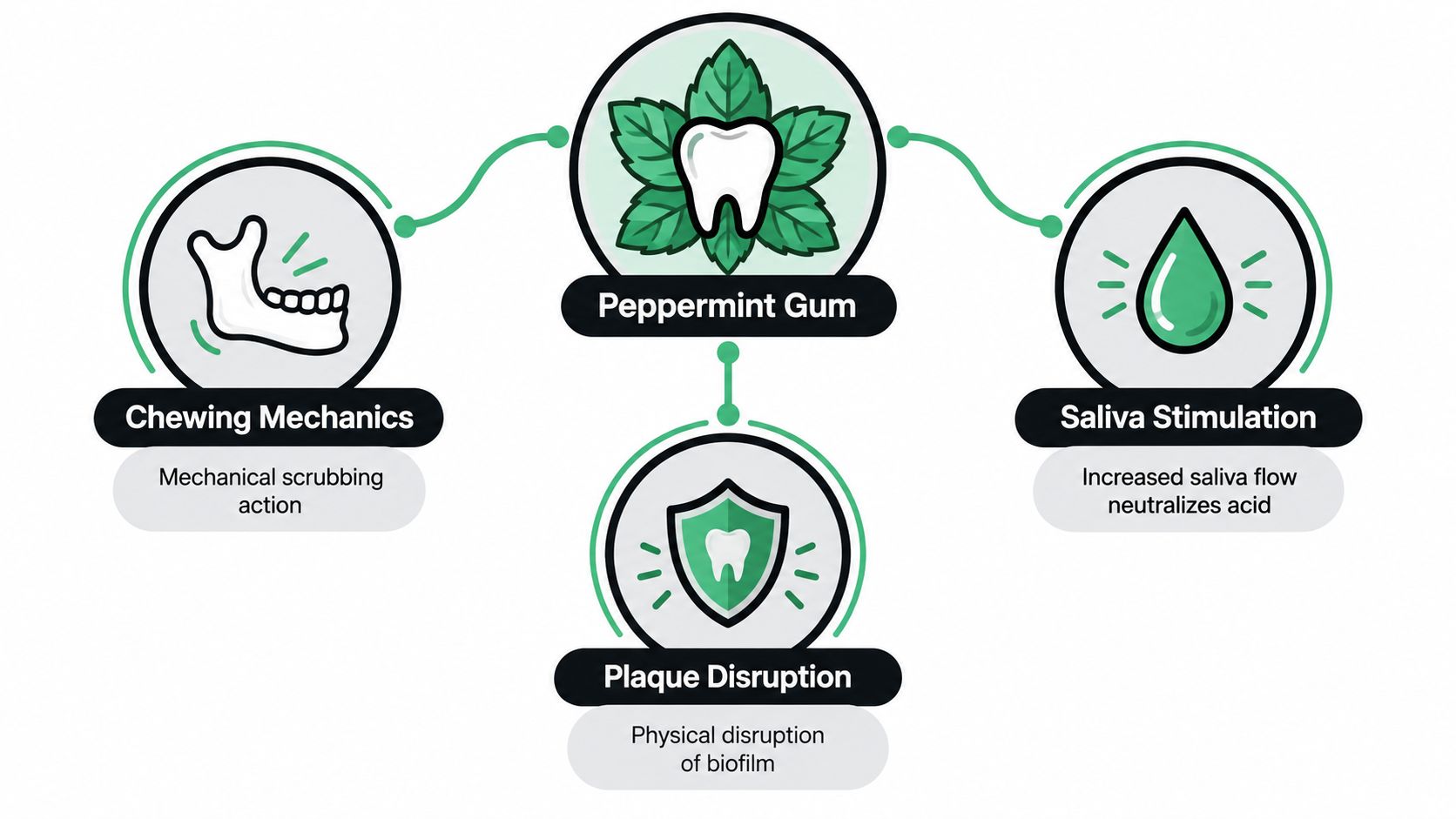
Many buyers purchase peppermint chewing gum for the wrong reason. They think the mint is what protects teeth. It isn't. The key benefit comes from chewing, the sweetener profile, and only then the flavor, which mostly affects how fresh your mouth feels and how long you want to keep chewing.
That distinction matters. A strong peppermint taste can make a gum feel cleaner, but the cavity story is driven by whether the gum is sugar-free, how long you chew it, and whether the sweetener can feed oral bacteria. The flavor is the sales pitch. The chemistry is the part that matters.
If you want the broader digestion angle from a different angle, Pep Tea has a useful guide on Pep Tea on gut-friendly brews, and it pairs well with the same basic rule here, don't confuse a soothing taste with a therapeutic effect. For patients comparing gum options after dry-mouth questions, the practical comparison at DentalHealth.com's Biotene chewing gum guide is also worth a look.
What Peppermint Gum Is Really Doing in Your Mouth
Three levers, one of them gets too much credit
Peppermint flavor mainly changes perception. It gives you that cooling blast and the breath-freshening feeling people associate with a clean mouth. But the oral-health benefit comes from a different lever, the chewing action, which stimulates saliva and helps clear debris.
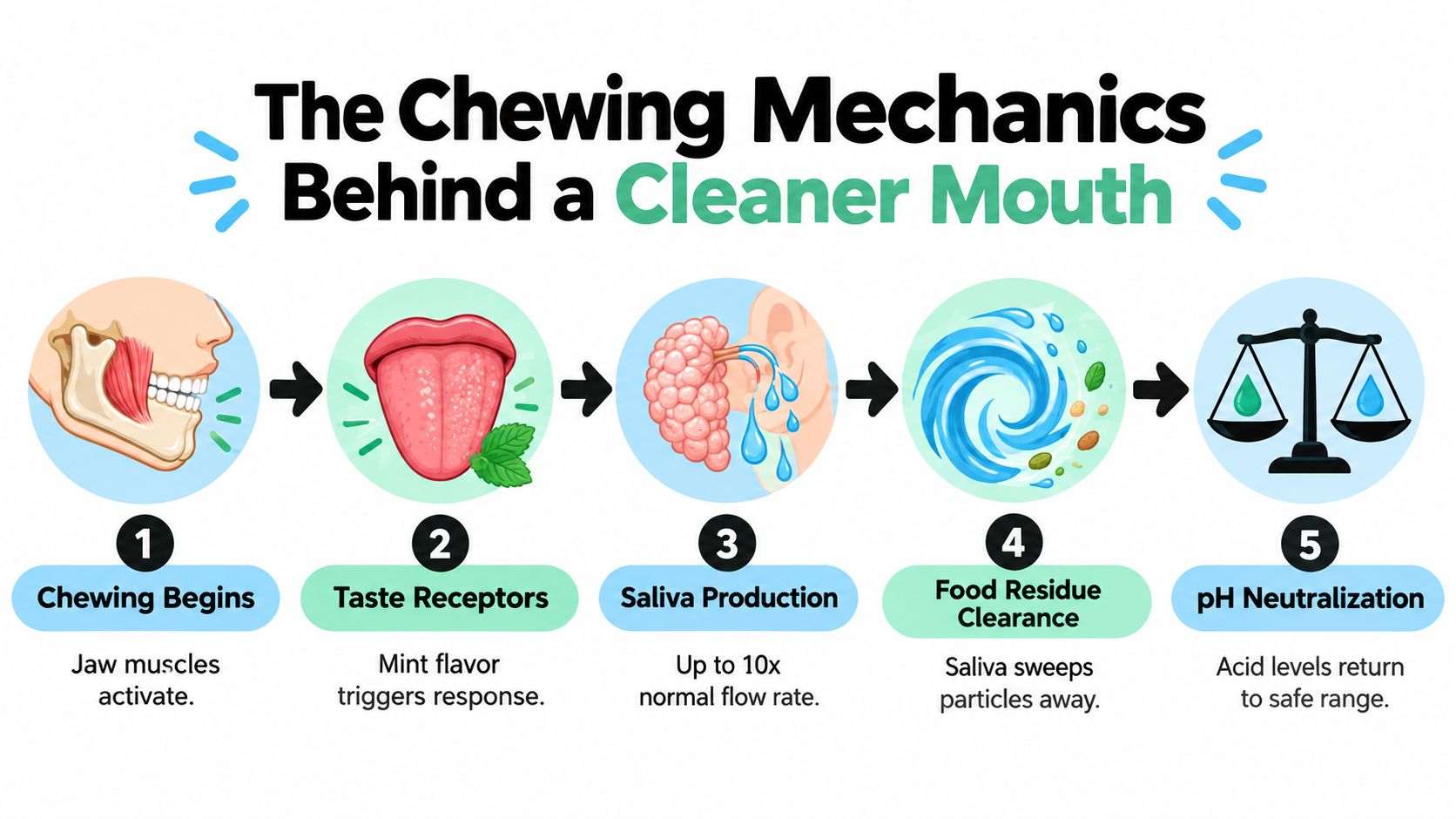
That saliva change is not minor. Healthy subjects can increase salivary flow from about 0.4–0.5 mL/min at rest to about 5–6 mL/min during active chewing, a roughly 10–12-fold increase, and flow usually drops after about five minutes, reaching around 1.2–1.5 mL/min by 20 minutes (ADA chewing gum guidance). That's why gum after meals makes sense, and why chewing for a short burst is not the same as idly tasting mint.
Practical rule: if the package is loud about mint but vague about sweeteners, treat it as a flavor product first and an oral-care product second.
The third lever is the sweetener. Sugar-free gum can support oral health because it avoids feeding acid-producing bacteria, while sugar-containing peppermint gum has a different caries profile and shouldn't be lumped into the same conversation. If you only remember one thing, remember this, peppermint does not equal protection.
People often ask why a milder gum can feel less dramatic but still be just as sensible for teeth. That's because the mouth doesn't care about marketing intensity. It cares about stimulation, salivary flow, and whether the formulation works against plaque pressure or adds to it.
How Peppermint Became the Default Chewing Gum Flavor
Peppermint solved gum's flavor problem
Peppermint became the default because it worked well in a product designed for prolonged chewing. In the late nineteenth century, manufacturers needed flavor that would not disappear immediately. In 1880, William White reportedly combined sugar and corn syrup with chicle and peppermint extract to create Yucatan gum, the first commercially successful chicle-based peppermint gum (history of chewing gum).
The lasting flavor gave peppermint a practical advantage over weaker options. It also matched what consumers expected from gum, toothpaste, and candy. According to the U.S. mint industry history, growing demand for mint products helped build a commercial market for higher-quality peppermint and spearmint oils around the turn of the twentieth century. Peppermint was becoming a standard flavor, not just a novelty.
Wrigley made mint a mass habit
In 1914, Wrigley introduced Doublemint, promoted as a new peppermint flavor. The name referred to a double-distillation process, while early advertising emphasized ideas such as double strength and double value. That positioning connected peppermint with freshness and gave the flavor a memorable commercial identity.
Peppermint's “clean” reputation is sensory first, cultural second. The cooling sensation became the message.
By the 1920s, Wrigley, American Chicle, and Beech-Nut were known as the industry's “big three.” Wartime gum use then helped American mint gums spread overseas. Today's peppermint gum carries that commercial history. Its flavor provides the cooling cue, while decades of branding made that cue shorthand for oral freshness.
For patients choosing gum, the lesson is straightforward: peppermint explains the experience and the brand association. It does not explain cavity protection. That depends on the chewing itself and the sweetener profile, which deserve separate attention from the flavor.
The Chewing Mechanics Behind a Cleaner Mouth
What actually changes after you start chewing
Chewing does the heavy lifting. It stimulates saliva through mechanical and taste pathways, and saliva helps clear food residue, dilute plaque acids, and support enamel remineralization. That's the core reason sugar-free gum after meals makes sense, not because the mint is antibacterial on its own, but because the mouth is flooded with fluid that changes the environment.
A study using gum with 2% peppermint flavor found menthol and menthone as the principal volatile compounds, and more than 50% of the released compounds were detectable in exhaled air and saliva (peppermint flavor release study). After two minutes, exhaled-air concentrations depended mainly on mastication intensity and chewing frequency, while salivary concentrations were more affected by salivary flow rate and total chewing time.
Why some people feel more mint than others
This is why vigorous chewers describe a colder, sharper peppermint hit. Faster chewing moves more volatile material toward the retronasal pathway, so the flavor seems stronger. High salivation can also keep more flavor compounds in the watery phase, which can blunt the perceived peppermint intensity.
Stronger mint isn't automatically better gum. It may just be more obvious gum.
The video below shows the basic oral mechanics in motion.
The practical takeaway is simple. If you want the cleaning effect, chew in a way that sustains saliva flow and keep the piece in play long enough to matter. Don't chase a more aggressive mint profile thinking it will disinfect your mouth. It won't.
Sugar-Free, Xylitol, and Where Peppermint Fits In
Sweeteners decide the cavity outcome
Peppermint is the selling point. Sugar-free is the part that matters for teeth. Evidence reviews report a significant reduction in oral Streptococcus mutans with sugar-free gum, with a meta-analytic effect size of −0.42 versus non-chewing controls (evidence review). That supports gum as a helpful habit, but it does not make peppermint the active cavity fighter.
The clean way to judge a peppermint gum is by the sweetener profile, not the flavor name.
| Sweetener type | Fermentable by oral bacteria | Cavity implication | Best use |
|---|---|---|---|
| Sugar-sweetened peppermint | Yes | Higher risk than sugar-free options | Skip for oral-care use |
| Sugar-free, no xylitol | No | Better than sugar gum, but the benefit comes from chewing | After meals when xylitol isn't available |
| Sugar-free with xylitol | No in the same way as sucrose, and clinically useful in oral-care routines | Best fit for cavity-conscious gum use | After meals, in the right dose and frequency |
Xylitol studies point to a simple rule, use enough of it, and use it often enough. A clinical study found that a fixed daily dose of 10.32 g reduced mutans streptococci over five weeks, while chewing xylitol only twice daily did not produce a statistically significant difference from the sorbitol control. That is the part shoppers miss. DentalHealth.com's xylitol gum guide is useful here because it keeps the focus on label reading, not mint marketing.
Peppermint makes gum pleasant; the sweetener protects teeth
Peppermint can make a gum easier to stick with after meals, and that matters because a routine you use beats a perfect product you ignore. Still, if you are buying gum for dental benefit, the sweetener line comes first.
If the label is vague about sweeteners, the product is probably selling sensation, not oral care.
My advice is simple. Buy sugar-free first, then look for xylitol, and only after that worry about how strong the mint tastes.
How to Read a Sugar-Free Peppermint Gum Label
Check the front, then read what actually does the work
The word peppermint on the front tells you about flavor, not tooth protection. For oral care, separate the label into three parts. Chewing stimulates saliva. The sweetener profile changes whether the gum feeds cavity-causing bacteria. Peppermint flavor mainly makes the product more pleasant to keep using.
Start with the simplest screen. If the package is not clearly sugar-free, put it back. If sugar shows up in the ingredient list, that gum is candy with a fresh taste, not a dental tool.
Then go straight to the sweeteners. Look for xylitol first. If the formula uses sorbitol, mannitol, or other polyols without xylitol, it can still be a decent sugar-free gum, but the main benefit is the chewing and saliva response, not the peppermint and not the same xylitol-specific benefit discussed earlier.
Here is the short checklist I want patients to use:
- Ingredient order matters: the first sweeteners listed tell you what the gum is mostly built from.
- Amount matters: if xylitol is present but the label gives no useful quantity, you cannot tell whether it fits a meaningful routine.
- Directions matter: gum chewed for a minute or two is mostly flavor delivery.
- Acceptance marks matter: an ADA-style seal is more useful than words like “fresh,” “cool,” or “clean.”
Brand familiarity does not help much here. The same kind of peppermint gum can be formulated differently across products and markets. Check the sweetener line every time you buy, even if you know the brand.
Read the ingredient list like a clinician. Flavor sells the gum. The formula decides whether it helps your teeth.
If you want a plain-English example of how a sugar-free chew can fit after meals, DentalHealth.com's 0-calorie gum guide is a practical reference. My advice stays simple. Buy sugar-free first, confirm the sweetener line second, and treat peppermint as the taste layer, not the reason the gum protects anything.
When Peppermint Gum Stops Being Friendly
Irritation is real, and it's easy to miss
Peppermint gum is generally safe in ordinary flavoring amounts, but natural mint isn't automatically risk-free. An allergen reference identifies L-carvone, a compound found in most chewing gums, as a potential cause of cheilitis and stomatitis in susceptible people (allergen reference). Concentrated or medicinal exposure can also trigger adverse reactions.
The warning signs are usually local. Burning, peeling lips, redness, mouth ulcers, or irritation that gets worse after starting a new peppermint gum should make you stop the product and compare ingredients. Don't “tough it out,” and don't assume a stronger mint will fix the problem.
Know when the gum is the issue
Some people with braces, aligners, dry mouth, reflux, oral lesions, or fragrance sensitivities tolerate peppermint fine. Others don't. The symptom pattern matters more than the brand story.
- If the mouth burns or stings: stop the gum and test a non-mint or differently formulated sugar-free option.
- If the lips peel or crack after chewing: compare the flavoring and sweetener list, not just the front label.
- If swelling or breathing symptoms appear: seek medical help.
- If the irritation keeps returning: get a dental or medical evaluation.
Peppermint can also be a poor sensory match for some people with jaw tension. If chewing seems to trigger head or jaw discomfort, the issue may be broader than flavor. A practical overview of jaw-related headache signs is available through Pain and Sleep Therapy Center's TMJ headache guide, and it's the kind of resource people ignore until they've chewed through weeks of discomfort.
The point is not to fear mint. The point is to stop treating every peppermint sensation as automatically beneficial. Sometimes the right move is just switching flavors, or stepping away from gum entirely.
A Simple 20-Minute Routine That Actually Helps
The routine I'd give a daily gum chewer
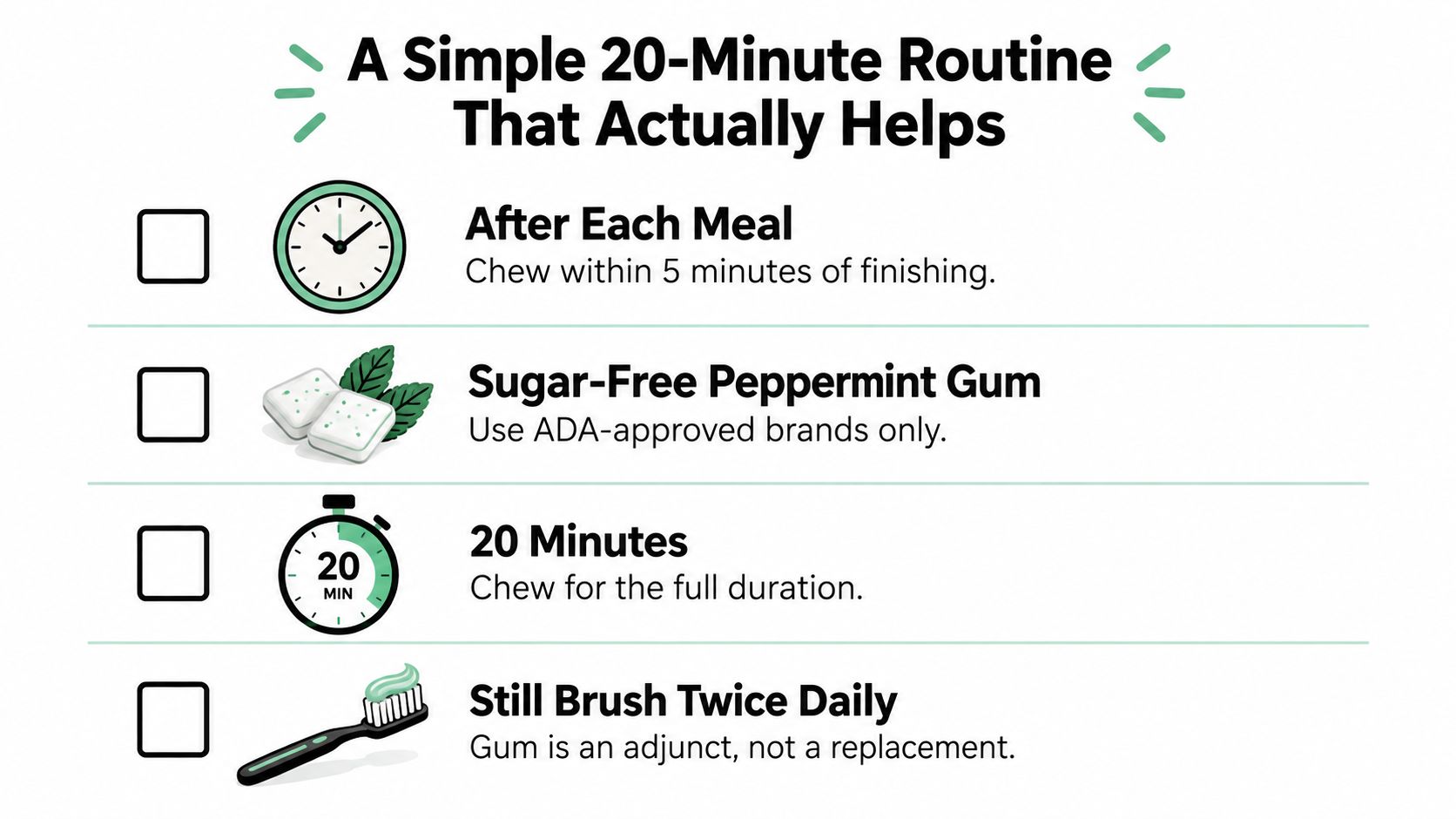
Use sugar-free peppermint gum after meals, not as a replacement for brushing. The ideal window is about 20 minutes, because that fits the saliva-stimulation pattern and gives chewing enough time to matter. If you're someone who snacks often, has low saliva flow, or wears orthodontic appliances, this is the routine that earns its place.
After each meal: chew soon after you finish eating, while the mouth is still dealing with food residue.
Use sugar-free peppermint gum: pick a formula that puts sweetener quality ahead of marketing flavor.
Chew for the full stretch: short, casual chewing wastes the saliva benefit.
Keep brushing twice daily: gum is an adjunct, not a replacement.
This isn't a cure-all. Skip or adapt it if peppermint irritates your mouth, if chewing aggravates jaw pain, or if you've got symptoms that need professional attention. If you want a practical place to shop for dentist-oriented at-home care products alongside your gum routine, DentalHealth.com carries oral-care items people commonly use to build out a cleaner daily setup.
If you want to tighten up your own gum routine, start by checking the sweetener list on the pack you already buy and compare it against a true sugar-free option. Then visit DentalHealth.com to browse oral-care products and read practical guides that help you separate marketing from evidence before you spend another dollar on “fresh” that doesn't do much.