
Epic Mints Xylitol: Doses, Evidence and Daily Use
Does a mint containing xylitol deliver the same dental benefit as the xylitol chewing gum used in clinical studies? Not necessarily. The sweetener matters, but so do the amount you consume, how often you use it, and whether you chew or let the product dissolve.
For anyone comparing Epic Mints' xylitol content with cavity-prevention claims, the useful starting point is the label, not the promise of fresher breath. Count the mints, separate product facts from clinical findings, and treat convenience as a benefit without mistaking it for proof.
Xylitol Dose per Mint and per Pack
Each Epic Mint contains 0.5 g of xylitol, and the labeled serving of two mints supplies 1 g, according to Epic Dental's product information. That makes the serving size a useful measuring unit, but it isn't a prescription or a demonstrated cavity-prevention threshold.
The arithmetic below uses that labeled amount throughout. The full-bottle calculation assumes the same xylitol content in every piece.
Xylitol delivered by Epic Mints at common intake levels
| Target intake | Mints needed | Xylitol delivered |
|---|---|---|
| One labeled serving | 2 | 1 g |
| Five servings, low end of studied range | 10 | 5 g |
| Low end of Epic suggested intake | 12 | 6 g |
| Top of studied and suggested range | 20 | 10 g |
| Full 180-mint bottle | 180 | 90 g |
The distinction between a serving and a daily amount is where shoppers often get confused. A serving tells you how the manufacturer presents the product. It doesn't establish how much you personally need or whether that amount will change your cavity risk.
Published xylitol research commonly examines 5–10 g daily, divided across at least three consumption periods, as summarized in the Drugs.com xylitol monograph. Those are research conditions, not a reason to keep eating mints until you reach the upper end.
Count pieces rather than packages
A bottle can look like a substantial supply while delivering relatively small portions at each use. Conversely, trying to reproduce a research-level daily intake using mints alone can involve more pieces than someone expects when buying a breath freshener.
Practical rule: Divide your intended xylitol amount in grams by the label's grams per mint. Then decide whether that number of pieces fits your day.
Don't assume another brand uses the same formulation. A large mint isn't necessarily a high-xylitol mint, and a prominent xylitol claim doesn't tell you the amount per piece.
If you're comparing formats, our guide to xylitol gum and product differences offers additional context. Check the bottle you receive before using any calculation, and distinguish a manufacturer's suggested intake from an individually appropriate dental recommendation.
What Epic Mints Are Made Of
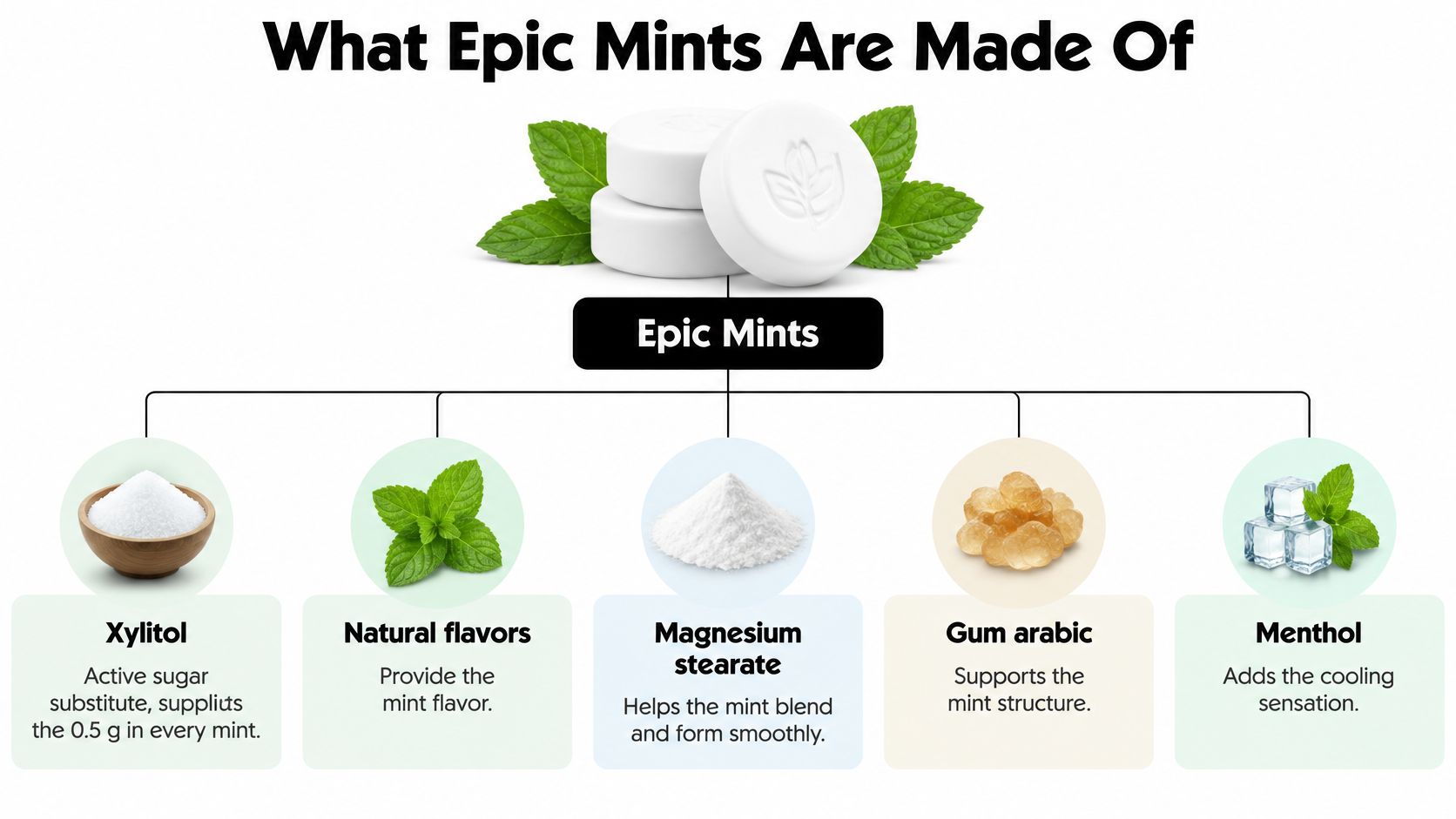
Epic Mints are formulated around xylitol rather than sucrose. The manufacturer's ingredient information also lists natural flavors, gum arabic or gum acacia, and magnesium stearate. These are composition facts, not evidence that the finished mint prevents cavities.
An ingredient illustration can help organize those roles, but the current package remains the authority for a particular flavor.
Read each ingredient by its job
- Xylitol supplies sweetness. It's the sugar substitute that makes the product relevant to a discussion of oral care. For comparison shopping, its disclosed amount matters more than the prominence of the word on the front label.
- Natural flavors supply the flavor profile. They make the mint pleasant to use, but flavor isn't a measure of dental effectiveness. A stronger taste doesn't establish a stronger preventive effect.
- Gum arabic holds the mint together. Also called gum acacia, it acts as a structural binder. Its presence explains how the product maintains its form, not how much xylitol it delivers.
- Magnesium stearate helps during processing. It reduces sticking and supports consistent manufacture. It isn't the ingredient responsible for the product's xylitol-related rationale.
The illustration mentions menthol, but the manufacturer's ingredient information described here doesn't separately identify it. Don't assume menthol is a separately listed ingredient unless your own package says so.
A label checklist that travels well
Use the same questions when comparing another sugar-free mint. Check whether xylitol is the main sweetener, whether sucrose appears, whether the maker discloses the xylitol amount per piece, and whether the serving size is clear.
A short ingredient list can make a product easier to understand. It can't tell you whether that product has been tested for cavity prevention.
Also distinguish ingredient quality claims from clinical outcomes. A description of where a sweetener comes from or how it's manufactured doesn't establish that the finished product reduces decay.
Your most useful purchase information is practical: what you're consuming, how much you're getting, and whether the flavor and format make consistent use realistic.
How Xylitol Works Against Plaque Bacteria
Say you finish lunch and reach for an ordinary sugar-sweetened mint. Bacteria in dental plaque can use sucrose to produce acids, lowering the pH around your teeth and contributing to enamel mineral loss. A fresh taste doesn't tell you whether that acid production is happening.
A dissolving mint may look much like a conventional sweet, even when the sweetener behaves differently.
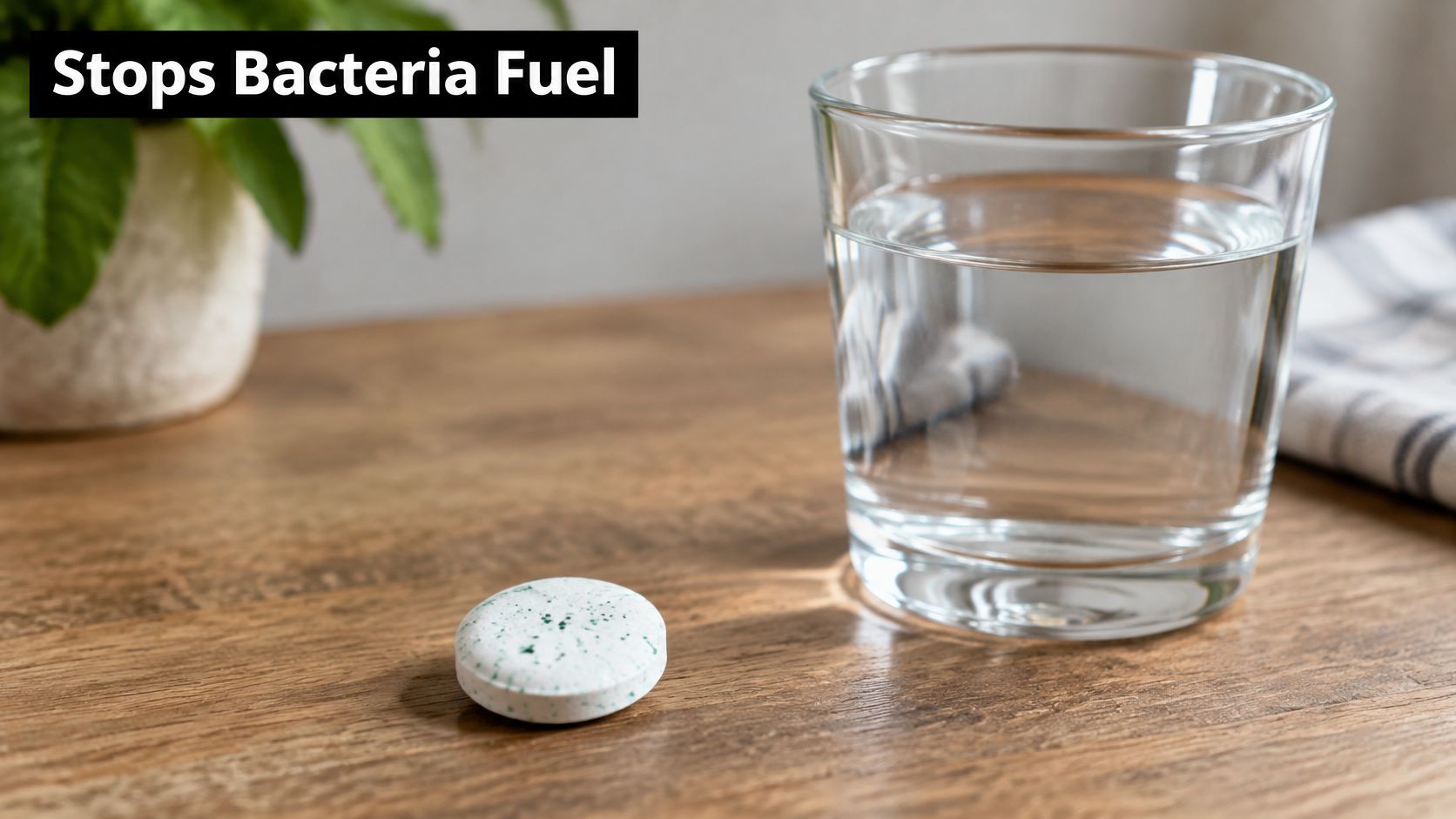
Xylitol is a nonfermentable polyol, meaning oral bacteria can't use it the way they use sucrose to produce those acids. Think of it as an unsuitable meal: it tastes sweet to you, but it doesn't provide the same usable fuel for acid-producing activity.
That analogy has limits. Xylitol doesn't remove the rest of your lunch, sterilize your mouth, or make plaque disappear just because a mint dissolves.
Plaque is an attached community
Plaque isn't just loose debris you can wash away with a pleasant taste. Bacteria attach to surfaces and form organized communities called biofilms, which helps explain why physical cleaning remains important.
For a clearer introduction to that structure, BacteriaFAQ.com lets you explore bacterial attachment and biofilm growth. Understanding attachment helps separate a sweetener's chemical role from a toothbrush's mechanical role.
The accompanying video offers another visual explanation of the oral-care topic.
A useful mechanism isn't a complete treatment
Xylitol and fluoride aren't interchangeable. Fluoride supports enamel remineralization and has its own antibacterial effects; choosing a different sweetener doesn't reproduce those functions.
Format also changes the experience. Chewing gum keeps the jaw moving and stimulates saliva, which helps clear material from the mouth and buffer acids. A dissolving mint may stimulate less saliva, so you shouldn't assume the same response merely because both products contain xylitol.
The practical distinction is between avoiding an extra sugar exposure and proving a therapeutic effect. Choosing a sugar-free mint instead of a sucrose-containing mint changes what plaque bacteria encounter. Whether that choice produces fewer cavities over time requires clinical evidence, not just a plausible explanation.
What the Cavity Research Really Shows
Xylitol has supportive but mixed evidence for cavity prevention, and the evidence discussed here doesn't establish a mint-specific preventive effect for Epic Mints. The strongest practical mistake is to take a favorable result for chewing gum and attach it directly to a dissolving product.
A systematic review of pediatric xylitol chewing gum examined ten studies and found significantly lower caries occurrence against no-treatment or placebo-polyol controls, with the clearest benefit among children who began with moderate or high caries levels. That supports a potential role for xylitol gum, but it doesn't establish equal benefit across ages, starting risks, or delivery formats.
Positive findings need their counterweight
Other clinical evaluations have reached less certain conclusions, describing xylitol as a complementary preventive agent rather than a reliably established anticaries treatment. Differences in the products, comparison groups, exposure patterns, and study quality make a single headline claim misleading.
A statistically nonsignificant tablet result is especially easy to misread. An apparent improvement doesn't establish that the intervention caused a dependable benefit when the study can't rule out chance adequately.
The relevant question isn't whether a result points in a favorable direction. It's whether the evidence is consistent, clinically meaningful, and applicable to the product you're considering.
Evidence strength by xylitol format
| Format | Reported evidence | Saliva stimulation | Fit for Epic Mints |
|---|---|---|---|
| Xylitol chewing gum | Favorable bacterial and caries findings, but results aren't uniform | Chewing stimulates saliva | Indirect support only |
| Xylitol tablets | Some favorable findings haven't reached statistical significance | May be lower than gum | Plausible but unconfirmed |
| Epic Mints, dissolving format | No Epic-specific cavity-prevention result established by these clinical findings | Likely lower than gum; direct comparison isn't established here | Product-specific prevention remains unproven |
A reduction in plaque bacteria also isn't automatically the same as a reduction in cavities. Bacterial measurements can help explain a possible pathway, while cavity outcomes address the longer-term result a shopper wants.
Evidence for an ingredient, evidence for a delivery format, and evidence for a specific branded product are different things.
That distinction doesn't make mints pointless. It sets an honest boundary around their claims: a plausible supportive option, not a guaranteed percentage reduction in decay.
When considering ways to prevent cavities naturally, judge each habit by its role rather than treating all preventive options as substitutes. Your starting cavity risk matters, and a favorable gum study doesn't tell you exactly what a mint will accomplish in your mouth.
Where Epic Mints Fit in Your Routine
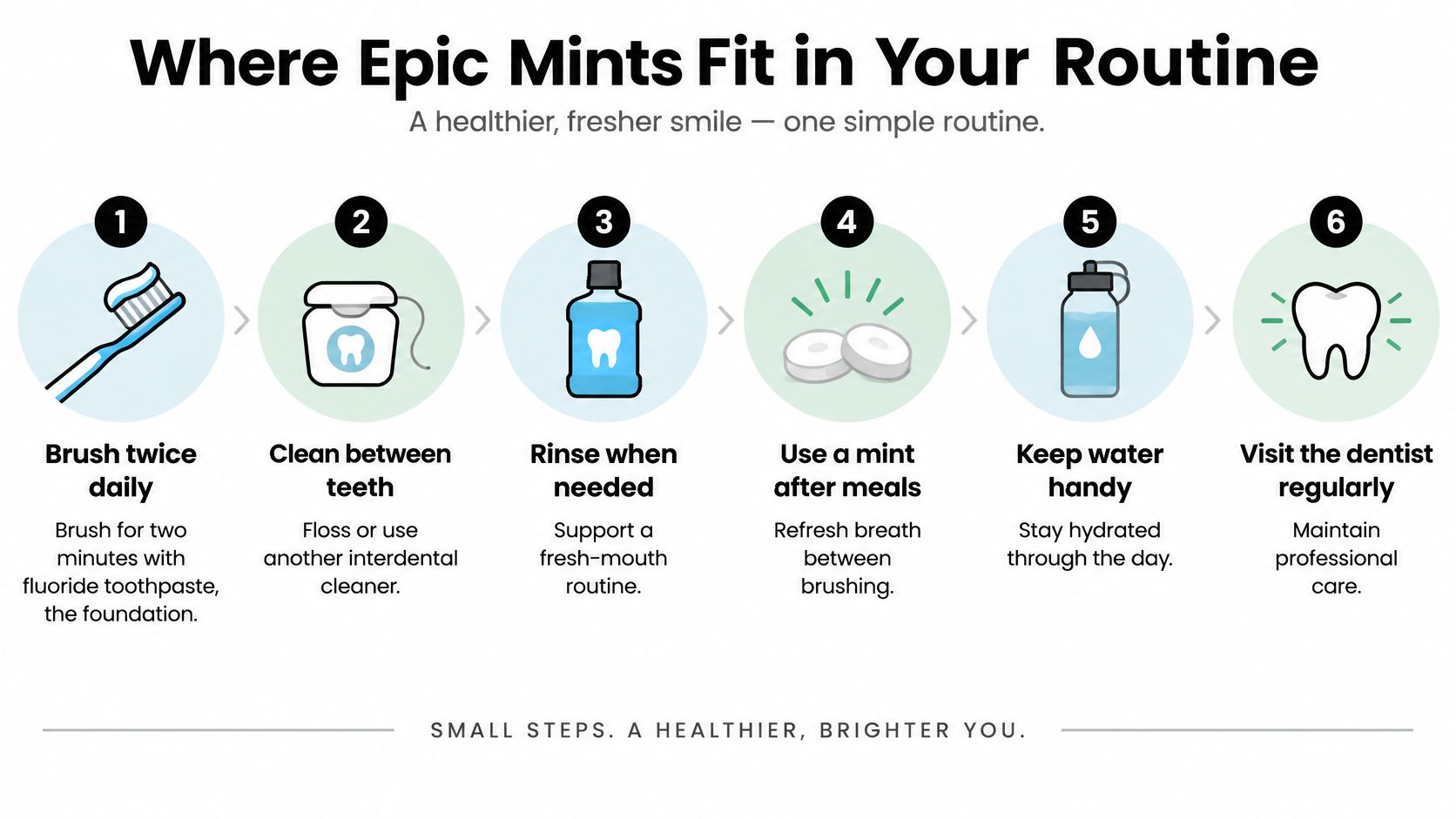
The most workable routine gives each tool a defined job. A toothbrush removes accessible plaque, an interdental cleaner reaches spaces the brush misses, and a mint offers a convenient sugar-free option between cleaning sessions.
Use the illustration as a broad reminder of daily habits, not as a requirement to add every possible product.
Give the essentials priority
- Brush morning and night with fluoride toothpaste. Work methodically along the gumline and across the inner, outer, and chewing surfaces. Don't let a fresh-mouth sensation persuade you to skip cleaning.
- Clean between your teeth daily. Use floss for tight contacts or appropriately sized interdental brushes where they fit comfortably. A dissolving mint doesn't mechanically remove attached plaque between teeth.
- Use a mint when it's convenient. After a meal away from home, let it dissolve rather than treating it as a replacement for your next brushing session. The useful habit is a deliberate sugar-free choice, not constant consumption.
- Spread use across relevant moments. If you and your dentist decide xylitol belongs in your plan, connect it to meals rather than consuming your intended daily amount in a sitting. A repeatable habit is easier to assess than occasional large amounts.
- Increase cautiously if you tolerate polyols. Larger amounts can cause gastrointestinal discomfort or diarrhea. If symptoms appear, reduce or stop use rather than pushing through to satisfy a gram target.
- Keep professional care on schedule. Examinations help identify decay and other problems a mint can't diagnose, while professional cleaning addresses deposits you can't manage fully at home. Bring the package if you want advice about this particular product.
Make the day manageable
A sensible day doesn't require a pocket full of competing remedies. Keep your cleaning habits consistent, use an optional mint where it suits your circumstances, and avoid adding products just because their claims sound complementary.
For a broader checklist, Winn Smiles outlines practical steps to prevent cavities. Use that kind of prevention framework to decide what deserves attention first.
Consistency with the essentials matters more than a complicated mint schedule. If buying mints distracts you from replacing worn cleaning tools, using fluoride toothpaste, or attending an overdue appointment, redirect your effort toward those needs.
Keeping Epic Mints Away From Dogs
If your dog may have eaten a xylitol mint, call a veterinarian or emergency animal hospital immediately. Don't wait for visible illness before asking for help.
The FDA's xylitol safety guidance identifies sugar-free mints as a possible source and warns that signs may appear within 20 minutes, while low blood sugar can occur within 10–60 minutes. Vomiting, weakness, staggering, collapse, seizures, and potentially liver failure are among the serious consequences.
Prevent access before an accident
Store the bottle in a closed cupboard or a secure container on a high shelf. An open bedside dish, accessible handbag, or backpack on the floor isn't safe storage when a dog can investigate it.
- Secure the whole package. Don't rely on a dog ignoring a bottle because it isn't ordinary food.
- Pick up dropped pieces immediately. Check under furniture and around the place where you opened the container.
- Tell other household members. Guests, children, and dog sitters need to know that these aren't treats for pets.
- Keep the label available. The ingredient list and package details can help veterinary staff assess a suspected exposure.
Don't calculate a supposedly safe allowance from the human serving size. The risk depends on the dog and the amount ingested, and a consumer dose calculation isn't a substitute for veterinary assessment.
Respond to suspected ingestion
Move the remaining product out of reach and contact veterinary care. Describe the product, the approximate amount missing, when the exposure may have happened, and your dog's size if you know it.
Keep the bottle with you and follow the veterinary team's instructions. Don't delay the call while searching for a precise count, and don't attempt home treatment unless a veterinarian directs it.
A dog that appears normal after suspected ingestion still needs immediate veterinary advice.
Readers comparing other oral-care products can also review side effects of XyliMelts and related considerations, but human product tolerability and canine poisoning are separate questions. A discussion of stomach upset in people doesn't describe the seriousness of exposure in dogs.
If you can't reliably control access at home, reconsider whether keeping xylitol mints there is practical. Human dental usefulness never makes xylitol dog-safe.
Confirm the Mint Fits Your Routine Before You Buy
Choose Epic Mints if you want a measured, sugar-free mint between brushings and you're comfortable with a supportive rather than proven product-specific benefit. Think twice if your expectation is that occasional use will reproduce a clinical gum intervention.
The purchase is also less attractive if polyols regularly upset your stomach or if safe storage around a dog will be difficult. Convenience only counts when the product fits the household that will use it.
Match the purchase to your actual use
- For occasional freshness, judge flavor, portability, and whether the label clearly explains the formulation.
- For a dentist-guided xylitol plan, calculate how many pieces the plan requires before ordering.
- For recurring cavities, ask your dentist about your personal caries risk rather than treating a mint as the missing answer.
- For a sensitive stomach, consider tolerance before buying a large supply or increasing intake.
Cost should follow that decision, not lead it. An Amazon listing for Epic Xylitol Cinnamon Mints recorded $9.78 for 180 pieces in 2026, equivalent to approximately $0.05 per mint or $0.11 per labeled serving. That's a dated price example, not a promise about what you'll pay today; retailer, flavor, and package size can change the comparison.
Buy with a specific purpose
A mint can be worth purchasing because you'll use it instead of a sugar-sweetened alternative. It doesn't need an exaggerated cavity-prevention promise to justify that role.
Protect the budget and attention you devote to fluoride toothpaste, interdental cleaning, and dental visits. Then decide whether the additional convenience is worth paying for.
Read the label on your current bottle today and count the mints your intended daily use would require. If that count surprises you, discuss the plan with your dentist before buying more.
We offer professional-grade at-home oral-care products, including Tooth Sensitivity options from Fluoridex and MI Paste, Retainer Brite, and Teeth Whitening lines such as Opalescence, Zoom, PolaNight, and PolaDay. Visit DentalHealth.com to compare product descriptions and find care options that complement your daily cleaning habits rather than replace them.