
Fresh Breath Oral Rinse: What It Does and How to Choose One
A strong minty tingle doesn't prove that a fresh breath oral rinse has controlled the odor. It proves that flavoring has reached your mouth. Freshness you feel and freshness produced by lower odor chemistry aren't the same thing. The more useful question is whether the formula can address volatile sulfur compounds, the gases that create much of persistent oral malodor, rather than covering them with mint.
That distinction matters if bad breath returns soon after rinsing, or if you have dry mouth, a coated tongue, bleeding gums, or another recurring oral problem. A rinse can be a helpful supporting tool, but it can't replace brushing, cleaning between teeth, tongue care, or a dental evaluation when symptoms persist. For broader context about causes that can sit behind ongoing odor, review this guide to chronic bad breath causes.
Why Fresh Breath Is Not Always About Flavor
A strong mint taste can create confidence without changing the odor itself. You swish, breathe out, and feel a cool or sharp sensation. Meanwhile, odor-producing bacteria may continue breaking down proteins on the tongue, near the gums, and between the teeth. The rinse has changed your sensory experience, but the compounds another person smells may remain.
A comparative study of eight rinses found no association between perceived freshness and halitosis reduction, reporting r = 0.185 and p = 0.608 (PubMed clinical study). Flavor still has a practical role: it can make the mouth feel cleaner and cover residual odor for a short time. It cannot serve as a dependable test of odor control.
Read the label for mechanism
Look past claims such as “long-lasting freshness” and “powerful mint.” Identify what each active ingredient is meant to change.
- Flavoring agents produce a cooling or aromatic sensation and may temporarily mask odor.
- Zinc salts can interact with sulfur-containing odor compounds.
- Antibacterial ingredients can reduce organisms involved in odor production.
- Oxidizing ingredients can chemically alter some odor compounds instead of relying only on fragrance.
The right formula depends on the chemistry behind the smell. Food odor may fade as food leaves the mouth. Morning breath can relate partly to reduced saliva during sleep. Odor that keeps returning may involve tongue bacteria, gum disease, plaque retention, or dry mouth. A mint-focused cosmetic rinse may be suitable before a short social occasion, while a formula with odor-targeting ingredients better fits a recurring problem.
Practical rule: Choose a rinse for the odor mechanism you want to address, not for the intensity of its burn.
A dental professional can help distinguish temporary odor from a gum-related condition. The overview of Eric Wiitala DDS gum disease care provides background when bad breath occurs with gum bleeding, tenderness, swelling, or ongoing inflammation. For additional context, review this guide to chronic bad breath causes. A rinse may improve the smell while the underlying tissue problem remains.
What Causes Bad Breath and How a Rinse Helps
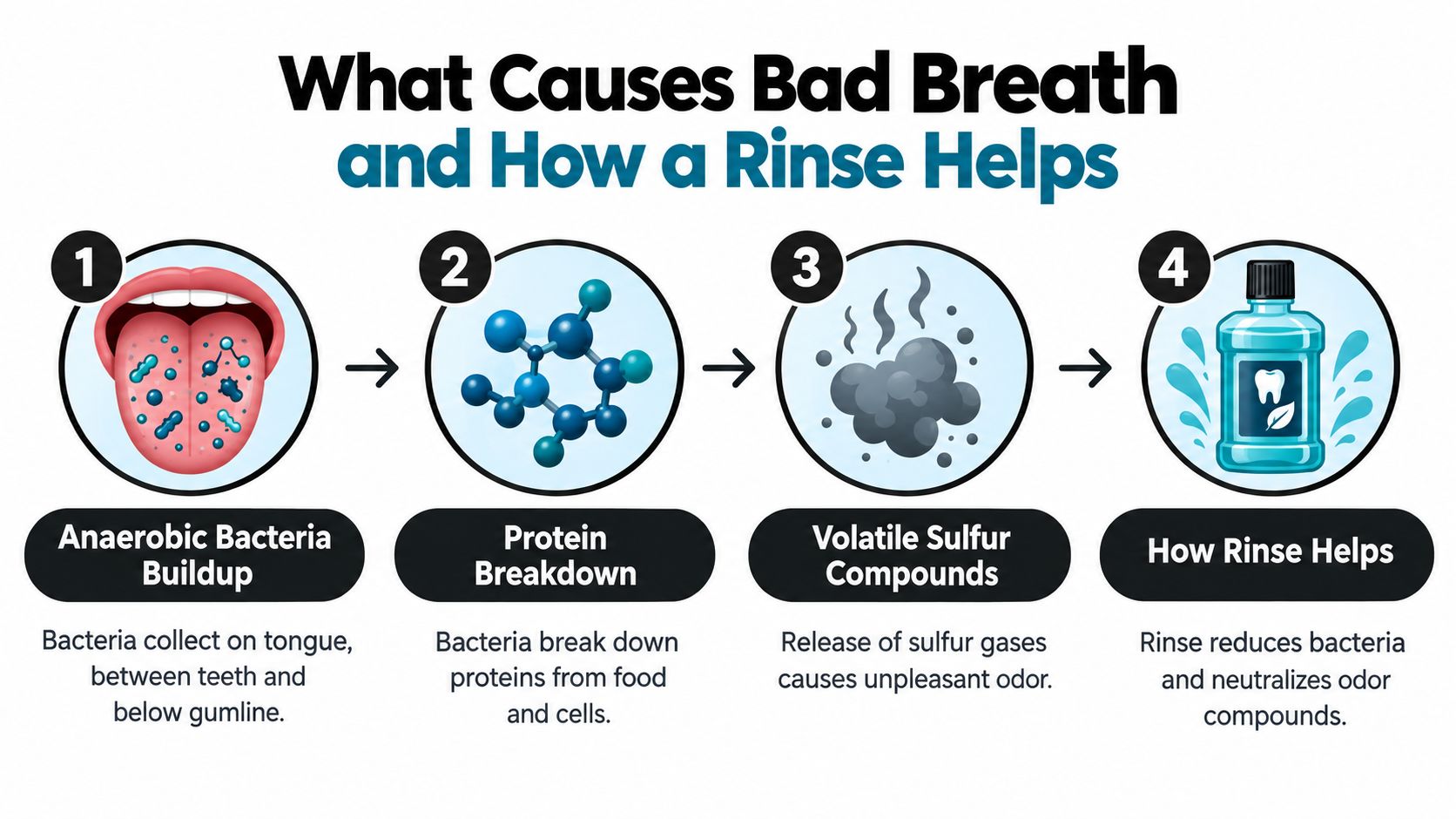
Freshness is a sensory effect. Odor control is a chemistry problem. Bad breath often starts with anaerobic bacteria, which grow in places with little oxygen, including the tongue's grooves and coating, spaces holding food debris, and areas below the gumline when inflammation or periodontal pockets are present. These organisms use proteins from food, saliva, and shed cells as fuel.
The process resembles a compost bin. Protein-rich material in a warm, damp container gives microorganisms something to break down, and the breakdown releases gases. In the mouth, this activity can produce volatile sulfur compounds, including hydrogen sulfide and methyl mercaptan. These compounds smell unpleasant even when mint flavor makes the mouth feel clean.
Where a rinse can intervene
A fresh breath oral rinse may affect several parts of this process:
- It can reduce some bacteria. Antibacterial ingredients may lower organisms involved in odor production.
- It can react with or neutralize sulfur compounds. Zinc matters because it targets the chemistry of sulfur-containing gases.
- It can loosen and carry away some residue. Swishing reaches liquid-accessible areas that a toothbrush may miss.
- It can mask remaining odor. Flavoring changes perception, but it does not provide lasting chemical control.
A rinse has clear limits. It does not remove mature plaque as effectively as brushing and cleaning between teeth, and it cannot reliably reach every area below the gumline. It also cannot repair a decayed tooth, clear an infected gum pocket, or reverse medication-related reduced saliva.
Food, coffee, tobacco, and temporary dryness can cause short-lived odor. Dry mouth deserves attention because saliva helps clear debris and support a healthier oral environment. A strongly flavored rinse may make a dry mouth feel fresher briefly while leaving the cause unchanged.
Clinical evidence supports targeting odor chemistry. A randomized clinical trial of a rinse containing chlorhexidine 0.05%, CPC 0.05%, and zinc lactate 0.14% reported organoleptic scores falling from 2.8 to 1.5, while the placebo group showed no significant change. The finding supports active odor control rather than flavor masking alone.
Active Ingredients That Actually Fight Odor
The ingredient panel often reveals more than the front label. Each active ingredient addresses odor differently, and the strongest formula is not automatically the most suitable for daily use. The practical balance is odor control, comfortable tissues, limited staining risk, and a routine you can follow consistently.
A clinically studied combination is chlorhexidine, cetylpyridinium chloride, and zinc. Evidence from the randomized halitosis trial supports its ability to improve odor scores and target volatile sulfur compounds. Chlorhexidine and CPC influence bacterial activity, while zinc acts on the sulfur chemistry that produces much of the odor.
| Ingredient Family | Primary Action | Typical Concentration | Key Tradeoff |
|---|---|---|---|
| Zinc salts | Binds or neutralizes sulfur-containing odor compounds | Varies by product | Can have a noticeable taste, but alcohol-free formulas may be gentler |
| Chlorhexidine | Broad antibacterial activity | The clinical combination cited above used 0.05% | Stronger clinical role, with staining and taste changes as important drawbacks |
| Cetylpyridinium chloride | Antibacterial activity against organisms associated with plaque and odor | Varies by product | May contribute to staining in some users |
| Essential oils | Antimicrobial action and strong flavor profile | Varies by product | A pronounced taste can feel effective without proving equivalent sulfur suppression |
| Chlorine dioxide | Oxidation-based odor-compound neutralization | Varies by product | Product performance and tolerability depend on the complete formula |
| Alcohol | Solvent, carrier, and short-term antimicrobial contribution | Varies by product | Can create a sharp burn and may aggravate mouth dryness |
Match the ingredient to the problem
Zinc-containing rinses fit people who want to address odor chemistry, particularly those who prefer an alcohol-free formula. A comparative study found that zinc chloride-containing, alcohol-free rinses performed well for immediate halitosis control.
Chlorhexidine has broader antibacterial activity, so dentists generally direct its use rather than recommend it as a casual, long-term freshness rinse. It can also cause staining and taste changes. CPC occupies a middle position, offering antibacterial support without making every product a prescription-style antiseptic.
Essential oils may provide antimicrobial activity and a familiar flavor. A mintier sensation, however, only changes perceived freshness. It does not prove that more sulfur compounds have been neutralized. Chlorine dioxide uses oxidation-based chemistry, but results and tolerability depend on the complete formulation, not that ingredient alone.
Use the label to match the chemistry to your goal, then check the broader formulation and directions. This guide to smart mouth rinse selection provides a practical way to compare ingredients, intended use, and likely tradeoffs.
Real Benefits You Can Expect From Daily Use
Daily rinsing can do more than create a brief mint sensation, provided the formula matches the cause of odor. Some rinses have shown measurable halitosis reduction lasting several hours after one use, but results vary by product and by whether the underlying source is addressed. A fresh flavor signals perception. It does not confirm that odor-producing volatile sulfur compounds have decreased.
Four useful outcomes
First, an effective rinse can reduce volatile sulfur compounds for part of the day. Zinc-containing formulas interact with odor chemistry, while antibacterial ingredients can limit some organisms that produce these compounds. That distinction matters because a cool mouth can feel cleaner without changing the chemistry responsible for odor.
Second, rinsing can add chemical support where cleaning is difficult. Liquid may reach parts of the tongue and areas between teeth, although it cannot replace tongue cleaning or interdental care. Those mechanical steps remove buildup directly. The rinse works as support around them.
Third, daily use may supplement plaque control. Swishing does not scrape established plaque from tooth surfaces, so brushing and cleaning between the teeth remain part of the routine. A rinse is one layer of care, not the whole system.
Fourth, it may make dry or socially demanding moments more comfortable. That comfort can improve confidence, especially when the mouth feels stale. It does not restore saliva flow or correct medication-related dryness, so persistent dryness still needs attention.
| Expected Benefit | Typical Result | Important Caveat |
|---|---|---|
| Immediate freshness | A noticeable mint or clean-mouth sensation | Perceived freshness does not reliably indicate sulfur reduction |
| Odor-compound control | Lower odor for a limited period with an effective formula | Duration varies by active ingredients and the cause of odor |
| Bacterial support | Less activity from some odor-associated organisms | Brushing, interdental cleaning, and tongue care remain necessary |
| Dry-mouth comfort | Temporary relief for some users | Alcohol may worsen dryness, and ongoing dryness needs attention |
A practical trial can last two weeks, while you follow the label and continue brushing, interdental cleaning, and tongue care. Assess whether odor returns less quickly and whether your mouth stays comfortable. Do not use the burning sensation as a scorecard. Alcohol can create a sharper feeling, but intensity is not evidence of greater volatile sulfur compound reduction. If odor persists despite consistent care, the rinse may be masking a problem that requires a dental evaluation.
Safety Considerations and Side Effects to Know
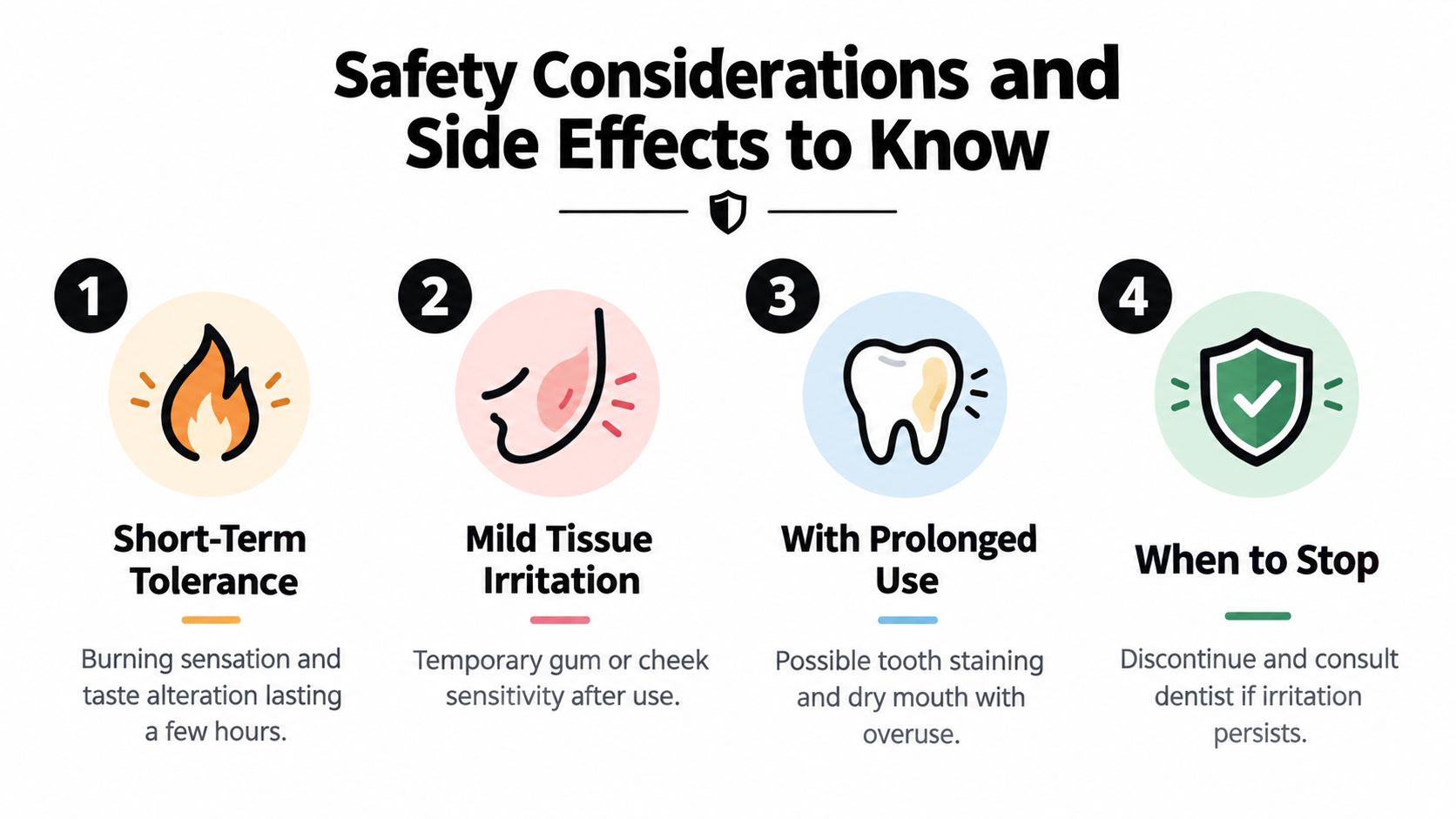
A stronger burn does not prove stronger odor control. A fresh breath oral rinse can cause burning, an altered taste, or mild irritation of the gums and cheeks, especially when canker sores, abrasions, or recently treated tissues are present. Stop using it if discomfort continues, rather than treating intensity as evidence that the formula is working.
Watch for changes with continued use
Staining is a familiar concern with chlorhexidine. CPC-containing products may also contribute to extrinsic staining for some users. Evidence from a systematic review describes increased staining as a tradeoff of effective antiseptic regimens, particularly those containing chlorhexidine (halitosis intervention review). Professional cleaning can often manage surface staining or a brown tongue, but a product that changes your taste or appearance should be reviewed with a dental professional.
Dryness deserves attention too. Alcohol-based formulas may feel harsh and worsen xerostomia for some people. That can work against breath control because reduced saliva already allows odor compounds to build up. People taking antihistamines or antidepressants, or receiving cancer treatment, should ask a dentist or physician about alcohol-free choices and saliva-supportive care.
Use the measured amount
Follow the product label. If its instructions specify it, use the measured amount of 15 to 20 milliliters, swish for 30 seconds, and spit it out. Don't swallow the rinse, dilute it unless the label directs you to, or use it more often because the odor returns.
Children under six, pregnant users, people with alcohol sensitivities, and anyone recovering from oral surgery should consult a dentist or physician before daily use. A clinician should also direct chlorhexidine use, especially when the aim is ongoing freshness rather than a defined short-term treatment.
Stop and get advice: Persistent irritation, swelling, sores, unusual bleeding, or worsening dryness needs professional attention, not a different flavor.
How to Choose the Right Fresh Breath Oral Rinse
Begin with the outcome you want. A cosmetic rinse can make sense before a meeting, meal, or social event when you need short-term flavor control. A therapeutic rinse is more appropriate when odor keeps returning and you want ingredients that address bacteria or volatile sulfur compounds.
A practical label-reading sequence
- Define the problem. If odor is occasional, prioritize comfort and tolerability. If it is persistent, look for an active ingredient and consider a dental assessment.
- Read the active-ingredient panel. Look for zinc salts, CPC, or a clinically directed chlorhexidine formula. Essential oils may suit users who value antimicrobial support and their characteristic flavor, but don't select them solely because they taste strong.
- Decide about alcohol. An alcohol-free formula is often the more comfortable choice for dry mouth, sensitive tissues, or frequent use. Alcohol-based products may feel sharper, but the sensation shouldn't be confused with better odor control.
- Check secondary goals. If cavity prevention matters, look for fluoride. If your mouth is easily irritated, consider a gentler formula and avoid unnecessary intensity.
- Review professional guidance. In the United States, an ADA-approved mouthwash guide can help you understand what professional acceptance means when comparing products.
| Factor | Alcohol-Based | Alcohol-Free |
|---|---|---|
| Mouthfeel | Sharper bite or warming sensation | Usually milder |
| Dry-mouth concern | May be less suitable for people prone to dryness | Often preferable when dryness is a concern |
| Odor chemistry | May contribute to short-term antimicrobial action | Can use zinc or other odor-targeting ingredients without alcohol |
| Sensitive tissues | More likely to feel irritating for some users | Often easier to tolerate |
| Best fit | Occasional use when comfortable and appropriate | Regular use for many people with sensitivity or xerostomia |
If your mouth is sensitive, choose alcohol-free first, select a formula with a clear odor-control active, and stop if burning or dryness develops. If your gums bleed, your tongue stays heavily coated, or the odor persists, product selection should follow an evaluation rather than replace it.
Building a Daily Routine That Actually Works
Use the rinse as the final support for a clean mouth, not as a shortcut around cleaning. A practical morning routine starts with brushing, followed by cleaning between teeth and gently cleaning the tongue. If your toothpaste contains sodium lauryl sulfate, avoid rinsing immediately after brushing because the toothpaste ingredients may interfere with some rinse formulas. Follow the product directions, and consider separating the steps by 30 minutes when the label or dental professional recommends it.
The rinse itself should be measured rather than poured by guesswork. Use the labeled amount, swish for 30 seconds, spit, and don't rinse with water immediately afterward unless the product directions say otherwise. Avoid eating or drinking for the period stated on the label, often 15 to 30 minutes, so the active ingredients aren't quickly removed.
Two routines, two purposes
For baseline odor support, use the product at the point in your morning routine that preserves the toothpaste benefit and follows the label. A second scheduled use may be appropriate if the label permits it, but more frequent swishing isn't automatically better.
For a post-meal or coffee refresh, first remove obvious debris with water, brushing, or interdental cleaning when possible. A rinse can then provide temporary freshness, but layering several different rinses back to back may increase irritation without adding a proven benefit.
Families often disagree about whether rinsing belongs before or after brushing. This explanation of proper mouthwash order for families can help you choose a consistent sequence, while the product label remains the final authority for that specific formula.
Routine reminder: A rinse can reach liquid-accessible surfaces, but it can't floss a contact point or brush plaque from a tooth.
When a Rinse Is Not Enough and What to Do Next
If bad breath continues despite consistent hygiene, stop treating the bottle as the diagnosis. Review tongue cleaning, interdental technique, hydration, and possible medication-related dryness first. Then arrange a dental visit if the odor remains, especially when it occurs with a coated tongue, dry mouth, bleeding gums, sour or metallic taste, pain, or swelling.
A dentist can assess periodontal disease, decay, trapped debris, and other oral causes. A primary care clinician may be appropriate when dental findings don't explain the odor and symptoms suggest reflux, sinus disease, medication effects, or another medical issue. The rinse remains useful as an adjunct, but it shouldn't conceal a condition that needs treatment.
Choose an alcohol-free, odor-targeting formula when dryness or sensitivity is a concern. Choose stronger antiseptic options only with appropriate professional guidance, and judge performance by odor control and comfort rather than mint intensity.
DentalHealth.com offers professional-grade at-home dental-care products and practical guidance for comparing rinses, sensitivity products, fluoride care, and other oral-health tools. Visit DentalHealth.com to explore fresh-breath options, read product information, and choose a routine that supports brushing, interdental cleaning, and professional care.