
GLO Science Teeth Whitening: How It Actually Works
GLO Science uses a specialized mouthpiece with warming heat and blue LED light to activate hydrogen peroxide gel, typically lightening teeth by about 5 shades in just a few days. In a clinical trial, users achieved an average improvement of 4.8 shades in 5 days, with no reported sensitivity in the GLO group (clinical summary).
You may be considering whitening after noticing coffee-colored edges around your retainers, a dull smile in photographs, or staining that returned after professional treatment. The difficult part isn't finding a whitening product. It's deciding whether you need a first treatment, a gentler touch-up routine, or advice before using peroxide at all.
GLO Science positions its system between low-cost whitening strips and chairside bleaching. Its heated, illuminated mouthpiece is designed to make home whitening more controlled, while the broader clinical record gives consumers more information than a package promising a brighter smile without explaining how the process works. The most useful question, however, isn't only whether GLO can whiten teeth. It's whether the system makes sense for your long-term maintenance routine.
What Is GLO Science Teeth Whitening
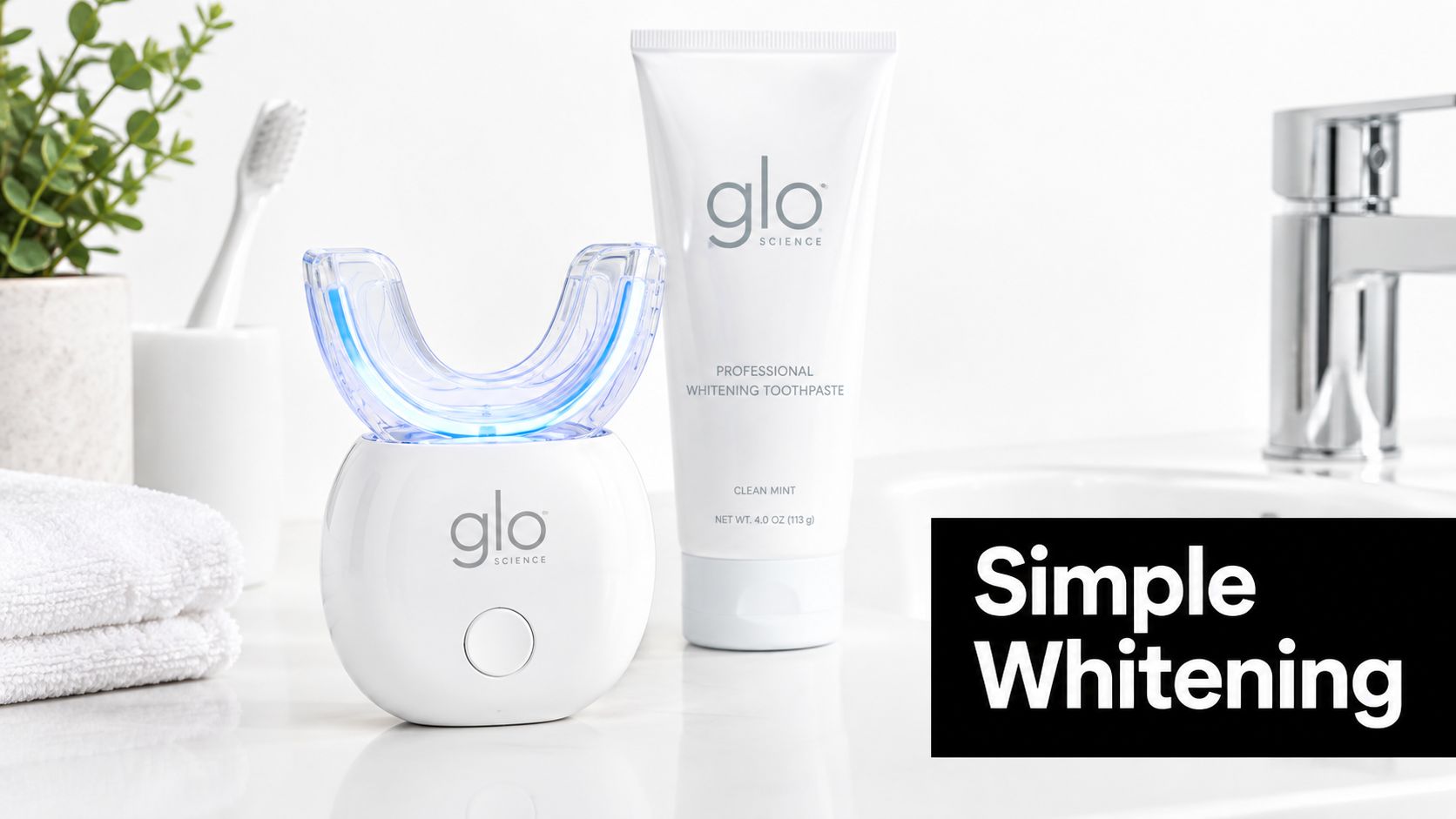
A common whitening decision starts with a familiar scene. You brush regularly, your teeth feel healthy, but coffee, tea, food, or time has changed the shade of your smile. Whitening strips seem convenient, while professional treatment may feel expensive or too intense. GLO Science offers another route, a home system built around peroxide gel and a reusable mouthpiece that adds warming heat and blue LED light.
The system is intended to bring some features associated with professional whitening into a home routine. That doesn't make it identical to treatment performed in a dental office, and it doesn't mean every person will get the same result. Tooth color depends on the type of stain, the condition of the enamel, existing dental work, and how evenly the gel contacts the teeth.
A bridge between strips and office treatment
Think of three people with the same cosmetic concern. One wants the lowest-cost option and accepts a slower, simpler routine. Another wants a dentist-directed treatment with close supervision. The third wants a device at home that feels more engineered than a strip but doesn't require sitting in a dental chair. GLO is designed for the third situation.
The brand's development history supports the idea that this isn't a newly assembled gadget. GLO Science documents clinical work beginning with a pilot study at Boston University in 2010, followed by university-based studies in 2012 and later comparative trials (GLO Science's clinical studies overview). Its U.S. patent portfolio includes an intra-oral whitening device, oxygen-sealing mouthpiece designs, and later closed-system and wireless mouthpiece technologies.
That history matters because the mouthpiece is central to the product. It helps keep the gel positioned against the teeth while the device applies its heat and light. A properly fitted, closed system may also reduce the mess associated with loose trays or unevenly applied strips.
If you want a broader explanation of how dentist-supervised and home systems differ, this guide to professional teeth whitening provides useful context. GLO can be considered professional-grade in its design, but responsible use still begins with realistic expectations and an assessment of your dental health.
Practical rule: A whitening device can change the shade of natural teeth, but it won't change the color of crowns, veneers, fillings, or bonding.
How GLO Science Teeth Whitening Works
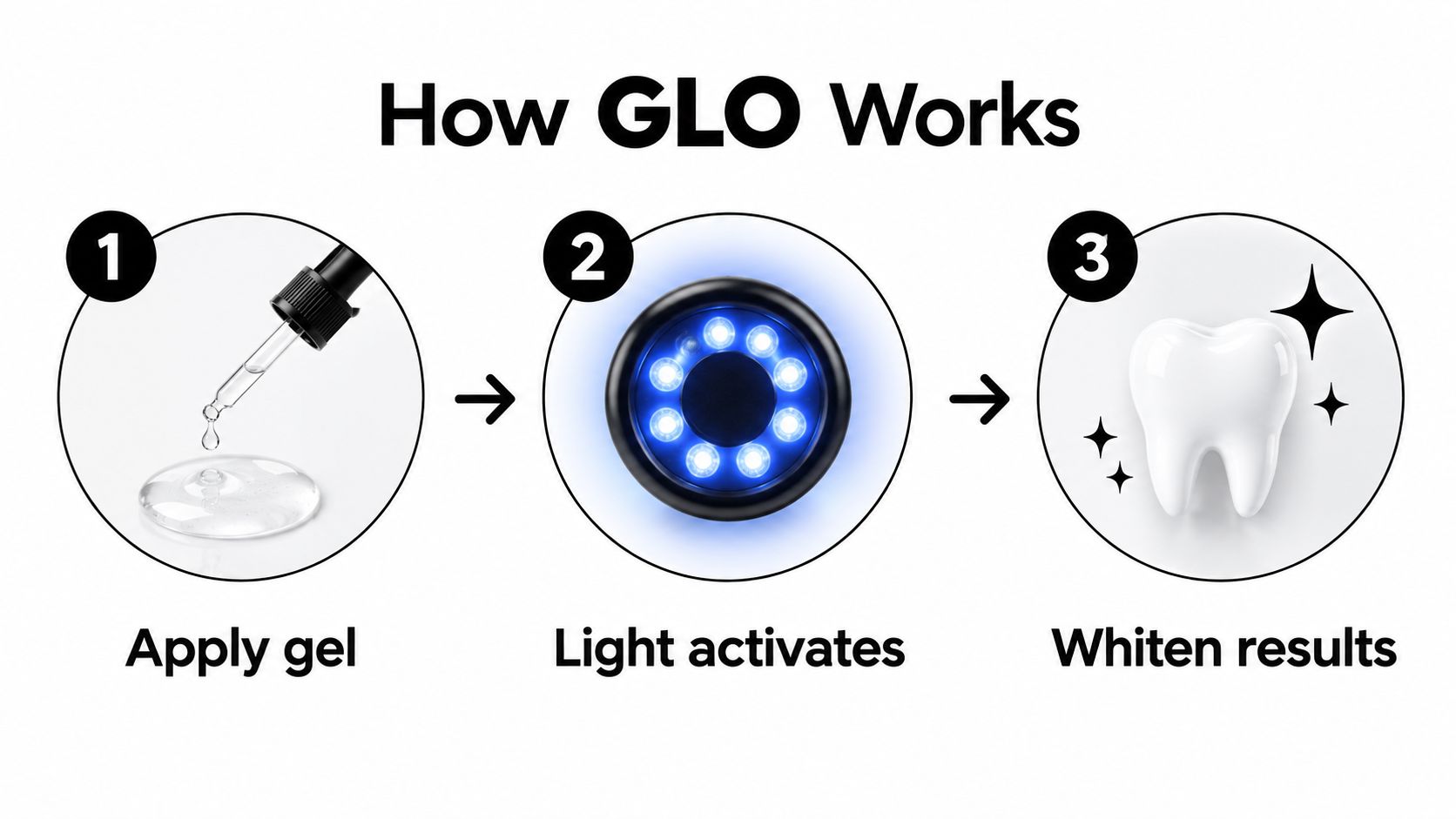
GLO's process is easier to understand when you separate the job into three parts: gel, heat, and light. The gel supplies hydrogen peroxide, which reacts with stain molecules. The mouthpiece then adds controlled warming and blue LED light to support the whitening process.
The three parts of the routine
- Apply the gel: The whitening gel is placed where it can contact the visible tooth surfaces. Coverage matters because missed areas may remain darker than the rest of the smile.
- Position the mouthpiece: The closed-system mouthpiece holds the gel against the teeth and helps create a more contained application. Follow the product instructions rather than adding extra gel, extending sessions, or improvising a different schedule.
- Activate the system: GLO combines gentle warming heat with blue LED light. The company says the heat brings the gel toward an optimal temperature, helping it penetrate tooth surfaces more effectively, while the light is intended to accelerate hydrogen peroxide performance and support faster whitening with less sensitivity (GLO Professional's explanation of the mechanism).
The heat isn't meant to “cook” the teeth or open enamel like a door. That popular comparison is too literal. A safer explanation is that warming changes the conditions around the gel, while the peroxide performs the chemical work of breaking down stain compounds. The blue light is part of the system's activation approach, not a replacement for peroxide.
What the light can and can't do
Blue LED technology often causes confusion. The light doesn't bleach teeth by itself, and it doesn't remove tartar or repair enamel. It works within a system that includes peroxide gel, contact with the tooth surface, and a prescribed treatment routine.
A useful explanation of the role of LED devices appears in this overview of LED teeth whitening kits. The key point is simple: the device may help the gel work efficiently, but the gel remains essential.
The mouthpiece also matters for comfort. A closed design can help keep peroxide away from the gums when the gel is applied correctly. If gel spills onto the gumline, wipe it away and stop if you feel burning, persistent irritation, or unusual pain. A brighter result isn't worth ignoring a warning sign.
Clinical Evidence and Real-World Results
Suppose you finish an initial whitening cycle, see a clear shade change, and then wonder how long it will last. The available GLO evidence helps describe the first result, but it does not establish a fixed touch-up schedule. Your starting shade, stain type, application technique, and any dental work can all affect what you see.
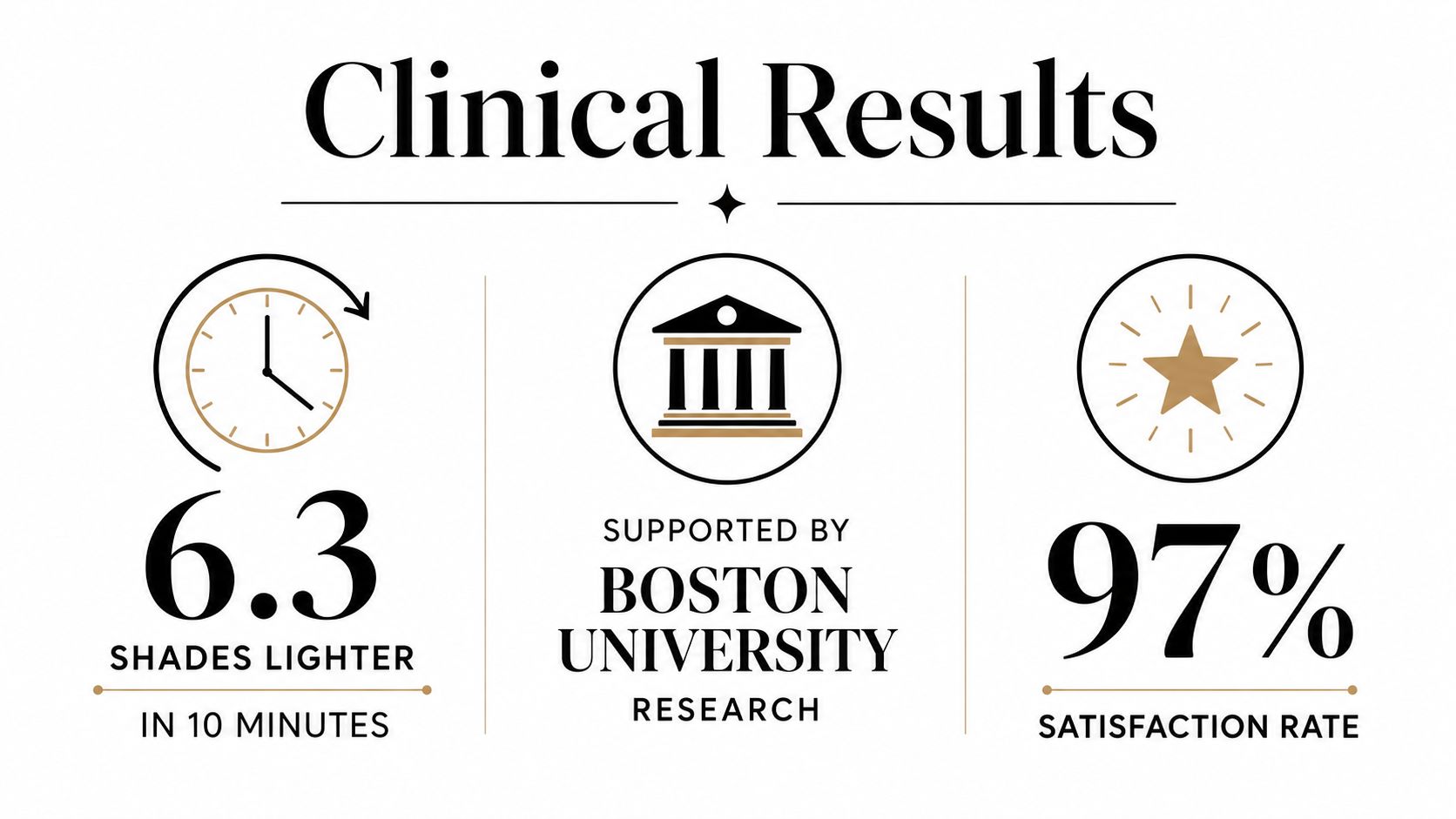
A randomized trial followed 12 participants on Day 3, Day 5, Day 7, and Day 30. During the initial five-day cycle, the group showed an average improvement of 4.8 shades, while more than 50% of subjects showed a 5 to 7 shade improvement. These figures describe initial treatment under study conditions, not the shade you should expect to preserve indefinitely or the frequency of monthly upkeep (GLO's competitive clinical evidence).
How to interpret the comparison
A separate trial summary reported 30% greater whitening than Crest 3D White Whitestrips over 10 days. It also reported average improvement of 4.8 shades for GLO compared with 3.7 shades for the strips, and 0% of GLO users reporting sensitivity. These comparisons describe results from a defined treatment period. They do not show how often either option must be used later to maintain the result.
The practical distinction is simple. GLO may serve as the tool for an initial whitening cycle, while later use may function as periodic upkeep when stains return. The published evidence does not determine an individual monthly schedule, nor does it show whether GLO costs less than strips for repeated touch-ups.
Another randomized, examiner-blinded trial cited by GLO reported comparable whitening efficacy to Zoom in-office whitening after 5 days. More than 50% of subjects reported a 5 to 7 shade improvement, and 0% reported severe to extreme pain (GLO's clinical study summary). “Comparable” describes that reported trial outcome. It does not replace an examination, professional cleaning, or care for dental disease.
What the results don't promise
A shade change is temporary, and whitening does not make every type of discoloration respond in the same way. Fillings, crowns, enamel wear, and untreated cavities may remain visibly different after natural teeth brighten.
For a practical explanation of variation in professional teeth whitening results, compare the clinical findings with real-world expectations. GLO appears to be a credible option for an initial treatment or later maintenance, but the right choice depends on your teeth, your sensitivity risk, and how often you are prepared to manage returning stains.
Safety Profile and Sensitivity Concerns
A patient with sensitive teeth may worry that whitening will turn a mild concern into sharp, lingering pain. Peroxide can temporarily irritate the tooth nerve or gums, particularly if it reaches exposed areas or remains in place beyond the instructions. GLO uses a contained mouthpiece, controlled warming, and a prescribed gel routine intended to limit that exposure. Comfort still varies, so the system cannot guarantee a symptom-free experience for everyone.
The cited clinical summaries describe no sensitivity in the GLO group and 0% reporting sensitivity in the comparative summary, as noted earlier. Those findings are encouraging, but they do not remove individual risk. Exposed roots, cracked enamel, inflamed gums, decay, or recent dental work can make peroxide whitening uncomfortable or inappropriate. A dental examination can identify these concerns before treatment.

Comparing common approaches
| Approach | Main strength | Main concern |
|---|---|---|
| GLO mouthpiece and gel | Holds gel in place while combining warming heat with blue LED activation | Requires accurate gel placement and careful use of the instructions |
| Whitening strips | Simple and widely available | May miss some tooth surfaces and irritate the gums |
| Traditional trays | Can spread gel across many surfaces when fitted well | Excess gel or a poor fit can expose the gums and increase sensitivity |
| In-office whitening | Provides professional oversight during treatment | Requires an appointment and may not fit every budget or schedule |
Protecting your teeth during treatment
Apply the recommended amount of gel and follow the stated treatment duration. More peroxide does not automatically produce better whitening. Longer sessions can increase irritation without a matching improvement.
Stop if you develop sharp pain, burning gums, or sensitivity that persists. Contact a dentist if you have untreated dental symptoms. Discomfort may come from whitening, decay, a leaking restoration, or gum disease, and those problems need different care. Whitening also cannot strengthen damaged enamel or correct an uneven bite.
For the maintenance decision, this safety distinction matters: GLO may be used for an initial cycle or later touch-ups, but repeated use should fit your dental condition and tolerance rather than follow a fixed monthly assumption.
Long-Term Maintenance and Usage Tips
Whitening is better understood as a recurring cosmetic routine than a permanent change. Even after a successful initial cycle, ordinary exposure to coffee, tea, strongly colored foods, and other staining habits can gradually affect the appearance of natural teeth. The practical question is not whether results will last forever. It's how you can maintain the shade without treating more often than your teeth and gums tolerate.
GLO's FAQ describes a 5- to 7-day treatment window and claims an average five-shade improvement (GLO Science's whitening FAQ). That information describes the initial routine, not a universal schedule for repeated treatment. The appropriate timing for touch-ups depends on your stain exposure, sensitivity, dental history, and the instructions supplied with the product.
Decide whether you're starting or maintaining
GLO can serve two different roles. As an initial system, it may suit someone who wants a structured home treatment and has natural teeth that are healthy enough for whitening. As a maintenance device, it may appeal to someone preserving the appearance achieved after professional whitening, aligner treatment, or earlier home bleaching.
Those roles shouldn't be confused. A person with heavy new staining may need a full treatment cycle rather than occasional touch-ups. Someone whose smile is already close to the preferred shade may need less frequent intervention, but there isn't enough public evidence to prescribe one schedule for everyone.
Maintenance principle: Use the smallest amount of retreatment that preserves your preferred shade, and let sensitivity guide you before the calendar does.
A simple routine can protect the result without turning whitening into a constant project:
- Reduce contact time with staining drinks: Use water after coffee or tea, and brush according to your normal dental routine rather than scrubbing aggressively.
- Keep aligners and retainers clean: Residue held against teeth can make a smile look dull and may complicate a whitening routine.
- Record your starting shade: A consistent photo in similar lighting can help you decide whether retreatment is truly needed.
- Stop when sensitivity appears: Don't continue just because a product schedule suggests another session.
Lower-cost strips or tray systems may be reasonable for some maintenance users, especially when the goal is a modest touch-up. GLO's potential advantage is the contained, device-assisted routine. Its unanswered question is long-term value, because public consumer guidance rarely explains how many retreatments a person may need over months or how GLO compares with less expensive options for repeated use.
Where to Buy and Final Recommendations
GLO Science makes the most sense for a specific type of buyer. You may prefer it if you want a home whitening system with a dedicated mouthpiece, warming heat, blue LED activation, and clinical evidence describing a substantial shade change over a short initial routine. You may also value it as a controlled touch-up tool after professional whitening, provided a dentist has confirmed that your teeth and gums are suitable.
It may be less suitable if you have untreated pain, active gum problems, exposed roots, extensive restorations, or expectations of permanent whitening. It also may not be the most practical choice if you only want an occasional low-cost refresh and don't care about using a device.
A sensible buying checklist
Before ordering, confirm the following:
- Your teeth are healthy enough to whiten: Address decay, gum inflammation, cracks, and unexplained pain first.
- Your goal is clear: Decide whether you're completing an initial treatment or maintaining an existing shade.
- The product is authentic: Purchase through a reputable dental retailer or a source that provides clear product details and usage instructions.
- Replacement gel is available: A device is only useful for maintenance if you can obtain the compatible gel and follow its storage and application directions.
- Your restorations are visible: Crowns, veneers, fillings, and bonding won't necessarily change color with peroxide, so whitening may reveal a mismatch.
DentalHealth.com sells GLO Brilliant Personal Teeth Whitening System products, including the device and gel refill kits, alongside other professional-grade at-home dental care products. Comparing the available GLO components, checking instructions, and choosing the product that matches your maintenance goal is more useful than buying based only on a promised shade change.
The evidence supports GLO as a serious home whitening option, not a magic treatment. Start with a dental check when there are symptoms, follow the treatment directions closely, and treat maintenance as a measured routine rather than an endless pursuit of a brighter shade.
If you're ready to compare GLO device and refill options for an initial treatment or ongoing touch-ups, visit DentalHealth.com to review the available professional-grade whitening products and practical dental care resources. Choose the system that fits your sensitivity needs, existing restorations, and long-term maintenance plan.