
GUM Technique Deep Clean Toothbrush: Guide & Proper Use
You brush twice a day, yet your gums may still bleed when you floss or feel tender after cleaning. The problem is often not a lack of effort. It's that the narrow border where each tooth meets the gum is difficult to reach without pressing too hard.
The GUM Technique Deep Clean toothbrush is designed around that access problem. Its tapered bristles are intended to reach tight areas near the gumline, but the brush can only work well when you place it correctly. A deep clean comes from angle, light pressure, systematic coverage, and cleaning between teeth, not from scrubbing harder.
The Challenge of Reaching the Gumline
The visible parts of the teeth typically receive more time. The front surfaces and chewing surfaces get attention before moving on. The less obvious area, where the tooth disappears beneath the gum edge, is harder to see and easier to miss.
That shallow space is called the gingival sulcus. Plaque can collect there because the surface curves away from the brush, especially around crowded teeth, back molars, and areas where the gumline is uneven. If plaque remains, the surrounding tissue can become inflamed. Bleeding, tenderness, or sensitivity may then appear during brushing or interdental cleaning.
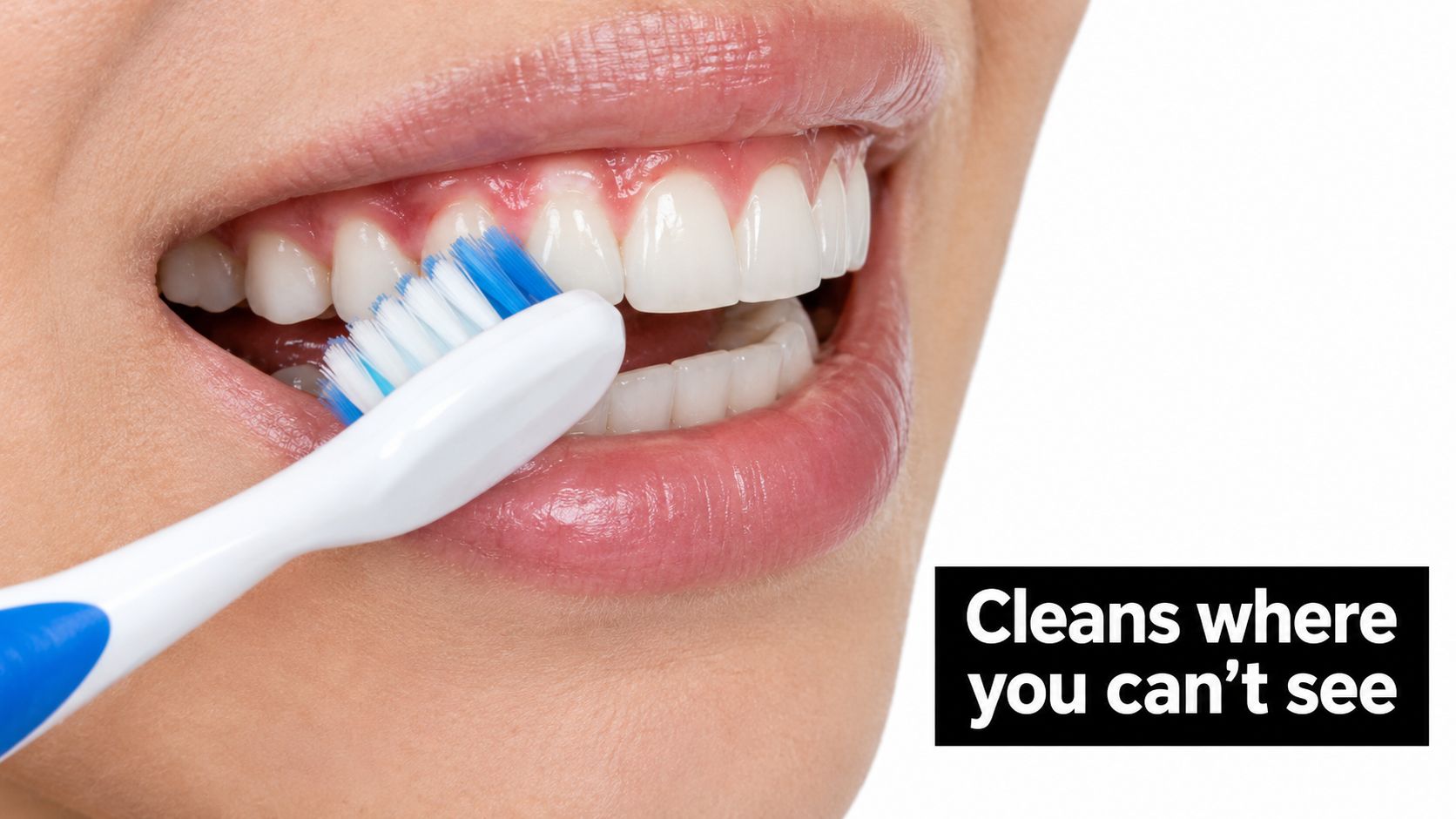
A conventional flat-trim brush may clean broad tooth surfaces effectively, but its bristle ends don't always enter narrow contours at the cervical margin, the area near the gumline. Pressing harder doesn't solve that physical limitation. It can bend the bristles against the tooth and gum, increasing irritation while leaving the most difficult areas untouched.
Access matters more than force
Think of plaque at the gumline as dust in a tight corner. A larger, rigid brush head may cover the room quickly, but it won't necessarily reach into the corner. A slimmer, tapered tool can enter that space with less pressure.
The GUM Technique Deep Clean toothbrush addresses this with soft, extremely tapered bristles. Its purpose isn't to encourage a more aggressive brushing style. It gives you a better chance of reaching the gum margin while you use a controlled motion.
The same principle applies to oral-health education more broadly. A dental practice that explains specific, practical prevention advice can also make it easier for local patients to find useful guidance online. Resources about getting found by local patients offer context on how clear educational content supports that connection.
Watch the demonstration below for a visual example of controlled gumline brushing. Focus on where the bristles sit, not on how quickly the hand moves.
The important change is simple: treat the gumline as a separate cleaning zone. Instead of sweeping past it while brushing the tooth, position the brush so the soft tapered tips can work at the border. That shift in attention is more important than the label “deep clean” on the handle or packaging.
Understanding the GUM Technique Deep Clean Design
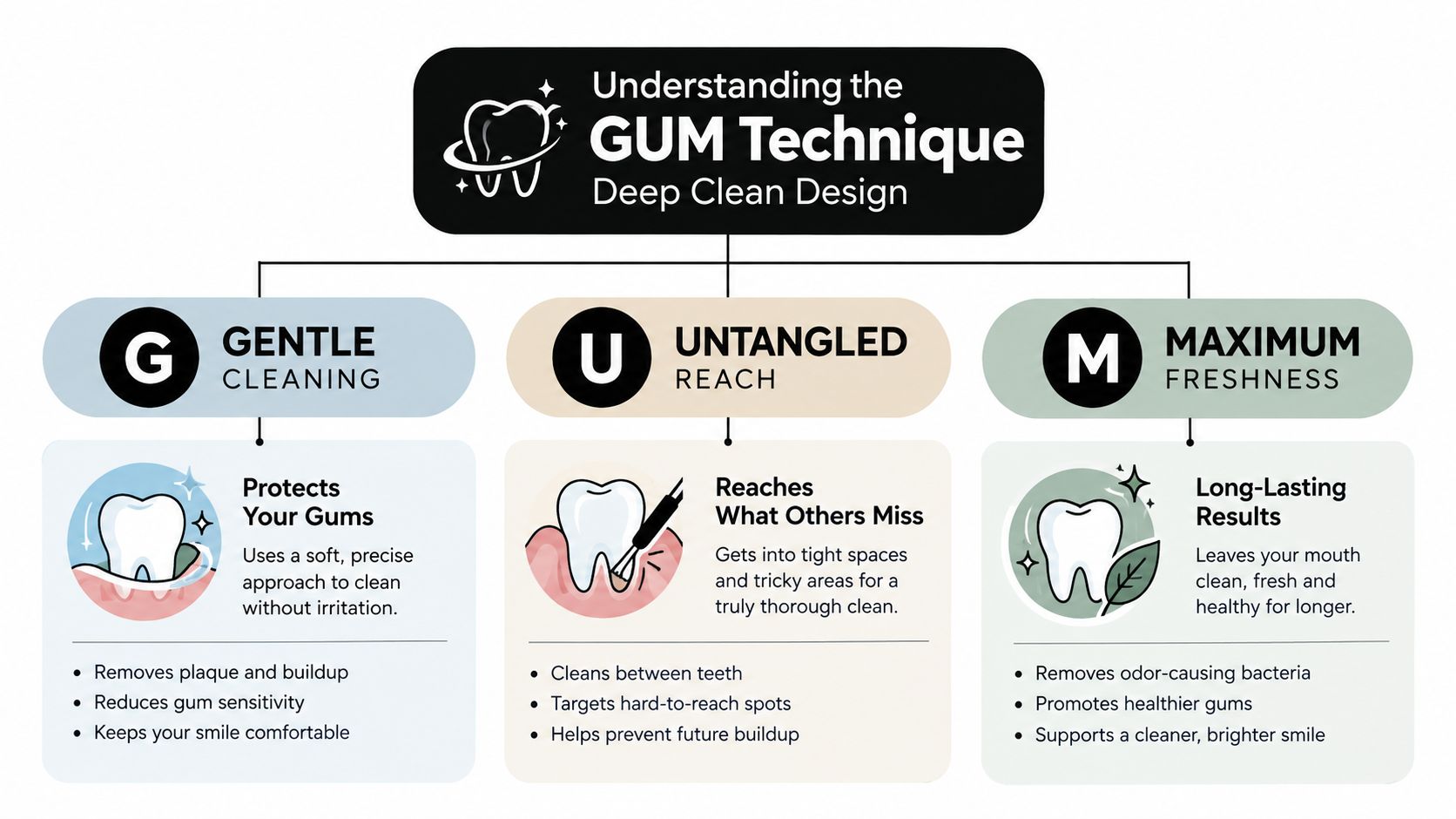
The GUM Technique Deep Clean toothbrush is built to reach narrow spaces without relying on stiff filaments. Its bristles are soft and extremely tapered, narrowing to a rounded 0.01 mm tip. Product specifications report approximately 2.75 mm of penetration into the gingival sulcus, with coverage extending up to 9.63 mm along the gingival margin and between teeth. These are design specifications, not a promise that every user will remove plaque to those depths.
What the tapered tip is meant to do
A flat-trim bristle ends in a broader surface. When it meets an uneven gumline, it may contact the outer edge while missing the recessed contour beside the tooth. A tapered filament behaves more like a fine brush used for reaching into a narrow seam. Its shape is intended to improve contact in areas that a conventional filament may not reach, particularly around the cervical margin and shallow spaces between teeth.
The reported dimensions come from the manufacturer's professional product specifications, available in the GUM professional product catalogue. They describe the potential reach of the bristle geometry. They don't account for differences in tooth anatomy, gum contours, brushing angle, pressure, or how consistently someone cleans.
The handle also matters because a precise angle is easier to maintain with a controlled grip. The Quad-Grip handle is designed to encourage a stable hold, which can help you place the bristles partly on the tooth and partly toward the gumline. For background on the product and its place among manual brushes, see this GUM Sunstar toothbrush overview.
Why the specifications shouldn't change your pressure
A deeper reach doesn't mean you should push the brush into the gum. The tapered tips are intended to enter the target area through placement and flexibility. If you force them downward, you may irritate tissue instead of improving plaque removal.
Independent manual-brush comparisons have often found that bristle patterns can produce similar overall plaque and gingival outcomes when brushing time and technique are controlled. That finding supports a sensible interpretation: the design may help with targeted access, but your method determines whether that potential becomes useful daily cleaning.
Mastering the Modified Bass Brushing Technique
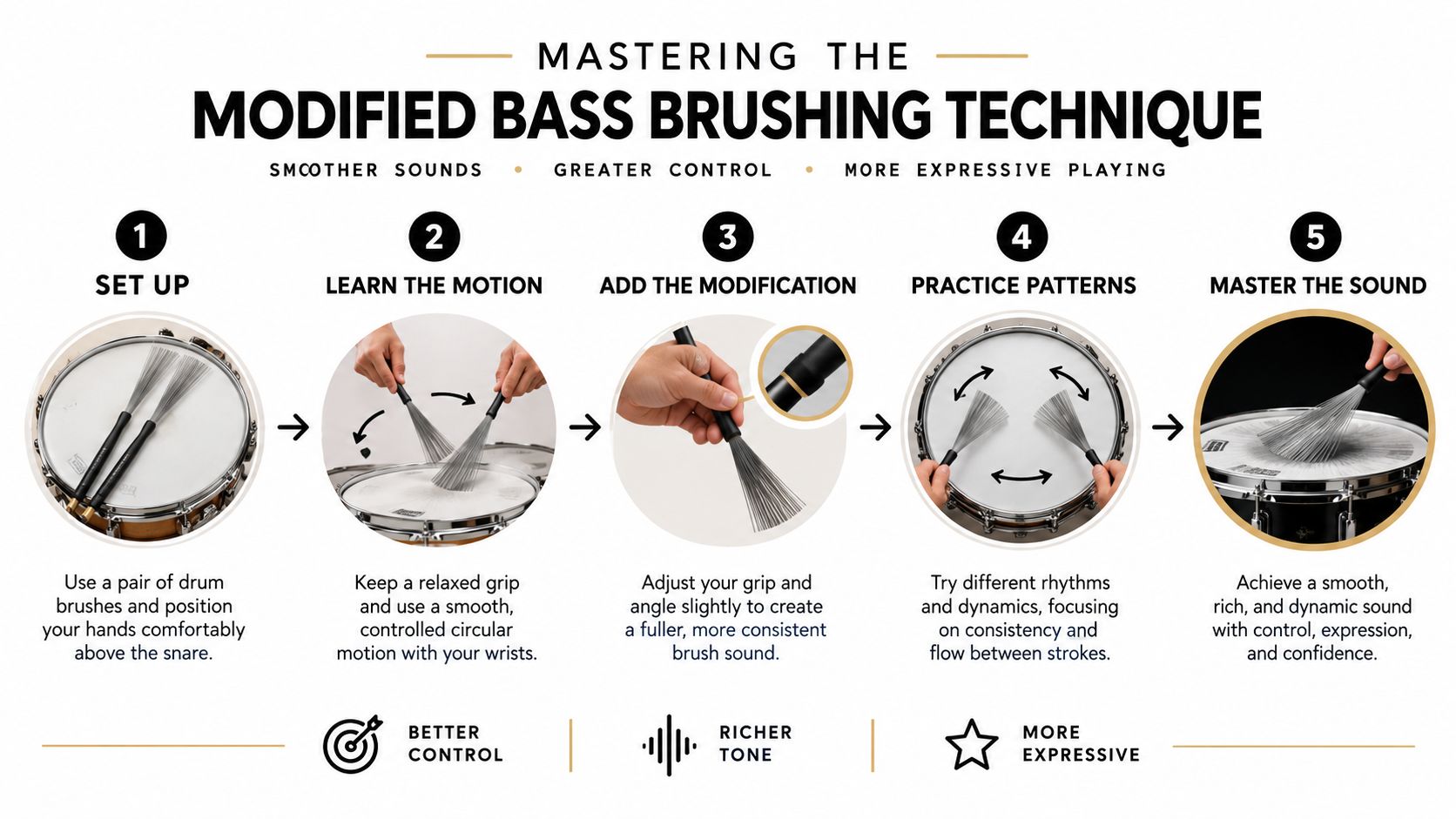
If the gumline still feels rough after brushing, the issue may be placement rather than effort. The modified Bass technique directs the bristles toward this narrow border, where tooth and gum meet, so the tips can loosen plaque with small, controlled movements.
Use the brush like a tool for polishing a delicate edge. Slow, accurate contact works better than scrubbing harder.
Set the angle before you move
Apply a small amount of fluoride toothpaste and hold the brush with a relaxed grip. Place the bristles at roughly a 45-degree angle to the gumline. Some bristles should rest on the tooth, while the tapered ends point toward the gum margin.
Follow this sequence:
- Begin at the outside of the back teeth. Work on a small section instead of sweeping across several teeth.
- Use short vibrating or tiny circular motions. Keep the movement gentle and controlled. Harsh scraping sounds usually indicate excessive pressure.
- Pause briefly at the gumline. Give the bristles time to contact the border rather than rushing across it.
- Move systematically. Cover the outer, inner, and chewing surfaces, including the backs of the last teeth.
- Adjust for the inside surfaces. Turn the handle as needed so the bristles remain directed toward the gumline.
- Brush for about two minutes, twice daily. The Cochrane review of powered toothbrushes reports that brushing outcomes are influenced by duration, surface coverage, pressure, regular use, and cleaning between teeth.
Use a coverage pattern you can repeat
A repeatable route helps prevent skipped areas, especially along the inner gumline. For example, start with the upper outer surfaces, continue around the lower outer surfaces, then clean the inner surfaces and chewing areas. The particular route matters less than following it consistently.
Practical rule: If the bristles bend significantly, reduce your pressure.
Let the brush move slowly from one small section to the next. A powered toothbrush supplies the movement, but you still guide its head along the gumline. With a manual brush, you control each short stroke. In both cases, the modified Bass angle and light contact determine how well the bristles reach tight corners.
Sensitivity calls for less pressure and shorter contact, not more force. Persistent soreness, bleeding, or increasing gum recession should be assessed by a dental professional, who can check the area and your technique.
Why Soft Bristles Beat Hard Scrubbing
A brush can leave your gums sore even when your teeth feel exceptionally clean. “Deep clean” describes the goal, not the force required. Repeated horizontal scrubbing with firm bristles can irritate gum tissue and wear the exposed surface of a tooth, particularly near the gumline.
Soft bristles work more like flexible fingers reaching into tight corners. They can adapt to the gum margin without being forced into it. Tapered filaments may enter narrow contours, but their geometry does not replace technique. Hold the brush at the modified Bass angle and use light, controlled contact so the bristle tips work at the plaque-retaining border.
What the evidence actually supports
Powered toothbrushes can improve plaque control and gum health compared with manual brushing. A 2014 Cochrane systematic review analyzed 56 randomized trials and found statistically significant plaque reductions in both short-term and long-term results, along with improvements in gingivitis. Those findings describe average group outcomes, not a promise that a more powerful setting or harder pressure will suit every mouth.
The practical lesson is specific: let the brush movement do the work. Increasing pressure can flatten the filaments, reduce their ability to reach the gum margin, and press abrasive toothpaste against the same area. A lighter touch preserves the intended shape of soft bristles and reduces unnecessary friction.
A deep clean should feel precise, not punishing.
People with tenderness or exposed roots can start with soft filaments and compare options using this guide to toothbrushes for sensitive gums. Stop and seek dental advice if bleeding persists, sensitivity worsens, the gums appear increasingly recessed, or brushing causes soreness that does not settle. A toothbrush cannot diagnose gum disease, and changing products cannot replace an examination when symptoms continue.
The Essential Role of Interdental Cleaning
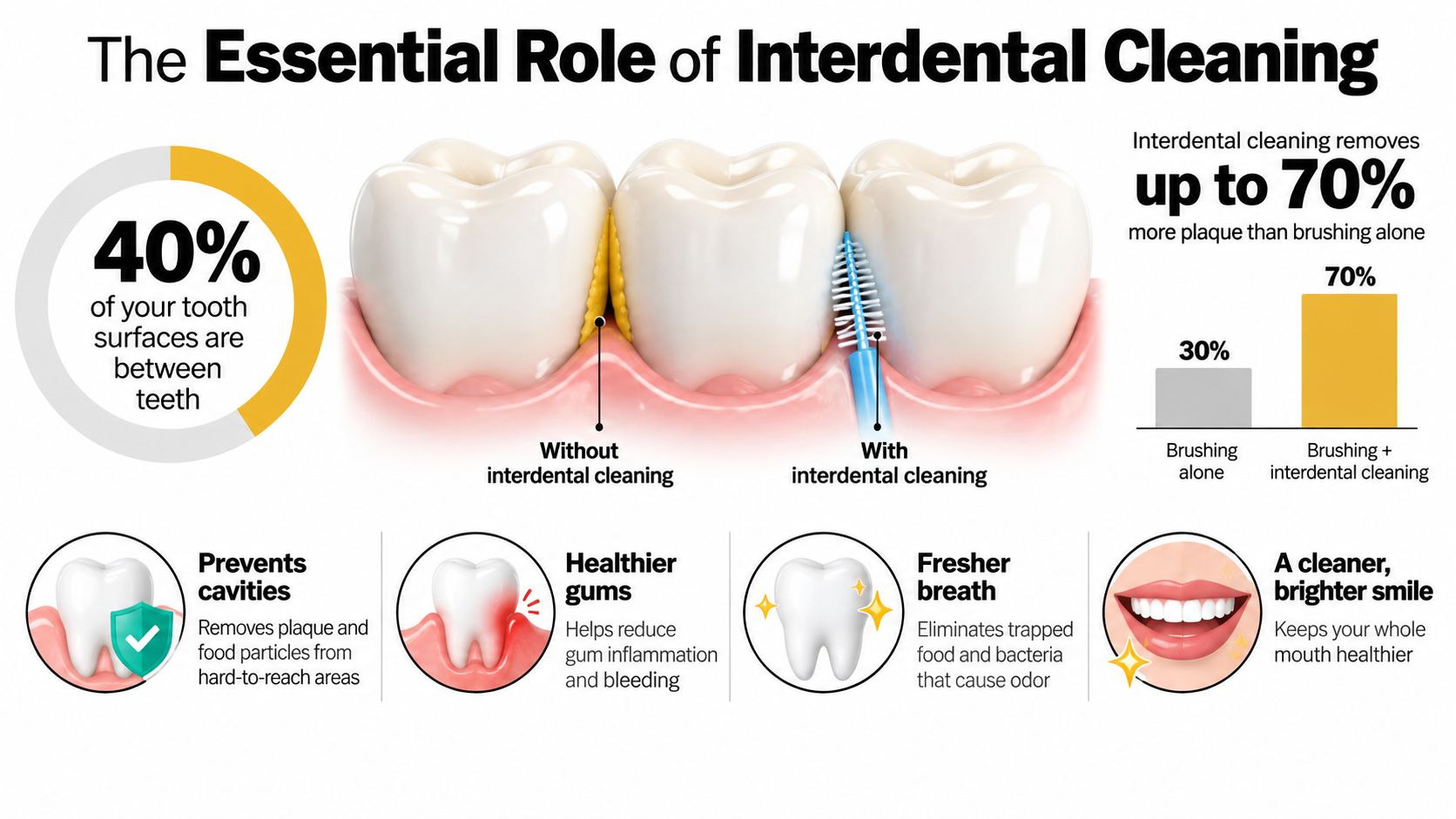
A toothbrush cleans the surfaces it can physically touch. It can't pass through a tight contact point between two teeth, so even a carefully angled gumline brush won't remove all plaque from the full proximal surface.
That's why a complete routine pairs brushing with an interdental tool. Floss can slide through tight contacts, while an interdental brush may be more practical where there is enough space for the bristles to enter. The correct choice depends on the shape and size of each gap, not on which tool is most popular.
Choose the tool that fits the space
Don't force an interdental brush into a tight gap. A brush that is too large can injure the gum, while one that's too small may not clean the sides effectively. A dental hygienist can measure or recommend suitable sizes, particularly if you have bridges, implants, orthodontic appliances, recession, or irregular spaces.
A 2025 survey by the International Federation of Dental Hygienists included 663 respondents across 34 countries. It found that 41% of hygienists said most or all patients needed better interdental cleaning, while 35% said many patients did. The survey identified lack of motivation at 90%, improper technique at 82%, and fear of gum bleeding at 81% among the leading barriers. These figures are reported in the IFDH interdental-cleaning survey results.
Bleeding shouldn't automatically lead you to abandon gentle interdental cleaning. Inflamed gums can bleed when plaque is disturbed, but forceful insertion can also cause injury. Use light pressure, stop if the tool doesn't fit, and ask a professional to check persistent bleeding.
Build the two-part routine
Brush the gumline and other accessible surfaces with the GUM Technique Deep Clean toothbrush. Then clean between the teeth with floss or correctly sized interdental brushes. A water flosser can be another option for people who struggle with string floss, particularly around appliances or restorations. This guide to Waterpik oral irrigators covers that category without changing the basic rule: water irrigation complements, rather than replaces, careful brushing.
Integrating Deep Clean Into Your Daily Routine
The GUM Technique Deep Clean toothbrush fits a manual routine for people who want targeted gumline access and direct control over movement. A powered brush may suit someone who benefits from consistent mechanical motion or finds manual brushing difficult. The choice matters less than whether you can maintain gentle pressure, complete coverage, and a repeatable routine.
Keep this checklist beside the sink:
- Soft contact: Let the bristles touch the gumline without pressing them into the tissue.
- Modified Bass angle: Aim the bristles toward the gum margin, partly on the tooth and partly at the edge.
- Small movements: Use short vibrations or tiny circles rather than forceful horizontal scrubbing.
- Complete coverage: Include inner surfaces, back teeth, and chewing surfaces.
- Interdental care: Use floss or a properly sized interdental brush where the toothbrush can't reach.
- Consistent timing: Brush for about two minutes twice daily.
The bristle tips can wear and lose their shape with use, so replace the brush when the filaments become splayed or no longer feel effective. If bleeding, sensitivity, soreness, or recession continues despite a gentle routine, arrange a dental assessment rather than increasing pressure.
DentalHealth.com offers professional-grade at-home dental-care products, including electric toothbrush options and products for sensitivity, whitening, and ongoing oral maintenance. Visit DentalHealth.com to compare tools that can support your gumline-brushing routine and find practical guidance for choosing the right addition to your daily care.