
How to Whiten Teeth Safely at Home A Practical Guide
Before you even think about buying a whitening kit, getting the basics down is your best defense against sensitivity and enamel damage. The quest for a brighter smile has created a huge market for at-home solutions, and it's not slowing down. The global teeth whitening market was valued at a staggering USD 8.52 billion in 2024 and is expected to keep growing, which tells you just how many people are looking for ways to whiten their teeth safely at home.
The Foundations of Safe At Home Teeth Whitening
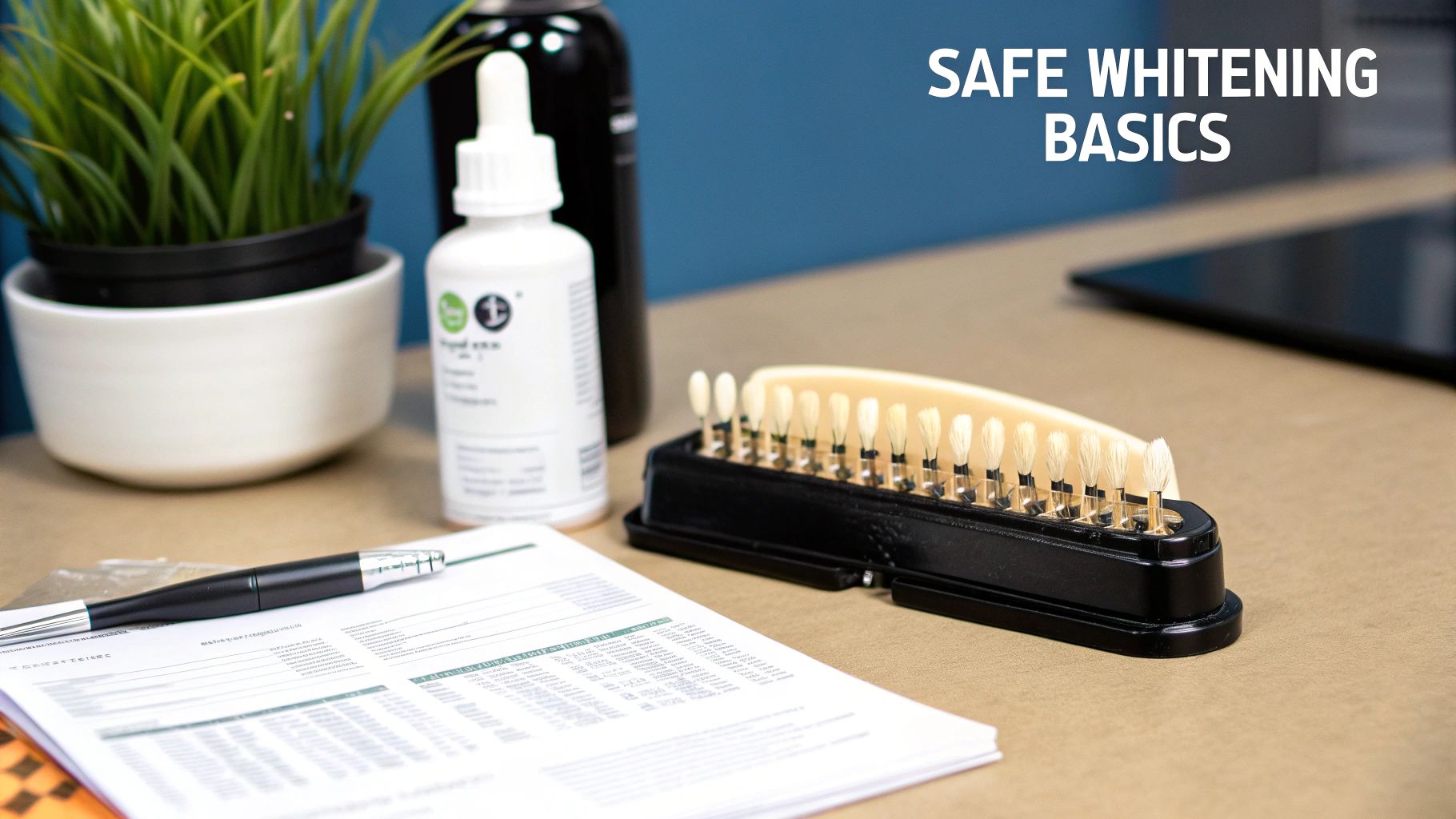
This explosion in popularity means there are more products than ever, but they're definitely not all created equal. Real, safe whitening hinges on using well-tested bleaching agents that gently lift stains without stripping your enamel.
The two workhorses of teeth whitening are:
- Carbamide Peroxide: This one is a slow-and-steady-wins-the-race kind of ingredient. It breaks down into hydrogen peroxide and urea, releasing its whitening power gradually. It’s a popular choice for overnight trays because it's generally gentler on sensitive teeth.
- Hydrogen Peroxide: This is the fast-acting agent. It gets the job done quickly but can be a bit aggressive on your gums and teeth if the concentration is too high.
For anything you buy over the counter, you'll likely see hydrogen peroxide concentrations between 3-10% or carbamide peroxide around 10-22%. Stick within these ranges and follow the instructions to the letter, and you’re on the right track.
Your Safe At Home Whitening Quick Start Checklist
Getting started can feel overwhelming, but a few key checks will set you up for success. This little checklist breaks down the non-negotiables before you apply that first strip or tray.
| Key Step | Why It's Important | Quick Tip |
|---|---|---|
| Get a Dental Check-Up | A dentist can spot underlying issues like cavities or gum disease that whitening gels could severely irritate. | Ask your dentist if you're a good candidate for at-home whitening during your next cleaning. |
| Identify Your Stain Type | At-home kits excel at surface (extrinsic) stains but struggle with deep (intrinsic) ones. | If your discoloration is from medication or trauma, professional treatment might be a better route. |
| Check Your Restorations | Whitening agents don't work on crowns, fillings, or veneers. | If you have dental work on your front teeth, whitening could create a mismatched look. |
| Start with a Clean Slate | Whitening works best on teeth free of plaque and tartar buildup. | Always brush and floss thoroughly right before applying any whitening product. |
Think of these steps as your pre-flight check. Skipping them is a recipe for sensitivity, uneven results, or even pain. A little prep work goes a long way.
Intrinsic vs. Extrinsic Stains
One of the most important first steps is figuring out what kind of stains you're dealing with. It makes all the difference.
At-home products are fantastic for extrinsic stains. These are the ones sitting on the surface of your enamel, caused by daily culprits like coffee, tea, red wine, and smoking.
Intrinsic stains are a whole different ballgame. They live deep inside the tooth's dentin layer and are often the result of aging, an old injury to a tooth, or even certain medications like tetracycline. While some powerful at-home kits can make a small dent in minor intrinsic stains, significant discoloration almost always requires a trip to the dentist. Knowing the difference helps you set realistic expectations from the get-go.
Key Takeaway: Safe and effective at-home whitening is all about targeting extrinsic (surface) stains with controlled, dentist-approved concentrations of peroxide. Understanding this helps you pick the right product and avoid the disappointment and potential damage from trendy but unproven DIY hacks.
Is Your Mouth Ready for Whitening?
Not everyone should jump straight into whitening. Applying powerful bleaching agents to an unhealthy mouth is asking for trouble. Before you start, ask yourself a few questions:
- Do you have any cavities? Whitening gel seeping into an untreated cavity can cause a world of hurt.
- Are your gums healthy? If you have gingivitis or your gums are receding, the peroxide will cause serious irritation.
- Do you have crowns, veneers, or fillings on your front teeth? Remember, this dental work won't change color, which can leave you with a two-toned smile.
If you answered "yes" to any of these, your first stop should be your dentist's office. While this guide is all about safe home practices, it’s crucial to understand the risks associated with certain DIY teeth whitening remedies that you might see online. To get more of the essential background, check out these 10 things you should know about teeth whitening before you make your final decision.
Choosing Your Ideal At Home Whitening Product
Walking down the dental care aisle can feel like a pop quiz you didn't study for. With countless products promising a brighter, whiter smile—from strips and gels to fancy LED kits—it's easy to feel overwhelmed. The best choice for you really boils down to your lifestyle, your budget, and what you’re hoping to achieve.
Let's break down the most popular methods to help you find the right fit.
Whitening strips are usually the first stop for many people. They're just thin plastic strips coated in a peroxide gel. Peel, stick, and you're done. Their biggest selling point is convenience, making them great for tackling minor surface stains when you don't want any fuss.
The catch? Their one-size-fits-all design doesn't always work for everyone. If your teeth aren't perfectly straight, the strips might not make even contact, which can sometimes lead to a patchy result.
Gels and Custom Trays
If you want more consistent, all-over whitening, gels paired with trays are a fantastic step up. You simply place a small amount of gel into a tray that fits over your teeth. This approach ensures the whitening agent covers every nook and cranny, giving you much more uniform results than strips.
You'll find two main types of trays:
- Boil-and-bite trays are a common, budget-friendly option you can mold at home for a pretty decent fit.
- Custom-fit trays made by your dentist (or from kits where you take your own impressions) offer a perfect, snug fit. This is key to preventing the gel from oozing onto your gums and making sure the whitening agent stays exactly where it needs to be.
This method takes a little more prep time than strips, but the superior coverage often delivers a more dramatic and even result. For anyone serious about getting great results at home, exploring the best teeth whitening products can help you find high-quality gel and tray systems that dentists trust.
The Rise of LED Whitening Kits
The new kids on the block are the LED whitening kits. These systems combine a whitening gel with a blue LED light device that fits in your mouth. The idea is that the light helps accelerate the peroxide's chemical reaction, potentially speeding up the whole process.
While many people feel they see faster results, it's good to keep expectations in check. The LED light's main job is to kickstart the breakdown of the peroxide. The real whitening power still comes from the gel itself. Modern kits have focused on enamel-safe LED technology that can boost the gel's efficacy by 25% without the risk of harmful UV rays.
Comparing Popular At Home Teeth Whitening Methods
To help you visualize the differences, here’s a quick comparison of the common at-home methods. This should make it easier to choose the best fit for your specific needs and lifestyle.
| Whitening Method | Best For | Typical Peroxide Level | Treatment Time | Potential Shade Lift |
|---|---|---|---|---|
| Whitening Strips | Convenience, mild surface stains | 6-10% Hydrogen Peroxide | 30 mins daily for 2 weeks | 1-3 shades |
| Gels & Boil-and-Bite Trays | Deeper stains, better coverage | 10-22% Carbamide Peroxide | 30-60 mins daily for 1-2 weeks | 3-6 shades |
| Gels & Custom-Fit Trays | Maximum coverage, even results | 10-22% Carbamide Peroxide | 30-60 mins daily for 1-2 weeks | 4-8 shades |
| LED Whitening Kits | Potentially faster results | 10-35% Carbamide Peroxide | 15-30 mins daily for 1 week | 3-7 shades |
Ultimately, the best product is the one you'll use consistently and correctly. Consider how much time you're willing to commit and your sensitivity level when making your final decision.
Decoding Product Labels: What to Look For
No matter which product you lean toward, learning to read the label is a non-negotiable step. There are two key things to keep an eye on.
First, look for the American Dental Association (ADA) Seal of Acceptance. This seal is your assurance that the product has been independently tested for both safety and effectiveness. It’s the best way to know you’re buying something that actually works as promised, not just something with flashy marketing.
Second, always check the peroxide concentration. For at-home kits using carbamide peroxide, a concentration between 10% and 16% is the sweet spot for safety and effectiveness. If the product uses hydrogen peroxide, look for something in the 3% to 10% range. Going for higher concentrations might seem tempting for faster results, but it dramatically increases the risk of painful tooth sensitivity and gum irritation.
To feel even more confident in your choice, it’s always a great idea to consult a comprehensive guide to choosing the best dental whitening kit for your unique situation. A little extra research can go a long way in ensuring your journey to a brighter smile is a safe and successful one.
A Practical Application Guide for Even Results
Picking the right product is just the first step. That perfectly even, bright smile you’re after really comes down to technique. How you apply the product is what separates a fantastic result from a frustrating, splotchy one, and it’s the key to avoiding common issues like sensitive gums.
A lot of people follow the basic instructions on the box but miss the little details that make a huge difference. Think of this as your hands-on guide to getting consistent, professional-level results right in your own bathroom.
Prepping Your Teeth for Whitening
For any whitening agent to work its magic, it needs a clean canvas. But how and when you clean your teeth beforehand is critical.
It seems logical to brush with toothpaste right before applying strips or trays, but this can actually work against you. The fluoride in most toothpastes can leave behind a temporary barrier, which might block the peroxide from getting into your enamel as effectively.
Here’s a better way: about 30 minutes before you plan to whiten, brush your teeth gently with just water on your toothbrush. This clears away any plaque or food particles without leaving anything behind. After that, dry your teeth. A quick pat with a clean, soft cloth or a paper towel makes a world of difference for getting gels and strips to stick properly.
Mastering Gel and Tray Application
If you're using a gel and tray system, the golden rule is "less is more." I can't tell you how many times patients complain about gum irritation, and the culprit is almost always overfilled trays. When there’s too much gel, it oozes out and sits directly on your sensitive gum tissue.
Try this simple trick for the perfect amount:
- Squeeze a tiny bead of gel into the part of the tray that will sit against the front of each tooth.
- We're talking a minuscule amount—about the size of a pinhead per tooth.
- When you press the tray onto your teeth, that small dot will spread into a thin, even layer across the entire tooth surface.
If you see any gel squishing out onto your gums, don't ignore it. Grab a cotton swab or your toothbrush (with no paste) and gently wipe it away immediately. This one small step is your best defense against chemical burns and that zinging sensitivity on your gums.
This simple process of reviewing, selecting, and using your product is key to a great outcome.
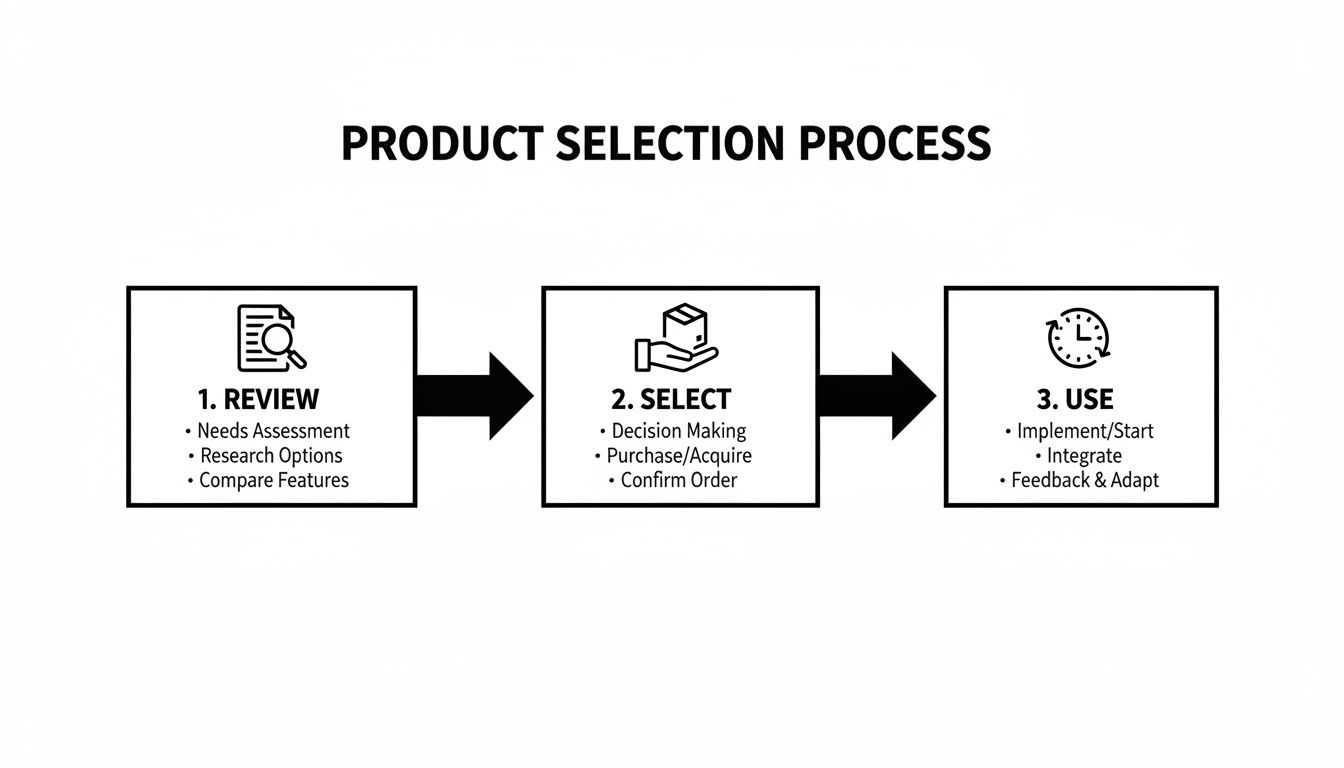
As the visual shows, careful application is just as important as the research you did to pick your kit.
Nailing Whitening Strip Placement
Whitening strips are super convenient, but they only work if they make solid contact with your enamel. A common mistake is just slapping them on, which leaves air bubbles and gaps where the whitener can't do its job.
To get it right, start by folding the strip over the front of your teeth. Then, gently press it down, working from the middle of your smile outwards. Use your fingernail to carefully press the strip into the little crevices between each tooth. This ensures every visible surface gets the same amount of exposure to the peroxide.
Pro Tip: For your bottom teeth, which are often a bit more crowded or crooked, it helps to dry them with a tissue right before putting the strip on. This gives the adhesive a much better grip and stops the strip from slipping around in saliva.
Timing and Aftercare Are Everything
Whatever you do, don't guess the timing. Set a timer on your phone and stick to the manufacturer's directions exactly. Going longer won’t make your teeth twice as white, but it will dramatically increase your risk of sensitivity and enamel stress.
When the timer goes off, remove the product and rinse your mouth with lukewarm water—not cold. Hold off on brushing with toothpaste for at least an hour. Your enamel is a little more porous right after whitening, so you want to be gentle.
Finally, try to avoid staining foods and drinks like coffee, red wine, tea, or dark berries for the next 24-48 hours. Your teeth are extra susceptible to new stains during this window, so protecting them is key to making your bright results last.
How to Manage and Prevent Tooth Sensitivity
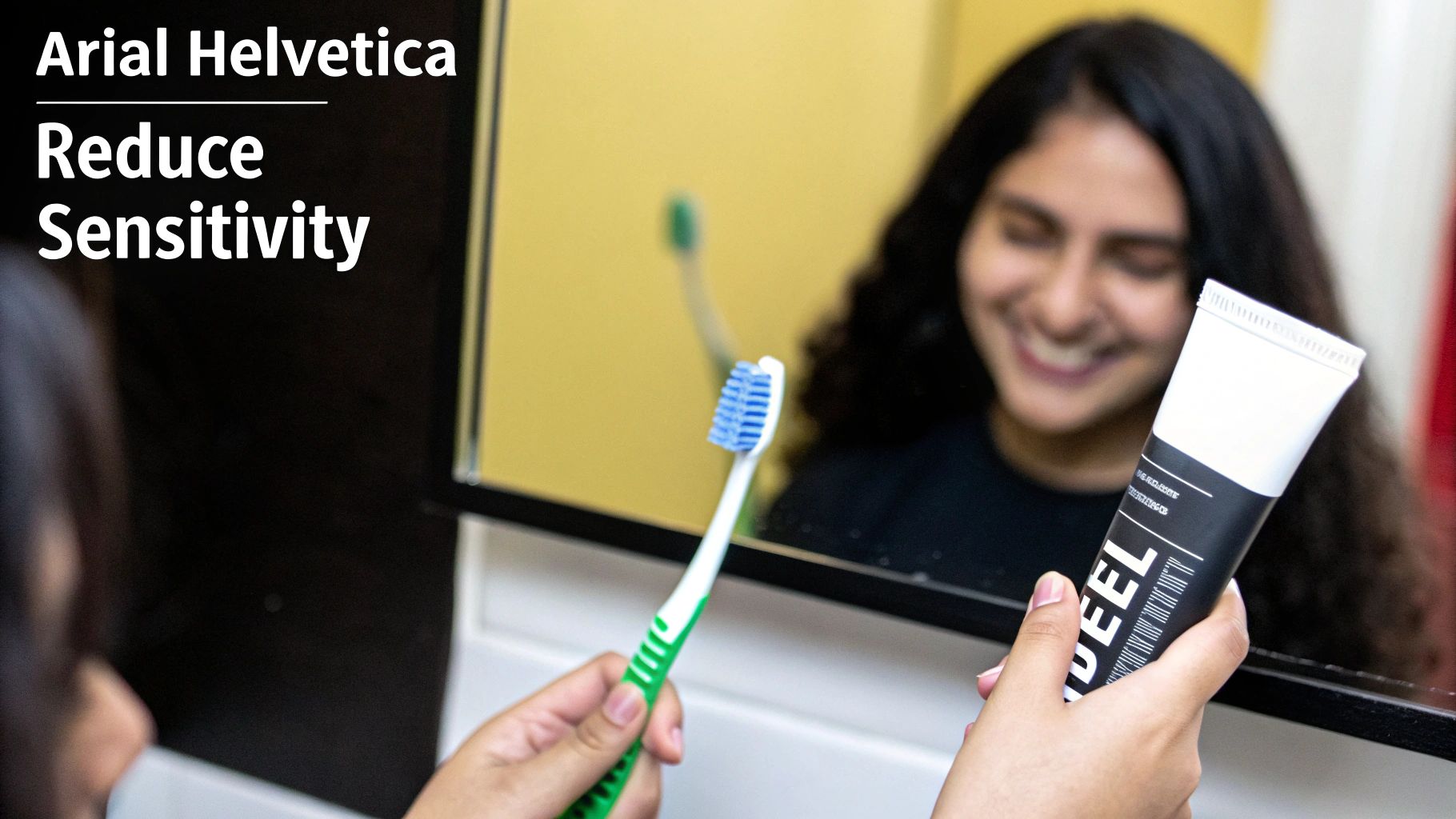
That sudden "zing" of sensitivity is easily the most common side effect of teeth whitening, but it doesn't mean you have to abandon your goal of a brighter smile. The key is understanding why it happens.
It all comes down to a part of your tooth called dentin. Hidden beneath your tough outer enamel is this softer, porous layer, filled with thousands of tiny tubes that lead straight to the tooth's nerve. Whitening gels can temporarily make your enamel more permeable, leaving these little channels exposed to changes in temperature and pressure.
That exposure is what causes that sharp, fleeting pain when you sip a cold drink or even breathe in cool air. But here's the good news: this is almost always temporary. With a few smart strategies, you can minimize it or even sidestep it completely.
Proactive Steps Before You Whiten
The absolute best way to handle sensitivity is to get out ahead of it. Don't wait for that first uncomfortable twinge—start prepping your teeth a couple of weeks before you even open your whitening kit.
One of the most effective moves you can make is switching to a desensitizing toothpaste. Look for one with potassium nitrate or stannous fluoride as the active ingredient. These ingredients work by plugging up those microscopic tubules in your dentin, creating a shield that keeps the nerve from getting zapped.
Use this as your daily toothpaste for at least 14 days before your first whitening session. Using it consistently builds up a protective barrier, making your teeth far less reactive to the peroxide in the whitening gel. For a closer look, our guide on how Fluoridex sensitivity relief can help reduce tooth sensitivity explains exactly how these formulas work to keep you comfortable.
Smart Strategies During Your Whitening Treatment
Once you actually start whitening, a few simple tweaks to your routine can make a massive difference. It's all about listening to your teeth and not trying to tough it out.
- Shorten Your Sessions: If the box says 30 minutes, try 15-20 minutes for your first few sessions. You can always work your way up if your teeth are feeling good.
- Take a Day Off: You don't need to whiten every single day to get great results. Whitening every other day gives your teeth a chance to recover and rehydrate, which dramatically cuts down on sensitivity.
- Use Less Gel: A classic rookie mistake is overfilling the whitening trays. All that extra gel just oozes onto your sensitive gums. You only need a tiny, pinhead-sized dot of gel for each tooth.
That zing of sensitivity isn't a sign that the product is broken—it's your teeth asking for a break. Listening to that signal is one of the most important parts of whitening safely at home. Slowing down will still get you to your goal, just without the pain.
Aftercare for Lasting Comfort
What you do right after a session is just as crucial. For the first hour or so after you take the trays out, your teeth are at their most vulnerable.
Try to avoid anything super hot or cold during this window, as those temperature shocks can easily trigger sensitivity. Rinsing with a neutral fluoride mouthwash right after you remove the gel can also help calm things down and start the remineralizing process for your enamel.
Combining a gentle whitening formula with desensitizing agents is a proven way to get comfortable results. In fact, studies show this approach can drop post-treatment sensitivity from 40% down to under 10%. Following these protocols—like limiting peroxide exposure and using remineralizing pastes—is recommended by 80% of dental professionals for achieving a bright smile that lasts.
Keeping That Bright Smile for the Long Haul
Getting your teeth whitened feels fantastic, but the real work is making that bright smile last. Life happens—that morning coffee, a glass of red wine with dinner—and those everyday habits can start to dull your newly brightened teeth quicker than you'd think. The good news? You don't have to give up your favorite things. A few smart, consistent habits are all it takes to protect your results.
Think of your freshly whitened enamel like a blank canvas. Your goal now is to stop new stains from ever setting in. It all starts with a few simple actions that make a massive difference over time.
Smart Daily Habits to Keep Stains Away
The best maintenance plan is a proactive one. The first 48 hours after any whitening treatment are the most critical because your enamel is a bit more porous and acts like a sponge for stains. But carrying these habits forward is the real secret to long-term success.
A simple but incredibly effective trick is to rinse your mouth with plain water right after you eat or drink anything with strong color. This includes things like:
- Coffee and black tea
- Red wine and colas
- Berries, soy sauce, and balsamic vinegar
- Curry and tomato-based sauces
Just swishing with water for 30 seconds helps wash away the staining compounds (called chromogens) before they get a chance to cling to your enamel. Another pro tip: drink dark liquids through a straw. It minimizes contact with your front teeth, which are the most visible part of your smile.
Choosing the Right Products for Maintenance
Your regular oral hygiene routine is your first line of defense. Swapping in a good whitening toothpaste is an easy way to gently polish off new surface stains as they appear. Just be sure to pick a non-abrasive formula with the ADA Seal of Acceptance to know it's safe for daily use on your enamel.
These toothpastes aren't designed to make your teeth dramatically whiter, but they are maintenance powerhouses. They use gentle abrasives or chemical agents to lift off daily grime before it becomes a permanent resident. It’s the daily upkeep that keeps your smile looking fresh between touch-up treatments.
The boom in at-home whitening is largely driven by people trying to combat discoloration from things like coffee, which is known to stain the teeth of 82% of daily drinkers. While safe at-home protocols can deliver gains of 6-8 shades in just three months, keeping those results requires diligence. You can dig deeper into these market trends and consumer habits to see just how common this is.
When to Schedule Your Touch-Up Treatments
No whitening results last forever, and that's perfectly okay. How often you'll need a touch-up really depends on your lifestyle. If you're a heavy coffee drinker, you'll probably need a touch-up sooner than someone who sticks to water.
As a general rule, plan for a quick touch-up session every four to six months. This usually just means one or two applications of your whitening gel or strips—often enough to bring your smile right back to its peak brightness.
A great way to remember is to schedule it on your calendar right after your semi-annual dental cleanings. A quick, periodic refresh is so much easier than waiting for your teeth to yellow significantly and having to start the whole whitening process from square one. It’s a tiny commitment that pays off big in maintaining a confident, brilliant smile.
When to Pause Whitening and See Your Dentist
Embarking on a journey to whiten your teeth at home is exciting, but knowing when to hit the brakes is just as critical as knowing how to start. Listening to your body is the cornerstone of whitening safely. While a little temporary sensitivity is pretty common, some symptoms are your body's way of screaming, "Stop and call a dentist!"
Ignoring these red flags can escalate a simple cosmetic goal into a genuinely painful dental problem. Think of it this way: at-home whitening is a partnership with your oral health. If one side is sending out distress signals, it’s time to regroup.
Clear Signs It Is Time to Stop
Your teeth and gums give you direct feedback during the whitening process, and it's essential to pay attention rather than just "pushing through" the discomfort. If you experience any of the following, stop your treatment immediately.
- Severe or Lingering Sensitivity: A quick "zing" that vanishes in seconds is one thing. But a constant, deep ache or sharp pains that stick around for hours after a session? That's a huge problem. It means the whitening agent is likely getting to the nerve of your tooth.
- Noticeable Gum Irritation: Your gums should not turn bright red, swell up, or develop weird white patches after a treatment. This is a chemical burn from the peroxide gel, a dead giveaway that too much is escaping your trays or strips and sitting on your soft tissues.
- Chalky White Spots on Teeth: If you start seeing opaque, unnaturally white spots pop up, it can be an early warning sign of enamel demineralization. Continuing to whiten could weaken these areas for good.
Key Insight: Pain is never a sign of progress in teeth whitening. If you have persistent sensitivity or visible gum damage, your current method or product is just too aggressive for you. Always prioritize comfort and health over speed.
When At Home Whitening Is Not a Good Idea
Sometimes, the issue isn't a reaction to the treatment itself, but a pre-existing condition that makes at-home whitening unsafe from the get-go. Whitening should always be the finishing touch on an already healthy smile, not a band-aid for underlying issues.
You should absolutely consult your dentist before starting an at-home kit if you have any of these conditions:
- Untreated Cavities or Cracked Teeth: Whitening gel seeping into a cavity or a crack is a recipe for excruciating pain. The gel can travel straight to the tooth’s inner pulp and nerve.
- Active Gum Disease: Applying peroxide to inflamed, bleeding gums (gingivitis) or infected gums (periodontitis) will only make the condition worse and cause significant irritation.
- Visible Dental Work on Front Teeth: Whitening agents do not work on porcelain or composite materials. Crowns, veneers, and fillings will not change color. Whitening your natural teeth will just create a mismatched, uneven smile.
Your dentist can fix these issues first, creating a healthy foundation. From there, they can recommend the safest and most effective whitening path for your specific situation, ensuring you get the bright, even results you want without damaging your long-term oral health.
Common Questions About At-Home Teeth Whitening
When you start looking into at-home teeth whitening, a few key questions always come up. It's smart to have these answered before you begin, so you can feel confident and safe while you brighten your smile. Let's dig into what people most often ask.
How Long Will My Whitening Results Last?
This is probably the number one question, and the honest answer is: it really depends on your daily habits. If you're a big fan of coffee, tea, or red wine, you might see new stains creep in after just a few months.
However, if you're careful and stick to good maintenance, most people can keep their smile bright for a solid six months to a year before feeling the need for a touch-up.
Does At-Home Whitening Damage Enamel?
This is a huge concern, and for good reason. Thankfully, the answer is generally no—as long as you do it correctly. Products that have earned the ADA Seal of Acceptance use peroxide concentrations that have been proven safe for tooth enamel. Whitening doesn't actually scrape away or dissolve your enamel; it works by opening the pores in your teeth to lift stains out from within.
The real key here is to follow the instructions to the letter. Don't leave gels on longer than recommended or use them more frequently, thinking you'll get faster results. Problems like enamel damage and severe sensitivity almost always happen when people use products with dangerously high peroxide levels or ignore the recommended treatment times.
Key Takeaway: When you whiten your teeth safely at home with approved products and follow the directions, the process is completely safe for your enamel. The sensitivity some people experience is almost always temporary and not a sign of any permanent damage.
Does Whitening Work on Crowns, Veneers, or Fillings?
Another common question is whether whitening gels will brighten dental work. The answer here is a firm no.
The materials used for restorations like crowns, veneers, and fillings are non-porous and won't change color. This is why it's so critical to talk to your dentist before starting if you have any dental work on your front, most visible teeth. You'll want to avoid a color mismatch.
Ready to start your journey to a brighter, more confident smile with products you can trust? DentalHealth.com offers a curated selection of professional-grade, dentist-recommended whitening kits and sensitivity-relief products. Shop now and get free shipping on all USA orders at https://dentalhealth.com.