
Peroxyl Canker Sores: Safe Use and Smart Alternatives
You bite into toast, feel that sharp sting, and catch a glimpse of a small white sore on the inside of your cheek. If there's a bottle of Peroxyl in the cabinet, it's natural to wonder whether you should use it right away, skip it, or reach for something simpler like salt water. The hard part is that canker sore advice online often mixes together pain relief, cleansing, healing, and prevention as if they were the same thing.
This guide takes the opposite approach. It treats Peroxyl for canker sores as one tool in a larger decision tree, then compares it with salt water and baking soda rinses, explains when it fits appliance wearers, and shows where its limits and risks are. If you're trying to decide what to rinse with before breakfast, you're in the right place.
That Annoying Sore on Your Tongue Right Now
You're brushing your teeth, or maybe eating something warm, and one spot on your tongue or cheek suddenly makes you stop. The sore looks small, but it changes the whole morning, because every sip and every bite keeps hitting the same tender patch. That's usually the moment people open the medicine cabinet and ask whether the Peroxyl bottle is the right move.
A calm answer starts with the goal, not the product. Some mouth rinses are meant to clean the sore surface, some are meant to numb pain, and some are just there to make the mouth feel less irritated while the tissue heals. If you want a deeper look at a protective paste that's often discussed alongside rinse options, see Orabase for mouth ulcers.
What most readers really need is simple. They want to know what the sore is, whether Peroxyl helps or just stings, how to use it safely, and what to try if it doesn't help. That's the decision path here, because one-size-fits-all advice doesn't work well when the mouth is already inflamed.
Practical rule: if a rinse makes your mouth feel more raw instead of less, that's useful information, not a reason to keep pushing through it.
The rest of the article keeps that same practical lens. You'll see where Peroxyl fits, where a plain rinse may be enough, and where a sore stops looking like a routine canker sore and needs a closer look.
What Canker Sores Are
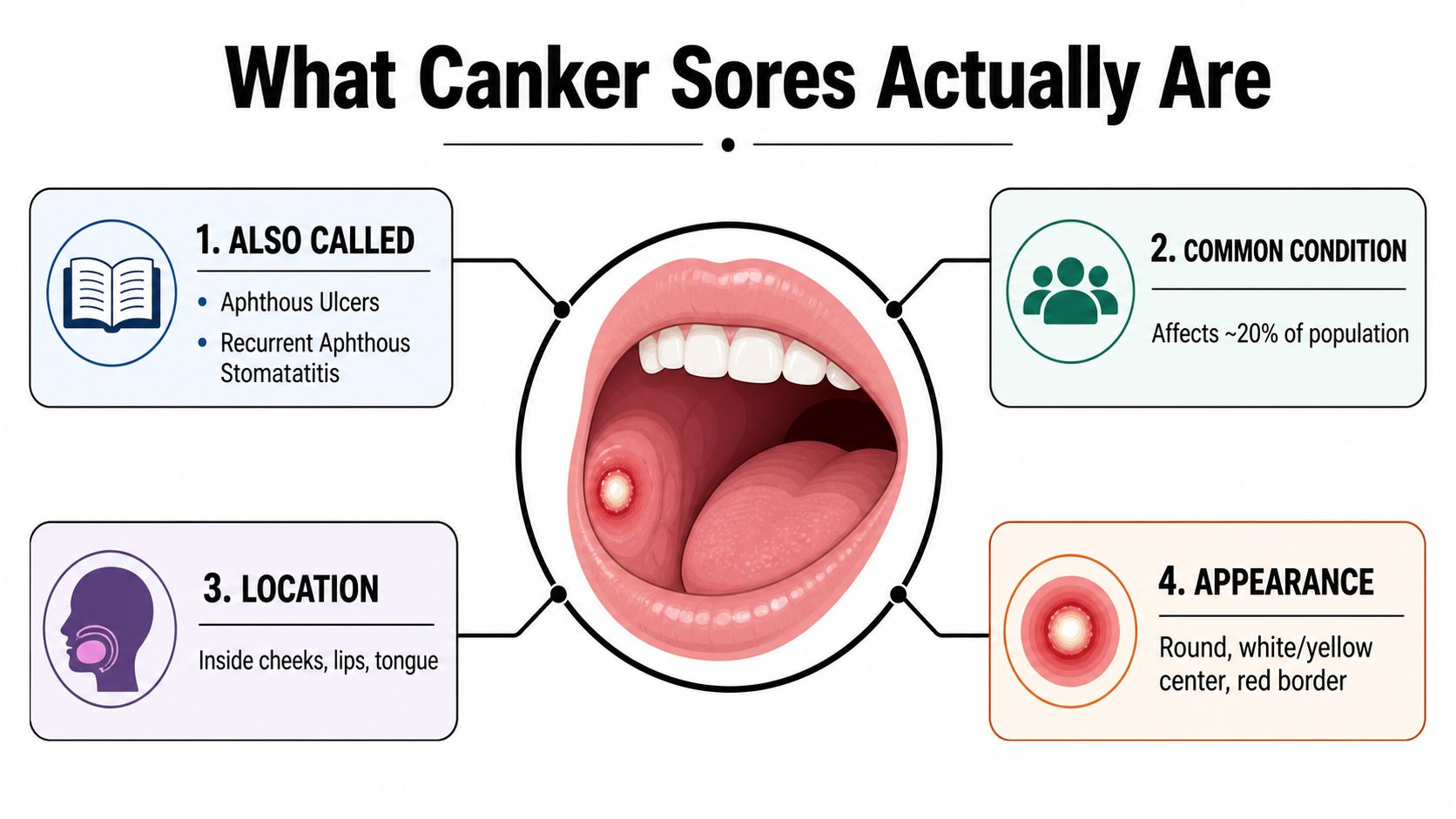
Canker sores, also called aphthous ulcers or recurrent aphthous stomatitis, are common oral mucosal lesions. They usually begin as a tender spot that turns into a small ulcer on the soft lining inside the mouth, and they can make brushing, eating, or talking uncomfortable. An evidence summary from NCBI notes that some experts estimate they affect about 1 in 10 people NCBI evidence summary. They most often first appear in the teenage or young-adult years, are more common in women than men, and often show up as two to four sores at the same time NCBI evidence summary.
How They Differ From Cold Sores
A canker sore usually forms inside the mouth, on soft tissue like the cheeks, lips, gums, or tongue. A cold sore, by contrast, forms on the outside of the lips and follows a different pattern. That difference matters because canker sores are generally not contagious, and they usually heal on their own NCBI evidence summary.
The pattern also explains why people keep looking for short-term relief. The sores are brief, but they recur, so the goal is usually to calm the area and make daily mouth care easier until the tissue closes. That is why rinses, gels, and other palliative options keep coming up in home care conversations.
What To Expect From A Typical Sore
NCBI patient guidance says canker sores usually heal within a few days, and common treatments are gels, creams, mouthwashes, or other local therapies that focus on symptom control rather than prevention NCBI patient guidance. That frame helps explain where products like Peroxyl fit. They are tools for cleaning and comfort, not a cure that changes the tendency to get sores in the first place.
A typical sore hurts, gets irritated when it rubs against food or teeth, then settles as the surface heals. If a rinse promises to stop every future outbreak, that is more than the evidence supports. If it helps keep the area cleaner and easier to tolerate while you wait for healing, that is a more realistic expectation.
For people who want the larger health picture, how your mouth affects your body helps explain why irritated tissue in the mouth is worth taking seriously, even when the sore itself is small.
How Peroxyl Works on a Canker Sore
Peroxyl is a 1.5% hydrogen peroxide oral debriding agent and oral wound cleanser. Its labeled use includes temporary cleansing of canker sores and minor oral wounds, including gum inflammation linked to dental procedures, dentures, orthodontic appliances, accidental injury, mouth burns, cheek bites, and toothbrush abrasions DailyMed Peroxyl label. That list matters because it shows the product is built for temporary local cleansing, not for long-term ulcer control.
What It Does On Contact
Hydrogen peroxide works by releasing oxygen. On a sore surface, that creates foaming that helps lift mucus and debris from the lesion area. If you have ever watched peroxide bubble on a scraped knee, the idea is similar, except the goal in the mouth is to clear away surface buildup so the tissue is easier to keep clean.
That is also why Peroxyl should not be mistaken for a pain reliever. It is an antiseptic cleanser, not an analgesic. It does not numb the sore the way lidocaine does. What it can do is help the area feel cleaner, which may make it easier to tolerate while the tissue heals.
For readers who want the oral-health bigger picture, the connection between the mouth and the rest of the body is worth keeping in mind. how your mouth affects your body helps show why irritated tissue in the mouth deserves attention, even when the sore itself is small.
Practical rule: if the main problem is dirt, debris, or irritated tissue around a sore, a cleansing rinse can help. If the main problem is sharp pain, you may need a different product class.
Setting Realistic Expectations
Peroxyl is most useful when you want a temporary cleansing step, especially early in a sore's life. It is not a cure, and it is not a substitute for identifying repeated triggers. DentalHealth.com's Peroxyl Colgate review fits that same practical view, since the rinse is better understood as one part of home care rather than the whole plan.
If your goal is clean tissue and less surface irritation, Peroxyl can make sense. If your goal is immediate numbing, it is the wrong expectation to bring to the bottle.
Safe Usage Guidelines for Peroxyl
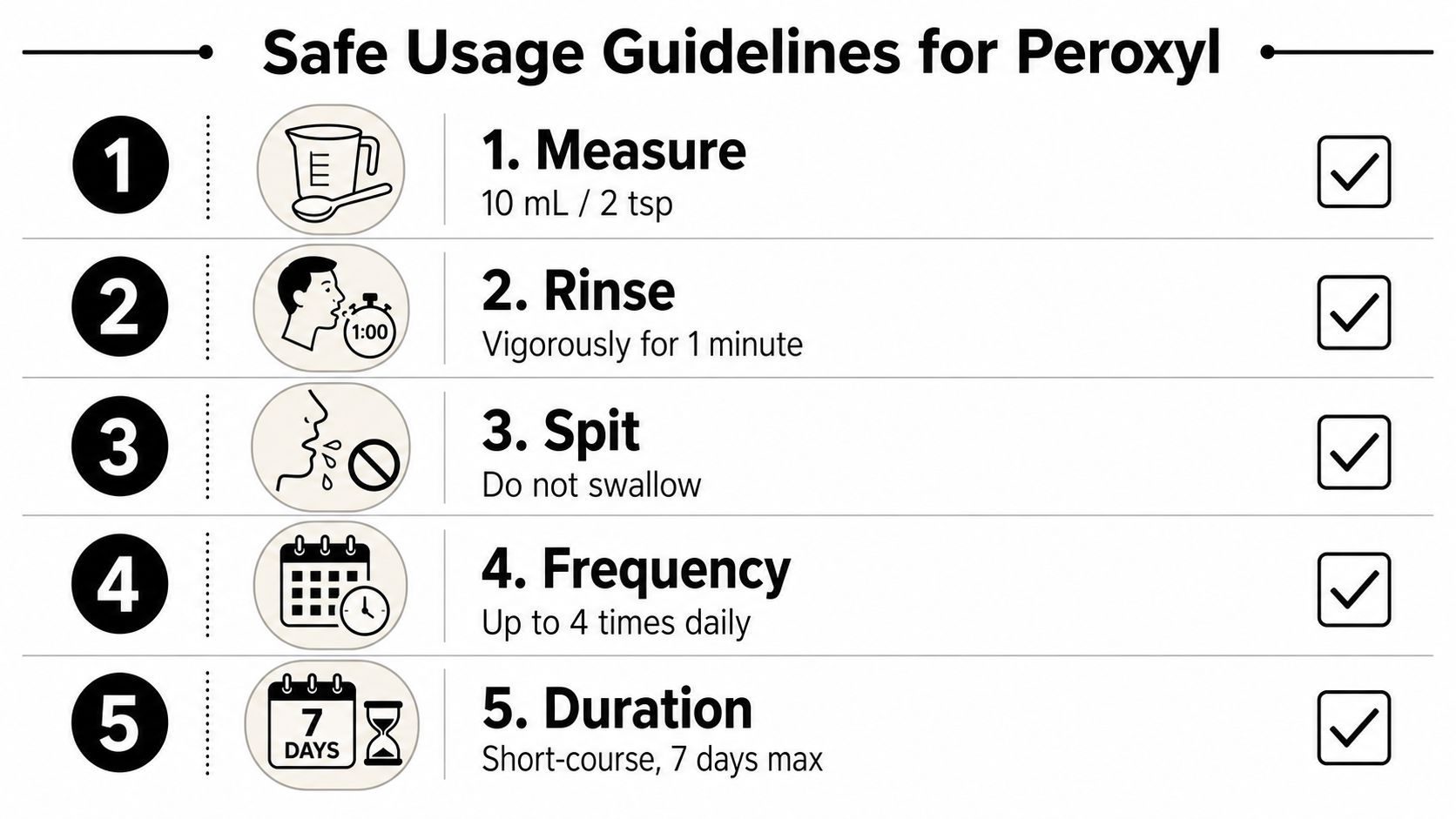
A sore can make you want to reach for the strongest rinse in the cabinet, but Peroxyl works best as a short, careful cleaning step. The usual routine is to measure about 10 mL, or 2 teaspoons, rinse for 1 minute, spit it out, and repeat up to 4 times daily after meals and before bedtime Peroxyl usage guidance. That schedule is meant for temporary use, not for ongoing everyday mouth care.
The Rules That Matter Most
Do not swallow the rinse. If symptoms are not improving after about 7 days, stop and get advice instead of extending the course on your own. If the mouth starts burning more instead of less, that is a sign to stop sooner.
Timing still matters. Mayo Clinic notes that topical products used when a sore first appears may help relieve pain and speed healing Mayo Clinic treatment guidance. That does not mean every sore needs peroxide right away, only that waiting until the tissue is already very irritated can make comfort harder to regain.
Some people should avoid using it without guidance. Children need close adult supervision because the no-swallow rule matters. Anyone with deep open wounds, or anyone whose dentist has told them to avoid peroxide, should follow that instruction rather than guessing. If a mouth area has already become very raw after another product, pause and reassess instead of layering more irritation on top.
Home care around the sore matters too. Gentle rinses, soft brushing, and avoiding irritating foods are part of the usual approach to mouth ulcers, as noted earlier. Peroxyl fits into that larger routine, it does not replace it.
If the sore feels more painful than dirty, a cleansing rinse may not be the right tool. In that case, a numbing product serves a different purpose, and Revivol-XR lidocaine cream is a clear example of how lidocaine is used to reduce pain directly while peroxide is used to clean.
Screenshot checklist
- Measure 10 mL, or 2 teaspoons.
- Rinse for 1 minute.
- Spit it out, do not swallow.
- Repeat up to 4 times daily.
- Stop if it is not helping after about 7 days.
If you want a plain-language product overview before deciding, the DentalHealth.com Peroxyl review is useful for seeing where it sits among other at-home oral care options.
Comparing Peroxyl With Salt Water and Baking Soda Rinses
A sore on your tongue can make every rinse feel like a decision. Peroxyl is one option, but it sits in a small group of home rinses that includes salt water and baking soda. Mayo Clinic keeps these approaches in the same conversation for symptom relief, which is a good reminder that the goal is often comfort and cleanliness, not choosing one perfect product Mayo Clinic treatment guidance. The better choice depends on what the mouth feels like right now.
Canker Sore Rinse Comparison
| Rinse | Active Approach | Pain Relief | Healing Support | Irritation Risk | Cost Per Use |
|---|---|---|---|---|---|
| Peroxyl | Hydrogen peroxide cleansing rinse that foams and lifts debris | Can feel soothing for some mouths, but it does not numb | Helps keep the sore clean during healing | Higher chance of burning in sensitive mouths if overused | Usually low, but higher than homemade rinses |
| Salt Water | Gentle saline rinse | Often comfortable and simple | Supports a cleaner oral environment | Usually low | Very low |
| Baking Soda | Mild alkaline rinse | Can feel less sharp than acidic or irritated conditions | Helpful for gentle cleansing | Usually low | Very low |
How To Choose
If you want the most budget-friendly option, salt water or baking soda is hard to beat. If your mouth feels coated, gritty, or irritated after dental work or appliance wear, Peroxyl's cleansing action may fit better. If the main problem is pain relief, a rinse alone may not cover that need, and a topical numbing product may make more sense.
The simplest way to sort them is by the job you want done. Salt water is like a gentle reset for a sore mouth, baking soda can calm a mouth that feels too acidic or irritated, and Peroxyl is better when you want a rinse that helps lift debris from the surface. That is also why a one-size-fits-all answer misses the point.
If you want a broader look at rinses that target mouth discomfort, antimicrobial mouthwash for ulcers is a useful related read. If you are also comparing more natural oral-care approaches, compare natural herbal chew sticks offers a different view of routine mouth care.
Decision rule: choose the mildest rinse that matches the problem. Use Peroxyl when cleansing matters, use salt water or baking soda when you want something simpler, and switch strategies if the sore gets more irritated.
Canker Sores and Dental Appliances
Braces, retainers, and aligners create a different kind of mouth sore problem. WebMD notes that hydrogen peroxide mouth rinses are used for mouth or gum irritation from braces, dentures, or retainers, which is exactly the kind of use case many canker-sore articles skip WebMD drug information. That matters because a sore caused by rubbing hardware can look a lot like an aphthous ulcer, even though the management is a little different.
Friction Ulcer Or Aphthous Ulcer
A friction ulcer usually follows a clear mechanical trigger. A bracket edge rubs, a retainer spot feels sharp, or an aligner edge catches the same area over and over. A true canker sore can appear without an obvious hardware trigger and still land in the same soft tissue.
The practical difference is what you adjust first. If the appliance is the source of friction, wax, fit adjustment, or better cleaning around the hardware may matter as much as the rinse itself. If the sore is a classic aphthous ulcer, the focus stays on comfort, cleansing, and avoiding extra irritation.
How To Fit Peroxyl Into An Appliance Routine
Peroxyl can be helpful when you want to clean around irritated tissue without scrubbing it. That makes it especially relevant after meals, after a retainer comes out, or when the gums feel gritty around orthodontic hardware. It's not there to whiten teeth, and the value isn't cosmetic. The point is temporary cleansing and comfort.
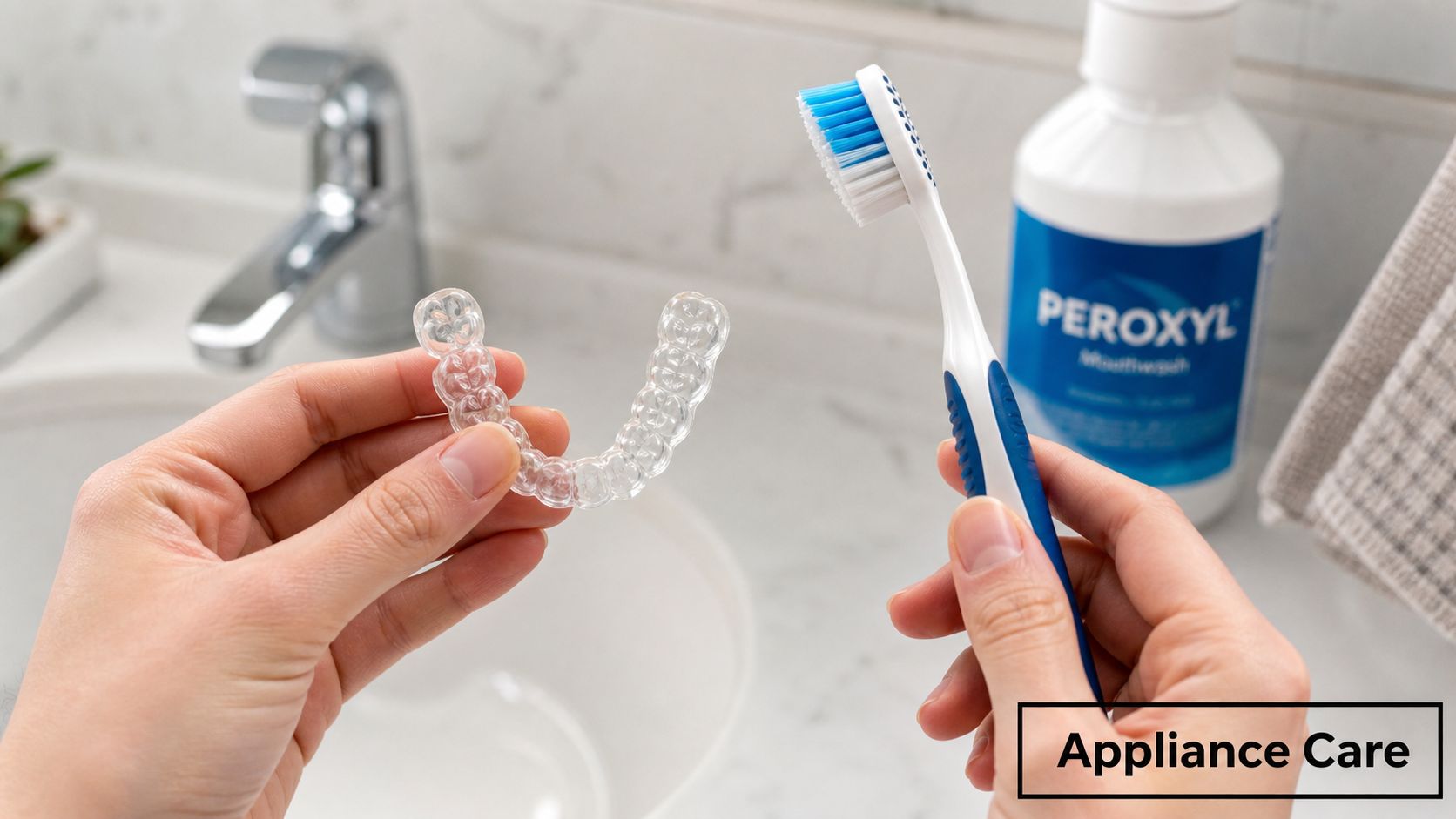
If you wear aligners, timing matters. Rinse after removing the tray, clean the appliance separately, then put it back in only after the mouth feels settled. If a retainer edge keeps rubbing, the rinse can soothe the area, but the hardware still needs attention. A rinse can't fix a sharp edge.
Common appliance signals to watch
- A single spot that keeps reopening in the same place usually points to friction.
- Multiple sores in different soft areas can fit a broader canker sore pattern.
- Pain right after adjustment often points to contact irritation.
- Pain that persists even after the appliance is checked deserves a dental look.
If you're using aligners or retainers, this is one area where a temporary cleaner can be helpful without pretending to solve the underlying cause. Peroxyl has a role, just not a curative one.
Prevention Habits That Reduce Canker Sore Flare Ups
The biggest mistake people make is treating every flare-up like a rinse problem. If sores keep coming back, something in the day-to-day routine is usually feeding the cycle. Acidic or abrasive foods such as citrus, tomato, chips, and crusty bread can poke at tissue that's already vulnerable, while sharp tooth edges or rough retainer surfaces can keep reopening the same spot.
Small Changes That Add Up
Toothpaste matters more than many people think. Toothpastes containing sodium lauryl sulfate can bother people who are prone to sores, so a gentler formula is worth trying if the pattern keeps repeating. Stress and poor sleep also belong on the list, because both can make the mouth feel less resilient.
Nutritional gaps can play a part too, especially B12, iron, and folate. If your diet is limited or you notice a repeated pattern, it's reasonable to bring that up with a clinician rather than assuming every sore is random.
A few realistic swaps help more than people expect.
- Choose softer textures: give the mouth a break from chips, crusty bread, and other scratchy foods during flare-ups.
- Watch acidic foods: citrus and tomato products can sting already irritated tissue.
- Check oral products: switch away from toothpaste that seems to aggravate the mouth.
- Fix the friction point: ask about sharp tooth edges or appliance hotspots if the sore keeps returning in one place.
Practical rule: the less often your mouth gets irritated, the less often you'll need a cleansing rinse at all.
That's where Peroxyl fits into prevention. It isn't the prevention plan. It's the backup tool you use less often when a sore still breaks through.
Red Flags and When to See a Professional
Most canker sores settle down on their own, but some signs mean self-care should stop. If a sore is unusually large, persists beyond two weeks, spreads, appears outside the mouth, or comes with fever, severe pain, or difficulty swallowing, it needs a dentist or doctor's attention NCBI patient guidance. Peroxyl also shouldn't be stretched past the 7-day short-course window if nothing is improving Peroxyl usage guidance.
When The Pattern Looks Different
A sore that keeps returning in clusters, or shows up with other symptoms, may point to something beyond a routine aphthous ulcer. Conditions such as herpes simplex, Behçet disease, celiac disease, or immune-related problems can enter the differential when the pattern doesn't behave like a typical canker sore. That's not something to diagnose at home.
The same rule applies if you're swallowing less because eating hurts too much. Pain that interferes with drinking or daily function isn't something to manage indefinitely with a rinse. It needs evaluation.
Quick Answers To Common Peroxyl And Canker Sore Questions
| Question | Short Answer | When To Worry |
|---|---|---|
| Can Peroxyl heal a canker sore? | It can help cleanse the sore, but it isn't a cure. | If it isn't helping within about 7 days. |
| Should I use it instead of salt water? | Not always. Salt water is a simpler first step for many people. | If salt water stings less and works fine, you may not need peroxide. |
| Is it okay to swallow? | No, spit it out. | Any swallowing concern, especially in children, needs supervision. |
| Can it burn? | Yes, especially if the mouth is already sensitive. | Stop if burning gets worse. |
| Do braces or aligners change the choice? | Yes, because hardware irritation can change the source of the sore. | If the same spot keeps rubbing, get the appliance checked. |
If you've reached the point where a sore feels different, lasts too long, or keeps coming back despite careful rinsing, that's the moment to step out of self-treatment and get a real exam.
If you're comparing Peroxyl with simpler rinses and want a practical next step, visit DentalHealth.com to review at-home oral care options and choose the rinse or topical product that matches your symptom pattern and appliance routine.