
Teeth Whitening for Sensitive Teeth a Pain-Free Guide
That sharp, sudden 'zing' you might feel when whitening your teeth is a real concern, but it's not a sign you're doing any damage. Think of it as a temporary side effect. It happens when the whitening agents get a little too close to the nerves inside your teeth, but by understanding why it happens, you can get ahead of it and still get that brighter smile, pain-free.
Understanding Why Teeth Whitening Causes Sensitivity
If you've ever felt that jolt from a cold drink, you already know the basic feeling behind whitening sensitivity. It’s pretty straightforward, really. Teeth whitening gels use active ingredients like hydrogen or carbamide peroxide to break down stains. For them to work, they have to make your enamel temporarily more porous.
This extra porosity opens up microscopic channels in your dentin—that’s the layer just under your enamel. This gives the whitening agent a direct path to the tooth's nerve, or pulp. That connection is what triggers the sensitivity. It’s a temporary state, not a long-term problem.
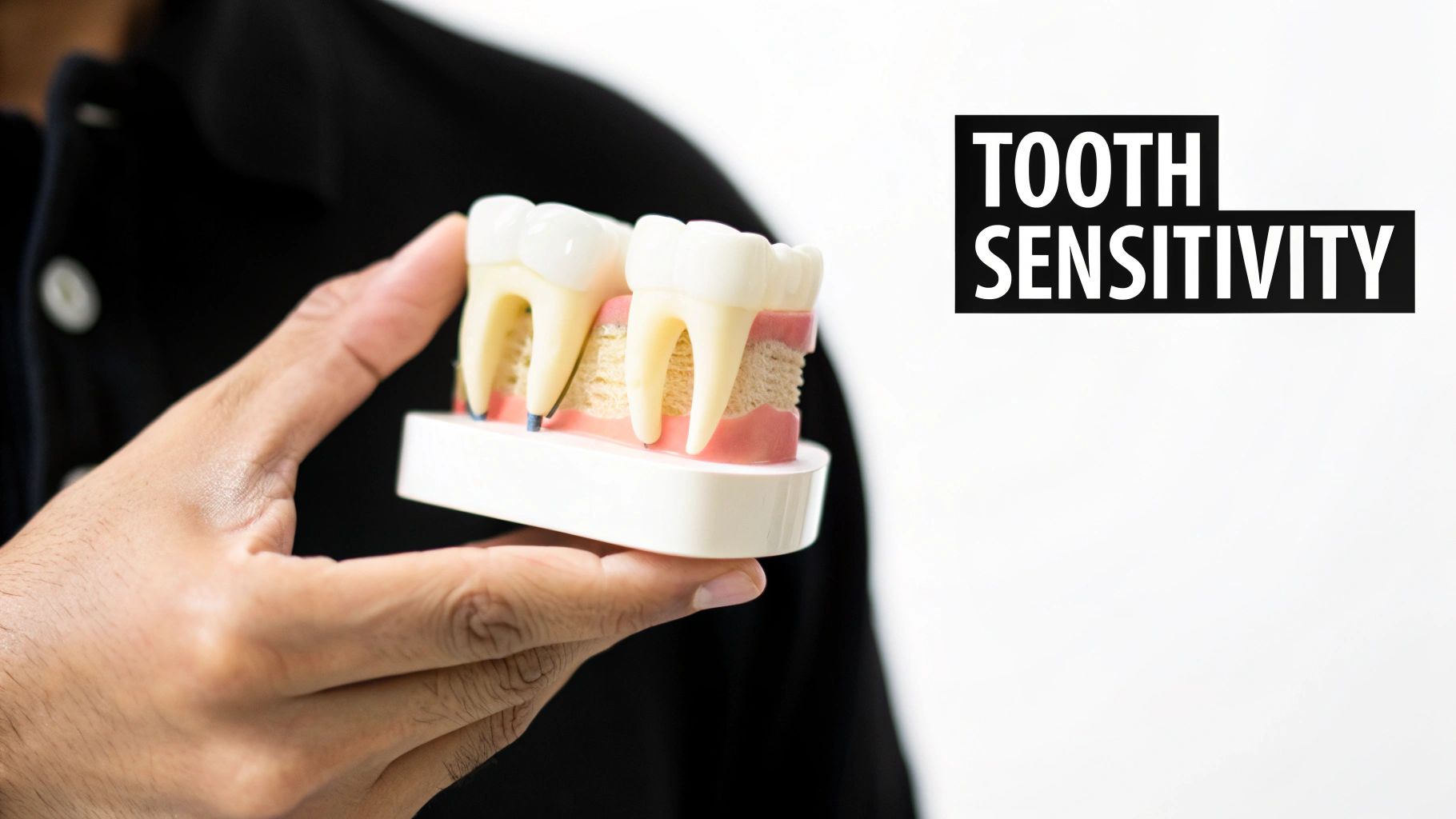
The Science Behind the 'Zing'
It helps to know what’s going on at a microscopic level. A few key things are happening when you feel that sensitivity:
- Dentin Tubules: Your teeth are filled with tiny, fluid-filled tunnels called dentin tubules that lead directly from the surface to the nerve. When whitening agents open them up, things like temperature changes travel much faster, causing that sharp reaction.
- Dehydration: Peroxide-based whiteners draw a bit of moisture out of the tooth. This temporary dehydration is thought to contribute to nerve irritation as well.
- Ingredient Concentration: The stronger the peroxide, the faster it works—but it also dials up the chances of sensitivity. A higher concentration means a more intense reaction for many people.
This is exactly why products designed for teeth whitening for sensitive teeth rely on gentler formulas and ingredients that help protect the nerve.
The good news? This sensitivity is almost always temporary. Once you finish your whitening session, the nerve calms down, and those tiny tubules naturally remineralize and seal back up.
How Common Is This Reaction?
If you feel sensitivity, you're definitely not alone. It's easily one of the most common side effects of whitening. In fact, industry analysis shows that around 67% of people report some level of sensitivity during or after whitening their teeth. The vast majority of these cases are mild and go away within a day or two after they stop the treatment.
Knowing the root cause of this discomfort is your first step toward a totally pain-free whitening experience. The very same things that cause sensitivity to whitening are often linked to what causes tooth sensitivity to cold. Once you make that connection, you can prepare your teeth and set yourself up for a comfortable and successful journey to a brighter smile.
How to Prep Your Teeth for a Comfortable Whitening Session
A little prep work goes a long way, especially if you know your teeth are on the sensitive side. Think of the next couple of weeks as a "desensitizing bootcamp" for your teeth. This proactive approach helps strengthen your enamel and calm the nerves before you even open a whitening kit, setting you up for a much more comfortable experience.
This isn't a complicated process. The whole idea is to build up your teeth's natural defenses, making them less reactive when you introduce the whitening agents. Small, consistent actions can make a massive difference in how your teeth feel during and after the treatment.
Your Two-Week Prep Routine
About 14 days before you plan to whiten, it’s time to switch up your daily oral care. The goal is simple: soothe the nerves in your teeth and give your enamel some extra strength.
First, swap your regular toothpaste for one specifically made for sensitivity. You'll want to look for a couple of key active ingredients on the label that are proven to help:
- Potassium Nitrate: This is the big one. It works by calming the tooth's nerve activity over time, essentially turning down the volume on those sharp pain signals.
- Stannous Fluoride: This ingredient does double duty. It not only helps strengthen your enamel but also creates a protective barrier over the microscopic tubules in your dentin.
Using a desensitizing toothpaste twice a day for a solid two weeks gives these ingredients enough time to build up their protective effects. Honestly, this simple change is probably the single most effective step you can take.
Pro Tip: Don't just brush and immediately rinse with water. After brushing, spit out the excess toothpaste but try to avoid rinsing for a few minutes. This lets the active ingredients hang around on your teeth longer, giving them more time to work their magic.
Strengthen Enamel with Remineralizing Pastes
If you want to give your teeth an extra layer of defense, consider adding a remineralizing paste to your routine. Products like MI Paste contain bio-available calcium and phosphate—the essential building blocks of your enamel. Think of it like a deep conditioning treatment for your teeth.
Applying a pea-sized amount after you brush can help fortify your enamel, making it less porous and more resilient against any sensitivity from the whitening process. For a detailed guide on how to apply it correctly, you can learn more about how to use MI Paste Plus from our dedicated article. I find this step is particularly helpful for people who already know their teeth are extremely sensitive.
Final Checks Before You Whiten
In the 24-48 hours right before your first whitening session, pay a little extra attention to your diet. Try to avoid highly acidic foods and drinks—things like citrus fruits, soda, and vinegar-based dressings. These can temporarily soften your enamel, which might make sensitivity worse.
By following this simple pre-treatment plan, you can start your journey toward a brighter smile without dreading that potential "zing" of discomfort. This prep work is truly the key to a successful whitening experience for sensitive teeth.
Choosing the Right Whitening Products for Your Sensitive Teeth
Walking down the dental care aisle can be a bit much, especially when every box is screaming promises of a brighter, whiter smile. If you have sensitive teeth, that choice becomes even more crucial. The goal isn't just to find something that whitens, but something that does it gently. You want a comfortable journey to a whiter smile, not a painful one.
The secret usually comes down to the active ingredient and how strong it is. A lot of products use hydrogen peroxide, which is a fast worker but can be way too intense if your teeth are sensitive.
A much gentler alternative is carbamide peroxide. It's a slow-release whitener, breaking down gradually to lift stains. This slower process is way less likely to irritate your tooth's nerve and cause those dreaded "zingers."
When you're looking at at-home kits, try to find carbamide peroxide concentrations in the 10% to 15% range. A product like the Opalescence PF 10% gel is a fantastic place to start if you're worried about discomfort.
Finding Your Perfect Whitening Match
Different products are built for different needs and comfort levels. Let's break down some of the best options out there specifically designed for people with sensitive teeth.
-
Whitening Strips with Desensitizing Agents: Modern strips have really leveled up. Many now come with sensitivity-blocking ingredients mixed right into the gel, so they protect your teeth while they whiten. They’re super convenient, easy to handle, and a great starting point for beginners.
-
Gentle Whitening Gels: Professional-grade gels, often paired with custom or thermoforming trays, give you amazing coverage. Brands like Opalescence PF are famous for adding potassium nitrate and fluoride to their formula, which actively fights sensitivity and strengthens your enamel at the same time.
-
LED Whitening Kits: These kits use a blue LED light to give the whitening gel a boost. That might sound a little intense, but most of these kits are designed with sensitivity in mind, using lower-concentration gels that are much gentler. The light just helps the gel work faster, so you don't have to wear it as long.
The market has really responded to people's concerns about sensitivity. This has led to a flood of specialized products, from gentle LED kits to peroxide-free formulas. You can see this trend in the teeth whitening strips market, which is currently valued at $83.7 million and is expected to hit $212 million by 2032. You can discover more about the growth of specialized whitening products and market trends to see how things are evolving.
Expert Tip: Always scan the ingredient list. If you see potassium nitrate or fluoride, that’s a great sign the product was made with your comfort in mind.
Sensitive Teeth Whitening Product Comparison
To make your decision a little easier, here’s a quick look at how these gentle options stack up. Think about your lifestyle, how sensitive your teeth are, and what kind of results you're after to find your best fit.
| Product Type | Key Ingredient & Concentration | Best For | Usage Time |
|---|---|---|---|
| Desensitizing Strips | Low-Dose Hydrogen or Carbamide Peroxide | Mild staining and ultimate convenience for beginners. | 30 minutes daily |
| Gentle Whitening Gel | 10-15% Carbamide Peroxide (e.g., Opalescence PF) | Moderate staining and a desire for dentist-quality, controlled results. | 30-60 minutes daily or every other day |
| LED Accelerator Kits | Low-Concentration Peroxide Gel | Those who want faster results with shorter wear times. | 10-20 minutes daily |
In the end, choosing the right product is all about finding that sweet spot between effectiveness and comfort. You really don't have to suffer to get a brighter smile. By starting with a lower-concentration formula that has added desensitizing ingredients, you can confidently get on the path to whiter teeth without fearing that painful "zing."
Your Gentle Whitening Routine for Maximum Comfort
Alright, you’ve done the prep work and picked out the right product. Now it's time to actually get started. Getting a great, pain-free result isn't just about what you use—it's very much about how you use it. A gentle, strategic routine can be the difference between a comfortable experience and one you regret.
This is more than just slapping on some strips and hoping for the best. It's about being deliberate and listening to what your teeth are telling you. With a few smart tweaks to the standard box instructions, you can take control and keep sensitivity from crashing the party.
The Application Playbook
Before you start, get your little toolkit ready. Having a timer, a few cotton swabs, and a bit of petroleum jelly on hand will make everything go much more smoothly.
- Brush Gently First: About 30 minutes before you plan to whiten, give your teeth a gentle brushing with your desensitizing toothpaste. Use a soft-bristled brush and don't go too hard—you don't want to irritate your gums right before applying the whitening agent.
- Protect Your Gums: This is a fantastic little trick that makes a huge difference. Take a cotton swab and apply a very thin layer of petroleum jelly right along your gumline. This creates a barrier to stop the whitening gel from seeping onto that sensitive gum tissue.
- Apply Your Product with Care: Whether it's strips, trays, or an LED kit, make sure the product only touches your teeth. If you see any excess gel oozing onto your gums, wipe it away immediately.
This simple diagram breaks down the basic application process for the most common types of products.
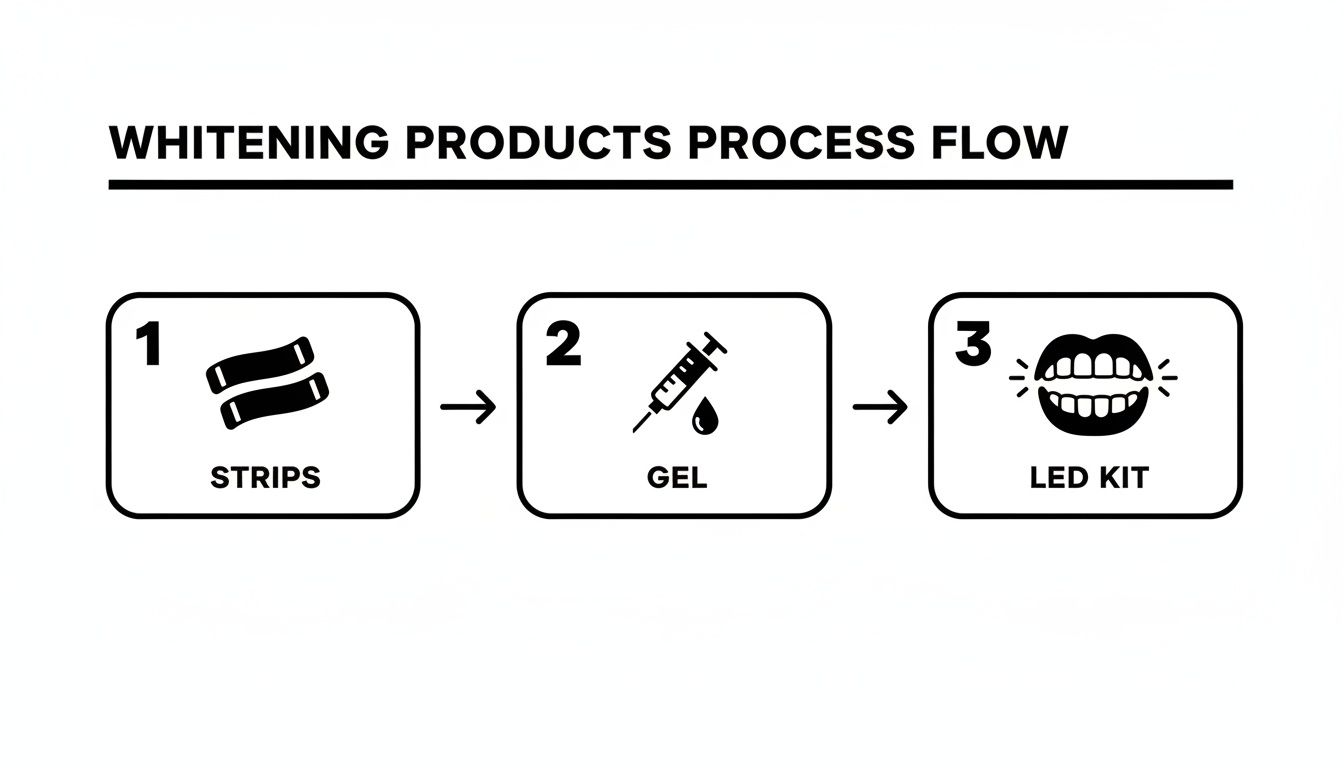
As you can see, each method—strips, gel, or LED kits—requires careful placement to keep the whitening agent where it belongs and away from sensitive areas.
A Smarter Whitening Schedule
Consistency is important, but so is recovery time. A classic mistake is whitening every single day, which doesn't give your teeth a chance to rehydrate and bounce back. A more forgiving schedule is a much better approach.
Key Takeaway: Start by whitening every other day. This simple change gives the microscopic pores in your enamel time to remineralize between sessions. It dramatically reduces the cumulative sensitivity that can build up. You'll still get those bright results, just over a slightly longer (and more comfortable) timeline.
Adjust Your Session Time
Think of the time printed on the box as a suggestion, not a hard-and-fast rule. The best teeth whitening for sensitive teeth is a process you can tailor to your own comfort.
- Start Short: For your first couple of sessions, slice the recommended time in half. If the box says 30 minutes, start with just 15. This is your test run to see how your teeth react without pushing them too far.
- Increase Gradually: If you feel fine after a few short sessions, you can slowly start adding time. Try increasing the duration by five minutes at a time, working up to the full recommended time only if you stay comfortable.
What to Do If You Feel a 'Zing'
If you're in the middle of a session and feel that sharp, sudden "zing" of sensitivity, don't try to tough it out. That's your cue to stop.
Just end the session right there. Take off the strip or tray, rinse your mouth with lukewarm water, and maybe gently brush with your desensitizing toothpaste. Your teeth are just telling you they need a break. Wait an extra day or two before trying again, and when you do, use a shorter session time. This approach puts you in the driver's seat, ensuring your whitening journey is a positive one.
Keeping Your Bright Smile Without the Sensitivity
So, you’ve put in the work and now you have a beautifully bright smile! The next step is all about maintenance—keeping that sparkle without letting sensitivity crash the party. It's not about a total lifestyle overhaul, just a few smart, consistent habits to keep your results looking great for the long haul.
The first 48 hours after whitening are absolutely crucial. Think of your enamel as being a little more porous during this window, almost like a sponge ready to soak up stains. This is the time for a "white diet." You'll want to steer clear of the usual suspects: coffee, tea, red wine, dark sodas, and berries. This one simple move helps lock in that new, brighter shade.
A Sustainable Plan for Long-Term Maintenance
For lasting success, you need a two-pronged approach: protecting your teeth from new stains and keeping sensitivity at bay. First off, continuing to use your desensitizing toothpaste is a must. Ingredients like potassium nitrate are fantastic for keeping nerve endings calm and building a solid defense against those sharp, unexpected zings.
From there, it's about building a simple, effective routine.
- Rinse After Stain-Prone Foods: Can't part with your morning coffee? No problem. Just make a habit of swishing your mouth with water right after you finish. This helps wash away the staining compounds before they have a chance to settle in.
- Use a Straw: For drinks like iced coffee, tea, or dark sodas, a straw is your best friend. It helps the liquid bypass your front teeth, dramatically cutting down on direct contact and stain potential.
- Don't Skip Your Hygiene Basics: This might sound obvious, but regular brushing and flossing do more than just fight cavities. They clear away the daily plaque buildup that can make teeth look dull and yellow over time.
Creating a Gentle Touch-Up Schedule
The good news is you won't need to repeat that initial, intensive whitening process to maintain your results. It's all about gentle, periodic touch-ups. This strategy keeps your smile looking fresh without overwhelming your teeth.
A great rule of thumb is to do one short whitening session—maybe for just 30 minutes—once every four to six weeks. For most people, this is more than enough to tackle everyday stains and keep their smile vibrant without reawakening sensitivity.
The desire for easy at-home options has fueled a massive industry. In fact, the global teeth whitening market was valued at up to $8.52 billion in 2024, with North America being the biggest consumer. This boom is all about people wanting effective, accessible products for a better smile. You can read more about the expanding teeth whitening market and its drivers on fortunebusinessinsights.com.
By sticking to a proactive maintenance plan, you’re protecting the investment you made in your smile. It's a strategy that keeps your teeth looking fantastic while ensuring comfort is always the priority. For even more detailed advice, check out our guide on how to reduce tooth sensitivity after whitening. This balanced approach lets you enjoy a brilliant smile year-round, completely worry-free.
Got Questions About Whitening Sensitive Teeth?
Even when you have a solid game plan, it's normal for questions to pop up. Getting clear, straightforward answers can make all the difference, giving you the confidence to get that brighter smile safely and without the dread of sensitivity. We’ve pulled together some of the most common concerns we hear from people just starting out.
Think of this as your go-to troubleshooting guide. These are the little details that help you handle your unique situation and stick to the best practices we’ve been talking about, making sure you feel in control from start to finish.
Can I Still Whiten My Teeth If I Have Receding Gums?
Yes, you can, but it requires a bit of extra caution. When your gums recede, they expose the root of the tooth. This part isn’t covered by that tough, protective enamel; instead, it's a softer material called cementum, which is way more porous and sensitive.
The absolute key is to keep the whitening gel from ever touching these exposed roots. Here’s how you do it:
- Pick the Right Product: Custom-fitted trays from your dentist are the gold standard here. They create a perfect seal that stops the gel from oozing where it shouldn’t. If you're using strips, you might need to get out the scissors and carefully trim them to fit the shape of your teeth, ensuring they don't overlap onto the root areas.
- Be Precise with Application: Use just a tiny dot of gel in the tray for each tooth. If any squeezes out onto your gums or the exposed root, wipe it away immediately. That petroleum jelly trick we talked about earlier is a lifesaver for creating a protective barrier along the gumline.
If you’re dealing with significant gum recession, your safest bet is to have a chat with your dentist before starting any at-home whitening routine.
How Long Does Sensitivity From Whitening Actually Last?
For the vast majority of people, any sensitivity you feel from whitening is temporary. It should fade away within 24 to 48 hours after you finish a session. This happens as your teeth naturally rehydrate and the tiny tubules in your enamel close back up.
You can definitely help speed this process along. Continuing to use your desensitizing toothpaste and steering clear of super hot or ice-cold food and drinks for a day or so will make a huge difference in your comfort level. If you feel any severe pain or the sensitivity sticks around for more than a couple of days, that's a red flag. It’s time to pause the whitening and give your dentist a call.
Key Insight: Lingering pain isn't just part of the deal—it's your body telling you something is off. Always listen to those signals. When in doubt, seek professional advice.
Is Carbamide Peroxide Better Than Hydrogen Peroxide for Sensitivity?
When it comes to sensitive teeth, carbamide peroxide is generally the winner. The big difference is in how it works. Carbamide peroxide is a slow-release agent; it breaks down gradually, releasing about 50% of its whitening power in the first two hours and then continuing to work for up to six more.
This slower, more controlled release is much gentler on the tooth's nerve than the fast and intense blast you get from hydrogen peroxide. To put it in perspective, a 10% carbamide peroxide gel is roughly equivalent in strength to a 3.5% hydrogen peroxide gel. This makes it a much milder and more comfortable starting point if you're prone to sensitivity.
Ready to finally get a brighter, more confident smile without the pain? At DentalHealth.com, we stock professional-grade, gentle whitening solutions like Opalescence PF, which is specifically formulated with desensitizing agents for maximum comfort. Explore our collection of products designed for sensitive teeth today.