
What Is Antibacterial Mouthwash? a Complete Guide
You're standing in the oral care aisle with a half-dozen bottles in your hand. One says “fresh breath,” another promises “antigingivitis,” and a third looks almost identical but seems aimed at something more serious. That's usually the moment people ask the core question, what is antibacterial mouthwash, and whether the bottle in front of them is a helpful daily habit or something they should only use for a short stretch.
The short answer is that antibacterial mouthwash is a therapeutic oral rinse designed to reduce harmful bacteria in the mouth, especially the bacteria involved in plaque and gingivitis. It's not the same thing as a minty rinse that only makes your mouth feel clean for a while. Used well, it works alongside brushing and flossing, not instead of them.
What Antibacterial Mouthwash Does
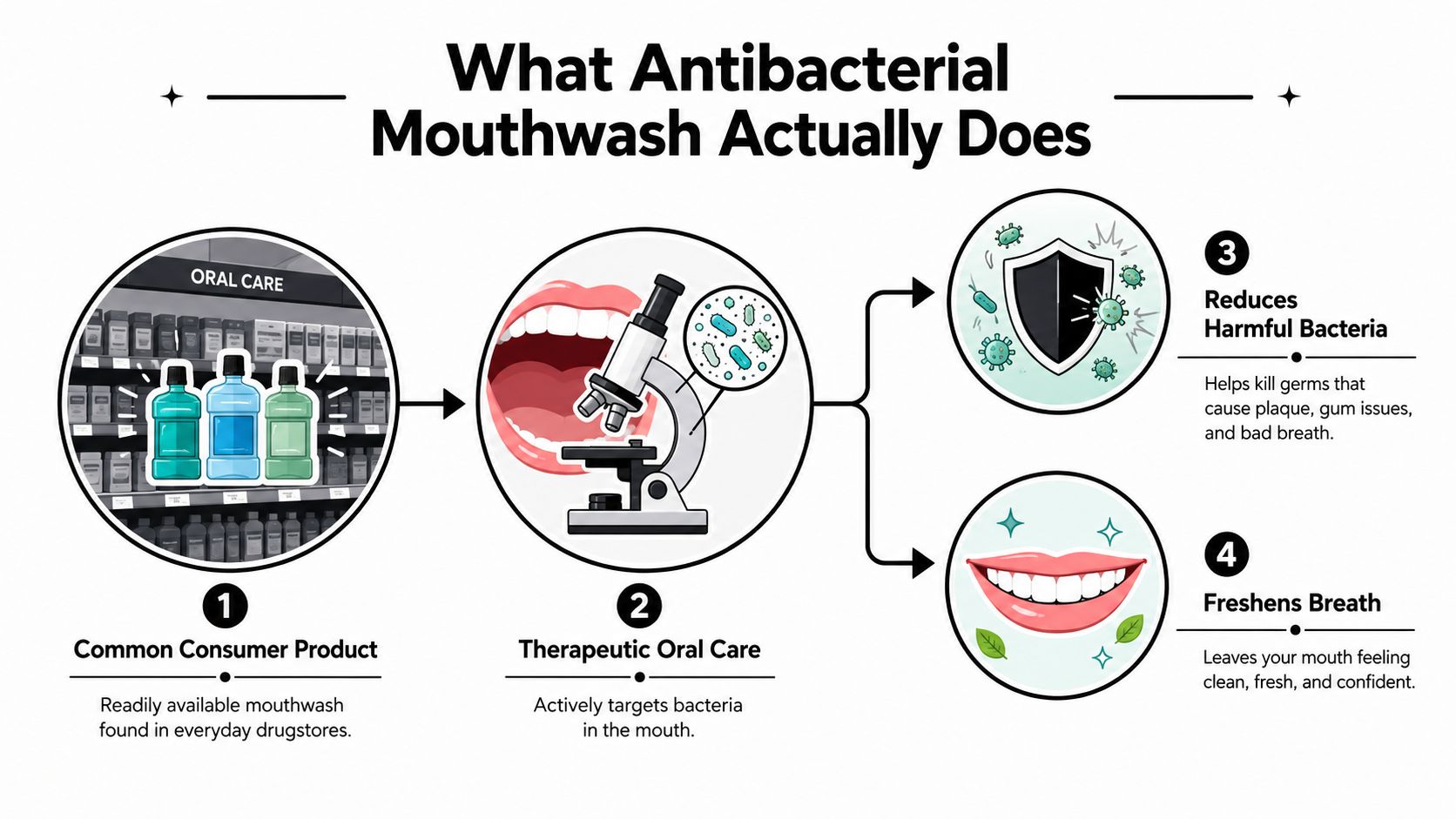
A lot of shoppers pick up a bottle because they want fresher breath, but the category is broader than that. Antibacterial mouthwash is a rinse made to act on bacteria in the mouth and to disturb the sticky film that helps those bacteria cling to teeth and gums. The American Dental Association lists therapeutic mouthrinses with active ingredients such as chlorhexidine, cetylpyridinium chloride, and essential oils as examples of this kind of product ADA mouthrinse guidance.
The practical question is whether the rinse is meant for everyday support or for a specific short-term problem. A toothbrush cleans the surfaces it can reach, and floss helps between teeth. A therapeutic rinse can wash through areas near the gumline and lower the bacterial burden that contributes to plaque buildup. That is why it is treated as an adjunct, and not a substitute for brushing and flossing. The strongest evidence keeps tying its use back to plaque control and gum health Cochrane review summary.
A simple way to tell the difference from a cosmetic rinse is to look at the job the bottle is meant to do. If it is only there to leave a minty taste, it is serving a freshness role. If the label points to plaque, gingivitis, or prescription use, the rinse is meant to do more than freshen breath.
Practical rule: if the label talks about bacteria, plaque, gingivitis, or prescription use, you are probably holding a therapeutic rinse, not just a breath freshener.
How Antibacterial Mouthwash Works in Your Mouth
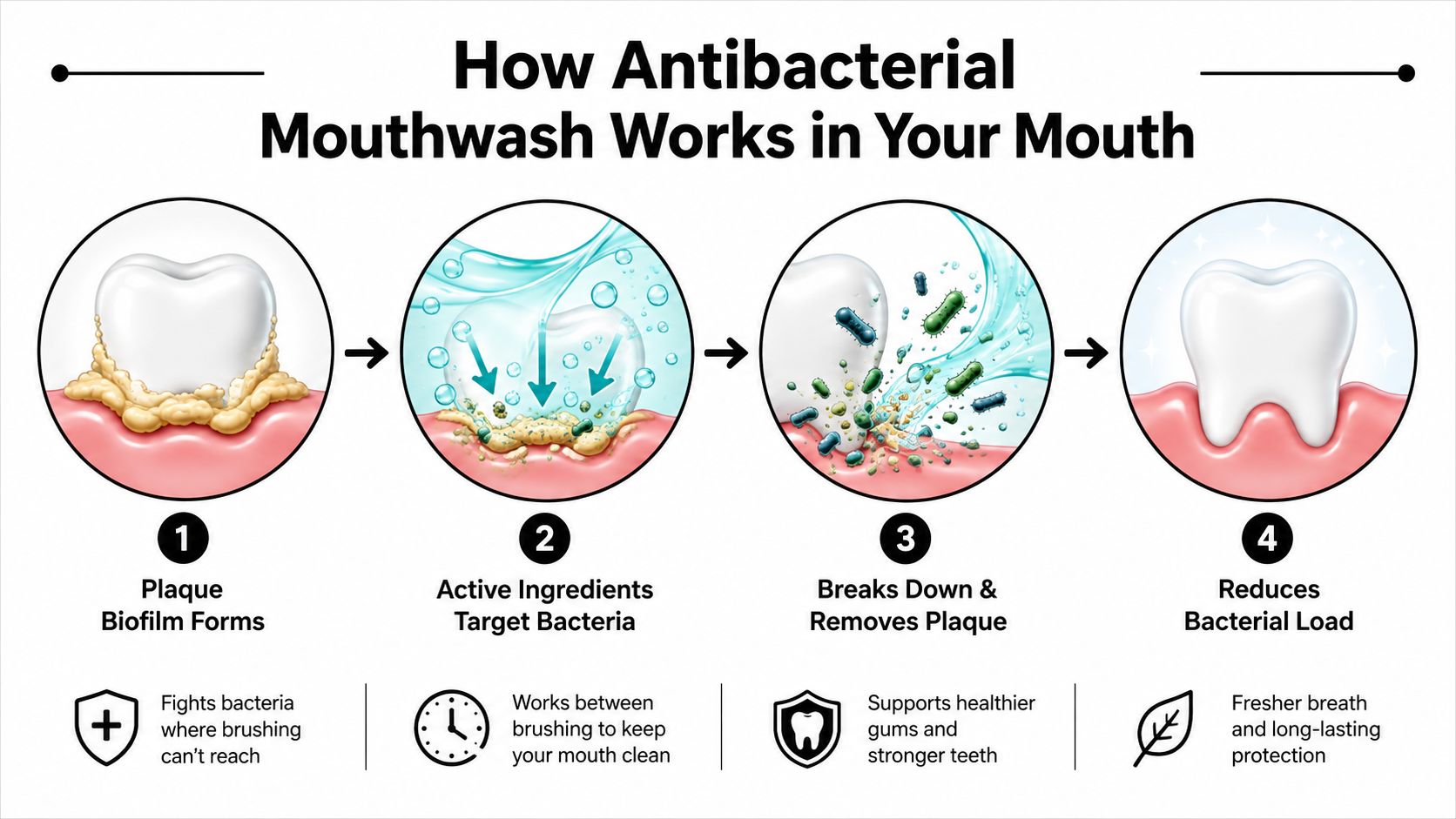
Your mouth is a busy place, even after brushing. Bacteria collect on teeth and along the gums, then organize into a biofilm, which is the scientific term for plaque. Plaque behaves like the film that lingers on surfaces long after cleaning, a sticky layer that gives bacteria a place to stay.
What the active ingredients are doing
Antibacterial rinses do not all work in exactly the same way, but they are trying to reach the same result. Chlorhexidine is a broad-spectrum antiseptic used clinically for plaque and gingivitis control. CPC is a quaternary ammonium compound that disrupts bacterial cell membranes. Essential oils work through antimicrobial effects that help reduce bacterial activity. In each case, the rinse is trying to make the mouth a less friendly place for plaque formation mechanism overview.
That matters because plaque is more than a surface film. It sets the stage for gum irritation, and if it is left undisturbed, it becomes harder to remove. A rinse cannot replace brushing and flossing, but it can weaken the bacterial environment that helps plaque persist.
Why formulation details matter too
The active ingredient is only part of the story. Published formulations vary widely in pH, and that affects stability, taste, and how comfortable the rinse feels in real life. If a rinse tastes too harsh or leaves an unpleasant feeling, people often stop using it. In practice, the bottle that looks strongest on paper is not always the one that fits daily use.
That is why the choice often comes down to intent. A rinse meant for short-term therapeutic use may be a better fit for a flare-up or a dentist-directed plan, while a gentler formula may make more sense for longer-term support. The right answer is not always the strongest label, it is the one that matches the problem you are trying to solve.
A mouthwash that people abandon after two uses does not help much, even if the ingredient list looks strong.
Key Active Ingredients You Will See on the Label
The label usually tells you more than the marketing does. Once you know the major ingredients, you can tell whether you're buying a short-term therapeutic rinse, a milder daily rinse, or something that's really just for taste and freshness. The chart below keeps the categories straight.
| Active Ingredient | Typical Concentration | Best Suited For | Notable Consideration |
|---|---|---|---|
| Chlorhexidine gluconate | 0.12% to 0.2% | Short-term plaque control, gingivitis, dentist-directed use | Strongest therapeutic profile, can stain and alter taste with longer use |
| Cetylpyridinium chloride | 0.045% to 0.1% | OTC antibacterial support for daily oral hygiene | Generally milder, less potent than chlorhexidine |
| Essential oils | Varies by formula | People wanting therapeutic support with a familiar rinse format | Effectiveness depends on the full formula, not just the flavor profile |
| Hydrogen peroxide | Varies by formula | Some whitening or antimicrobial routines | Can irritate sensitive mouths if overused |
| Zinc salts | Varies by formula | Breath control formulas | More often used for odor management than strong plaque suppression |
If you want a deeper ingredient breakdown, the label guide at this DentalHealth.com article on ACT rinse ingredients is a useful reference point for comparing therapeutic ingredients without getting lost in brand hype.
Chlorhexidine is the most studied therapeutic option
Chlorhexidine, often shortened to CHX, is the ingredient dentists reach for when they want a strong short-term antibacterial effect. In comparative laboratory and clinical studies, 0.2% CHX produced an 18.38 mm average zone of bacterial inhibition and reduced bacterial counts by 23.13 CFU over two weeks, while Listerine also reduced counts but less strongly in that study formulation and comparison review. That doesn't make one ingredient “better” in every situation, but it does show why CHX still sits near the top of therapeutic discussions.
CPC and essential oils are common OTC categories
CPC is usually found in lower-concentration over-the-counter rinses and is often chosen for day-to-day plaque support. Essential-oil rinses take a different route, using a blend rather than a single antiseptic. The trade-off is simple, stronger ingredients can mean stronger side effects, while milder options may be easier to use consistently.
Hydrogen peroxide and zinc show up in narrower roles
Hydrogen peroxide rinses are often connected with whitening or short-term antimicrobial use, and zinc salts show up in products aimed at breath management. They can be useful, but they're not the same thing as a focused therapeutic rinse for gingivitis control.
What the Clinical Evidence Shows
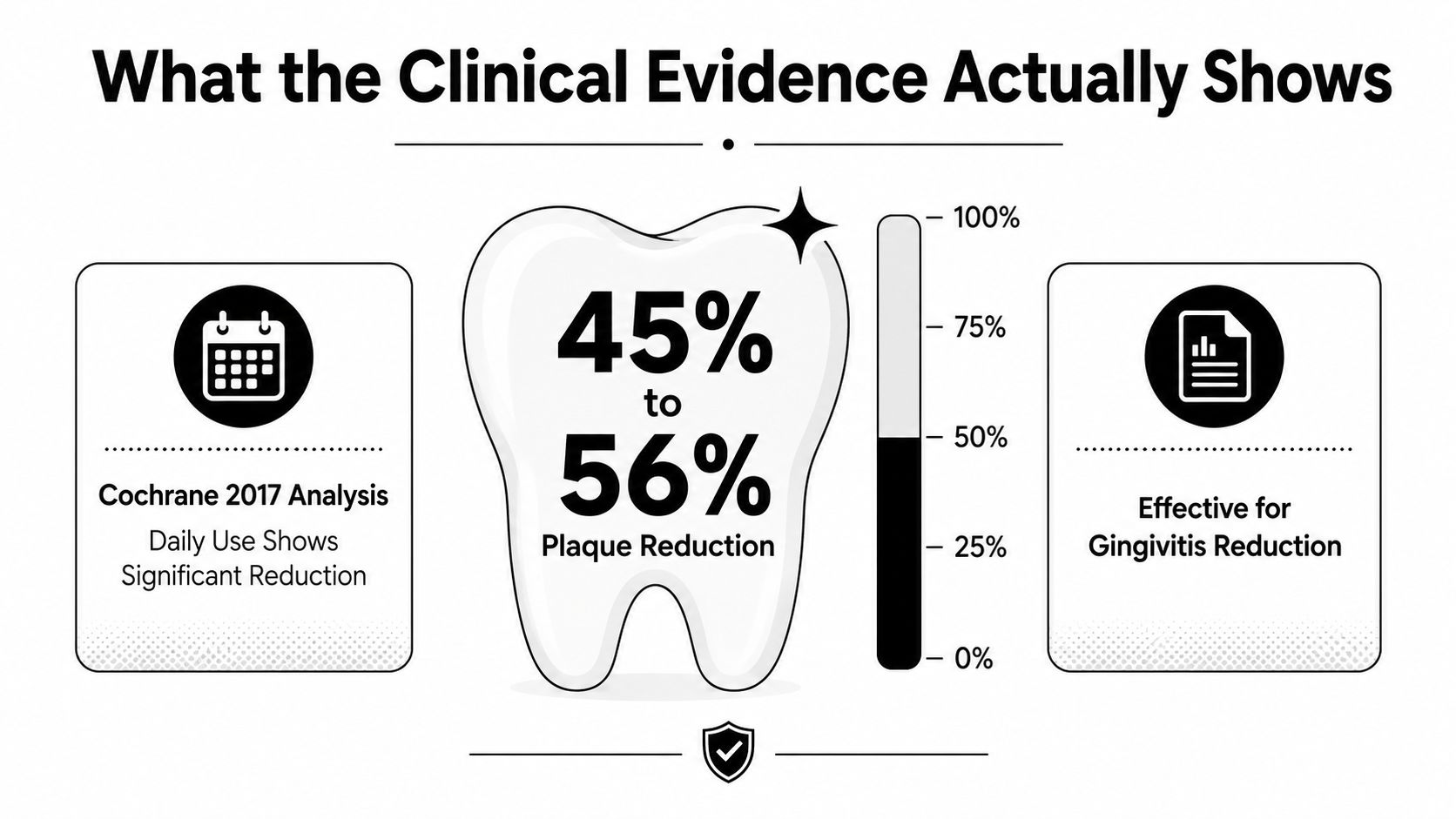
Clinical research supports antibacterial mouthwash as a focused tool for lowering plaque and helping with gingival inflammation. A 2017 Cochrane review found that daily chlorhexidine mouthwash used for 4 to 6 weeks produced a large reduction in dental plaque versus placebo or no mouthwash, based on 12 clinical trials with 950 participants and a standardized mean difference of −1.45 (95% CI −1.00 to −1.90) Cochrane summary. That is the kind of evidence dentists look for when they recommend a rinse for a specific short-term goal.
The pattern in later research
Later reviews have continued to identify chlorhexidine and essential-oil rinses as the therapeutic categories with the most consistent results for plaque and gingivitis reduction. A newer trial also reported clinically meaningful effects after 3 and 6 months, with relative improvements of 6.2× for gingivitis and 5.3× for gingival severity versus control formulation review. The exact product and study setup still matter, but the overall pattern is steady. Therapeutic rinses can help when the goal is gum health, especially when a dentist wants an extra layer of control beyond brushing and flossing alone.
The limits matter as much as the benefits
Most studies are still relatively short, often six months or less, so the evidence supports practical use but not careless, open-ended daily use. Mouthwash works best as an add-on to brushing and flossing, because the physical removal of plaque is still the foundation. A rinse can lower the bacterial burden, but it cannot fully replace the mechanical work of cleaning tooth surfaces.
The practical takeaway is simple. The evidence supports targeted use, especially when gum inflammation is already a concern or a dentist has suggested a prescription rinse, rather than leaving any antibacterial product on the sink for automatic daily use.
Antibacterial Mouthwash vs Cosmetic Mouthwash
A cosmetic rinse and a therapeutic rinse can look almost identical on the shelf, which is why people confuse them. One mainly leaves your mouth tasting fresher. The other is built to change the bacterial environment in your mouth.
| Cosmetic Mouthwash | Antibacterial Mouthwash |
|---|---|
| Masks odor | Kills or suppresses bacteria |
| Temporary effect | Long-term oral-health support |
| No therapeutic action | Clinically studied ingredients |
| Often flavor-driven | Often ingredient-driven |
What to look for on the label
If the front of the bottle promises a minty blast, that's a flavor claim. If it mentions plaque control, gingivitis, or a named active ingredient, you're in therapeutic territory. That distinction matters because a fluoride-only rinse or a flavor-only rinse should not be confused with an antibacterial product.
Regulatory and professional language tends to follow that same split. Cosmetic rinses focus on temporary freshness, while therapeutic rinses are formulated and reviewed for oral-health outcomes. The label is the fastest way to tell which one you've picked up.
The video below gives a visual overview of how rinse categories differ in everyday use.
Quick filter: if your main goal is breath for the next hour, cosmetic may be enough. If your goal is plaque or gum support, look for a therapeutic antibacterial rinse.
Common Reasons Dentists Recommend Antibacterial Rinses
Dentists usually recommend antibacterial rinses when they want to lower bacterial load in a mouth that needs extra help. That can happen with gingivitis, after oral surgery, around implants, or when braces and fixed appliances trap plaque in hard-to-clean spots. The rinse is there to support healing or control inflammation while normal cleaning is harder than usual.
Real-world situations where they make sense
- Gingivitis or early gum irritation: A therapeutic rinse can support plaque control when gums are already inflamed.
- Post-surgical care: After dental surgery or extraction, dentists may use a stronger rinse short term to limit bacterial buildup while tissues heal.
- Implant maintenance: Implants need careful plaque control, and rinses can help when brushing access is awkward.
- Orthodontic appliances: Brackets and wires create tiny hiding spots where bacteria collect more easily.
- Bacterial bad breath: If halitosis has a bacterial cause, a rinse can help reduce odor at the source.
- Short recovery periods: During oral infections or when brushing is difficult, a rinse may be part of a temporary hygiene plan.
A prescription product becomes the smarter choice when the mouth needs a stronger, supervised intervention. Chlorhexidine is commonly prescription-only and typically used under professional direction, which is exactly why consumer advice often feels vague around duration and overuse ADA-aligned overview.
Avoid self-treating with a strong antibacterial rinse if you have open oral wounds unless a dentist has told you to use it, and be cautious with young children or anyone with significant dry mouth. The right rinse depends on the reason you're using it, not just the fact that it's sold in the oral care aisle.
Benefits and Side Effects You Should Know About
Antibacterial mouthwash can solve a real problem, but it can also create one if you use the wrong formula for too long. The upside is easier to describe. The downside is the part many bottles gloss over.
Benefits people actually notice
A therapeutic rinse can reduce plaque, support gum health, and make breath fresher when the odor is linked to bacteria rather than just food. It can also be useful during healing periods when thorough brushing or flossing is temporarily difficult. For many people, that support is the difference between getting through a rough stretch and watching gum irritation linger.
Trade-offs that deserve attention
Chlorhexidine is the big one to watch. It can cause temporary brown staining of teeth and tongue, taste alteration, and more tartar with prolonged use. Alcohol-containing rinses can irritate soft tissue and dry the mouth, which is a problem for people who already struggle with dryness. CPC and essential oils are often milder, but they're usually less potent than chlorhexidine.
If you're dealing with mouth soreness or ulcer-type irritation, the ingredients matter even more. A useful consumer guide on that topic is this DentalHealth.com article about antimicrobial mouthwash for ulcers, because the wrong rinse can sting when the tissues are already tender.
The main point is simple. Duration matters. Long-term daily use of a strong antibacterial rinse without professional guidance is usually a bad idea, especially with chlorhexidine. Therapeutic mouthwash should be matched to the problem, then stepped down when the job is done.
How to Choose and Use Antibacterial Mouthwash Safely
A bottle of mouthwash can look simple on the shelf, but the label tells you how it should be used. Start with the ingredient list, because the active ingredient should match the job. If you need short-term therapeutic support, look for an antibacterial ingredient such as chlorhexidine or CPC. If you want something for everyday use, check whether the rinse is alcohol-free, whether it carries the ADA Seal of Acceptance or a similar professional endorsement, and whether the flavor is mild enough that you will keep using it. A rinse only helps if you can tolerate it.
A few practical checks make the decision easier:
- Match the ingredient to the goal: Stronger actives fit dentist-directed short-term use, while milder formulas are better for routine maintenance.
- Check alcohol content: Alcohol-free rinses are usually easier on dry or sensitive mouths.
- Watch for fluoride: Some people prefer fluoride in the same routine, especially if cavity prevention matters.
- Pay attention to taste: If you dislike the flavor, you are less likely to use it as directed.
- Use the label directions: Measure the cap, swish for the listed time, and spit it out. Do not swallow it.
After rinsing, wait about 30 minutes before eating or drinking, so the ingredients can stay on the mouth surface a little longer. If you have bleeding gums, persistent bad breath, mouth sores that last more than two weeks, or a recent procedure with specific post-op instructions, call a dentist instead of trying to solve the problem with another bottle.
For a broader shopping checklist, the guide to ADA-approved mouthwashes at DentalHealth.com is a useful place to compare therapeutic and cosmetic products side by side.
A strong antibacterial rinse is generally best as a short-term tool unless a dentist tells you otherwise. Daily use without professional guidance can be too much, especially with chlorhexidine, because the rinse may solve one problem while creating another. Prescription chlorhexidine makes sense when a dentist wants targeted plaque and gingivitis control after surgery, during active gum inflammation, or when routine cleaning needs backup.
If you are still asking how long is too long, the safe answer is simple. Once a strong rinse turns into an everyday habit, it is time to reassess with a dentist. A prescription rinse is the smarter choice when the mouth needs a temporary reset, while a milder over-the-counter product is usually better for maintenance.