
Zoom Whitening System: A Complete Guide to Brighter Teeth
You're looking at a photo from last weekend and your smile looks duller than you remember. It's not your imagination. Years of morning coffee, afternoon tea, and the occasional glass of red wine leave pigments behind, and regular brushing doesn't lift what's settled below the surface. That's usually the moment people start searching for the Zoom Whitening System, then get confused because the name seems to describe several different products at once.
What the Zoom Whitening System Actually Is
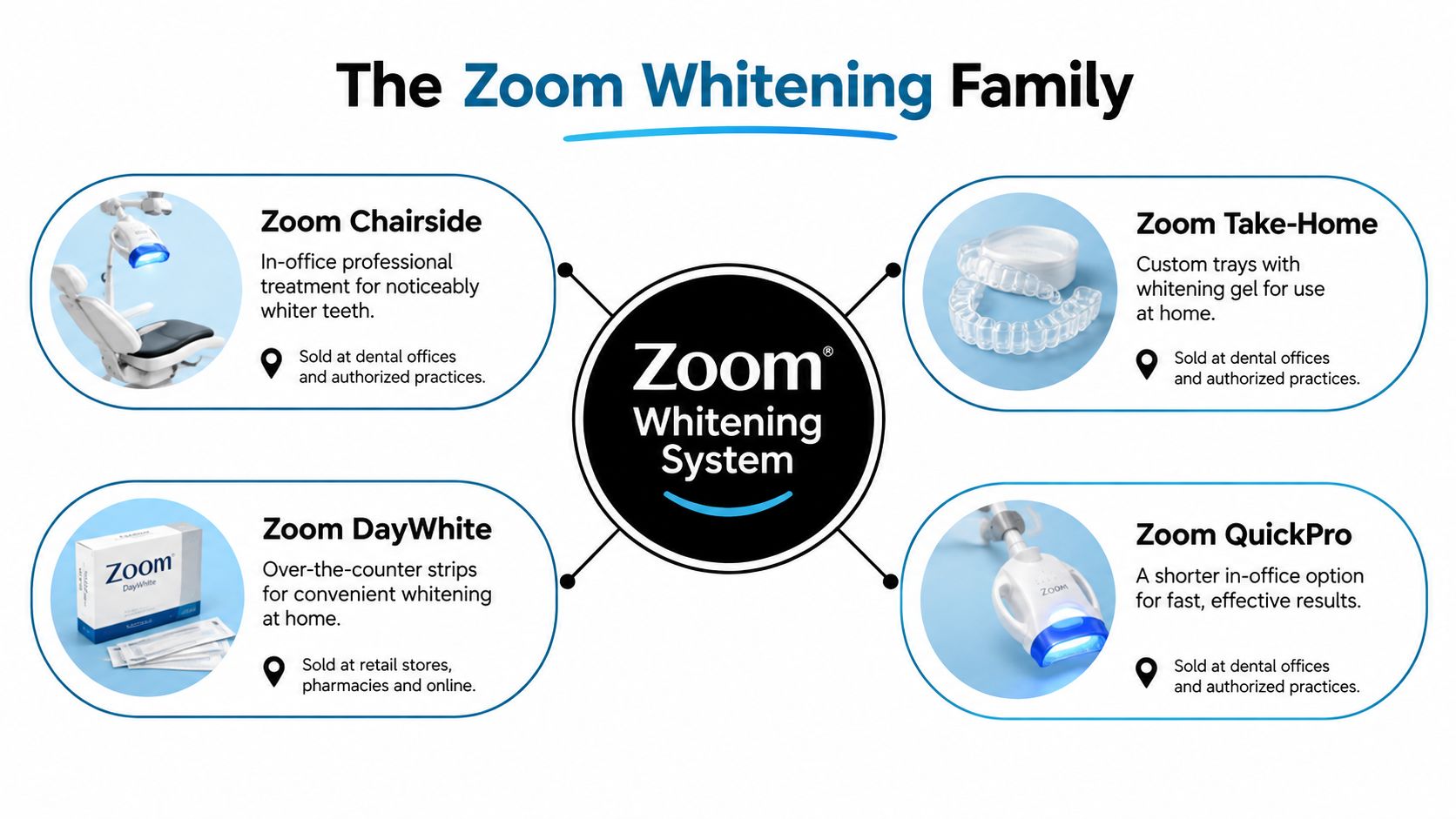
Zoom isn't one tube of gel. It's a family of professional whitening options made by Philips, sold through dentists and select retailers, and the format you choose changes almost everything about the experience. One path happens in a dental chair with a light positioned in front of your teeth. The other happens at your bathroom sink, with gel you place in trays over several days.
Think of a patient we'll call Maya. She's got a reunion coming up, she drinks two coffees a day, and strips from the drugstore left her front teeth uneven, brighter in the middle and darker near the edges. She types "Zoom" into a search bar expecting a single answer and finds chairside treatment, take-home kits, and maintenance gels all using the same name. Her confusion is the normal starting point, not a sign she's missed something obvious.
Teeth Work a Bit Like a Hard Sponge
Your enamel looks smooth and solid, but under magnification it's porous. Those microscopic pores absorb color over time from coffee, tea, tobacco, and wine, and the dentin layer underneath also yellows as you age. That's why surface polishing at a cleaning helps a little but can't reverse deeper discoloration. The stain isn't only sitting on your teeth. Some of it's in them.
Whitening gels work because hydrogen peroxide and carbamide peroxide release reactive oxygen molecules. Those molecules travel through enamel and react with large pigmented compounds, breaking them into smaller fragments that reflect light differently and appear less colored. You're not painting teeth white or scrubbing a layer off. You're changing how the trapped stain molecules look.
A useful picture to keep in mind: peroxide doesn't bleach a tooth the way paint covers a wall. It works more like breaking a dark ink spot into tiny pieces your eye no longer reads as dark.
Why Strength and Contact Time Both Matter
Patients often ask why a professional gel works faster if the basic chemistry sounds similar to a strip. The answer comes down to two variables your dentist can control more precisely, peroxide concentration and contact time. A higher concentration generally acts faster, while a lower concentration used repeatedly over several days can still produce a substantial change. That trade-off sits at the center of every Zoom format decision you'll make.
Fit matters just as much. A strip that bunches or slips delivers gel unevenly, so some areas whiten and others barely change. A custom tray or a carefully isolated in-office application keeps gel against the tooth surface consistently, which is a major reason professional results tend to look more even. Consistent contact also means less gel wandering onto gum tissue, where it can cause irritation.
- Chairside Zoom: a dentist applies gel in the office and uses the WhiteSpeed LED during the appointment
- Take-home Zoom: you apply gel yourself in trays, usually with a dentist's guidance on timing and strength
- Maintenance use: smaller, periodic applications after an initial treatment to slow the return of stain
Those three uses overlap in marketing language, which is why people compare prices and timelines that don't line up. An in-office fee covers staff time, isolation materials, and same-day shade change. A take-home kit covers trays and gel you manage yourself over days. Judging them as if they're the same product in different boxes leads to the wrong purchase.
By the end of this guide, you should be able to answer three practical questions for your own mouth. How quickly do you need a visible change, how much sensitivity can you realistically tolerate, and does your type of discoloration respond to peroxide? The Zoom Whitening System can be a strong option, but only when the format matches those answers.
In-Office Zoom WhiteSpeed Versus Take-Home Gels
Set the two main routes side by side and the differences stop feeling abstract. WhiteSpeed concentrates treatment into one supervised appointment. Take-home gel spreads the same basic chemistry across repeated sessions you control, which gives you scheduling flexibility but asks for consistency.
| Feature | In-Office WhiteSpeed | Take-Home Gel |
|---|---|---|
| Who applies it | Dental team | You, following professional instructions |
| Gel used in studied protocol | 6% hydrogen peroxide in four 15-minute applications with LED acceleration, as described in the Philips Zoom clinical booklet on WhiteSpeed protocols | Peroxide gel placed in custom trays for repeated use |
| Time commitment | Single appointment | Repeated sessions over several days |
| Control over pace | Team monitors you in the chair | You can pause if sensitivity builds |
| Cost tier | Higher, because it includes chair time | Lower entry cost, plus tray fabrication |
| Best fit | Deadline driven, wants same-day change | Prefers gradual change and home convenience |
Who Each Route Suits
Choose the chairside route if you've got a wedding, photos, or a work event close enough that waiting several days feels impossible. You'll leave with the change already visible, and you won't have to remember nightly tray wear. The trade-off is that you experience the full treatment intensity in one sitting, with less ability to spread out sensitivity.
Take-home gel suits a different temperament. You can whiten in the evening, stop for a night if your teeth feel zingy, and build the result gradually. For many sensitivity-prone patients, that control is worth more than speed. It's also the format most naturally reused later for touch-ups, because you already own the trays.
Budget plays a role, but don't compare only sticker prices. Ask whether trays, maintenance gel, and a follow-up shade check are included. A cheaper starting point that leaves you buying replacements separately may not stay cheaper, while an in-office visit that includes take-home maintenance can protect the result longer.
What Happens During a Chairside Zoom Appointment
Knowing the sequence in advance removes most of the anxiety. Your appointment starts with a shade assessment, where the team records your starting color so you're not relying on memory under bathroom lighting later. They'll also check that your teeth and gums look healthy enough to proceed.
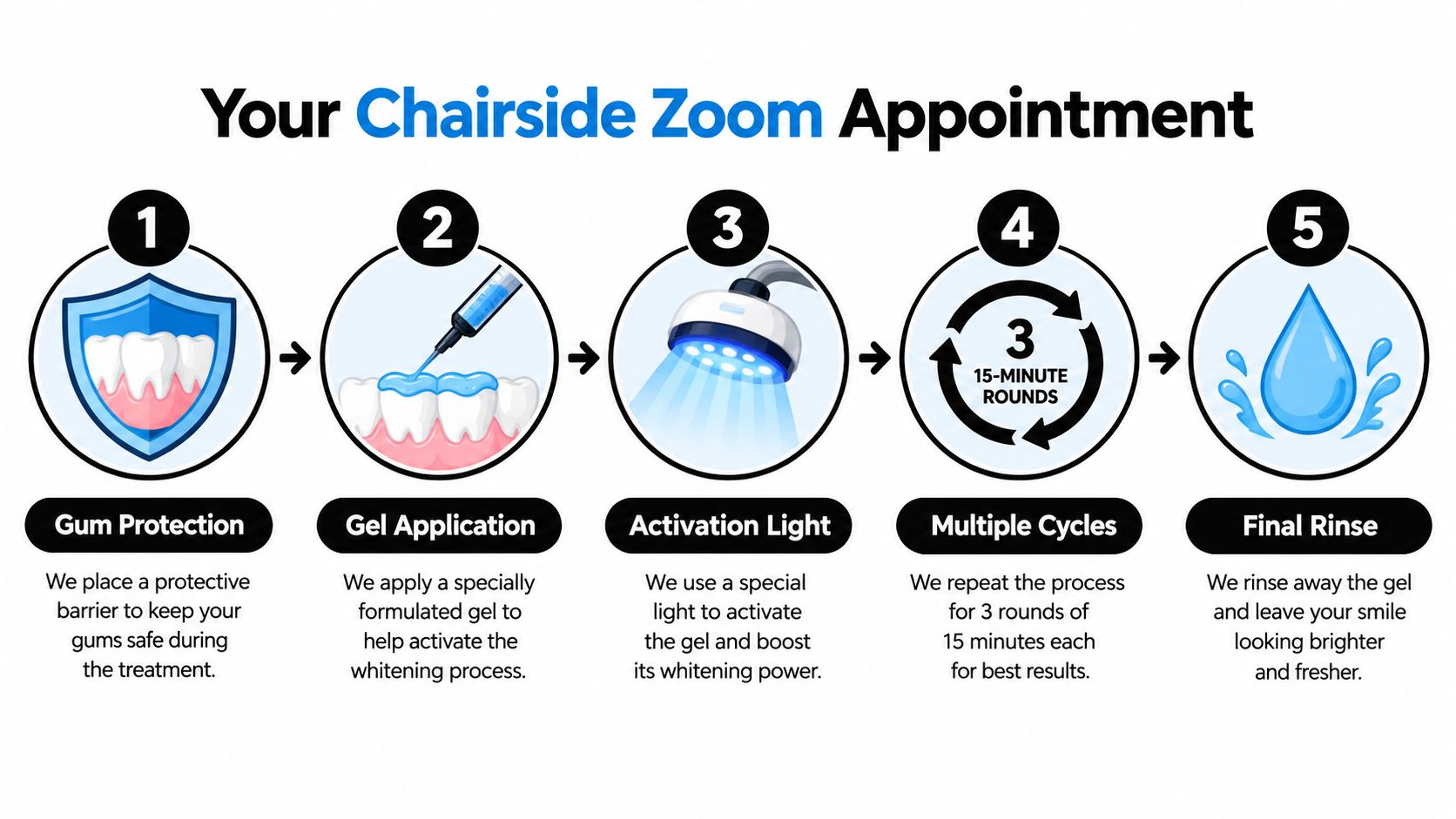
The visual below maps the appointment from protection through the final rinse, so you can picture each stage before you're in the chair.
In the Chair, Step by Step
- Isolation first: the team places a cheek retractor and applies a protective barrier over your gums so gel stays on teeth, not soft tissue
- Gel application: peroxide gel is painted onto the visible surfaces of your teeth in a controlled layer
- Light cycles: the WhiteSpeed LED is positioned for timed applications, with gel refreshed between cycles
- Shade checks: the team can compare your progress against the starting shade during the visit
- Finishing care: gel is removed, your mouth is rinsed, and a fluoride or desensitizing product may be applied
Most sensations during treatment are mild, such as tingling or warmth, but tell the team immediately if you feel a sharp zing or burning. They can check the barrier, adjust positioning, or pause. Staying quiet to be polite helps no one, and early feedback lets them protect your comfort without abandoning the session.
If you want to see the pace and positioning before you book, this short clinical video shows how the equipment is placed and what the patient experience looks like.
You'll leave with aftercare instructions and, in many practices, trays or gel for later maintenance. Ask when you should reassess your shade, because the color you see walking out can shift as your teeth rehydrate.
How Many Shades Whiter Can You Realistically Expect
Before-and-after photos online usually show the most dramatic responders under ideal lighting. Clinical shade guides give you a more honest frame. In the foundational 2003 study of Zoom! Take-Home gel in 25 subjects using 6% hydrogen peroxide over six nights, teeth lightened by an average of 6.49 shades by day 4 and 7.72 shades by day 7 on the VITA Shade Value Oriented Guide, both statistically significant at p = 0.0001.
A second scale in that same study, the Trubyte Bioform Color Ordered Shade Guide, recorded mean changes of 9.31 shades by day 4 and 10.77 shades by day 7, also at p = 0.0001. Those numbers differ because shade guides don't divide color identically. Don't shop by the biggest number. Shop by whether the measurement came from a structured guide or an instrument rather than a selfie.
Immediate Brightness Is Not Your Final Shade
Teeth often look extra bright right after treatment, partly because they've dried out during isolation. As they rehydrate over the following days, some of that initial pop settles. Dentists call that color rebound, and it doesn't mean treatment failed. It means your stabilized shade is the fair one to judge.
That's also why follow-up checks matter when you're evaluating realistic professional teeth whitening results over time. A result that still looks clearly lighter after your teeth have settled, in normal daylight and without a filter, is the result you paid for. Maintenance gel can then help you hold that settled shade rather than chasing the temporary brightest moment.
Does the Zoom Light Actually Matter
The lamp is the part everyone remembers, so it's natural to assume the lamp does the whitening. It doesn't work that way. Peroxide does the chemical work described earlier. The light is best understood as an adjunct to a specific protocol, not an independent bleaching agent you could use without gel and expect the same outcome.
Evidence from different eras of Zoom technology points in slightly different directions, which is exactly why protocol details matter. In a 2009 randomized trial of 33 adults comparing 25% hydrogen peroxide with Zoom light, gel alone, and light alone, the adjusted change in yellowness immediately after treatment was -3.1 for gel plus light, -2.0 for gel alone, and -2.4 for light alone. By day 30 those values had moved to -1.7, -1.1, and -0.5, showing meaningful rebound after the initial change.
The light may improve measured shade matching under the manufacturer's studied WhiteSpeed conditions, but that doesn't make it a substitute for peroxide exposure or good case selection.
The Sensitivity Part of the Equation
That same trial reported tooth sensitivity in 91% of the gel-plus-light group, with most cases classified as moderate or severe. Newer protocols use different gels and LED technology, so don't transfer that figure directly to every modern appointment. Do take the warning seriously if cold drinks already bother you. Ask how the practice adjusts intensity, pre-treats sensitivity, and responds if discomfort escalates mid-cycle.
A separate comparison offers useful balance. A randomized clinical study of 22 adults comparing Zoom with a competing in-office system found both systems produced statistically significant whitening, with Zoom averaging 1 to 2 additional shades at measured follow-ups and no statistically significant difference in induced sensitivity between systems. Small studies don't settle the question for every patient, a point worth remembering when you read claims about whether LED teeth whitening kits actually work.
If speed matters most and your teeth aren't usually sensitive, light-assisted treatment may be a reasonable trade. If comfort is your limiting factor, a gel-only or take-home pace gives you more control. Neither answer is a character judgment. It's matching intensity to tolerance.
Using Zoom Take-Home Gels the Right Way
Take-home treatment starts in the dental office, not at your sink. The team takes impressions or a digital scan, fabricates custom trays that hug your arch, and checks the fit before you leave. That fit keeps gel distributed evenly and reduces leakage onto your gums, which is where many one-size kits go wrong.
At home, you'll place a small amount of gel in each tooth well, seat the tray fully, and wipe away any excess that squeezes out. More gel doesn't mean faster whitening. It mostly means more gel on tissue that was never meant to hold peroxide.
Building a Routine You Will Actually Follow
- Brush and floss first: clean surfaces let gel contact enamel evenly instead of sitting on plaque
- Use less than you think: a thin ribbon per tooth well is the principle, follow your product instructions for exact amounts
- Track your sessions: note shade, wear time, and sensitivity so you and your dentist can adjust intelligently
- Store gel as directed: heat and expired product undermine consistency, so check labels before each course
Consistency beats intensity for this format. The take-home evidence discussed above came from repeated nightly use over about a week, not from one marathon session. If sensitivity builds, skipping a night and using a desensitizing product is usually a smarter move than pushing through and then abandoning treatment entirely.
Keep your trays clean, dry, and stored in their case. A warped or cracked tray changes gel distribution, and pets find them irresistible. If your bite changes or you get new dental work, bring the trays to your next visit so the fit can be checked.
Aftercare, Sensitivity Relief, and Long-Term Maintenance
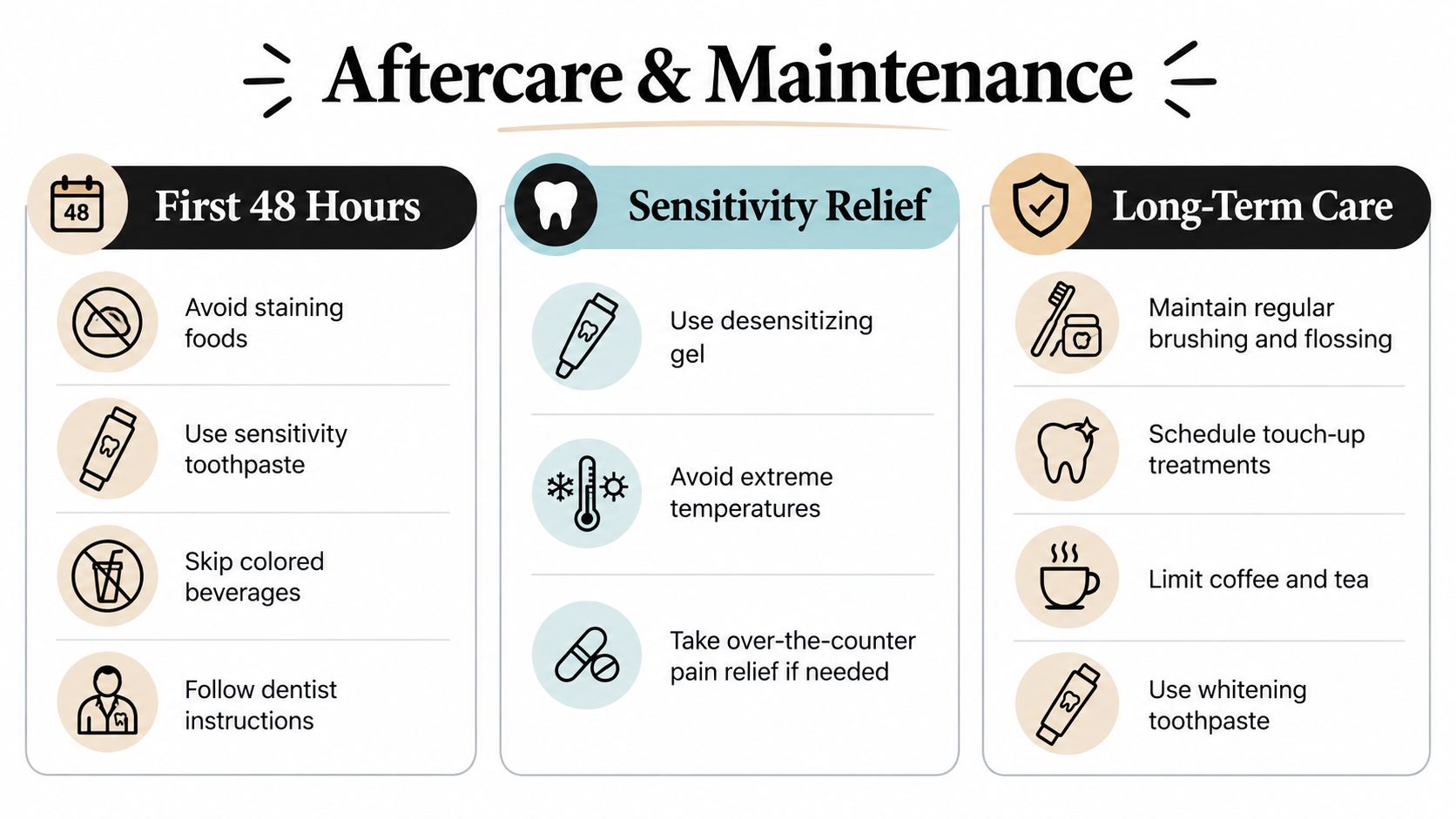
Freshly whitened teeth pick up color more readily for a short window after treatment. For the first two days, treat anything that would stain a white shirt as a risk. That includes coffee, tea, red wine, dark berries, tomato sauce, curry, and tobacco.
Managing Sensitivity Without Panicking
Short-lived sensitivity is common after peroxide whitening and, in the take-home study referenced earlier, minor sensitivity reported during treatment resolved within several days after treatment ended. Desensitizing toothpaste, fluoride products recommended by your dentist, and avoiding very hot or cold foods for a while can make that window easier. Our guidance on how to reduce tooth sensitivity after whitening covers practical sequencing if discomfort is your main concern.
Call your dental practice if pain feels sharp, one-sided, or persistent rather than gradually improving. A single tooth that behaves differently from the rest deserves a look. It may have a crack, decay, or a leaking restoration that whitening has drawn attention to.
Maintenance principle: small, planned touch-ups protect a good result better than waiting until stain fully returns and starting over at full intensity.
Periodic maintenance with your existing trays, daily brushing and flossing, and regular hygiene visits slow the return of surface stain. Rinsing with water after coffee or wine won't undo the drink, but it reduces how long pigments sit against enamel. Those unglamorous habits determine how long any Zoom Whitening System result lasts.
When Zoom Is the Wrong Tool
Not every dark tooth is a stained tooth. Extrinsic stains from food, drink, and tobacco sit in and on enamel and usually respond best. Intrinsic discoloration from aging dentin, trauma, medication taken during tooth development, or developmental conditions sits deeper and may respond poorly or unevenly. A non-vital tooth that has darkened after injury may need a different dental procedure altogether.
The British Dental Association guidance on tooth whitening notes that outcomes and long-term stability vary with stain type, patient age, peroxide concentration, treatment time, and treatment frequency. It also emphasizes professional oversight for peroxide products in relevant concentration ranges. That variability is why an exam for decay, gum disease, cracks, and existing restorations isn't an upsell. It's screening.
There's one limitation patients discover too late. Peroxide changes natural tooth color, but it doesn't meaningfully change composite fillings, porcelain crowns, or veneers. If a visible front-tooth filling matches your current shade, whitening around it can leave that filling looking darker by comparison. The fix may be planned replacement after your natural teeth settle at their new shade, not more gel.
If you're planning new cosmetic work, whiten first and restore second. Your dentist can then match the new crown or veneer to the brighter shade you've stabilized at. Reversing that order locks you into matching old color or redoing work you just paid for.
Choosing the Right Zoom Option for Your Situation
Pull your decision down to three honest answers. How soon do you need the change, how sensitive are your teeth on a normal week, and what's causing your discoloration? A deadline points toward chairside care. A tight budget and patience point toward trays. Uncertain stain type points toward an exam before either.
Three Common Reader Profiles
You're time-pressed. In-office WhiteSpeed gives you the fastest visible change, provided screening shows you're a suitable candidate and you accept a higher chance of short-term sensitivity. Book it with a buffer before your event so rebound and any sensitivity have time to settle.
You're budget-conscious and can wait. Dentist-supervised take-home gel spreads cost and effort over several days, and you keep the trays for future touch-ups. DentalHealth.com is one retailer that stocks professional-grade Zoom gels alongside other dentist-recommended whitening brands, which can be useful once you know the exact product and strength your dentist recommends.
You're sensitivity-prone. Prioritize pace and pre-treatment over speed. Ask about lower-intensity protocols, desensitizing preparation, and planned rest days between sessions. A slightly slower result you'll complete beats an aggressive plan you quit halfway through.
Quick Answers Before You Buy
How long do results last? No whitening is permanent because new pigment exposure and aging continue. Maintenance trays and hygiene habits extend the result, and many people plan periodic refreshes rather than repeating a full course.
Does whitening damage enamel? Professional whitening used as directed is designed to change stain molecules within the tooth, but overuse can increase sensitivity and irritation. Follow the prescribed concentration, wear time, and frequency instead of improvising stronger schedules.
Can you whiten with braces or during pregnancy? Brackets block gel contact and can leave uneven color, so whitening is usually postponed until after orthodontics. Pregnancy is another situation where elective whitening is typically deferred, so get personal guidance from your dentist and physician rather than relying on general articles.
How do you spot genuine product online? Buy through your dental practice or an authorized retailer, check sealed packaging and expiry dates, and be wary of prices far below the normal range with no product details. If the seller can't tell you the peroxide type, intended tray use, and storage requirements, don't put it in your mouth.
If you're ready to act on what you've learned, browse the professional-grade Zoom gels, sensitivity toothpastes, and maintenance products at DentalHealth.com and match the product to the format your dentist recommends for your stain type and sensitivity profile. Start with the right strength and a plan for aftercare, and you'll give your brighter shade its best chance to last.