
Accessories for Teeth That Make Daily Care Easier
You brush in the morning, smile at the mirror, and notice the same small problems waiting for you. Your whitening tray needs cleaning, your retainer case smells slightly stale, and a cold drink makes one tooth complain. Brushing and flossing still form the foundation, but accessories for teeth help manage the jobs those two habits can't handle alone.
Introduction to Accessories for Teeth and Why They Matter
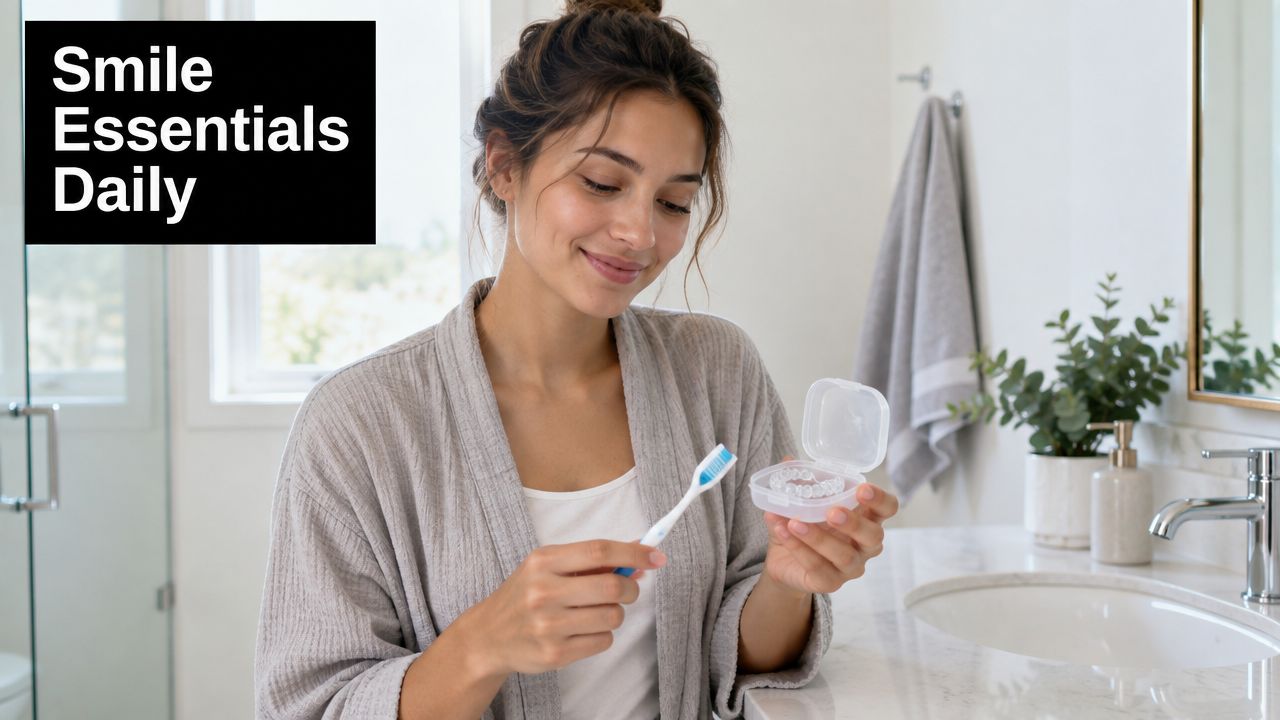
You wear clear aligners, apply whitening gel before an event, and then feel a sharp response to a cold drink. Your toothbrush still removes plaque, yet it cannot clean the aligner case, limit whitening contact, protect teeth during sports, or soothe irritated nerves. Accessories for teeth form a maintenance system around brushing, with each item handling a different job.
The distinction keeps product choices practical. Accessories support brushing, flossing, and professional dental care rather than replacing them. A whitening tray holds gel against tooth surfaces, an interdental brush cleans spaces a standard brush may miss, and a retainer case protects an appliance between uses. Together, these tools help preserve cleanliness, comfort, and the results of whitening or orthodontic treatment.
The wider oral-care market includes mouthwash, floss, whitening products, and other hygiene accessories. It reached an estimated USD 34.76 billion in 2025, while Asia Pacific represented USD 13.04 billion and 37.52% of global share that year, according to Fortune Business Insights' oral care market overview. The range of products reflects broad demand, not a universal fit. A crowded shelf can still contain the wrong tool for your teeth, gums, or appliance.
A useful rule: Choose an accessory because it solves a specific problem, not because your bathroom shelf has room for another product.
Dentist guidance matters if you have untreated decay, gum inflammation, restorations, orthodontic appliances, or persistent pain. Whitening, sensitivity care, and retainer maintenance should work together without aggravating an existing concern. If you are also developing a patient-facing dental or cosmetic practice, medical spa branding tips can help explain care choices clearly, without presenting routine oral-health products as miracle cures.
The right kit resembles a small care team. Brushing handles the daily foundation, whitening accessories support appearance, sensitivity products protect comfort, and retainer accessories preserve fit and hygiene. Choose only the tools that match your habits and needs.
Understanding How Oral Care Accessories Work Together
A toothbrush supplies the daily foundation, while other accessories handle areas it cannot reach or protect. The system works like a well-organized toolbox: each tool has a defined job, and adding more tools does not help unless each one fits a real need.
Cleaning tools remove what brushing leaves behind
Interdental brushes, floss, oral irrigators, tongue cleaners, and mouthwash all support hygiene through different methods. An interdental brush enters the spaces between teeth. Floss cleans along contact points and the gumline. An oral irrigator uses a stream of water to flush around brackets, implants, or other difficult-to-reach areas.
A water flosser does not automatically suit every mouth or replace every method. Consistent use matters, as do the tip and pressure. This guide to water irrigators explains how an oral irrigator may fit beside brushing and conventional flossing.
Protection and alignment tools preserve position
Retainers, aligner cases, sports mouth guards, and night guards protect teeth or help maintain their position. A retainer holds the position created by orthodontic treatment. A mouth guard cushions teeth during impact or separates them during grinding.
The case is part of the care routine. It protects an appliance in a bag or bathroom, but a sealed, damp container can encourage odor and buildup. Clean the appliance and let it dry appropriately before storage, then keep the case clean as well.
Whitening and sensitivity tools manage a tradeoff
Whitening trays, strips, gels, LED devices, and desensitizing products address appearance and comfort. Whitening changes the shade of natural tooth structure, while sensitivity products help make treatment more tolerable. Retainer care protects the alignment that whitening routines should not disturb, and daily plaque removal helps keep the result looking even.
The categories can work as one routine. A whitening plan might use a fitted tray, measured gel, sensitivity toothpaste, and ventilated case. Those products support comfort and maintenance, but none replaces brushing or cleaning between teeth. Together, they form a maintenance system rather than a shelf of unrelated accessories.
Key Whitening and Sensitivity Accessories Explained
Whitening accessories differ mainly in how evenly they deliver product, how long they stay in place, and how much control you have over the dose. Strips are convenient and premeasured. Trays can distribute gel across the teeth, especially when they fit well. Desensitizing gel and toothpaste address comfort rather than color change.
At-home systems commonly use 10% to 38% carbamide peroxide, and the American Dental Association notes that daily wear times described in the literature range from 2 to 10 hours for 6 to 28 days. The ADA whitening guidance also explains the central tradeoff: higher concentrations tend to produce sensitivity more often, although the discomfort is usually mild and temporary.
Compare the main options
| Accessory | Main strength | Main tradeoff |
|---|---|---|
| Whitening strips | Convenient, measured application | Coverage and fit depend on the strip |
| Whitening trays | Controlled placement and potentially more even contact | Fit, wear time, and gel amount need attention |
| Desensitizing gel | Comfort support before or after whitening | Doesn't replace the whitening product |
Carbamide peroxide breaks down into active compounds that help lift discoloration. A stronger formula may allow a shorter wear period, but stronger doesn't mean better if you can't tolerate the routine. Follow the product instructions rather than adding extra gel or extending wear time to chase faster results.
Support sensitive teeth deliberately
Sensitivity can appear early in treatment. The ADA describes it as more common with higher concentrations, potentially affecting up to two-thirds of users early in treatment, often beginning within 2 to 3 days and resolving around day 4 after treatment ends. If discomfort becomes sharp, persistent, or localized to one tooth, stop whitening and contact a dental professional, because whitening-related sensitivity isn't the only possible cause of pain.
Potassium nitrate is one desensitizing ingredient worth recognizing on a label. Evidence summarized in a recent study of newer strip formulas suggests that adding potassium nitrate may reduce sensitivity while preserving whitening effectiveness, as discussed in this review of sensitivity-reducing whitening strips.
High-fluoride toothpaste serves a different purpose. In one study, a 5000 ppm fluoride formulation enhanced remineralization and inhibited demineralization compared with 1500 ppm fluoride. The study reported a demineralization-to-remineralization ratio change from 13.8 to 2.1, and estimated that about 71% of remineralized mineral became resistant to later acid dissolution, as detailed in the PubMed study. High-fluoride products require appropriate professional advice, particularly because they aren't a casual substitute for ordinary toothpaste.
How to Choose the Right Accessories for Your Needs
Start with your main problem, then select the smallest set of tools that solves it. Someone maintaining aligners doesn't need the same kit as someone preparing for whitening, and an athlete has different protection needs from someone who grinds at night.
Match the accessory to the job
| Your Main Goal | Best Accessory Types | What to Prioritize |
|---|---|---|
| Maintain aligners or retainers | Appliance cleaner, soft brush, ventilated case | Material compatibility, easy rinsing, secure storage |
| Brighten natural teeth | Whitening strips, fitted trays, measured gel | Instructions, fit, concentration, wear-time control |
| Reduce sensitivity | Desensitizing toothpaste, potassium nitrate products, professional guidance | Ingredient suitability and a pause plan |
| Clean around braces or implants | Interdental brushes, oral irrigator, specialized floss | Tip access, gentle pressure, ease of daily use |
| Protect teeth during sports | Properly fitted sports mouth guard | Stability, comfort, breathing, retention |
| Manage nighttime grinding | Dentist-evaluated night guard | Correct fit and professional assessment |
Fit deserves careful attention. A loose tray may let gel spread onto the gums, while an overly tight appliance can feel uncomfortable and discourage use. Custom-fit options can offer more precise positioning, but a boil-and-bite product may suit a person who needs a practical home solution. Whichever style you choose, follow the molding instructions and don't use a damaged or distorted tray.
Material and lifestyle matter too. A frequent traveler may value a compact case and tablets that don't require a complicated cleaning setup. Someone who plays contact sports needs stable protection, while a person with sensitive gums may prioritize gentle edges and a lower-intensity whitening routine.
Before buying: Check whether the product is meant for natural teeth, restorations, aligners, retainers, braces, or sports use. Those categories aren't interchangeable.
Mouth tape belongs to a separate sleep-related category and shouldn't be treated as dental protection. If you're exploring ways to improve sleep with mouth tape, review the product guidance and speak with a clinician if you have nasal obstruction, breathing concerns, or sleep-related symptoms.
Everyday Care and Maintenance for Longer Lasting Results
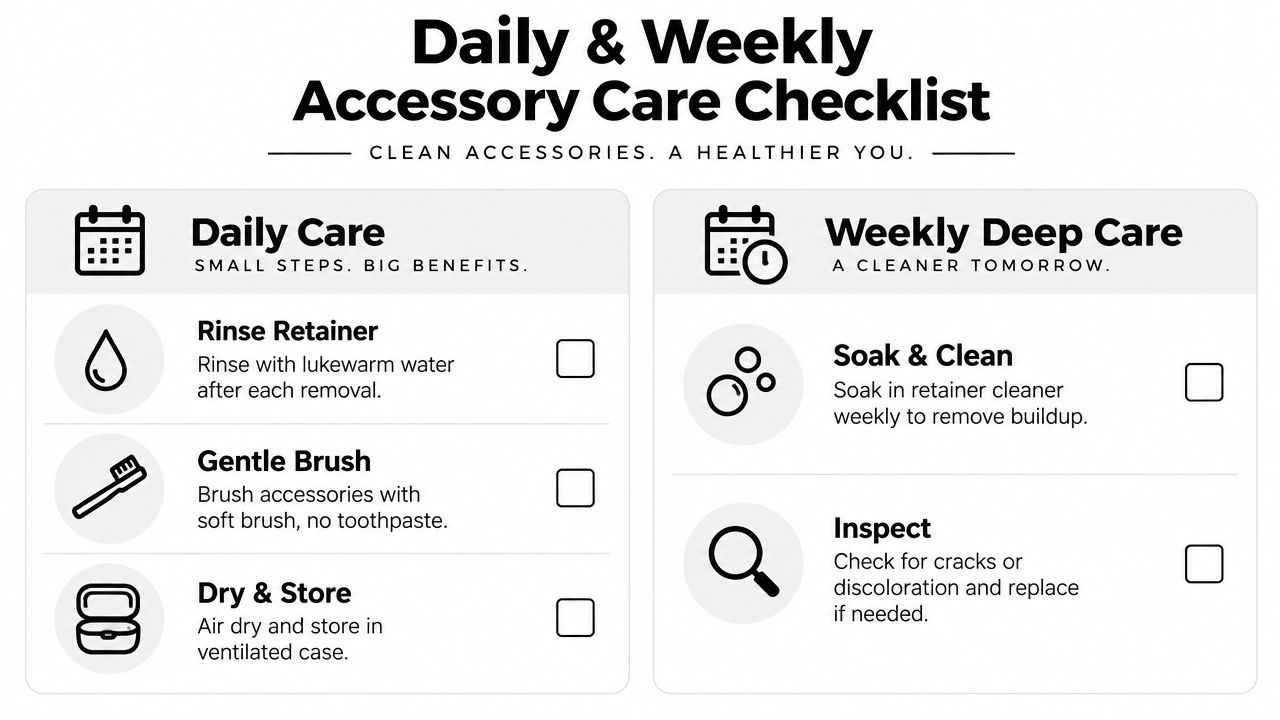
Clean accessories immediately after use whenever possible. Saliva, gel residue, food particles, and moisture can remain on trays and retainers, creating odor and cloudiness over time. A quick rinse removes loose material, but it doesn't replace periodic cleaning.
Daily routine
- Rinse after removal. Use lukewarm water on retainers, aligners, whitening trays, and mouth guards. Avoid hot water because heat can distort some plastics.
- Brush gently. Use a soft brush reserved for the appliance. Unless the manufacturer says otherwise, avoid abrasive toothpaste, which can create tiny scratches that collect residue.
- Let it dry. Air-dry the appliance before placing it in a clean, ventilated case. Don't wrap a damp retainer in tissue, where it can be forgotten, crushed, or thrown away.
- Clean the case. Rinse and dry the case regularly. A clean appliance stored in a dirty case won't stay clean for long.
Weekly check
Use a cleaner designed for the appliance rather than improvising with household chemicals. Follow the soaking instructions, rinse thoroughly, and inspect for cracks, sharp edges, cloudiness, or a changed fit. Replace consumable brush heads, floss, interdental brushes, and cleaning products according to their condition and the manufacturer's directions.
For whitening trays, remove all gel residue before storage. This whitening tray cleaning guide offers product-specific care ideas, but the central habit remains simple: rinse, gently clean, dry, and store with airflow.
Don't share mouth guards, retainers, or whitening trays. If an appliance develops a persistent smell despite cleaning, causes gum rubbing, or no longer fits as it once did, set it aside and ask your dentist or orthodontist to evaluate it.
Common Mistakes and Sensitivity Solutions to Avoid
Most accessory problems come from using a reasonable product in an unreasonable way. People add more whitening gel, wear a tray longer, scrub a retainer with abrasive paste, or leave an appliance wet in a closed case. Each shortcut can undermine comfort or shorten the useful life of the accessory.
Whitening mistakes that trigger trouble
Extra gel doesn't guarantee extra whitening. It can spill onto the gums and increase irritation, especially when the tray fit is poor. Follow the stated amount and wear time, keep gel away from the gumline, and stop if the gums become sore or visibly irritated.
Sensitivity also needs interpretation. Generalized, short-lived sensitivity during whitening may settle after treatment ends, but severe pain, lingering pain, or discomfort focused on one tooth deserves professional attention. A cavity, crack, worn filling, gum recession, or exposed root can mimic whitening sensitivity.
The ADA describes whitening sensitivity as generally mild and transient, with higher concentrations carrying greater risk. That makes concentration a practical choice, not a badge of strength. A gentler product used consistently may be more useful than a stronger one that forces repeated breaks.
Products that may support comfort
Potassium nitrate can appear in desensitizing toothpaste, gels, or newer whitening strip formulas. The evidence discussed earlier indicates that some potassium nitrate strip formulas may lower sensitivity without removing whitening efficacy, but formulas differ, so read the label and follow the instructions.
Fluoride products support a separate enamel-care strategy. A dentist may recommend a higher-fluoride formulation when caries or sensitivity risk is high, but prescription-strength products shouldn't be selected casually. Ask about your risk factors, especially if whitening causes repeated discomfort.
Pause and ask for help: Pain that persists after whitening, a visible crack, bleeding gums, swelling, or a tray that suddenly feels wrong shouldn't be managed by simply changing brands.
For practical troubleshooting, use this guide to reducing sensitivity after whitening as a starting point, then involve a dental professional when symptoms don't follow the expected pattern.
Building Your Ideal Kit of Accessories for Teeth
Your ideal kit should follow the way you care for your mouth, rather than become a shelf of unused products. Begin with tools that support daily hygiene. Then add protection for retainers, aligners, or sports, and consider whitening only after checking fit and sensitivity.
A simple kit might include:
- Cleaning support: Interdental brushes, floss, or an oral irrigator that fits your routine.
- Appliance care: A soft brush, compatible cleaner, and ventilated case for retainers or aligners.
- Whitening control: Strips or a fitted tray with clear instructions and measured gel use.
- Comfort support: Desensitizing toothpaste or a potassium nitrate product if sensitivity develops.
- Enamel support: A fluoride product chosen with dental guidance when your risk profile requires it.
Each item has a separate role, like parts of a maintenance system. Cleaning removes debris, appliance care protects the fit and material, whitening targets color, and comfort or enamel products help you continue the routine without unnecessary irritation.
DentalHealth.com lists at-home products from brands including Opalescence, MI Paste, Fluoridex, Retainer Brite, GLO, Zoom, PolaNight, and PolaDay. Its categories cover whitening gels and kits, sensitivity products, remineralizing pastes, breath-care products, and retainer-cleaning solutions. Product descriptions and educational content can help you compare options before choosing.
Make the system easy to repeat. Store your tray and case together, place cleaning supplies where you remove your retainer, and record the whitening schedule instead of relying on memory. These small habits protect comfort and make results easier to maintain.
The oral-care market is expanding, but that trend does not mean you need more products. Choose accessories with a clear job, a comfortable fit, and a practical connection to the brushing routine you already follow.
Visit DentalHealth.com to browse whitening, sensitivity, retainer-care, and enamel-support products by category or brand. Start with your immediate need, then add only tools you can use comfortably each day.