
How to Reduce Teeth Sensitivity After Whitening: Expert Tips
So, you’ve just whitened your teeth and instead of admiring your pearly whites, you’re wincing from those sharp, zinging pains. Don't panic. This is your game plan for immediate relief.
Your Immediate Action Plan for Whitening Pain
If you're dealing with that all-too-familiar ache after a whitening session, your number one priority is getting comfortable, fast. The discomfort you’re feeling is a direct result of the whitening agents temporarily making your enamel more porous. This allows things like cold air or a sip of hot coffee to get way too close to the nerve endings inside your teeth.
The good news? This is almost always a temporary situation, and it's highly manageable if you take the right steps right away.
Pause the Whitening Process
This is the most important first step: stop the treatment. I see people try to "push through the pain," but that will only make the sensitivity worse and could irritate your gums. Give your teeth a break for at least 24-48 hours. If the discomfort lingers, wait until it's completely gone before you even think about whitening again.
Think of it like a sunburn—you wouldn't go right back out into the sun while your skin is still red and stinging. Your teeth need that same recovery time to remineralize and calm down.
Avoid Temperature Extremes
Because your enamel is temporarily more porous, your teeth become hyper-responsive to hot and cold. That iced tea or steaming bowl of soup can trigger a sharp, shooting pain that takes your breath away.
For the next day or two, make a simple change: stick to room-temperature or lukewarm foods and drinks. This small adjustment prevents the sudden temperature shocks that are notorious for aggravating sensitive nerve endings.
Temporarily Adjust Your Diet
It’s not just about temperature. Certain foods and drinks, particularly acidic ones, can make the sensitivity feel a lot worse. They can further irritate the microscopic tubules in your dentin that are now more exposed after whitening.
For the next 48 hours, it's smart to steer clear of these usual suspects:
- Citrus Fruits and Juices: Oranges, lemons, and grapefruits are off the menu for a bit.
- Sodas and Carbonated Drinks: These are a double-whammy of acid and sugar.
- Wine: Both red and white wine have high acidity levels that won't do you any favors.
- Tomatoes and Vinegar-Based Dressings: Be mindful of these in salads and sauces.
This doesn't mean you're stuck with bland food. It just means being a little more conscious of high-acid ingredients to keep yourself comfortable.
The moment you feel that first twinge of sensitivity, it helps to have a quick checklist. Here’s a simple table to guide your immediate response.
Immediate Relief Checklist for Whitening Sensitivity
| Action Item | Why It Works | Timeframe |
|---|---|---|
| Stop Whitening | Prevents further irritation and allows enamel to recover. | Immediately; wait 24-48 hours before reconsidering. |
| Use Lukewarm Water | Avoids the shock of hot or cold temperatures on sensitive nerves. | For the next 24-48 hours. |
| Eat Soft, Mild Foods | Reduces physical pressure and avoids acidic triggers. | For the next 48 hours. |
| Avoid Acidic Drinks | Prevents acid from irritating exposed dentin tubules. | For at least 48 hours post-whitening. |
Following these steps provides a solid foundation for managing discomfort, allowing your teeth the time they need to recover so you can get back to enjoying your brighter smile, pain-free.
Key Takeaway: The sensitivity you're feeling is a common and predictable side effect of teeth whitening, not a sign of permanent damage. By taking immediate, simple actions, you can manage the discomfort effectively and get back on track to a brighter smile.
This sensitivity is far from unusual. In fact, a foundational study in the Journal of the American Dental Association found that when using at-home 15% carbamide peroxide gels, about 54% of participants experienced mild discomfort. The research also showed that the sensitivity was temporary, with all moderate and severe cases resolving within a few weeks of treatment. You can read the full study to understand the data on whitening sensitivity.
For more targeted relief, a specialized product can be a lifesaver. Our guide on teeth desensitizing gels explains exactly how these formulas work to block pain pathways and provide more direct, lasting comfort.
Understanding Why Your Teeth Hurt After Whitening
That sharp, unexpected zing you feel after a whitening treatment can be pretty alarming. Don't worry, it’s almost never a sign of lasting damage. It's actually a temporary and predictable side effect of the science that gives you a brighter smile. Once you understand what's happening inside your tooth, the discomfort makes a lot more sense, and it’s much easier to manage.
The active ingredients in professional whitening gels are usually hydrogen peroxide or carbamide peroxide. These ingredients are fantastic at breaking down deep-set stains, but to do that, they have to make your enamel slightly more porous for a short time.
Think of your tooth's enamel as its protective outer shield. Just beneath it lies a softer, more sensitive layer called dentin. This dentin is filled with thousands of microscopic channels, or tubules, that lead directly to the tooth's nerve center—the pulp.
The Science of Sensitivity Explained
When you whiten, the peroxide temporarily opens up these tiny pores in the enamel. This is great for lifting stains, but it also creates a temporary highway for outside sensations—like cold air, a sip of hot tea, or a sweet treat—to reach those dentin tubules.
Suddenly, those sensations travel down the tubules and hit the nerve endings in the pulp. The result is that sharp, sometimes achy feeling known as dentin hypersensitivity. It's the very same thing that causes general tooth pain, which you can read more about in our guide on what causes tooth sensitivity to cold.
This isn't a sign you've harmed your teeth; it's just a normal biological response. Your enamel starts to remineralize and rehydrate almost as soon as the whitening gel comes off. Those pores seal back up, and the sensitivity usually fades within 24 to 48 hours.
Factors That Can Put You at Higher Risk
Just about anyone can get a little sensitive after whitening, but some things can definitely make you more likely to feel that zing. If any of these sound familiar, you can be better prepared for your next session.
- Existing Gum Recession: When your gums pull away from the teeth, they expose the root surface. Unlike the crown of your tooth, the root isn't covered by that tough enamel. It's protected by a much softer material called cementum, which offers very little defense against whitening agents.
- Thin Enamel: Some of us just have thinner enamel due to genetics, while for others it's from years of wear and tear. Less enamel means the peroxide has a shorter trip to the dentin, making a sensitive reaction much more likely.
- Cracks or Leaky Fillings: Even tiny, invisible cracks in your teeth or old fillings that aren't perfectly sealed can become superhighways for peroxide gel. It can seep deep into the tooth, causing a much more intense and focused pain.
It’s also worth pointing out that the strength of the whitening gel plays a huge part. It's simple logic: higher concentrations of peroxide create more porosity and are more likely to cause sensitivity. This is exactly why a dentist might suggest a lower-strength gel or tell you to wear your trays for shorter periods if you’ve had sensitivity issues before.
The key takeaway is that post-whitening sensitivity is just a temporary state. Your nerves are on high alert because your enamel is more porous than usual. It's a sign the process is working, not a sign of damage.
Once you get this, the whole experience feels less mysterious. Your teeth aren't being damaged; they're just temporarily more open to the world. And knowing that is the first step toward managing the discomfort and getting back to enjoying your brilliantly white results.
Choosing The Right Products For Sensitive Teeth
Walking down the dental aisle after a whitening treatment can feel overwhelming. The shelves are packed with options, and grabbing the wrong one won't just waste your money—it could actually make your discomfort worse. The secret isn't just to buy any product labeled for sensitivity; it's about picking the one with the right active ingredients for the job.
Once you understand what's happening inside your teeth and which ingredients can help, you can shop with confidence and find real relief. We'll break down the three main types of products that will get you through this: desensitizing toothpastes, remineralizing gels, and supportive therapeutic rinses.
This flowchart maps out that first crucial decision you need to make the second you feel that post-whitening "zing."
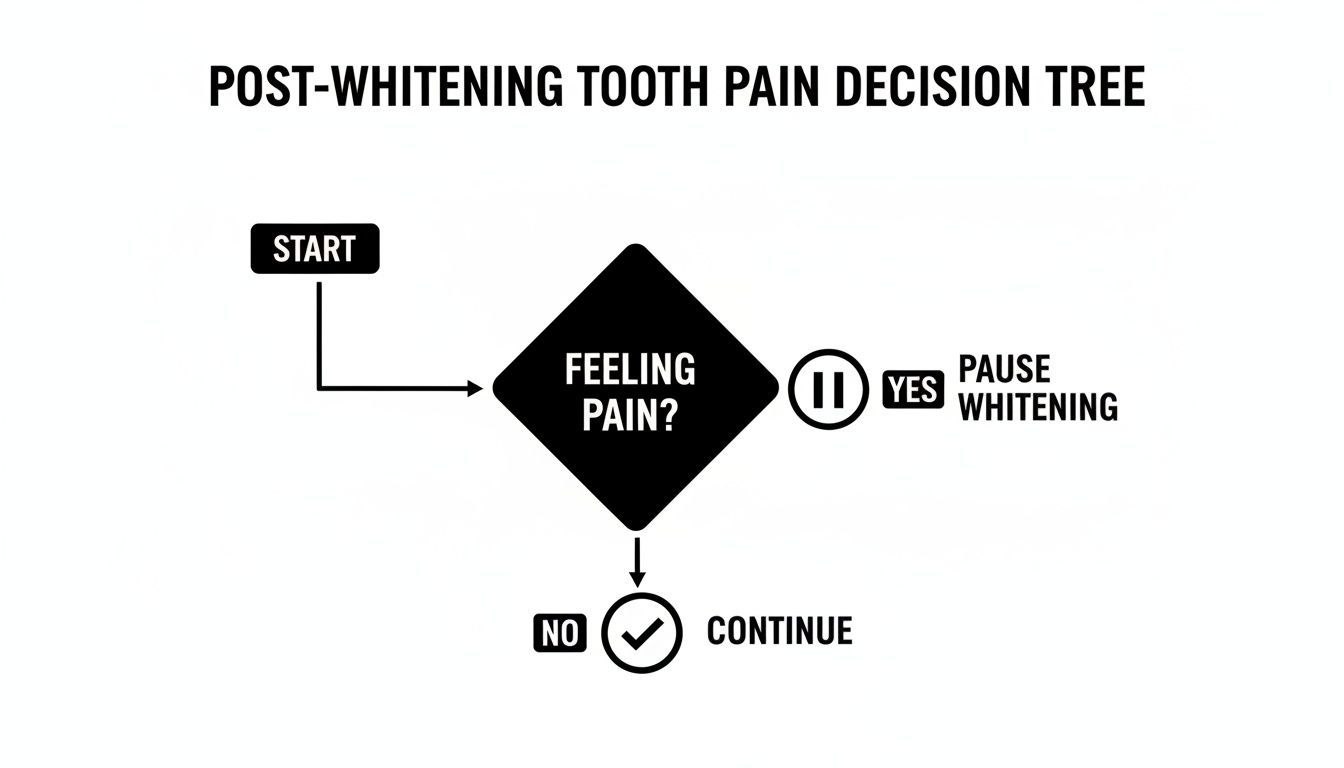
As you can see, the path is clear. The moment you feel pain, the first step is always to pause the whitening process. Give your teeth a break to recover.
Desensitizing Toothpastes For Immediate Relief
When you need relief right now, a desensitizing toothpaste is your go-to. These aren't your average toothpastes; they contain specific ingredients designed to block the pain signals traveling from your tooth's surface to the nerve.
The gold standard ingredient here is potassium nitrate. Think of it as a nerve-calming agent. It works by essentially telling the nerve to chill out, making it less excitable and less likely to fire off those sharp pain signals when you breathe in cold air or sip a cool drink. It’s fantastic for managing those immediate, unexpected zingers.
Another heavy hitter is stannous fluoride. Unlike potassium nitrate, which focuses on the nerve, stannous fluoride acts like a bouncer for your teeth. It physically blocks the tiny, microscopic tubules in your dentin, creating a barrier that stops triggers from ever reaching the nerve in the first place. Many of the best formulas now combine both for a one-two punch against pain.
Pro Tip: For an extra shot of relief, dab a pea-sized amount of desensitizing toothpaste directly onto the most sensitive spots with your fingertip. Let it sit for a few minutes before rinsing—this gives the active ingredients more time to work their magic.
Remineralizing Gels To Strengthen Enamel
While desensitizing toothpastes are fantastic for managing symptoms, remineralizing gels and pastes go a step further by addressing the root cause. Whitening treatments temporarily make your enamel more porous, and these products are all about rebuilding and reinforcing it.
You'll want to look for products containing ingredients like:
- Amorphous Calcium Phosphate (ACP): This compound is like a construction crew for your enamel, delivering a powerful dose of the calcium and phosphate ions your teeth are made of.
- Casein Phosphopeptide-Amorphous Calcium Phosphate (CPP-ACP): Often found in professional-grade products like MI Paste, this milk-derived ingredient is exceptionally good at getting those bio-available calcium and phosphate ions right where they need to go.
- Fluoride: It’s a classic for a reason. Fluoride helps lock calcium and phosphate into your enamel structure, creating a new, tougher, and more acid-resistant surface called fluorapatite.
Using a remineralizing paste is a brilliant proactive move. If you apply it for a week or two before you even start whitening, you can significantly reduce how much sensitivity you experience during and after the process.
Therapeutic Rinses And Their Role
Fluoride rinses can also be a great supporting actor in your sensitivity management plan. A quick daily rinse with a fluoride mouthwash helps harden your enamel across the board, offering a gentle, all-over layer of protection. It’s an easy addition to your routine that perfectly complements the targeted action of specialized toothpastes and gels.
Comparing Sensitivity Relief Products
To make it even easier to choose, here's a quick breakdown of how these different product types stack up against each other. Each has a specific job to do, and understanding their primary action will help you build the perfect sensitivity-fighting toolkit.
| Product Type | Key Active Ingredient | Primary Action | Best For |
|---|---|---|---|
| Desensitizing Toothpaste | Potassium Nitrate or Stannous Fluoride | Blocks pain signals or dentin tubules | Immediate relief from sharp, sudden pain after whitening. |
| Remineralizing Paste/Gel | ACP, CPP-ACP, Fluoride | Rebuilds and strengthens porous enamel | Long-term enamel repair; proactive use before whitening to prevent pain. |
| Therapeutic Fluoride Rinse | Sodium Fluoride | Hardens the entire enamel surface | Daily maintenance and providing an overall layer of protection. |
As you can see, a combination approach is often the most effective. Use a desensitizing toothpaste for the immediate pain, and a remineralizing gel to fix the underlying issue for lasting comfort.
While our focus is on teeth, the principle of using targeted ingredients applies elsewhere, too. For instance, those looking to manage skin irritation might find useful parallels in guides for choosing effective products for sensitive skin.
Ultimately, finding what works for you might take a little trial and error. To dive deeper, you can explore this detailed guide to various products for sensitive teeth and see which options align with your specific situation. By arming yourself with a little knowledge, you can turn a potentially painful side effect into a minor, totally manageable step on your journey to a brighter smile.
A Smarter Approach to Whitening Without the Pain
While it’s good to know how to manage sensitivity after it strikes, the best strategy is always to avoid the pain in the first place. A proactive approach puts you in the driver's seat, letting you get that brilliant smile without dreading the zings that might follow. It all comes down to making smarter choices before the whitening gel even touches your teeth.
So many people fall into the trap of thinking that more power equals better results, so they grab the highest-strength gel they can find. This is almost always a direct ticket to serious discomfort. If you can shift your mindset from "faster is better" to "smarter is better," you can sidestep sensitivity entirely.
Choose a Lower Peroxide Concentration
One of the simplest and most effective ways to prevent sensitivity is to just opt for a whitening gel with a lower concentration of peroxide. Sure, those high-strength, in-office treatments can deliver dramatic results in a hurry, but they're also notorious for causing that intense, sharp pain. For at-home whitening, a gentler formula is a total game-changer.
Starting with a 10% or 16% carbamide peroxide gel is a fantastic strategy, especially for anyone who already knows they're prone to sensitivity. These concentrations are still incredibly effective at lifting years of stains, but they are significantly less aggressive on your enamel. You'll get the same beautiful results, just over a slightly longer timeframe—a trade-off that’s well worth the comfortable experience.
There's plenty of research to back this up. Studies consistently show that at-home treatments with 10% carbamide peroxide cause far less sensitivity than the 35% (or higher) hydrogen peroxide formulas used in many dental offices. One notable study found a 10% gel achieved the same whitening as a 16% gel but with the smallest increase in sensitivity. When you compare that to the massive jump caused by a 40% hydrogen peroxide treatment, the choice is clear. You can learn more about these whitening agent findings and see how different concentrations impact comfort levels.
Adjust Your Whitening Schedule
Your whitening routine shouldn't be a rigid, all-or-nothing commitment. One of the smartest things you can do is listen to your body and adjust as you go. If you know your teeth are on the sensitive side, modify your plan right from the start.
Instead of whitening every single day, which can overwhelm your teeth, try one of these alternative schedules:
- Every-Other-Day Whitening: This is my favorite tip for sensitive users. Giving your teeth a full day to recover and remineralize between sessions can make a world of difference.
- Reduced Wear Time: If the instructions on your kit say to wear the trays for 60 minutes, try cutting that back to 30 or 45 minutes instead. You will still see progress, just with less of the prolonged exposure that often leads to sensitivity.
The goal is consistent progress, not an endurance test. A customized, comfortable schedule is far more sustainable and will lead to better long-term results than a painful process you can't stick with.
This flexibility allows you to find the perfect balance for your teeth—that sweet spot where you’re hitting your whitening goals without triggering any discomfort.
Pre-Treat Your Teeth Before You Whiten
Here's an insider tip that can make a huge difference: prepare your teeth before you even begin the whitening process. This involves using a desensitizing or remineralizing product for a week or two leading up to your very first session.
Think of it as priming your teeth for the main event. By using a product with ingredients like potassium nitrate or amorphous calcium phosphate (ACP) beforehand, you accomplish two key things:
- Calm the Nerves: Potassium nitrate is the star ingredient in most sensitivity toothpastes for a reason. It helps soothe the nerve endings inside your teeth, making them far less reactive to the whitening agents.
- Strengthen Enamel: Remineralizing agents like ACP help fortify and patch up your enamel, making it less porous and better equipped to handle the peroxide gel.
Applying a remineralizing paste, like MI Paste, or just switching to a desensitizing toothpaste for about 10-14 days before you start whitening can dramatically reduce or even completely eliminate sensitivity. This simple prep step builds up your teeth's natural defenses, paving the way for a much more pleasant whitening journey.
Simple Home Remedies and Lifestyle Adjustments
While specialty dental products are fantastic for targeted relief, you'd be surprised how much the small, everyday habits can help manage post-whitening sensitivity. These simple tweaks and at-home tricks create a better environment for your teeth to recover, often making the difference between nagging zings and a totally smooth experience.
It really just comes down to remembering your teeth are in a temporarily vulnerable state. Gentle care is the name of the game.
Master Your Brushing Technique
How you brush has a massive impact on sensitivity, especially right after whitening when your gums might be a little tender, too. Brushing too hard can wear down enamel and cause gums to recede over time—two major culprits behind sensitive teeth.
Now is the perfect time to adopt a gentler approach.
- Switch to a Soft-Bristled Brush: This one’s non-negotiable. A soft brush cleans just as effectively without being abrasive on your enamel or gums.
- Use Gentle, Circular Motions: Avoid that aggressive back-and-forth scrubbing. Instead, think small, circular motions, holding the brush at about a 45-degree angle to your gum line.
- Ease Up on the Pressure: Let the bristles do the work. If they're splayed out and flattened against your teeth, you’re definitely pushing too hard.
This gentle technique not only helps reduce teeth sensitivity after whitening but also protects your smile from damage in the long run.
Make Smart Dietary Choices
What you eat and drink in the first few days after whitening can either soothe your teeth or trigger a world of discomfort. The main things to watch out for are highly acidic or sugary foods and drinks, which can easily irritate those temporarily exposed tubules in your dentin.
For at least 48 hours post-whitening, try to steer clear of:
- Citrus fruits like oranges and lemons
- Sodas and sports drinks
- Wine (both red and white are acidic)
- Coffee and tea
- Tomatoes and vinegar-heavy sauces
Here's a pro tip: If you do have something acidic, rinse your mouth with plain water right after. It helps neutralize the acid before it has a chance to cause trouble.
This isn’t about living on a bland diet forever. It’s just about being mindful for a couple of days to give your enamel a chance to remineralize without interference.
Soothe Your Gums with a Salt Water Rinse
Sometimes, the whitening gel can irritate your gums, and that discomfort can feel a lot like tooth sensitivity. A simple, time-tested trick for this is a warm salt water rinse. Salt is a natural antiseptic and has anti-inflammatory properties that can calm down tender tissue.
It couldn't be easier to make:
- Dissolve half a teaspoon of salt into a cup of warm water.
- Gently swish it around your mouth for about 30 seconds.
- Spit it out, and repeat until the cup is empty.
Doing this once or twice a day can really help soothe irritated gums and promote healing. If you're looking for more ideas, there are many other great home remedies for sensitive teeth you can explore.
By weaving these small, practical adjustments into your routine, you create a complete care plan that protects your whitening results while keeping discomfort out of the picture.
Got Questions About Whitening Sensitivity?
Even when you do everything right, you might still have a few questions about that post-whitening tingle. That’s perfectly normal. Getting some clear answers can make the whole process feel less stressful and more manageable.
Let's walk through some of the most common questions and concerns that pop up, so you have all the info you need for a comfortable whitening experience.
How Long Does Whitening Sensitivity Last?
This is the big one, isn't it? For most people, sensitivity after whitening is a temporary thing. Think of it as a short-term visitor that usually packs up and leaves within 24 to 48 hours. How long it sticks around really depends on the strength of the whitening gel you used and your own unique teeth.
If you went with a high-concentration peroxide gel, the discomfort might hang on a bit longer while your enamel works to remineralize itself. But if you’re still feeling significant, nagging pain after three or four days, that's a red flag. It’s time to hit pause on the whitening and give your dentist a call, just to make sure nothing else is going on.
Key Takeaway: Post-whitening sensitivity is almost always short-lived. Just think of it as a brief recovery period for your smile. If the pain doesn't start fading after a couple of days, it's time to stop and get some professional advice.
Is It Safe to Take Pain Relievers?
Yes, and it can be a really smart move. Taking an over-the-counter anti-inflammatory like ibuprofen about an hour before you even put your whitening trays in can proactively head off discomfort before it starts.
These medications help calm the inflammatory response in the tooth's nerve (the pulp), making it less likely to fire off those zinging pain signals. It’s a great way to manage sensitivity you know is coming, but don't use it as an excuse to power through with a gel that's just too strong for you. And of course, always stick to the recommended dosage on the bottle.
Can I Use Sensitivity Toothpaste After Whitening?
Absolutely. In fact, I highly recommend it. Brushing with a desensitizing toothpaste right after you take out your trays and rinse away the gel can bring some quick, welcome relief. This is one of the simplest and most effective ways to reduce teeth sensitivity after whitening.
When you're shopping, look for a toothpaste with one of these powerhouse ingredients:
- Potassium Nitrate: This stuff works directly on the tooth's nerve, helping to soothe it and block it from sending out pain signals.
- Stannous Fluoride: This one works a bit differently by physically plugging the microscopic tunnels in your dentin. It basically builds a shield against sensitivity triggers.
Here's a pro tip: for a little extra comfort, dab a small amount of the toothpaste directly onto any extra-sensitive spots with your finger. Let it sit there for a few minutes before rinsing. This gives the ingredients more time to work their magic right where you need it most.
When Should I Call My Dentist?
While a bit of temporary sensitivity is pretty standard, some symptoms are your cue to pick up the phone. You definitely don't want to ignore signs that could point to a bigger problem.
Get in touch with your dental office if you experience any of these:
- Severe or Throbbing Pain: A dull ache is one thing. Sharp, throbbing, or unbearable pain is not part of the deal.
- Pain Lasting More Than a Week: If the sensitivity isn’t getting better after several days of stopping the treatment, something else could be at play.
- Significant Gum Irritation: Keep an eye out for gums that are bright red, swollen, or have developed obvious white spots, which can be chemical burns from the gel.
- "Zingers" from a Single Tooth: If all the pain seems to be coming from one specific tooth, it might be a sign of an underlying issue like a crack, a hidden cavity, or a leaky filling that the whitener has irritated.
Your dentist can take a look, rule out any serious problems, and give you personalized advice to get you back to feeling comfortable.
Managing sensitivity is the real secret to a successful whitening routine. At DentalHealth.com, we carry a full lineup of professional-grade products designed to help you get a brilliant smile without the discomfort, from gentle whitening gels to powerful remineralizing pastes like MI Paste. Find the perfect sensitivity solution for your whitening journey at DentalHealth.com.