
Your Guide to Teeth Desensitizing Gel for Lasting Relief
That sharp, sudden “zing” you get from a sip of hot coffee or a spoonful of ice cream is a pain too many of us know well. It’s the tell-tale sign of tooth sensitivity, and thankfully, teeth desensitizing gel is made specifically to bring targeted, effective relief. It gets right to the heart of the problem, calming the nerves that cause that jolt of discomfort.
Understanding Tooth Sensitivity and How Gels Can Help
The best way to think about your teeth is to imagine your enamel as a protective shield. Day after day, this shield can get worn down or develop microscopic cracks, which exposes the much softer layer underneath called dentin. You can't see it, but this dentin layer is full of thousands of tiny, fluid-filled tubes that lead straight to your tooth's nerve center.
When something hot, cold, or even sweet hits these exposed pathways, it triggers a pain signal that shoots directly to the nerve. That’s the "zing" you feel. It isn't a sign that you've done something wrong; it's an incredibly common issue that a huge portion of the population deals with.
Why Is This So Common?
So, what’s breaking down that enamel shield in the first place? A few common culprits are usually to blame:
- Aggressive Brushing: Scrubbing your teeth with too much force can literally wear away your enamel over the years.
- Acidic Diets: If you frequently enjoy citrus fruits, sodas, or wine, the acid can slowly erode your tooth's surface.
- Gum Recession: As gums pull back from the teeth, they expose the root surfaces, which don't have that protective layer of enamel to begin with.
Because this is such a widespread problem, there's a huge demand for real solutions. In fact, the global market for these desensitizing gels is expected to climb to USD 950 million by 2025—that’s a clear sign of just how many people are looking for relief. With tooth sensitivity affecting up to 57% of adults, these gels have become a go-to for getting back to a life free from dental pain.
A good desensitizing gel works like a targeted repair crew. It's formulated with ingredients that either block up those microscopic pathways or calm the nerve itself, stopping pain signals before they can even fire. Once you understand the real reason for that discomfort—especially what causes tooth sensitivity to cold—it’s easy to see how these gels provide a direct path to managing the problem and finally enjoying your favorite foods again. For more unique or persistent issues, exploring options like compounding for dental health can also open the door to customized treatments.
The Science Behind How Desensitizing Gels Work
To really get why desensitizing gels are so good at stopping that sharp tooth pain, we need to zoom in and see what’s happening on a microscopic level. These gels aren't just putting a bandage on the problem; they're designed to shut it down at the source using two clever strategies: either calming the tooth's nerve or physically blocking the pathways that lead to it. It’s a smart, targeted approach that gets to the root cause of sensitivity.
This whole process is about restoring the natural protective barrier your tooth is supposed to have, bringing you back to a place of comfort.
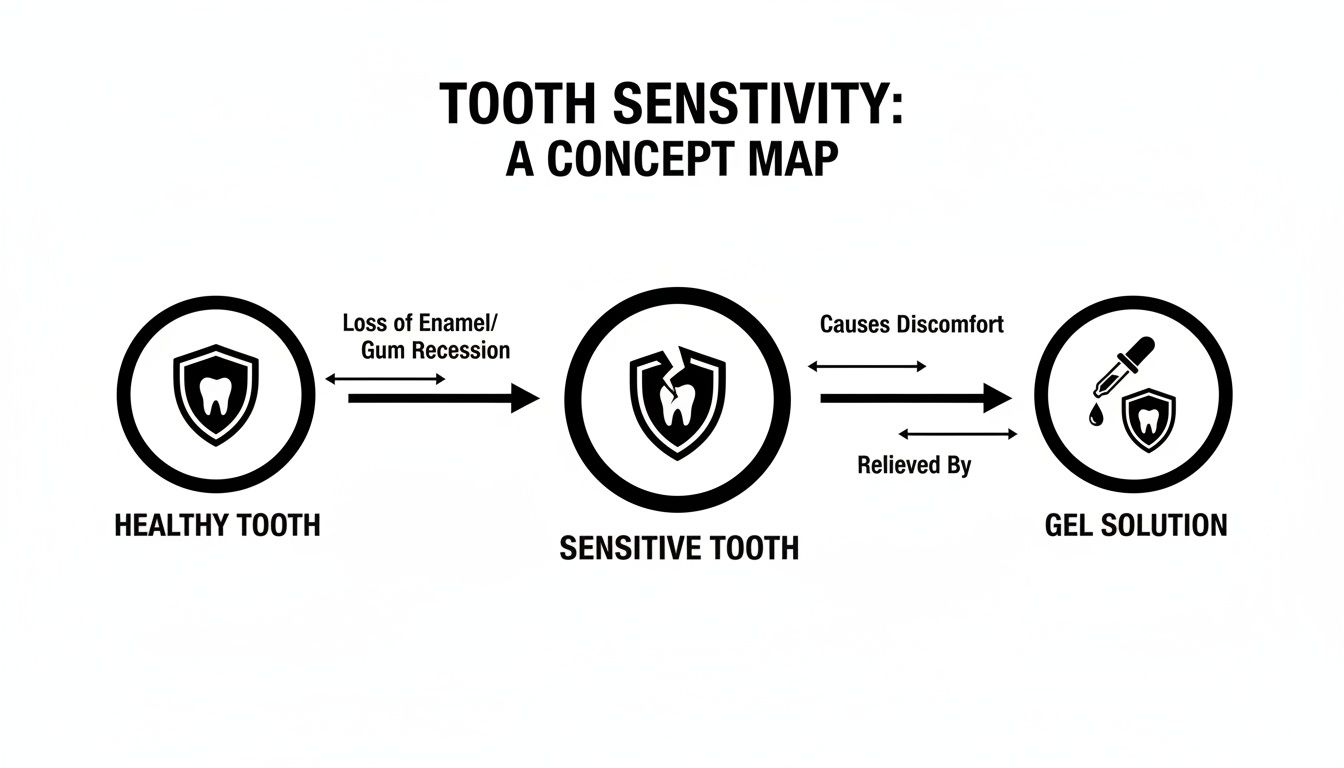
As you can see, a healthy tooth is nicely shielded. But once that protective layer thins out, it exposes tiny channels that lead straight to the nerve. A good desensitizing gel works to seal those channels right back up, stopping the pain in its tracks.
The Nerve-Calming Approach
Picture your tooth's nerve as an overly sensitive car alarm. On a healthy tooth, it's pretty chill. But when your enamel is worn down, that alarm is on high alert, ready to go off with the slightest touch of cold air or a sip of hot coffee. This is where an ingredient like potassium nitrate steps in.
Potassium nitrate is unique because it soaks through the tooth's surface to get right to the nerve. Once there, it basically turns down the "volume" on that hyperactive alarm system, making the nerve less excitable. It doesn't build a wall; instead, it just tells the nerve endings to relax so they don't overreact to every little thing.
This method is fantastic for generalized sensitivity because it calms the nerve's ability to send pain signals to your brain. With consistent use, it provides widespread, lasting relief.
Desensitizing gels are a huge part of the dental preventive supplies market for this very reason. It’s a sector that’s expected to jump from USD 6.22 billion in 2025 to a whopping USD 8.96 billion by 2034. A big piece of that growth comes from post-whitening sensitivity—up to 60-80% of patients report that familiar "zing" after bleaching. This makes these gels an absolute must-have for anyone looking to brighten their smile without the pain. You can read more about the growing demand for effective dental solutions.
The Tubule-Blocking Approach
The second strategy is more of a construction project. Imagine the layer under your enamel, called dentin, is like a sponge filled with thousands of tiny, hollow straws. These are the dentinal tubules, and they lead directly to the nerve. When your enamel wears away, these microscopic straws are left wide open.
This is where tubule-blocking ingredients come in to play the role of microscopic construction workers, sealing up those openings. This is often a quicker fix, and the effects can be felt almost immediately.
This blocking action basically "closes the windows" to the nerve, stopping painful triggers before they even have a chance to get inside. It's a physical shield built right where you need it most. By understanding these two very different ways desensitizing gels work, you can pick the right product for your specific kind of sensitivity.
Key Ingredients in Desensitizing Gels and Their Roles
To make the best choice, it helps to know who the key players are. The active ingredients in these gels are what really do the heavy lifting, and each one has a specific job.
| Active Ingredient | Mechanism of Action | Best For |
|---|---|---|
| Potassium Nitrate | Calms the tooth's nerve, making it less responsive to stimuli. It interrupts the pain signal pathway to the brain. | Generalized, widespread sensitivity that needs ongoing management. Great for post-whitening discomfort. |
| Fluoride (Stannous or Sodium) | Creates a protective barrier over exposed tubules and helps remineralize and strengthen weakened enamel. | Mild to moderate sensitivity, especially when combined with cavity prevention. A fantastic all-arounder. |
| Arginine & Calcium Carbonate | Forms a mineral layer that plugs and seals the dentinal tubules, providing both immediate and long-lasting blockage. | People seeking fast relief from localized sensitivity, like from gum recession. |
| Strontium Chloride | Forms a durable, insoluble barrier inside the tubules, physically blocking triggers from reaching the nerve. | Persistent, sharp sensitivity caused by exposed dentin. Offers a robust physical block. |
Knowing what's inside the tube helps you go beyond the marketing claims and find a formula that's truly built to solve your type of sensitivity. Whether you need to calm a fussy nerve or plug up microscopic holes, there's an ingredient designed for the job.
How to Choose the Right Teeth Desensitizing Gel
Walking down the dental care aisle can feel like a pop quiz you didn't study for. With so many boxes promising instant relief, how do you pick the right one? Choosing the right teeth desensitizing gel isn't about grabbing the shiniest package; it's about playing detective and matching the active ingredients to your specific kind of sensitivity. Making a smart choice is your first real step toward lasting comfort.
You're not alone in this search. The market for these products is booming, which tells you just how common sensitive teeth have become. Projections actually show the teeth desensitizer market could hit USD 286.1 million by 2035, a trend fueled by everything from sugary diets to the rise in cosmetic whitening procedures that can leave teeth feeling tender. You can dig into the trends in the desensitizer market if you're curious.
This growth means more options for you, which is great, but it also makes it crucial to know what you’re putting in your cart.
Pinpoint Your Primary Need
First things first, let's figure out what your teeth are trying to tell you. Is your sensitivity a dull, all-over ache? Or is it more of a sharp, localized "zing" when you drink something icy? Your answer is the key that unlocks the right type of gel.
- For Widespread or Post-Whitening Sensitivity: If your teeth feel generally sensitive all over, especially after a whitening session, look for a gel with potassium nitrate. Think of this ingredient as a peacemaker for your tooth's nerve. It works over time to calm things down, making the nerve less likely to overreact to triggers.
- For Sharp, Localized Pain: If you can point to a specific spot—that one tooth or an area right at the gumline—that gives you a jolt, you'll want a tubule-blocking gel. Ingredients like fluoride, arginine, or strontium chloride act like tiny bodyguards, creating a physical shield over exposed dentin for faster, more targeted relief.
Daily Use vs. Intensive Treatment
Next, consider how often you'll need it. Not all gels are created equal, and using the right one for the right job ensures you get relief without overdoing it. Many people find it helpful to look at different products for sensitive teeth to see what meshes with their daily routine.
A daily-use gel, often built right into sensitive toothpaste formulas, is for ongoing maintenance. An intensive treatment gel, on the other hand, is for short-term, heavy-duty work—like for the week after a whitening treatment when sensitivity is at its peak.
Over-the-Counter vs. Professional Grade
The last piece of the puzzle is deciding between the products you can grab off the shelf and the professional-grade options. For most people with mild to moderate sensitivity, over-the-counter (OTC) gels are a fantastic starting point.
But if your sensitivity is severe, hangs around for weeks, or just isn't getting better with an OTC product, it’s time to call in the pros. Your dentist can get to the bottom of the issue and might recommend a prescription-strength teeth desensitizing gel or even an in-office treatment. When it comes to your oral health, their guidance is pure gold.
Getting the Most Out of Your Desensitizing Gel
Choosing the right teeth desensitizing gel is only half the battle; how you apply it makes all the difference. A consistent, correct routine is what allows those active ingredients to really get in there and do their job, giving you the lasting relief you're looking for. Following a few simple steps can seriously boost the gel's power, turning it from a temporary fix into a reliable part of your daily oral care.
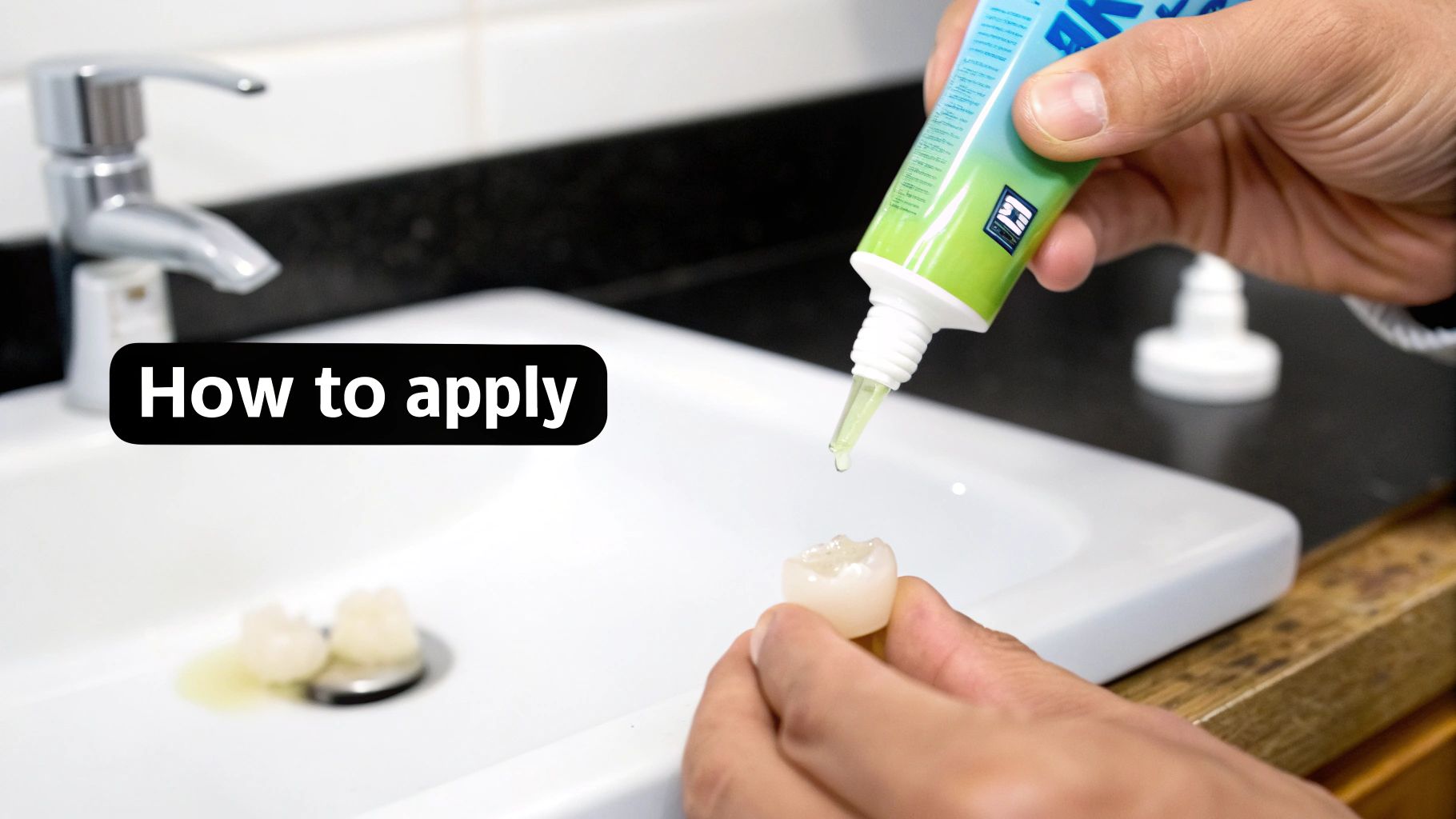
Think of it like priming a wall before you paint. You need a clean, dry surface for the paint to stick properly. The same logic applies to your teeth—a clean tooth surface lets the gel make direct contact with the enamel and dentin, which maximizes how much of the good stuff gets absorbed.
Your Step-by-Step Application Guide
For the best results, you've got to be consistent. Try to work this simple process into your daily routine, especially right before bed. That gives the gel several undisturbed hours to work its magic.
-
Start with a Clean Slate: First things first, give your teeth a thorough brushing and flossing. This clears away any plaque or food debris that could act as a barrier and stop the gel from reaching the sensitive spots.
-
Dry the Area: Grab a clean tissue or a bit of cotton gauze and gently pat the sensitive teeth dry. Saliva can dilute the gel, making it less potent. A dry surface ensures the gel stays concentrated right where you need it most.
-
Use a Small Amount: You only need a tiny, pea-sized dab of gel for each sensitive tooth or area. Trust us, more is not better here. Using too much is just wasteful and could irritate your gums.
-
Pick Your Method: You've got a few easy options for getting the gel onto the tooth surface.
- Clean Fingertip: A simple and quick way to just dab the gel on.
- Cotton Swab: This gives you more precise, targeted application, which is great for those hard-to-reach spots.
- Custom Dental Tray: If your dentist recommended a tray, use it! It’s the best way to get even, full coverage for more widespread sensitivity.
Once the gel is on, it's crucial to let it sit and do its thing. Don't eat, drink, or even rinse your mouth for at least 30 minutes. This gives the active ingredients plenty of time to absorb into the tooth and start either blocking pain signals or sealing up those tiny tubules.
Common Mistakes to Sidestep
Even with the best intentions, a few common slip-ups can sabotage your efforts. Keep these in mind to make sure every drop of your teeth desensitizing gel counts.
- Rinsing Too Soon: It's tempting, but rinsing right after you apply the gel just washes it all away before it has a chance to work.
- Applying to Wet Teeth: As we mentioned, saliva is the enemy of an effective application. Always take a few seconds to dry the tooth first. It makes a huge difference.
- Skipping Days: Relief from sensitivity builds up over time. Using the gel here and there won't allow ingredients like potassium nitrate to accumulate and keep the nerves calm. Make it a daily habit for results that stick.
By following these straightforward tips, you'll ensure every application is as effective as possible, paving the way for consistent, long-lasting relief from that nagging tooth sensitivity.
Comparing Gels to Other Sensitivity Treatments
When you're trying to get a handle on tooth sensitivity, a teeth desensitizing gel is an incredibly effective tool in your arsenal. But it’s not the only option out there. Knowing how it stacks up against daily toothpastes and in-office dental procedures helps you pick the right approach for your specific situation.
Think of it like a spectrum of relief. On one end, you have the daily-use products that help manage mild sensitivity. On the other, you have the heavy-duty professional treatments for more severe cases. Desensitizing gels fit perfectly in the middle, offering more potent, targeted relief than your toothpaste without the expense and hassle of a dental appointment.
Sensitivity Treatment Showdown Gels vs Toothpastes vs Varnishes
Navigating your sensitivity relief options can feel overwhelming. This quick comparison should help you pinpoint which treatment is the best fit for your needs, your lifestyle, and your budget.
| Treatment Type | Speed of Relief | Duration | Average Cost | Best For |
|---|---|---|---|---|
| Desensitizing Gel | Fast (minutes to hours) | Temporary (hours to days) | $15 - $40 | Flare-ups, post-whitening sensitivity, targeting specific problem teeth. |
| Sensitive Toothpaste | Gradual (days to weeks) | Ongoing (with daily use) | $5 - $15 | Daily management of mild, generalized sensitivity and prevention. |
| Fluoride Varnish | Immediate | Long-Term (months) | $25 - $75 | Persistent, moderate-to-severe sensitivity; requires a dental visit. |
Ultimately, the best choice depends on the severity and frequency of your discomfort. Gels offer a powerful, on-demand solution, while toothpastes provide a steady defensive line, and varnishes are the professional intervention for when you need the strongest relief possible.
Gels vs Desensitizing Toothpastes
For many people, the first line of defense against that familiar zing is a specialized toothpaste. These are fantastic for managing low-level, widespread sensitivity as part of your everyday brushing routine. They work by using active ingredients like potassium nitrate or stannous fluoride, but usually in lower concentrations designed for twice-daily use.
A teeth desensitizing gel, on the other hand, is like calling in an expert for a specific job. It’s formulated for direct application, often with a higher concentration of the active ingredients you need for more immediate relief.
- Toothpastes: Offer slow and steady relief that builds up over weeks of consistent use. They are designed for long-term maintenance.
- Gels: Provide a more concentrated, targeted dose of relief that often works much faster. They are perfect for sudden flare-ups or managing sensitivity after a whitening session.
If you want to explore your daily options further, our guide to the best toothpaste for sensitive teeth is a great place to start.
Think of it this way: a gel delivers a focused dose of relief right where you need it, when you need it. While your daily toothpaste works to maintain a baseline level of comfort, a gel is your go-to for acute sensitivity—it's a direct intervention, not just a preventative measure.
Gels vs Professional Treatments
When sensitivity becomes severe or just won't go away, your dentist might suggest an in-office treatment. These are the heavy hitters in the world of sensitivity relief.
A couple of common professional options include:
- Fluoride Varnish: This is a highly concentrated fluoride treatment that your dentist paints directly onto your teeth. It creates a durable, protective layer that can provide relief for months.
- Bonding Agents: For sensitivity caused by exposed root surfaces, a dentist can apply a special dental resin to seal the area, creating a long-lasting physical barrier against triggers.
These treatments provide the most immediate and durable relief, but they naturally come with a higher price tag and require scheduling a dental appointment. A teeth desensitizing gel is an excellent at-home alternative that can bridge the gap between dental visits or manage sensitivity that doesn't quite warrant a professional procedure. Of course, when considering these options, finding a dentist you trust is key; it can be helpful to understand how dentists build their online reputation to make an informed decision.
Is Desensitizing Gel Safe? Potential Side Effects to Know
For the most part, teeth desensitizing gel is incredibly safe for at-home use. But just like with any new product, knowing what to expect ensures you have a good experience from start to finish.
The most common hiccup people run into is some mild, temporary gum irritation. This usually only happens if you apply a bit too much gel and it squishes out onto your gums. If you feel a little tenderness, just scale back the amount of gel you use next time and aim for a more precise application. Most minor issues like this clear up on their own once you adjust how you're using the product.
When You Should Talk to Your Dentist First
Following the instructions on the box is your best bet for safe and effective use. However, there are a few situations where it's smart to have a quick chat with your dentist before starting.
- You Have Existing Dental Problems: If you're dealing with untreated cavities, gum disease, or even cracked teeth, that zinging sensitivity could be a symptom of a much bigger issue. A gel can't fix those underlying problems.
- You're Pregnant: It's always a good rule of thumb to run any new health or dental products by your doctor or dentist during pregnancy.
- It's for a Child: You should never use a desensitizing gel on a child unless a pediatric dentist has given you the green light and specific instructions.
Think of it this way: the goal of a desensitizing gel is to manage discomfort, not to cover up the warning signs of a serious dental issue. If your sensitivity doesn't improve after a few weeks—or gets worse—that's a clear signal to book an appointment.
The gel is your partner for temporary relief, but your dentist is the one who can provide the long-term solutions you need for a truly healthy mouth.
Your Questions About Desensitizing Gels, Answered
Even after getting the rundown on how these gels work, you probably still have a few questions floating around. That's completely normal. Let's tackle some of the most common ones so you can feel totally confident about getting started.
How Quickly Does Desensitizing Gel Actually Work?
This really comes down to what's inside the tube. If your gel uses potassium nitrate, which works by getting the tooth's nerve to chill out, you'll likely feel a real difference within a few days to two weeks of consistent, daily use.
On the other hand, gels designed to physically block the tiny tunnels (tubules) in your dentin can sometimes give you a sense of relief much faster. The catch is that this relief can sometimes be more temporary. For the best, most lasting results, the golden rule is always to follow the product's specific instructions.
Can I Use This Gel With a Whitening Kit?
Yes, you absolutely can—and it's a fantastic idea. A little bit of sensitivity is one of the most common side effects of teeth whitening, so using a desensitizing gel is a smart, proactive way to keep yourself comfortable. Many people find it helpful to use the gel either right before or right after their whitening sessions.
A good rule of thumb is to apply the teeth desensitizing gel for about 10–30 minutes either before you whiten or after you're done. But remember to double-check the instructions for both products to make sure they play nicely together and you're using them correctly.
How Long Will the Relief From the Gel Last?
The staying power of that relief really varies. It depends on the specific gel you're using, how consistent you are with it, and even your daily habits like diet and how you brush. With regular, ongoing application, the effects can be quite long-lasting, providing continuous comfort day in and day out.
A key thing to remember is that sensitivity can creep back if you stop using the gel. It can also return if the original cause—like a diet high in acidic foods or brushing too aggressively—isn't addressed. It's best to think of the gel as part of your ongoing routine, not just a one-and-done fix.
Is It Safe to Use Desensitizing Gel Every Day?
For the most part, yes. The vast majority of over-the-counter desensitizing gels are specifically formulated to be safe for daily use, as long as you stick to the directions on the package. They're designed to be gentle enough for your regular routine.
However, if you've been using a gel for several weeks and the sensitivity just isn't getting better (or is getting worse), it's time to call your dentist. Persistent pain can be a red flag for a bigger issue that a gel can't solve, like a cavity or a tiny crack in a tooth. Nothing beats professional advice for your long-term oral health.
Ready to put sensitivity behind you? At DentalHealth.com, we carry a curated selection of professional-grade desensitizing gels from the top brands dentists trust. Shop our collection and get fast, free shipping on your order today.