
A Guide to the Best Products for Sensitive Teeth
That sharp, sudden zinger of pain when you sip a hot coffee or take a bite of ice cream is a feeling you know all too well. The best products for sensitive teeth go to work in one of two ways: they either calm the tooth's nerve down or they block the tiny pathways that lead to it, giving you both relief and protection.
Figuring out why this is happening is the first real step toward finding a fix that actually lasts.
What Causes Tooth Sensitivity in the First Place?
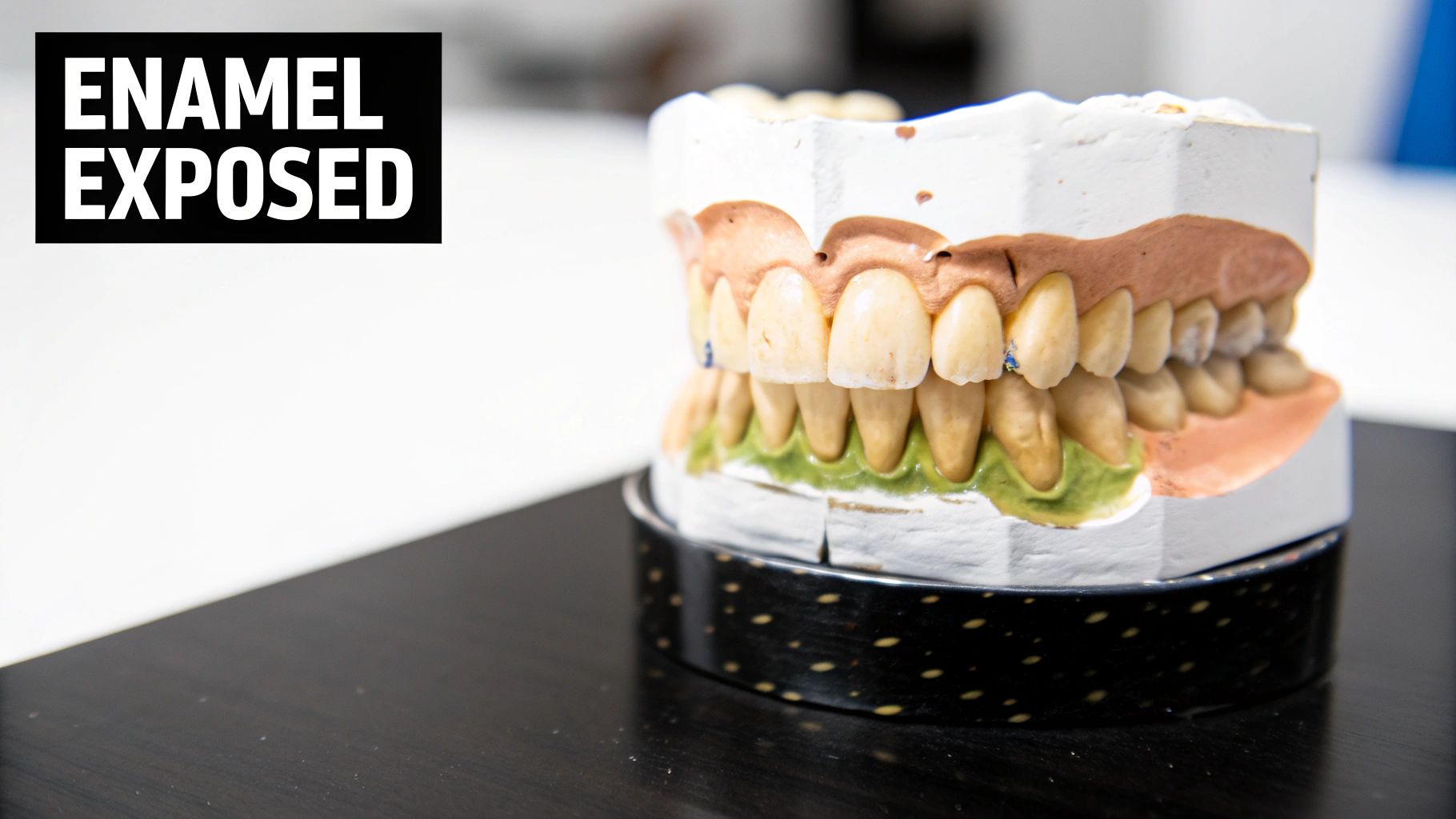
A good way to think about your tooth's enamel is like the insulation on a house. This tough, outer shell is designed to protect the softer, more porous layer just underneath it, which is called dentin. When that insulation is thick and doing its job, the inside of the house stays comfortable, no matter what the weather is doing outside.
In the same way, healthy enamel shields your dentin from all the hot, cold, acidic, or sugary things you eat and drink. But if that protective layer wears thin or your gums start to pull back, the dentin gets exposed. And that's where the trouble begins.
You see, dentin isn't just a solid block. It’s full of thousands of microscopic channels, or tubules, that act like tiny straws leading directly to the tooth's nerve center (the pulp). When something like cold air or a sweet drink hits these exposed tubules, it sends a direct signal down to the nerve, triggering that all-too-familiar flash of sharp pain.
Common Triggers for Enamel Breakdown
A few common habits and conditions are notorious for wearing away that protective enamel, leaving the sensitive dentin underneath exposed. Pinpointing these culprits is key for both finding relief and preventing the problem from getting worse.
- Aggressive Brushing: Using a toothbrush with hard bristles or just scrubbing way too hard can physically grind down your enamel over time and even cause your gums to recede.
- Acidic Diet: If you frequently consume things like citrus fruits, soda, or wine, the acid can chemically soften and erode the enamel surface.
- Teeth Grinding (Bruxism): Clenching or grinding your teeth, which often happens while you sleep, puts a massive amount of pressure on the enamel, causing it to wear away or even crack.
- Gum Recession: Our gums can pull back for different reasons, like gum disease or simply aging. This exposes the root of the tooth, which doesn't have the same tough enamel protection.
Understanding the root cause is empowering. It transforms you from someone simply reacting to pain into an informed consumer who can proactively choose the right products for sensitive teeth and adopt habits that prevent future discomfort.
If this sounds familiar, you're far from alone. Tooth sensitivity is an incredibly common issue, affecting about half of all adults. This explains why specialized toothpastes have become such a staple in so many bathrooms. In fact, research shows that 1 in 2 adults deals with the sharp pain caused by exposed dentin.
This widespread need has fueled a massive market, which is projected to hit $1.74 billion in 2025 and climb to $2.29 billion by 2030.
By identifying what’s triggering your sensitivity, you can zero in on a solution that targets your specific problem, whether that means rebuilding enamel or just blocking the pain signals. For a closer look at specific triggers, our guide on what causes tooth sensitivity to cold is a great next step.
What's Actually Working in Your Sensitivity Toothpaste?
Walking down the dental care aisle can feel like a pop quiz you didn't study for, especially when you’re dealing with the sharp zing of sensitive teeth. The secret to picking a winner isn't about the flashy packaging—it's about understanding what's inside the tube. It’s not magic; it’s just good chemistry.
Different ingredients tackle sensitivity in completely different ways. Some work to calm down the nerve itself, while others focus on building a tiny shield to block the pain triggers. Once you know how they work, you can stop guessing and start choosing the right product for your teeth. Let's look at the three main players in the fight against tooth sensitivity.
Potassium Nitrate: The Nerve Calmer
Think of the nerve inside your tooth as a sensitive doorbell. When something cold, hot, or sweet touches an exposed spot, it’s like someone leaning on that doorbell, sending a jolt of pain straight to your brain. Potassium nitrate is the ingredient that basically puts that doorbell on silent.
It works by seeping into the microscopic tunnels (called tubules) in your dentin layer and gathering around the tooth's nerve. This buildup of potassium ions makes it much harder for the nerve to send a pain signal. It doesn't fix the root cause of the exposure, but it effectively cuts the communication line, stopping that "zing" before it even starts.
Think of potassium nitrate as a temporary peacekeeper. It quiets down an overactive nerve, bringing you relief, but you have to keep using it. If you stop, the nerve will eventually go back to being just as sensitive as before.
This is why most people start feeling real relief after a couple of weeks of brushing twice a day with a toothpaste containing potassium nitrate.
Stannous Fluoride: The Protective Shield
While potassium nitrate is busy calming the nerve, stannous fluoride takes a totally different route. It acts like a microscopic bodyguard for your tooth, creating a physical barrier that blocks the pain pathways.
When you brush with a stannous fluoride product, it forms a tough, protective layer over any exposed dentin. This layer seals off those tiny tubules, preventing triggers like cold air or ice cream from ever reaching the nerve. It’s like putting a solid cover over the doorbell so no one can even get to the button.
But stannous fluoride is a true multitasker. It also provides excellent protection against cavities and gingivitis, making it a powerhouse for overall oral health. It helps fortify your enamel against acid attacks from food and drinks and fights the plaque that builds up along your gumline.
This shielding ability makes it a go-to ingredient in many of the best products for sensitive teeth, as it provides a real, physical defense against discomfort.
Arginine: The Natural Gap-Filler
The third key player is arginine, an amino acid that works with your body’s own chemistry to plug up the problem areas. Just like stannous fluoride, arginine’s goal is to seal off those pesky tubules, but it does so in a more natural way.
It partners up with the calcium that’s already in your saliva to create a mineral layer. This layer gets deposited deep inside the dentin channels, creating tiny plugs that stop the fluid movement that triggers pain signals. Dentists call this process occlusion, but you can just think of it as filling in the gaps.
This targeted approach not only brings relief but also helps rebuild a protective layer that can stand up to the daily acid attacks from your diet. The demand for effective solutions like this is booming.
The global sensitive toothpaste market has seen incredible growth, reflecting how common this issue has become. In 2024, the market hit a value of $1.81 billion and is expected to jump to $1.93 billion in 2025—a 6.9% compound annual growth rate (CAGR). This surge is partly driven by an aging population more prone to the enamel wear that causes sensitivity, pushing the need for ingredients that effectively block pain. You can dive deeper into these numbers by checking out the full global market report on sensitive toothpaste.
To make it even clearer, let's break down how these ingredients stack up against each other.
Active Ingredients in Sensitivity Products at a Glance
| Ingredient | Mechanism of Action | Primary Benefit | Best For |
|---|---|---|---|
| Potassium Nitrate | Calms the tooth's nerve by interfering with pain signal transmission. | Reduces nerve excitability. | General, widespread sensitivity; pain without major enamel erosion. |
| Stannous Fluoride | Creates a protective layer that physically blocks the dentin tubules. | Forms a durable shield against triggers. | Sensitivity combined with concerns about cavities, gingivitis, or enamel wear. |
| Arginine | Works with saliva's calcium to plug and seal dentin tubules. | Builds a natural, acid-resistant barrier. | Those looking for a natural mechanism that rebuilds protection. |
Understanding these key players takes the mystery out of choosing a product. Whether you need to calm an overactive nerve or build a stronger shield, there's an ingredient designed to help you find relief.
Choosing the Right At-Home Sensitivity Treatment
Walking down the dental care aisle can be a bit of a sensory overload. When you’re dealing with sensitive teeth, it’s easy to feel overwhelmed by all the options. But here's the good news: understanding what each type of product for sensitive teeth does best is the first step to building a relief plan that actually works for you.
Toothpaste is usually the first thing people reach for, and it's a great starting point, but it's really just one piece of the puzzle. Other options, like rinses, gels, and specialized pastes, offer unique advantages for different kinds of sensitivity. Your best bet depends on how severe your sensitivity is, where it's located, and what fits into your daily routine.
Let's break down the most common at-home options to help you figure out which treatment—or maybe combination of treatments—is the right fit.
These products all work toward the same goal but take different routes to get there. They either focus on calming the nerve, shielding the exposed surfaces of your teeth, or plugging up the microscopic tunnels that lead to the nerve.
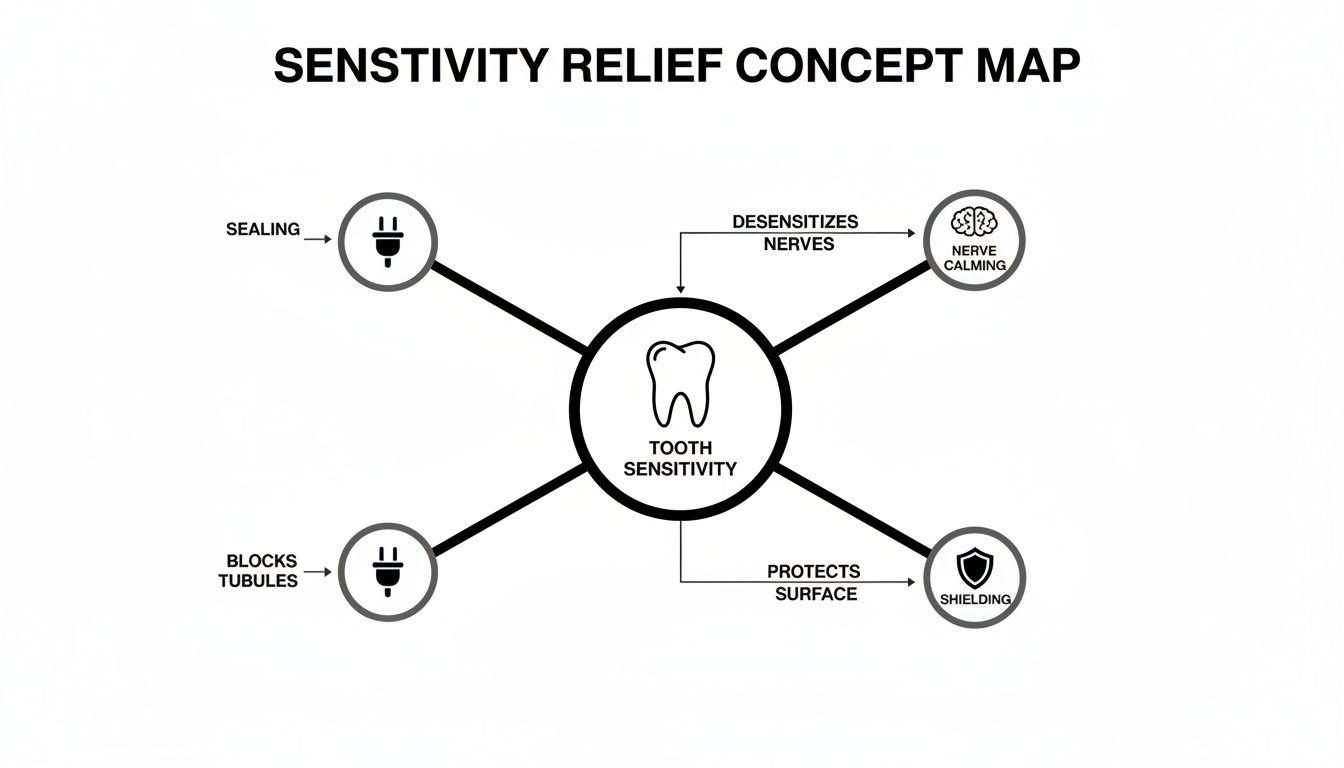
As you can see, effective relief comes down to either dialing down the nerve's overreaction or putting up a physical barrier so triggers can't reach it in the first place.
Desensitizing Toothpastes
This is the go-to for most people, and for good reason. Desensitizing toothpastes are designed for daily use and deliver active ingredients like potassium nitrate or stannous fluoride while you do your normal brushing. The biggest perk is convenience—you don't have to add a single extra step to your day.
What was once a niche remedy has exploded into a global powerhouse. The sensitive toothpaste market, valued at $1.86 billion in 2025, is expected to hit $2.74 billion by 2032. Big names like Sensodyne and Colgate Sensitive are driving this growth, with the U.S. market alone making up nearly 50% of North American sales. It just goes to show how many of us are dealing with this.
For a closer look at our favorite formulas and brands, check out our complete guide on the best toothpaste for sensitive teeth.
Therapeutic Mouthwashes
If your sensitivity feels like it's all over rather than just in one or two spots, a therapeutic mouthwash can be a fantastic addition. These rinses are made to coat every tooth, even those tricky-to-reach areas between them, with desensitizing agents. They offer quick, widespread coverage that toothpaste alone might miss.
Just keep in mind that the concentration of active ingredients in a rinse is usually lower than in a toothpaste or gel. It's best to think of it as a great supporting player, not the star of the show.
Pro Tip: Try using a sensitivity mouthwash at a different time than brushing, like after lunch. If you rinse right after you brush, you might wash away the concentrated ingredients from your toothpaste before they've had time to do their job.
Brush-On Gels and Serums
Got a few specific "hot spots" that are causing all the trouble? A brush-on gel or serum is your best friend. These products let you apply a powerful, concentrated dose of relief directly to the sensitive area using a small applicator. Because the gel stays put, the active ingredients get more time to work their way in and block those dentin tubules.
Gels are especially handy for sensitivity caused by gum recession, which leaves the root of a tooth exposed. They’re perfect for an intensive treatment right before bed, letting the ingredients work their magic overnight without being disturbed. The only trade-off is that it’s an extra, precise step, but for anyone with sharp, localized pain, the targeted relief is well worth it.
Remineralizing Pastes
When sensitivity stems from weak or thinning enamel, remineralizing pastes can be a real game-changer. Products like MI Paste use a special complex of calcium and phosphate (CPP-ACP) to put back the essential minerals your enamel has lost from acid erosion. It's like rebuilding and strengthening your tooth's natural armor from the inside out.
Using a remineralizing paste is like giving your teeth a deep conditioning treatment. You’ll typically apply a pea-sized amount after brushing and let it sit for a few minutes before spitting. These pastes are particularly great for people who enjoy acidic foods or drinks, or for anyone looking to stop sensitivity from getting worse over time.
Comparing At-Home Products for Sensitive Teeth
To make things a little easier, here’s a side-by-side look at how these different product types stack up.
| Product Type | How It's Used | Best For | Typical Time to Relief |
|---|---|---|---|
| Desensitizing Toothpaste | Used twice daily as a replacement for regular toothpaste. | Mild to moderate, generalized sensitivity and daily maintenance. | 2-4 weeks of consistent use. |
| Therapeutic Mouthwash | Swished for 30-60 seconds after brushing or between meals. | Widespread sensitivity and reaching areas between teeth. | 1-2 weeks for initial effects; complements toothpaste. |
| Brush-On Gel | Applied directly to specific sensitive spots, usually before bed. | Severe, localized pain on one or more teeth. | Can provide relief within days for targeted spots. |
| Remineralizing Paste | Applied to teeth after brushing and left to absorb. | Sensitivity caused by enamel erosion or demineralization. | 4-6 weeks; focuses on long-term structural repair. |
In the end, you might find that the best strategy is to mix and match. For example, you could use a desensitizing toothpaste every day, a mouthwash after lunch, and a targeted gel on that one problem tooth at night. Once you understand what each product does best, you can create a personalized routine that finally gets your sensitivity under control and brings back your comfort.
How to Get the Most from Your Sensitivity Products
Picking the right products for sensitive teeth is a fantastic first step, but your work isn't quite done. It’s not just what you use, but how you use it that makes all the difference. A few simple, strategic tweaks to your daily habits can massively boost the effectiveness of your toothpaste, gel, or rinse, giving those active ingredients the best shot at working their magic.
By fine-tuning your routine, you can turn a good product into a great one. These small changes help maximize how long the product stays on your teeth and prevent common mistakes that can accidentally undo all your hard work. Think of it as going from just using a product to actively managing your own oral health.
Fine-Tune Your Application Technique
You might be surprised how much the way you apply your products actually matters. For daily brushing, a simple pea-sized amount of desensitizing toothpaste is all you need. Piling on more doesn't add any extra benefits and just means you'll go through the tube faster.
For those extra-sensitive zinger spots, try a more targeted approach. Right before bed, put a small dab of your sensitivity toothpaste directly onto the painful tooth with a clean fingertip. Just leave it there overnight without rinsing. This gives the active ingredients—like potassium nitrate or stannous fluoride—a long, uninterrupted window to either calm the nerve down or plug up those tiny dentin tubules.
Perfect Your Post-Brushing Routine
What you do right after brushing can either supercharge your results or wash them down the drain. Many of us have a habit of rinsing vigorously with water after spitting, but this is one of the biggest mistakes you can make when dealing with sensitivity.
Rinsing with water washes away the concentrated active ingredients left on your teeth before they've had a chance to fully absorb and do their job. Instead, simply spit out the excess foam and avoid eating or drinking for at least 30 minutes.
This tiny change in habit makes a huge difference. It ensures the protective and desensitizing agents stay on your tooth surfaces longer, delivering a much more powerful effect. If you also use a therapeutic mouthwash, try using it at a different time of day—maybe after lunch—to avoid immediately rinsing away your toothpaste’s benefits.
Avoid These Common Sabotaging Mistakes
Even with the best products in your arsenal, some habits can quietly undermine all your progress. Being aware of these common pitfalls is key to getting real, lasting relief. Remember, consistency is everything. These products work by building up an effect over time, so skipping applications will definitely set you back.
Here are a few key mistakes to steer clear of:
- Using Abrasive Whitening Toothpastes: Many whitening toothpastes rely on harsh abrasives to scrub away surface stains. This can physically wear down your enamel and counteract the protective layer your sensitivity product is trying to build. If you want to whiten, look for formulas made specifically for sensitive teeth.
- Brushing Too Hard: An aggressive brushing technique, especially with a medium or hard-bristled brush, can cause gums to recede and literally scrub away enamel. Stick with a soft-bristled brush and use gentle, circular motions. Let the toothpaste do the work, not brute force.
- Ignoring a Product's Timeline: Relief from sensitivity isn't always instant. Nerve-calming ingredients like potassium nitrate can take 2-4 weeks of consistent, twice-daily use to reach their full effect. Be patient and stick with the routine before you decide a product isn’t working for you.
Successfully managing sensitivity that pops up after cosmetic treatments requires a similar, gentle approach. To learn more, check out our detailed guide on how to reduce tooth sensitivity after whitening, which offers more tips for keeping your smile both bright and comfortable. By pairing the right products with these smarter habits, you can achieve significant and lasting relief.
Lifestyle Habits That Prevent Tooth Sensitivity
While the right products for sensitive teeth are a game-changer, their real power is unlocked when you pair them with smart daily habits. Think of it this way: your sensitivity toothpaste is like a firefighter working to put out the fire, but your lifestyle choices determine whether you keep throwing fuel on it.
By making a few simple adjustments, you can create a solid defense for your enamel and gums, paving the way for long-term comfort. This isn't about a drastic overhaul; it's the small, consistent actions that add up to the biggest impact. Let's walk through the key shifts you can make to protect your teeth and take back control.
Master a Gentle Brushing Technique
It might sound surprising, but one of the most common culprits behind tooth sensitivity is simply brushing too hard. When you scrub away with a hard-bristled brush, you're not just cleaning your teeth—you're physically wearing down your enamel and encouraging your gums to recede. This exposes the sensitive dentin layer underneath, and that's where the trouble starts.
The goal is to clean, not to scour. A few tweaks to your technique can protect your teeth from this self-inflicted damage.
- Switch to a Soft-Bristled Brush: A soft brush is more than enough to remove plaque and debris without being abrasive to your enamel or gums.
- Use Gentle, Circular Motions: Ditch the back-and-forth sawing motion. Instead, use small, gentle circles to clean each tooth, especially along the gumline where plaque loves to hide.
- Let the Brush Do the Work: Hold your toothbrush lightly, almost like you’re holding a pen. This simple change in grip naturally prevents you from applying too much force.
It's a common misconception that more pressure means a better clean. The truth is, a gentle but thorough technique with the right brush is far more effective and infinitely safer for sensitive teeth.
Tweak Your Diet to Be Tooth-Friendly
What you eat and drink has a massive impact on your enamel’s health. Highly acidic foods and drinks are notorious for softening and eroding this protective outer layer, leaving your teeth defenseless against sensitivity triggers. You don't have to cut them out completely, but being mindful can make a world of difference.
Some of the usual suspects include:
- Sodas and Sports Drinks: These are often loaded with corrosive acids.
- Citrus Fruits and Juices: Lemons, oranges, and grapefruits are delicious but highly acidic.
- Wine: Both red and white wine can contribute to enamel erosion over time.
Try to balance your diet with more tooth-friendly options. Dairy products are rich in calcium, and crunchy vegetables help clean your teeth as you chew. A great tip? When you do have something acidic, just swish with some water afterward to help neutralize the acid and give your enamel a fighting chance.
Address Teeth Grinding Head-On
Do you ever wake up with a sore jaw or a dull, nagging headache? You could be grinding your teeth at night, a condition known as bruxism. This habit puts an incredible amount of force on your teeth, which can wear down enamel, cause tiny fractures, and lead to some serious sensitivity.
If you think you might be a grinder, the best next step is a visit to your dentist. They can confirm if bruxism is the issue and will often recommend a custom-fitted night guard. This simple appliance creates a protective barrier between your upper and lower teeth, absorbing the grinding pressure while you sleep.
Pairing a night guard with the right products for sensitive teeth is a powerful one-two punch against pain, protecting your teeth from damage while actively treating the sensitivity.
When You Should See a Dentist for Sensitive Teeth
While the right at-home products for sensitive teeth can be a game-changer for managing day-to-day discomfort, they aren't a cure-all. It's so important to know when that little twinge is more than an annoyance and actually a sign that you need to get a professional opinion.
Think of over-the-counter products as your first line of defense. They work wonders for that widespread, mild-to-moderate sensitivity you might get from enamel wear or receding gums. But if you’ve been diligently using a sensitivity toothpaste for a few weeks and aren't feeling any real relief, that’s your cue to call the dentist. Pain that sticks around usually means the problem is a bit deeper than what an OTC product can handle.
Key Signs You Need a Professional Opinion
Not all sensitivity is created equal. Certain types of pain are more like flashing red lights, pointing to an underlying dental issue that needs a proper diagnosis and treatment. Catching it early can be the difference between a simple fix and a major, expensive procedure down the road.
Be on the lookout for these specific symptoms:
- Severe or Throbbing Pain: If the feeling is less of a quick "zing" and more of a constant, throbbing ache, that's a significant warning sign.
- Pain Localized to a Single Tooth: When the sensitivity isn't all over but is lasered in on one specific tooth, it could mean a cavity, a crack, or an issue with an old filling.
- Pain That Lingers: A jolt from hot or cold is one thing. But if that pain lasts for more than 30 seconds after the trigger is gone, something more serious could be going on.
- Discomfort with Pressure: Feeling pain when you bite down or chew is a classic sign of a potential crack in the tooth or even an infection.
Your dentist is your partner in oral health. While at-home products manage symptoms, a dentist diagnoses the root cause. Ignoring persistent pain is like turning off a smoke alarm without checking for a fire.
What to Expect at Your Dental Visit
When you go in, your dentist will do a thorough exam to hunt down the source of your sensitivity. This might involve taking X-rays to check for decay hiding between teeth or other problems lurking below your gumline.
Based on what they find, they might recommend in-office treatments that pack a much bigger punch than what you can buy yourself. This could be anything from applying a concentrated fluoride varnish to strengthen your enamel and block those sensitive tubules, to bonding a sealant over an exposed root. In some cases, they might even write you a prescription for a high-strength desensitizing toothpaste. By getting a professional involved, you’re making sure you're actually solving the problem, not just putting a band-aid on it.
Got Questions About Sensitivity Products? We've Got Answers.
When you're dealing with sensitive teeth, trying to pick the right product can feel overwhelming. You've probably got a few questions floating around. Let's tackle some of the most common ones so you can feel confident you're making the right choice for your smile.
How Long Until I Feel Relief?
This is the big one, right? You want to know when that zing of pain will finally go away. The honest answer is: it depends on the product's main ingredient.
If your toothpaste uses potassium nitrate, its job is to calm down the nerve inside your tooth. This isn't an overnight fix; you'll generally start to feel a real difference within about two weeks of brushing twice a day, every day. For ingredients that create a physical shield, like stannous fluoride, you might feel some relief a bit quicker.
The most important thing here is consistency. If you’ve been using a product diligently for four weeks and still aren't getting the relief you need, it might be time to switch to a formula with a different active ingredient or, better yet, have a chat with your dentist.
Can I Still Whiten My Teeth If They're Sensitive?
Yes, absolutely! You just have to be smart about it. A lot of whitening toothpastes on the shelf are highly abrasive—they basically scrub off stains, but they can also scrub away your precious enamel, making sensitivity even worse.
The trick is to find whitening products made specifically for people like us. These formulas are much gentler.
- They use non-abrasive polishing agents to gently lift stains without roughing up your enamel.
- They also include desensitizing ingredients, like our old friend potassium nitrate, to keep the nerve calm while you brighten up.
It’s a two-for-one deal: you get a whiter smile without aggravating the sensitivity.
Are These Products Safe to Use Every Day?
Definitely. In fact, they're meant for daily, long-term use. Think of it like this: the relief you get isn't permanent. These products work by building up a protective effect over time, whether that’s calming the nerve or blocking the tubules.
If you stop using them, that protection wears off, and the sensitivity will likely creep back in. To keep your teeth comfortable and pain-free, you need to make your sensitivity toothpaste a regular part of your daily routine.
Ready to find a solution that works for you? At DentalHealth.com, we carry a curated selection of dentist-approved products that tackle sensitivity while helping you safely achieve a brighter smile. Check out our professional-grade options today at https://dentalhealth.com.