
ACP Relief Gel: How It Reduces Tooth Sensitivity
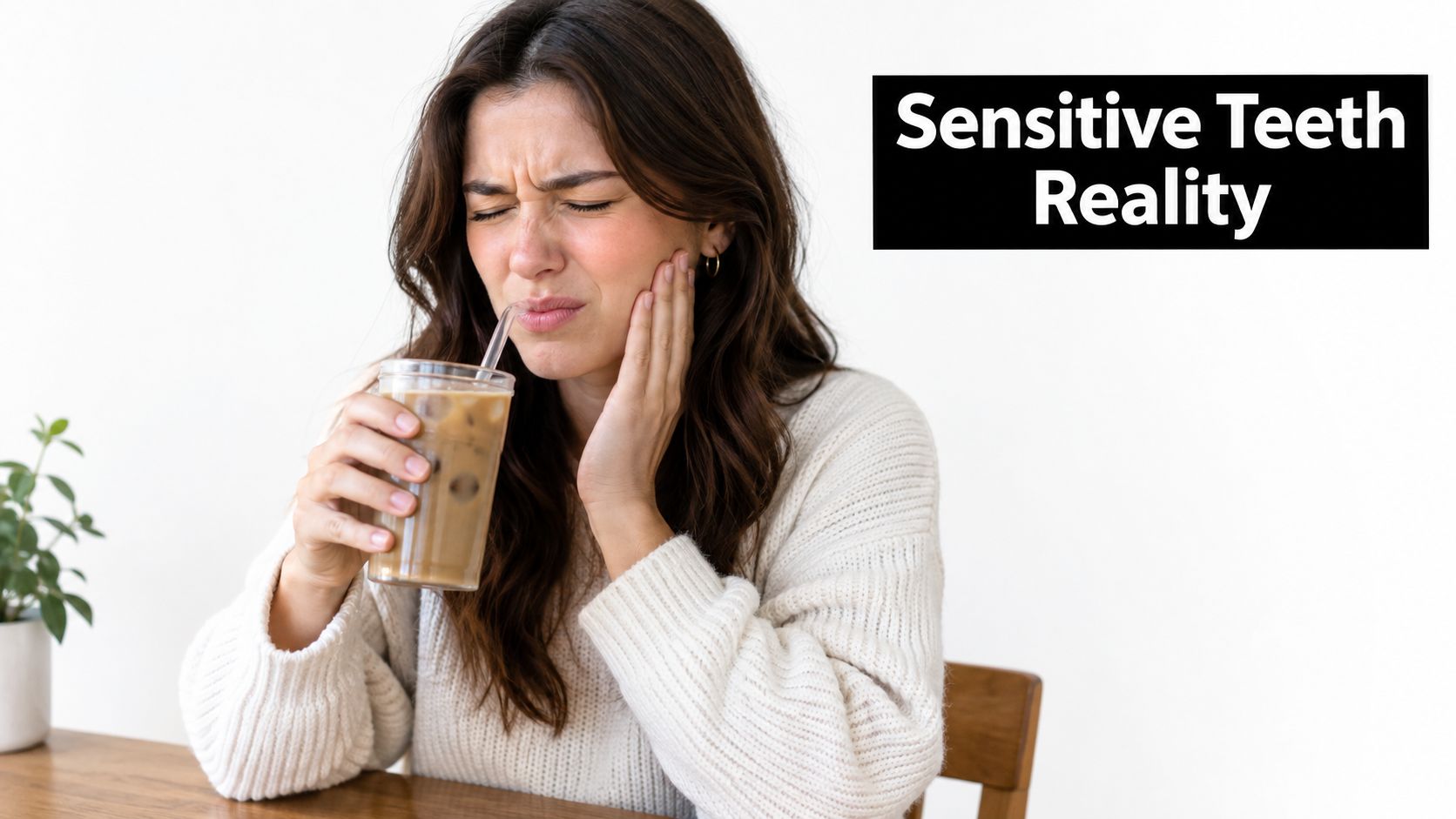
You take a sip of cold coffee and feel a sharp jolt shoot through one tooth. Later, a spoonful of ice cream triggers the same reaction. If the discomfort started during or after whitening, it may be temporary. If it keeps returning, however, the sensation deserves more than a quick layer of gel.
ACP Relief Gel is a professional desensitizing product associated especially with whitening-related sensitivity. Its formulation may combine potassium nitrate, amorphous calcium phosphate, and fluoride, depending on the specific product. The practical question isn't whether calcium sounds beneficial. It's whether the product matches the cause of your sensitivity, whether the evidence supports your expectations, and whether the ingredients are safe for you.
What Triggers Tooth Sensitivity and How ACP Relief Gel Responds
A typical sensitivity episode is brief but intense. Cold coffee, sweet food, a toothbrush, or a breath of cold air reaches an exposed or vulnerable area and produces a sudden “zing.” The discomfort often comes from exposed dentin, the tooth layer beneath enamel, where microscopic channels called dentinal tubules can transmit fluid movement toward the pulp.
Whitening can make this response more noticeable because peroxide may pass through enamel and dentin, contributing to temporary pulpal irritation and movement within open tubules. Enamel wear, gum recession, erosion, and exposed root surfaces can create similar conditions. A useful overview of other possible triggers appears in this guide to tooth sensitivity from cold.
Two mechanisms, not one promise
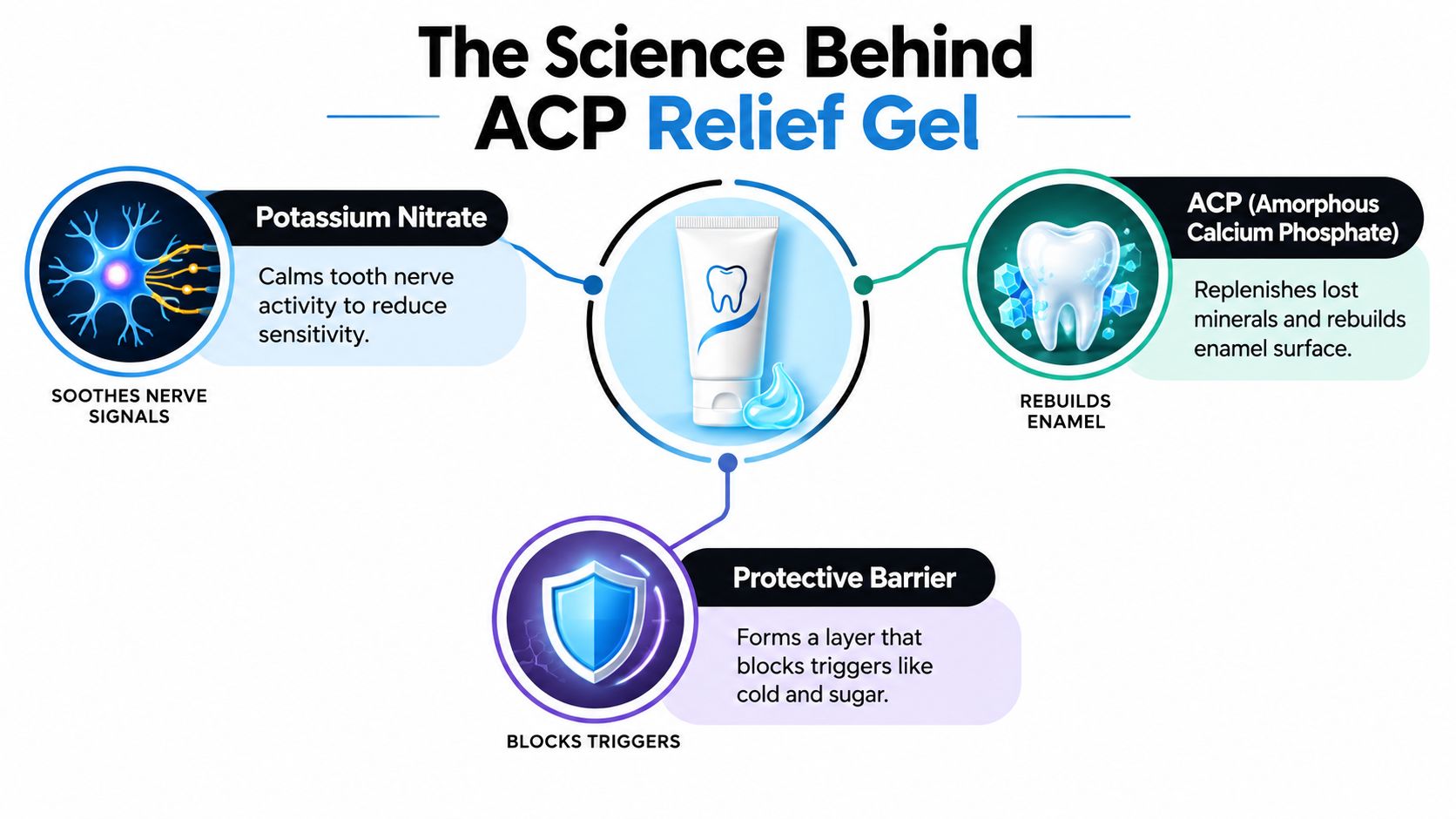
ACP Relief Gel is best understood as a desensitizing adjunct, not a universal repair treatment. Potassium nitrate is used for a nerve-calming effect. Amorphous calcium phosphate, or ACP, is intended to deposit minerals and help reduce fluid movement through exposed dentinal tubules.
That distinction matters. A product can reduce the response to a stimulus without correcting the reason the tooth became sensitive. A cracked tooth, cavity, leaking restoration, gum recession, or inflamed pulp needs diagnosis and treatment, not repeated applications of gel.
Practical rule: Use desensitizing gel for a known, appropriate situation, especially post-whitening discomfort. Don't use it to mask pain that is localized, spontaneous, worsening, or lingering.
People most likely to consider ACP-based products include patients managing sensitivity during professional whitening, those with early enamel wear, and users whose dentist has identified exposed dentin without another urgent cause. The product may help by addressing both nerve response and the physical pathway that allows triggers to stimulate the tooth.
The Science Behind ACP Relief Gel Ingredients
A good ACP gel combines a few different jobs in one formula, and each ingredient has limits. Potassium nitrate is there for nerve desensitization. ACP works at the tooth surface and inside open dentinal tubules. Fluoride, when present, supports remineralization and helps form a more acid-resistant mineral phase. If you want the enamel-side explanation, this guide shows how remineralization works at the enamel level.
Potassium nitrate and nerve response
Potassium nitrate is a standard desensitizing ingredient in professional and consumer dental products. In Relief ACP formulations, its role is to reduce how strongly the nerve responds to triggers. In practice, that usually means less reactivity to cold, air, or whitening-related irritation. It does not numb the tooth like a local anesthetic, and it does not fix the reason a tooth became sensitive in the first place.
That distinction matters clinically.
The rewritten paragraph is:
If sensitivity is coming from exposed dentin after whitening or mild enamel wear, potassium nitrate may help. If the underlying issue is decay, a cracked cusp, a leaking margin, or pulpal inflammation, a desensitizing gel can only soften symptoms for a while.
ACP and tubule occlusion
Amorphous calcium phosphate supplies calcium and phosphate in a form that can participate in mineral deposition on the tooth surface. When exposed dentinal tubules become partly occluded, less fluid movement occurs in response to cold, touch, air, or acidic stimuli. Less fluid movement generally means less hydrodynamic stimulation and less discomfort.
Some formulas use a CPP-ACP system. Casein phosphopeptides stabilize calcium and phosphate ions so they stay available at the tooth surface longer. In demineralized or acidic conditions, those ions can move into porous enamel and dentin and support mineral precipitation. That is why CPP-ACP is better understood as a delivery system for minerals, not just a calcium additive.
This is also where a practical safety point comes in. Because CPP is derived from casein, CPP-ACP products are not a casual choice for people with a milk-protein allergy.
What the laboratory evidence can and can't show
The U.S. regulatory record for Relief ACP describes potassium nitrate and ACP as a dual-mechanism formulation, but the supporting work was bench testing rather than a clinical trial. Bench testing can show material behavior, mineral deposition, or tubule occlusion. It cannot promise how much relief a specific patient will feel or how long that relief will last.
Clinical evidence gives a better picture, with the usual limits. In this clinical paper on calcium phosphate and bleaching sensitivity, ACP-containing treatments reduced sensitivity in bleaching settings while maintaining whitening performance comparable to potassium-fluoride treatment. That supports real usefulness, especially around whitening, but not a blanket claim that ACP gel will solve every kind of tooth pain.
Used correctly, these ingredients make sense. Potassium nitrate helps calm nerve response. ACP helps create a mineral barrier. Neither replaces diagnosis.
Clinical Evidence and Realistic Effectiveness Expectations
The strongest practical evidence depends on what outcome you care about. A gel used alongside a specific whitening protocol isn't automatically equivalent to a treatment for every form of dentin hypersensitivity.
A 2013 U.S. survey of 135 patients reported that 99% experienced little or no sensitivity during Philips Zoom in-office whitening when Relief ACP was used with the treatment. The result corresponds to approximately 134 of 135 surveyed patients, but the source presents it as a survey, not a randomized, independently controlled clinical trial. Its scope is therefore narrow: it relates to a defined patient sample and associated Zoom whitening protocol, not all users, all whitening systems, or untreated sensitivity. The historical result is reported in Philips' professional information about Relief ACP.
What broader reviews suggest
A systematic review summarized in the available literature found an average reduction of approximately 2.5 points on visual-analogue pain scales after four weeks, with benefits also appearing immediately in several individual studies. The review is accessible through this evidence summary on desensitizing treatments.
That finding is clinically meaningful, but it doesn't establish ACP as universally superior. Comparative reviews describe CPP-ACP benefits as sometimes transient and haven't confirmed consistent superiority over potassium nitrate, fluoride, or other desensitizers. A person with mild post-whitening discomfort may notice useful relief. Someone with exposed roots, erosion, a cracked tooth, or pulp inflammation may see little improvement because the gel isn't treating the primary problem.
A sensible expectation
Think in terms of reduced intensity and improved comfort, not instant pain elimination or permanent enamel restoration. Relief may begin quickly for some users, while others need repeated directed use. Results can vary with the cause, baseline severity, exposure to whitening agents, tray fit, oral hygiene, and whether the tooth has an untreated defect.
The fairest conclusion is that ACP Relief Gel has a credible role as part of professional whitening aftercare and short-term sensitivity management. It has evidence behind its mechanisms and some clinical support, but the available record doesn't justify promising a fixed outcome for every person.
How to Use ACP Relief Gel in Your Daily Routine
Start with the directions for the exact product and the instructions from your dentist. Contact time and frequency can differ by formulation, and increasing the amount won't necessarily improve the result. Excess gel can spread onto the gums and create irritation rather than extra protection.
A practical routine
- Identify the situation first. Use the gel for sensitivity associated with a supervised whitening plan or a previously assessed sensitivity problem. Don't apply it repeatedly to an unexplained, single-tooth pain.
- Clean the teeth gently. Brush with a soft brush and remove visible plaque before application. Avoid aggressive scrubbing, especially where the gumline is already tender or the root surface is exposed.
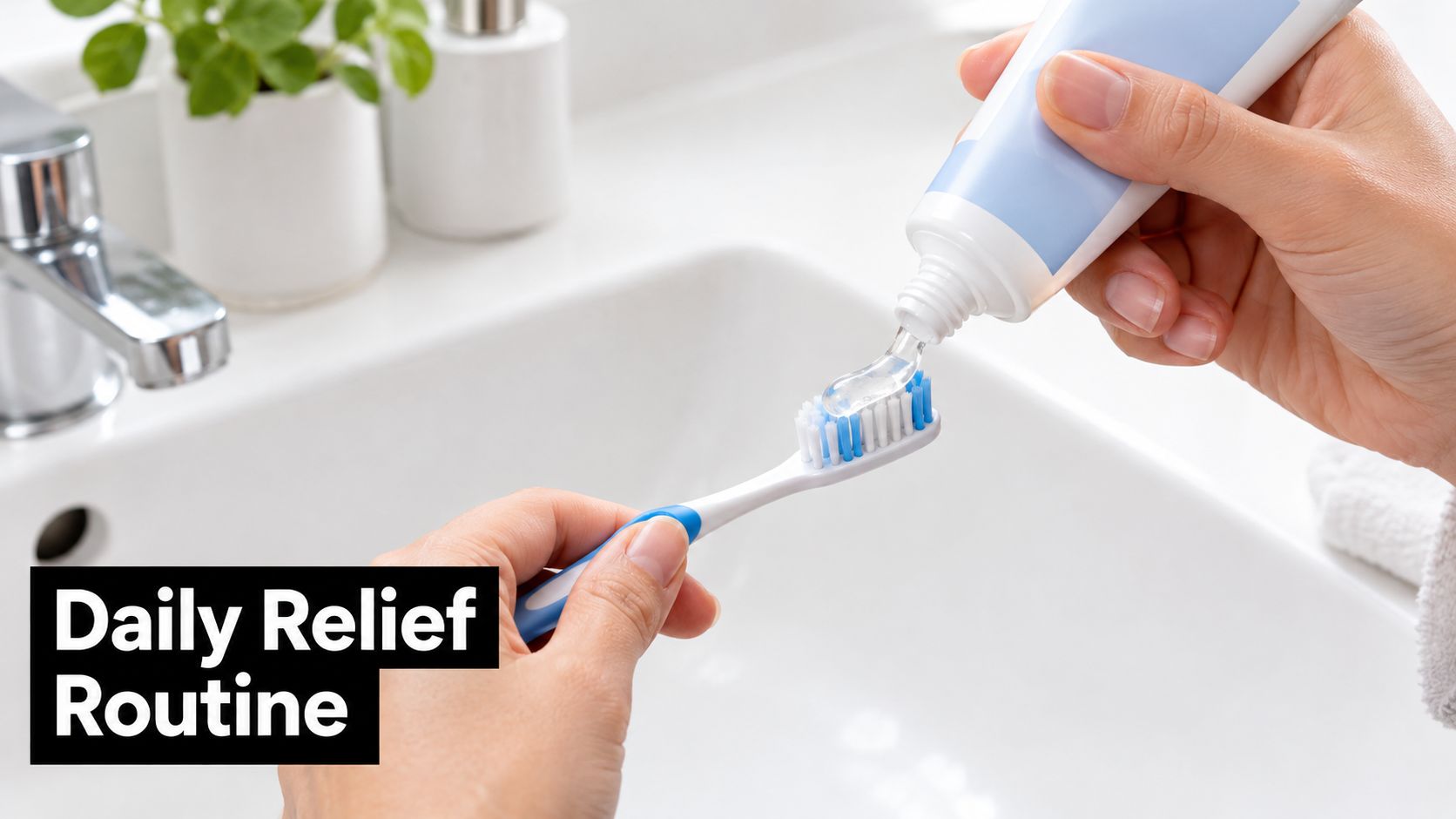
- Apply only as directed. If your dentist has provided trays, place the recommended amount in the tray or on the affected areas according to the product instructions. Keep the prescribed contact time, then remove excess material and follow the label's rinsing guidance.
- Coordinate other products. MI Paste or MI Paste Plus may be considered for remineralizing support, while Fluoridex can serve a separate fluoride-focused role when prescribed or recommended. These products aren't interchangeable, so using more than one doesn't automatically produce better sensitivity control.
- Adjust the whitening plan if needed. If sensitivity appears during whitening, pause or modify the whitening schedule only with appropriate professional guidance. Tray fit, peroxide exposure, and the condition of the enamel all affect comfort.
The routine works best when it supports diagnosis, careful whitening technique, and regular hygiene. If you find that oral-care changes feel difficult to maintain, a practical mindfulness guide by Live Better With may help you build a calmer, more consistent daily habit without turning it into another demanding task.
For a visual demonstration of application and whitening aftercare, use the video below as general orientation, while following your own clinician's directions for the product you have.
Milk Protein Allergy Safety Considerations
The most important screening question isn't whether a product is labeled “lactose-free.” It's whether the formulation contains casein-derived ingredients.
CPP-ACP uses casein phosphopeptide, and casein is a milk protein. Lactose intolerance and cow's-milk-protein allergy are different conditions. Lactose intolerance concerns digestion of milk sugar. A milk-protein allergy involves an immune response to proteins such as casein, so a lactose-free label doesn't establish allergy safety.
The Australasian Society of Clinical Immunology and Allergy advises people with cow's-milk allergy to avoid dental products containing Recaldent or CPP-ACP. Its guidance is summarized in this food-allergy information from ASCIA.
Check the exact formulation
“ACP Relief Gel” can describe a product family or a formulation whose ingredients need careful verification. Look for terms such as CPP-ACP, casein phosphopeptide, Recaldent, or other milk-derived components in the ingredient list and manufacturer documentation. Don't assume that every ACP product has the same source materials.
Rinsing after application may remove remaining product from the mouth, but it doesn't make a milk-protein-containing formula appropriate for someone with a confirmed allergy. A person with a history of significant reactions should ask an allergist or dentist to approve the ingredient before use, especially for a child.
Recognize urgent symptoms
A 2026 case report described immediate reactions in two children with confirmed cow's-milk allergy after application of CPP-ACP dental paste. Reported symptoms included urticaria, facial and lip swelling, breathing symptoms, and emergency transport. Anyone who develops breathing difficulty, facial or throat swelling, widespread hives, faintness, or rapidly worsening symptoms needs urgent medical care.
People with suspected allergy should not perform an informal home test with a dental paste. Ask a qualified clinician to identify a non-milk-derived alternative and document which ingredients must be avoided. For general product education, this explanation of MI Paste and its use can help, but ingredient suitability still depends on the specific product and the patient's medical history.
When to Seek Professional Dental Evaluation
ACP Relief Gel is reasonable for short-term management when the cause is known, the formulation is safe, and the symptoms fit ordinary sensitivity. It isn't a treatment for decay, a cracked tooth, gum recession, pulp inflammation, or a leaking restoration.
Stop whitening and arrange a dental assessment if pain is spontaneous, localized, worsening, severe, or lingering after the trigger disappears. A tooth that hurts without cold or touch may be signaling a deeper problem, particularly when the discomfort keeps returning in the same location.
For readers comparing desensitizing products or seeking clinical guidance, information about tooth sensitivity treatment in Katy offers an example of how professional evaluation fits into treatment planning. The key decision is simple: use gel strategically for appropriate sensitivity, but don't let temporary relief delay diagnosis.
DentalHealth.com offers professional-grade whitening gels, sensitivity products, fluoride care, and remineralizing options from established dental brands, along with practical product guidance. Visit DentalHealth.com to compare options for a supervised whitening routine or targeted tooth-sensitivity care, and verify ingredient details before ordering if you have a milk-protein allergy.