
What Is MI Paste Used For and How Does It Work?
So, what exactly is this MI Paste that dentists keep talking about?
Think of it as a professional-grade topical crème for your teeth. Its main job is to rebuild, strengthen, and protect your tooth enamel by delivering a powerful dose of calcium and phosphate directly where it's needed most. This helps knock out sensitivity, reverse the very first signs of cavities, and protect your teeth during and after treatments like whitening or braces.
A Closer Look at This "Multivitamin" for Your Teeth
Your daily toothpaste is great for cleaning and basic fluoride protection, but MI Paste is a targeted restorative treatment that picks up where your regular paste leaves off. It provides a super-boost of the exact minerals your enamel is made of—calcium and phosphate. This makes it an incredible tool for proactive dental care, especially when your teeth are under stress.
Instead of just sitting on the surface, its formula actively replenishes lost minerals. This helps fortify your teeth against the daily barrage of acidic foods and drinks that wear down enamel over time. This process, known as remineralization, is the secret behind why MI Paste is so effective.
What Are the Core Benefits?
Dental professionals recommend MI Paste for a whole host of common oral health concerns. Its versatility makes it a go-to solution for both fixing existing problems and preventing new ones from starting.
Here's a quick rundown of the primary uses for MI Paste and how it helps in each scenario.
MI Paste Key Uses and Benefits at a Glance
| Primary Use | How It Works | Key Benefit |
|---|---|---|
| Soothing Tooth Sensitivity | Blocks microscopic tubules in the dentin that lead to the tooth's nerve. | Provides relief from pain caused by hot, cold, or sweet foods and drinks. |
| Reversing Early Enamel Damage | Delivers calcium and phosphate to "re-harden" and repair demineralized spots. | Can reverse early-stage cavities, especially "white spot lesions." |
| Protecting Teeth During Orthodontics | Shields enamel from acid attacks in hard-to-clean areas around brackets. | Prevents the formation of white spots and decay while wearing braces. |
| Aiding Post-Whitening Recovery | Calms nerve sensitivity and replenishes minerals stripped during whitening. | Reduces post-whitening discomfort and strengthens enamel. |
In short, MI Paste is a fantastic tool for a wide range of dental needs, offering both immediate relief and long-term protection.
The four main situations where MI Paste really shines are:
- Soothing Painful Tooth Sensitivity: It provides relief for teeth that zing when hit with hot, cold, or sweet things. It works by helping to block the microscopic pathways that transmit those pain signals to the nerve.
- Reversing Early Enamel Damage: It's incredibly effective at treating "white spot lesions"—those chalky, white patches that signal the first stage of a cavity. You often see these after braces are removed, and MI Paste can help make them disappear.
- Protecting Teeth During Orthodontics: The areas around braces are notoriously tough to clean, making them prime real estate for demineralization. MI Paste helps shield these vulnerable spots from acid attacks.
- Aiding Post-Whitening Recovery: Professional teeth whitening can sometimes leave you with temporary sensitivity. Applying the paste afterward helps calm the nerves and remineralize the enamel, leading to a healthier, stronger smile.
By delivering a concentrated dose of bio-available calcium and phosphate, MI Paste essentially gives your teeth the raw materials they need to repair themselves, making them more resilient against future damage.
How MI Paste Rebuilds Your Tooth Enamel
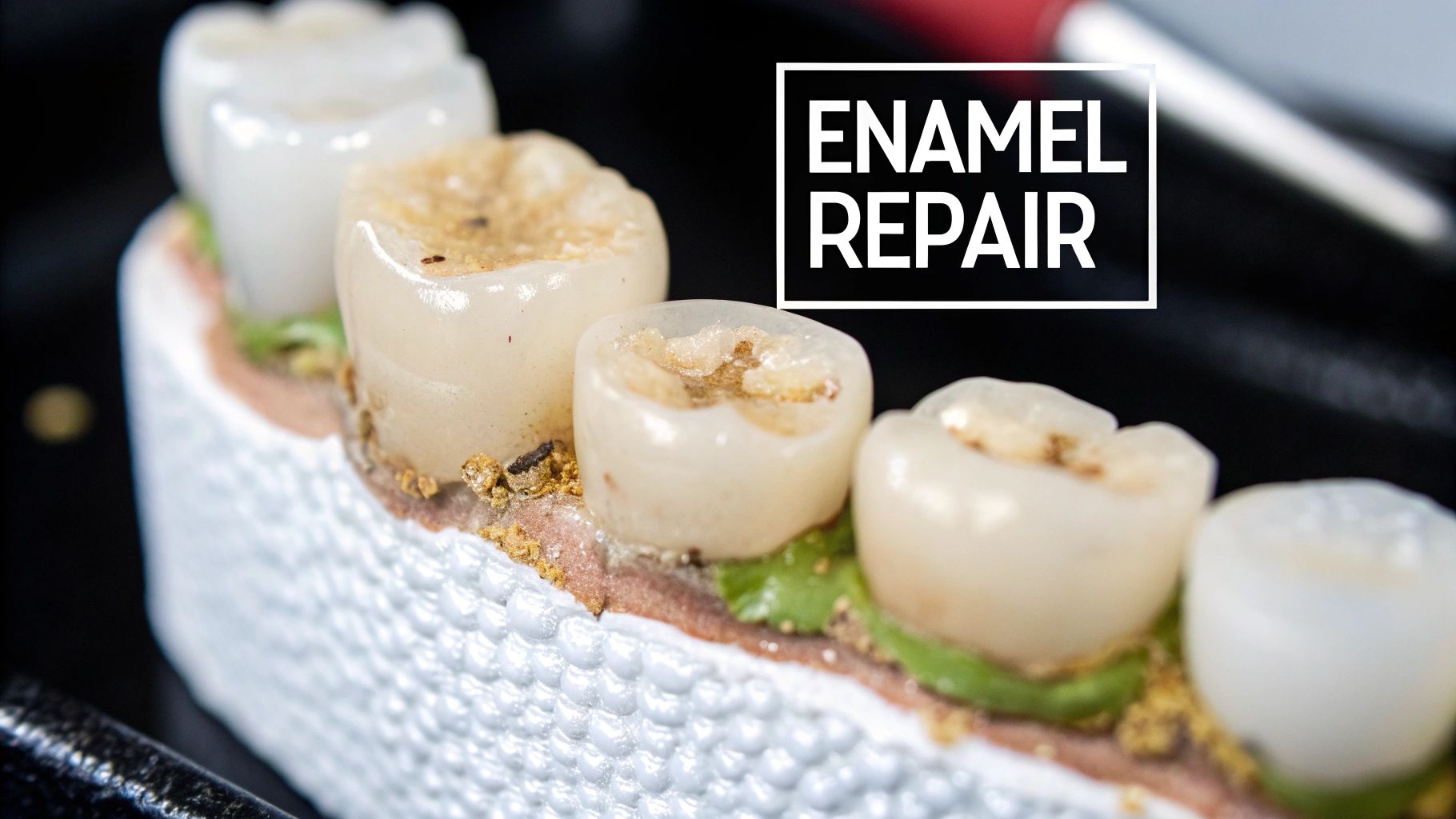
To really get what MI Paste is used for, you have to look at the powerful science working inside the tube. It all comes down to one star ingredient: a milk-derived protein complex called Recaldent™. The technical name is a mouthful—Casein Phosphopeptide-Amorphous Calcium Phosphate (or CPP-ACP for short).
Think of your tooth enamel as a microscopic crystal wall that’s constantly under attack from acids in your food and drinks. Every time you have something acidic, it’s like tiny thieves are stealing the essential minerals—calcium and phosphate—right out of that wall. This process, called demineralization, leaves behind tiny weak spots.
This is where Recaldent™ comes in. It acts like a highly specialized mineral delivery truck. It’s loaded up with a super-concentrated payload of calcium and phosphate ions, keeping them perfectly stable and ready to use until they get to your teeth. Once it arrives, it releases those minerals directly onto the enamel surface, effectively patching up and rebuilding the wall from the inside out.
The Science of Remineralization
This powerful rebuilding action is called remineralization. It’s not just a temporary fix; it’s a genuine repair process that puts mineral density back into your enamel. When your enamel is stronger, it's naturally more resistant to future acid attacks. It can even help reverse the earliest signs of decay, like those chalky white spot lesions.
Imagine your enamel surface is like a porous sponge. MI Paste completely soaks that sponge with the exact building blocks it needs to become solid and tough again. This targeted delivery system is what makes it so much more effective than just relying on the small amount of minerals available in your saliva.
This unique ability to deliver bio-available calcium and phosphate directly to the tooth surface is the core reason MI Paste is so widely recommended by dental professionals for enamel repair and sensitivity reduction.
If you're curious about the fundamental minerals that build strong hard tissues throughout the body, this guide on Calcium and Magnesium Tablets offers great insights. Understanding their importance really drives home why replenishing these specific minerals in your enamel is so critical for your long-term oral health.
Why This Process Matters for You
This mineral replenishment process has a few direct benefits that tackle some of the most common dental issues people face. By actively repairing and strengthening your enamel, MI Paste can:
- Reduce Sensitivity: Remineralization helps plug the tiny pores (called dentinal tubules) in your teeth that lead to the nerve. By blocking these pathways, it effectively cuts off the pain signals from hot, cold, or sweet foods.
- Reverse White Spots: It restores mineral density to those demineralized areas, which often show up as white spots. This helps them blend back in with your natural tooth color for a more even appearance.
- Strengthen Vulnerable Teeth: Using it regularly creates a more acid-resistant enamel surface. This is a huge help for anyone undergoing orthodontic treatment or for those of us with a bit of a sweet tooth.
At the end of the day, MI Paste does more than just clean your teeth. It provides a therapeutic dose of the exact materials your teeth need to heal themselves, helping you achieve a healthier, more resilient smile. You can explore more ways to strengthen tooth enamel in our related guide.
The Four Most Common Uses for MI Paste
Now that we've covered the science behind how MI Paste works its magic on enamel, let's talk about where the rubber meets the road. Dentists don't just recommend this topical crème for fun; they turn to it for specific challenges that go way beyond what your average toothpaste can handle. These four common uses really show what MI Paste is for in everyday dental care.
Soothing Painful Tooth Sensitivity
Ever get that sharp, sudden zing when you eat ice cream or sip hot coffee? That’s tooth sensitivity, and it's a real pain. It happens when your enamel wears down, exposing tiny microscopic tunnels called dentinal tubules that lead right to your tooth's nerve.
MI Paste brings relief by plugging up these little pathways with a concentrated dose of calcium and phosphate. Think of it like a road crew patching up thousands of tiny potholes. By blocking these channels, MI Paste cuts off the route pain signals use to reach the nerve, calming sensitivity so you can get back to enjoying your favorite foods and drinks without fear.
Repairing White Spot Lesions
Have you ever noticed those chalky, milky-white spots on teeth? Dentists call these white spot lesions, and they’re one of the first visible warning signs of demineralization—that critical stage right before a full-blown cavity develops. They're especially common after someone gets their braces off, since it's notoriously tricky to clean around all that hardware.
This is where MI Paste really shines. It floods these porous, weakened areas with the exact minerals they've lost, helping to restore their original density and strength. With consistent use, this remineralization process helps the white spots fade and blend back into the natural color of the tooth, often getting rid of them completely without any drilling or filling.
By replenishing lost minerals, MI Paste can essentially "heal" the enamel in its earliest stage of decay. It turns a vulnerable weak spot back into a strong, resilient surface, making it a powerful tool for conservative, proactive dental care.
Supporting Post-Whitening Recovery
Getting your teeth professionally whitened is a great way to brighten your smile, but it can sometimes leave them feeling a bit tender and sensitive afterward. The whitening process can temporarily pull some minerals from the enamel surface, making it more porous and easily irritated for a short time.
Using MI Paste after a whitening session is like giving your teeth a calming, restorative spa treatment. It does two crucial things:
- It calms sensitivity by addressing the temporary porosity that whitening agents can cause.
- It puts back the lost minerals, helping to rehydrate and fortify the enamel for a healthier, more resilient smile.
This simple step makes the whole whitening experience more comfortable and ensures your newly brightened smile is also strong and healthy.
Protecting Teeth During Orthodontics
Wearing braces creates a unique challenge for keeping teeth clean. All those brackets and wires are perfect hiding spots for plaque, making teeth much more vulnerable to acid attacks and demineralization. This is exactly why white spot lesions are so common for people who have had orthodontic treatment.
MI Paste acts like a defensive shield during this critical time. Applying it regularly helps neutralize acids from plaque and continuously feeds minerals to those high-risk areas around the brackets. Its track record here is solid. For instance, research on MI Paste Plus (the version with fluoride) showed just how big of an impact it can have. One clinical study found that orthodontic patients who used it every night saw an incredible 53.5% reduction in decalcification around their brackets. You can dive deeper into the research insights on how MI Paste Plus prevents demineralization to see the full findings. This kind of proactive protection helps ensure that when the braces finally come off, the smile you see is not just straight, but healthy and spot-free, too.
MI Paste vs MI Paste Plus: Which One Is Right for You?
When you start looking into what MI Paste is used for, you’ll quickly see two versions pop up: the standard MI Paste and its partner, MI Paste Plus. While both are built on the same powerhouse Recaldent™ (CPP-ACP) technology to deliver essential minerals, the choice between them really boils down to one key ingredient: fluoride.
Understanding this single difference is the easiest way to figure out which product fits your specific dental needs. Both formulas are fantastic at remineralizing enamel and dialing down sensitivity, but the addition of fluoride gives MI Paste Plus an extra layer of defensive power against cavities.
The Core Difference: Fluoride
The standard MI Paste is a fantastic fluoride-free option. Its mission is simple and focused: deliver a concentrated dose of calcium and phosphate directly to your tooth structure. This makes it the perfect go-to if your main goals are:
- Reducing painful tooth sensitivity.
- Reversing early-stage white spot lesions.
- Soothing enamel after whitening treatments.
On the other hand, MI Paste Plus includes 900 ppm of sodium fluoride in its formula. Fluoride is a well-known champion of dental health because it helps create a stronger, more acid-resistant enamel surface called fluorapatite. This makes MI Paste Plus the recommended choice for anyone who needs both remineralization and an extra boost in cavity prevention.
Think of it this way: MI Paste is like a dedicated repair crew sent to rebuild a damaged wall. MI Paste Plus is that same repair crew, but they also apply a protective, weather-resistant sealant to the finished wall, making it much tougher against future storms.
Choosing Your Product: MI Paste vs. MI Paste Plus
So, how do you pick the right one? It often comes down to your dentist's recommendation and your personal risk factors for cavities. This table breaks down the main differences to help guide your decision.
| Feature | MI Paste | MI Paste Plus |
|---|---|---|
| Active Ingredient | Recaldent™ (CPP-ACP) | Recaldent™ (CPP-ACP) & 900 ppm Sodium Fluoride |
| Fluoride Content | Fluoride-Free | Contains Fluoride |
| Primary Use | Sensitivity, white spots, post-whitening care | Sensitivity, white spots, cavity prevention |
| Best For | Those avoiding fluoride or with low cavity risk | Those with moderate to high cavity risk |
| Application | Topical paste applied after brushing | Topical paste applied after brushing |
Ultimately, both products deliver the powerful benefits of Recaldent™, but if you're looking for comprehensive protection against decay, the "Plus" makes all the difference.
Making the Right Choice for Your Smile
For people struggling with sensitivity from whitening treatments or orthodontic work, MI Paste Plus has proven to be especially effective. Its combination of Recaldent™ and 900 ppm fluoride optimizes the enamel’s ability to absorb fluoride, which not only strengthens the tooth but also stimulates saliva flow. This enhanced saliva flow helps deliver even more of the beneficial minerals to your teeth, providing superior protection.
If your main concern is sensitivity or remineralization without adding fluoride to your routine, the standard MI Paste is an excellent choice. However, if you are at a higher risk for cavities or simply want the maximum defensive power available, the added fluoride in MI Paste Plus makes it the superior option for all-around protection.
How to Apply MI Paste for the Best Results
Getting the most out of MI Paste really comes down to how you apply it. When you use it correctly, you're giving the active ingredients enough time to really work their magic and deliver those crucial minerals right to your enamel. The process is super straightforward and should fit easily into your regular oral hygiene routine.
Think of it as a simple, two-step process that happens right after your normal brushing. First, you clean the canvas, then you apply the specialized treatment.
Your Step-by-Step Application Guide
Following these steps will ensure the paste is as effective as possible. Like any good habit, consistency is the key, so try to do this once or twice a day, or whatever your dental professional recommends.
- Brush Your Teeth First: Start by brushing thoroughly with your everyday toothpaste to clear away any plaque or food debris. Rinse your mouth out just like you normally would.
- Apply a Pea-Sized Amount: Squeeze a small, pea-sized dab of MI Paste onto a clean fingertip or a cotton swab. A little goes a long way.
- Spread a Thin Layer: Gently apply a thin, even coat across the surfaces of your teeth. Make sure to pay extra attention to any specific problem areas, like sensitive spots or those pesky white spot lesions.
- Wait and Absorb: This is the most important step. You need to leave the paste on your teeth, undisturbed, for at least three minutes. You can spit out any excess saliva that builds up, but don't rinse your mouth with water.
- Avoid Food and Drink: Once the three minutes are up, hold off on eating, drinking, or rinsing for at least 30 minutes. This waiting period gives the minerals plenty of time to be absorbed by your enamel.
This simple chart can help you decide whether the standard MI Paste or MI Paste Plus is the right choice for your main dental concerns.
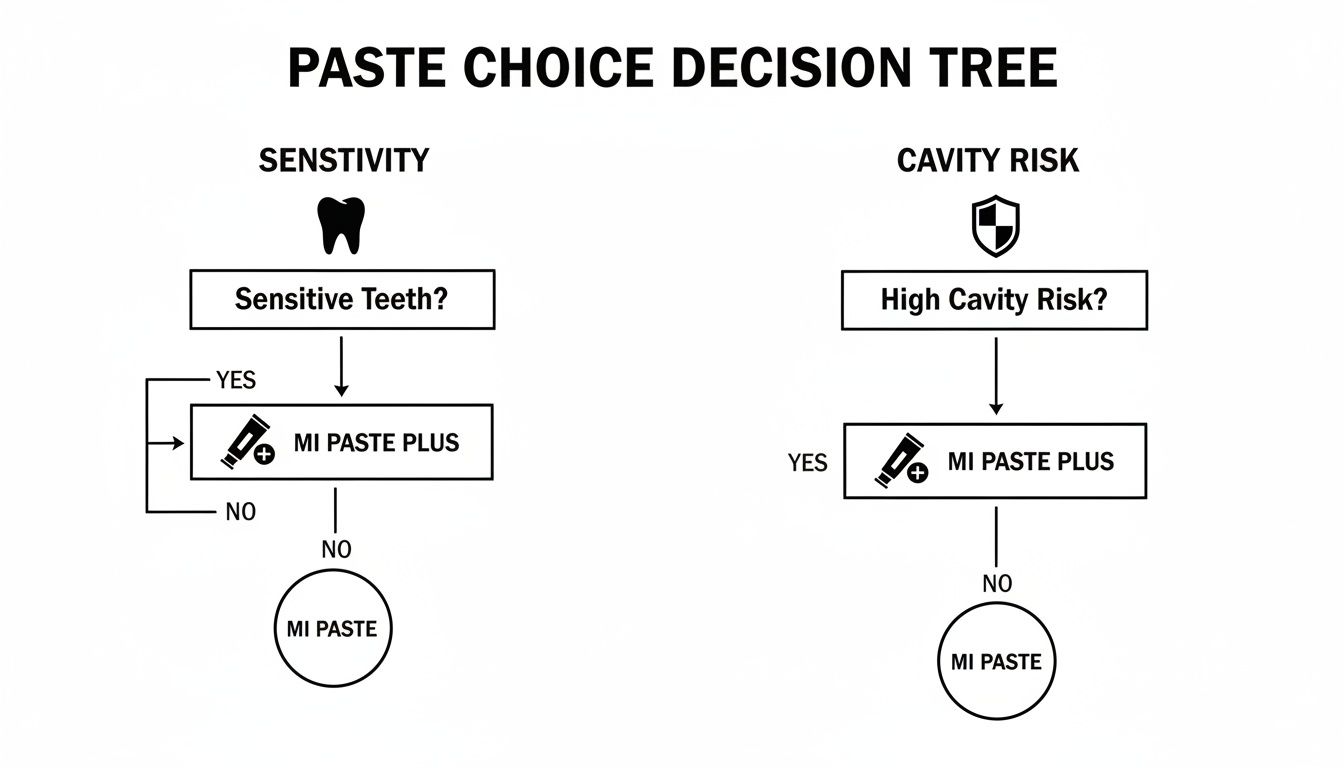
As the visual shows, your primary goal—whether it's tackling sensitivity or stepping up your cavity prevention game—is what determines the best formula for you.
Getting the Most from Your Treatment
For a more intensive treatment, some dentists suggest using custom-fitted dental trays. You just put the paste inside the trays and wear them for the recommended time. It’s a great way to ensure maximum contact.
Recent research has really backed up the product's effectiveness, showing it can cause sensitivity to drop by up to 70%. It does this by remineralizing the enamel and blocking the tiny tubules in your teeth that transmit those pain signals. If you want more detailed instructions, you might find our guide on how to use MI Paste Plus helpful.
Hold On—Important Safety Info Before You Start
MI Paste can be a fantastic tool for strengthening your enamel, but it's not for everyone. Before you dive in, there’s one critical piece of safety information you absolutely need to know.
The powerhouse ingredient in MI Paste, Recaldent™, comes from a milk protein called casein. That means the product itself contains milk-based components.
Because of this milk-derived protein, MI Paste is not safe if you have a known or suspected milk protein allergy. Using it could set off an allergic reaction, making this the single most important warning to be aware of.
Understanding Its Role in Your Routine
It's also really important to understand where MI Paste fits into your overall dental health plan. Think of it as a specialized, therapeutic treatment—it doesn't take the place of your daily brushing and flossing or your regular visits to the dentist.
MI Paste is built to tackle specific issues like sensitivity and the early stages of enamel breakdown. It isn't a cure for existing dental problems like deep cavities or gum disease.
- It’s not toothpaste: You still need to brush with your regular toothpaste first.
- It’s a partner to professional care: It doesn't replace your six-month check-ups, cleanings, or any treatments your dentist has recommended.
- It’s targeted support: See it as a booster shot for your enamel, not a cure-all for every oral health concern.
When to See Your Dentist First
If you're dealing with persistent or severe dental pain, you should always check in with your dentist before starting any new product on your own. Don't try to self-treat serious symptoms with MI Paste.
Make sure you schedule an appointment if you're experiencing:
- A constant or throbbing toothache
- Visible holes or dark spots on your teeth
- Gums that are swollen, bleeding, or pulling away from your teeth
- Extreme sensitivity that just isn't getting better
Your dentist is the only one who can give you an accurate diagnosis and make sure you’re using the right products for your specific situation. Using MI Paste the right way is the key to getting that stronger, healthier smile safely.
Common Questions About Using MI Paste
Alright, let's wrap up by tackling some of the most common questions that pop up when people first start using MI Paste. Getting the facts straight on the practical side of things is just as important as knowing what it does. This quick Q&A should clear up any lingering questions you might have.
Can I Use MI Paste Instead of Toothpaste?
This is a big one, and the answer is a firm no. It’s easy to get them confused, but MI Paste is a topical treatment, not a cleaner. Its job is to deliver those powerhouse minerals to your enamel after you've already brushed away all the plaque and food particles.
Always brush first with your regular fluoride toothpaste. Think of it this way: your toothpaste is the cleanser that preps the canvas, and MI Paste is the concentrated serum you apply afterward to repair and fortify it.
How Often Should I Apply It?
The best routine is always the one your dentist recommends, as they know your specific needs. But generally, most people apply MI Paste once or twice a day. A common schedule is in the morning and right before bed, always after brushing.
Consistency is really the secret sauce here. Applying it before you go to sleep is a great strategy because it gives the paste hours to work on your teeth without being disturbed. No matter what, stick to the schedule your dental professional gives you.
Your dentist's advice is gold. They have the full picture of your oral health and can tailor an application schedule that will get you the absolute best results.
How Long Until I Notice a Difference?
Everyone’s teeth are different, so results can vary. For sensitivity, many people feel a noticeable improvement within just a few days of consistent use. The calcium and phosphate get to work pretty quickly, plugging up those tiny tubules in your dentin that send pain signals to the nerve.
Reversing visible white spots, however, is more of a marathon than a sprint. Since you're rebuilding mineral density from within the enamel, it can take several weeks or even a few months to see a significant change. Patience and sticking with the routine are key.
Is It Safe for Children to Use?
MI Paste can be a fantastic tool for kids, particularly for those with braces who are at a higher risk of developing white spots. That being said, it should always be used with a professional's green light.
It's crucial to talk to your pediatric dentist first. They can confirm if MI Paste is the right call, make sure your child is old enough not to swallow it, and give you precise instructions for how to apply it safely and effectively.
Ready to give your teeth the restorative boost they deserve? DentalHealth.com offers the full range of MI Paste products, delivered right to your door. Shop for MI Paste and strengthen your smile today.