
Proven Ways to Strengthen Tooth Enamel and Protect Your Smile
You can absolutely strengthen your tooth enamel. The best approach involves using a quality fluoride toothpaste, eating a balanced, calcium-rich diet, and practicing smarter oral hygiene. The secret lies in a process called remineralization, a natural repair mechanism where minerals like calcium and phosphate are put back onto your tooth's surface.
While you can't regrow enamel that's been completely lost, these daily habits are incredibly effective at fortifying and patching up weakened spots before they turn into full-blown cavities.
Understanding How Your Tooth Enamel Works
Think of your tooth enamel as a microscopic fortress wall. It's actually the hardest substance in your entire body. But every single day, this fortress is under attack. The main culprits are acids from the foods and drinks we all enjoy—things like sodas, citrus fruits, and sugary snacks. This constant acid exposure kicks off a process called demineralization.
Demineralization is like tiny invaders chipping away at the stones of your fortress wall. It leaches out essential minerals—specifically calcium and phosphate—from your enamel. This creates weak spots that are prime targets for decay. If this process goes on without intervention, the wall eventually crumbles, and you've got a cavity.
But your body has a built-in defense and repair crew.
The Natural Repair Process
Thankfully, your body fights back with its own process: remineralization. Your saliva is much more than just water; it's a mineral-rich solution perfectly designed to neutralize those acids and redeposit lost calcium and phosphate right back onto your tooth surfaces. This is like a team of masons coming in to patch up the chipped stones in the fortress wall, restoring its strength and integrity.
Your enamel's health is a constant balancing act. When demineralization happens faster than remineralization, your teeth lose minerals quicker than they can be repaired, leading to enamel erosion and decay. Your goal is to tip the scales in favor of remineralization.
This dynamic is where being proactive with your oral care makes all the difference. This infographic does a great job of showing this continuous cycle of mineral loss and repair that defines your enamel's health day in and day out.
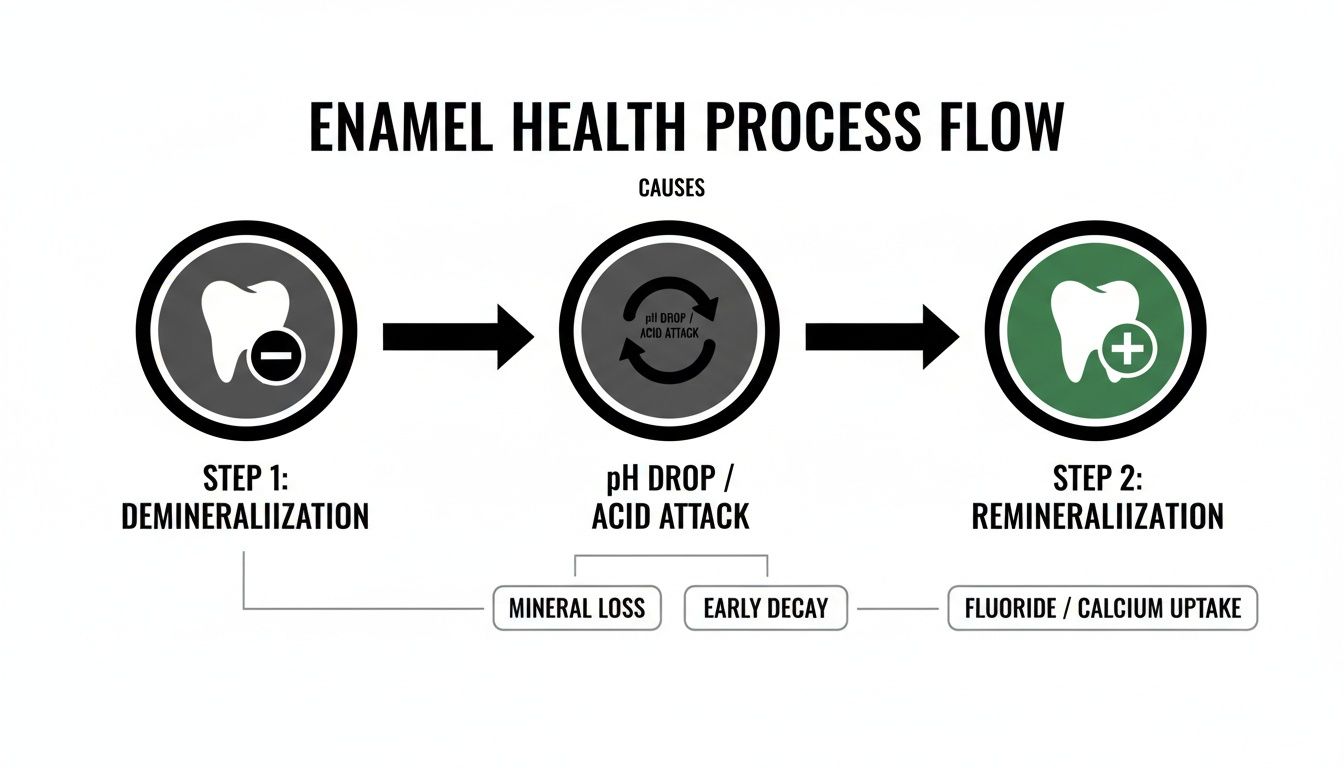
As the visual shows, daily acid attacks cause mineral loss, but our protective habits promote mineral gain, effectively reinforcing your enamel's structure.
Can You Regrow Lost Enamel?
This is a really critical point: once enamel is physically gone—worn away from grinding or severe erosion—your body can't grow it back. It's not like skin that can heal over. However, you have significant power to strengthen the enamel you do have. This distinction is the key to effective at-home care.
That said, some exciting new research is exploring ways to go beyond just strengthening. For instance, recent developments in biomaterials have led to peptide-based therapies that aim to rebuild enamel-like mineral layers. Promising preclinical tests on a peptide-based lozenge showed it could actually deposit new protective material. Clinical trials are now underway to see how well it works for people.
You can explore the latest advancements in tooth regeneration to get a glimpse of what the future holds. This kind of progress highlights a huge shift toward not just preserving, but potentially restoring, this vital protective layer.
Using Fluoride to Build a Stronger Enamel Shield
If your enamel is your body’s natural armor, think of fluoride as the master blacksmith who forges it into a stronger, more resilient shield. It’s the single most reliable and scientifically-backed tool we have for actively rebuilding tooth enamel, turning the daily battle against acid attacks in your favor.
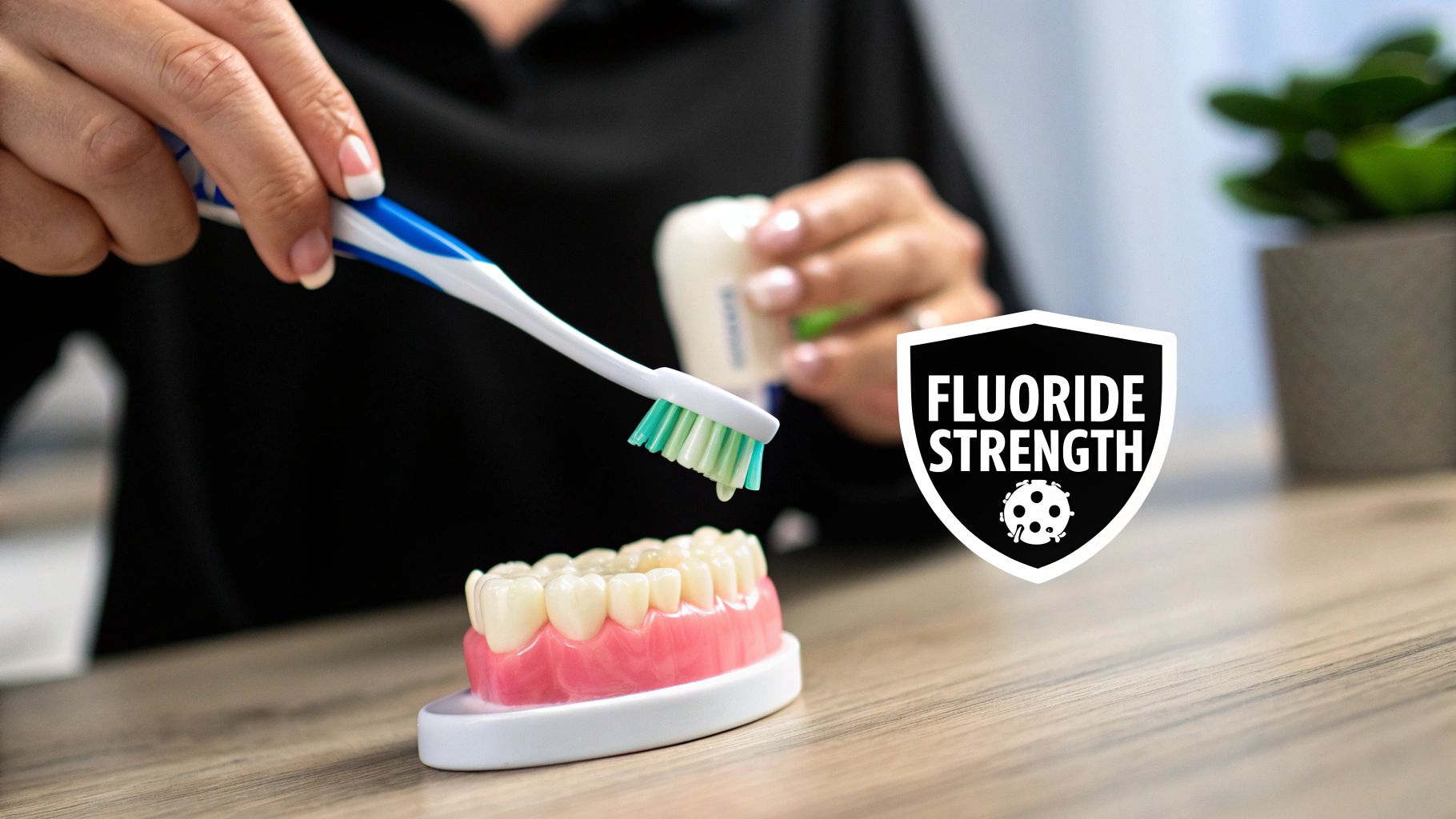
Fluoride's real power is how it supercharges your body's natural remineralization process. When it's present in your saliva, it acts like a magnet for calcium and phosphate ions—the raw materials for enamel—and helps them plug back into the weakened crystal structure of your teeth.
But it does more than just patch up the damage. It fundamentally upgrades your enamel.
How Fluoride Transforms Your Enamel
The mineral that makes up your enamel is called hydroxyapatite. It’s tough, but it has a weakness against acid. When fluoride is around during remineralization, it integrates itself right into the enamel's crystal lattice, creating a new, superior mineral: fluorapatite.
Think of fluorapatite as the superhero version of your natural enamel. It’s way more resistant to acid, which makes it much harder for bacteria and acidic foods to wear your teeth down. This means every time you use a fluoride product, you aren't just cleaning your teeth; you're actively applying a chemical upgrade to your smile's defenses.
By incorporating itself into the tooth's surface, fluoride lowers the critical pH level at which enamel starts to dissolve. This creates a powerful buffer, giving your teeth a much stronger defense against everyday acid attacks from your diet.
This ongoing cycle of repair and reinforcement is one of the best ways to fortify tooth enamel and stop cavities before they ever get a chance to start.
Choosing Your Fluoride Toolkit
Fluoride isn’t a one-size-fits-all deal. It comes in different forms and strengths, so you can build a routine that fits your specific needs. Getting familiar with these options is the key to maximizing your enamel protection.
1. Everyday Over-the-Counter (OTC) Products
- Fluoride Toothpaste: This is the cornerstone of any enamel-strengthening routine. Most OTC toothpastes contain around 1,000 to 1,500 parts per million (ppm) of fluoride, a concentration proven effective for daily cavity prevention and remineralization.
- Fluoride Mouth Rinses: These give you an extra dose of fluoride that can get into nooks and crannies that brushing might miss. They're a great backup for anyone at a higher risk of decay. For a closer look at how they work, check out our guide on the benefits of an anticavity fluoride rinse.
2. High-Strength Prescription Options
- Prescription Toothpaste: For people dealing with a higher risk of cavities, dry mouth, or serious enamel erosion, a dentist might prescribe a toothpaste with 5,000 ppm of fluoride. This high concentration packs a much bigger remineralizing punch.
- Prescription Gels or Rinses: Just like the toothpaste, these products deliver a higher dose of fluoride for targeted, at-home treatment under a dentist's supervision.
3. Professional In-Office Treatments
- Fluoride Varnish: This is a highly concentrated fluoride treatment applied right onto your teeth by a dental professional. The varnish sticks to your teeth for several hours, slowly releasing a high dose of fluoride for maximum absorption and enamel hardening. It's one of the most powerful ways to strengthen weak spots.
Understanding the Numbers and Impact
The proof is in the pudding. Mountains of clinical data show that fluoride is the most widely used, evidence-backed way to strengthen existing tooth enamel. For instance, community water fluoridation alone is linked to a 25–35% reduction in tooth decay over a lifetime.
On top of that, high-concentration products, like a 5,000 ppm toothpaste or a professional varnish, create measurable increases in enamel hardness for those at higher risk.
Ultimately, consistency is what truly matters. Whether you're using a standard OTC toothpaste or a prescription-strength product, the daily application of fluoride keeps your enamel's repair crew on the job 24/7. This simple habit elevates your oral hygiene routine from a basic cleaning into a powerful, proactive strategy for building and maintaining a strong, brilliant smile for life.
Advanced Therapies for Targeted Enamel Repair
While fluoride is the undisputed champion for defending your enamel, it helps to think of it as the primary material for strengthening your fortress walls. Sometimes, though, you need a specialized delivery service to bring in extra building blocks—specifically, calcium and phosphate—to repair specific spots that have taken a hit. This is exactly where advanced remineralizing therapies come in.
These products are engineered to go beyond fluoride’s broad protective shield. They work by delivering a concentrated supply of the exact minerals your enamel has lost, right to the weakened surfaces of your teeth. This targeted approach is a game-changer for tackling specific vulnerabilities before they become bigger problems.
Delivering Minerals Where They’re Needed Most
One of the most effective technologies in this space is Casein Phosphopeptide-Amorphous Calcium Phosphate, or CPP-ACP. It sounds complex, but the concept is brilliant. This milk-derived protein acts like a microscopic mineral transport system. It grabs onto calcium and phosphate ions, keeping them "bioavailable" and ready to use until they reach your tooth's surface.
Once there, the CPP-ACP releases these essential building blocks, allowing them to integrate directly into the demineralized enamel. This process effectively patches and reinforces the tooth's structure from the inside out, making it an incredibly powerful way to strengthen compromised tooth enamel.
Think of it like this: If fluoride is the cement that strengthens the entire wall, CPP-ACP is a specialized delivery truck. It brings a fresh supply of perfectly shaped stones (calcium and phosphate) directly to the cracks and weak spots, ensuring a more thorough and targeted repair.
This technology is most often found in professionally recommended products, like remineralizing pastes and creams. When you apply them, they form a protective, mineral-rich layer on your teeth, bathing them in the very components they need to rebuild.
Who Benefits from These Advanced Therapies?
While just about anyone can benefit from extra mineral support, these therapies are particularly effective for people facing specific challenges that speed up enamel wear. See if you fall into one of these categories—it could help you and your dentist decide if this is a smart addition to your routine.
Consider these therapies if you experience:
- High Acid Exposure: Whether it's from a diet high in acidic foods and drinks or from conditions like acid reflux (GERD), constant acid attacks can easily overwhelm your saliva's natural defenses.
- Dry Mouth (Xerostomia): A lack of saliva seriously cripples your mouth's ability to remineralize teeth, leaving them vulnerable. These therapies help make up for that missing mineral flow.
- Post-Whitening Sensitivity: The tooth whitening process can temporarily make enamel more porous. Using a remineralizing paste can help calm sensitivity and speed up the re-fortification process.
- Early Signs of Demineralization: If your dentist points out "white spot lesions"—the first visible sign of mineral loss—these products can often help reverse the damage before a full-blown cavity forms.
For those curious about the best way to apply these products for maximum effect, check out our guide on how to use MI Paste Plus.
A Powerful Addition to Your Fluoride Routine
It's crucial to understand that these therapies are powerful boosters, not replacements for your daily fluoride. Think of them as a team: fluoride creates the strong, acid-resistant fluorapatite shield, while products with CPP-ACP restock the fundamental building materials. Using them together is a comprehensive, one-two punch for maximum enamel protection.
For the past two decades, clinical studies have repeatedly shown that remineralizing pastes with bioavailable calcium and phosphate significantly boost enamel mineral content and slash sensitivity. Many trials report 20–60% improvements in outcomes like surface hardness and stopping lesion growth when these products are used alongside fluoride.
By integrating these advanced treatments, you're not just defending your enamel—you're actively supplying it with everything it needs to repair and rebuild itself. It's a proactive approach that ensures your smile stays strong and resilient for years to come.
How Your Diet Defends or Destroys Your Enamel
If your enamel is a fortress, your daily diet is the force that either reinforces its walls or lays siege to them. The foods and drinks you consume are on the absolute front lines of this battle, creating an environment in your mouth that can either strengthen your teeth or rapidly break them down.
Understanding this dynamic is one of the most powerful ways to take control of your enamel health from the inside out.
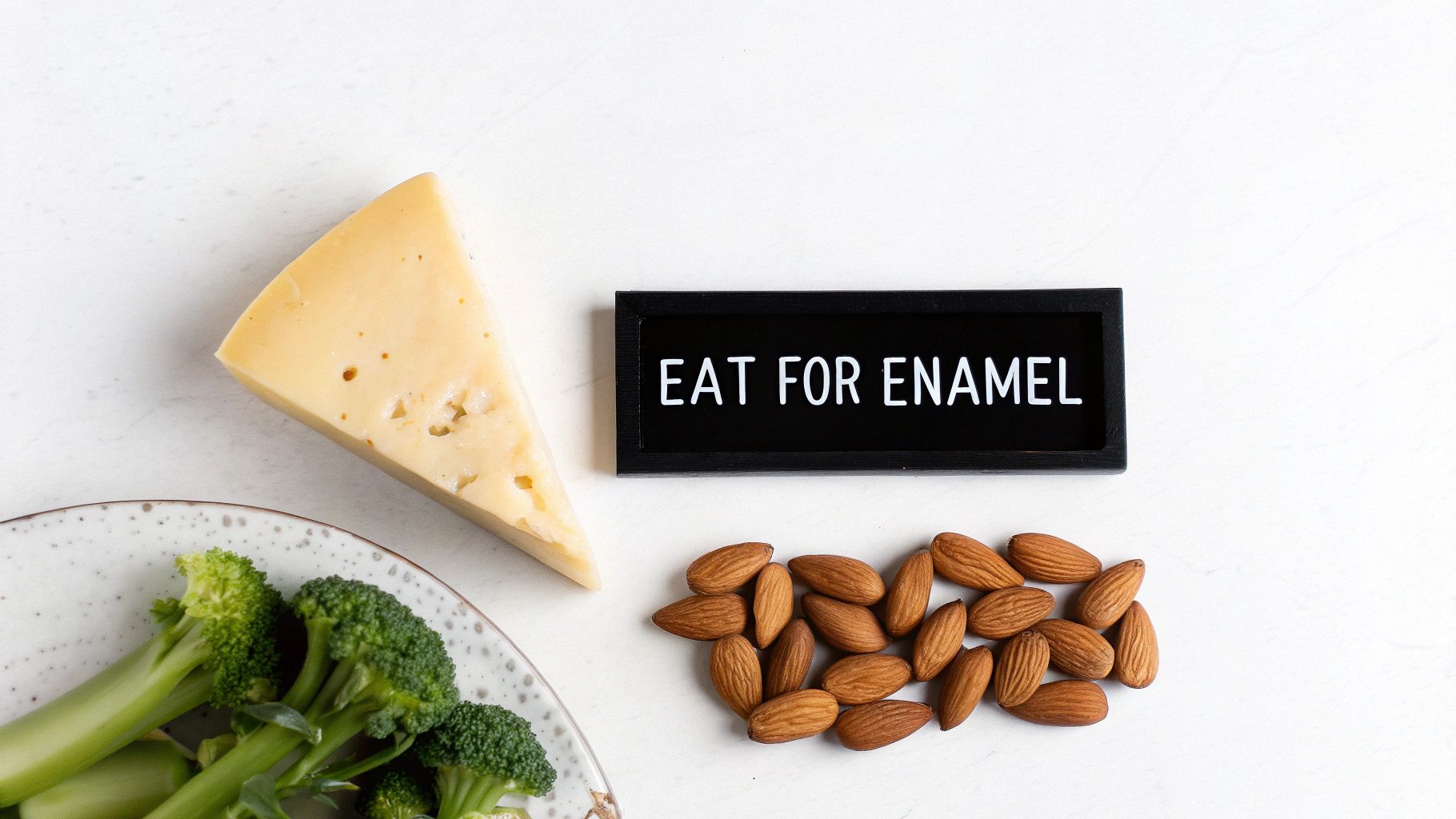
Every single meal and snack can tip the scales toward demineralization or remineralization. The choice is yours, and making smarter decisions starts with knowing the heroes from the villains in your pantry.
The Primary Villains of Enamel Erosion
Certain foods and drinks are notorious for launching direct acid attacks on your teeth. These culprits create a hostile environment where your enamel’s mineral structure simply can't hold up, leading to weak spots and, eventually, cavities.
Here are the main offenders to watch out for:
- Sugary Foods and Drinks: Think candy, cookies, and especially soda. The harmful bacteria in your mouth feast on these sugars and produce corrosive acids as a byproduct. This acid directly dissolves the minerals right out of your enamel.
- Acidic Beverages: Sports drinks, fruit juices (like orange and grapefruit), and wine are highly acidic. They don't even need bacteria's help; their low pH directly attacks and softens your enamel on contact.
- Starchy Foods: Items like potato chips, crackers, and soft bread break down into simple sugars right in your mouth. Their gummy texture also allows them to stick to teeth for longer, prolonging the acid attack.
Because a high sugar intake is such a major contributor to enamel erosion, learning effective strategies to curb sugar cravings is a vital part of defending your teeth. By cutting off the fuel for those acid-producing bacteria, you give your enamel a much-needed break.
Recruiting Dietary Heroes for Your Smile
Just as some foods weaken your teeth, others are perfectly equipped to defend and even rebuild them. These dietary heroes work by neutralizing acids, stimulating your protective saliva flow, and providing the essential minerals your enamel needs to remineralize and stay strong.
Focusing on these foods can make a huge difference in your long-term oral health.
Enamel-strengthening foods provide the raw materials for remineralization—calcium and phosphate. They also create a healthier oral environment by neutralizing acids and boosting saliva, which is your body's natural cleaning and repair system.
Think of these foods as the repair crew for your enamel, constantly working to patch up damage and reinforce the structure. The following table breaks down the good, the bad, and why it matters.
Dietary Choices for Enamel Health
| Enamel-Weakening Foods (Limit These) | Why They Harm Enamel | Enamel-Strengthening Foods (Enjoy These) |
|---|---|---|
| Soda & Sugary Drinks | Create a direct acid attack from sugar and low pH, rapidly dissolving minerals. | Water & Milk |
| Candy & Sweets | Provide a feast for acid-producing bacteria, leading to prolonged demineralization. | Cheese & Plain Yogurt |
| Citrus Fruits & Juices | Their natural acidity can directly soften and erode the enamel surface. | Leafy Greens (Kale, Spinach) |
| Starchy Foods (Chips, Crackers) | Break down into sugar in the mouth and stick to teeth, fueling bacteria for longer periods. | Crunchy Veggies (Carrots, Celery) |
| Sports & Energy Drinks | Extremely high in both sugar and acid, delivering a powerful one-two punch against enamel. | Nuts (Almonds) & Seeds |
| Wine (Red and White) | Highly acidic, which can soften enamel and make it more susceptible to staining. | Lean Proteins (Chicken, Fish, Eggs) |
Choosing more from the "Strengthening" column makes your diet a proactive defense for your smile.
Your Enamel-Friendly Shopping List
Building a diet that actively protects your teeth is easier than you might think. Start by incorporating more of these enamel-boosting categories into your daily meals.
1. Calcium-Rich Champions
Calcium is a primary building block of enamel, making it absolutely essential for any repair process.
- Dairy Products: Milk, cheese, and plain yogurt are fantastic sources. Cheese is a particular standout because it helps raise the pH in your mouth, neutralizing harmful acids.
- Non-Dairy Options: If you're dairy-free, turn to dark leafy greens like spinach and kale, almonds, and fortified plant-based milks.
2. Phosphorus Powerhouses
Phosphorus works hand-in-hand with calcium to build strong bones and teeth. You need both for effective remineralization.
- Protein-Packed Foods: Meat, poultry, fish (especially salmon and tuna), and eggs are loaded with phosphorus.
- Plant-Based Sources: Nuts, seeds (like pumpkin seeds), lentils, and soybeans are also great choices.
3. Saliva-Stimulating Superstars
Saliva is your best natural defense. Foods that require a lot of chewing kick saliva production into high gear, helping wash away food particles and neutralize acids.
- Crunchy Fruits and Vegetables: Apples, carrots, and celery act like natural toothbrushes, scrubbing surfaces as you chew.
- Sugar-Free Gum: Chewing sugar-free gum, especially brands sweetened with xylitol, after meals can significantly boost saliva and fight acidity. Xylitol has been shown to inhibit harmful bacteria, giving your enamel another layer of protection.
By consciously limiting the villains and embracing these heroes, your diet becomes a proactive tool in your quest for a stronger, healthier smile. Every smart choice you make at the dinner table directly contributes to more resilient tooth enamel.
Smarter Brushing Habits for Enamel Protection
Brushing your teeth seems simple enough, but it's not just about going through the motions. While brushing twice a day is the cornerstone of good oral health, the way you do it can either build up your enamel's defenses or, surprisingly, tear them down. Getting the technique right transforms your daily routine from a basic cleaning into a strategic plan to protect your smile for the long haul.

So many of us were taught to scrub our teeth hard, thinking that more force equals a better clean. This is one of the biggest myths in dental care. When you brush too aggressively, especially with a stiff brush, you can physically wear away your enamel. This process is called abrasion, and over time, it can cause serious damage. The goal is to be gentle but thorough.
Mastering Enamel-Safe Brushing Techniques
Protecting your enamel begins with having the right tools for the job and using them correctly. Making a few small tweaks to how you brush can make a world of difference, preventing needless wear and tear and ensuring you’re actually strengthening your enamel, not stripping it away.
-
Choose a Soft-Bristled Brush: This is non-negotiable. Always grab a toothbrush with soft bristles. They are perfectly capable of clearing away plaque and food particles without being harsh on your enamel or gums. Medium and hard bristles are more like a scouring pad—great for pots and pans, terrible for your teeth.
-
Use the Proper Angle: Position your brush at a 45-degree angle to your gums. This angle is the sweet spot that lets the bristles clean the tooth surface and sweep away plaque from just below the gumline, which is a prime hiding spot for bacteria.
-
Brush, Don't Scrub: Think of it as massaging your teeth, not scrubbing them. Use gentle, short strokes in a circular pattern. Let the bristles do the work for you. If you find you have a heavy hand, an electric toothbrush with a pressure sensor can be a fantastic coach, alerting you when you're pushing too hard.
Of course, the right toothpaste is a huge part of the equation. To find a product that cleans effectively while delivering that all-important fluoride, check out our guide to the best fluoride toothpaste for adults.
The Critical Rule of Timing
One of the most powerful—and most overlooked—ways to protect your enamel has to do with timing. Ever brushed your teeth right after finishing a glass of orange juice or a can of soda? It feels like the responsible thing to do, but you could actually be making things worse.
After you eat or drink something acidic, your enamel temporarily softens. In this state, it's incredibly vulnerable. If you brush right away, you're essentially scrubbing that softened, weakened layer of enamel right off your teeth.
The fix is simple: wait a bit. The best move is to rinse your mouth with water right after you're done, and then hold off on brushing for at least 30 to 60 minutes. This pause gives your saliva time to work its magic, neutralizing the acid and allowing your enamel to reharden.
Beyond Brushing: Additional Strategies
A truly solid oral care routine goes beyond just the toothbrush. A couple of extra habits can give your enamel a significant defensive boost against those daily acid attacks.
1. Chew Xylitol Gum After Meals
Popping a piece of sugar-free gum after you eat is a great trick. The chewing action stimulates saliva, which is your body's natural defense against acid. For an extra punch, choose a gum sweetened with xylitol. This natural sweetener has been shown to stop cavity-causing bacteria in their tracks and help with the remineralization process.
2. Use an Antimicrobial Mouthwash
A good mouthwash does a lot more than just cover up bad breath. An antimicrobial or antiseptic rinse helps knock down the overall amount of bacteria in your mouth, which in turn means less acid is produced. Just make sure you pick one that's low in alcohol, as high-alcohol rinses can dry out your mouth and reduce your protective saliva.
Combining these smarter habits—from gentle brushing to strategic timing—creates a multi-faceted approach to not only clean your teeth but to actively protect and strengthen them every single day. For a broader look, you can also review these comprehensive toothcare tips for optimal oral health.
Knowing When to Call for Backup
While your at-home routine is your first line of defense for strengthening enamel, sometimes it's just not enough. It's crucial to know when your teeth need more support than a daily fluoride rinse or a change in diet can offer.
Think of it this way: daily care is like keeping your car topped up with gas and oil. It runs smoothly day-to-day. But when a warning light flashes on the dashboard, you know it's time to see a mechanic for some expert help. Listening to the signals your teeth are sending is just as important.
The Warning Lights: Signs You Need a Dental Visit
If you start noticing any of the following, it's a clear signal that your enamel is compromised and it’s time to book an appointment. Catching these things early can stop a small issue from turning into a much bigger headache.
Pay attention to these key indicators:
- Lingering Tooth Sensitivity: Does that zing from hot coffee or a cold drink stick around longer than it used to? When sensitivity becomes persistent or gets worse, it’s often because your enamel has thinned, exposing the delicate dentin layer underneath.
- Your Teeth Look Different: Have you noticed your teeth looking more yellow? That's not always just staining. As enamel wears away, the naturally yellowish dentin beneath it starts to show through. Also, take a close look at the edges of your front teeth—if they appear translucent or almost see-through, that’s a classic sign of enamel loss.
- Chips, Cracks, or Dents: Healthy enamel is tough, but weakened enamel is brittle. It becomes much more susceptible to physical damage. You might notice tiny vertical imperfections, known as craze lines, or even small divots (cupping) on the chewing surfaces of your molars.
When your daily routine can't get sensitivity under control or you're seeing visible wear and tear, it's time for professional intervention. A dentist can properly diagnose how much enamel you've lost and create a game plan to stop it from getting worse.
Professional Treatments for Enamel Loss
Once you're in the dental chair, your dentist has a whole toolkit of powerful options that go far beyond what you can buy at the drugstore. These treatments are designed to deliver a more concentrated and targeted repair.
Depending on your situation, your dentist might suggest:
- High-Concentration Fluoride Varnish: This isn't your average fluoride rinse. A professional-grade varnish is painted right onto your teeth, where it delivers a potent, slow-release dose of fluoride for maximum remineralization and hardening. It’s one of the most effective ways to give your enamel a serious boost.
- Prescription-Strength Pastes: For more serious demineralization, your dentist might send you home with a prescription. This could be a high-fluoride toothpaste or a specialized remineralizing paste that delivers the building blocks of enamel—calcium and phosphate—directly to your teeth.
- Dental Bonding: If the enamel wear is more advanced, your dentist can use a tooth-colored resin to bond over the damaged areas. This simple procedure restores the tooth's original shape, protects it from more damage, and instantly improves its appearance.
Seeing a professional isn't a sign that you've failed at your home care. It's a smart, proactive step to make sure your smile stays strong and healthy for years to come.
Common Questions About Strengthening Tooth Enamel
Even with a solid game plan, you're bound to have some questions as you start working to strengthen your enamel. Getting clear, straightforward answers is the best way to move forward with confidence. Let's tackle some of the most common things people ask and clear up any confusion.
Can You Truly Rebuild Lost Tooth Enamel?
This is a big one. While you can't regrow enamel that's been physically chipped or worn away, you can absolutely repair and strengthen areas that have become weak through a process called remineralization. When you consistently use products with fluoride and other helpful ingredients, you're helping your teeth pull in the calcium and phosphate they need to patch up their mineral structure.
Think of it less like building a brand-new wall and more like being a master mason, expertly reinforcing the one you already have. This ongoing repair process is what great enamel care is all about.
The key distinction is between regrowth and repair. Enamel that is completely gone cannot be regrown by the body. However, enamel that is weakened and demineralized can be significantly hardened and repaired through consistent, targeted care.
This is exactly why your daily habits are so powerful—they constantly keep the scale tipped in favor of repair.
How Long Does It Take to Strengthen Tooth Enamel?
The good news is that the remineralization process kicks off with your very first positive change. When you start using a quality fluoride toothpaste every day, you can often feel a difference in sensitivity and notice more resilience within just a few weeks.
For more intensive repair using prescription-strength products or advanced therapies like MI Paste, studies often show significant improvements in surface hardness and mineral density within one to three months. The real magic, though, is in consistency. It's the small things you do every single day that build up over time to make the biggest impact on your enamel's strength.
Does Teeth Whitening Harm Your Enamel?
This is a totally fair and common question. When you follow the directions, professional teeth whitening is safe for your enamel. The whitening agent works by making your enamel temporarily more porous, which lets it get inside the tooth to break up and lift stains.
This temporary porosity is what can cause some short-term sensitivity, but it does not cause permanent damage or strip away healthy enamel. To give your teeth some extra support during whitening, it's a great idea to use a remineralizing paste or a toothpaste made for sensitivity. This helps keep your enamel strong and cuts down on any discomfort, so you can get a brighter smile without sacrificing its health.
Ready to give your enamel the professional-grade support it deserves? At DentalHealth.com, we stock dentist-recommended products like MI Paste and high-strength fluoride toothpastes to help you actively repair and strengthen your smile from home. Shop our full collection of remineralizing and sensitivity relief products today and enjoy free shipping on all USA orders.