
Finding the Best Fluoride Toothpaste for Adults
Walking down the toothpaste aisle can feel like a pop quiz you didn't study for. With so many options, how do you know which one is right for you? It's actually simpler than it looks: the best choice comes down to matching the ingredients on the box to your specific dental needs.
For most adults, a good starting point is a toothpaste with stannous fluoride or sodium fluoride at a concentration of around 1450 PPM. This is your workhorse for general cavity prevention. But as we get older, our oral health concerns often go beyond just fighting cavities. We might be dealing with nagging sensitivity, wanting to brighten up years of coffee stains, or needing extra help with gum health.
Your Guide to the Top Fluoride Toothpastes for Adults
Instead of getting lost in brand names, let's focus on what these toothpastes are actually designed to do. Think of it like picking the right tool for a job. A standard anti-cavity toothpaste is great, but it might not be the best solution if a sip of cold water makes you wince.
This guide will help you cut through the noise. We'll break down the best fluoride toothpastes for adults based on the most common dental goals. Understanding why a certain formula works is the key to choosing one with confidence.
Matching Toothpaste to Your Dental Needs
To make things easy, we've organized our top recommendations by the problem they solve. Are you focused on reinforcing your enamel, or is soothing sensitivity your top priority? Maybe you're looking for a little bit of everything.
- For Cavity Protection: These are the classics, designed to strengthen tooth enamel with effective fluoride compounds and stop decay in its tracks.
- For Sensitive Teeth: If you dread hot or cold drinks, these formulas are for you. They contain special ingredients that block the pain signals from reaching the nerves deep inside your teeth.
- For Whitening: These toothpastes use gentle, polishing abrasives or other agents to lift away surface stains from things like coffee, tea, and red wine.
- For Gum Health: Look for ingredients like stannous fluoride, which has antibacterial properties that help fight the plaque and bacteria responsible for gingivitis.
To give you a quick reference, the table below summarizes our top picks. It lines up common concerns with the type of toothpaste, key ingredients, and the main benefit you can expect. This should help you zero in on the perfect starting point for your oral care routine.
Top Fluoride Toothpaste Picks for Adult Needs
This table summarizes our top recommendations based on common adult dental concerns, helping you quickly identify the best type of product for your specific needs.
| Concern | Recommended Toothpaste Type | Key Ingredients | Primary Benefit |
|---|---|---|---|
| General Cavity Prevention | Standard Fluoride Toothpaste | Stannous Fluoride, Sodium Fluoride (~1450 PPM) | Strengthens enamel and prevents tooth decay. |
| Tooth Sensitivity | Sensitivity Relief Toothpaste | Potassium Nitrate, Stannous Fluoride | Blocks pain signals and protects exposed dentin. |
| Stains & Discoloration | Whitening Toothpaste | Mild Abrasives (e.g., Hydrated Silica), Hydrogen Peroxide | Gently polishes away surface stains for a brighter smile. |
| Gum Inflammation / Gingivitis | Gum Health Toothpaste | Stannous Fluoride | Fights plaque bacteria along the gumline to reduce inflammation. |
| Weak or Eroding Enamel | Enamel Repair Toothpaste | Stannous Fluoride, Sodium Fluoride, RECALDENT™ | Remineralizes and hardens weakened enamel. |
| Braces or Retainers | Anti-Cavity/Enamel Strengthening | Higher concentration Sodium Fluoride, Stannous Fluoride | Prevents white spots and decay around brackets and hardware. |
Once you've pinpointed your primary concern, you can explore specific products with a much clearer idea of what to look for on the label. This targeted approach ensures you're not just buying another tube of toothpaste, but making an investment in your long-term oral health.
How Fluoride Works to Protect Your Teeth
Ever wonder what fluoride really does when you brush? It’s not just a marketing term on the toothpaste box—it's a hard-working mineral playing defense and offense in your mouth every single day.
Think of your tooth enamel as a sturdy fortress wall. This wall is constantly under attack from acids, which are produced by mouth bacteria munching on sugars and also come directly from things like soda, citrus, and coffee. Over time, these acid attacks can weaken the wall by leaching out key minerals, creating tiny, vulnerable spots. This process is called demineralization.
The Dynamic Duo: Remineralization and Fortification
This is where fluoride swoops in like an expert repair crew. When you brush, you’re delivering this powerful mineral straight to the front lines. Fluoride then gets to work on two crucial jobs.
First, it kicks your mouth’s natural healing process, remineralization, into high gear. While your saliva is already trying to redeposit lost calcium and phosphate back into your enamel, fluoride supercharges this effort. It acts like a magnet, attracting these minerals back to the tooth’s surface to patch up weak spots before they become full-blown cavities.
Second—and this is the really cool part—fluoride doesn’t just rebuild the original fortress wall; it upgrades it. As it helps remineralize your enamel, it weaves itself into the tooth’s crystal structure. This creates a new, tougher material called fluorapatite. This upgraded material is significantly harder and more resistant to future acid attacks than your enamel's original structure, making your dental fortress stronger than ever.
Key Takeaway: Fluoride is more than a simple shield. It actively rebuilds weakened enamel and reinforces it with a stronger, more acid-resistant material, essentially giving your teeth's natural defenses a permanent upgrade.
Exploring Different Types of Fluoride
While all fluoride aims for the same goal, the specific compounds you see on ingredient lists aren't all identical. You’ll typically find one of three main types in your toothpaste, each with slightly different strengths. Knowing the difference can help you pick the best formula for your unique needs.
- Sodium Fluoride (NaF): This is the most common and widely studied type of fluoride. It’s a stable and highly effective ingredient known for its powerful, straightforward ability to fight cavities and remineralize enamel.
- Sodium Monofluorophosphate (MFP): This compound works a bit differently, as it needs enzymes in your saliva to release its fluoride ion. It's known for being gentle yet effective and is often used in multi-benefit toothpastes.
- Stannous Fluoride (SnF2): This one is a true multi-tasker. On top of providing excellent cavity protection, stannous fluoride is also antimicrobial. That means it actively helps kill the bacteria responsible for plaque, gingivitis (gum inflammation), and even bad breath.
Because it tackles so many issues at once, stannous fluoride is often the go-to choice for comprehensive care formulas that address everything from sensitivity to gum health.
The following infographic illustrates the main benefits adults look for when choosing a toothpaste, from soothing sensitivity to fighting cavities.
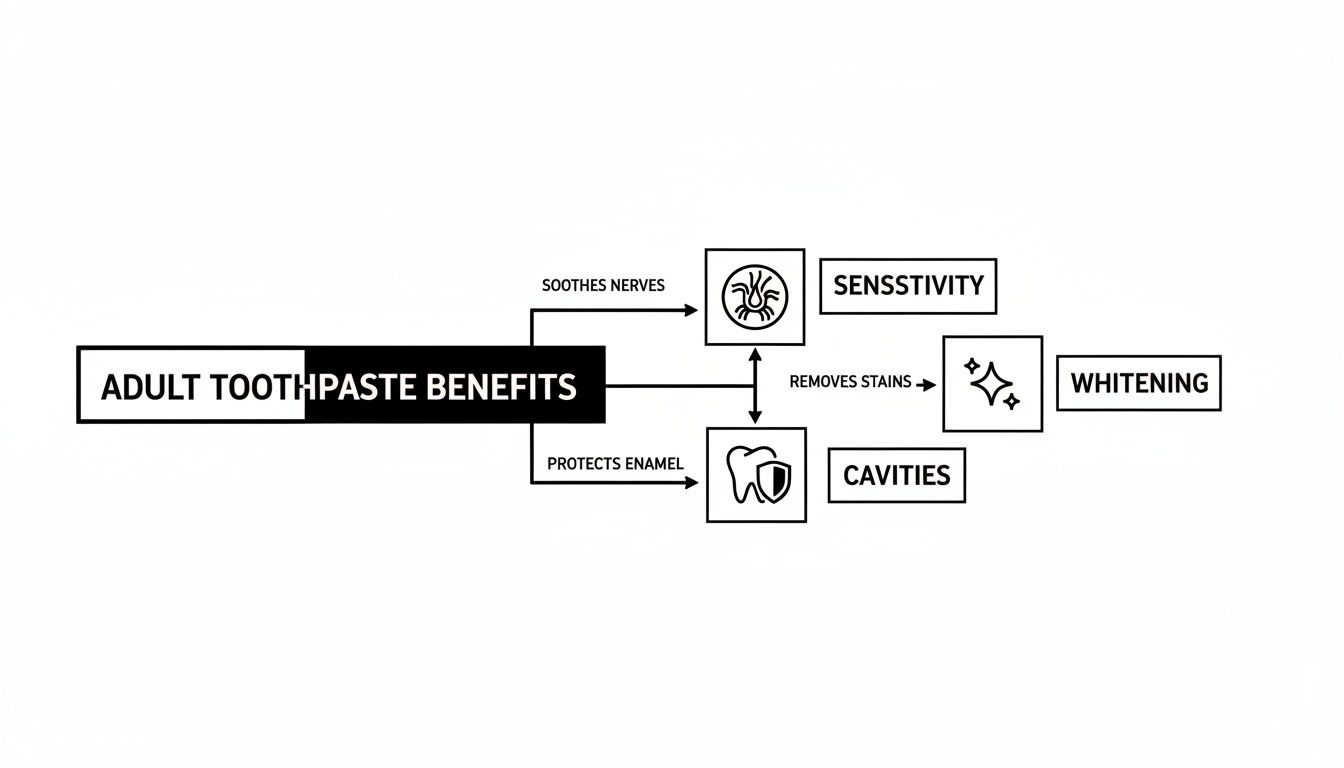
This visualization highlights how specialized toothpastes target specific issues like nerve sensitivity, surface stains, and enamel defense, helping you find the right solution for your mouth.
The Proven Impact of Fluoride
The benefits of using fluoride aren't just theoretical; they're backed by decades of solid research. When used consistently, fluoride toothpaste makes a real, measurable difference in preventing tooth decay.
Topical fluoride—the kind you get from toothpaste and rinses—has been shown to cause major reductions in cavities for both adults and kids. In fact, public health organizations often report that using fluoride toothpaste can reduce tooth decay by at least 25% over a person's lifetime. The effect is even stronger when combined with other sources, like fluoridated water.
For an extra layer of protection, especially if you're prone to cavities, supplementing your brushing routine is a smart move. Using an anticavity fluoride rinse can help ensure this protective mineral reaches every nook and cranny, boosting the benefits you get from your daily brushing. At the end of the day, understanding how fluoride works empowers you to read labels with confidence and make the best choice for your long-term dental health.
Choosing the Right Fluoride Strength for Your Needs
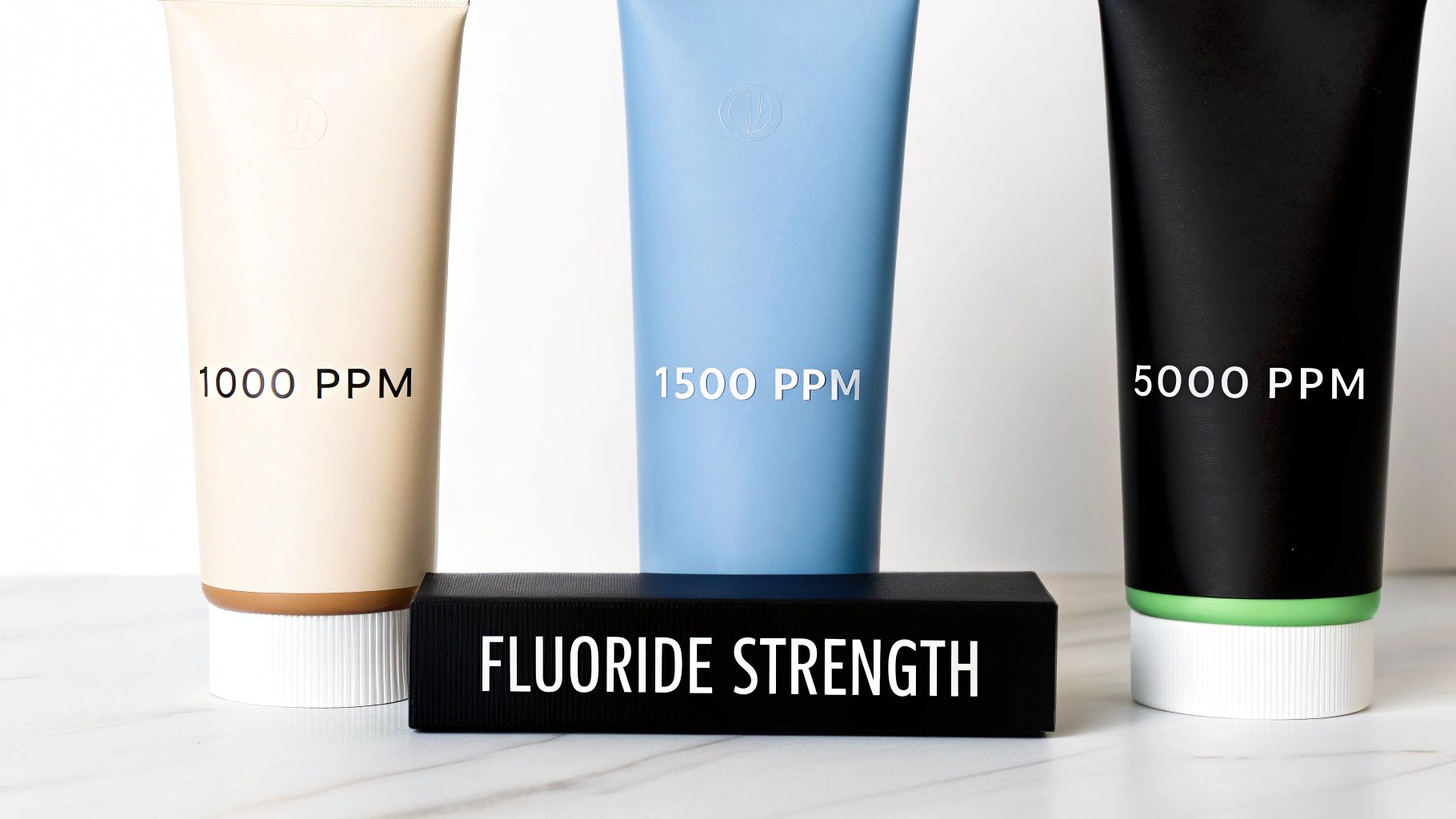
When you're trying to find the best fluoride toothpaste for adults, it’s easy to get lost in the details. One of the most critical numbers on the tube—and one that’s often overlooked—is the fluoride concentration, measured in PPM, or parts per million.
Think of PPM like the dose of a medicine. Just as different health issues need different dosages, your unique dental risk profile determines the ideal fluoride strength for you. Getting a handle on these numbers is the key to finding a toothpaste that gives you the exact level of protection your teeth need.
Standard Strength for Everyday Prevention
For most adults, a standard over-the-counter toothpaste delivers more than enough fluoride for excellent daily protection. These formulas are the workhorses of the dental aisle, designed to maintain good oral health and stop new cavities before they start.
Most toothpastes you see on store shelves fall within a specific range. Standard adult toothpastes typically contain 1,000–1,500 parts per million (PPM) fluoride. This is widely considered the gold standard for everyday cavity prevention in adults with a low-to-moderate risk of tooth decay.
This level of fluoride is incredibly effective for:
- Daily Enamel Maintenance: Consistently reinforcing your teeth against acid attacks from the foods and drinks you consume every day.
- Preventing New Cavities: Remineralizing those weak spots before they have a chance to turn into full-blown decay.
- General Oral Health: Supporting a healthy mouth when you pair it with good brushing and flossing habits.
If your dental check-ups are usually pretty good and you don't have a history of cavities, a quality toothpaste with around 1450 PPM of sodium fluoride or stannous fluoride is a fantastic and reliable choice.
When to Consider Prescription Strength Toothpaste
While standard toothpaste is great for keeping things in check, some situations call for a more powerful approach. If your enamel is under constant, heavy assault, you might need to bring in the specialized reinforcements. That's where prescription-strength fluoride toothpaste comes in.
These high-potency formulas, usually containing 5,000 PPM of sodium fluoride, pack a much more concentrated punch. You won't find them on store shelves; they have to be prescribed by a dentist for people who are at a higher risk of developing cavities.
Key Insight: Prescription-strength fluoride is really a therapeutic treatment, not just a preventative step. It's designed to actively halt and even reverse the decay process in high-risk individuals by giving their teeth a supercharged remineralization boost.
You might want to talk to your dentist about a prescription option if you're dealing with any of these issues:
- Frequent Cavities: You seem to get a new cavity at every check-up, even with good oral hygiene.
- Dry Mouth (Xerostomia): A lack of saliva dramatically reduces your mouth’s natural ability to neutralize acid, leaving your teeth vulnerable. This can be caused by medications, certain medical conditions, or aging.
- Exposed Tooth Roots: When gums recede, they can expose the softer root surfaces of your teeth, which are far more susceptible to decay than enamel is.
- Orthodontic Treatment: Braces and other appliances create endless nooks and crannies for plaque to hide, which ramps up your cavity risk.
- History of Gum Disease: Periodontal problems can lead to root exposure and other complications that put you at a higher risk for decay.
For anyone identified as high-risk, a product like 3M Clinpro 5000 is often recommended by dentists. If this sounds like your situation, you can learn more about this prescription-strength toothpaste and bring it up at your next dental visit.
Complementary Therapies for Maximum Support
Choosing the right fluoride strength is a huge step, but it doesn't have to be your only move. For those who want to give their enamel the best possible support system, combining a quality fluoride toothpaste with other therapies can create a seriously powerful defense.
Consider adding these to your routine:
- Fluoride Mouth Rinses: An over-the-counter fluoride rinse is great for getting protection into those hard-to-reach areas between teeth and along the gumline.
- In-Office Fluoride Varnish: Your dentist can apply a highly concentrated fluoride varnish during your check-up for a protective boost that lasts for months.
- Remineralizing Pastes: Products with ingredients like nano-hydroxyapatite or casein phosphopeptide-amorphous calcium phosphate (CPP-ACP) can work alongside fluoride to help rebuild enamel.
By taking a moment to think about your personal risk factors and understanding the difference between standard and prescription options, you can make a much more informed choice. It's all about making sure the toothpaste you use every day is perfectly matched to what your teeth actually need.
Finding a Toothpaste for Your Specific Dental Concern

Choosing the right fluoride toothpaste often feels less about finding one "perfect" product and more about finding the perfect match for what your mouth needs right now. Our dental priorities can shift over the years. Yesterday's goal might have been simple cavity prevention, but today, you might be tackling sensitivity or brightening a smile that’s seen a few too many cups of coffee.
The great news is that modern toothpastes are incredibly specialized. You don't have to settle for a one-size-fits-all tube anymore. Instead, you can pick a formula with active ingredients that target your primary concern, making sure every brush stroke is working as hard as possible for you.
Soothing Sensitive Teeth
If a sip of a cold drink sends a sharp jolt through your teeth, you’re definitely not alone. Tooth sensitivity is a huge issue for adults, often caused by receding gums or worn-down enamel. When that protective outer layer thins, it exposes the softer, porous layer underneath called dentin.
Think of dentin as a network of microscopic tunnels leading directly to your tooth’s nerve. When these tunnels are exposed, things like cold, heat, or sweetness can rush through and zap the nerve, causing that flash of pain.
Thankfully, sensitivity toothpastes have a couple of clever ways to shut this down:
- Blocking the Tunnels: Ingredients like stannous fluoride act like tiny plugs, sealing off the exposed dentin tubules so those outside triggers can't get to the nerve.
- Calming the Nerve: Potassium nitrate takes a different approach by essentially telling the nerve to chill out. It desensitizes the nerve itself so it doesn't overreact, offering lasting relief.
For anyone struggling with this, trying out different formulas can be a game-changer. Our guide on the best toothpaste for sensitive teeth dives even deeper into how these ingredients bring you much-needed comfort.
Safely Whitening Your Smile
It's completely normal for teeth to lose a bit of their brightness over time, thanks to surface stains from coffee, tea, red wine, and tobacco. Whitening toothpastes are made to fight this discoloration, but it's crucial to pick one that gets the job done safely.
The key is to steer clear of overly harsh formulas. Some older whitening pastes used abrasive particles that could scrub away stains but also damage precious enamel. Modern formulas are much smarter and gentler.
Important Distinction: Whitening toothpastes work by lifting extrinsic stains (the ones on the surface) from your enamel. They won't change your tooth's natural, intrinsic shade like professional bleaching treatments do.
Today, the best fluoride toothpaste for adults looking for a brighter smile will usually contain:
- Mild Abrasives: Ingredients like hydrated silica gently polish the tooth's surface to lift stains without scratching up your enamel.
- Chemical Agents: Some advanced formulas include low concentrations of agents like hydrogen peroxide, which help break down stain molecules for a more noticeable whitening effect.
Rebuilding and Protecting Your Enamel
Your tooth enamel is the hardest substance in your body, but it isn't invincible. Daily acid attacks from the foods and drinks we love can slowly wear it away in a process called dental erosion. And once enamel is gone, your body can't grow it back. That makes protecting what you have absolutely critical.
This is where enamel repair toothpastes come in. They are packed with fluoride—often stannous fluoride or a high-concentration sodium fluoride—to supercharge the natural remineralization process.
This means they help your saliva deposit lost calcium and phosphate back into your enamel, patching up microscopic weak spots before they can become cavities. Using an enamel-focused toothpaste is like giving your teeth's natural defense system daily reinforcements to keep them strong and resilient.
Promoting Better Gum Health
Healthy gums are the foundation of a healthy smile, but they're often ignored until a problem like gingivitis pops up. Gingivitis, the earliest stage of gum disease, is simply inflammation caused by plaque bacteria building up along the gumline.
If you’ve noticed your gums are red, swollen, or bleed when you brush, a toothpaste designed for gum health can be an excellent first line of defense. These formulas are loaded with antimicrobial ingredients that go right to the source of the problem.
The real MVP here is often stannous fluoride. Unlike other types of fluoride that are laser-focused on cavities, stannous fluoride is also a potent antibacterial agent. It actively kills the harmful bacteria that cause plaque and gingivitis, helping to reduce inflammation and get your gums back into a healthier state. By zeroing in on your main concern, you can build a truly personalized and effective oral care routine.
Using Fluoride Toothpaste Safely and Effectively
When it comes to fluoride, it’s easy to get lost in conflicting information. While there are some legitimate concerns about fluoride for young children who might swallow a bit too much toothpaste, the story is completely different for adults.
Using a quality fluoride toothpaste as directed isn't just safe—it's one of the cornerstones of great long-term oral health. The real secret is simply using it correctly to get all the protective benefits without a second thought.
Getting the Most from Every Brush
You can dramatically boost how well fluoride protects and strengthens your enamel with just a few small tweaks to your daily routine. It’s not just about the toothpaste you choose, but how you use it.
First, let's talk about quantity. Forget those commercials with a toothbrush overloaded with paste. For an adult, a simple pea-sized amount is all you need. That’s more than enough fluoride to do the job without creating a foamy mess.
Next, it's all about technique and timing.
- Brush for Two Full Minutes: This is the magic number. It gives the fluoride enough contact time with your teeth to really kickstart the remineralization process. If you have to, set a timer on your phone to make sure you’re not cutting it short.
- Cover All Your Bases: Be systematic. Make sure you brush the outer, inner, and chewing surfaces of every single tooth for complete coverage.
- Spit, Don’t Rinse (with Water): This is the pro tip that makes the biggest difference. After brushing, spit out the extra foam, but try not to rinse with water right away. Rinsing immediately washes away that helpful layer of fluoride before it has a chance to fully absorb and work its magic.
Understanding Adult Fluoride Safety
For adults using toothpaste as intended, the risk of any serious fluoride issue is virtually nonexistent in developed countries. The main safety topic you might hear about, dental fluorosis, is a condition that almost always develops in early childhood when permanent teeth are still forming under the gums. Even then, it's rarely a significant problem.
Research from the National Institutes of Health confirms that moderate-to-severe fluorosis is uncommon. Recent studies show that only about 1.4–1.8% of people aged 6 and older have these conditions. You can discover more about these fluoride safety findings for yourself.
At the end of the day, adopting these simple brushing habits ensures you’re getting the maximum cavity-fighting power out of your toothpaste. These small, practical steps help fluoride do its job—keeping your enamel strong, resilient, and healthy for years to come.
Still Have Questions About Fluoride Toothpaste?
As you get closer to picking the right fluoride toothpaste, it's normal to have a few last-minute questions. You want to feel good about your choice, and that means getting clear, straightforward answers. We've gathered some of the most common questions we hear to help you feel totally confident in your decision.
We'll clear up everything from safety concerns to how long it actually takes to see results, making sure you have all the facts you need.
Can Adults Get Too Much Fluoride?
This is a great question, and one we hear a lot. The short answer is that for adults using toothpaste as directed, the risk of getting too much fluoride is practically zero. The main concern people have, a condition called dental fluorosis, is something that only affects kids while their adult teeth are still forming under the gums.
Once you're an adult, your teeth are fully developed and your body handles fluoride differently. To keep things safe and effective, just stick to these two simple rules of brushing:
- Use a Pea-Sized Amount: You really don't need to load up your brush. A small dab, about the size of a pea, has all the fluoride your teeth need for protection.
- Spit, Don't Swallow: The magic happens when fluoride sits on your teeth, not when it goes into your stomach. Always make sure to spit out the foam when you're done.
Following these basic steps ensures you get all the enamel-strengthening benefits without any worries.
When Should I Consider a Prescription Toothpaste?
While most adults do perfectly well with an over-the-counter toothpaste containing 1000-1500 PPM of fluoride, some situations need a stronger, more targeted approach. Think of a prescription-strength toothpaste, which usually has 5000 PPM of sodium fluoride, as a specialized treatment for teeth that are really struggling.
It’s time to talk to your dentist about a prescription option if you're dealing with any of these higher-risk issues:
- High Cavity Risk: If you seem to get new cavities every single check-up, even with good brushing and flossing, your enamel probably needs more support.
- Chronic Dry Mouth (Xerostomia): Saliva is your mouth’s natural defense against acid. If medications or a health condition are causing dry mouth, your risk for decay skyrockets.
- Receding Gums: When your gums pull back, they expose the root surfaces of your teeth. This part of the tooth is much softer than enamel and far more susceptible to cavities.
- Orthodontic Appliances: Braces, with all their brackets and wires, create tons of little hiding spots for plaque, dramatically increasing the risk of cavities and those chalky white spots.
Expert Insight: Don't just think of prescription toothpaste as a preventative measure—it's an active intervention. It's built to stop decay in its tracks and give your teeth a powerful remineralization boost that standard formulas just can't deliver.
If any of this sounds like you, bring it up at your next dental visit. It's the first step toward getting the heavy-duty protection your teeth might need.
How Long Does Fluoride Take to Strengthen Teeth?
It’s exciting to start a new routine, but remember that fluoride is a long-term game, not an overnight miracle. The process of strengthening your teeth begins the very first time you brush, but the real, lasting benefits are built up over time with consistent use.
Here’s a realistic timeline of what’s happening in your mouth:
- Immediate Action (After Each Brushing): Right after you brush, a thin layer of fluoride hangs out on your teeth and in your saliva. This gives you immediate, temporary protection against the acids from your next meal or drink.
- Short-Term Effects (Weeks to Months): When you brush twice a day, every day, the remineralization process really gets going. Fluoride is constantly helping to patch up weakened spots in your enamel, making your teeth more resistant to acid attacks. You're literally building up your dental armor.
- Long-Term Benefits (Months to Years): This is where you see the major payoff. A consistent fluoride routine helps create fluorapatite—a super-charged, more durable version of your natural tooth enamel. This long-term reinforcement is what truly lowers your risk of getting cavities down the road.
The key here is consistency. Every time you brush with a quality fluoride toothpaste, you're making a deposit into your long-term dental health account. Stick with it, and you’ll give your teeth the strength they need to last a lifetime.
Ready to give your teeth the professional-grade protection they deserve? At DentalHealth.com, we stock the dentist-recommended brands that deliver real results, from high-performance whitening to therapeutic sensitivity relief. Find your perfect match and enjoy free, fast shipping on all USA orders.
Shop our full collection of professional dental care products now at DentalHealth.com