
The Best Dentist Recommended Mouthwash for Your Smile
When you see "dentist recommended" on a mouthwash bottle, it's more than just clever marketing—it's a sign that the product contains proven, therapeutic ingredients. The best dentist recommended mouthwash isn't one specific brand. Instead, it’s a whole category of rinses scientifically formulated to tackle real oral health issues, from strengthening weak enamel to fighting off gum disease.
Why Dentist Recommended Mouthwash Matters
Walking down the oral care aisle is enough to make anyone's head spin. Rows of brightly colored bottles all promise fresher breath and a healthier smile, but here's the secret: not all mouthwashes are created equal. The biggest difference comes down to their purpose. Is it just for show, or does it actually do something?
Most of the standard rinses you grab off the shelf are purely cosmetic. They work by masking bad breath with a pleasant scent, like mint or cinnamon. While that gives you a temporary feeling of freshness, they do very little to fix the root cause of the problem. It’s like using air freshener to cover up a strange smell in your house instead of actually finding and cleaning the source.
The Therapeutic Advantage
Therapeutic mouthwashes, on the other hand, are the ones dentists actually get behind. Why? Because they’re packed with active ingredients designed to deliver specific clinical results. These rinses are meant to be part of the solution, not just a quick cover-up.
Picking the right rinse is a huge step in building a proactive oral care routine. It's all about personalizing your approach to target exactly what your mouth needs.
A dentist-recommended mouthwash acts as a specialized tool in your oral hygiene toolkit. Just as you wouldn't use a hammer to turn a screw, you shouldn't use a cosmetic rinse to fight gingivitis. The right product delivers targeted support where you need it most.
For instance, if you're prone to cavities, a dentist will almost certainly suggest a rinse containing fluoride to help remineralize and toughen up your tooth enamel. If you're dealing with the early signs of gum disease, they might point you toward a formula with antimicrobial agents to reduce plaque buildup and calm inflammation.
Ultimately, your own oral health goals will determine which product is best for you. This guide will help you understand these powerful formulations so you can move beyond just freshening your breath and start actively improving your dental health with every swish. At DentalHealth.com, we make it easy to find these professional-grade options, connecting you with the exact products trusted by dental experts.
What's Actually in a Dentist-Recommended Mouthwash?
Stepping into the oral care aisle can feel like walking through a science lab. You’re hit with a wall of bottles, each plastered with complex ingredient lists promising everything from iron-clad enamel to perfectly healthy gums. But what really separates a truly best dentist recommended mouthwash from a simple minty breath freshener? It all comes down to the active ingredients—the powerhouse compounds doing the real work for your oral health.
Think of it this way: a cosmetic mouthwash is like a spritz of perfume for your mouth. It might cover up odors for a little while, but it doesn't fix what’s causing them. A therapeutic rinse, on the other hand, is like targeted medicine. Every active ingredient has a specific job to do, whether it's fighting bacteria, strengthening enamel, or soothing irritation.
Once you understand what these key ingredients do, you can decode any label with confidence and pick a rinse that’s actually right for your specific needs. Let's break down the most common and effective agents you'll find in professional-grade formulas.
Fluoride: Your Enamel's Personal Bodyguard
If your teeth could wear a suit of armor, it would be forged from fluoride. This naturally occurring mineral is the undisputed champion of cavity prevention. Its primary mission is to actively strengthen your tooth enamel, which is the hard, protective outer layer that shields your teeth from decay.
Imagine your enamel is a brick wall. Every time you eat or drink something sugary or acidic, it's like acid rain dissolving the mortar between the bricks, creating tiny weak spots. Fluoride swoops in to patch up and rebuild these areas in a process we call remineralization. A top-notch fluoride rinse, like the ones we cover in our guide to ACT Anticavity Fluoride Mouthwash, can be a total game-changer for anyone who seems to get a new cavity every time they visit the dentist.
Chlorhexidine: The Guardian Against Gum Disease
When things get serious with gum issues like gingivitis, dentists often bring out the big guns: a powerful antiseptic called chlorhexidine gluconate. This ingredient is a heavyweight champ in the fight against the nasty bacteria that cause gum disease. It works by sticking to the surfaces in your mouth—your teeth, gums, and even your tongue—and slowly releasing its antibacterial power over several hours.
You can think of it as a bouncer for your gums. It doesn’t just kick out the existing troublemaking bacteria; it stands guard to prevent new ones from starting a party that leads to inflammation, bleeding, and irritation. Because it's so potent, chlorhexidine rinses are typically prescribed by a dentist for short-term use to get a more advanced gum condition under control.
Chlorhexidine is often considered the gold standard for managing gingivitis because of how effectively it demolishes plaque and bacteria. However, it's a specialized tool for specific situations, not something most people should use every day for the long haul.
CPC and Essential Oils: The Plaque and Odor Busters
For your daily defense against plaque and bad breath, Cetylpyridinium Chloride (CPC) and essential oils are the go-to players. CPC is an antimicrobial agent that's fantastic at killing the bacteria responsible for plaque buildup and halitosis (the clinical term for bad breath). It works by literally breaking down the cell walls of bacteria, stopping them dead in their tracks.
Essential oils—like eucalyptol, menthol, and thymol—deliver a classic one-two punch. Not only do they provide that signature fresh, clean feeling, but they also have natural antiseptic properties that help keep bacterial growth in check. Together, these ingredients work to disrupt biofilm—that sticky, invisible film of bacteria that's always trying to form on your teeth.
Hydrogen Peroxide: The Stain Lifter
If a brighter, whiter smile is what you're after, keep an eye out for rinses containing hydrogen peroxide or carbamide peroxide. These ingredients act as gentle bleaching agents. They carefully penetrate the enamel to break apart and lift the surface stains left behind by your daily coffee, tea, or red wine.
Using a whitening mouthwash is like giving your smile a gentle polish between professional cleanings or whitening treatments. While it won't create a dramatic transformation on its own, it’s an excellent way to maintain your teeth's brightness and help prevent new stains from settling in.
Why Alcohol-Free Formulations Are a Big Deal
Finally, you’ve probably noticed that many of the best dentist-recommended mouthwash options proudly state they are "alcohol-free." For decades, alcohol was used in mouthwash as a carrier for the other active ingredients. The problem? It comes with a major downside: it can seriously dry out the tissues in your mouth.
For anyone who already suffers from dry mouth (a condition called xerostomia) or has sensitive gums, alcohol-based rinses can make irritation and discomfort much worse. Modern, alcohol-free formulas use gentler alternatives to deliver the same therapeutic benefits without that harsh, drying effect. This makes them a much safer and more comfortable choice for daily use, especially for those with sensitive mouths.
To help you keep all this straight, here’s a quick-reference guide to the heavy hitters in therapeutic mouthwash.
Active Ingredients and Their Oral Health Mission
| Active Ingredient | Primary Mission | Best For | Example Product Type |
|---|---|---|---|
| Fluoride | Strengthens enamel & prevents cavities | Cavity-prone individuals | Daily anticavity rinses |
| Chlorhexidine | Kills bacteria that cause gum disease | Short-term gingivitis treatment | Prescription antiseptic rinses |
| CPC | Reduces plaque & kills bad breath germs | Daily plaque and odor control | Antimicrobial daily rinses |
| Essential Oils | Fights plaque bacteria & freshens breath | Everyday use for a clean feel | General-purpose antiseptic mouthwash |
| Hydrogen Peroxide | Gently lifts surface stains | Maintaining a white smile | Whitening mouthwashes |
| Alcohol-Free Base | Delivers ingredients without drying | Sensitive mouths, dry mouth sufferers | All modern therapeutic rinses |
Ultimately, choosing a mouthwash with the right active ingredients is about understanding your own oral health goals. By matching the science to your needs, you can move beyond the marketing hype and find a product that truly supports a healthier smile.
Finding the Right Mouthwash for Your Oral Health Goal
When you're standing in the dental aisle, it’s easy to get overwhelmed. But choosing the right mouthwash isn't about finding a single "best" product—it's about picking the right tool for a specific job. Your oral health is unique, so your rinse should be a targeted solution, not just a generic, minty liquid.
Think of it this way: you wouldn't use a whitening toothpaste to treat sensitive gums. The same logic applies here. By matching the active ingredients to your main concern, you turn a simple daily rinse into a powerful step toward a healthier smile and cut through all the marketing noise.
Winning the War on Gingivitis
If your gums are looking red, swollen, or bleed a little when you brush, you're likely seeing the first signs of gingivitis. This is the earliest stage of gum disease, and it's caused by a buildup of plaque bacteria right along the gumline. To fight back, you need a mouthwash with serious antimicrobial muscle.
The best dentist recommended mouthwash for this job often contains chlorhexidine gluconate. This is the heavy hitter, considered the gold standard for wiping out the specific bacteria that cause gum inflammation. Because it's so potent, it's usually recommended for short-term use under a dentist's supervision to get a stubborn infection under control. For daily, long-term management, look for rinses with Cetylpyridinium Chloride (CPC), which is excellent for disrupting plaque and keeping bacteria levels down.
Battling Persistent Bad Breath
We all have occasional bad breath, but if it’s a constant struggle, there’s usually an underlying cause. The culprit is typically volatile sulfur compounds (VSCs), which are smelly gases released by bacteria in your mouth. A cosmetic rinse that just masks the odor with a blast of mint is like spraying air freshener—it doesn't solve the problem.
To get to the root of it, you need a therapeutic rinse that neutralizes the source. Formulas with CPC are fantastic here because they kill the odor-causing bacteria directly. Rinses with essential oils (like eucalyptol, menthol, and thymol) also do double duty; they provide that fresh feeling while their natural antiseptic properties help reduce the overall bacterial load for genuinely fresher breath.
This simple decision tree can help you narrow down your options based on what you need most.
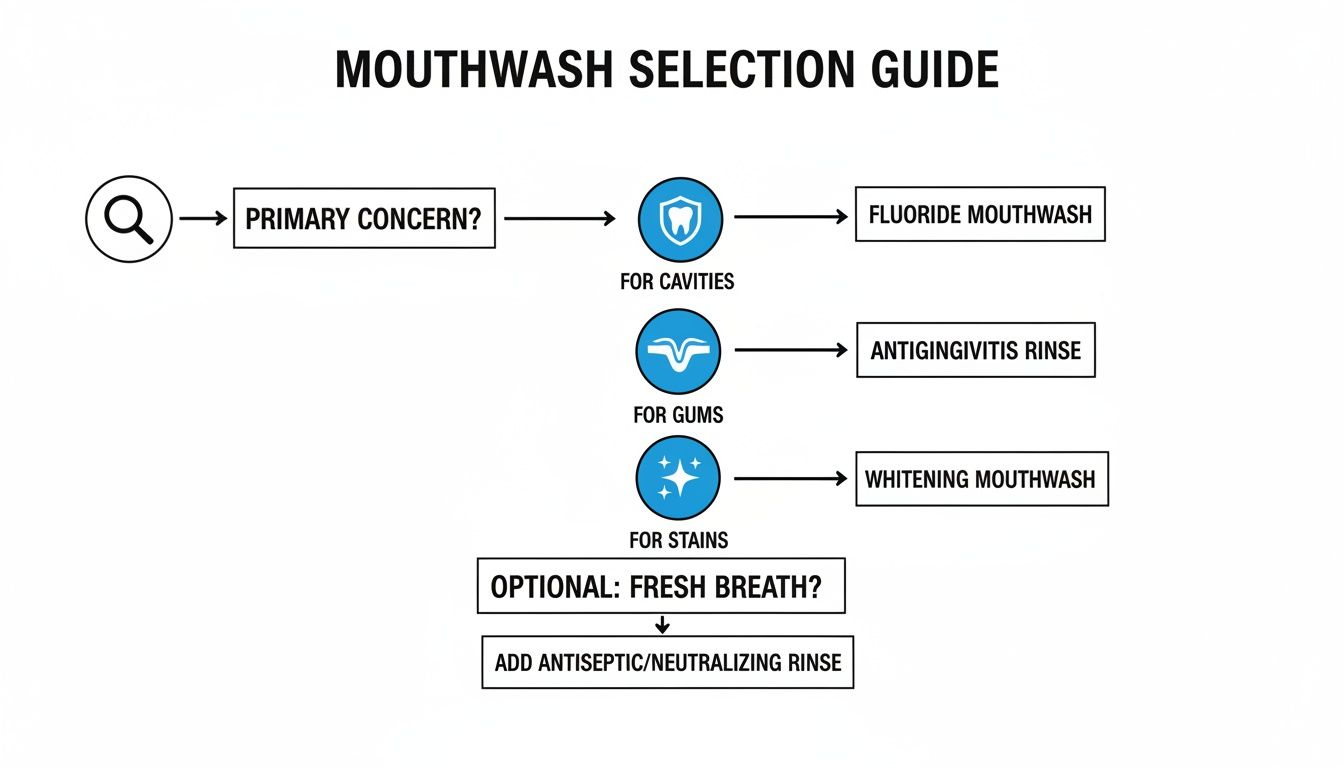
This visual guide shows how different goals—like fighting cavities, supporting gum health, or removing stains—point to different types of mouthwash solutions.
Soothing Sensitive Teeth
Do you get that sharp, zinging pain when you have something hot, cold, or sweet? That’s tooth sensitivity. It happens when your protective enamel wears down, exposing the softer dentin layer and the nerve endings inside.
Mouthwashes designed for sensitivity work by calming those overactive nerves. The key ingredient to look for is potassium nitrate. It works by blocking the tiny pathways from the tooth's surface to the inner nerve, essentially desensitizing it and dialing down that painful reaction over time. For this to work, consistency is everything—you need to use it daily to build up that protective barrier and find lasting relief.
"For patients with sensitivity, a mouthwash with potassium nitrate isn't just about comfort—it's about restoring quality of life. It allows them to enjoy foods and drinks without fear of that sudden, sharp pain, making it a crucial part of their daily care routine."
Strengthening and Remineralizing Enamel
Your tooth enamel is the hardest substance in your body, but it's constantly under attack from acids—both from plaque bacteria and the foods you eat. When enamel starts to lose minerals (a process called demineralization), it gets weak and becomes a prime target for cavities.
A high-fluoride mouthwash is your best line of defense. Think of fluoride as a repair crew for your teeth. It helps rebuild and strengthen weakened spots on your enamel in a process called remineralization, making your teeth tougher and more resistant to decay. If you're prone to cavities, adding a fluoride rinse is one of the smartest preventive moves you can make. You can learn more in our guide on the best fluoride rinses for adults.
Brightening Your Smile and Maintaining Whiteness
While a mouthwash won't give you a dramatic whitening transformation on its own, it can be a fantastic supporting player. Whitening rinses usually contain low concentrations of agents like hydrogen peroxide or carbamide peroxide. These work by gently lifting and breaking down new surface stains from things like coffee, tea, and red wine.
This makes them perfect for keeping your smile bright after a professional whitening treatment or just preventing new discoloration from settling in. For those looking to really enhance their smile, exploring the best teeth whitening options can work hand-in-hand with a good maintenance rinse. By aligning your mouthwash with your specific goals, you make sure every swish is working hard for your smile.
How to Use Mouthwash for Maximum Benefit
Just having a bottle of the best dentist-recommended mouthwash under your sink isn't the whole story. How you use it is what really unlocks its power. A surprising number of people make small mistakes that slash its effectiveness, pretty much just pouring those powerful active ingredients right down the drain.
Think of this as the user manual for your oral health. Following the right steps transforms your mouthwash from a simple breath freshener into a targeted treatment. It’s like the difference between just spraying a garden with a hose versus setting up a drip system that gets nutrients straight to the roots. Every step is designed to give those ingredients the best possible chance to work on your teeth and gums.
Step 1: Measure the Right Amount
First things first: stop guessing. Therapeutic mouthwashes have specific dosage instructions for a reason, usually somewhere between 15 to 20 milliliters. That’s about 3 to 4 teaspoons. This isn't some random number; it's the exact amount needed to thoroughly coat every surface in your mouth.
Many bottles come with a handy measuring cap for this very purpose. If you use too little, you're guaranteed to miss spots. On the flip side, using too much doesn't boost the benefits and just leads to waste. For some people, it might even cause a bit of irritation.
Step 2: Perfect Your Swishing Technique
With the right amount poured, it's time to swish like you mean it. Your goal is a vigorous, active rinse that forces the liquid into every nook and cranny. Most dentists and product labels will tell you to swish for a full 30 to 60 seconds.
That time frame is critical. It gives ingredients like fluoride, CPC, or chlorhexidine enough time to actually bind to your tooth and gum surfaces and start doing their job.
- Swish with purpose: Force the liquid between your teeth and all around your gumline.
- Don't skip the gargle: If the formula is right for it, a quick gargle helps clean the back of your tongue and throat.
- Use a timer: It’s ridiculously easy to think 60 seconds has passed when it’s only been 20. Use your phone's timer to make sure you’re not cutting the treatment short.
When time’s up, spit it all out. And remember, these rinses are never, ever meant to be swallowed.
The most important—and most ignored—part of using mouthwash is the "wait rule." If you eat, drink, or rinse with water right after, you wash away all the active ingredients before they can work. Give it at least 30 minutes to get the full effect.
Step 3: The Great Debate: Before or After Brushing?
This is one of the most common questions we hear, and the answer definitely impacts your results. While you might hear different opinions, most dental professionals agree on a specific order for the best outcome.
The ideal routine is simple: Floss, Brush, then Rinse.
- Floss First: This clears out the plaque and food debris hiding between your teeth, paving the way for everything else.
- Brush Second: Now you can effectively clean the main surfaces of your teeth with your toothbrush and paste.
- Use Mouthwash Last: Rinsing as the final step coats your freshly cleaned teeth and gums with those therapeutic ingredients, letting them sit and do their work without being immediately washed away.
Sticking to this order ensures the powerful ingredients in your dentist-recommended mouthwash are the very last thing your mouth is exposed to. By mastering these simple steps—measuring right, swishing long enough, and getting the timing right—you'll get every bit of benefit out of your chosen formula.
Accessing Professional-Grade Rinses Online
So, you're now up to speed on what makes a mouthwash actually effective and how to match one to your specific goals. But there’s usually one last little roadblock: where do you find these things? A quick run to your local drugstore can be pretty disappointing. Most of the powerful, professional-grade formulas simply aren't sitting on those shelves.
This is where shopping online completely changes the game. It closes the gap between what your dentist tells you to get and actually getting it, delivered right to your door. You don’t have to settle for a generic, mass-market option that doesn’t quite hit the mark.
Find Dentist-Trusted Brands in One Place
Here at DentalHealth.com, we’ve made it our mission to give you direct access to the exact brands that dental professionals trust for their own patients. Think of it as your personal key to the dental office supply cabinet, no appointment needed.
We make a point to stock the leading professional-grade brands that are tough to find anywhere else. This includes hard-hitting therapeutic rinses like BreathRX, which uses a zinc-based formula to completely neutralize bad breath, not just mask it. We also carry Fluoridex, a high-strength fluoride rinse built for maximum protection against cavities. These aren't just for fresh breath; they're targeted treatments that deliver real, clinical results.
Let’s say you just had a professional whitening treatment. Your dentist will likely recommend something to keep that bright smile going. We carry rinses from top whitening brands like Opalescence that are specifically formulated to support and extend the life of your results.
Finding the right mouthwash shouldn’t feel like a treasure hunt. Our goal is to make it simple and stress-free to follow your dentist’s recommendations, so you get the exact formula you need without any compromises.
Shop by Concern for Targeted Solutions
We get it—navigating all the different products can be overwhelming. That’s why we’ve organized our entire selection to make it incredibly simple to shop by your specific concern. Whether you're battling gum issues, dealing with sensitivity, preventing cavities, or keeping your smile white, you can find a curated list of products perfect for the job.
This approach takes all the guesswork out of the equation. You can pick a product with confidence, knowing it has the right active ingredients to tackle your main goal. And with fast U.S. shipping, you can have it in hand and start your new routine in just a few days.
To make things even easier, here’s a quick guide matching common oral health needs with the top-tier brands you can find on our site.
Your Oral Health Needs Solved at DentalHealth.com
This table is your cheat sheet for finding the right type of dentist-recommended product for your specific concern on our site.
| If Your Goal Is... | Look for These Ingredients... | Find These Brands at DentalHealth.com |
|---|---|---|
| Fighting Cavities | Sodium Fluoride | Fluoridex |
| Neutralizing Bad Breath | Zinc, CPC, Essential Oils | BreathRX |
| Maintaining Whitening | Hydrogen Peroxide, Potassium Nitrate | Opalescence |
| Soothing Sensitivity | Potassium Nitrate, Fluoride | Various Specialized Rinses |
By giving you easy access to these professional-level solutions, you can follow your dentist's advice to the letter. Take the next step toward your best oral health and explore our complete collection of oral care mouthwash options today.
Got Questions About Dentist-Recommended Mouthwash?
Even after getting the rundown on what makes a therapeutic mouthwash work, it's totally normal to have a few questions. Picking the best dentist-recommended mouthwash is a big step up for your oral health routine, so you want to get it right. Let’s tackle some of the most common questions we hear, so you can feel confident in your choice.
Think of this as your personal FAQ, designed to cut through the noise and give you straight answers. We'll settle the big debates (like whether you can ever skip brushing) and give you a realistic idea of when you can expect to see results.
Can Mouthwash Replace Brushing and Flossing?
Let's get the most important question out of the way first. The answer is a clear, absolute no. While a good therapeutic mouthwash is a fantastic addition to your routine, it can never, ever replace the physical act of brushing and flossing.
Imagine trying to clean a plate caked with dried-on food just by swishing water over it. You might get a few loose crumbs off, but the sticky stuff isn’t going anywhere until you grab a sponge and actually scrub it. Brushing and flossing are that "scrubbing" motion for your teeth; they mechanically break apart and wipe away the sticky film of plaque.
Mouthwash is the final step. It comes in after the heavy lifting is done to kill off leftover bacteria, deliver helpful ingredients like fluoride, and rinse out those hard-to-reach spots. Using mouthwash without brushing is like waxing a dirty car—you’re just sealing the grime in.
Is the Alcohol in Mouthwash a Bad Thing?
For a long time, alcohol was a go-to ingredient in mouthwash. It was mainly there to dissolve other active ingredients and act as a preservative. But today’s formulas have mostly moved on from alcohol, and for good reason. The biggest problem is that alcohol can seriously dry out your mouth, a condition called xerostomia.
A dry mouth isn't just uncomfortable. It actually creates the perfect breeding ground for harmful bacteria, which can put you at a higher risk for cavities and gum disease. That makes alcohol-based rinses a bad idea for a lot of people.
You should definitely reach for an alcohol-free mouthwash if you:
- Already have a dry mouth: Alcohol will just make it worse.
- Have sensitive gums or canker sores: The sting from alcohol can be incredibly irritating.
- Are in recovery from alcoholism: The presence of alcohol, even if not swallowed, is best avoided.
- Are buying for kids or teens: This eliminates any risk of them accidentally swallowing it.
So, is it always bad? Not necessarily for everyone, but with so many fantastic and effective alcohol-free options on the market, there’s really no reason to choose one with it anymore.
How Long Until I See Results from a Therapeutic Rinse?
Patience is a virtue with any new health habit, and oral care is no exception. How quickly you see results really depends on what you're trying to treat and which active ingredients you’re using. It's important to have realistic expectations.
Here’s a rough timeline for some common goals:
- For Bad Breath (Halitosis): You’ll get that immediate fresh feeling right after you rinse. But for chronic bad breath, using a mouthwash with CPC or zinc consistently will lead to a more lasting improvement within one to two weeks as it gets bacterial levels under control.
- For Gingivitis: If you're using an antimicrobial rinse to tackle red, bleeding gums, you should start seeing a real difference in about two to four weeks of twice-daily use. Your gums will look and feel healthier.
- For Tooth Sensitivity: This isn't an overnight fix. Ingredients like potassium nitrate need time to work their magic and block the pathways to the tooth's nerve. With daily use, most people feel a noticeable drop in sensitivity within two to four weeks.
- For Whitening: Think of whitening mouthwashes as maintenance, not a miracle worker. They’re best at preventing new stains and very gradually lifting old ones. You might notice a subtle brightening over six to twelve weeks.
The key takeaway? A therapeutic mouthwash is a long-term strategy, not a quick fix. You have to use it consistently every day as directed to get the real clinical benefits.
Are All "Dentist Recommended" Mouthwashes by Prescription Only?
That's a common myth. While there are some heavy-duty prescription rinses out there, many of the most effective and highly recommended therapeutic mouthwashes are available right over the counter (OTC). The main difference is usually the concentration of the active ingredients.
- Professional Over-the-Counter (OTC) Rinses: These are the high-quality, professional-grade formulas you can buy yourself. They have proven ingredients like sodium fluoride, Cetylpyridinium Chloride (CPC), and potassium nitrate at levels that are safe and effective for the public. Brands like Fluoridex and BreathRX are perfect examples—they're what the pros use, but you can get them without a script.
- Prescription (Rx) Rinses: Your dentist might prescribe a rinse for more severe issues. The classic example is a mouthwash with chlorhexidine gluconate, a powerful antiseptic used to manage advanced gum disease. Because it's so strong and can have side effects (like temporary staining), its use needs to be supervised by a dental professional.
Your best bet is always to chat with your dentist about your goals. They can point you to the perfect professional OTC product or write a prescription if your situation needs a more targeted approach.
Ready to find the right professional-grade mouthwash for your needs? DentalHealth.com makes it easy to access the top brands trusted by dentists, all in one place. Explore our curated collections and get the perfect rinse delivered right to your door. Start shopping now at https://dentalhealth.com.