
Choosing the Best Fluoride Rinse for Adults
Finding the best fluoride rinse for adults isn't about crowning one single product. It’s about matching the right formula to what’s happening in your mouth. Whether you're fighting off cavities, trying to calm down sensitive teeth, or protecting your investment in orthodontic work, the ideal rinse comes down to its active ingredients and strength. The most effective choice will always be the one that lines up with your specific oral health goals, like using a 0.05% Sodium Fluoride rinse for daily prevention or reaching for an alcohol-free formula to combat dry mouth.
Finding the Right Fluoride Rinse for Your Needs
Choosing the right fluoride rinse is a critical step if you want to elevate your at-home oral care beyond just brushing and flossing. For adults, dental concerns often become more complex, ranging from a higher risk of cavities along the gumline to nagging tooth sensitivity. A professional-grade fluoride rinse delivers targeted protection exactly where you need it most, helping to strengthen enamel and stop decay before it even gets a chance to start.
The key is to first figure out what you're trying to accomplish. Are you looking for a daily workhorse to bolster your cavity defenses? Or do you need a more specialized solution for a temporary issue like sensitivity after a whitening treatment? Pinpointing your primary goal is the first step toward selecting a product that delivers real, noticeable results.

Matching Formulations to Adult Dental Concerns
Let's be clear: not all rinses are created equal. The formulation—from the type and concentration of fluoride to the addition of other therapeutic ingredients—makes all the difference. An adult with braces, for instance, has a completely different set of needs than someone managing xerostomia (the clinical term for dry mouth).
To make it easier, I've put together a quick guide that breaks down the main categories of fluoride rinses. Think of this as your starting point for identifying which type is most suitable for your situation. After this, we’ll dive deeper into specific product comparisons and recommendations available right here at DentalHealth.com.
Quick Guide to Adult Fluoride Rinses
This table helps you quickly see which type of rinse might be right for you.
| Rinse Type | Key Ingredient | Best For | Example Use Case |
|---|---|---|---|
| Daily Cavity Prevention | 0.05% Sodium Fluoride (NaF) | Adults with a moderate risk of cavities. | Someone looking for a consistent, daily enamel boost. |
| High-Risk/Weekly Use | 0.2% Sodium Fluoride (NaF) | Adults with a high susceptibility to tooth decay. | A patient with a history of frequent cavities. |
| Sensitivity Relief | Potassium Nitrate | Adults with sensitive teeth from whitening or gum recession. | An individual experiencing discomfort from hot or cold foods. |
| Dry Mouth (Xerostomia) | Alcohol-Free Formulation | Adults with reduced saliva flow due to medication or health conditions. | Anyone needing hydration and cavity protection without irritation. |
| Orthodontic Care | Cetylpyridinium Chloride (CPC) | Adults with braces, aligners, or retainers. | A person trying to prevent white spots and plaque around brackets. |
Once you understand these key differences, you can move beyond the generic, one-size-fits-all options and select a professional-grade fluoride rinse that provides targeted, effective protection. The right product won’t just strengthen your teeth; it will actively address your unique dental challenges, making it an indispensable part of your oral hygiene routine.
How Fluoride Rinses Strengthen and Protect Adult Teeth
Think of your tooth enamel as a microscopic crystal structure. Every single day, this structure gets attacked by acids that plaque bacteria produce right after you eat sugars and starches. This process is called demineralization, and it literally strips away vital minerals like calcium and phosphate, leaving your enamel weaker and open to cavities.
A good fluoride rinse is like sending in a specialized repair crew for your enamel. When you swish with it, fluoride ions get deposited directly onto your tooth surfaces. These ions then weave themselves into the enamel's crystal structure during its natural repair cycle, known as remineralization.
The Science of Stronger Enamel
But this isn't just a simple patch job. Fluoride fundamentally upgrades your enamel's defensive capabilities. The new crystal structure it creates is called fluorapatite, which is dramatically stronger and far more resistant to future acid attacks than your enamel's original structure. It’s like swapping out a wooden fence for a solid stone wall—it’s built to withstand a lot more.
Fluoride also plays offense. It actively disrupts the metabolism of the bacteria that cause cavities in the first place. By getting in the way of their acid production, fluoride cuts down the overall acidic assault in your mouth, giving you a powerful two-pronged defense against tooth decay. You can dive deeper into building stronger enamel in our guide on ways to strengthen tooth enamel.
This whole protective process is a game-changer for adults, who often face a unique set of dental challenges. Gum recession, for example, is a common issue as we age and can expose the softer, more vulnerable root surfaces of your teeth. These areas don't have the tough enamel coating of the tooth's crown, making them extremely susceptible to decay. This is where a daily fluoride rinse becomes an essential line of defense.
Key Insight: A fluoride rinse isn't just about cleaning your mouth. It’s a chemical process that actively rebuilds and reinforces your tooth enamel, making it chemically tougher against the daily barrage of acids from your food and bacteria.
Why Adults Need Specialized Protection
Another big concern for many adults is xerostomia, or dry mouth, often brought on by medications or certain health conditions. Saliva is your body's built-in defense system; it neutralizes acids and washes away food debris. Without enough of it, your risk for aggressive tooth decay—especially root decay—skyrockets. An alcohol-free fluoride rinse can provide the protection you need without causing more dryness or irritation.
The clinical proof is solid. One study focusing on adults with a high risk for cavities showed that using a fluoride gel or rinse made a significant difference. Participants who used fluoride treatments saw their odds of needing fillings or other restorative work drop by an impressive 28% compared to those who didn't.
Of course, while a fluoride rinse is a powerful tool, it's one part of a bigger picture. For a complete guide on building a robust oral hygiene routine, you can learn more about how to improve dental health. Adding a professional-grade rinse is a smart, effective step in any comprehensive oral care strategy.
Comparing Key Fluoride Formulations and Ingredients
Choosing the right fluoride rinse means looking past the marketing on the bottle and getting to know what’s actually inside. The specific type of fluoride, its concentration, and any other active ingredients are what really determine how effective a rinse will be for your specific dental needs. After all, a formula designed for someone with a high risk of cavities is built very differently from one made to soothe sensitive teeth.
Understanding these differences is the key to getting the most protection out of a professional-grade rinse. Let's break down the most important components—from the types of fluoride to other helpful ingredients—so you can make a smart choice based on science, not just brand loyalty.
This simple diagram shows how fluoride creates a protective barrier against the acid produced by bacteria in your mouth.
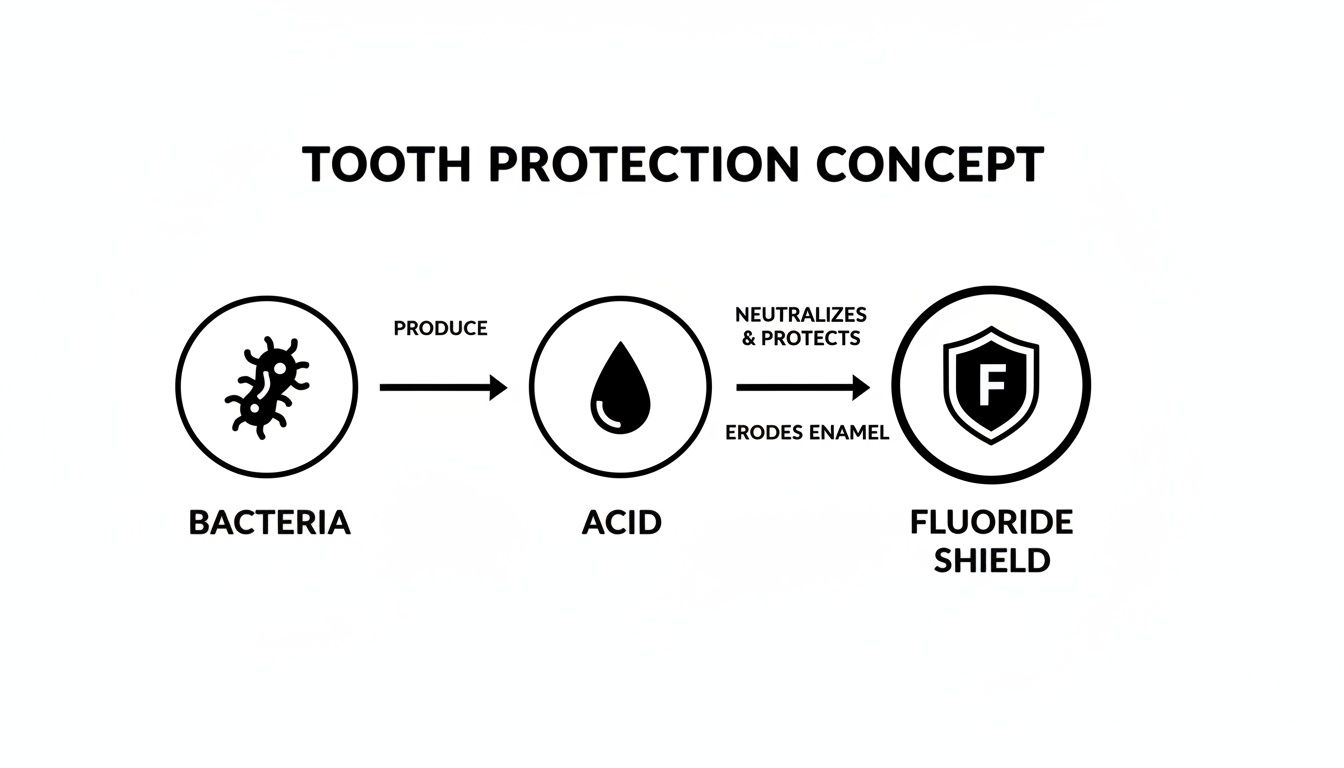
It’s a great visual of the crucial role fluoride plays in stopping the demineralization process that leads to cavities.
Sodium Fluoride vs. Stannous Fluoride
The two most common fluoride compounds you'll see in rinses are Sodium Fluoride (NaF) and Stannous Fluoride (SnF2). While both are fantastic at preventing cavities by strengthening enamel, they offer slightly different secondary benefits.
- Sodium Fluoride (NaF): This is the gold standard for pure cavity prevention. It's incredibly stable, usually has a pleasant taste, and is exceptionally good at remineralizing tooth enamel. You'll find NaF as the workhorse ingredient in the vast majority of prescription and over-the-counter fluoride rinses.
- Stannous Fluoride (SnF2): Think of this compound as a multitasker. On top of its anti-cavity properties, stannous fluoride is also known for its antibacterial effects, which help reduce plaque and control gingivitis. The only trade-off is that it can sometimes cause minor, temporary surface staining on teeth.
For most adults focused squarely on strengthening enamel, a sodium fluoride rinse is an excellent and reliable choice. But if you also struggle with plaque buildup or early signs of gum inflammation, a stannous fluoride formula might give you more comprehensive protection.
Daily Use vs. Weekly Use Concentrations
The concentration of sodium fluoride in a rinse directly affects how often you should use it. You'll generally find two main strengths, each designed for very different schedules and risk levels.
- 0.05% Sodium Fluoride: This is the standard concentration for daily-use rinses. It’s formulated to provide a consistent, low-level dose of fluoride to continuously repair and strengthen your enamel against daily acid attacks from food and drinks. This is the ideal choice for most adults looking for routine cavity prevention.
- 0.2% Sodium Fluoride: This is a much higher concentration meant for weekly use. It delivers a powerful dose of fluoride and is typically recommended for people with a high risk of cavities, like those with braces, a history of frequent decay, or severe dry mouth.
Scientific reviews consistently show that both concentrations work. Evidence confirms that at-home fluoride mouthrinses with 0.05% and 0.2% sodium fluoride significantly help prevent cavities in adults when added to regular brushing. For root caries, which is common in adults with gum recession, research shows that combining a standard fluoride toothpaste with a 0.05% rinse provides clinically significant benefits. You can explore a full analysis of fluoride's effectiveness in adults from McGill University's research.
Why Alcohol-Free Formulations Matter
The liquid base of a mouth rinse is just as important as its active ingredients, especially for adults with certain sensitivities. Many traditional mouthwashes contain alcohol, which can cause that familiar burning sensation and, more importantly, contribute to oral dryness.
Crucial Consideration: For anyone experiencing dry mouth (xerostomia) from medications or health conditions, an alcohol-based rinse is counterproductive. Alcohol is a desiccant, meaning it dries out tissues, which can make symptoms worse and actually increase your cavity risk.
An alcohol-free formulation is always the better choice for anyone with a sensitive mouth, gum irritation, or dry mouth. These rinses are gentle but just as effective at delivering fluoride and other therapeutic ingredients, all without causing discomfort or making existing issues worse.
The Role of Additional Active Ingredients
Beyond fluoride, many specialized rinses include other active ingredients to tackle specific problems. Knowing what these additives do can help you find a product that gives you more targeted benefits.
- Cetylpyridinium Chloride (CPC): This is an antiseptic agent that helps kill the bacteria responsible for plaque and bad breath. It’s an excellent addition for orthodontic patients who need extra help controlling plaque buildup around brackets and wires.
- Potassium Nitrate: This is the most common desensitizing agent you'll find in oral care products. It works by calming the nerves inside your teeth, making it a must-have ingredient for anyone with sensitivity from teeth whitening, gum recession, or enamel wear.
By looking at the complete ingredient list, you can find a multi-benefit formula that does more than just prevent cavities. Whether you need sensitivity relief or extra plaque control, the right combination of ingredients will help you achieve your specific oral health goals.
Matching a Fluoride Rinse to Your Specific Dental Needs
Picking the right fluoride rinse isn't about grabbing the first bottle you see on the shelf. It’s about understanding your own dental situation and finding a formula that directly tackles your main concerns. Think of it less like a generic recommendation and more like a targeted solution.
This guide breaks down common dental challenges adults face and connects them to the specific rinse formulations that can help. We'll show you exactly what to look for on the ingredient list so you can choose a professional-grade product that actually works for you.
For Those with a High Cavity Risk
Do your dental check-ups often come with the bad news of a new cavity? You need a rinse with some serious defensive power. Adults can find themselves more prone to decay from things like gum recession, which exposes the softer root surfaces, or a diet heavy on sugars and acidic drinks. In this case, a standard daily rinse just won't cut it.
Your best bet is a higher-concentration formula. Look for a rinse that contains 0.2% Sodium Fluoride (NaF). This strength is typically for weekly use and delivers a powerful dose of fluoride to aggressively remineralize weak spots and build up a durable shield against acid attacks. It’s a smart, proactive way to stop the decay process in its tracks. To learn more about how different formulations work, check out our detailed guide on Fluoridex products and their specific applications.
For Managing Tooth Sensitivity
That sharp, sudden pain from hot or cold foods can be a frustrating part of life, often brought on by teeth whitening, gum recession, or enamel erosion. This happens when the layer beneath your enamel, called dentin, becomes exposed. A fluoride rinse is a great tool here, but the right one needs to do more than just strengthen enamel.
The key is finding a formula that includes a desensitizing agent. The ingredient you're looking for is potassium nitrate. It works by calming the nerves inside your teeth, effectively stopping the pain signals from ever reaching your brain. When you combine that with fluoride, which helps plug the tiny tubules in your dentin, you get a fantastic dual-action approach for sensitivity relief.
Expert Tip: If you're currently whitening your teeth, adding a fluoride rinse with potassium nitrate to your routine can make the whole process a lot more comfortable while still protecting your enamel.
For Adults Experiencing Dry Mouth
Xerostomia, the clinical term for dry mouth, is a widespread issue among adults, often triggered by medications, aging, or health conditions. Your saliva is your mouth's first line of defense—it neutralizes acids and rinses away food debris. Without enough of it, your risk for aggressive tooth decay skyrockets.
The most important feature to look for is an alcohol-free formulation. Alcohol is a desiccant, meaning it's a drying agent, and it will only make dry mouth symptoms worse. An alcohol-free fluoride rinse provides that crucial remineralization without causing further irritation, helping to protect vulnerable teeth when saliva flow is low. Some formulas even add moisturizing agents for extra comfort.
For Orthodontic Patients
Keeping your teeth clean with braces or other orthodontic hardware is a unique challenge. All those brackets and wires create perfect hiding spots for plaque, which puts you at a much higher risk for cavities and those dreaded white spot lesions—decalcified enamel spots that can stick around permanently.
For anyone in orthodontics, the ideal rinse needs a multi-pronged attack. First, it has to have fluoride to keep the enamel strong around all that hardware. Second, it should contain an antiseptic to keep plaque under control. Look for an ingredient like Cetylpyridinium Chloride (CPC), which is fantastic at killing the bacteria that cause plaque. This one-two punch ensures your teeth stay healthy and spot-free throughout your treatment, protecting the investment you've made in your smile.
Our Top Recommended Fluoride Rinses for Adults
Finding the right professional-grade dental product can feel like a chore, but it doesn't have to be. Selecting the best fluoride rinse becomes much simpler when you match the right formula to your specific needs. We've handpicked our top-tier options available right here at DentalHealth.com, going beyond the usual drugstore picks to spotlight products engineered for targeted concerns like cavity prevention, tooth sensitivity, and orthodontic care.
Think of this as your personal buyer's guide. We'll break down our expert recommendations, explaining not just what they do, but why they’re the perfect fit for different oral health situations. When you understand the science behind each bottle, you can choose a rinse that delivers real, measurable results.

A Closer Look at Our Premier Selections
Let's dive into our most effective fluoride rinses. Each one made this list because of its unique formulation, powerful active ingredients, and proven track record of tackling the common dental challenges adults face. Whether you need a daily workhorse for enamel defense or a specialized solution for sensitive teeth, you'll find an ideal match here.
DentalHealth.com's Top Fluoride Rinse Picks for Adults
To make your decision as clear as possible, we’ve organized our top recommendations in this handy table. Use it to pinpoint the perfect product for your routine.
| Product Name | Fluoride Type & Concentration | Key Benefit | Ideal For |
|---|---|---|---|
| Fluoridex Daily Renewal Rinse | 0.05% Sodium Fluoride (NaF) | Consistent daily enamel strengthening and cavity prevention. | Adults seeking reliable, everyday protection against decay. |
| 3M Phos-Flur Rinse | 0.044% Acidulated Phosphate Fluoride | Enhanced fluoride uptake for preventing white spot lesions. | Individuals with braces, aligners, or other orthodontic appliances. |
| ACT Anticavity Fluoride Rinse | 0.05% Sodium Fluoride (NaF) | Clinically proven cavity defense in an alcohol-free formula. | Anyone with moderate cavity risk or sensitivity to alcohol. |
| Crest Pro-Health Multi-Protection | 0.022% Sodium Fluoride (NaF) | Kills germs that cause plaque, gingivitis, and bad breath. | Users needing broad oral health benefits beyond just fluoride. |
The effectiveness of these formulas isn't just talk; it's backed by solid clinical evidence. For example, a landmark clinical trial found that using a 0.2% sodium fluoride mouthwash (a higher concentration typically for weekly use) can dramatically slow down caries progression in adults. The study revealed it slashed the mean DMFT (Decayed, Missing, Filled Teeth) index by a staggering 51.5% compared to a control group.
Breaking it down further, decayed teeth dropped by 45%, missing teeth by 44%, and filled teeth by 59%. It’s a powerful testament to what a dedicated fluoride rinse regimen can do. You can read more about these significant findings on caries prevention.
Making Your Final Decision
Your choice should ultimately come down to the specific dental needs we've been discussing. To make it even easier, let's connect those real-world scenarios directly to our product recommendations.
-
For General Cavity Prevention: If your main goal is to keep your enamel strong and stop new cavities before they start, Fluoridex Daily Renewal Rinse or the trusted ACT Anticavity Fluoride Rinse are excellent go-to options. Their 0.05% sodium fluoride concentration is perfect for daily use, providing consistent remineralization. You can learn more about the benefits of ACT Anticavity Fluoride Rinse mouthwash in our detailed product overview.
-
For Orthodontic Patients: Braces and aligners create unique challenges that demand a specialized formula. 3M Phos-Flur Rinse is engineered with acidulated phosphate fluoride to boost fluoride absorption and head off the formation of white spot lesions around brackets and wires.
Key Takeaway: The "best" fluoride rinse is completely situational. A person with braces has fundamentally different needs than someone dealing with dry mouth. Always select a product based on its ability to solve your specific problem, not just its brand name.
- For All-Around Oral Health: If you want a rinse that does more than just fight cavities, Crest Pro-Health Multi-Protection is a fantastic contender. While it provides fluoride, its antiseptic properties also help manage plaque and gingivitis for a more complete approach to oral wellness.
By taking a moment to consider your dental profile—be it high cavity risk, orthodontic maintenance, or general prevention—you can select a professional-grade fluoride rinse that becomes a powerful ally in your daily hygiene routine.
Answering Your Questions About Fluoride Rinses
Even when you know what to look for in a quality fluoride rinse, a few practical questions always pop up. It's one thing to buy the right product; it's another to use it correctly and confidently. Let's walk through the common questions we hear so you can get the most out of your rinse.
Think of this as your quick-start guide to making a professional-grade rinse a seamless part of your daily routine.
How Should I Use a Fluoride Rinse Correctly for the Best Results?
To really get those enamel-strengthening benefits, timing and technique are everything. A quick, casual swish won't cut it. You have to give the fluoride enough time to actually work on your teeth and, just as importantly, you need to avoid washing it away right after.
Here’s a simple, step-by-step process that ensures the active ingredients can do their job:
- Brush and Floss First: Always start with a clean slate. Use your rinse after you've brushed and flossed thoroughly. This clears away plaque and food particles, giving the fluoride direct contact with your tooth enamel.
- Measure the Right Amount: Check the product label for the recommended dose, which is almost always 10 milliliters (about two teaspoons). Too much is just wasteful, but too little won't give you the full coverage your teeth need.
- Swish Actively for One Full Minute: This is the most important part. Don't just let it sit in your mouth. Swish it vigorously, making sure it coats every tooth surface—fronts, backs, and in between. Set a timer on your phone for the full 60 seconds.
- Spit, Don't Rinse: When the minute is up, spit all of the rinse out. And here's the crucial step: do not rinse your mouth with water afterward. This is a common mistake that immediately washes away the protective fluoride layer you just applied.
- Wait 30 Minutes Before Eating or Drinking: Give the fluoride time to work its magic. Waiting at least 30 minutes before eating or drinking allows it to fully absorb into your enamel and kickstart the remineralization process.
Following these steps, especially the "no rinsing with water" rule, is the key to unlocking the full protective power of a professional-grade formula.
Is a Fluoride Rinse Helpful for Sensitive Teeth?
It certainly can be. While most people think of fluoride rinses for cavity prevention, many formulas are specifically made to tackle tooth sensitivity. This is a game-changer for adults dealing with sensitivity from things like gum recession, enamel wear, or even recent teeth whitening treatments.
The trick is to find a rinse that doesn't just have fluoride, but also includes a desensitizing agent.
The Key Ingredient for Sensitivity: Look for potassium nitrate on the label. It’s the most common and effective desensitizing ingredient out there. It works by calming the nerves inside the tooth, blocking the pathways that send those sharp pain signals when you eat or drink something hot, cold, or sweet.
When a rinse combines both sodium fluoride and potassium nitrate, you get a powerful one-two punch for sensitivity relief:
- Fluoride gets to work remineralizing weak spots in the enamel and helps block the tiny tubules in your dentin that lead to the tooth's nerve.
- Potassium Nitrate goes straight to the source, soothing the nerve itself to reduce its reactivity and quiet down the pain over time.
For anyone who winces at the thought of ice cream or finds teeth whitening too uncomfortable, a rinse with this combination can provide both immediate relief and long-term protection.
Is It Safe to Use a Fluoride Rinse Every Day?
Yes, for standard over-the-counter fluoride rinses, daily use is perfectly safe—as long as you follow the directions. These daily rinses are formulated with a specific concentration, usually 0.05% sodium fluoride, that’s designed for consistent, effective, and safe application. This amount provides that continuous low-level exposure your enamel needs to fight off daily acid attacks.
But safety comes down to one absolute rule: you must spit out the rinse and never swallow it.
Swallowing fluoride rinse, especially over a long period, can lead to getting too much fluoride systemically. This is the main reason these rinses aren't recommended for children under six, who might swallow them by accident. For adults who can follow instructions, the risk is incredibly low.
- Daily Use Rinses (0.05% NaF): These are formulated to be used once or twice a day.
- Weekly Use Rinses (0.2% NaF): These have a much higher concentration and should only be used once a week, typically under the guidance of a dental professional.
Just stick to the recommended frequency on the bottle, and you’ll get all the anti-cavity benefits without any safety worries. When used the right way, a daily fluoride rinse is one of the safest and most powerful tools you have for your oral health.
Ready to give your teeth the professional-grade protection they deserve? Explore our curated selection of the best fluoride rinses for adults at DentalHealth.com and find the perfect formula to strengthen your smile. Shop our complete collection of fluoride rinses today!