
Best Mouthwash for Bad Breath Guide to Targeted Relief
What if the problem is not that you need a stronger mint, but that the rinse you chose does not match the cause of the odor? Bad breath is often noticed at the worst time, after coffee, after waking up, or after a long afternoon when brushing is not practical. The more useful question is whether a mouthwash is reducing the compounds that cause halitosis, or only masking them for a short period.
| Mouthwash type | Best for | What it does | Evidence-based note |
|---|---|---|---|
| Chlorhexidine-based | Persistent, bacteria-driven halitosis | Strong antiseptic action against oral bacteria | A 2021 meta-analysis found the largest organoleptic score reduction with a zinc acetate and chlorhexidine diacetate rinse, mean difference −1.10 (meta-analysis) |
| Zinc-based | Odor tied to volatile sulfur compounds | Helps neutralize VSCs directly | Zinc-containing rinses are repeatedly positioned as cause-based options rather than cosmetic fresheners (review) |
| Chlorine dioxide | Sulfur-heavy breath odor | Targets sulfur compounds at the molecular level | Expert guides describe chlorine dioxide formulations as VSC-focused rinses (guide) |
| CPC and essential oils | Broad antimicrobial support | Reduces odor-causing bacteria | Expert reviews list CPC and essential oils among the active categories used for bad breath control (Health) |
The right rinse matters because bad breath has more than one cause. It can stem from bacterial buildup, dry mouth, gum inflammation, or a diet that supports odor-producing microbes. A mouthwash that matches the cause can help, while the wrong one may only create a temporary clean feeling.
That is why ingredient-level selection matters more than brand name or mint intensity. A zinc formula may fit sulfur-heavy odor, an antimicrobial rinse may better suit bacterial buildup, and a dry-mouth-friendly option may be more appropriate if odor worsens as saliva drops. For a broader prevention framework, see how to get rid of bad breath permanently.
Why the Right Mouthwash Matters for Bad Breath
You brush before work, rinse with something minty, and your mouth feels clean for a while. Then by midmorning, the odor is back, which is usually the sign that the rinse never touched the actual source. That gap between fresh taste and real odor control is where most bad-breath products fall short.
A mouthwash should do more than make your mouth feel cooler. A lot of rinses rely on flavor and temporary suppression, but that doesn't change the bacteria or sulfur compounds that create halitosis in the first place. The more useful question is whether the formula helps reduce the compounds that people can smell, not just the sensation of freshness.
Practical rule: if a rinse leaves your breath tasting minty but doesn't change the pattern of recurring odor, it's probably masking rather than treating.
The best mouthwash for bad breath is usually the one that matches the underlying trigger. That might mean a zinc-based formula for sulfur odor, an antimicrobial rinse for bacterial buildup, or a dry-mouth-friendly option if your breath worsens as your mouth gets less moist. The rest of this analysis focuses on that ingredient-level logic, because brand names alone don't tell you much about efficacy.
Understanding Causes of Bad Breath
Bad breath usually starts in the mouth, but the cause is rarely the same from one person to the next. Tongue coating, gum disease, dry mouth, trapped food debris, and lifestyle habits can each produce odor through different mechanisms, so a rinse that works for one pattern may do little for another. A product that only adds mint flavor cannot correct the underlying source.
Oral bacteria and tongue coating
The tongue is a major reservoir for odor-causing bacteria, especially when coating builds up on its surface. Those bacteria break down proteins and release volatile sulfur compounds, often shortened to VSCs, which are the main chemicals linked to halitosis. That is why some people brush carefully and still notice persistent odor, because the tongue surface was never addressed.
Gum problems and trapped debris
Bleeding gums, inflammation, and deeper periodontal problems create more places for bacteria to live. When gums are irritated, food particles and plaque can remain in pockets that brushing alone does not fully clean. In that setting, an antimicrobial rinse makes more sense than a flavor-heavy cosmetic mouthwash, and an ADA-approved mouthwash guide can help separate therapeutic formulas from products that mainly freshen breath.
Dry mouth, diet, and habits
Dry mouth can intensify breath because saliva normally helps wash away debris and dilute odor compounds. Alcohol-free formulas are often favored in expert coverage for that reason, since alcohol can contribute to dryness. Smoking, dehydration, and certain foods can also intensify odor because they alter the oral environment, not just the smell.
A major gap in many “best mouthwash for bad breath” articles is that they focus on which brand to buy but do not explain when mouthwash is the wrong fix. Masking rinses offer only short-term relief, while zinc-based formulas can neutralize volatile sulfur compounds more directly.
How Active Ingredients Eliminate Odors
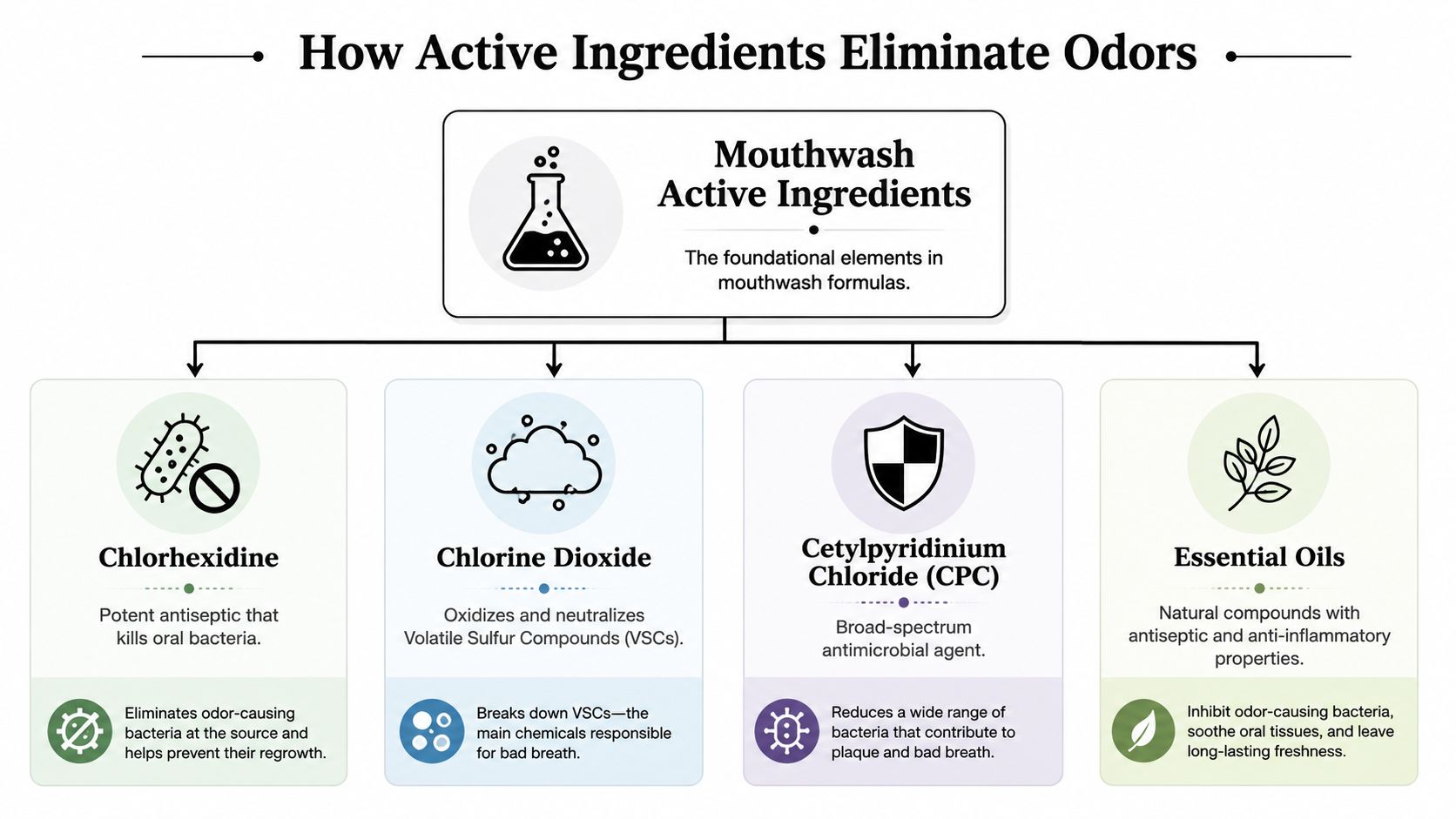
Ingredient choice matters more than bottle design. A rinse can look clinical and still act like a cosmetic freshener, or it can contain an active ingredient that changes the oral chemistry driving bad breath. The most relevant categories are chlorhexidine, chlorine dioxide, cetylpyridinium chloride, and essential oils.
Chlorhexidine and chlorinated antiseptics
Chlorhexidine is the most aggressively antimicrobial option in this group. It is used when the goal is to suppress oral bacteria rather than to freshen the mouth superficially. In the evidence base, chlorhexidine combinations show some of the strongest halitosis reductions, which is why they are treated as therapeutic rinses instead of everyday mint waters.
That strength matters most when odor is tied to a high bacterial load. A formula that interrupts bacterial growth can reduce the source of smell, while a fragrance-only rinse changes little beyond the first few minutes after use.
Chlorine dioxide and zinc
Chlorine dioxide is best understood as a sulfur-targeting ingredient, while zinc-based formulas are often discussed for their ability to neutralize odor compounds more directly. Expert coverage describes TheraBreath's OXYD-8 system as a chlorine dioxide and zinc approach aimed at VSC control rather than scent masking.
That is the right logic for chronic bad breath, where the problem is chemistry, not just smell. For readers who want a closer look at one ingredient system, this breakdown of ACT mouth rinse ingredients shows how specific actives are positioned for odor control.
CPC and essential oils
A good summary from expert coverage is simple, CPC-based rinses kill odor-causing bacteria, while chlorine dioxide is associated with reducing sulfur-producing bacteria. Essential oils add another antimicrobial layer, though they are generally better viewed as support ingredients than the most targeted solution for severe halitosis.
A practical way to read the label is to ask what the active ingredient is doing. If it mainly refreshes breath, it is masking the problem. If it targets bacteria or sulfur compounds, it is addressing the mechanism behind the odor.
Clinical takeaway: alcohol-free formulas are often the safer default for people whose breath worsens when the mouth dries out.
Comparing Mouthwash Types and Efficacy
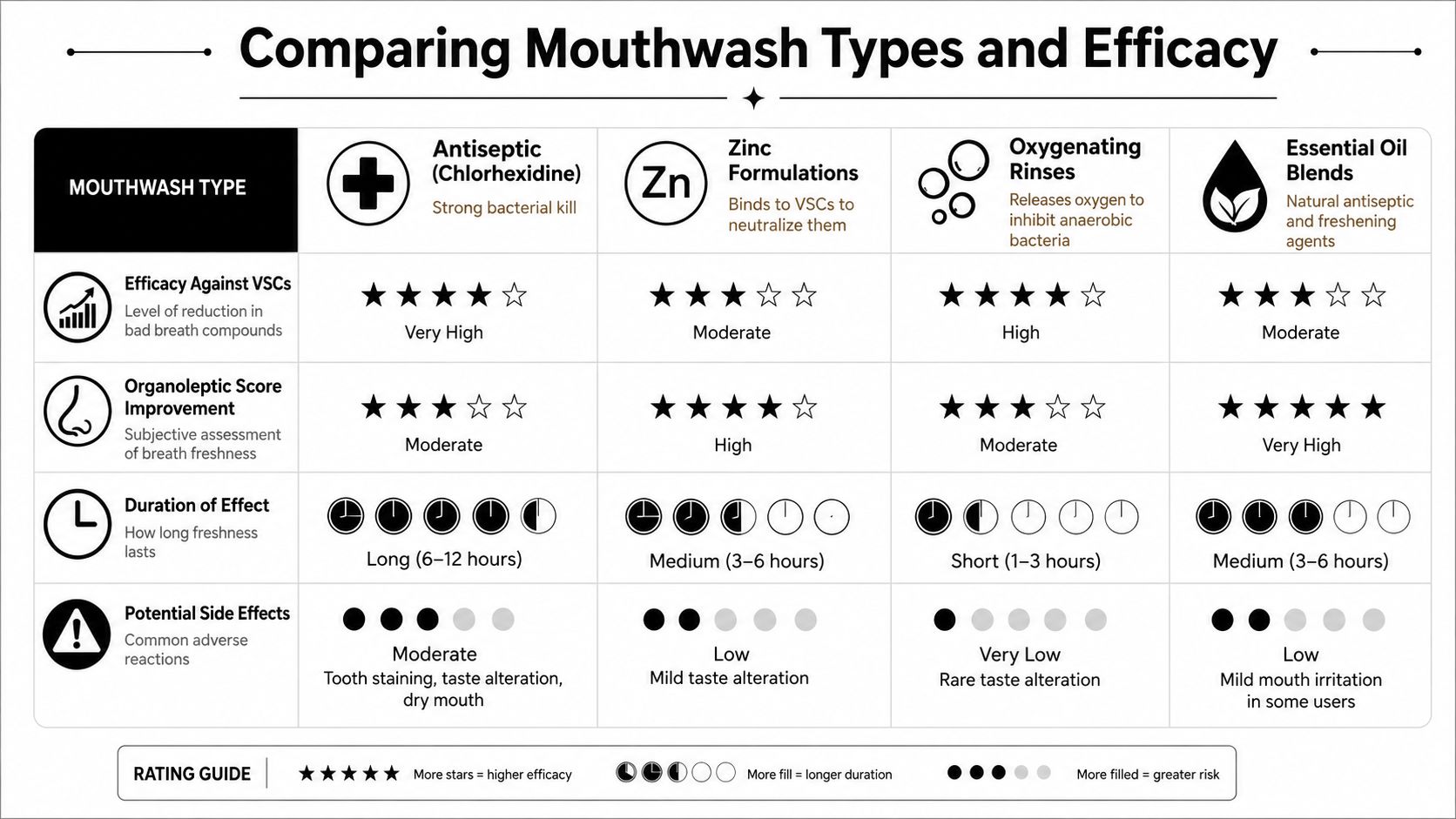
The most useful comparison starts with the target, VSCs, because those sulfur compounds are what people smell. In a clinical study of confirmed halitosis, a CHX-CPC-Zn mouthwash reduced median total VSC values from 192 at baseline to 32 after two weeks, while an antioxidant rinse did not show a significant improvement (PMC study). That kind of result carries more weight than a strong mint flavor or a brief cooling sensation.
Antiseptic rinses versus zinc-centered formulas
Chlorhexidine-based rinses are the most clinically aggressive option, and the 2021 meta-analysis found the largest reduction in organoleptic score with a zinc acetate and chlorhexidine diacetate combination, mean difference −1.10 (meta-analysis). That distinction matters because it shows the difference between microbial suppression and actual odor improvement. A rinse can reduce bacterial load and still perform less well if it does not neutralize sulfur compounds effectively.
Oxygenating approaches and persistence
Oxygenating rinses are useful because they target the anaerobic environment that odor-causing bacteria prefer. Expert coverage of chronic halitosis also emphasizes repeated use, with a 7- to 14-day twice-daily protocol described for persistent bad breath. That repeated-use model makes sense, because breath control usually improves through sustained chemistry shifts rather than one isolated swish.
What the comparison really means
The strongest practical distinction is between odor suppression and odor neutralization. Cosmetic fresheners can make the mouth feel cleaner, but better-performing therapeutic rinses are the ones that reduce measurable sulfur compounds or improve organoleptic scores. A strong mint taste is a poor proxy for performance, so ingredient quality should outweigh branding.
For a purchasing framework, the ADA-referenced mouthwash categories are more useful than scent claims.
Best Practices for Mouthwash Use and Safety
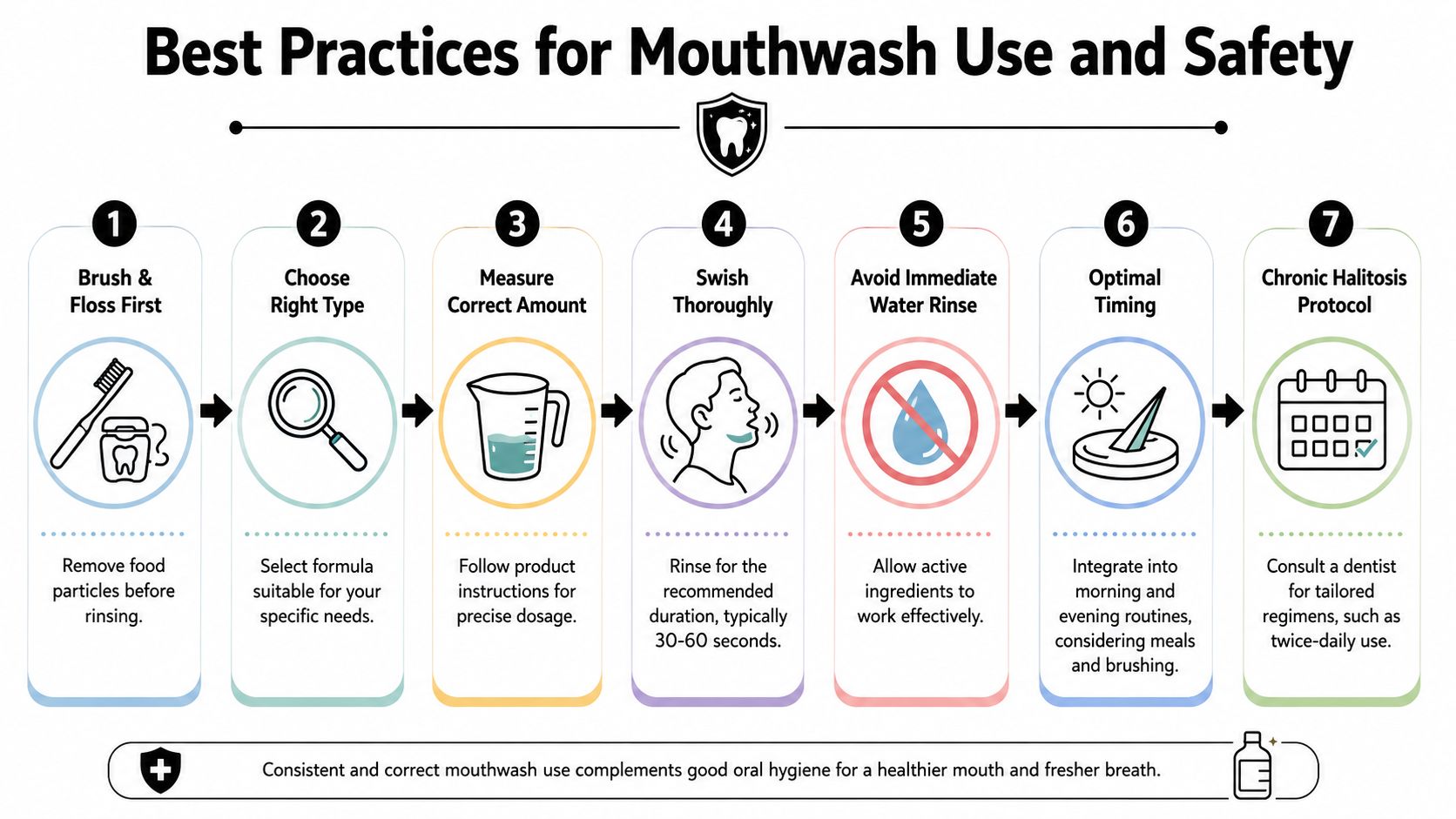
A mouthwash only performs well when it reaches the surfaces that drive odor. If plaque, food debris, and tongue coating are still present, the active ingredient has less access to the bacteria and sulfur compounds that matter most. The routine around the rinse changes the result.
Brush and floss first so the rinse can contact cleaner oral surfaces. Then choose a formula that fits the cause of the odor, since a zinc or chlorine dioxide rinse is better aligned with sulfur-related breath, while an antimicrobial formula fits bacterial buildup more directly. Dose it carefully, because more liquid does not improve performance and may irritate soft tissue. Swish long enough for real contact time, since a quick splash gives the ingredients less chance to work.
Water right after rinsing can dilute the active agents before they finish acting, so waiting makes more sense than chasing the rinse immediately. A regular schedule matters too, because chronic halitosis responds to repeated use rather than one forceful rinse. That is why a 7- to 14-day twice-daily protocol is often described for ongoing bad breath management, and it fits the way these products are meant to work.
Safety deserves the same discipline as efficacy. Chlorhexidine products can be highly effective, but they should be used deliberately and not treated like an all-day freshener. For a practical framework that aligns mouthwash choice with the underlying cause of odor, Transactional LLC's dental marketing tips provide a useful reference point for how oral-care guidance is organized in practice.
Signs You Need Professional Dental Care
If bad breath keeps coming back after proper rinsing, the issue may be deeper than your mouthwash choice. Bleeding gums, swelling, persistent dry mouth, and oral sores deserve a dental exam because they can point to gum disease or another underlying problem. Mouthwash can support care, but it can't diagnose a cause.
Persistent odor from the same mouthwash routine is the red flag. So is breath that changes alongside gum pain, visible plaque buildup, or discomfort when chewing. A dentist can check tongue coating, measure gum health, and decide whether the issue is periodontal, salivary, or something outside the mouth entirely.
Professional-Grade Mouthwash Options at DentalHealth.com
For readers comparing categories rather than chasing a flavor profile, the most useful framework is simple, match the rinse to the cause. The evidence favors therapeutic formulas over cosmetic ones, especially when the goal is to reduce VSCs and improve perceived breath, not just create a cleaner taste. A useful purchasing lens is shown in the table below, and it lines up with practical guidance from Transactional LLC's dental marketing tips, which also emphasizes clear category-to-need matching when presenting dental products to patients.
| Category | Active Ingredient | Target Cause | Product Examples |
|---|---|---|---|
| Chlorhexidine | Chlorhexidine-based antiseptic | Strong bacterial burden and persistent halitosis | Chlorhexidine Gluconate Rinse |
| Zinc-based | Zinc salts, often paired with chlorhexidine | Sulfur odor and VSC control | BreathRX OXYD-8 |
| Oxygenating | Oxygen-releasing system | Anaerobic odor environment | BreathRX OXYD-8 |
| CPC-based | Cetylpyridinium chloride | Odor-causing bacteria | 3M CPC Rinse |
| Essential oil blends | Eucalyptol, thymol, methyl salicylate | Mild to moderate breath freshness and antimicrobial support | Selected essential-oil formulas |
The strongest evidence signal in the verified data points to zinc plus chlorhexidine. A 2021 meta-analysis found the largest organoleptic score reduction with a mouthwash combining zinc acetate and chlorhexidine diacetate, mean difference −1.10. That result supports a narrower conclusion, formulas that pair sulfur control with antibacterial action tend to perform better than rinses that only add fragrance.
That does not mean every person should start with the strongest antiseptic. It means recurring halitosis should be matched to cause, intensity, and tolerance. A sulfur-heavy odor calls for a different ingredient profile than a mainly bacterial one, and a dry mouth needs a different safety profile than a mouth that tolerates stronger antiseptics well.
A practical buyer should sort products into three questions. First, is the odor mostly sulfur-based, which favors zinc or chlorine dioxide systems? Second, is the issue clearly bacterial, which points toward chlorhexidine or CPC? Third, does the mouth run dry easily, which makes alcohol-free formulas the safer default? Once those questions are answered, brand selection becomes much easier.
If you want a compact shopping path, DentalHealth.com is built around professional oral-care categories and clear product descriptions, which makes it easier to compare therapeutic rinses without guessing from the label alone. You can browse the site's breath-focused options and decide whether a chlorhexidine, zinc-based, oxygenating, or CPC formula fits your needs best through the product pages on the site.
If your breath issue keeps returning, stop treating every rinse like the same product. Compare professional-grade mouthwash categories, look for ingredients that match your cause of bad breath, and choose a formula that is designed for real odor control rather than temporary mintiness.