
How to Get Rid of Bad Breath Permanently A Practical Guide
If you're trying to figure out how to get rid of bad breath permanently, the journey starts right inside your mouth. The single most important step is knocking out the odor-causing bacteria with a meticulous daily routine. For the vast majority of people, this gets right to the root of the problem.
Your Action Plan for Conquering Bad Breath for Good

Are you tired of mints and sprays that just cover up the problem for a few minutes? You're in the right place. This guide is built on a simple, powerful truth: bad breath, or halitosis, isn't just bad luck—it’s a problem with a clear source. Getting rid of it for good isn't about masking odors; it's about systematically dismantling what causes them in the first place.
If you're dealing with this, you're not alone. Bad breath affects a staggering 50% of the global adult population at some point. The key to permanent relief is knowing that in 85-90% of cases, the problem is intraoral. This means it comes from anaerobic bacteria feasting on debris on your tongue, gums, and between your teeth, producing foul-smelling volatile sulfur compounds (VSCs).
Tackling this requires a consistent, multi-pronged strategy. You can learn more about the science behind halitosis causes and treatments to understand what's really going on.
The Four Pillars of Permanent Fresh Breath
Achieving lasting fresh breath comes down to executing a solid game plan every single day. Think of it as building a fortress against those odor-causing bacteria. Each pillar supports the others, creating a comprehensive defense that a simple mouthwash rinse can't match on its own.
We've broken this strategy down into four core pillars. Mastering each one will shift you from temporary fixes to a permanent solution.
Key Takeaway: Permanent fresh breath isn't about finding a magic product. It's about building a routine that systematically disrupts and eliminates the bacteria responsible for oral malodor right where they live.
Below is a quick overview of the essential strategies we will dig into throughout this guide. Think of this as your roadmap to taking immediate, effective action.
The Four Pillars of Permanent Fresh Breath
| Strategy Pillar | Primary Goal | Key Action | Example Product Type |
|---|---|---|---|
| Daily Hygiene Mastery | Disrupt bacterial biofilm and remove debris | Brush, floss, and scrape your tongue daily | Antibacterial Mouthwash |
| Strategic Hydration & Diet | Neutralize oral environment and reduce fuel for bacteria | Drink plenty of water; limit sugar and acids | Sugar-Free Chewing Gum |
| Professional-Grade Toolkit | Target and kill specific odor-causing germs | Use therapeutic, not cosmetic, products | Zinc-Based Toothpaste |
| Lifestyle Habit Adjustment | Eliminate external contributing factors | Avoid tobacco and excessive alcohol/caffeine | Reusable Water Bottle |
By focusing on these four areas, you create an oral environment where bad breath simply can't thrive. This action plan sets the stage for everything that follows, giving you a clear path to finally winning the battle against bad breath for good.
Mastering Your Daily Oral Hygiene Routine
This is where the real war against bad breath is won or lost. You’ve probably heard "brush twice a day" a million times, but that advice barely scratches the surface. To truly eliminate bad breath for good, you need to be more strategic.
Your main goal isn’t just clearing away last night’s dinner. It’s about methodically destroying biofilm—that sticky, invisible film of bacteria blanketing your teeth, gums, and tongue. This biofilm is the VSC factory, and your job is to shut down production.
Reinvent Your Brushing Technique
Let’s get past just scrubbing. Effective brushing is all about precision. The right technique can slash the bacterial load in your mouth.
First, hold your brush at a 45-degree angle to your gums. Use gentle, short, circular motions instead of sawing back and forth. That angle is key; it lets the bristles get just under the gumline where plaque loves to hide, which is also a major source of odor.
- Work in Zones: Split your mouth into four quadrants (upper right, upper left, etc.). Spend a solid 30 seconds on each one. That’s how you hit the full two-minute mark without cheating.
- Cover Every Surface: Give extra love to the inside surfaces of your bottom front teeth and the outside of your upper back teeth. These are the spots people miss all the time.
- Think About an Upgrade: A good powered toothbrush isn't just a gadget. Studies consistently show they're better at removing plaque than manual brushes. Plus, most have a built-in timer, which takes all the guesswork out of it.
The Non-Negotiable Step: Daily Flossing
If you’re skipping the floss, you’re leaving about 35% of your tooth surfaces totally uncleaned. That’s like washing only two-thirds of your body in the shower. Those tight spaces between teeth are perfect, protected breeding grounds for bacteria.
And don't just pop the floss in and out. Wrap about 18 inches around your middle fingers and gently guide it between your teeth. Form a "C" shape against one tooth, sliding it just under the gumline. Pull it out, and then do the same for the tooth next to it before moving on.
Pro Tip: Find string floss awkward? Don't give up. Water flossers and interdental picks are fantastic alternatives. The goal is to clean between the teeth, and these tools get the job done just as well.
Conquer the Most Overlooked Area: Your Tongue
Take a look at your tongue in the mirror. See that white or yellowish film, especially at the back? That's a massive colony of bacteria, dead cells, and food debris. A huge percentage of bad breath cases start right there.
Brushing your tongue with your toothbrush is okay, but a dedicated tongue scraper is a total game-changer. It's designed to physically peel that biofilm off the surface in just a couple of swipes, removing the source of those nasty VSCs.
Here's the right way to do it:
- Stand in front of a mirror and stick your tongue out.
- Place the scraper as far back as you can comfortably go.
- Apply gentle pressure and pull forward toward the tip.
- Rinse the gunk off the scraper and repeat a couple more times.
Doing this once a day, especially in the morning, can make an incredible difference.
Choosing a Mouth Rinse That Actually Works
Most commercial mouthwashes are just breath mints in a bottle—they mask the problem but don't solve it. To make a real impact, you need a therapeutic rinse that actively kills the germs causing the odor.
Scan the label for active ingredients that are proven to either neutralize VSCs or kill the bacteria that make them.
- Cetylpyridinium Chloride (CPC)
- Chlorhexidine (usually requires a prescription)
- Chlorine Dioxide
- Zinc Compounds
Swish for a full 30 to 60 seconds, and make sure you gargle to get the rinse to the back of your tongue and throat. You might also want to look into the benefits of aloe vera juice for oral care as a natural supplement to your routine. A solid, consistent daily plan is your most powerful weapon for fresh breath that lasts.
Strategic Diet and Lifestyle Changes to Eliminate Triggers
Even with a flawless oral hygiene routine, certain daily habits can quietly sabotage your efforts to get rid of bad breath for good. Think of your mouth as an ecosystem; what you put into your body directly impacts its delicate balance. This is all about making smart, sustainable swaps that turn your lifestyle into an asset for fresh breath, not a liability.
The link between what you eat and how your breath smells is direct and surprisingly powerful. Pungent foods like garlic and onions, for example, contain sulfur compounds that get absorbed into your bloodstream. From there, they travel to your lungs and are exhaled. No amount of brushing can stop this process, which is why that odor can hang around for hours.
Identifying Your Dietary Culprits
Some foods and drinks are notorious for fueling the very bacteria that cause malodor. Recognizing them is the first step toward getting things under control.
- Sugary Foods and Drinks: Odor-causing bacteria absolutely feast on sugar. When you consume sugary snacks, sodas, or even certain fruit juices, you're essentially serving these microbes an all-you-can-eat buffet. This leads to an explosion of foul-smelling VSCs.
- Coffee and Alcohol: Both of these beverages have a significant drying effect on the mouth. This reduction in saliva creates the perfect anaerobic (oxygen-free) environment for smelly bacteria to multiply like crazy.
- High-Protein Diets: While fantastic for fitness goals, diets heavy in meat and dairy can sometimes lead to an ammonia-like odor on the breath. This happens as your body works to break down large amounts of protein.
A dry mouth, medically known as xerostomia, is one of the biggest non-hygiene-related contributors to bad breath. Saliva is your mouth's natural cleaning agent; without it, bacteria and food particles aren't washed away, creating a stagnant, odor-producing environment.
Foods That Fight for Fresh Breath
The good news? You can also eat your way to a healthier mouth. Swapping out the triggers for foods that help can make a noticeable difference in your breath's freshness.
Crunchy fruits and vegetables like apples, carrots, and celery act like natural toothbrushes. As you chew, their fibrous texture helps scrub away plaque. The simple act of chewing also stimulates saliva production—absolutely crucial for rinsing away debris and keeping your mouth clean.
Beyond that, think about how a diet rich in probiotics can improve your overall gut health, which is a surprisingly key factor in preventing bad breath. Foods like yogurt, kefir, and kimchi introduce beneficial bacteria that help balance your oral and digestive microbiome. You can learn more about finding good sources of natural probiotics for optimal gut health to support this effort.
The Critical Role of Hydration
Water is your secret weapon. Seriously. Staying hydrated is one of the simplest and most effective ways to combat xerostomia and keep your mouth clean all day long.
When you're properly hydrated, you maintain a healthy flow of saliva. This constant rinsing action washes away food particles and neutralizes the acids produced by plaque bacteria, stopping odors before they even have a chance to develop.
Practical Hydration Tips
- Carry a Reusable Water Bottle: Keeping water on hand is a constant visual reminder to sip throughout the day. It makes a huge difference.
- Set Hydration Goals: Aim for at least eight glasses (64 ounces) of water daily. You'll want to increase that amount if you exercise or drink dehydrating beverages like coffee.
- Rinse After Meals: If you can't brush right after eating, just swishing vigorously with plain water can dislodge food particles and help neutralize your mouth's pH.
If you struggle with persistent dry mouth despite staying hydrated (often due to medications or certain medical conditions), specialized products can provide significant relief. For instance, using a product like the GC Dry Mouth Gel can help lubricate your oral tissues and stimulate saliva, offering comfort and helping to manage bad breath. Prioritizing hydration is a cornerstone of any successful plan to get rid of bad breath permanently.
When Your Efforts Aren't Enough
You’ve been diligent. You brush meticulously, floss daily, scrape your tongue, and chug water like it's your job, yet the frustrating problem of bad breath just won't quit. If this sounds familiar, you may be part of the 10-15% of people for whom the cause of halitosis runs deeper than surface-level oral hygiene.
When a top-tier routine isn't enough to solve the problem, it’s a pretty clear signal that something else is at play. Your body might be sending you a message that the issue isn't just about your teeth and gums. This is when it's time to put on your detective hat and investigate other potential culprits.
Looking Beyond the Mouth
While most bad breath does start in the mouth, the stubborn cases often point to issues that no amount of mouthwash can fix. These require a different kind of attention and, frequently, a professional diagnosis.
Here are a few common offenders I see in my practice:
- Tonsil Stones (Tonsilloliths): These are little clusters of bacteria and debris that get trapped in the nooks and crannies of your tonsils. They can produce a powerful, foul odor that even the most rigorous oral hygiene can't touch.
- Post-Nasal Drip: If you have chronic sinus issues, allergies, or infections, you might have a constant drip of mucus down the back of your throat. This provides an endless buffet for odor-causing bacteria, leading to a persistent sour smell.
- Acid Reflux (GERD): When stomach acid frequently flows back up into the esophagus, it can carry undigested food and a distinctly sour, acidic smell. This type of bad breath often has a "stomach" odor and is usually worse in the morning or right after eating.
Think of it this way: trying to fix this kind of bad breath with just brushing is like trying to mop up a wet floor while a leaky pipe is still dripping from the ceiling. You have to fix the source.
This decision tree can be a helpful guide for figuring out what to do next when your routine isn't cutting it.
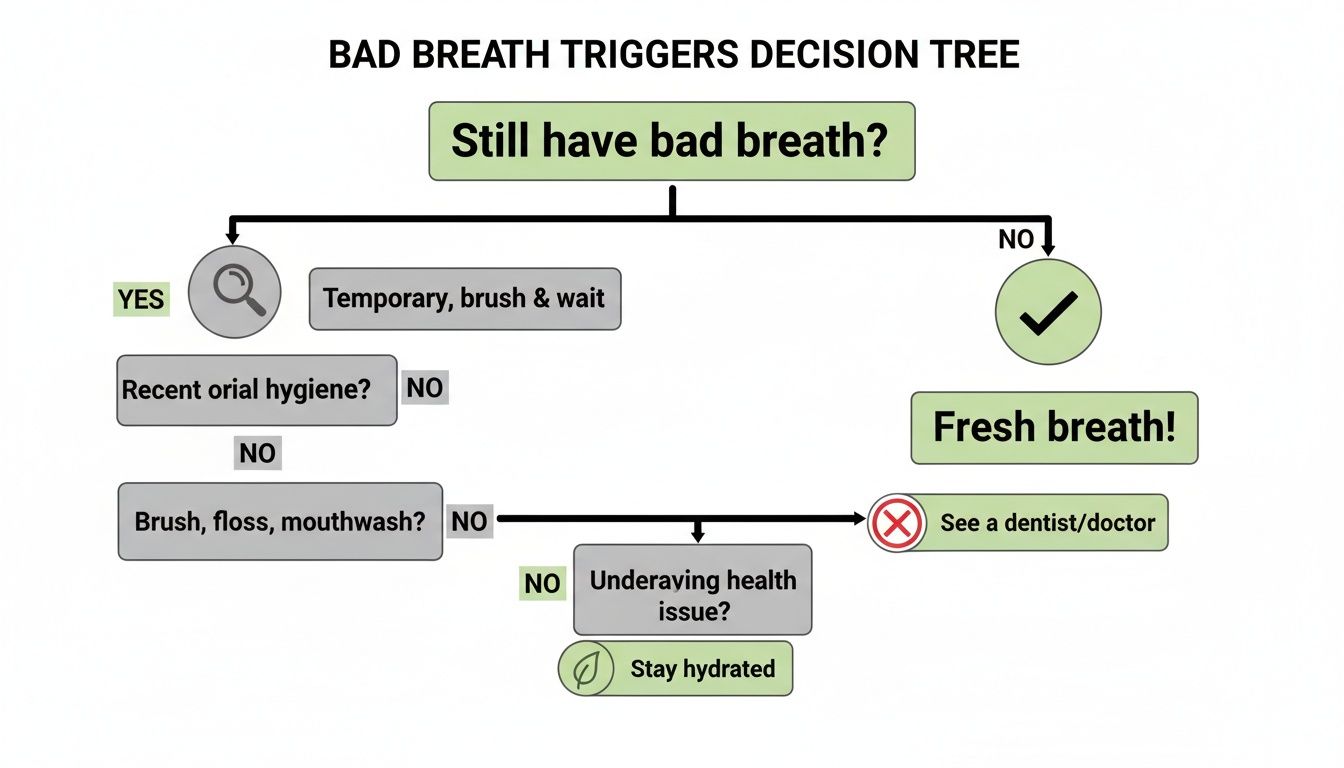
As the flowchart shows, if your best oral care efforts aren't working, it's time to start looking at potential non-oral causes.
When to See a Dentist
Your dentist should always be your first stop. They can do a thorough exam to make sure there isn't an advanced oral health problem causing the odor. It's definitely time to book an appointment if you're experiencing any of these:
- Persistent Bad Breath Despite Good Hygiene: This is the number one sign that something more is going on.
- Bleeding or Swollen Gums: This often points to gingivitis or its more serious cousin, periodontitis (gum disease), a major cause of chronic bad breath. You can learn more in our guide on treating bleeding gums at home.
- Tooth Pain or Sensitivity: An underlying infection or abscess can release some seriously foul-smelling gases.
- Persistent Dry Mouth (Xerostomia): A lack of saliva is a huge contributor to bad breath. Your dentist can help figure out why and suggest ways to get it flowing again.
Keep in mind, only about 38.8% of people see their dentist for regular cleanings. This is a critical step for catching and addressing the oral causes of bad breath before they spiral out of control.
When to Consult a Physician
So, your dentist gave your mouth a clean bill of health, but the bad breath is still hanging around? Your next call should be to your primary care physician. Sometimes, the specific scent can even be a clue to an underlying medical condition.
- A fruity or acetone-like smell can be a sign of ketoacidosis, a serious complication of uncontrolled diabetes.
- An ammonia or "fishy" odor is sometimes linked to kidney or liver problems.
- A "sour milk" smell may be connected to lactose intolerance or other digestive issues.
Now, these are just potential indicators, not a diagnosis. Your doctor is the one who can run the right tests to see if a medical condition is contributing to your halitosis and get you on a proper treatment plan. This is a bigger issue than most people realize; worldwide, oral diseases that cause bad breath affect 3.7 billion people, and in places like the U.S., halitosis prevalence can be as high as 50%.
Ultimately, getting rid of bad breath for good sometimes means becoming a bit of a health detective. By systematically ruling out causes and getting the right professional help, you can finally uncover the real source of the problem and get the lasting fresh breath you've been working so hard for.
Assembling Your Anti-Halitosis Arsenal
Walking down the oral care aisle can feel overwhelming. You're hit with a wall of products, all screaming promises of "fresh breath" and "icy mint explosions." It's tempting to just grab whatever has the slickest packaging and cross your fingers.
But if you're serious about getting rid of bad breath for good, you have to be more deliberate. This is about building a customized toolkit where every single product has a specific, science-backed job to do.
It’s not about buying the most expensive gear; it’s about understanding what you’re buying. Your mission is to move past temporary fixes and create a daily routine that actively dismantles the root cause of bad breath: those volatile sulfur compounds (VSCs).
Decoding the Mouthwash Aisle
Here's where most people get tripped up: the difference between cosmetic and therapeutic mouth rinses. Getting this right is probably the most critical part of your new strategy.
- Cosmetic Rinses: Think of these as breath mints in a bottle. They hit you with a strong, minty flavor (and often a harsh alcohol burn) that just masks the odor for a little while. They do absolutely nothing to fix the underlying bacterial problem. They’re a band-aid solution.
- Therapeutic Rinses: This is what you're looking for. These are formulated with active ingredients that either kill the bacteria producing the VSCs or neutralize the smelly compounds themselves. They are a treatment, not a cover-up.
When you're scanning the labels, keep an eye out for ingredients that have been clinically proven to work.
| Active Ingredient | Primary Action | Best For |
|---|---|---|
| Cetylpyridinium Chloride (CPC) | Kills a broad spectrum of oral bacteria | Daily use for general halitosis control |
| Chlorine Dioxide | Oxidizes and neutralizes smelly VSCs | Targeting stubborn sulfur-based odors |
| Zinc Compounds | Binds to sulfur compounds, preventing them from becoming volatile | Providing long-lasting odor neutralization |
Choosing a rinse with one of these key players means you’re actually fighting the problem, not just sweeping it under the rug for an hour.
Selecting the Right Toothpaste
Just like mouthwash, toothpaste isn't a one-size-fits-all product for bad breath. Fluoride is a non-negotiable for fighting cavities, but for halitosis, you need to look for something extra.
Stannous fluoride is a fantastic multi-tasker because it tackles cavities and has antibacterial properties. Toothpastes with zinc compounds are also incredibly effective, as the zinc goes to work neutralizing those smelly sulfur gases on contact.
Expert Tip: Don't get sidetracked by flashy whitening claims or trendy charcoal formulas if your main goal is fresh breath. Zero in on the active ingredients designed to eliminate bacteria and VSCs. A toothpaste with zinc or stannous fluoride will be a much more powerful ally in your quest for permanently fresh breath.
The Unsung Hero: Your Tongue Scraper
If you only add one new tool to your routine, please make it a tongue scraper. A shocking amount of the bacteria causing bad breath sets up camp in that thick, whitish film on the back of your tongue. Brushing your tongue is better than nothing, but a scraper is specifically designed to peel that biofilm away far more effectively.
Using one couldn't be simpler. A few gentle strokes from the back of your tongue to the front each morning can physically remove a massive percentage of odor-causing microbes. You can find everything from simple plastic scrapers to more durable metal ones. For a well-designed tool built specifically for this crucial task, something like the Philips Sonicare BreathRx Tongue Cleaner is a great place to start.
Specialized Tools for Unique Situations
Your daily battle might require more than just the standard brush, floss, and rinse. A truly personal toolkit addresses your specific circumstances head-on.
For example, if you have orthodontic aligners or a retainer, you already know they can start to smell funky—fast. Using specialized cleaning tablets is non-negotiable for keeping them fresh and free of bacteria that you'd otherwise just reintroduce to your mouth.
Likewise, if you struggle with sensitive teeth, forcing yourself to use a generic toothpaste can be an exercise in pain. Grabbing a product made for sensitivity, often with potassium nitrate or stannous fluoride, lets you keep up your rigorous cleaning schedule without the wincing. The goal is to identify your unique roadblocks and find products that remove them, so nothing gets in the way of your daily routine.
Your Top Questions, Answered
Once you get the core strategies down, a few specific questions almost always pop up. Let's tackle the most common ones I hear from patients so you can move forward with total confidence.
How Long Does This Process Actually Take?
You'll probably notice a real difference within just a few days of starting a consistent, high-quality routine. That initial win is hugely motivating.
But getting to a truly "permanent" solution is about building habits that stick, not a quick fix. For most people, it takes about 2 to 4 weeks of sticking to the plan for your mouth's ecosystem to find its new, healthy balance. This is the sweet spot where the good bacteria start winning and the odor-causing ones are systematically kicked out.
If you've been following every step to the letter for a month and still aren't getting relief, take that as a clear signal. It's time to see a professional to check for underlying issues that no amount of brushing and rinsing can solve.
Can Bad Breath Really Come From the Stomach?
Yes, it can, but it's far less common than you might think. Oral hygiene issues are the culprit in the vast majority of cases. When the stomach is the source, it's often linked to things like acid reflux (GERD). In that scenario, stomach acids and bits of undigested food can travel back up, creating a distinct sour smell.
You might suspect a stomach issue if your oral hygiene is perfect, yet the bad breath persists. Other clues? Frequent heartburn, a sour taste in your mouth (especially when you wake up), or regurgitation. The fix here isn't more mouthwash; it's a visit to your physician to diagnose and treat the root digestive problem.
Is a Tongue Scraper Really Better Than Brushing My Tongue?
Absolutely. There's no contest in my clinical experience. While brushing your tongue is a decent start—and way better than nothing—a dedicated tongue scraper is just on another level of effectiveness.
Think about it this way: a toothbrush's bristles can sometimes just push the gunk around on your tongue's surface. A scraper, on the other hand, is designed to physically lift and remove that thick, gunky film of bacteria, food particles, and dead cells. It's a clean sweep that gets rid of the volatile sulfur compounds causing the worst of the smell. For many of my patients, this is the one simple change that finally solves the puzzle.
Will Getting My Teeth Professionally Whitened Help?
It often does, but indirectly. The main goal of whitening is cosmetic—removing stains. However, the whole process creates a positive ripple effect. When people invest in a bright, white smile, they're naturally more motivated to keep it looking great with top-notch hygiene.
Plus, the professional cleaning that's almost always done right before a whitening treatment is a huge benefit. That cleaning blasts away plaque and tartar, which are major hangouts for stinky bacteria. So while the whitening gel itself doesn't "cure" bad breath, the excellent habits and clean slate it provides are a massive step in the right direction.
Ready to build your professional-grade toolkit for permanently fresh breath? At DentalHealth.com, we stock the dentist-recommended products you need to win the battle against bad breath for good. From therapeutic rinses to specialized toothpastes and tongue cleaners, we simplify access to the brands that deliver real results. Explore our curated collections and get everything you need delivered directly to your door by visiting us at https://dentalhealth.com.