
A Practical Guide to Treating Bleeding Gums at Home
That little bit of pink you see in the sink after brushing can be alarming, but it’s more common than you might think. Figuring out how to treat bleeding gums at home usually starts with a simple reality check: your gums are irritated, and the most likely culprit is plaque buildup. The good news is that the solution is often about getting back to basics with a gentle but consistent oral hygiene routine.
The main goal is to remove the source of the irritation—that sticky plaque—through proper brushing and flossing. Once that's out of the way, the inflamed tissue can finally get a chance to heal.
Why Your Gums Bleed and What It Really Means
Think of bleeding gums as a small alarm bell from your body. It's not just a minor inconvenience; it's a direct signal that your gum tissue is inflamed and needs your attention. This inflammation is your body's natural response to an irritant, and in almost every case, that irritant is dental plaque.
Plaque is that sticky, invisible film of bacteria that’s always forming on your teeth. If it isn't removed daily, it settles right along the gumline. The bacteria within this plaque release toxins that aggravate the delicate gum tissue, leading to a condition you've probably heard of: gingivitis.
Gingivitis is the earliest and most reversible stage of gum disease. Its classic signs are red, swollen, and bleeding gums. If you ignore this early warning, the condition can progress into something far more serious.
The Slippery Slope from Plaque to Bleeding
The journey from a healthy mouth to bleeding gums doesn't happen overnight. It starts with that initial plaque buildup. If you let it sit for more than 24-48 hours, it starts to harden into tartar (also called calculus), which is a rough, porous deposit that you can't just brush away.
This tartar creates a perfect home for even more plaque to gather, which only escalates the irritation. In response, your body’s immune system sends more blood to the area to fight off the bacteria. This is what makes your gums sensitive, swollen, and likely to bleed from even the gentlest pressure.
Other Things That Can Make Gums Bleed
While plaque is almost always the main offender, other factors can make your gums more susceptible to bleeding. Knowing about these can help you fine-tune your at-home care.
- Hormonal Changes: Fluctuations during puberty, pregnancy, or menopause can ramp up blood flow to the gums, making them extra sensitive to plaque.
- Brushing Too Hard: Being too aggressive with your toothbrush, especially a hard-bristled one, can physically damage your gum tissue and cause it to bleed. It’s a common mistake!
- Nutritional Gaps: A diet lacking in essential vitamins, particularly Vitamin C and Vitamin K, can interfere with your gums' ability to heal and clot properly.
- Certain Medications: Some prescription drugs, like blood thinners, can make gum bleeding more likely.
Ultimately, seeing blood isn't a signal to stop brushing—it's a clear sign to step up your game and refine your daily oral care routine. And if your gums are also feeling tender, finding the best toothpaste for sensitive teeth can make sticking to that routine a lot more comfortable while your gums are on the mend.
What to Do the Moment You See Bleeding Gums
When you spot that first hint of pink in the sink, don't panic. Think of it as a signal from your body asking for a little extra TLC. What you do in these first few moments can make a huge difference in calming the irritation and starting the healing process right away.
The absolute best and most time-tested first response is a simple warm salt water rinse. It's a fantastic natural antiseptic. The salt works by gently drawing excess fluid out of the swollen gum tissues, which helps reduce the inflammation, and it cleans the area without any harsh chemicals.
Just dissolve about half a teaspoon of salt in an eight-ounce glass of warm water. Swish it around your mouth for 30 seconds, making sure it gets to the sore spots, then spit it out. Try to do this two or three times a day, especially after you've eaten.
Apply a Little Gentle Pressure
If the bleeding doesn't stop right after brushing, don't just leave it. A bit of gentle, direct pressure is a surprisingly effective way to stop the bleeding.
Grab a clean piece of gauze or even a soft, clean washcloth. Dip it in cold water, wring it out, and then hold it firmly but gently against the bleeding spot for a few minutes. The combination of the cold and the light pressure helps constrict the blood vessels, encouraging the bleeding to stop.
Remember, the key here is to be gentle. Your gums are already inflamed and feeling sensitive. Being aggressive will only make things worse. Patience and a soft touch are your best friends in these initial moments.
Tweak Your Diet Temporarily
What you eat and drink can also directly affect your irritated gums. For the next day or so, it’s a smart move to give your gums a break from anything that might physically irritate them or increase sensitivity.
Try to steer clear of foods that are:
- Hard or Crunchy: Things like chips, nuts, or even crusty bread can easily poke and scrape at your already tender gum tissue.
- Acidic: Citrus fruits, tomatoes, and sodas can really sting and aggravate inflamed areas.
- Extremely Hot or Cold: Big temperature swings can spike sensitivity and discomfort when your gums are this tender.
Instead, stick with softer foods. Think yogurt, smoothies, soups, and well-cooked veggies. This gives your gums the space they need to start healing without being constantly disturbed. These first few actions not only bring immediate relief but also lay the groundwork for a solid routine to keep your gums healthy and happy in the long run.
Building a Daily Routine for Healthy Gums
Lasting relief from bleeding gums isn't about a quick fix; it's about building consistent, healthy habits day in and day out. The single most powerful thing you can do is refine your daily oral hygiene routine. This means going beyond just the motions and truly focusing on the quality of your care.
If you're seeing pink in the sink, you're not alone. Over 50% of adults worldwide deal with bleeding gums at some point, which is often the first warning sign of gingivitis. The good news? Your dedication at home really pays off. Studies looking at home-supported care show an incredible 80-90% success rate in getting early gum disease under control when people stick to an effective routine.
Perfecting Your Brushing Technique
The first step for many people is actually unlearning bad habits. It's a common myth that brushing harder gets your teeth cleaner. In reality, aggressive scrubbing, especially with a hard-bristled brush, can easily damage your delicate gum tissue and make bleeding even worse. The goal is to be gentle but thorough.
Make the switch to a soft-bristled toothbrush. When you brush, tilt the bristles at a 45-degree angle toward your gumline and use short, gentle, circular motions. Think of it as massaging your gums, not scrubbing a floor. This simple change in technique is fantastic for dislodging plaque right where your teeth and gums meet, without causing extra irritation.
Making Flossing a Healing Habit
For healing bleeding gums, flossing is completely non-negotiable. It’s the only way to clean the spaces your toothbrush can't possibly reach, especially just below the gumline where the most harmful, inflammation-causing plaque loves to hide.
To avoid causing more trauma, gently guide the floss between your teeth—never snap it down. Curve it into a “C” shape against the side of one tooth and slide it carefully beneath the gumline. Repeat that motion for the tooth next to it before moving on. If you find traditional string floss tricky or uncomfortable, there are some great alternatives:
- Water Flossers: These devices are a game-changer for many. They use a targeted stream of pulsating water to flush plaque and debris from between teeth and below the gums. They’re particularly helpful if you have braces, bridges, or very sensitive gums.
- Interdental Brushes: These are like tiny pipe cleaners designed to fit into the gaps between your teeth. They come in various sizes and are incredibly effective at disrupting plaque buildup.
The infographic below shows a few immediate actions you can take for relief right now. As your daily routine improves, you'll find you need these "emergency" measures less and less.
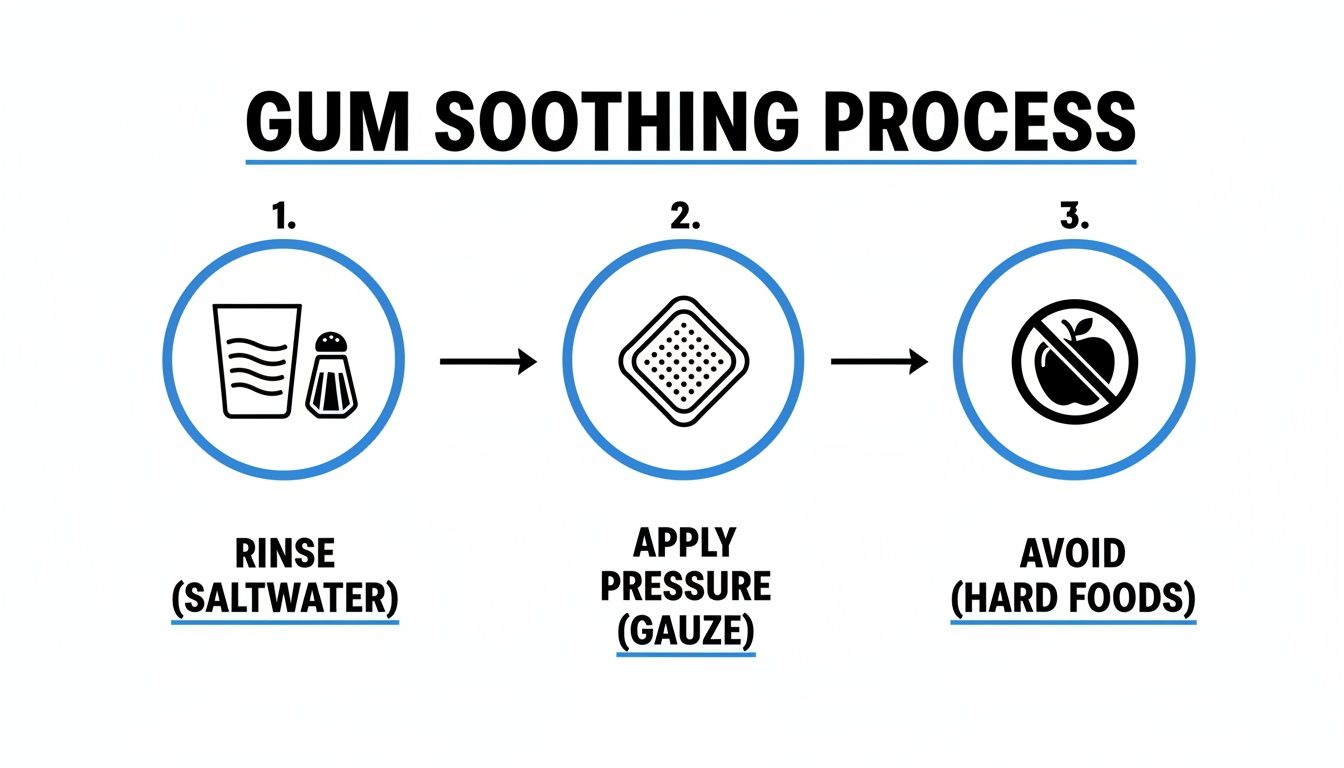
This simple process provides immediate comfort while your new and improved daily habits start doing the heavy lifting for long-term health.
Here’s a quick-glance table to help you structure your daily efforts for the best results.
Your Daily Gum Health Action Plan
| Action | Primary Goal | Pro Tip |
|---|---|---|
| Gentle Brushing | Remove plaque from tooth surfaces and along the gumline. | Use a soft-bristled brush at a 45-degree angle. Focus on massaging, not scrubbing. |
| Daily Flossing | Clear out plaque and debris from between teeth. | Curve the floss in a "C" shape against each tooth and slide it gently below the gumline. |
| Therapeutic Rinse | Reduce bacteria and soothe irritated gum tissue. | Choose an alcohol-free formula to avoid drying out your mouth and causing further irritation. |
Sticking to this plan consistently is the key to seeing real improvement and preventing future flare-ups.
Choosing the Right Mouthwash
Adding a therapeutic mouthwash to your routine can give your healing process a significant boost, but be aware that not all rinses are created equal. Many of the common, big-name mouthwashes contain alcohol, which can dry out your mouth and actually irritate already inflamed gums. An alcohol-free formula is a much smarter choice.
Look for products with ingredients specifically designed to fight plaque-causing bacteria and soothe your gums. When you're trying to decide, it can be helpful to explore the best mouthwash for sensitive gums to find options that offer gentle but effective action. Making this the final step in your routine helps reduce bacteria throughout your entire mouth, creating a much healthier environment for your gums to heal.
Natural Home Remedies to Support Gum Healing

While your daily brushing and flossing are the heavy lifters when it comes to stopping bleeding gums, certain natural remedies can give your healing process a nice boost. Think of them as soothing sidekicks that help calm inflammation and make your mouth a healthier place for your gums to recover.
These aren't miracle cures, but with consistent use, they can provide some welcome relief. It’s all about adding an extra layer of care, often with ingredients you can easily find or might already have in your kitchen.
The Soothing Power of Aloe Vera
You probably know aloe vera for its skin-soothing benefits, and it works much the same way on irritated gums. Its anti-inflammatory properties make it a fantastic choice for calming down puffy, tender tissue.
Just mix a little bit of pure, food-grade aloe vera gel with water to create a gentle rinse. After brushing and flossing, swish it around your mouth for 30 to 60 seconds and then spit it out. This simple step can really help with the discomfort while your gums are on the mend.
Green Tea as an Antioxidant Rinse
Green tea is loaded with powerful antioxidants called catechins, which are known to help manage the body's inflammatory response. Using it as a daily mouthwash is a simple way to get those benefits right where you need them.
Simply brew a cup, let it cool down completely, and swish it for about a minute after your normal routine. It’s a gentle approach that supports gum health without the intensity of some over-the-counter rinses.
Natural remedies have really gained traction, and the science is starting to back them up. Clinical trials have found that aloe vera rinses can significantly cut down on gum inflammation and bleeding in just three months. Interestingly, green tea mouthwash has even been shown to outperform some traditional antiseptic rinses at reducing gum bleeding, and it doesn't stain your teeth.
Try Oil Pulling for a Deeper Clean
Oil pulling is an age-old practice that involves swishing oil—usually coconut oil—in your mouth to help draw out bacteria and reduce plaque. Coconut oil is a great choice because of its natural antimicrobial properties. For anyone looking into more traditional wellness methods, a coconut oil pulling kit can be an interesting addition to your oral hygiene routine.
To give it a try, swish a tablespoon of coconut oil around your mouth for 5 to 15 minutes. Just be sure not to swallow it. When you’re done, spit the oil into the trash can (it can clog your sink drains) and give your mouth a good rinse with water.
Keep in mind, while these natural aids are great for support, they don't replace the essential minerals needed to rebuild and protect your tooth enamel. Products that supply calcium and phosphate are crucial for strengthening teeth. If that's a concern, you might find our guide on how to use MI Paste Plus helpful for fortifying your teeth as your gums heal.
When to See a Dentist for Bleeding Gums
While you can often get bleeding gums under control at home, it's critical to know when to call in the professionals. Think of your at-home care as your first line of defense—it's incredibly powerful, but it's not the final solution for every gum issue. Recognizing when you need backup is the key to protecting your long-term oral health.
Here’s a good rule of thumb: give your new and improved routine about two weeks to work its magic. If you’ve been brushing gently, flossing correctly, and using a supportive mouth rinse every single day, you should see a real drop in bleeding.
If two weeks go by and you're still seeing red in the sink, that’s a clear signal. It likely means there's something more going on that a toothbrush and floss just can't reach.
Unfortunately, a lot of people wait too long to get help. Shocking studies show that 75% of adults with bleeding gums would rather just wait and see if it goes away on its own. The good news? When you combine good home habits with a timely dental visit, the success rate for managing early gum disease can be as high as 95%. This is your best shot at preventing serious problems like bone and tooth loss down the road. You can dive into the research about periodontal care and patient behavior to learn more.
Red Flags That Require a Dental Visit
Ignoring stubborn symptoms is a gamble. It gives gingivitis a chance to escalate into periodontitis, which is a much more destructive form of gum disease. If you spot any of these warning signs, it's time to book an appointment, no matter how long you've been trying home remedies.
- Bleeding Won't Stop: After two weeks of dedicated care, your gums still bleed easily when you brush or eat.
- Serious Swelling or Color Change: Your gums look puffy, bright red, or even have a purplish tint.
- Gums Are Pulling Back: You notice your gums receding from your teeth, making your teeth appear longer than they used to. This is a classic sign of trouble.
- Bad Breath That Lingers: You have persistent bad breath (halitosis) that mouthwash and brushing just can't seem to fix.
- Teeth Feel Loose: Any feeling of movement in your teeth or a change in your bite is a major red flag that needs immediate attention.
Visiting the dentist isn't a sign that your home care failed—it's a smart, proactive step toward getting healthy. Your dentist is your partner in this. They have the tools and expertise to find the root cause and provide treatments, like professional cleanings or scaling, that you simply can't do yourself. They can get rid of that hardened tartar buildup that keeps the cycle of inflammation going.
Common Questions About Treating Bleeding Gums
Working through the process of getting your gums healthy again naturally brings up some questions. It's completely normal to wonder what to expect. Let's walk through some of the most common concerns to give you a clearer picture of the healing journey ahead.
How Long Until My Gums Stop Bleeding With Home Care?
If you're diligent with a gentle but thorough daily routine, you should see a real improvement within one to two weeks. The key here is consistency. Brushing softly twice a day and flossing correctly every single day are the cornerstones of healing.
What if the bleeding doesn't stop? If things aren't getting better after two weeks, or if they seem to be getting worse, that's a clear sign that home care isn't cutting it. It's time to call your dentist to make sure there isn't a deeper issue that needs professional treatment.
Is It Normal For Gums To Bleed When I Start Flossing Again?
Yes, absolutely. It’s not only common but pretty much expected for your gums to bleed a bit when you first get back into the flossing habit after some time off. This is happening because plaque has built up between your teeth and right at the gumline, causing inflammation.
Think of it this way: the bleeding is actually proof that flossing is exactly what your gums need. As you stick with it daily, you'll clear out that irritating plaque, the inflammation will calm down, and the bleeding should stop completely within about a week.
Don't let a little pink in the sink discourage you. That initial bleeding is a sign that your gums are inflamed and need cleaning to heal. Stopping is the last thing you should do.
Could A Vitamin Deficiency Be Causing My Gums To Bleed?
It definitely can play a role. While plaque is almost always the main offender, certain nutritional gaps can leave your gums weaker and much more susceptible to bleeding. Two vitamins, in particular, are major players in gum health:
- Vitamin C: This is essential for producing collagen, which is the protein that literally holds your gum tissue together and helps it heal. A shortage can make your gums fragile.
- Vitamin K: This vitamin is critical for proper blood clotting. If you're low on Vitamin K, even minor irritation can lead to bleeding that's harder to stop.
While your oral hygiene routine should be your number one focus, you can support your gums from the inside out. Making sure your diet includes plenty of leafy greens, citrus fruits, and berries gives your body the building blocks it needs for healthy, resilient gums.
Will An Electric Toothbrush Make My Gums Bleed More?
Actually, it's usually the opposite. When you use it the right way, an electric toothbrush is often much better at removing plaque and can help reduce bleeding gums even faster than a manual brush. It simply does a more thorough job cleaning right where the teeth and gums meet.
The best part is that many modern electric toothbrushes have a built-in pressure sensor. This feature is a game-changer because it warns you if you're pushing too hard—a super common habit that irritates gums and causes bleeding. Just pair it with a soft-bristled brush head and focus on guiding the brush along your teeth, letting it do all the work.
At DentalHealth.com, we provide professional-grade products to support your entire at-home oral care routine. From therapeutic rinses for sensitive gums to advanced whitening systems, we make it easy to access the dentist-recommended brands you need for a healthy smile, delivered right to your door. Explore our curated collections today at https://dentalhealth.com.