
Finding the Best Teeth Whitening Products for a Brighter Smile
When you're looking for the best teeth whitening products, you'll quickly notice they often use professional-grade ingredients like carbamide or hydrogen peroxide. These are the workhorses found in everything from whitening strips and gel trays to advanced LED kits. If you're after truly noticeable results, dentist-recommended brands like Opalescence and Zoom even offer powerful at-home systems that can deliver that brilliant brightness safely and effectively.
Why Everyone Is Talking About a Brighter Smile
In a world that runs on first impressions, having a radiant, confident smile has become more important than ever. From that perfect social media photo to a big professional meeting, a bright smile often signals health and good self-care. This isn't just a fleeting trend; it's a real cultural shift toward valuing dental aesthetics.

What's fueling this movement? A combination of a deeper appreciation for what a great smile communicates and the simple fact that effective at-home solutions are now within everyone's reach. People are actively looking for ways to undo years of staining from daily habits like sipping on coffee, tea, or red wine.
The Power of a Confident Smile
A whiter smile does more than just enhance your appearance—it can be a serious boost to your self-esteem. When you feel good about your teeth, you're more likely to smile freely, and that confidence shines through in all your interactions. This can make a real difference in your life:
- Social Connections: You might find yourself feeling more open and eager to engage with others.
- Professional Opportunities: It helps project a polished, approachable image that can open doors.
- Personal Well-being: The simple act of smiling more can actually improve your mood and lower stress.
It's no surprise the global teeth whitening market is exploding. Market analysts predict the industry will surge by USD 1.27 billion between 2025 and 2029. This massive growth is driven by our increasing awareness of oral hygiene and the visual power of a bright smile—something that's constantly amplified on social media, where stunning before-and-after photos inspire millions. You can dive deeper into this market trend over at Technavio.com.
Your Guide to Navigating the Options
With a dizzying number of products on the shelves, making an informed choice is the key to getting great, safe results. Think of this guide as your roadmap. We're here to demystify the science of how whitening actually works and break down all the different types of products you'll come across.
Our goal is simple: to arm you with clear, practical knowledge so you can pick a solution that fits your goals, your budget, and your lifestyle.
We'll cover everything from the active ingredients inside the box to the best application methods, making sure you have all the info you need to choose the best teeth whitening product for your unique smile.
Understanding How Teeth Whitening Actually Works
Ever wonder what's really going on when you pop on a whitening strip or apply a gel? It isn't magic, though the results can feel that way. It's actually a fascinating chemical reaction happening on a microscopic level, targeting the very molecules that are making your teeth look dull.
To get a handle on how it works, you first need to know that not all tooth stains are created equal.
Surface Stains Versus Deep Discoloration
The two main culprits behind a less-than-brilliant smile are extrinsic and intrinsic stains. A simple way to think about it is like cleaning a window.
Extrinsic stains are like the dirt and grime on the outside of the glass. They sit right on the surface of your tooth enamel and are caused by daily habits. We're talking about those intensely pigmented molecules (called chromogens) found in things like coffee, red wine, tea, and tobacco. Over time, these particles latch onto your enamel, creating that familiar yellowish film. The good news? These are the easiest stains to tackle because they haven't worked their way deep into your tooth.
Intrinsic stains, on the other hand, are like a fog that has settled inside the glass. This is a deeper type of discoloration that happens within the dentin, the sensitive tissue just underneath your enamel. This can be caused by certain medications you took as a child, an injury to a tooth, or even just the natural aging process, which thins out your enamel and lets the naturally yellower dentin show through. These tougher stains require a bit more firepower to lighten.
If you want to dig a bit deeper, you can check out these 10 essential facts you should know about teeth whitening.
The Chemical Reaction That Erases Stains
This is where the whitening agents in professional-grade products come into play. Most at-home systems rely on one of two key ingredients to do the heavy lifting:
- Hydrogen Peroxide: This is a fast-acting agent that breaks down quickly to release its stain-fighting power.
- Carbamide Peroxide: A more stable compound, this one breaks down into hydrogen peroxide and urea over a longer period. This slower release makes it perfect for treatments you might wear overnight or for a few hours at a time.
When you apply a whitening gel, the peroxide gets to work through a gentle process called oxidation. Think of the peroxide molecules as tiny, specialized cleaning agents. They are small enough to pass right through the microscopic pores of your enamel and get to the discolored molecules hiding inside.
The oxidation process breaks the chemical bonds that hold the stain molecules together. By dismantling these pigmented molecules, they become colorless and are simply washed away, revealing your tooth's natural, whiter shade underneath.
This reaction doesn’t scrub, scrape, or damage your enamel. It just chemically changes the stained molecules so they no longer reflect that yellow or brown color. This is precisely why peroxide-based whiteners are so effective at tackling not just the everyday surface gunk, but also the deeper intrinsic stains that whitening toothpastes can't even touch.
Understanding this basic science is the first step toward picking a product that will actually get you the results you're after, whether you're fighting a daily coffee habit or years of built-up discoloration.
Comparing The Most Popular Whitening Methods
Stepping into the dental care aisle can feel like navigating a maze. With countless boxes promising a brighter, whiter smile, it's easy to get overwhelmed. To cut through the noise, let's break down the most common at-home whitening methods, comparing how they work, who they're best for, and what you can realistically expect from each.
This visual guide shows how different products are designed to tackle the two main types of tooth discoloration we talked about earlier.
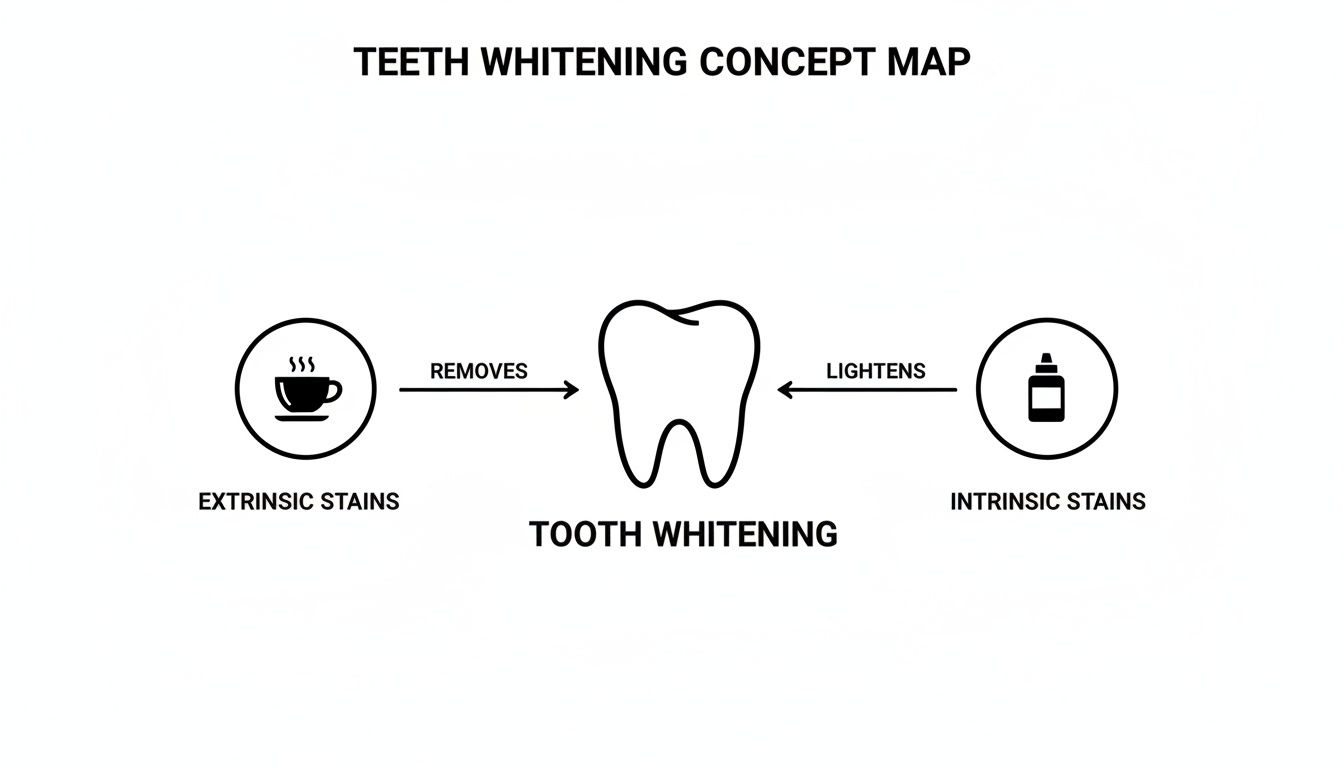
The key takeaway here is that different products are engineered to work at different depths. That's precisely why matching the right method to your goals is so critical.
To help you visualize the trade-offs, here’s a quick comparison of the top at-home whitening options.
At-Home Teeth Whitening Product Comparison
| Product Type | Effectiveness | Best For | Average Cost | Potential for Sensitivity |
|---|---|---|---|---|
| Whitening Strips | Moderate | Beginners, mild to moderate surface stains | $20 - $50 | Low to Moderate |
| Gels & Trays | High | Deeper, more stubborn intrinsic stains | $30 - $100 | Moderate to High |
| LED Light Kits | High | Accelerating results for significant whitening | $50 - $150 | Moderate to High |
| Whitening Pens | Low | On-the-go touch-ups and targeting specific spots | $15 - $30 | Low |
| Whitening Toothpaste | Low (Maintenance) | Daily stain prevention and maintenance | $5 - $20 | Low |
As you can see, there’s no single "best" option—it all depends on your budget, timeline, and how much whitening power you really need.
Whitening Strips: A Popular Starting Point
Whitening strips are often the first thing people try, and for good reason. They're thin, flexible plastic strips coated with a peroxide-based whitening gel. You just apply them to your teeth for about 30 minutes a day. It doesn't get much simpler than that.
Their biggest advantage is convenience. They're sold everywhere and are incredibly easy to use, making them a great entry point into at-home whitening. The one common drawback is that their one-size-fits-all design can sometimes lead to uneven coverage, missing the curves and crevices between teeth.
Whitening Gels and Trays: For Deeper Whitening
If you're after more uniform and powerful results, whitening gels paired with trays are a fantastic option. These systems use a tray—either a stock "boil-and-bite" version or a custom one from a dentist—that you fill with a concentrated peroxide gel.
This method forces the whitening agent to make consistent, even contact with every tooth surface, which leads to more dramatic and predictable results. Gels also come in different strengths, so you can pick one that works for your sensitivity level and whitening goals. For more tips, our complete guide on how to whiten teeth at home fast offers some excellent insights.
The snug fit of the tray is what really sets this method apart. It stops saliva from diluting the gel and keeps the active ingredients locked against the enamel, maximizing their power over the treatment time.
LED Light Whitening Kits: The Tech-Forward Approach
LED whitening kits are all about speeding up the process. These systems combine a whitening gel with a mouth tray equipped with a blue LED light. You apply the gel, pop the tray in, and turn on the light.
The idea is that the light energy "activates" the peroxide, helping it blast through stains more quickly. While the science on just how much of a boost the light provides is still being debated, many users swear they see faster results. These kits are best for anyone who wants to see a big change in a shorter timeframe and doesn't mind a more involved, multi-step process.
Whitening Pens: For On-The-Go Touch-Ups
Think of whitening pens as your secret weapon for battling stains on the fly. These are small, portable applicators filled with a whitening gel that you can brush directly onto your teeth. They're perfect for targeting specific spots or for quick touch-ups after a cup of coffee or glass of red wine.
While a pen isn't going to give you a full-mouth transformation, it absolutely excels at maintenance. They're perfect for keeping your smile bright between more intensive treatments and are small enough to toss in a bag or keep at your desk.
Whitening Toothpastes: The Daily Maintenance Tool
Whitening toothpastes are probably the most seamless solution, since you're just swapping out a product you already use every day. Most of them work by using mild abrasives to gently polish away new surface stains before they can set in. Some also contain a very low concentration of peroxide for a subtle brightening effect over time.
Because they're so easy and affordable, whitening toothpastes are a market leader. In fact, one report showed that whitening toothpaste is the most popular segment, grabbing a massive 42.5% of the teeth whitening market revenue in 2024. Their availability in every store makes them the default maintenance product for millions. You can dig deeper into the best teeth whitening options for a brighter smile to see how they stack up against other methods.
How to Choose the Right Whitening Product for You
Finding the best teeth whitening product isn’t about grabbing the box with the flashiest claims. It's a personal decision that really hinges on your unique needs, from how sensitive your teeth are to what your daily schedule looks like. Think of this as your personal checklist for navigating the options and finding a solution that feels like it was made just for you.
Before we dive in, it helps to know a little about the industry itself. North America is the powerhouse in the teeth whitening world, setting global trends and pushing innovation. In 2023, the region pulled in the highest revenue share, all thanks to the massive demand from people wanting to tackle stains from coffee, wine, and other daily habits. You can learn more about the global teeth whitening market trends on Straits Research.
What does that huge demand mean for you? A lot more choices, but it also means you need a clear game plan to pick the right one.
Assess Your Tooth Sensitivity
The single biggest factor to think about is tooth sensitivity. If your teeth already give you trouble with hot or cold temperatures, a high-concentration peroxide gel might cause those sharp, uncomfortable "zingers."
But don't worry, that doesn't mean you can't whiten. You just have to be a bit more strategic about it. Here’s what to look for:
- Lower Peroxide Levels: Go for products with lower concentrations of carbamide or hydrogen peroxide. A gentler formula might take a little longer to show results, but it’ll be a much more comfortable experience.
- Desensitizing Ingredients: Many modern formulas now include ingredients like potassium nitrate and fluoride. Potassium nitrate works by calming the nerves inside your teeth, while fluoride helps beef up your enamel.
- Shorter Application Times: Instead of a 30-minute strip, maybe a 10-minute treatment is a better fit. Cutting down the contact time can make a huge difference in minimizing sensitivity.
Consider Your Budget and Desired Results
Your budget is obviously going to play a role, but it's important to think about the value of a product, not just its price tag. That cheap box of strips might look like a steal, but if it doesn't give you the results you're after, it's not much of an investment.
Try to weigh the initial cost against the potential outcome. Sometimes, a slightly more expensive kit with custom-feel trays, like the popular Opalescence Go 15% prefilled whitening trays, can deliver more dramatic and longer-lasting results, making it the better value in the long run.
Key Takeaway: Balance the upfront cost with the whitening power you actually need. A slightly higher investment can often lead to more professional-grade results and leave you a lot happier.
Match the Product to Your Lifestyle
Be honest with yourself about your daily routine. The absolute best teeth whitening product for you is the one you'll actually use consistently.
- For the Busy Professional: If you're always on the move, a whitening pen for quick touch-ups or a simple whitening toothpaste for daily maintenance might be the most realistic choices.
- For the Routine-Oriented Person: If you can easily carve out 30 minutes each evening while you watch TV, whitening strips are a perfect fit. They demand consistency but are incredibly easy to use.
- For the Results-Driven Individual: If you're aiming for a significant change and can commit to a slightly more involved process, a gel and tray system or an LED kit will give you the most powerful whitening.
Look for the ADA Seal of Acceptance
Finally, when in doubt, look for the American Dental Association (ADA) Seal of Acceptance on the packaging. This seal isn't just some marketing gimmick; it's a trusted symbol that the product has been independently tested and proven to be both safe and effective when used as directed.
Choosing a product with the ADA Seal gives you an extra layer of confidence. It assures you that you’re not just buying into hype but are using a product that has met tough scientific standards.
Getting the Best Results Safely and Effectively
Picking the right whitening product is only half the battle. If you really want to win the war on stains, how you use that product is what truly matters. Getting a genuinely radiant smile isn't just about slapping on a gel or a strip; it's about a smart, safe approach that gets you the most whitening power while keeping your teeth and gums healthy.
Think of your teeth like a canvas. You wouldn't start a masterpiece on a dirty surface, right? The same logic applies here. A little bit of prep work lays the foundation for a fantastic—and comfortable—whitening session.
Pre-Whitening Prep for Maximum Impact
Before you even think about starting a treatment, you need to create a clean slate. This is non-negotiable if you want the whitening agent to make direct, even contact with your enamel. Skipping this step is how you end up with splotchy, uneven results.
Here’s a simple checklist to run through before every session:
- Brush and Floss Thoroughly: Give your teeth a gentle but thorough brushing and flossing about 30 minutes before you plan to whiten. This clears away any plaque or stray food bits that could literally block the gel from doing its job.
- Rinse and Dry: After brushing, just rinse your mouth out with plain water. If you're using strips, go one step further and gently pat your teeth dry with a clean tissue right before you put them on. A dry surface helps the strip stick so much better, keeping it exactly where it needs to be.
This little routine only takes a few minutes, but it can make a world of difference in how well your product works.
Pro Tips for a Better Whitening Session
Once you're prepped and ready, a few extra tricks can take your results from pretty good to absolutely great. These small tweaks help you squeeze every last drop of whitening power out of each application.
- Don't Overfill Trays: If you're using a tray system, less is more. A tiny bead of gel for each tooth's spot in the tray is all you need. Overfilling just causes the gel to ooze out onto your gums, which is a fast track to irritation.
- Respect the Clock: Always, always follow the recommended time. Leaving the product on longer doesn't magically make your teeth whiter faster. What it does do is seriously increase your risk for sensitivity and sore gums.
- Rinse, Don't Rush to Brush: When your time is up, rinse your mouth well with lukewarm water to get rid of any leftover gel. But hold off on brushing for at least an hour. Your enamel is a bit more porous right after whitening, so it's best to give it some time to settle.
Following these steps isn't just about getting better results—it's about protecting your oral health. The goal is a brighter smile, not a painful one. For more great advice on finding that perfect balance, checking out dentist-recommended teeth whitening strategies can offer some valuable, pro-level insights.
Managing Sensitivity and Gum Irritation
Even when you do everything right, some people still run into temporary sensitivity or gum irritation. It’s easily the most common side effect of teeth whitening, and thankfully, it’s usually mild and doesn't last long.
If you start feeling any discomfort, don't panic. Here are a few simple things you can do to manage it:
- Slow Your Roll: Instead of whitening every day, try switching to an every-other-day schedule. This gives your teeth and gums a little breathing room to recover between treatments.
- Use a Desensitizing Toothpaste: A week or two before you even start whitening, switch to a toothpaste designed for sensitive teeth (look for ingredients like potassium nitrate or stannous fluoride). Keep using it throughout your treatment to help keep nerve sensitivity at bay.
- Know When to Hit Pause: If the sensitivity is more than just a minor annoyance or it won't go away, just take a break from whitening for a few days. If that doesn't solve it, it's always a good idea to check in with your dentist to make sure nothing else is going on.
How to Maintain Your Bright Smile Long Term
Getting your smile to that perfect shade of white feels amazing, but the real win is making it last. Once you've used a top-tier teeth whitening product to get the results you want, the game shifts to smart maintenance. The best way to think about it is like a new white shirt—you wouldn't wear it to do yard work without being a little careful.
It’s the exact same idea with your teeth. Your daily habits have the biggest impact on how long your bright smile will stick around. Without a solid plan, you're just inviting new stains to move in and undo all that effort. Luckily, it only takes a few simple adjustments to protect your investment for months, or even years.
Defending Against Daily Stain Culprits
Every single day, your teeth are up against an army of staining compounds called chromogens. These are just intensely pigmented molecules hiding in many of the foods and drinks we enjoy. They have a nasty habit of latching onto tooth enamel, slowly but surely dimming its brightness over time.
You probably already know the usual suspects:
- Coffee and Tea: Their dark pigments are legendary for causing yellowing.
- Red Wine: This one's a double whammy. It has strong pigments and acids that can slightly etch your enamel, making it even easier for stains to take hold.
- Dark Sodas and Berries: A good rule of thumb? If it can stain a white tablecloth, it can stain your teeth.
- Tobacco Products: The tar and nicotine from smoking or chewing tobacco are notorious for creating stubborn, deep-set brown and yellow stains.
Now, this doesn't mean you have to break up with your morning coffee. The trick is to minimize contact and do a little cleanup afterward. Simple things, like drinking dark beverages through a straw, can help them bypass your front teeth altogether. Even just swishing with plain water right after you finish can wash away a lot of those staining molecules before they get a chance to settle in.
Your Long-Term Maintenance Toolkit
Beyond tweaking your daily habits, bringing a few specific products into your routine is key to keeping that smile vibrant. These tools are all about upkeep, helping you fend off new stains and give your color a little boost when needed.
Think of maintenance as a marathon, not a sprint. Consistency with the right products is far more effective than aggressive, infrequent whitening sessions. This approach is gentler on your enamel and delivers more stable, long-lasting results.
Your maintenance arsenal should have a couple of core items. First up, a quality whitening toothpaste. These formulas use either very mild abrasives or low-dose chemical agents to gently polish away fresh surface stains on a daily basis, stopping them from building up.
For a bit more power, periodic touch-up treatments are your best friend. This could be as simple as using whitening strips for a few days every couple of months or dabbing on a whitening pen after a meal you know was a stain-risk. These occasional boosts lift any minor discoloration that's popped up, basically hitting the reset button on your shade and keeping your smile at its peak for the long haul.
Answering Your Top Teeth Whitening Questions
When you start looking into teeth whitening, it's totally normal to have a bunch of questions. Is it safe? Will it work on my dental work? How long will I get to enjoy my new, brighter smile? Getting straight answers is the best way to feel good about the process. Let's tackle some of the most common questions we hear.
How Long Do Teeth Whitening Results Usually Last?
This is the big one, and the honest answer is: it varies. Your results could last anywhere from a few months up to three years, but how long your smile stays bright really comes down to your daily habits.
Think of your teeth like a white shirt. Things like coffee, red wine, tea, and dark sodas are the biggest culprits for new stains. And, not surprisingly, tobacco use is one of the fastest ways to yellow your freshly whitened teeth.
The secret to making your results last is all in the maintenance. Good oral hygiene is non-negotiable. Using a whitening toothpaste daily and doing a quick touch-up treatment every few months will go a long way in keeping new stains from setting in.
Are At-Home Teeth Whitening Products Safe For My Enamel?
Yes, when you use them the way you're supposed to, at-home whitening products from well-known brands are considered safe for your enamel. The active ingredients, usually hydrogen peroxide or carbamide peroxide, are designed to work on the stains without harming the actual structure of your tooth.
The American Dental Association (ADA) even gives its Seal of Acceptance to products that have been independently tested and proven to be both safe and effective. To stay on the safe side, always stick to the instructions on the package, never leave the product on longer than recommended, and look for that ADA Seal for extra peace of mind.
Can I Whiten Crowns, Veneers, or Fillings?
This is a crucial point: no, whitening products only work on natural tooth enamel. They won't change the color of any dental work you have.
That means materials used for crowns, veneers, fillings, or bridges will stay the same shade, even as your natural teeth get brighter. If you have this kind of work on your front teeth, whitening could create an obvious color difference between your natural teeth and your restorations.
If you have existing dental work and are dreaming of a whiter smile, your best first step is a chat with your dentist. They can map out a plan with you, which might involve replacing older restorations to perfectly match the new, brighter shade of your natural teeth for a seamless look.
Ready to find the perfect professional-grade solution for your smile? Explore a curated selection of dentist-recommended brands at DentalHealth.com and enjoy free, fast shipping on all USA orders. Visit us today at https://dentalhealth.com to get started.
Article created using Outrank