
A Guide to Desensitizing Gel for Teeth and Sensitive Smiles
That sharp, sudden jolt you get from a cold drink or a spoonful of ice cream? That's tooth sensitivity, and millions of us deal with it. Desensitizing gel for teeth is your secret weapon against that pain. Think of it as a protective shield that either calms down the hyperactive nerves inside your teeth or blocks the microscopic tunnels that lead straight to them. It's a targeted fix designed to stop that painful 'zap' in its tracks.
Why Your Teeth Hurt and How Desensitizing Gels Can Help
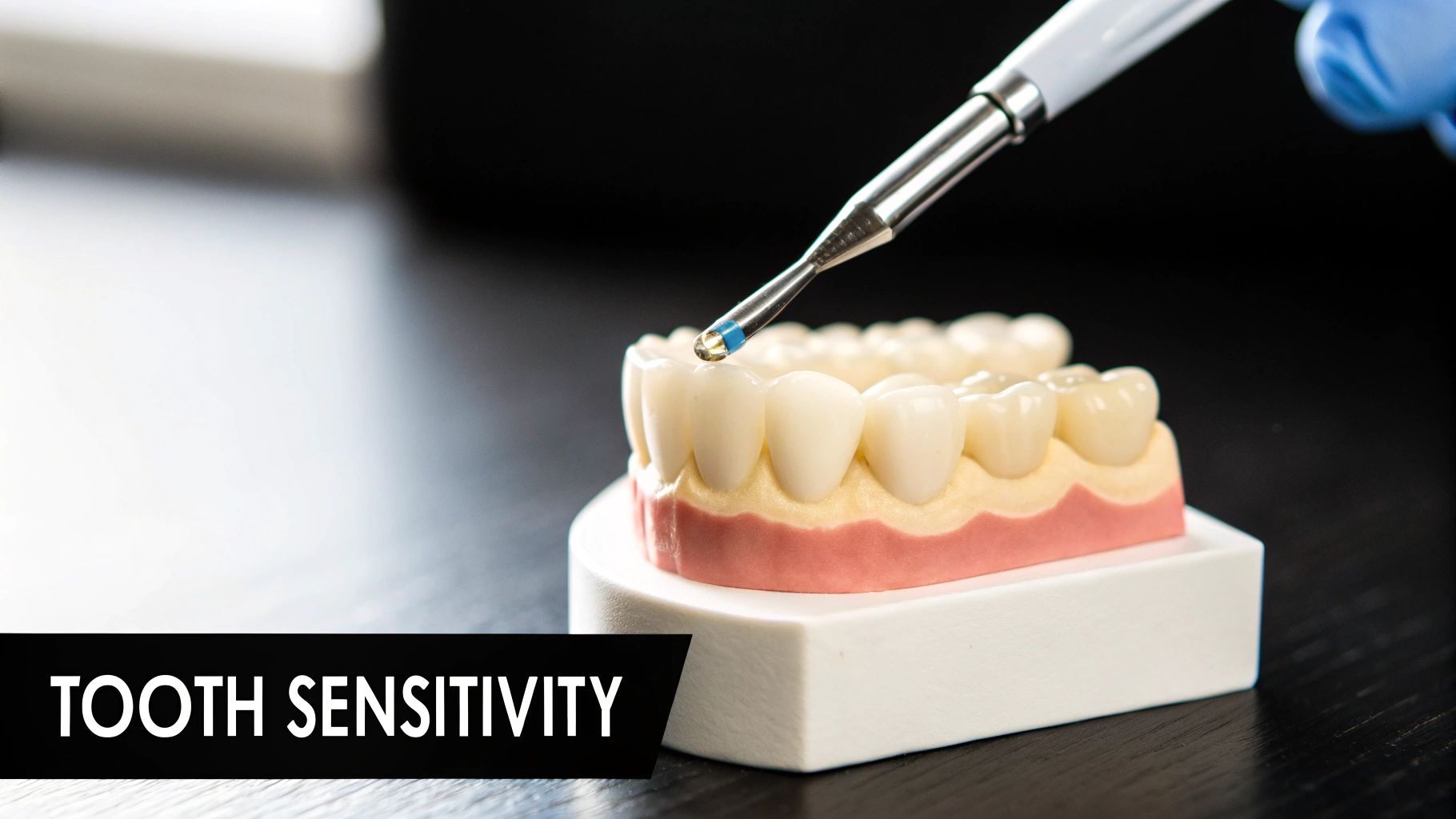
To get how these gels work, you first need to understand what's happening inside your tooth. The inner part of your tooth, the dentin, is like a sponge filled with thousands of tiny, fluid-filled tunnels. These tunnels, called tubules, are microscopic pathways that lead directly to the tooth's nerve center.
Normally, a tough outer layer of enamel (on the crown) and cementum (on the root) keeps these tubules covered and protected. But when that layer wears away from things like gum recession, teeth grinding, or acidic foods, the dentin gets exposed. And that's when the trouble starts.
The Science Behind the 'Zap'
When those tubules are exposed, any outside trigger can make the fluid inside them move. Picture a sudden gust of wind rushing through a tunnel—that movement irritates the nerve at the other end, firing a sharp pain signal straight to your brain.
What kind of triggers cause this? The usual suspects include:
- Temperature: Hot coffee and ice-cold water are classic culprits.
- Sweet or Acidic Foods: Sugary treats or citrusy drinks can easily set off a sensitive tooth.
- Physical Touch: Sometimes, even the bristles of a toothbrush or a dental tool can trigger that pain.
This condition, known as dentin hypersensitivity, is more than just a minor annoyance. It's a daily struggle for over 40 million adults in the United States alone. It's such a widespread problem that the global market for tooth desensitizers hit USD 1,020 million in 2024 and is only expected to grow. A big reason for this is the rise of at-home teeth whitening, which often causes temporary sensitivity.
How Gels Provide Relief
Desensitizing gels are formulated to fight this problem in one of two ways. It's like having two options to fix a drafty window: you can either turn up the thermostat or you can seal the crack.
The gel works by:
- Calming the Nerve: Some ingredients, like potassium nitrate, work by soothing the nerve itself. It essentially turns down the volume on the pain signal, making the nerve less likely to overreact to triggers.
- Blocking the Tunnels: Other ingredients focus on plugging up the open ends of the dentin tubules. This creates a physical barrier that stops things like cold air or sugar from ever reaching the nerve in the first place.
By getting to the root of the problem—the exposed pathways to the nerve—desensitizing gel does more than just mask the pain. It actively prevents the pain signal from even starting. This is exactly why it's a go-to solution for managing sensitivity during and after teeth whitening treatments.
Getting a handle on the different factors that cause this discomfort is the first step to finding real relief. For a deeper dive, you can learn more by understanding tooth sensitivity and its most common triggers. And if you're wondering specifically what causes tooth sensitivity to cold, our guide breaks it all down.
Understanding the Key Ingredients That Stop Sensitivity
To really get why a desensitizing gel can bring such quick relief, you have to look under the hood at its active ingredients. These compounds aren’t just putting a band-aid on the pain; they're getting to the root of the problem and stopping sensitivity where it starts.
You can think of them as two different types of highly specialized technicians. One type works to calm the nerve down, while the other builds a protective barrier. They generally fall into two strategic categories: nerve-calming agents and tubule-blocking agents. Knowing the difference will help you decode product labels and pick the best gel for your specific kind of sensitivity.
Nerve-Calming Agents: The Dimmer Switch for Pain
The first group of ingredients goes straight for the nerve. Instead of building a wall, the goal here is to change how the nerve reacts to triggers like cold, heat, or sugar. The most common and well-researched ingredient that does this is Potassium Nitrate.
Imagine your tooth’s nerve is like an overly sensitive smoke detector that shrieks every time you make toast. Potassium Nitrate is the tool that recalibrates it. When you apply it, potassium ions build up around the nerve endings inside your tooth’s tiny tubules. This subtle chemical shift makes it much harder for the nerve to fire off a pain signal to your brain.
It’s basically a dimmer switch for your nerve’s excitability. With consistent use, the nerve becomes less jumpy when faced with cold air or a sweet drink, stopping that sharp ‘zing’ of pain before it can even begin.
This approach works especially well for that annoying, generalized sensitivity that isn't just coming from one bad spot. If you're looking for steady, all-around relief, our detailed guide on various products for sensitive teeth explores a bunch of great options that use this nerve-calming strategy.
Tubule-Blocking Agents: The Microscopic Gatekeepers
The second strategy is a bit more direct: it blocks the tiny tunnels (dentin tubules) that lead to the nerve. If the triggers can't get in, they can't cause any trouble. These ingredients create a physical barrier, sealing off the exposed dentin from the outside world.
Some of the most common tubule-blocking agents include:
- Fluoride (Stannous Fluoride or Sodium Fluoride): This hero of dental health does more than just fight cavities. It mixes with your saliva to form a compound that crystallizes inside the tubules, plugging them up tight.
- Calcium Phosphates (like ACP or CPP-ACP): These ingredients are like a construction crew for your teeth. They deliver fresh calcium and phosphate right to the tooth's surface, forming a new mineral layer that both blocks the tubules and helps rebuild weakened enamel.
- Strontium Chloride: This compound works in a similar way, forming tiny deposits that clog up the dentin tubules and stop fluid from sloshing around inside them, which is a major cause of sensitivity.
This blocking action is a huge deal in the dental world. The global market for dental gels, which includes these powerful desensitizers, was valued at $12,750.45 million in 2024. Gels designed specifically for sealing tubules make up a whopping 47.8% of that market, largely because so many people need relief from sensitivity caused by teeth whitening. If you want to dive deeper into market trends, you can read the full research about dental gel trends.
To help you sort this all out, the table below gives a quick breakdown of these ingredients and what they do best.
A Comparison of Common Active Ingredients
| Active Ingredient | How It Works | Best For |
|---|---|---|
| Potassium Nitrate | Calms the tooth nerve to reduce its excitability. | General, widespread sensitivity or sensitivity from whitening procedures. |
| Fluoride | Plugs the microscopic tubules in the dentin. | Sensitivity caused by enamel erosion or gum recession. |
| Calcium Phosphates | Blocks tubules and helps remineralize enamel. | Weakened enamel and preventing future sensitivity. |
By knowing whether an ingredient is designed to calm the nerve or block the tunnels, you can make a much smarter choice and find the desensitizing gel that will finally give you some lasting comfort.
How to Apply Desensitizing Gel for Maximum Effectiveness
Just having a tube of desensitizing gel isn't enough to get the job done. The real magic happens when you use it correctly, unlocking its full pain-relieving potential. Proper application is all about making sure the active ingredients get right to the source of the sensitivity. This allows them to either calm the tooth's nerve or block the microscopic tunnels that are causing you grief.
Think of it like watering a single thirsty plant in a big garden. You wouldn't just spray water everywhere and hope some of it lands in the right spot. You’d aim the hose right at the base of the plant. Applying desensitizing gel works the same way—precision is what gets you the best results.
Pre-Application Prep for Better Results
Before you even unscrew the cap, a little prep work can make a world of difference. Your first mission is to get your teeth as clean and dry as possible. Any plaque or food debris can act like a roadblock, preventing the gel from ever reaching the tooth's surface.
Just follow these simple prep steps:
- Brush and Floss: Start by gently brushing with a soft-bristled toothbrush and flossing to clear away any buildup.
- Rinse Thoroughly: Swish with some water to wash away any leftover toothpaste or loose particles.
- Dry the Area: Grab a clean tissue or a bit of cotton gauze and gently pat the sensitive teeth dry. A dry surface helps the gel stick better and keeps your saliva from diluting it right away.
This whole routine takes less than a minute, but it massively boosts the gel's effectiveness.
This infographic breaks down the two main ways these gels bring relief once you've applied them correctly.
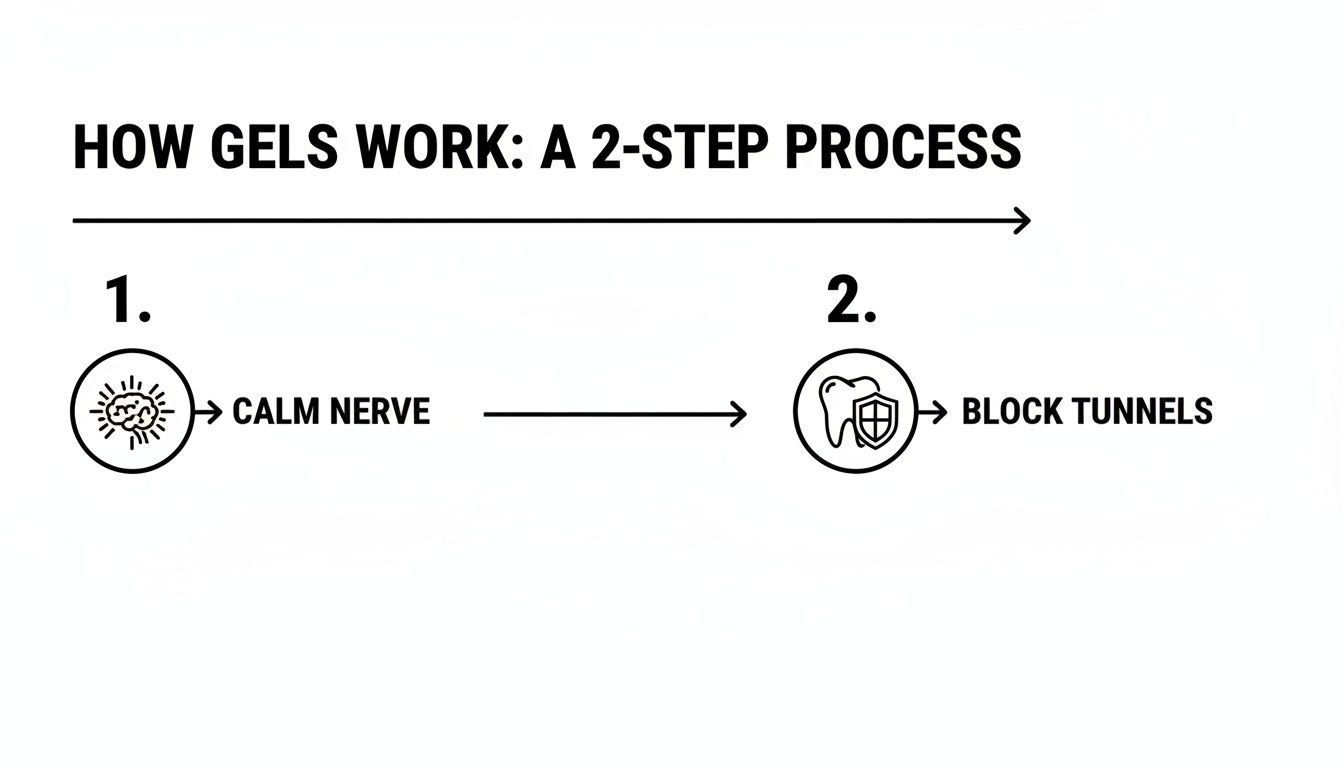
Whether it’s calming a nerve or blocking those tiny dentin tunnels, the gel has to be in the right place to start the process.
Step-by-Step Application Guide
You've got two main options for applying desensitizing gel at home: using a dental tray or dabbing it directly onto your teeth. The best method usually depends on the product's instructions or what your dentist recommends.
Method 1: Using a Dental Tray
This approach is perfect if you have widespread sensitivity or if you're using it before or after a full-mouth whitening session.
- Load the Tray: Squeeze a very small, continuous bead of gel along the bottom of the tray. A little bit goes a long way here; you just need enough to coat the surfaces of your teeth.
- Seat the Tray: Place the tray firmly but gently over your teeth, making sure it’s snug and fully seated.
- Wipe Excess Gel: Use a soft cloth or even just your finger to wipe away any gel that might have oozed out onto your gums.
- Wait: Leave the tray in for the time specified by the product, which is typically between 15 to 30 minutes.
- Remove and Clean: When the time's up, take the tray out. Don't brush or rinse your teeth right away. Just spit out any extra gel and try to avoid eating or drinking for at least 30 minutes.
Method 2: Direct Application
This is your go-to method for targeting sensitivity in just one or two specific spots.
- Dispense a Small Amount: Squeeze a tiny drop of gel onto a clean fingertip, a cotton swab, or a small, soft brush.
- Apply Directly: Gently rub the gel onto the sensitive tooth. Really focus on the area near the gumline, as that's often where sensitivity is the most intense.
- Let It Sit: Allow the gel to stay on the tooth without being disturbed. Try to avoid touching the spot with your tongue.
- Wait to Eat or Drink: Same as the tray method—spit out any excess gel and hold off on eating or drinking for at least 30 minutes.
For products that contain specific remineralizing agents, like calcium phosphate, getting the application right is essential for helping rebuild enamel. For more detailed techniques on these specialized formulas, you can read our guide on how to use MI Paste Plus.
Special Cases: Whitening and Orthodontics
One of the great things about desensitizing gel is how versatile it is. It's a lifesaver for managing the sensitivity that can come from teeth whitening or dealing with the discomfort from braces.
Before Whitening: Applying the gel for 15-30 minutes before your whitening session can preemptively calm the nerves down, which can dramatically reduce those sharp "zings" of sensitivity.
After Whitening: If sensitivity does pop up after a treatment, using the gel can provide immediate, soothing relief.
If you have braces, applying the gel can be a bit more challenging with all the brackets and wires. Your best bet is to use a small interdental brush or a cotton swab to precisely apply the gel to sensitive areas without messing with your hardware. This targeted approach ensures you can keep sensitivity under control throughout your orthodontic treatment.
How to Choose the Right Desensitizing Gel for You
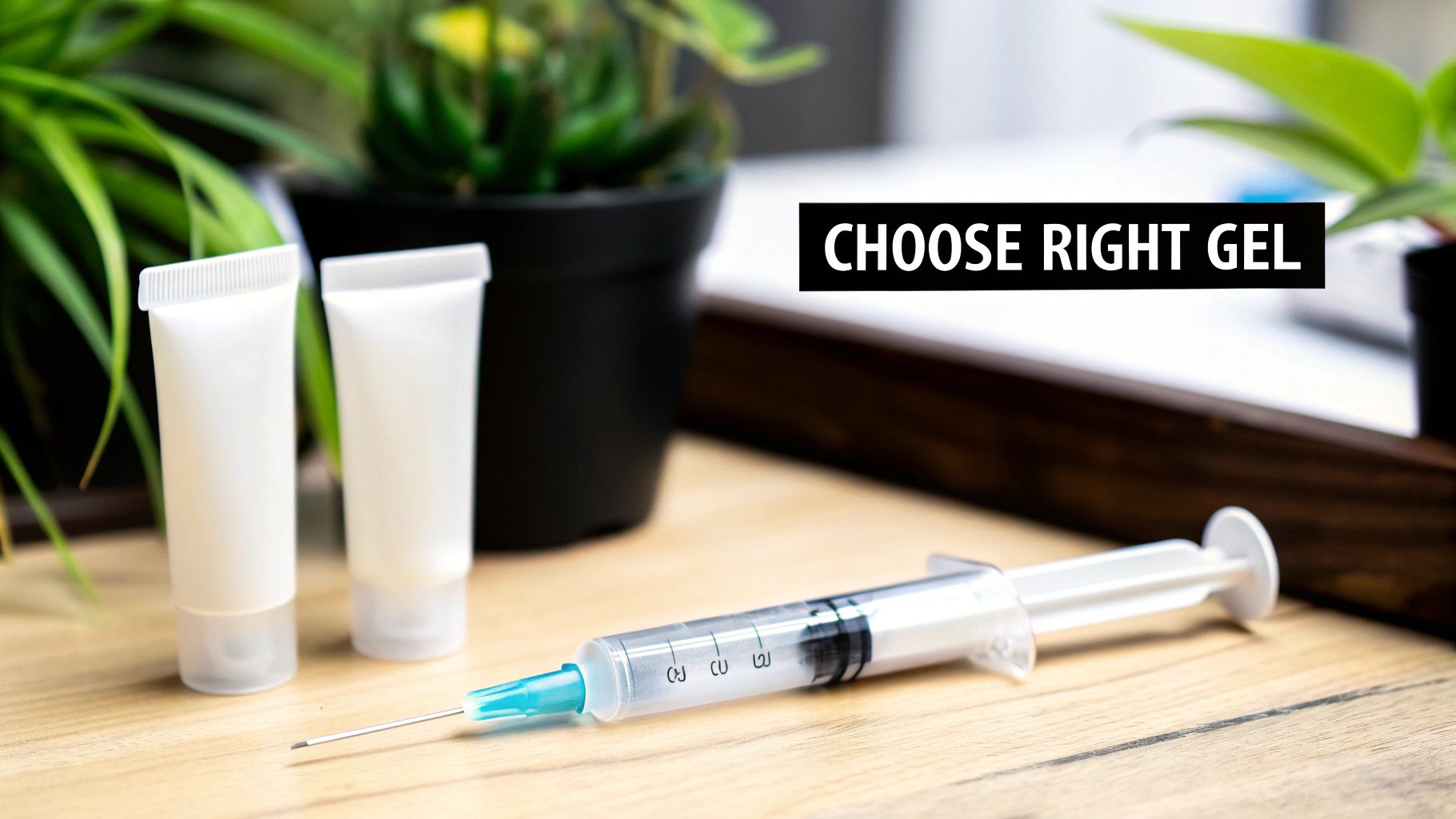
Walking down the dental care aisle can feel like a pop quiz you didn't study for. With dozens of boxes all promising fast relief, how do you pick the right one? The secret isn't finding one single "best" product, but finding the best desensitizing gel for teeth that matches your specific situation.
Think of it like being a detective for your own mouth. The gel that works wonders for your friend's whitening sensitivity might do very little for the chronic ache you get from gum recession. Knowing the difference is the key to picking a targeted solution that actually solves your problem instead of just masking it.
Match the Ingredient to Your Sensitivity Source
First things first, you need to connect the why behind your pain to the right active ingredient. As we've covered, these gels work in one of two ways: either by calming the nerve down or by plugging up the microscopic tunnels in your teeth. Your specific issue will point you directly to the most effective formula.
Here’s a quick guide:
- For Whitening Sensitivity: If you’re getting that signature "zing" after a whitening treatment, you’ll want a gel with Potassium Nitrate. This ingredient is a nerve-calming agent. It basically tells the over-stimulated nerve endings in your teeth to take a chill pill.
- For Gum Recession or Enamel Wear: When the pain is coming from exposed tooth roots or thinning enamel, your goal is to block the pathways to the nerve. Gels with Fluoride or Calcium Phosphates are perfect for this. They act like microscopic spackle, filling in the exposed tubules and creating a physical shield against painful triggers.
Taking this targeted approach means you're addressing the root cause, not just putting a bandage on the symptom.
By aligning the active ingredient with the source of your discomfort, you move from a trial-and-error approach to a strategic one. This simple step dramatically increases your chances of finding fast and lasting relief.
Consider the Application Method and Your Lifestyle
How you apply the gel is just as important as what's inside it. The best method for you really boils down to convenience and where you need relief. Are you trying to soothe one or two problem teeth, or are you looking for a full-mouth solution?
You’ve got two main options:
- Dental Trays: This is the go-to for widespread sensitivity. You fill a custom-fitted or stock tray with the gel, which guarantees an even, consistent coating over all your teeth. This method is fantastic for pre- and post-whitening treatments where everything feels sensitive.
- Syringe or Tube for Direct Application: Got one or two teeth that are the main culprits? A syringe or a tube with a fine-tip nozzle lets you apply a small dab of gel right where you need it. It’s a quick, efficient, no-mess solution for localized pain.
Think about your daily routine. If you have a few minutes to spare and need comprehensive coverage, trays are your best bet. If you need a quick fix for a problem spot on the fly, direct application is hard to beat.
Ready to zero in on the perfect product? Use this checklist to match your specific sensitivity type to the right ingredients and features.
Your Desensitizing Gel Selection Checklist
| Your Sensitivity Cause | Recommended Active Ingredient | Product Examples | Key Feature to Look For |
|---|---|---|---|
| Teeth Whitening | Potassium Nitrate | Opalescence Soothing Gel, Ultradent UltraEZ | Fast-acting nerve-calming formula |
| Gum Recession | Fluoride (Stannous or Sodium) | 3M Clinpro 5000, PreviDent 5000 | Tubule-blocking and enamel-strengthening |
| General Cold/Hot Sensitivity | Potassium Nitrate or a combination | Sensodyne Rapid Relief | Multi-action formula for broad relief |
| Weak or "Soft" Enamel | Calcium Phosphate (ACP or CPP-ACP) | MI Paste ONE | Remineralizing technology to rebuild enamel |
This chart is a great starting point, but always double-check the product label to make sure it lines up with your needs and your dentist’s recommendations.
Professional Grade Versus Over The Counter Options
Finally, it helps to understand the difference between professional-grade gels and the ones you can grab off the shelf at any drugstore. Both can work well, but they’re built for different jobs.
Over-the-counter (OTC) products are perfect for mild, everyday sensitivity. They typically contain lower concentrations of active ingredients and are designed to be safe for unsupervised daily or occasional use. They are a great entry point for managing minor discomfort.
Professional-grade gels, on the other hand, are the heavy hitters. Often recommended by dentists, they pack higher concentrations of ingredients like potassium nitrate or specialized remineralizing agents. These are formulated for more significant sensitivity, like the kind you might experience during an intensive whitening regimen. While many are available online through trusted retailers, they demand you follow the instructions to the letter. Choosing a professional-grade desensitizing gel for teeth gives you a stronger, faster-acting tool for tackling more stubborn sensitivity.
Safety Tips and When You Should See a Dentist
Using a desensitizing gel for teeth is generally a safe and effective way to handle that annoying, everyday tooth sensitivity right at home. These products are really designed for temporary relief, making them a fantastic quick fix for the zingers you might get from teeth whitening or a cold drink. However, it's critical to use them the right way and know what they can—and can't—do.
Think of desensitizing gel as a bandage for your teeth. It’s perfect for calming down those minor, predictable flare-ups. But just like you wouldn’t slap a bandage on a deep cut and call it a day, this gel isn't a replacement for professional dental care when a more serious problem is lurking.
Using Desensitizing Gels Safely
While side effects are uncommon, they can pop up, usually if the product isn't used correctly. The good news is that a few simple rules will help you get all the benefits without any trouble. The most frequent complaint is some minor gum irritation, which almost always happens from using way too much gel or leaving it on too long.
To keep your gums happy, stick to these best practices:
- Use Only the Recommended Amount: A small dot is all it takes. Piling on more gel won't give you more relief, but it might irritate your gums.
- Wipe Away Excess Gel: If you're using a tray and some gel squishes out onto your gums, just wipe it away with a cotton swab or a clean cloth.
- Follow the Time Limits: Pay close attention to the product’s instructions. Most applications are meant to last between 15 and 30 minutes—don't push it.
- Don't Overuse It: This gel is meant for occasional discomfort or short-term use after whitening. If you find yourself reaching for it every day for more than a week, that’s your cue to call the dentist.
Following these simple steps will help you get the most out of your desensitizing gel, safely and effectively.
Red Flags That Signal a Dental Visit
A desensitizing gel is great at turning down the volume on sensitivity, but it can't fix the underlying problem causing the noise. General, widespread sensitivity is one thing; sharp, persistent pain in one spot is a whole different story. Knowing the difference is key to your long-term oral health.
Your mouth is an excellent communicator. While a desensitizing gel can temporarily quiet the noise of sensitivity, it’s vital to listen when the pain points to a specific, unchanging location. This is often your mouth’s way of flagging a problem that needs a professional diagnosis.
Ignoring these specific signals can let a small, easily fixable issue snowball into a much bigger, more painful, and more expensive one.
When to Put Down the Gel and Call the Dentist
If you experience any of the symptoms below, it's time to set the gel aside and book a dental appointment. These are clear signs that something more than general sensitivity is going on.
Call your dentist if you notice:
- Pain Localized to a Single Tooth: If one specific tooth is screaming at you, it could be a sign of a cavity, a crack, or an issue with an old filling.
- Sharp Pain When Biting Down: A jolt of pain when you bite often points to a cracked tooth or decay that has worked its way deep inside the tooth.
- Sensitivity That Lingers: If the pain from hot or cold sticks around for more than a few seconds after the food or drink is gone, it could mean the nerve is inflamed.
- Swelling or a Bump on Your Gums: Any unusual swelling, a little bump, or a pimple-like sore on your gums near a painful tooth can signal an infection or an abscess.
- Constant, Throbbing Pain: A persistent, dull ache that just won't quit is a classic symptom of an infection that needs immediate attention from a professional.
Managing generalized sensitivity with a desensitizing gel for teeth is a smart move. But what's even smarter is recognizing when that sensitivity is just a symptom of a deeper issue. By paying attention to these warning signs, you can tackle the root cause and keep your smile healthy for years to come.
Common Questions About Desensitizing Gels
When you're dealing with the zing of sensitive teeth, finding a product that actually works is a massive relief. But just like with any new part of your routine, you probably have a few questions. Getting the details right on how to use a desensitizing gel can be the difference between a little relief and long-term comfort.
Let's walk through the most common questions people have about using a desensitizing gel for teeth. We’ll clear up any confusion so you can feel totally confident you’re getting the most out of every application.
How Quickly Can I Expect Relief?
This is one of the best parts about these gels: they work fast. Most people feel a noticeable difference within just a few minutes of putting the gel on. For products that use nerve-calming ingredients like potassium nitrate, that soothing feeling can start in under five minutes.
This quick action is exactly why they are a go-to for managing the sharp sensitivity that sometimes pops up during or after teeth whitening. The relief is almost immediate, giving you a much-needed break from that jarring discomfort.
Now, for ingredients that work differently, like fluoride or calcium phosphates that physically block the tiny tubules in your teeth, the full protective benefit builds up over a few uses. You'll still get some initial relief, but the real magic happens with consistent use, creating a stronger, more durable shield against sensitivity triggers.
Can I Eat or Drink Right After Applying It?
Great question, and the answer is a definite no—it’s best to wait a bit. After you've applied the gel, you should hold off on eating or drinking anything for at least 30 minutes. This waiting period is critical. It gives the active ingredients the time they need to actually absorb into the tooth surface and get to work.
Think of it like putting on sunscreen right before you jump in the pool. You'll just wash it right off. Eating or drinking immediately after using the gel pretty much does the same thing; it dilutes the product and washes it away, making it far less effective. For the best results, plan on applying the gel after you're done eating and drinking for a while.
Is Daily Use of Desensitizing Gel Safe?
Desensitizing gel is really meant for short-term or occasional use, not as a permanent part of your daily routine. It's completely safe for handling sensitivity flare-ups, like during a whitening treatment or when you just have a bad sensitivity day.
However, if you find yourself reaching for it every single day for more than a week or two, that’s your mouth trying to tell you something.
Daily, persistent sensitivity is often a symptom of an underlying issue, such as gum recession, enamel erosion, or a cavity. Using a desensitizing gel can mask the pain, but it won't fix the root cause. If you're in that situation, it's time to schedule a visit with your dentist to get a proper diagnosis.
What Is the Difference Between a Gel and a Sensitive Toothpaste?
This is a fantastic question because it really gets to the core of how to build a smart routine for managing sensitivity. While both products are designed to reduce pain, they play very different roles on the team.
- Desensitizing Gel: Think of this as a concentrated treatment. It's like a spot treatment you use for flare-ups. The gel delivers a higher dose of the active ingredients right where you need it for fast, targeted relief. It’s perfect for using before whitening or for handling those moments of acute, sharp sensitivity.
- Sensitive Toothpaste: This is your daily maintenance tool. It contains a lower concentration of the same kinds of ingredients and is designed for brushing twice a day, every day. It works by gradually building up a protective layer over time, which helps keep sensitivity from coming back in the first place.
Honestly, the best approach is to use them together. Use a sensitive toothpaste for your everyday brushing to maintain a baseline of protection, and keep a desensitizing gel on hand for those times you need an extra boost of fast-acting relief. This two-pronged strategy gives you both long-term prevention and immediate comfort.
Ready to find the right products to manage your tooth sensitivity and achieve a brighter smile? DentalHealth.com offers a curated selection of professional-grade desensitizing gels, whitening treatments, and therapeutic toothpastes from brands trusted by dentists. Explore our collection and take control of your oral health today at https://dentalhealth.com.