
GlossRay Teeth Whitening: What the Kit Can Do
You want a brighter smile, but you don't want to spend hours wearing trays or book a dental appointment just to get started. Then you see a home kit promising a short session with an LED light, and the obvious question is whether the light makes the whitening more effective or just makes the routine feel more advanced.
GlossRay sells several at-home whitening formats, including LED kits, a pen, and gel. Its product pages document how the products are designed, what routines they recommend, and what prices they list. They don't establish that GlossRay's whitening results match dentist-supervised treatment, so it helps to separate the product's instructions from its performance claims.
What GlossRay Teeth Whitening Actually Is
You may see GlossRay beside overnight trays, dentist-dispensed gels, and other at-home products. The comparison can be confusing because those options describe different routines, not necessarily treatments with equal evidence. GlossRay is a direct-to-consumer product line with several at-home whitening formats.
Its product pages describe the kits' components and suggested use. For example, the Standard Teeth Whitening Kit listing describes an at-home product, while the 3D Pro Advanced Kit is presented as a system that pairs whitening gel with an LED mouth-light. The Advanced Kit listing suggests sessions of about 10 minutes and one to two initial treatments. These are instructions and product descriptions, not evidence of a particular shade change. (GlossRay's Standard Teeth Whitening Kit listing)
Product details versus whitening evidence
GlossRay has described the 3D Pro Advanced Kit as having 32 individual LEDs, and its product materials identify the brand as American while saying the products are made in China. These statements describe the product's design and the company's presentation of its identity and manufacturing. They do not establish where the whitening formula was developed or how well the kit compares with professional treatment.
The distinction is simple: a product page can tell you what a kit includes and how the seller recommends using it. Performance claims, including language such as “20X 3D Pro LED,” need clinical evidence to show how much whitening a user can expect. Without cited dental studies or testing results, the product description alone cannot confirm those outcomes.
Treat the listed session time and LED count as details of the consumer product, not as proof of dentist-level results. That gives you a clearer basis for comparing the kit with other whitening options.
How the LED and Gel System Is Built
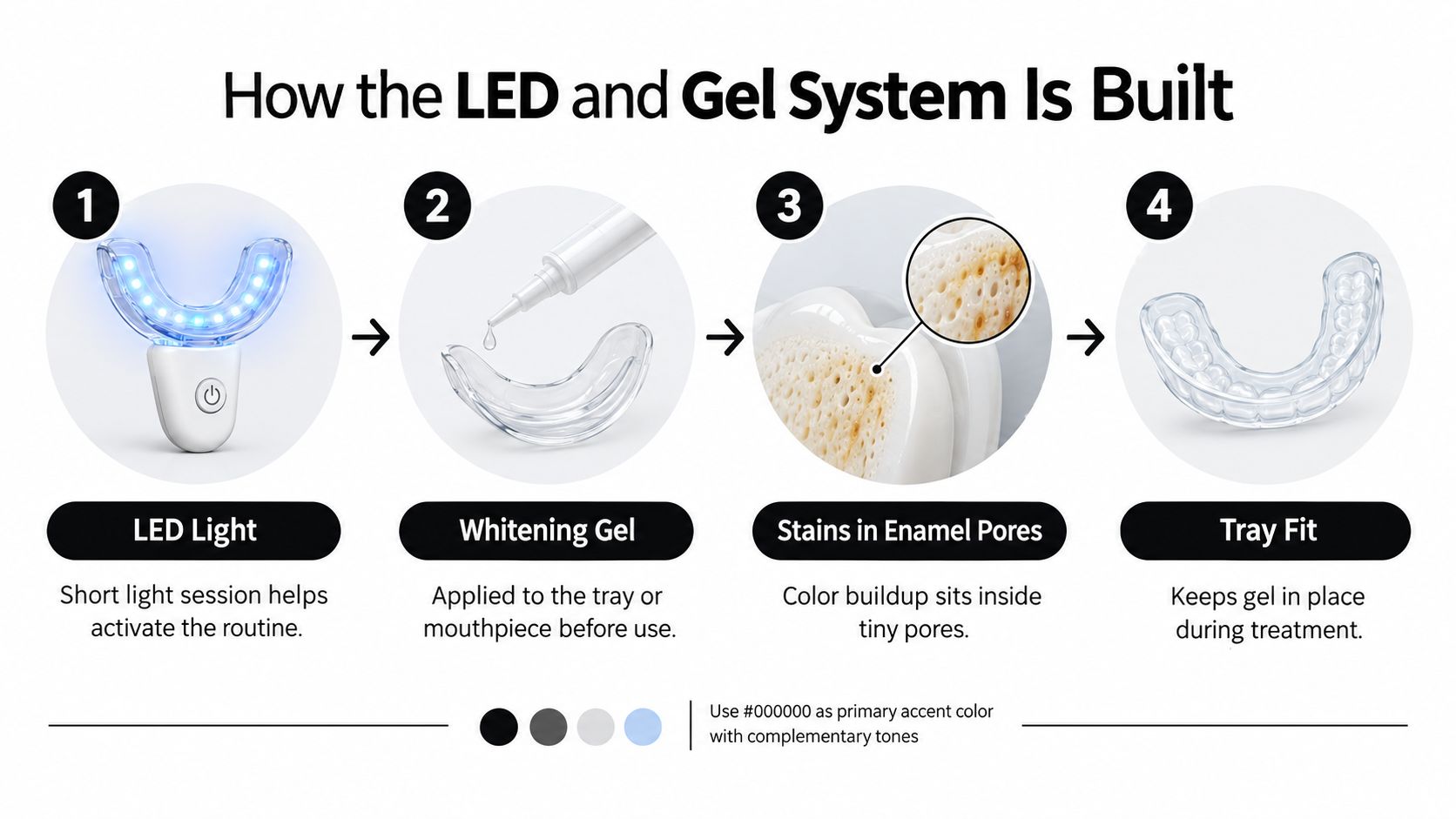
The easiest way to understand an at-home whitening kit is to separate what each part does. Stains can sit within tiny enamel pores, a little like color absorbed into a sponge. A whitening gel is intended to reach and break down some discoloration; a tray or pen helps put that gel where it's meant to go.
The gel is the active whitening component in this setup. The tray holds gel against the teeth during the routine, while a pen applies product directly. Those delivery methods can make a product easier to use, but they don't by themselves prove how much whitening you'll see.
Where the LED fits
GlossRay describes its 3D Pro Advanced setup as whitening gel used with an LED device and tray. It markets the routine around a session of about 10 minutes and reports 32 individual LEDs. (GlossRay's 3D Pro Advanced Kit listing)
But the available product information doesn't provide the LED's wavelength, irradiance, or treatment-temperature data. It also doesn't include controlled clinical results showing that the light whitens more than gel alone. That means the light's practical contribution can't be determined from those product details.
In everyday terms, peroxide whitening depends mainly on the oxidant moving into enamel and dentin. A light could matter if its output speeds peroxide breakdown without producing excessive heat, but knowing that requires technical and test information the product description doesn't supply. Think gel first, light second. Don't assume a short LED session is equivalent to a dentist-supervised whitening protocol.
GlossRay's pen listing calls urea peroxide a slow-acting bleaching agent and claims reduced sensitivity, but it doesn't state the concentration or provide comparative sensitivity measurements. For more background on the distinction between a light and a whitening ingredient, see this overview of whether LED teeth-whitening kits work.
GlossRay Kits Pens and Listed Prices
GlossRay's catalog offers several formats, each with its own listed price and suggested use. A kit is built around a guided, short session; the pen is for direct application; and the gel is a refill-style option. That's a retail comparison, not a clinical ranking.
| Format | Regular price | Sale or from price | Published use pattern |
|---|---|---|---|
| 3D Pro Advanced Kit | $149 | $79 | One to two treatments of about 10 minutes, then optional touch-ups with remaining pen refills |
| Standard Kit | $99 | $49 | A kit format; the cited listing doesn't provide a specific routine here |
| Teeth Whitening Pen | $98 | From $49 | Twice daily for up to seven days |
| Whitening gel | $78 | From $39 | Refill-style product; the cited listing doesn't specify a separate schedule |
These are listed retail prices, not average checkout prices or proof of effectiveness. Promotions may affect what you pay, and a higher price doesn't demonstrate that a kit will whiten better than a pen or gel. The published promotional entry prices range from $39 to $49, while the Advanced Kit's regular listed price is $149. (GlossRay's Teeth Whitening Pen listing)
Match the format to your routine
If you want a device-led session, the Advanced Kit's listed instructions provide a short routine to follow. If you prefer applying product directly, the pen has its own twice-daily schedule. The gel listing gives you another format, but the cited product information doesn't specify an independent treatment schedule for it.
That difference is useful when shopping: compare the listed use pattern with the routine you're likely to follow, rather than treating the product prices as a measure of whitening strength. And don't extend or combine schedules just because one format seems convenient.
Safety Limits of a Short LED Session
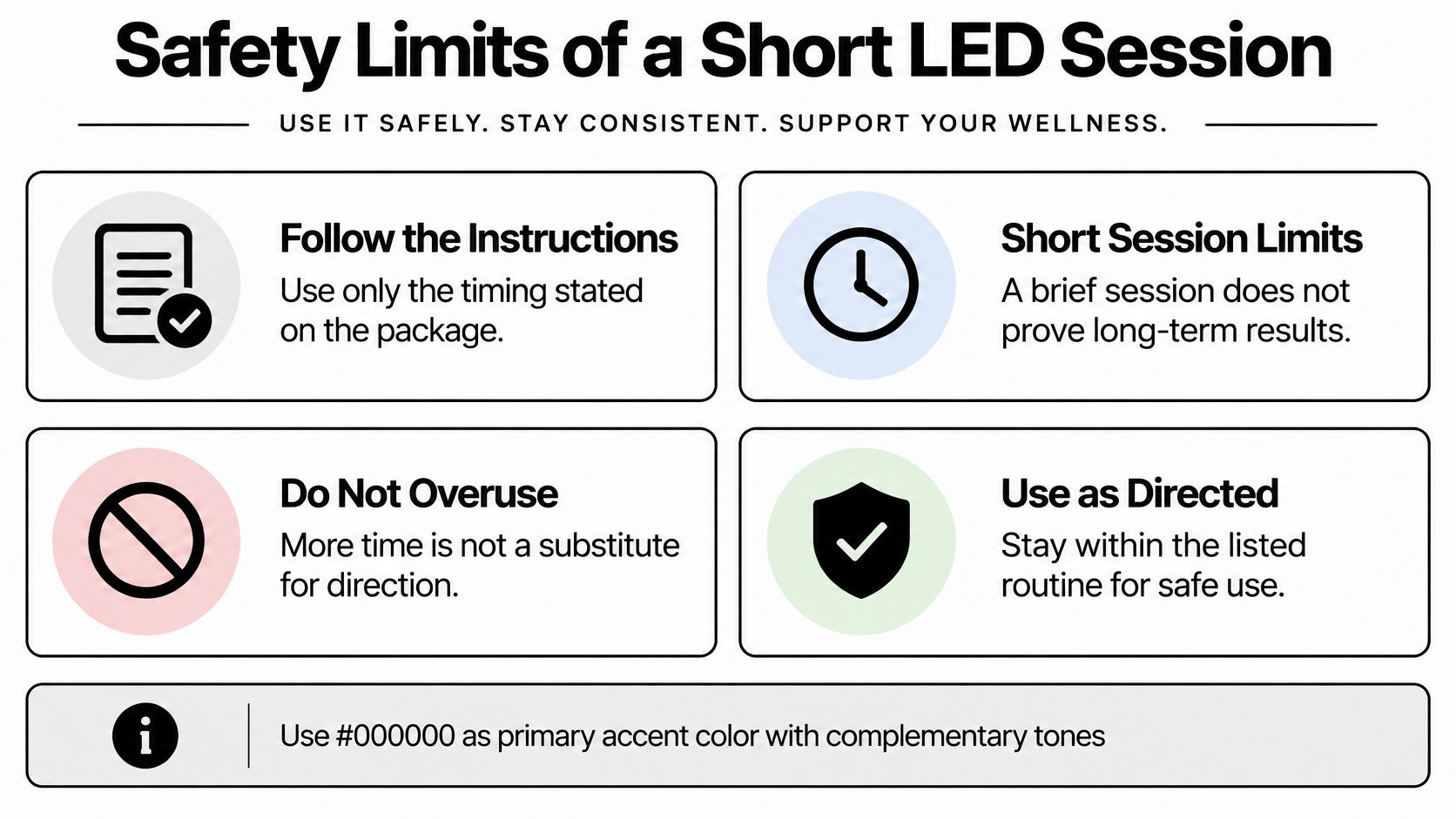
A session advertised as brief doesn't automatically mean it's gentler, safer, or equal to a dentist-supervised peroxide routine. The Advanced Kit is marketed around a session of about 10 minutes, but the available product information doesn't state the LED's wavelength, irradiance, or treatment temperature. It also doesn't show a controlled comparison of the light-assisted kit against gel alone.
That missing information sets a limit on what you can conclude. The session time tells you what the product recommends, not how the LED affects bleaching or whether the routine has the same evidence base as care supervised by a dentist.
Use the product instructions as a boundary
For practical use, stay within the exposure schedule supplied with the product. Keep gel off your gums, and stop if you develop sharp tooth sensitivity or soft-tissue irritation. These are cautious-use steps, not a substitute for individualized dental advice.
The pen's reduced-sensitivity claim also needs context: the listing doesn't state the urea peroxide concentration or give measured sensitivity comparisons. A claim about sensitivity isn't the same as evidence that irritation can't happen.
Practical rule: A short session is a timing instruction, not proof that the kit matches a dentist-supervised protocol.
If you're unsure whether a whitening product is appropriate for your teeth, get dental guidance before starting. This is especially useful if you already have sensitivity or notice irritation during use. You can also review this practical guide to using teeth-whitening kits safely.
Everyday Use Patterns and Shade Limits
You have a weekend event coming up and want to try a short routine first. The Advanced Kit's published guidance suggests one to two sessions of about 10 minutes. That gives you the product's stated schedule to work from, but it doesn't promise a particular result by the event.
Someone traveling might prefer a pen because it's easy to apply directly. GlossRay's listing recommends using the pen twice daily for up to seven days. That's the stated schedule, not an invitation to repeat it more often or longer.
Another shopper may finish a kit and keep remaining pen refills for touch-ups. The Advanced Kit's instructions describe optional touch-ups with remaining refills, but don't set a long-term maintenance calendar. Use the listed routine rather than inventing a weekly pattern.
The kind of discoloration also affects expectations. Coffee, wine, dark berries, and smoking are familiar sources of staining people may hope to address with whitening. But the sponge analogy is only a way to picture how color can sit in tiny pores. It doesn't prove that GlossRay will remove a particular stain or produce a specific shade change.
Restorations won't match automatically
Fillings, crowns, and veneers don't bleach like natural tooth structure. If a front tooth has a crown and the neighboring natural teeth change color, the difference may become more noticeable. That's a reason to consider how your teeth fit together visually before whitening, not just whether the natural enamel looks brighter.
Look for balance, not a promised shade: Consider whether your natural teeth will look even with your existing dental work.
How GlossRay Compares with Dentist-Grade Home Kits
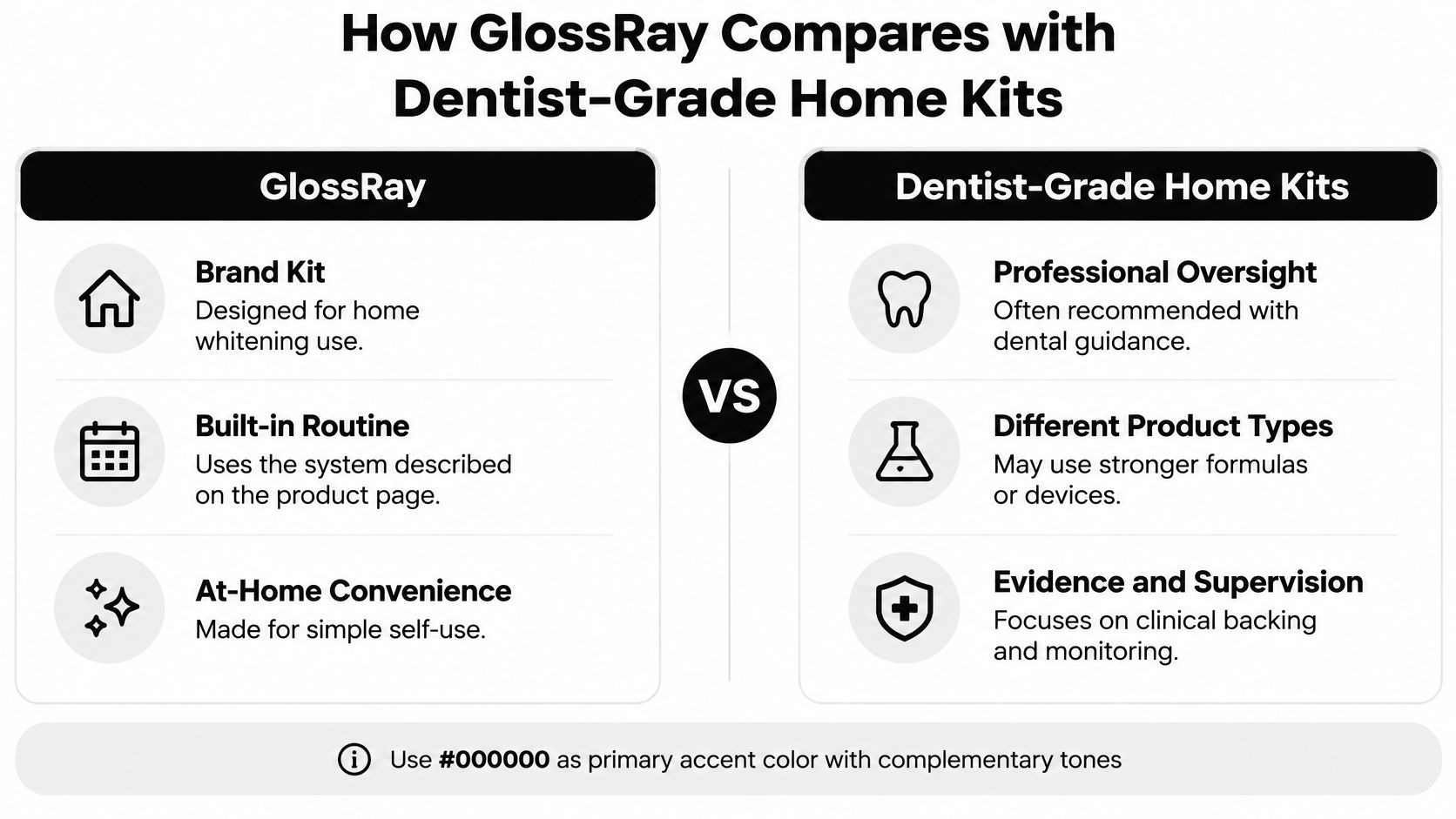
GlossRay's documented offer is a consumer kit that pairs gel with an LED device, plus pen and gel formats. The product pages give shoppers suggested routines and listed prices, but independent review coverage found that the performance claims weren't supported by cited dental studies or clinical testing in the material reviewed.
Dentist-recommended at-home products offer a different buying path. A dentist may suggest tray gels such as Opalescence, Zoom whitening gels, PolaNight, or PolaDay. Some options include higher-concentration carbamide peroxide, such as PolaDay CP 35%. GLO and Captivate by Nupro are other product lines commonly associated with professional dental care.
Choose by format and support
A light-assisted consumer kit may suit you if you want a device-led routine at home and understand that its performance claims aren't backed by cited studies in the reviewed material. A dentist-recommended gel may suit you if you want a product familiar in a dental office and are prepared to follow that product's own directions, including wear times that may be longer than a short LED session.
These options aren't interchangeable just because both are used at home. The important differences are the product instructions, the level of dental guidance, and the evidence available for the particular product. For a closer look at the dentist-recommended route, read this guide to an at-home teeth-whitening kit from a dentist.
Sensitivity care is a separate need, not a whitening method. Fluoridex products are intended for sensitivity relief, while MI Paste and MI Paste Plus are remineralizing support products. They don't replace whitening gels or kits.
Choosing Your Whitening Next Step
Start by deciding what matters more to you: a short, consumer LED routine whose whitening-performance claims aren't backed by cited studies in the reviewed material, or a dentist-recommended gel with its own use instructions. That choice is about evidence, format, and routine, not a promised shade score.
If you choose GlossRay, match the product to its published directions. The Advanced Kit suggests one to two sessions of about 10 minutes, while the pen listing recommends use twice daily for up to seven days. Keep to the product schedule and stop if your teeth become sharply sensitive or your soft tissue becomes irritated.
If you'd rather browse brands commonly recommended by dentists, compare gels and kits from Opalescence, Zoom, PolaNight, PolaDay, GLO, and Captivate. Add a sensitivity toothpaste or remineralizing paste only if that's a separate need. Whatever you choose, remember that fillings, crowns, and veneers won't change color along with your natural enamel.
Choose the product whose instructions you'll actually follow, and set expectations around your natural teeth and any restorations.
DentalHealth.com stocks professional-grade at-home whitening gels and kits from dentist-familiar brands, along with separate options for sensitivity relief and remineralizing support. Browse its product range for U.S. shipping, phone support, free shipping on USA orders, secure checkout, and easy returns, and visit DentalHealth.com to compare your next whitening option.