
Grind No More Guide to Stop Teeth Grinding for Good
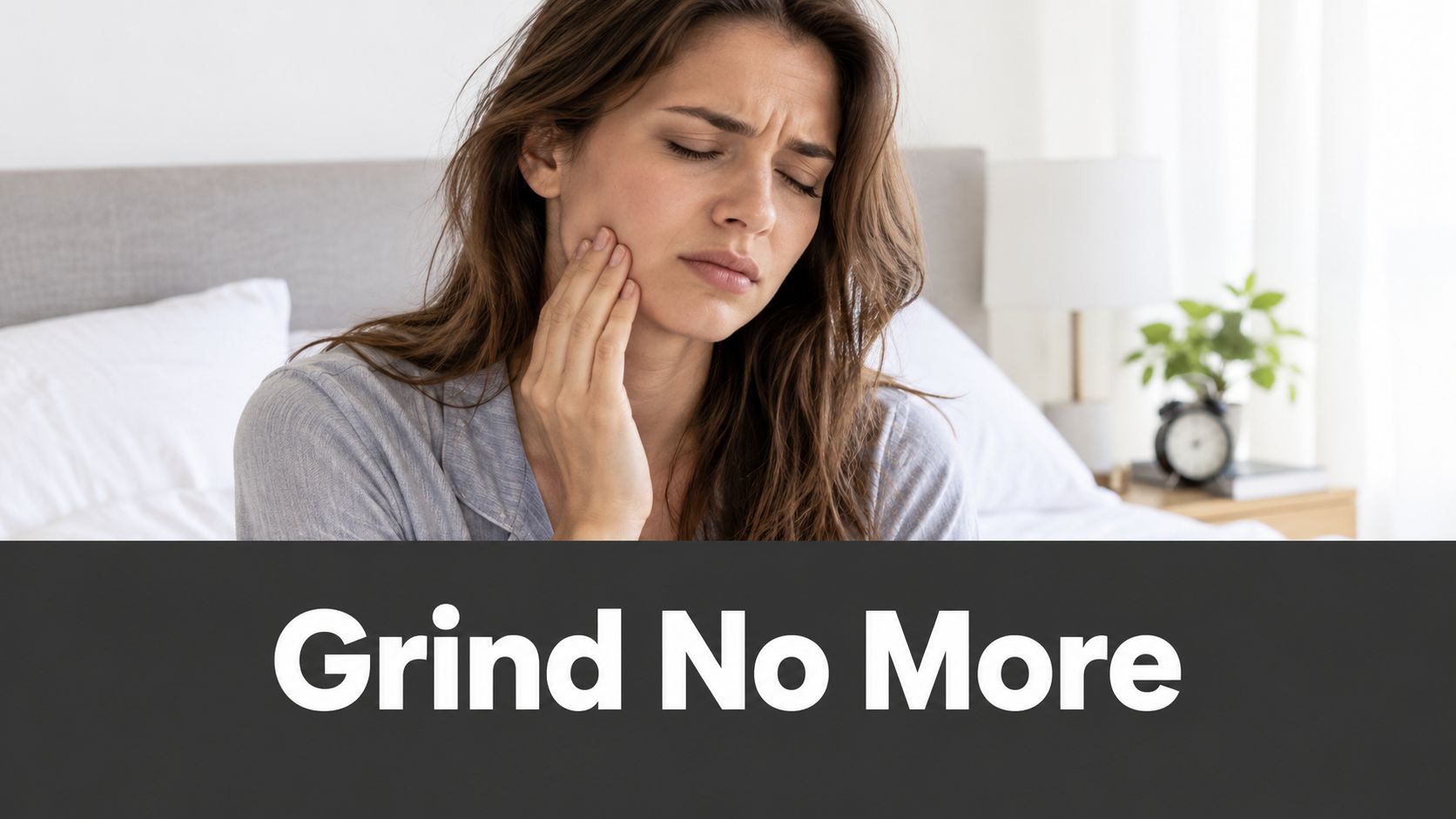
You wake with a tight jaw, a dull headache near your temples, or teeth that suddenly sting when you drink something cold. Your partner may mention a scraping sound during the night, while you remember nothing unusual. Searching for “grind no more” can feel like a search for a quick product, but lasting relief usually requires a wider view.
Bruxism, the clinical term for repeated clenching or grinding, can involve your teeth, jaw muscles, sleep quality, stress response, and daily habits. A night guard may protect tooth surfaces, but it may not address why your jaw keeps working while you sleep.
This guide starts with recognition, then moves through possible drivers, warning signs, protective options, and practical routines. By the end, you'll have a clearer way to decide whether to begin with habit changes, try temporary protection, schedule a dental visit, or ask a medical professional about sleep-related causes.
Waking Up Sore and Wondering Why
Morning jaw pain often arrives without an obvious explanation. You may have gone to bed feeling fine, then noticed soreness when you yawn, chew breakfast, or open your mouth. A headache can make the morning feel heavy, and tooth sensitivity may add another layer of worry.
Nighttime grinding is easy to miss because you aren't consciously monitoring your jaw. Sleep can hide the behavior from you, while a partner may notice the sound first. Some people learn about it only after a dentist sees flattened biting surfaces, small chips, or other signs of repeated pressure.
That uncertainty can make the problem seem more alarming than it is. Jaw soreness and tooth wear deserve attention, but they don't automatically mean that severe or permanent damage has occurred. A dental examination can distinguish ordinary sensitivity from cracks, decay, gum problems, or wear associated with clenching.
Key idea: Protection can reduce the consequences of grinding, while root-cause care helps address the conditions that keep the behavior going.
The phrase “grind no more” also has an older history than many readers expect. The Old English verb grindan meant “to crush into powder by friction,” and the figurative use connected with relentless study appeared in American college slang by 1851. By 1864, “grind” could describe a student who studied with dogged, joyless application, according to this documented history of the word grind.
Today, the phrase can mean a personal wish to stop clenching, a product name, or even an advocacy slogan. For someone waking with jaw pain, its most useful meaning is practical: reduce ongoing strain, protect vulnerable teeth, and investigate the factors that may be activating the jaw.
Understanding What Teeth Grinding Really Is
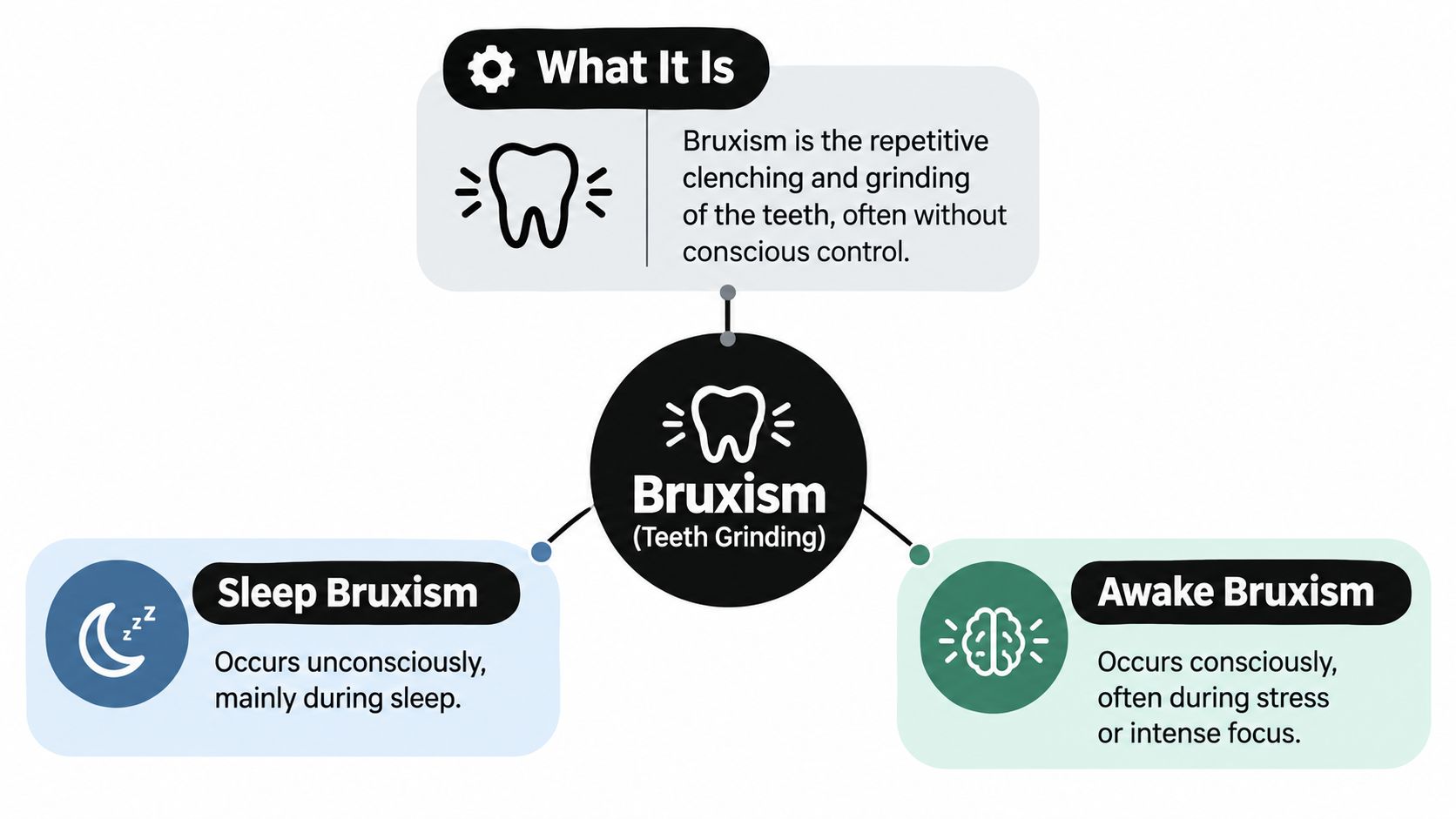
Bruxism is repetitive clenching, grinding, or forceful contact between the upper and lower teeth. It can happen during sleep, when you aren't aware of your jaw activity, or while you're awake, often during concentration, tension, or emotional strain.
Think of your teeth like a finished wooden surface and grinding like repeated sandpaper contact. A single movement may not seem important, but repeated friction can gradually flatten edges and make the surface more vulnerable. Clenching is different from grinding because the jaw may hold the teeth together without sliding them, yet sustained pressure can still fatigue the muscles and load the tooth structures.
Sleep and awake bruxism
Sleep bruxism occurs during sleep and may appear as rhythmic grinding, brief clenching, or repeated jaw contractions. Because you don't choose the movement consciously, telling yourself to stop at bedtime usually isn't enough.
Awake bruxism is more likely to occur during focused work, driving, exercise, or stressful conversations. Many people don't notice it until they check their posture and find their teeth touching, their tongue pressed upward, or their jaw muscles braced.
Healthy resting posture generally doesn't require your teeth to remain together. A useful daytime reminder is to let the lips rest gently, keep the teeth slightly apart, and allow the tongue to sit comfortably without pushing hard against the teeth. This isn't a treatment for sleep bruxism, but it can reduce unnecessary daytime loading.
What a guard can and cannot do
A guard creates a barrier between tooth surfaces and can change how forces are distributed. The FDA 510(k) summary for Grind No More Generation II states that the device is indicated for protection against bruxism and nighttime teeth grinding, with the intended purpose of reducing tooth damage and grinding noise. Its design uses anterior and posterior occlusive bite plates connected by a buccal retention band, supporting retention while distributing contact across front and back areas of the mouth.
That wording matters. A protective device can limit direct tooth-on-tooth contact, but it isn't automatically a cure for stress, poor sleep, medication effects, or a sleep disorder. Think of it as a bumper on a vulnerable surface, not a switch that turns off the behavior.
Why You Grind and What Makes It Worse
Bruxism rarely has one simple cause. A stressful week can make you tense during the day, disrupted sleep can increase nighttime jaw activity, and habits such as late caffeine or alcohol use may add to the pattern. Dental factors can matter too, but focusing only on the bite may overlook important contributors.
Stress and nervous system arousal
Stress doesn't always feel like panic. It can show up as a raised jaw, shallow breathing, tight shoulders, or teeth touching while you concentrate. Anxiety, frustration, and sustained mental effort may keep the body in a more activated state, making relaxation harder at bedtime.
A short evening routine can help you notice the transition from alertness to rest. If jaw tension appears alongside broader stress symptoms, resources on pain relief via nervous system regulation may offer useful context for calming the body's threat response.
Sleep-related factors
Poor sleep quality can leave the jaw active even when you think you're resting. Loud snoring, witnessed pauses in breathing, gasping, morning dry mouth, and unrefreshing sleep are reasons to discuss possible sleep problems with a medical professional. Bruxism shouldn't be used to diagnose sleep apnea, but sleep symptoms deserve attention rather than being treated as a dental issue alone.
A consistent sleep schedule, a quieter wind-down period, and a bedroom that supports uninterrupted rest can remove some avoidable friction. These steps won't identify every cause, but they give you a practical baseline.
Lifestyle and oral factors
Caffeine, alcohol, and smoking can influence sleep and muscle tension. The Mayo Clinic's bruxism diagnosis and treatment guidance includes stress reduction, reducing caffeine and alcohol, smoking cessation, sleep hygiene, and screening for sleep disorders as parts of management.
Dental alignment, missing teeth, restorations, and changes in the way your teeth meet may also affect comfort. Don't assume a bite correction is necessary just because you grind. A dentist should examine the pattern of wear and your jaw function before recommending irreversible changes.
A dental association report referenced in the same medical guidance found that 71% of dentists reported seeing increased grinding and clenching in 2021. That figure is linked to the source above, and it highlights why people need more than a guard recommendation. The most useful question is not "Which guard should I buy?" It's “What combination of protection, sleep care, stress support, and dental assessment fits my pattern?”
How to Recognize Symptoms and Risks Early
The earliest clues are often ordinary enough to dismiss. A sore jaw after waking can look like poor sleeping posture. A chipped edge can seem like an isolated accident. A partner's report of grinding may be the first sign that connects these details.
A quick symptom check
Look for patterns rather than a single bad morning:
- Jaw soreness: Pain or stiffness when you wake, chew, yawn, or open wide.
- Morning headaches: A dull ache around the temples or forehead that appears after sleep.
- Tooth sensitivity: Discomfort from hot, cold, sweet, or acidic foods, especially if it keeps returning.
- Worn or chipped enamel: Flattened chewing surfaces, shortened edges, small chips, or a change in how the teeth meet.
- Tongue or cheek marks: Indentations, tenderness, or irritated areas along the sides of the tongue or inside the cheeks.
- Reported nighttime noise: A partner or family member hears clicking, scraping, or grinding while you're asleep.
Some of these signs have causes other than bruxism. Sensitivity may reflect erosion, decay, exposed roots, or a failing restoration, so don't diagnose yourself from one symptom. For background on protecting tooth surfaces, review this guide to preventing enamel erosion.
What continued force can do
Repeated friction can wear enamel and expose more vulnerable inner tooth structure. Strong pressure can contribute to cracks, fractures, loose or damaged restorations, and soreness in the muscles and joints that move the jaw. Gum recession may also make teeth feel more sensitive, although it can have several causes.
Contact a dentist promptly if you notice a cracked tooth, sudden severe pain, swelling, a restoration that feels loose, or difficulty opening your mouth. Seek urgent care for facial swelling that affects swallowing or breathing. Those symptoms require professional assessment rather than a new guard alone.
Before an appointment, record when symptoms appear, whether they're worse after stressful days, what your partner hears, and whether a guard becomes visibly worn. A simple note on your phone can help your dentist see the pattern and decide whether you need an examination, a custom appliance, or medical screening.
Choosing Protection That Fits Your Needs
A night guard is best understood as protective equipment. It may reduce direct contact, tooth wear, and noise, but it doesn't necessarily stop the jaw muscles from contracting. The right option depends on how heavily you grind, how often you need protection, whether a device stays in place, and whether a dentist has identified existing damage.
Disposable ready-to-wear products can be useful when you need a short-duration barrier or want to test whether wearing a guard feels tolerable. However, the service life matters. Manufacturer instructions for Grind No More Dental Night Protectors specify use for up to 3 nights, with replacement at the first sign of excessive wear and no reuse if the fit deteriorates. That makes the product a brief protective barrier, not a long-term occlusal appliance.
Custom guards take impressions or digital scans so a dental professional can design the appliance around your mouth. They may offer a more stable fit and a clearer plan for monitoring wear, but they require professional assessment and an upfront commitment. A custom device still needs cleaning, inspection, and replacement when it wears or no longer fits correctly.
Night guard options compared
| Feature | Disposable Ready to Wear | Custom Dental Guard |
|---|---|---|
| Protection period | Intended for short-duration use and replacement when worn or poorly fitting | Designed for longer-term use, with replacement based on condition and professional advice |
| Fit | General fit may feel less stable or comfortable for some users | Made to the individual's teeth and bite |
| Durability | Thin material can deform under heavy grinding | Material and design can be selected with grinding severity in mind |
| Hygiene | Frequent replacement limits long-term buildup, but each device still needs appropriate care | Requires regular cleaning and storage |
| Cost pattern | Lower commitment per device, with repeat purchases | Higher initial commitment, with ongoing maintenance |
| Professional oversight | Limited unless a dentist reviews the device | Includes assessment of teeth, bite, jaw symptoms, and wear |
The FDA's summary for a Plackers product describes its indication as reducing damage and noise, not treating the underlying cause. A comparison of SOVA Aero night guard options can help you think about fit and design, but product information shouldn't replace a dental examination when symptoms are persistent.
Don't force a guard that causes pain, changes your bite, slips out, triggers gagging, or develops sharp edges. Stop using it and ask a dentist for guidance if the fit deteriorates or your symptoms worsen. If a dentist suspects a bite problem, they may discuss restorative or orthodontic options, but irreversible adjustments deserve a clear diagnosis and conservative reasoning.
Daily Habits That Help You Grind No More
A useful routine doesn't need to be complicated. The aim is to lower avoidable jaw tension during the day and create better conditions for sleep, while a guard protects the teeth if your dentist recommends one.
Start with a daytime separation check. Several times during work or driving, ask whether your teeth are touching. Let your jaw hang comfortably, keep the tongue relaxed, and drop your shoulders. Don't stretch into pain or repeatedly open and close the mouth. You're practicing awareness, not trying to force the jaw into a new position.
Build an evening downshift
Choose a short wind-down period with fewer stimulating tasks. Gentle breathing, a warm compress over tight jaw muscles, light neck and shoulder movement, or a quiet book may help you shift out of work mode. Keep the routine repeatable so your body begins to associate it with sleep.
Caffeine and alcohol deserve a personal review, especially if you use them late in the day or notice worse sleep afterward. Reducing intake, changing timing, or discussing dependence with a clinician can be more useful than buying stronger protection. If you smoke, cessation support can address a broader health concern while removing a possible bruxism amplifier.
Make sleep easier to evaluate
Keep your sleep and wake times as consistent as your schedule allows. Note whether you snore, wake gasping, feel unusually tired, or wake with a dry mouth. Ask a partner what they hear at night, and bring those observations to a physician or dentist if they persist.
The evidence for splints as a treatment for sleep bruxism remains limited. A Cochrane review found insufficient evidence to determine whether occlusal splints effectively treat sleep bruxism, although they may help reduce tooth wear. The FDA indication for the Plackers product likewise focuses on reducing damage and noise rather than eliminating the cause, as described in this FDA device summary.
Try this simple evening checklist:
- Relax the jaw: Notice tooth contact and release it without clenching harder.
- Reduce stimulation: Use a calm, predictable pre-sleep routine.
- Review triggers: Track late caffeine, alcohol, nicotine, stress, and poor sleep.
- Protect carefully: Use a guard only as directed, and inspect it for wear.
- Get help for sleep symptoms: Ask about evaluation when snoring, pauses, or unrefreshing sleep continue.
These habits complement protection. They don't prove that stress causes your grinding, and they shouldn't delay care for damaged teeth or concerning sleep symptoms.
Your Next Steps Toward Lasting Relief
Use your symptoms to choose the next action rather than treating every case the same way.
If your discomfort is mild and occasional, begin with daytime jaw awareness, a calmer evening routine, and a brief record of sleep, stress, habits, and morning symptoms. If you use a disposable guard, follow its instructions closely and replace it when wear or fit changes.
Schedule a dental examination if soreness keeps returning, sensitivity persists, teeth appear flattened or chipped, your bite feels different, or a guard causes discomfort. Bring the device, a symptom diary, photos of visible changes, and your partner's observations. Ask what the appliance is expected to protect, how often it should be checked, and whether your symptoms suggest another dental problem.
Ask a physician or sleep professional about evaluation if grinding occurs alongside loud snoring, breathing pauses, gasping, or unrefreshing sleep. People who also struggle with snoring may want to learn about a non-surgical snoring solution as one topic to discuss with a qualified provider, not as a substitute for diagnosis.
For tooth wear and surface care, DentalHealth.com's guide on how to restore enamel on teeth can support a broader maintenance routine. Enamel that has been lost can't be regrown at home, so prevention, fluoride guidance, and timely dental care matter.
The practical meaning of grind no more is protection plus investigation. Start this week by writing down your morning symptoms, checking your daytime jaw position, and arranging professional advice if the pattern is persistent.
DentalHealth.com offers professional-grade at-home dental care products and practical oral-care guidance, including resources relevant to sensitivity, enamel maintenance, and night guard decisions. Visit DentalHealth.com to review dentist-oriented care options and choose your next step with clearer information.