
How to Prevent Enamel Erosion and Protect Your Smile
When you want to stop tooth enamel erosion, it really comes down to a simple, proactive approach: you have to limit your exposure to acidic foods and drinks, get smart about your oral hygiene, and use products specifically designed to strengthen and protect your teeth.
This combination is your best defense. It neutralizes the daily threats to your smile and reinforces its natural protective layer. But before we get into the "how," let's quickly cover the "why"—understanding what's at risk is the key to safeguarding it for a lifetime.
What Is Enamel Erosion And Why Does It Happen?
Think of your tooth enamel as your smile's personal bodyguard. It’s the hardest substance in the entire human body, a tough outer shell that shields the sensitive inner layers of your teeth from daily wear, tear, and temperature shocks. But this amazing protective layer has one major weakness: acid.
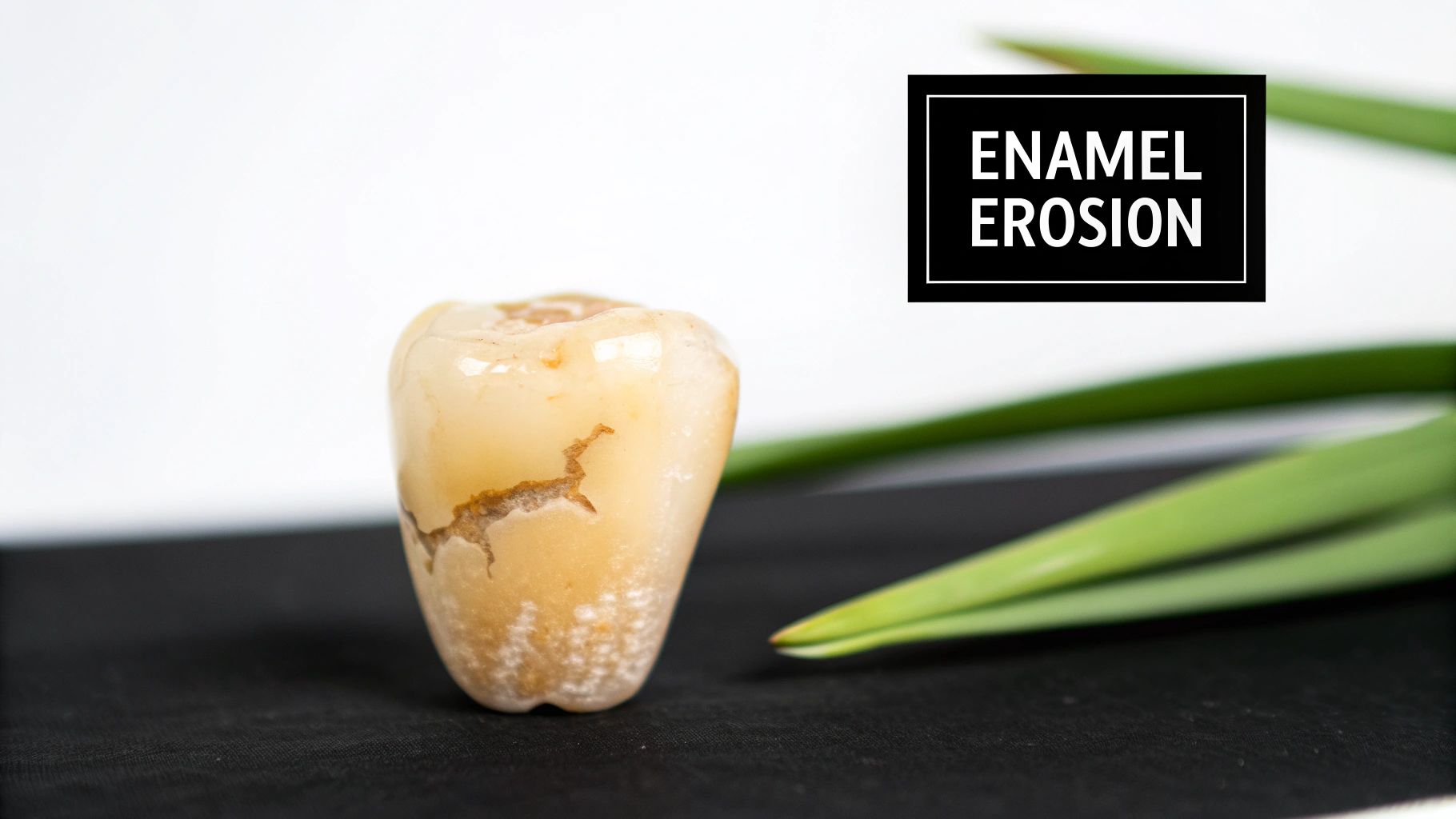
Every time you sip on a soda, enjoy citrus fruits, or drink wine or sports drinks, the pH level in your mouth drops. This acidic environment softens the enamel, causing it to lose vital minerals like calcium and phosphate. This process is called demineralization, and it's the root cause of erosion.
The Subtle Signs Of Enamel Wear
Enamel erosion usually starts quietly, making it easy to miss until the damage is more obvious. That's why catching the early warning signs is so important—it gives you a chance to act before things get serious.
Keep an eye out for a few key changes:
- Increased Sensitivity: Do you feel a sharp twinge when you eat or drink something hot, cold, or sweet? As enamel thins, it exposes the sensitive dentin layer underneath, causing that zinging sensation.
- Yellowish Discoloration: Enamel is naturally a whitish, translucent material. The dentin below it is yellow. As your enamel wears away, more of that yellow dentin shows through, making your teeth look dull or discolored.
- Changes in Tooth Shape: In more advanced stages, you might notice the edges of your teeth looking more rounded or developing small chips and cracks. The surfaces can also take on an unnaturally smooth, glassy look.
This isn't a rare problem. Enamel erosion affects a huge number of people, with some studies showing it impacts as many as 20-45% of adults. This is largely driven by modern diets that are packed with acidic foods and beverages.
Here’s the critical takeaway: once your enamel is gone, it's gone for good. Unlike bones or skin, tooth enamel doesn't contain living cells, which means your body can't regenerate it. This makes proactive prevention absolutely essential.
Your Roadmap To Enamel Protection
Fortunately, you have a lot of control when it comes to protecting the enamel you still have. While you can't regrow what's lost, you can definitely take steps to fortify what remains. If you want to dive deeper, our guide on ways to strengthen tooth enamel offers some great additional strategies.
The journey to preventing enamel erosion boils down to three core strategies, which we’ll cover step-by-step in this guide. For a quick overview, this table breaks down the essentials.
Quick Guide to Enamel Erosion Prevention
| Strategy | Key Action | Why It Works |
|---|---|---|
| Dietary Adjustments | Reduce acidic food/drink intake. Rinse with water after consumption. | Minimizes direct acid contact and helps neutralize pH levels in the mouth quickly. |
| Protective Oral Hygiene | Use a soft-bristled brush, wait 30-60 mins to brush after meals. | Prevents scrubbing away acid-softened enamel and promotes gentle cleaning. |
| Specialized Products | Use fluoride toothpaste and remineralizing pastes. | Actively replenishes lost minerals and strengthens the existing enamel structure against future acid attacks. |
Now that you understand the "why" behind erosion, you’re ready to tackle the "how." The following sections will give you practical, actionable steps to build a powerful defense system for your smile.
Your Diet's Impact on Acid Wear
What you eat and drink every day plays a starring role in the health of your tooth enamel. While your diet should be a source of nourishment and enjoyment, some of our favorite things can create a highly acidic environment in the mouth, directly contributing to the slow dissolution of your enamel.
This is the frontline where the battle for your smile’s long-term health is often won or lost.
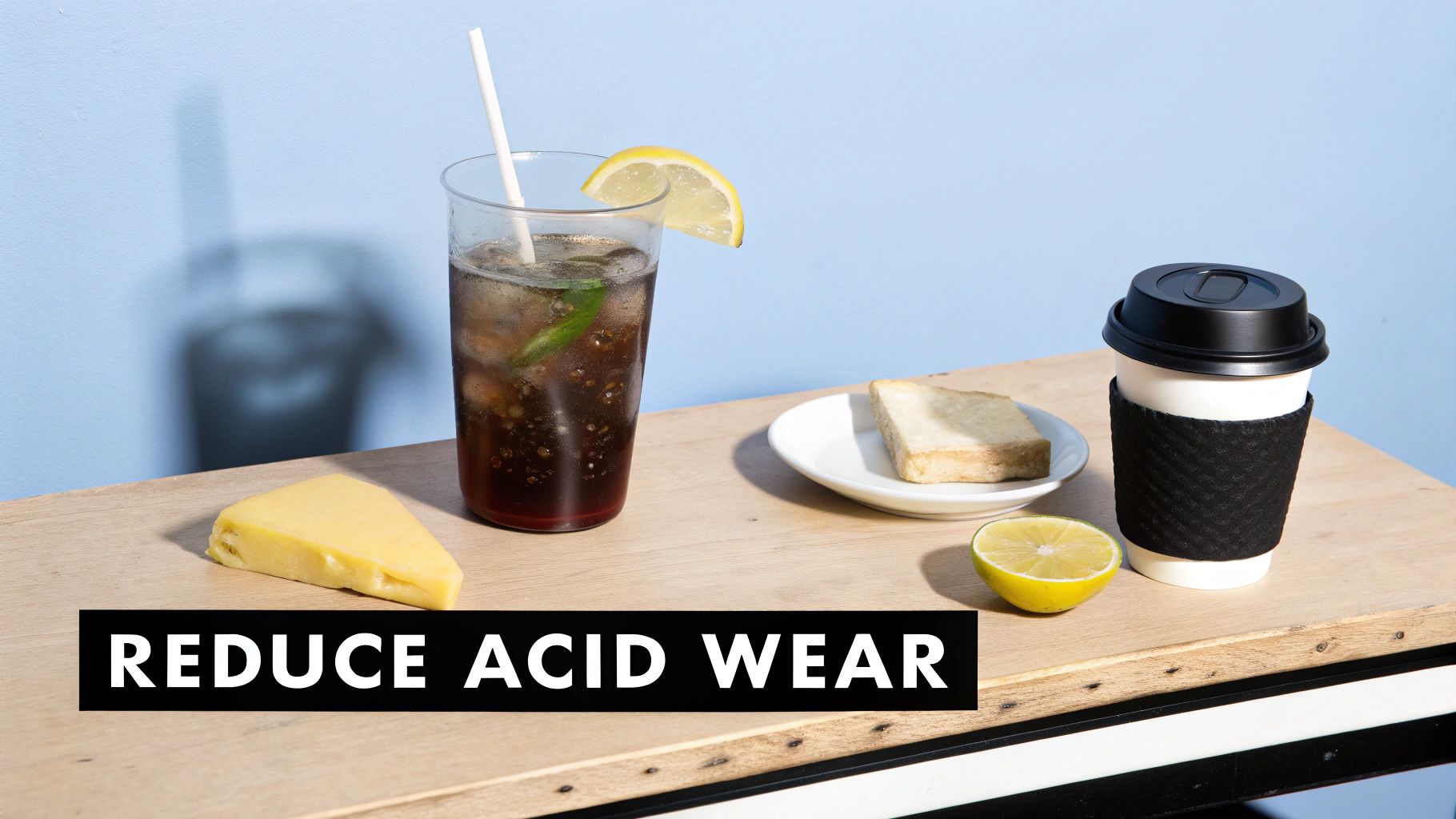
The first step in protecting your teeth is simply knowing which foods and drinks are the main offenders. This isn't about banning your favorite treats, but about being smarter about how and when you have them. The goal is to minimize how long your teeth are exposed to acid, giving your mouth a fighting chance to recover.
Identifying Common Acidic Culprits
Many popular foods and drinks have a surprisingly low pH, making them particularly tough on your enamel. You don’t have to cut them out entirely, but awareness is the key to managing their impact.
Here are some of the usual suspects:
- Sodas and Carbonated Drinks: Both regular and diet sodas are incredibly acidic, thanks to the carbonic acid they contain. This is a primary driver of enamel demineralization.
- Citrus Fruits and Juices: Oranges, lemons, limes, and grapefruits are packed with citric acid that can soften enamel, whether you eat them whole or drink their juice.
- Sports and Energy Drinks: These are often a double-whammy, loaded with both acid and sugar to improve flavor and shelf life.
- Wine: Both red and white wine are acidic, with white wine often being slightly more so. Swishing it around your mouth only prolongs the acid contact.
- Certain Sauces and Dressings: Think about vinegar-based salad dressings, tomato sauces, and even some salsas—they all contribute to the acidic load of a meal.
If you're wondering just how damaging some of these drinks can be, you can learn more about some of the worst offenders in the guide, "Are Energy Drinks Bad for You?".
Smart Habits to Neutralize Acid Attacks
The secret to preventing acid wear isn't some crazy restrictive diet; it's about adopting simple, strategic habits that fit your lifestyle. These small adjustments can dramatically reduce the damage from the acidic things you consume.
One of the easiest and most effective changes is to rinse your mouth with plain water right after you have something acidic. This simple act helps wash away those lingering acids and starts returning your mouth to a neutral pH. It's a perfect habit to get into after your morning coffee or that afternoon soda.
Using a straw when you drink acidic beverages is another game-changer. It helps guide the liquid past your front teeth, minimizing the direct assault on your enamel. This is especially helpful for anyone who regularly sips on soda, iced tea, or juice.
A critical mistake I see people make is brushing their teeth immediately after an acidic meal or drink. Your enamel is temporarily softened and vulnerable after an acid attack. Brushing at this point can physically scrub away the weakened enamel, making erosion even worse.
The 30-Minute Rule and Strategic Pairing
So, if you can't brush right away, what's the alternative? You just need to wait.
It's crucial to wait at least 30 to 60 minutes before you brush. This waiting period gives your saliva—your body’s natural defense system—time to neutralize the acids and start the remineralization process. Your saliva is rich in calcium and phosphates that help reharden your enamel.
Another powerful strategy is smart food pairing. You can consciously pair acidic foods with acid-neutralizing ones to buffer their effects. For example, eating a piece of cheese after a glass of wine or with some acidic fruit can help balance the pH in your mouth.
Here are a few other smart pairing ideas:
- Have a glass of milk or some yogurt with a meal that includes acidic foods.
- Add crunchy, high-fiber veggies like celery or carrots to your meal to kick saliva production into high gear.
- Finish your meal by chewing a sugar-free gum that contains xylitol, which stimulates saliva and helps fight cavity-causing bacteria.
By making these simple dietary tweaks, you can significantly lower your risk of acid wear. It’s all about creating a balanced oral environment where your enamel has the chance to recover and stay strong for the long haul.
Building an Enamel-Safe Oral Hygiene Routine
While tweaking your diet is a huge win for your teeth, your daily hygiene routine is where the real long-term defense is built. This is your frontline. It’s about more than just a quick brush twice a day; it's about being strategic with the tools and ingredients you use to actively strengthen your teeth against acid.
Let's dial in your approach, moving from basic cleaning to a focused, enamel-protecting strategy. It all starts with the very first thing you pick up each morning and night.
Choosing the Right Tools for the Job
The toothbrush you use matters—a lot. A hard-bristled brush, especially if you're an aggressive brusher, can be incredibly abrasive on enamel that's already been softened by acids. It's like taking fine-grit sandpaper to a delicate surface; you're creating microscopic scratches that add up to significant wear and tear over time.
The only real choice here is a soft-bristled toothbrush. It has all the cleaning power you need to get rid of plaque and food debris without physically scraping away your precious enamel. Remember, gentle, circular motions are far more effective and safer than scrubbing back and forth.
Your toothpaste choice is just as critical. Many "whitening" or heavy-duty "tartar control" toothpastes can be surprisingly harsh. You'll want to look for a low-abrasion formula. A quick search online for a toothpaste's Relative Dentin Abrasivity (RDA) score can tell you a lot. A lower score means it's gentler on your teeth while still getting the job done.
The Power of Fluoride for Enamel Defense
Fluoride is, without a doubt, the undisputed champion of enamel protection. It works through a process called remineralization, helping to replenish the calcium and phosphate minerals that acids love to steal from your teeth. But it does something even more important: when fluoride gets incorporated into your enamel, it creates a new, super-strong crystal structure called fluorapatite.
Think of it like upgrading your teeth's natural armor to a stronger, more durable version that's significantly more resistant to future acid attacks. Using a fluoride toothpaste is the single most fundamental thing you can do to stop enamel erosion in its tracks.
The science is clear: fluoride doesn't just clean your teeth; it chemically fortifies them. Every time you brush with a quality fluoride toothpaste, you're not just wiping away plaque—you're applying a microscopic, acid-resistant shield.
For those looking for the absolute best protection, it's worth knowing that not all fluoride is created equal. One game-changing strategy is to use a toothpaste with stabilized stannous fluoride (SnF2). Clinical studies have shown these formulas can slash enamel surface loss by an incredible 83% compared to standard sodium fluoride or arginine toothpastes. To learn more, check out our guide on choosing the best fluoride toothpaste for adults.
Strategic Rinsing for Maximum Protection
Adding a fluoride mouth rinse to your routine gives you an extra layer of defense, but the timing is everything. If you rinse immediately after brushing, you're just washing away the concentrated fluoride your toothpaste just delivered.
To get the most out of it, use your fluoride mouth rinse at a different time of day. A fantastic habit is to use it after lunch or as a mid-afternoon refresh. This helps neutralize any acids from your meal and gives your teeth an extra fluoride boost right when they need it, without messing with your morning or evening brushing. And always, always opt for an alcohol-free formula to avoid drying out your mouth.
If you're looking to explore how natural ingredients can support a healthier mouth, some people find that learning about aloe juice and oral care benefits adds another helpful dimension to their routine for overall gum and tissue health.
By combining these three elements—gentle tools, powerful fluoride, and smart rinsing—you build a complete daily hygiene plan. This isn't just a cleaning routine; it's a system designed to actively harden, protect, and defend your enamel from the constant threat of acid erosion.
Using Advanced Products for Remineralization
When your daily brushing and rinsing routine isn't quite cutting it, or if you're already feeling those tell-tale twinges of sensitivity, it's time to bring in the heavy hitters. This is where remineralization becomes your best friend. It’s a process where we actively put back the essential minerals—calcium and phosphate—that acid has stripped away, helping to rebuild and strengthen your enamel from the inside out.
For anyone with high-risk factors like acid reflux, a sugary diet, or simply existing enamel wear, a standard fluoride toothpaste might not be strong enough. That's when we turn to therapeutic-grade products packed with concentrated ingredients designed to halt erosion in its tracks.
The Power of Bio-Available Calcium and Phosphate
Fluoride is a superstar for enamel defense, but it can't work in a vacuum. It needs building blocks. Since your enamel is mostly made of calcium and phosphate, advanced products focus on delivering these minerals in a "bio-available" form—meaning your teeth can actually absorb and use them for repair.
One of the standouts in this category is MI Paste. It uses a unique technology called CPP-ACP (casein phosphopeptide-amorphous calcium phosphate). Think of it as a smart delivery system, carrying a super-concentrated dose of calcium and phosphate directly to your tooth's surface, right where it’s needed most.
By applying a paste like this, you’re not just playing defense; you're actively rebuilding weakened spots. It's a proactive step toward restoring your enamel's strength. You can dive deeper into the science in our detailed guide on MI Paste and how it works.
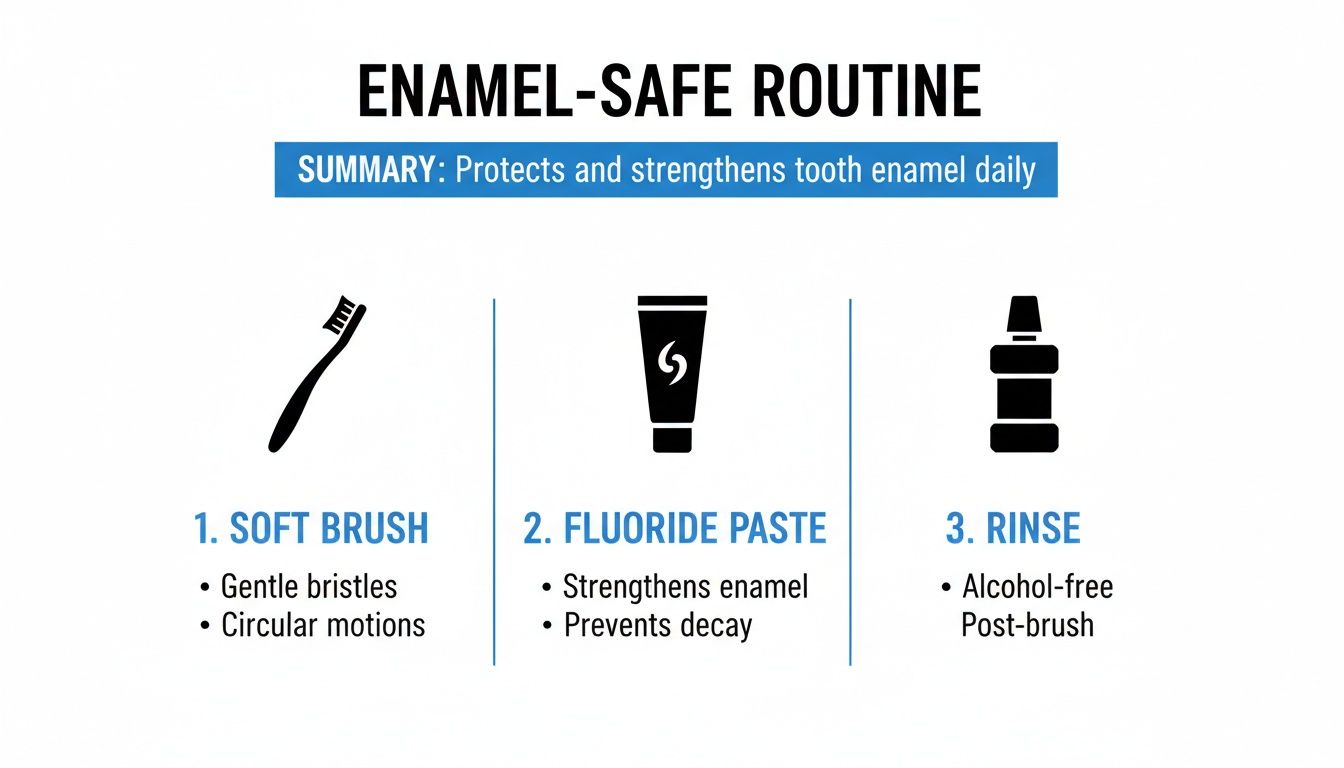
The best approach always combines multiple strategies. A soft brush, a powerful fluoride toothpaste, and a protective rinse create a complete system for daily defense against acid attacks.
Choosing the right product can feel overwhelming, but breaking it down by function makes it much easier.
Comparing Enamel Protection Products
To help you decide what might work best for your situation, here's a quick comparison of the different types of enamel-protecting products available.
| Product Type | Key Ingredient | Primary Benefit | Best For |
|---|---|---|---|
| High-Fluoride Toothpaste | Stannous Fluoride or Sodium Fluoride (5000 ppm) | Strengthens enamel and prevents cavities | Daily use for anyone at moderate to high risk of decay or erosion. |
| Remineralizing Paste | CPP-ACP (Casein Phosphopeptide-Amorphous Calcium Phosphate) | Delivers bio-available calcium and phosphate to rebuild enamel | Those with visible demineralization (white spots) or high sensitivity. |
| Silver Diamine Fluoride (SDF) | Silver and Fluoride | Stops active decay and creates a highly acid-resistant surface | Professional application for managing existing cavities or severe erosion non-invasively. |
| Alcohol-Free Rinse | Cetylpyridinium Chloride (CPC), Fluoride | Neutralizes acids and kills bacteria without causing dry mouth | Post-meal rinsing to reduce acid exposure and support overall oral health. |
Each product serves a specific purpose, from daily prevention to intensive repair. Your dentist can help you build a routine that incorporates the right solutions for your unique needs.
Understanding Professional-Grade Treatments
If at-home care isn't enough to get things under control, don't worry—your dentist has even more powerful tools. Professional treatments offer a durable, long-lasting barrier against acid that you simply can't get from over-the-counter products. We often recommend these for people with moderate to severe erosion or medical conditions that put their teeth at higher risk.
One of the most effective professional options is Silver Diamine Fluoride (SDF). This is a liquid that a dentist can simply paint onto affected teeth. It's a true game-changer because of its two-part action:
- The silver acts as a potent antimicrobial, killing off the bad bacteria that drive decay.
- The fluoride kicks remineralization into overdrive, creating an incredibly hard, acid-resistant surface.
SDF is a fantastic non-invasive tool. It essentially creates a shield on your tooth that physically stops the demineralization process. For many, it’s a way to manage erosion and decay without ever needing a drill or a filling.
The protective power of SDF is truly impressive. In studies where teeth were soaked in acidic drinks like Coca-Cola, untreated enamel lost hardness dramatically. But the enamel treated with SDF? It remained stable and strong, showing just how effective this treatment is at fending off acid challenges.
These advanced products and professional treatments represent the next level of enamel care. They offer active repair and powerful defense to keep your smile healthy and strong for years to come.
When to See Your Dentist About Enamel Wear
While your daily habits are the cornerstone of protecting your enamel, think of it as a partnership. The other half of that team is your dentist, and knowing when to bring them in is just as important as your at-home care.
Your efforts at home are powerful, but some signs indicate the damage has gone beyond what a toothbrush and good choices can fix. Ignoring these signals can turn small, manageable issues into much bigger, more expensive problems down the road.
Key Symptoms That Warrant a Dental Visit
If you're doing everything right but still notice things are off, it's time to book an appointment. These symptoms often mean erosion has reached a point where you need a professional to step in.
Keep a close eye out for any of these changes:
- Persistent Sensitivity: If that zing from hot coffee or cold ice cream isn't getting better with a sensitivity toothpaste—or is actually getting worse—it’s a major sign your enamel shield has thinned out.
- Noticeable Discoloration: Are your teeth looking more yellow? That's not just staining. It can be the darker layer beneath your enamel, called dentin, starting to show through. This is a classic sign of advanced wear.
- Changes in Tooth Shape or Texture: Take a look at the edges of your front teeth. Do they seem rounded or almost sanded down? You might also spot tiny dents, or "cupping," on the chewing surfaces of your back teeth.
- Increased Chipping or Cracking: Teeth with weak enamel are brittle. If you suddenly find yourself with little chips or fractures from eating something you normally wouldn't think twice about, that’s a red flag.
Don't wait until you're in pain to make the call. Enamel erosion is sneaky in its early stages. By being proactive when you first notice something is wrong, you give your dentist the best chance to intervene and save as much of your natural tooth as possible.
What to Expect During Your Consultation
When you see your dentist about enamel wear, their first job is to play detective. They need to figure out how much damage has been done and, just as importantly, what's causing it.
The appointment will start with a careful visual exam, where your dentist will look for those tell-tale signs like transparency, yellowing, and changes to the tooth's shape. They’ll also want to talk—really talk—about your diet, your daily habits, and any health conditions like acid reflux that might be contributing to the problem. This conversation is absolutely crucial for creating a prevention plan that's actually going to work for you.
Professional Treatments for Enamel Erosion
If the erosion is fairly significant, don't worry—your dentist has options. Restorative treatments can protect the vulnerable parts of your teeth, get rid of sensitivity, and bring back their original look and feel.
Here are a few common solutions your dentist might recommend:
- Dental Bonding: This is a great, minimally invasive option for mild to moderate wear. Your dentist applies a tooth-colored resin material directly to the worn spots and hardens it with a special light. It's like putting a new, protective layer right where you need it most.
- Veneers: If the erosion is more widespread on your front teeth, custom-made porcelain shells called veneers are a fantastic solution. They are bonded to the front surface, restoring the tooth's appearance while acting as a durable shield against future acid attacks.
- Crowns: For severe cases where a lot of the tooth structure is gone, a crown (or "cap") is the best bet. It covers the entire tooth, giving it back its original strength, shape, and function. Think of it as a helmet for your tooth.
Knowing when to tag in your dentist is a vital part of your enamel protection strategy. When you combine your daily diligence with their expert care, you've got the ultimate defense for your smile.
Answering Your Top Enamel Questions
As you start focusing more on preventing enamel erosion, it’s only natural to have a few questions. The world of oral health can seem a little complicated, but getting clear, straightforward answers is the best way to build a routine that actually protects your smile.
Let's clear up some of the most common questions and myths we hear about keeping your enamel strong for the long haul.
Can You Naturally Rebuild Lost Tooth Enamel?
This is a big one, and the answer is a bit of a "yes and no." Unfortunately, once enamel is completely gone and the dentin underneath is exposed, your body can't grow it back. Unlike our skin or bones, enamel doesn't have living cells, so it can't regenerate on its own.
But here’s the good news—and it's a crucial distinction: you absolutely can strengthen and remineralize enamel that's been weakened in the early stages. This process literally puts minerals back onto the tooth’s surface. While your saliva is your body's first line of defense, sometimes it needs a helping hand.
This is exactly where powerhouse ingredients like fluoride, calcium, and phosphate come into play.
- Fluoride: Helps form a new, stronger crystal structure on your enamel that's more resistant to acid.
- Calcium and Phosphate: These are the actual building blocks that get deposited back onto your tooth surface, patching up weakened spots.
Products like MI Paste Plus are formulated specifically for this. They deliver a concentrated, bio-available dose of these minerals to actively fortify the enamel you have against future acid attacks. The real takeaway here is to act early. The sooner you intervene, the more of your natural tooth structure you can save.
Does Teeth Whitening Cause Enamel Erosion?
It's a valid concern—does a brighter smile come at the cost of its strength? The short answer is no. When done correctly with trusted, professional-grade products, teeth whitening is safe for your enamel. Whitening gels use active ingredients like carbamide peroxide or hydrogen peroxide to do their job.
These ingredients work by gently opening the microscopic pores in your enamel to lift stains out from within. For some, this can cause temporary sensitivity because the inner part of the tooth is a little more exposed, but it does not cause permanent erosion or structural damage as long as you follow the directions.
The real danger isn't from the whitening itself, but from misuse. This usually comes from two things: overusing whitening products or trying abrasive DIY "hacks" you see online. Scrubbing your teeth with things like charcoal or harsh pastes can physically scratch your enamel, while whitening too often can lead to persistent, painful sensitivity.
Always stick to dentist-recommended brands, follow the instructions perfectly, and give your teeth a break between treatments. A great pro-tip is to use a remineralizing toothpaste alongside your whitening routine. This helps ensure your enamel stays strong and mineral-rich throughout the process.
How Long Should I Wait to Brush After Acidic Foods?
Adopting this one habit can make a massive difference in preventing enamel erosion. The golden rule is to wait at least 30 to 60 minutes after consuming anything acidic before you even think about brushing. This isn't just about soda and citrus—it includes your morning coffee, wine, sports drinks, and even a salad with vinaigrette.
So, why the wait? When you consume something acidic, it temporarily softens the very outer layer of your enamel, leaving it vulnerable. If you brush right away, the bristles of your toothbrush essentially act like sandpaper on that softened surface, physically scrubbing away microscopic bits of your enamel.
Done day after day, this habit can seriously accelerate erosion. Waiting 30-60 minutes gives your saliva time to work its magic. Saliva naturally neutralizes acid, bringing the pH in your mouth back to a safe level and kicking off the remineralization process.
To give your saliva a head start, try rinsing your mouth with plain water right after an acidic meal or drink. It helps wash away the lingering acid and reduces the total time your teeth are under attack.
At DentalHealth.com, we give you access to the professional-grade products that are the foundation of any solid enamel protection plan. From high-fluoride toothpastes like Fluoridex to powerful remineralizing solutions like MI Paste, you can find the dentist-recommended tools needed to build a stronger, more resilient smile. Explore our complete collection of oral care essentials at https://dentalhealth.com and take control of your dental health today.