
Just Right Toothpaste: Finding Your Perfect Match
Standing in the toothpaste aisle, shoppers do the same thing. They scan bright boxes, recognize a familiar name, and put the tube in the cart without much thought. The problem is that toothpaste is not one-size-fits-all, and the tube that works fine for one person can be the wrong match for someone else.
A better approach is the just right toothpaste framework. It means matching the product to the problem, whether that problem is sensitivity, cavity risk, stain control, dry mouth, or a child who needs supervision and the right amount of fluoride. That mindset keeps you from paying for features you don't need, and it helps you focus on ingredients that matter.

Why Finding Your Just Right Toothpaste Matters
A patient once told me she had used the same mint toothpaste for years because it was “fine.” Her teeth were fine, too, until cold drinks started triggering sharp pain and she began avoiding one side of her mouth. That's the trap with toothpaste habits, they often survive long after your needs change.
The just right toothpaste is the one that fits your mouth today, not the one that was convenient three years ago. Daily toothpaste use isn't just about freshness, it's part of how people manage cavity prevention, sensitivity, stain removal, and gum support. The category itself is broad because dental needs are broad, and the wrong match can leave important problems unaddressed.
What “good enough” often misses
A tube that tastes nice may still be the wrong choice if it lacks the ingredient you need. If you have sensitivity, a whitening formula alone won't solve pain. If you're prone to decay, a cosmetic or trendy option may not give you the fluoride support your enamel needs.
The wider toothpaste market reflects that demand for different use cases. Standard toothpaste held 53.64% of the worldwide toothpaste market in 2025, which shows how dominant everyday formulas remain, and in the United States toothpaste represented 48.32% of the oral-care market in 2025 (global toothpaste market context, U.S. oral-care market context). Those numbers describe the market, not any single brand, but they do show why ordinary daily-use toothpaste still matters.
Practical rule: Don't shop for the flashiest box. Shop for the ingredient that matches the problem.
Understanding Toothpaste Categories and Key Ingredients
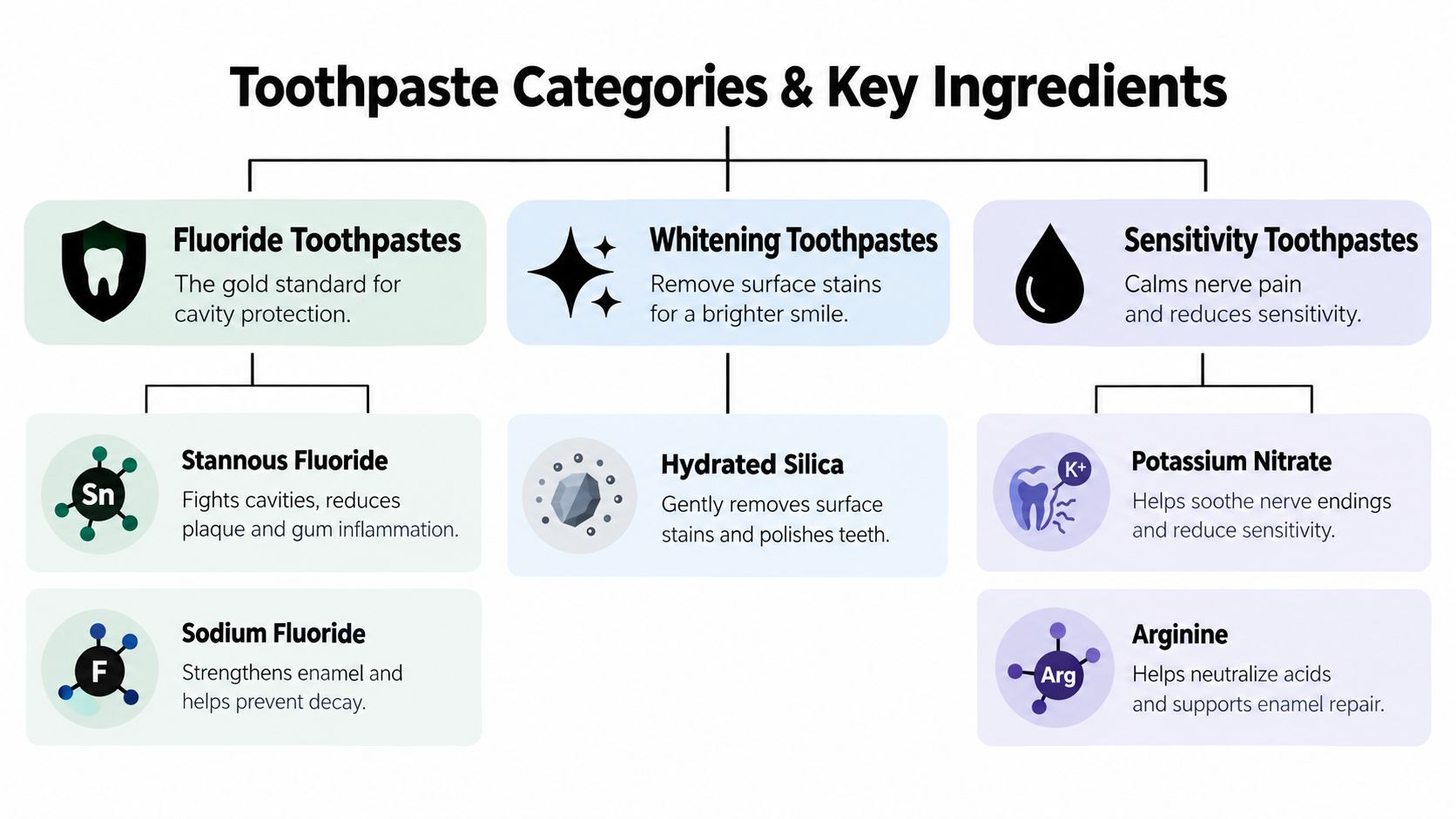
A patient choosing toothpaste often faces several claims on one tube: cavity protection, sensitivity relief, whitening, natural ingredients, and a deep-clean finish. These categories overlap, but the active ingredients determine what the product can realistically do. Reading that list helps match the formula to your dental needs instead of following packaging or trends.
The main categories that actually matter
Fluoride toothpastes remain the foundation for everyday cavity prevention. Fluoride helps enamel resist acid and supports remineralization, so it is usually the first ingredient to look for unless your dentist has recommended another approach. The right formula still depends on your cavity risk, brushing habits, and overall oral health.
Sensitivity toothpastes commonly contain potassium nitrate or stannous fluoride. These ingredients address discomfort that occurs when cold, heat, or sweetness reaches exposed dentin, although relief may take consistent use. Compare the active ingredient rather than relying on the brand name. This guide to sensitive teeth toothpaste active ingredient choices provides a useful reference when evaluating options.
Whitening toothpastes serve a narrower purpose. Ingredients such as hydrated silica polish away surface stains from coffee, tea, or wine. They can make teeth look cleaner, but they do not change the tooth's natural shade or provide the same result as professional whitening for deeper discoloration. Some whitening formulas may also feel less comfortable if your teeth are already sensitive, so stain-removal goals need to be balanced against comfort.
Reading past the label claims
Words such as “advanced,” “natural,” and “deep clean” describe marketing positions, not necessarily clinical benefits. Ask two questions: what is the active ingredient, and which problem is it designed to address? Choose fluoride for cavity protection, a recognized sensitivity ingredient for dentin-related pain, and a polishing agent when the goal is surface-stain removal.
A toothpaste can also contain inactive ingredients that control texture, foam, flavor, and shelf stability. These features affect comfort and whether you brush consistently, but they do not provide the main protection. Your just right choice should therefore combine a useful active ingredient with a texture and flavor you will use twice daily.
Fluoride Options From Regular to Prescription Strength
For a patient with low or moderate cavity risk, a standard over-the-counter fluoride toothpaste may fit a twice-daily routine. Prescription-strength fluoride is a different decision. It is reserved for situations in which the patient's risk remains high despite consistent home care, or where a dentist identifies a specific need for additional support.
Standard fluoride versus high-fluoride formulas
Just Right 5000 is a prescription-strength dentifrice gel containing 1.1% sodium fluoride by weight, or about 5,000 ppm fluoride ion. Standard U.S. over-the-counter toothpastes generally contain 1,000 to 1,500 ppm (ADA fluoride guidance). The practical distinction is dosing, not a superior label. A higher concentration changes how the product is prescribed and monitored.
A dentist may consider prescription strength for patients with xerostomia, frequent sugar or acid exposure, orthodontic appliances, exposed root surfaces, or recurrent decay. These factors increase the chance that routine brushing will not provide enough protection on its own. A single risk factor does not automatically require a prescription. The decision should reflect the patient's decay history, saliva flow, diet, appliances, root exposure, and ability to follow instructions.
Safety matters more as strength rises
High-fluoride toothpaste should be used according to professional instructions. Patients need clear guidance on the amount to apply, how often to use it, and how to avoid swallowing it. Keep the tube away from young children, since excess fluoride ingestion can cause toxicity or fluorosis while teeth are developing.
Age and swallowing ability also affect the decision. A child who cannot reliably spit should not use a high-fluoride product like a small adult. Adults with dry mouth or repeated decay may benefit when the product is carefully integrated into a broader prevention plan.
Prescription fluoride is a targeted tool, not a default upgrade. It fits higher-risk mouths and requires appropriate supervision.
Patients comparing branded prescription products can review an overview of Fluoridex toothpaste, then discuss whether the formulation and dosing suit their history. Repeated decay, dry mouth, or difficulty controlling plaque are reasons to ask a dentist for an individualized recommendation rather than choosing by concentration alone.
How to Choose Toothpaste for Your Specific Needs
The simplest way to choose toothpaste is to start with the problem you want to solve. If you try to solve everything at once, you usually end up with a tube that does one thing okay and nothing particularly well. A focused choice works better.
Match the formula to the need
- Sensitivity: Look for potassium nitrate or stannous fluoride if hot, cold, or sweet foods trigger discomfort.
- Whitening: Choose a formula with gentle abrasives if your goal is surface stain removal, not a dramatic color shift.
- Cavity prevention: Pick a fluoride toothpaste first, especially if you're prone to decay or skip brushing occasionally.
- Gum concerns: Ask whether a stannous fluoride formula fits your routine if your gums bleed easily or plaque builds up fast.
- Dry mouth: Focus on comfort, because dry mouths often need a toothpaste you'll use consistently, not one that feels harsh.
Children need a separate decision. The most important issue isn't flavor, it's exposure control. The earlier section on high-fluoride products matters here, because a child who can't spit reliably should never be treated like a small adult using the same amount and strength.
A good label-reading habit helps too. If the toothpaste hides its useful ingredient behind vague language, that's a signal to slow down. The practical question is not, “What does the ad promise?” It's, “What ingredient is doing the work?”
When uncertainty stays high, ask a dentist or hygienist for a direct recommendation. A resource like what toothpaste do dentists recommend is helpful, but it's most useful when paired with your own exam findings and history.
Real Examples of Matching Toothpaste to Dental Situations
A woman with sensitivity after whitening treatments may need to step back from a brightening formula and switch to a toothpaste built around nerve-calming ingredients. In that situation, the issue isn't brand loyalty, it's restoring comfort so she can brush consistently. The best choice is the one that lets her keep a normal routine.
A patient with repeated cavities often needs a different conversation. Standard toothpaste might be enough for someone with low risk, but recurrent decay usually justifies asking about stronger fluoride support and professional supervision. If that sounds familiar, your dentist may also review other treatments offered by a local practice, because toothpaste alone isn't the whole plan. One example of a broader treatment overview appears here: treatments offered.
For a parent, the toothpaste question is often about control. A metered pump can help limit over-application, but it does not remove the need for supervision, especially when a child can't reliably spit. That distinction matters more than the front-of-box claim.
A patient with gum inflammation may do better with a formula that addresses both plaque and gum response instead of a plain freshening paste. The point isn't to chase every benefit in one tube. It's to choose the one that solves the most important problem first.
Making Your Just Right Toothpaste Decision
The best toothpaste is the one that fits your mouth, your risk level, and your ability to use it every day. That sounds simple, but it cuts through most of the confusion on the shelf. A tube doesn't need to be trendy to be effective.
Start by naming your main need. If it's sensitivity, choose a formula built for that. If it's cavity prevention, prioritize fluoride. If it's staining, use a whitening toothpaste for surface cleanup and keep expectations realistic. If you have children, focus on age-appropriate use and swallowing control, not just taste.
A few common myths create bad decisions. Natural doesn't automatically mean safer or more effective. Whitening doesn't always mean better oral health. And a stronger product isn't automatically the right product unless your risk level calls for it. The label should match the problem, not the trend.
If your needs change, your toothpaste can change too. A person who was fine with a basic fluoride paste two years ago may need a sensitivity formula now or a higher-fluoride option later. That flexibility is part of smart oral care, not inconsistency.
When you want product information, practical comparisons, or help sorting through professional-grade options, DentalHealth.com offers a focused place to compare oral care products and learn what each one is meant to do. Visit DentalHealth.com to review options that align with your needs and make your next toothpaste choice with more confidence.