
What Toothpaste Do Dentists Recommend? Find Your Best Option
Walk down any oral care aisle, and the sheer number of toothpaste choices can feel overwhelming. With so many brands promising brighter, stronger, or healthier teeth, how do you know which one is actually the best?
If you ask a dentist, the answer isn't about a specific brand. It’s about a specific seal. The first thing any dental professional looks for is the American Dental Association (ADA) Seal of Acceptance. That little logo on the box is your guarantee that the toothpaste contains fluoride—the single most important ingredient for protecting your teeth.
The One Thing Dentists Agree On
Before we even get into whitening, sensitivity, or tartar control, we have to talk about fluoride. It’s the undisputed champion of oral health for a very simple reason: it works.
Think of your tooth enamel as a strong, protective shield. Every single day, acids from the foods you eat and the bacteria in your mouth launch an attack on that shield, stripping away its minerals. This process is called demineralization.
Fluoride is like your enamel’s personal repair crew. When you brush, it gets absorbed into the tooth surface, reinforcing the shield and making it more resistant to future acid attacks. It doesn't just prevent damage; it can actually reverse the early stages of decay through a process known as remineralization.
Why the ADA Seal Matters
The ADA Seal of Acceptance isn't just a marketing gimmick. It's a sign that the product has gone through rigorous, science-backed testing. To earn that seal, a toothpaste company must provide hard scientific data proving to the ADA's independent council of experts that its product is both safe and effective at fighting cavities.
This is exactly why dentists put so much trust in it. Fluoride is the gold standard, backed by decades of research showing it can reduce cavities by up to 25% when used daily.
To put it in perspective, here's a quick summary of why this mineral is so essential for your daily brushing routine.
Why Dentists Prioritize ADA-Approved Fluoride Toothpaste
| Key Benefit | Why It Matters for Your Teeth |
|---|---|
| Remineralization | Actively rebuilds weakened enamel to reverse the very earliest signs of tooth decay. |
| Acid Resistance | Integrates into the tooth structure, creating a stronger surface that’s tougher for plaque acids to penetrate. |
| Cavity Prevention | Creates a less hospitable environment for the harmful bacteria that cause cavities. |
| Proven Effectiveness | Decades of clinical research confirm its ability to significantly reduce tooth decay across all age groups. |
Ultimately, fluoride's ability to both protect and repair your teeth is why it's the foundation of any good oral care routine.
A toothpaste without fluoride is like a raincoat full of holes—it might look the part, but it won’t provide the essential protection you actually need when faced with an assault from plaque and dietary acids.
Once you’ve made sure your toothpaste has that ADA seal and contains fluoride, then you can start looking for formulas that tackle your other specific concerns, like sensitivity or whitening.
You can also explore our detailed guide on finding the best fluoride toothpaste for adults to learn more.
Decoding Your Toothpaste Ingredients
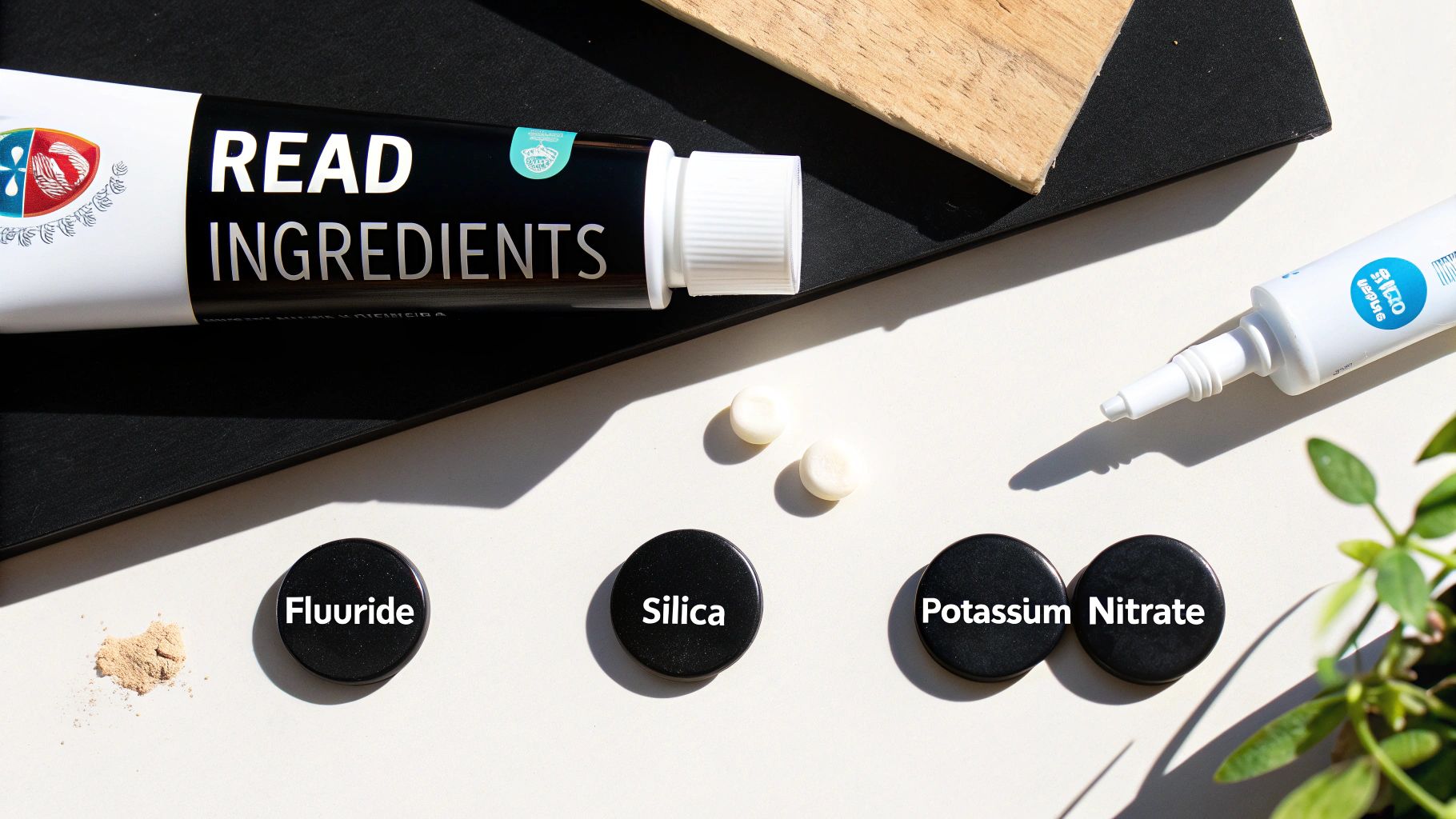
Okay, so you've checked for fluoride and the ADA Seal. That's a great start. But if you really want to find the perfect toothpaste, it’s time to flip the tube over and look at the fine print.
Understanding the other ingredients on the label lets you move past the marketing hype and choose a product that actually solves your specific dental problems.
Think of your toothpaste like a well-trained pit crew. Fluoride is the star mechanic, but it's the supporting team that makes everything run smoothly. These other ingredients handle everything from the paste's texture and cleaning power to its specialized, therapeutic benefits.
The Core Components in Every Tube
No matter what a toothpaste claims to do—whiten, desensitize, or fight tartar—it has a few foundational ingredients that do the basic jobs of cleaning your teeth. These are the unsung heroes working behind the scenes in every squeeze.
-
Abrasives: These are the gentle "scrubbers" that physically lift away plaque, food particles, and surface stains. You’ll see ingredients like hydrated silica or calcium carbonate, which act like a super-fine polish to clean your teeth without scratching the enamel.
-
Humectants: Ever wonder why your toothpaste stays a smooth paste and doesn't dry out into a chalky brick? That’s the work of humectants like glycerol or sorbitol. They trap water in the formula to keep it at the perfect consistency.
-
Detergents: That satisfying foamy feeling you get when you brush comes from detergents, most often sodium lauryl sulfate (SLS). The foam helps spread the toothpaste all around your mouth, getting into nooks and crannies to lift away debris.
While these ingredients form the foundation of any good toothpaste, the real magic for targeting specific issues comes from the next group.
Reading a toothpaste label shouldn't feel like a chemistry exam. By understanding the roles of a few key ingredients, you can confidently select a product that targets your unique needs, from sensitivity relief to tartar prevention.
Therapeutic Ingredients for Targeted Action
This is where toothpaste goes from being a simple cleaner to a specialized treatment. These "active" ingredients are what dentists look for when recommending a paste to solve a specific problem.
-
For Sensitivity: If a sip of hot coffee or a bite of ice cream sends a jolt through your teeth, you need a toothpaste with potassium nitrate or stannous fluoride. Potassium nitrate works by soothing the nerves inside your teeth, while stannous fluoride acts like a shield, blocking the tiny pathways that lead to those nerves.
-
For Tartar Control: When plaque sits on your teeth for too long, it can harden into tartar (or calculus), which can only be removed by a dental professional. Ingredients like pyrophosphates and zinc citrate are game-changers because they interfere with this hardening process, stopping tartar before it can even form. You can learn more about other beneficial ingredients like xylitol in our other guides.
Once you know how to spot these key players, you can decode any toothpaste label and find the exact formula your smile needs.
Finding Relief for Sensitive Teeth
If a blast of cold air or a sip of an icy drink makes you cringe, you’re in good company. Tooth sensitivity is one of the most common complaints we hear, and it usually boils down to a simple problem with your tooth's structure. Think of the hard outer layer of your tooth, the enamel, as a protective shield.
Underneath that shield is a softer, more porous layer called dentin. This layer is threaded with thousands of microscopic channels, called dentin tubules, that are like tiny, direct phone lines to the tooth's nerve. When your enamel wears away or your gums pull back, these channels get exposed. Things like cold, heat, or even sweetness can rush down these pathways and send a zinging pain signal straight to the nerve.
This is where the right toothpaste can be a game-changer. When dentists point you toward a sensitivity toothpaste, they’re usually recommending a product that fixes this problem in one of two main ways.
How Sensitivity Toothpastes Work
The first strategy is to quiet the nerve down. Ingredients like potassium nitrate work by interfering with the nerve's ability to send pain signals. It essentially tells the nerve to calm down, making it less likely to overreact when a trigger comes along. It’s like turning down the volume on a super-sensitive alarm.
The second method is all about blocking those open channels. Ingredients such as stannous fluoride or arginine create a barrier over the exposed dentin. By sealing off the tubules, they stop triggers from ever reaching the nerve in the first place. This is like patching up the holes in that protective shield. You can dive deeper into specific products in our guide to the best toothpaste for sensitive teeth.
Protecting Your Enamel Shield
Of course, the best defense is a good offense—and that means protecting your enamel from wearing down to begin with. Enamel erosion is a major cause of sensitivity, often accelerated by acidic foods and drinks like citrus, coffee, and soda. The tricky part is, once enamel is gone, it doesn't grow back. Protecting what you have is absolutely crucial.
Toothpastes designed for enamel protection are formulated to actively strengthen and reharden this vital outer layer. They use highly effective fluoride systems to help your enamel stand up to the daily barrage of acid attacks from your diet.
Pronamel is the #1 dentist-recommended toothpaste for enamel protection for a reason. It directly tackles the fact that 9 out of 10 adults show signs of enamel loss from dietary acids. Studies show its formula can reharden enamel that's been softened by acid and make it up to 50% more resistant to future erosion after only three weeks of use. Explore more data on enamel protection.
Choosing the Right Toothpaste for Your Goals
Once you've made sure your toothpaste has fluoride, you can start narrowing down the options based on what you want to achieve. Think of fluoride as the non-negotiable foundation. Everything else is about targeting your specific oral health goals, whether that’s getting a brighter smile, keeping tartar in check, or calming sensitive teeth.
Let's cut through the marketing noise and look at how these specialized formulas actually work.
Tackling Whitening, Tartar, and Bad Breath
Getting a whiter smile is probably one of the most common goals. It's crucial to understand that "whitening" toothpastes don't bleach your teeth. Instead, they use gentle abrasives, like hydrated silica, to polish away surface stains. They're fantastic for lifting the daily grime from coffee, tea, and red wine to reveal your teeth's natural, brighter shade underneath.
If you're looking for a dramatic color change, that’s a job for professional treatments that use bleaching agents to lighten the tooth's internal color. No over-the-counter paste can do that.
Another big concern for many is tartar. Plaque is that soft, sticky film of bacteria that's always trying to set up camp on your teeth. If you don't brush it away, it hardens into a rock-like substance called calculus, or tartar. Once it's there, only a dental professional can scrape it off.
Tartar control toothpastes jump in to stop that hardening process. They use ingredients like pyrophosphates or zinc citrate that prevent plaque from calcifying. This simple step makes your daily brushing much more effective and helps keep your teeth cleaner between professional cleanings.
And what about bad breath? A good toothpaste does more than just blast your mouth with minty flavor. Formulas designed for fresh breath often contain antibacterial agents that go after the root cause: the volatile sulfur compounds produced by mouth bacteria. By knocking down the bacteria, they offer freshness that actually lasts.
The decision tree below gives you a clear visual for thinking through a common problem like tooth sensitivity.
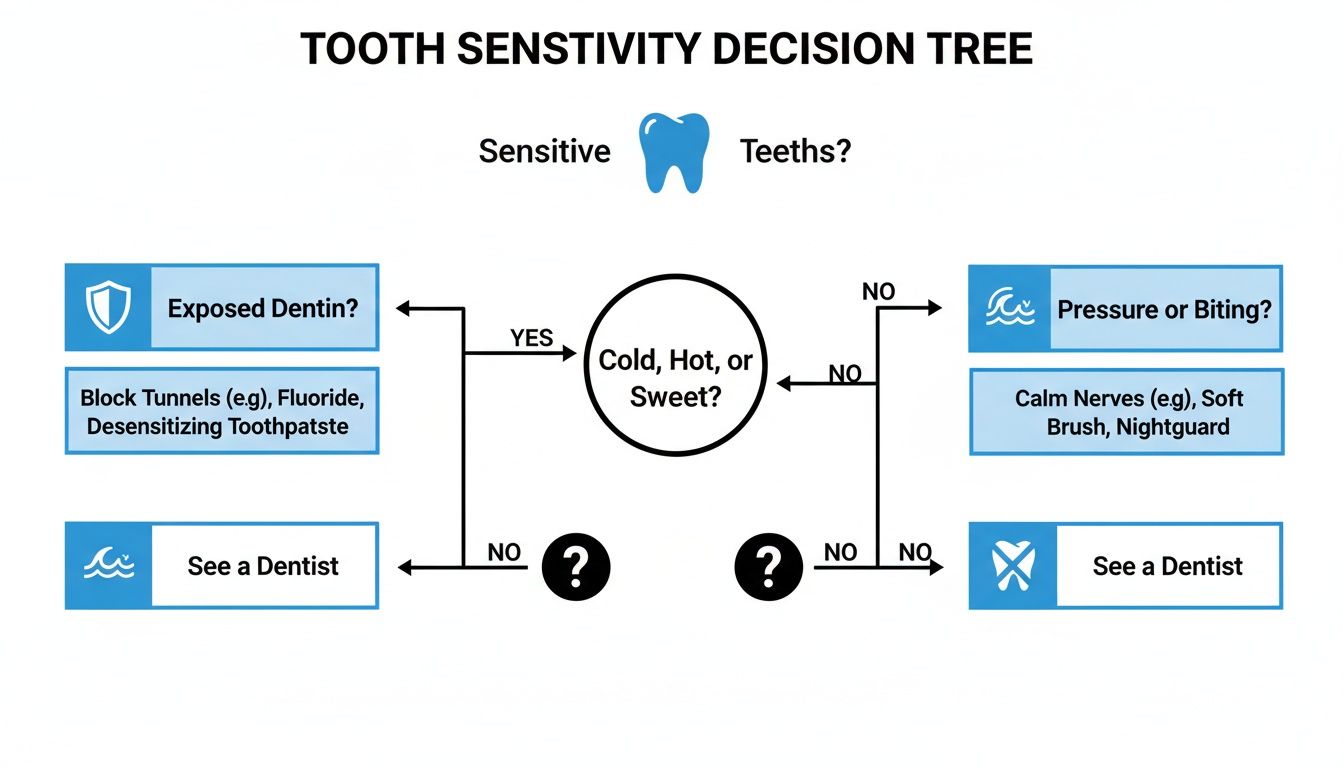
As you can see, sensitivity toothpastes have two main strategies: either block the tiny channels in your dentin or soothe the nerve itself.
Matching Ingredients to Your Needs
The sheer variety of specialized toothpastes out there shows how much dentistry has moved toward personalized recommendations. It's all about matching the right active ingredients to the right person. In 2023, ingredients like stannous fluoride and potassium nitrate have been front and center for their proven results.
Studies have found these ingredients can provide sensitivity relief in 82% of users after just two weeks and reduce plaque by 25% more than standard sodium fluoride. With nearly half of all adults dealing with some level of tooth sensitivity, it’s no wonder dentists are pointing patients toward these targeted solutions. You can read more about these toothpaste recommendations and their effectiveness.
To make this even simpler, here’s a quick-reference table to help you connect your goal with the right ingredient on the label.
| Your Goal | Key Ingredient to Look For | How It Works (Simplified) |
|---|---|---|
| Sensitivity Relief | Potassium Nitrate or Stannous Fluoride | Calms the tooth's nerve or blocks the tiny tubes leading to it. |
| Tartar Control | Pyrophosphates or Zinc Citrate | Prevents sticky plaque from hardening into stubborn tartar. |
| Whitening | Hydrated Silica or Calcium Carbonate | Gently polishes away surface stains without bleaching. |
| Cavity Prevention | Sodium Fluoride or Stannous Fluoride | Strengthens tooth enamel to make it more resistant to acid attacks. |
This table helps you quickly scan an ingredient list and know if that toothpaste is actually equipped to do the job you need it to do.
When choosing a specialized toothpaste, think of it as hiring an expert for a specific job. You wouldn't hire a plumber to fix your roof. Likewise, pick a toothpaste with the right active ingredient—like pyrophosphates for tartar or potassium nitrate for sensitivity—to solve your unique dental concern.
By taking this targeted approach, you ensure you're not just cleaning your teeth, but actively managing your specific oral health with every brush. Match your goal to the ingredient, and you can feel confident you're making a choice your dentist would approve of.
Toothpaste for Specific Health Needs
While your everyday fluoride toothpaste is a fantastic all-rounder, certain times in life or specific health conditions demand a more specialized tool for the job. Think of it like this: you wouldn't wear hiking boots to a marathon. Choosing a toothpaste that's built for your unique situation can make a world of difference.
This is especially true when we're talking about the littlest smiles in your family. Getting them started with great habits is everything, and that begins with having the right toothpaste on their brush.
Toothpaste for Kids
With children, the mission is twofold: protect their brand-new teeth and make brushing a positive habit they'll carry for life. Dentists overwhelmingly recommend an ADA-approved children's toothpaste that contains fluoride. But the amount is absolutely critical. For toddlers under three, you only need a smear the size of a single grain of rice.
Fun, kid-approved flavors like fruit or bubblegum can also transform brushing from a daily battle into a simple part of their routine. The main goal is to deliver the cavity-fighting power of fluoride in a safe, age-appropriate formula they won’t fuss about using.
It’s not just about the paste, it’s about the process. Parents really need to supervise brushing until their child has the motor skills to do a good job on their own, which is usually around age six. This makes sure teeth get properly clean and kids aren't swallowing the toothpaste.
Caring for Teeth with Braces
Braces create a whole new obstacle course for your toothbrush. All those brackets and wires are perfect hiding spots for plaque, which dramatically increases the risk for cavities and those pesky white spots that can appear after the braces come off.
When you have braces, you'll want to find a non-abrasive toothpaste. A formula that's too gritty could potentially scratch or even damage the orthodontic hardware. The focus should be on a smooth but effective fluoride paste that can navigate around all that metal and clean thoroughly without causing any wear and tear.
Managing Dry Mouth
Dry mouth, which dentists call xerostomia, is much more than just an uncomfortable nuisance. It turns your mouth into a perfect breeding ground for decay. Saliva is your body's natural defense force—it neutralizes acids and washes away food debris. When you don't have enough of it, your teeth are left defenseless.
Because of this, anyone dealing with dry mouth should look for toothpastes made specifically to bring relief and add protection. Dentists often suggest formulas that are free of harsh detergents like sodium lauryl sulfate (SLS), which can actually make dryness worse.
Instead, look for products containing enzymes or other ingredients that mimic saliva's natural protective qualities. They can provide much-needed comfort while giving your enamel a defensive boost. It's also worth noting that systemic issues like heartburn and acid reflux can wear away enamel, making the right protective toothpaste even more crucial for overall oral health.
Your Simple Guide to Choosing the Right Toothpaste
Walking down the toothpaste aisle can feel like you're studying for a final exam. With so many options, how do you know you're making a choice your dentist would approve of? It's actually easier than you might think.
The key is to follow a simple, clear checklist. This turns a confusing chore into a confident, informed decision, empowering you to pick the perfect product for your specific needs.
First things first, there's one thing that isn't up for debate. Before you even think about flavors, brands, or fancy packaging, your eyes should be looking for the American Dental Association (ADA) Seal of Acceptance. This little seal is a big deal—it's your guarantee that a toothpaste is safe, it does what it says it will do, and it contains fluoride. Fluoride is the single most important ingredient for fighting off cavities, period.
Your Four-Step Checklist
Once you've spotted that ADA Seal, the rest is just about matching a product to your own dental health goals. Use these four steps the next time you're shopping, and you'll never feel lost in the toothpaste aisle again.
- Start with the Seal: Make this your first move, every time. It’s the quickest way to filter out any products that haven’t been put through rigorous scientific testing for safety and effectiveness.
- Pinpoint Your Priority: Ask yourself, "What's the main thing I want my toothpaste to do?" Is it to finally get some relief from sensitive teeth? Brighten your smile by lifting away coffee stains? Or maybe you want to stop plaque from turning into stubborn tartar.
- Match Your Goal to the Ingredient: Now you can play matchmaker. Connect your top priority to the active ingredients we've covered. For sensitivity, you're looking for potassium nitrate. For tartar control, keep an eye out for pyrophosphates or zinc citrate. And for gentle whitening, hydrated silica is your friend.
- Consider Special Circumstances: Lastly, think about what makes your mouth unique. If you have braces, you'll want a formula that's not too abrasive. If you're dealing with a dry mouth, choosing a toothpaste without SLS can make a world of difference.
When you follow this simple framework, a confusing shopping trip becomes an intentional choice. You're no longer just guessing at what's best; you're actively selecting the right tool for the job to meet your personal oral health goals.
Frequently Asked Questions
Even after going through all the details, you might still have a couple of questions rattling around. That’s perfectly normal. Let's clear up some of the most common ones so you can feel totally confident next time you're in the toothpaste aisle.
Does Toothpaste Brand Really Matter to Dentists?
Honestly, for most of us in the dental field, the brand name on the tube is way down the list of priorities. What really matters are the active ingredients inside and, above all else, the ADA Seal of Acceptance.
Think of the ADA Seal as the gold standard. It’s our guarantee that a toothpaste has been scientifically proven to be safe and effective for preventing cavities with fluoride. While we might recommend specific brands like Colgate Total for its all-in-one benefits or Sensodyne for its proven track record with sensitivity, the non-negotiable starting point is always that seal. A lesser-known brand with the seal is always a better bet than a famous one without it.
The ADA Seal of Acceptance acts as a universal quality control check. It tells a dentist that a product has passed rigorous, independent scientific review, making it a trustworthy recommendation regardless of the brand name.
Can Whitening Toothpaste Damage My Teeth?
This is a big one we hear all the time. The short answer is no—whitening toothpastes that have earned the ADA Seal are safe for daily use and won't harm your enamel. They work by using very gentle abrasives to polish away surface stains, the kind you get from coffee, tea, or red wine. They don't actually bleach your teeth.
That said, if you already struggle with sensitive teeth or have been told you have enamel erosion, it's smart to look for a whitening toothpaste with low abrasivity. If you're hoping for a dramatic change in color, we'll always steer you toward professional treatments. Those use different agents to safely change the tooth's internal shade, something a toothpaste just can't do.
For dental professionals, clearly explaining these concepts is just part of the job. Building trust with patients often starts online, and there are many strategies for dentists to grow their practice online that help them connect with the community.
At DentalHealth.com, we've taken the guesswork out of finding the right products. Our collections are curated to match what dentists recommend for every possible need, from sensitivity relief to professional-level whitening. Shop with us and get the best in oral care sent right to your home. https://dentalhealth.com