
A Guide to Toothpaste with Xylitol and Fluoride
A toothpaste that brings xylitol and fluoride together is a seriously effective tool for top-tier cavity protection. It's not just one ingredient doing all the work; it's a team effort. The fluoride focuses on strengthening and rebuilding your tooth enamel, while xylitol goes after the harmful, acid-producing bacteria living in your mouth. This dual-action strategy delivers a much more thorough defense against tooth decay than you'd get from using either one on its own.
Why Xylitol and Fluoride Are a Powerhouse Combination
Think of your teeth as a fortress that's constantly under siege by plaque bacteria. In this scenario, fluoride and xylitol are two critical—but very different—parts of your defense system. This strategic pairing isn't just a marketing gimmick; it's a science-backed approach to creating a healthier mouth.
By teaming up these two ingredients, a single toothpaste can tackle tooth decay from two unique angles. This synergy offers an enhanced level of protection, which is a game-changer for anyone who's prone to cavities.
The Two-Part Defense Strategy
Here’s a simple way to look at it: fluoride is the master mason, constantly repairing and reinforcing the fortress walls (your enamel). It makes the entire structure harder, more durable, and better able to stand up to the acidic assaults launched by bacteria.
At the same time, xylitol is like a secret agent working behind enemy lines. It messes with the bacteria's ability to produce acid and multiply, effectively neutralizing the threat before it can even launch an attack on the fortress walls. It's a classic one-two punch that weakens the attacker while strengthening the defense.
This diagram shows how fluoride acts as a shield for your enamel while xylitol works to undermine harmful bacteria, creating a powerful synergistic effect.
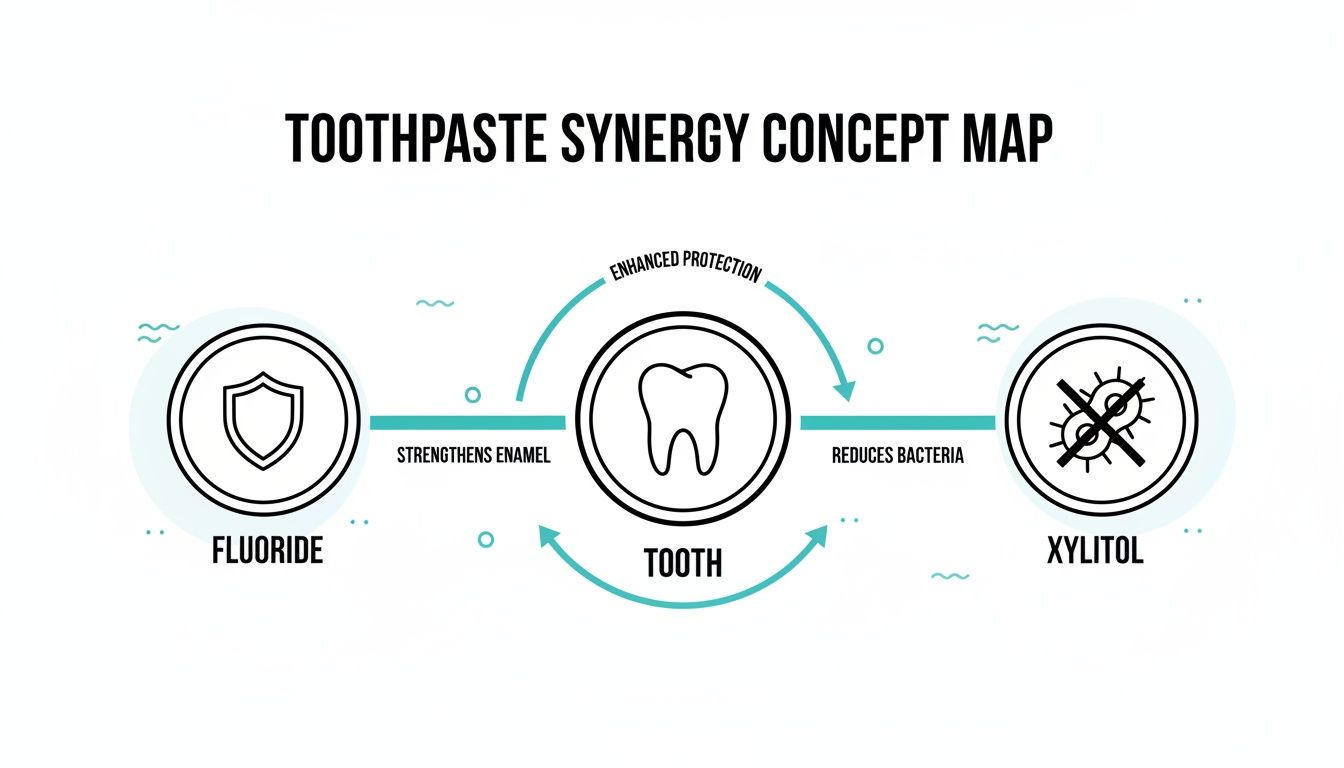
As you can see, each ingredient has a distinct job, but they work together perfectly to keep your teeth healthy.
To make the individual roles even clearer, here’s a quick breakdown:
Xylitol vs Fluoride At a Glance
| Ingredient | Primary Action | Mechanism |
|---|---|---|
| Xylitol | Bacteria Control | A natural sugar alcohol that cavity-causing bacteria can't digest. It starves them, reducing their numbers and acid production. |
| Fluoride | Enamel Strengthening | A mineral that integrates into the tooth structure, making it more resistant to acid and helping to repair early decay (remineralization). |
By combining these two, you get a toothpaste that doesn't just patch up damage—it actively reduces the source of the problem.
Market Recognition and Growth
This potent combination isn't just a clinical success; it's also making waves in the market. The global dental fluoride treatment market hit an impressive USD 13.7 billion in 2024 and is expected to soar to USD 23.8 billion by 2034. Toothpastes and gels are leading this charge, and formulas that blend xylitol with fluoride are gaining attention for their advanced anti-cavity benefits. If you're interested, you can explore the full market analysis of dental fluoride treatments to see the data for yourself.
This growing demand signals a major shift in what people are looking for. We've moved beyond basic cleaning; today, consumers want targeted, effective solutions that pack multiple benefits into one simple product. The xylitol and fluoride combo meets that need head-on.
Ultimately, when you choose a toothpaste with both xylitol and fluoride, you're arming your daily routine with a complete, multi-faceted defense system. It’s a smart, proactive step toward preventing decay, strengthening your enamel, and locking in a healthier smile for years to come.
How Fluoride Rebuilds and Fortifies Your Enamel
While xylitol is busy dealing with the bad bacteria, fluoride takes on a totally different but just as critical job. It’s the undisputed champ of cavity prevention, working directly on the structure of your teeth to make them stronger from the inside out. Fluoride’s main goal is simple: rebuild and reinforce your tooth enamel, making it tougher against the daily barrage of acid attacks.
Think of your enamel like a sturdy brick wall. Every day, acids from plaque bacteria act like corrosive rain, dissolving the mortar and chipping away at the bricks. This process is called demineralization, and if it goes on for too long, a cavity forms. This is where fluoride comes in, acting like a master repair crew for that wall.
The Science of Remineralization
When fluoride is present in your saliva, it immediately gets to work patching up those microscopic weak spots in your enamel. But here’s the cool part: it doesn't just patch the wall with the original material. Instead, it weaves itself into the tooth’s crystal structure, creating a new, super-strong mineral called fluorapatite.
Think of fluorapatite as a high-tech, acid-resistant mortar. It doesn't just fill in the gaps left by demineralization; it upgrades the entire structure. This process, known as remineralization, leaves your enamel significantly stronger and more resistant to future acid attacks than it was before.
This constant cycle of repair and reinforcement is exactly why fluoride is a cornerstone of preventive dental care. It doesn't just stop damage in its tracks; it actively reverses the very earliest signs of tooth decay.
Different Types of Fluoride in Toothpaste
When you scan the ingredients on a tube of toothpaste with xylitol and fluoride, you'll see a few different forms of this key mineral. They’re all effective, but each has slightly different properties.
- Sodium Fluoride (NaF): This is one of the most common and well-studied types of fluoride. It’s highly stable and incredibly effective at converting your tooth mineral into that stronger fluorapatite.
- Stannous Fluoride (SnF2): This one is a real multi-tasker. It not only prevents cavities but also has antibacterial properties and can help reduce tooth sensitivity. It’s great for fighting both plaque and gingivitis.
- Sodium Monofluorophosphate (MFP): Another popular choice, MFP works a bit differently by releasing its fluoride ions when it mixes with enzymes in your saliva during brushing.
No matter which type is used, the most important thing is that the toothpaste has an effective concentration of fluoride. That’s where a very important symbol comes into play.
The Importance of the ADA Seal
To be certain a product is both safe and effective, always look for the American Dental Association (ADA) Seal of Acceptance on the box. This seal confirms the manufacturer has provided solid scientific proof that the product does what it claims and helps prevent cavities.
The ADA Seal is your assurance that the toothpaste contains the right amount of fluoride and that it has been proven to work as advertised. It cuts through marketing claims and provides a reliable benchmark for quality.
When choosing a product, especially from a curated selection like the ones on DentalHealth.com, that ADA Seal shows it meets tough standards for dental care. For anyone serious about their oral health, you can learn more in our guide covering the different ways to strengthen tooth enamel. This powerful mineral is still the gold standard for building a healthy, resilient smile, and pairing it with xylitol gives you a truly comprehensive approach to your dental wellness.
How Xylitol Starves Harmful Oral Bacteria
While fluoride is busy strengthening your enamel, its partner, xylitol, is playing a completely different—and equally important—role. Xylitol is a natural sugar alcohol that basically tricks the main culprit behind cavities, a nasty little bacterium called Streptococcus mutans.
Think of it this way: the harmful bacteria in your mouth see xylitol and think it's a delicious sugar meal. They gobble it up. The problem for them is, they don't have the right tools to actually digest it.
This clever bit of deception effectively gums up their internal machinery. Unable to process the xylitol, the bacteria can't produce the enamel-eating acids that cause tooth decay. In short, xylitol starves them from the inside out.
Weakening Bacteria and Plaque
This process does more than just shut down acid production; it also makes it harder for the bacteria to multiply and build their colonies. Over time, regular use of xylitol can dramatically slash the population of harmful bacteria in your mouth. Some studies have even shown it can reduce cavity-causing bacteria by up to 75%.
This also has another fantastic benefit. It makes the plaque on your teeth less sticky and much easier to brush away.
Xylitol disrupts the very foundation of plaque, which is a protective biofilm bacteria create to shield themselves. By making this biofilm less adhesive, xylitol helps your toothbrush do a much more effective job of sweeping away debris and harmful bacteria.
What does that mean for you? Less stubborn plaque buildup and a cleaner feeling after every brush. It’s a huge reason why adding xylitol to a fluoride toothpaste creates such a powerful combination.
Boosting Your Natural Defenses
Beyond its direct attack on bacteria, xylitol also works with your body's own defense system by stimulating saliva production. More saliva is a very good thing.
Increased saliva flow gives you several key benefits:
- Neutralizes Acids: Saliva helps buffer the acids produced by bacteria, raising the pH in your mouth back to a safe, non-damaging level.
- Washes Away Debris: It constantly rinses away food particles and bacteria, stopping them from settling on your teeth.
- Delivers Minerals: Saliva is packed with calcium and phosphates, the very minerals your teeth need to repair themselves and stay strong.
This makes toothpaste with xylitol and fluoride a fantastic choice for anyone dealing with dry mouth, a condition that seriously increases cavity risk. It's also great for those with braces or aligners, since more saliva helps keep those hard-to-clean spots much cleaner.
A Growing Trend Backed by Science
The use of xylitol in dental products isn't just a fad; it's backed by decades of solid research. Its unique ability to fight bacteria is what’s driving its popularity in oral care formulas everywhere.
Xylitol's market value, estimated at USD 1.01 billion in 2024, is expected to jump to USD 1.47 billion by 2033. This growth is fueled almost entirely by its use in dental products designed to stop tooth decay. You can dig deeper into the numbers by checking out these xylitol market trends and growth reports.
Ultimately, xylitol's job is elegantly simple. It messes with the attackers—the harmful bacteria—by making them unable to eat, reproduce, or build their sticky plaque fortresses. When you combine that with fluoride's enamel-strengthening power, you get a comprehensive defense system that tackles tooth decay from every angle for a healthier, more resilient smile.
What This Duo Can Do for You in the Real World
Understanding the science is one thing, but seeing how xylitol and fluoride work together in your daily routine is where you’ll really appreciate them. Using a toothpaste with xylitol and fluoride is like having a complete, two-part defense strategy for your mouth every single time you brush.
Think of it this way: fluoride is actively rebuilding and hardening your enamel, like reinforcing a castle wall. At the same time, xylitol goes on the offense, systematically weakening the enemy—bad bacteria—by starving them and stopping their acid attacks. This tag-team approach offers far better protection against cavities than using either one on its own.
Who Benefits Most from This Powerful Combination?
While just about anyone can benefit from this kind of toothpaste, some people will find it's a real game-changer for their specific oral health issues. The synergy between xylitol and fluoride provides targeted solutions for some of the most frustrating dental problems out there.
We can break down who really gets a leg up from this combination:
| Who Benefits Most from Xylitol and Fluoride Toothpaste |
| :--- | :--- | :--- |
| User Group | Primary Challenge | How Xylitol + Fluoride Helps |
| Individuals at High Risk for Cavities | Frequent decay due to genetics, diet, or other health factors. | Fluoride strengthens weak spots in the enamel, while xylitol drastically cuts down on the cavity-causing bacteria that initiate the decay process. |
| Those with Dry Mouth (Xerostomia) | A lack of saliva to wash away bacteria and neutralize acids. | Xylitol stimulates natural saliva production, creating a healthier environment for fluoride to remineralize and protect the teeth effectively. |
| Orthodontic Patients | Braces, aligners, and retainers create hiding spots for plaque. | Xylitol makes plaque less sticky and easier to clean off, while fluoride works to prevent the white spot lesions that can form around brackets. |
| People with Sensitive Teeth | Pain from hot, cold, or sweet foods and drinks due to enamel erosion. | Fluoride helps block the tiny pathways to the tooth's nerve, and xylitol reduces the acid that wears down enamel in the first place. |
This dual-action formula is becoming a standout performer in a competitive market. In the global toothpaste industry, valued at an estimated USD 29.32 billion in 2025, functional formulas are what people are looking for. Xylitol perfectly complements fluoride by reducing Streptococcus mutans growth by up to 90% in some studies, promoting saliva to neutralize acids and protect enamel. You can discover more insights about the global toothpaste market and see how these trends are shaping product development.
In short, this isn't just another toothpaste. It's a targeted treatment that solves real-world dental frustrations for millions of people.
Practical Advantages You Can See and Feel
The benefits go beyond just preventing cavities; they translate into a healthier, more comfortable mouth day-to-day. This proactive approach helps you manage and prevent issues before they turn into bigger problems, leading to a much better long-term outcome for your smile.
Soothing Tooth Sensitivity
One of the first things many people notice is a real drop in tooth sensitivity. This isn't a coincidence, it happens for two key reasons:
- Fluoride Fortification: Fluoride strengthens your enamel and helps plug the microscopic tubes that lead to the tooth's nerve. This is what dulls that sharp, zinging pain from hot coffee or a cold drink.
- Acid Reduction: By cutting down on acid-producing bacteria, xylitol helps stop the slow, steady erosion of enamel that makes sensitivity worse over time.
By addressing both the symptom (the pain) and one of its root causes (enamel erosion), this kind of toothpaste provides comprehensive relief that actually builds over time. It's a smarter, proactive step toward a more comfortable smile.
For those who want to take their anti-cavity routine to the next level, pairing this toothpaste with a good mouthwash can provide even more protection. A post-brush rinse can help neutralize any leftover bacteria and get fluoride into those hard-to-reach spots between your teeth. To learn more, check out our complete guide on the benefits of an anticavity fluoride rinse. It’s a simple extra step that can make a huge difference in shielding your teeth all day and night.
How to Choose the Right Product for Your Needs
Walking down the dental care aisle can be dizzying. With so many options, how do you pick the right toothpaste with xylitol and fluoride? It’s not about finding a magic bullet, but about choosing a formula that’s built for your specific oral health goals.
The good news is, you just need to know what to look for on the label. Once you learn to spot a few key details, you'll be able to confidently grab a toothpaste that will deliver the powerful, targeted results you're after.
Check the Fluoride Concentration
First things first, look at the fluoride level. This is usually listed in "parts per million" or PPM. For most adults, a standard over-the-counter toothpaste will have somewhere between 1,000 and 1,500 PPM of fluoride. That’s the sweet spot—the clinically proven range for effectively preventing cavities and helping your enamel remineralize.
If your dentist has told you you're at high risk for cavities, they might even prescribe a stronger formula. But for everyday use, that 1,000-1,500 PPM range gives you exactly the protection you need.
Prioritize Xylitol's Position
Next up, play detective with the ingredient list and find where xylitol is hiding. Ingredients are always listed in order of concentration, from most to least. For xylitol to really do its job and starve out that bad bacteria, you want to see it as high up on that list as possible.
If xylitol is one of the first handful of ingredients, you know you're getting a powerful, therapeutic dose. But if it’s buried way down at the bottom with the flavorings and thickeners, it’s probably not in there at a high enough level to make a real difference.
Think of it as a clear signal of quality. A formula that puts xylitol front and center is serious about bacterial control, not just about tasting good.
Look for the ADA Seal of Acceptance
The American Dental Association (ADA) Seal of Acceptance is basically a cheat sheet for finding a great product. This seal isn't just a fancy logo; it's a guarantee. It means the product has been put through rigorous scientific testing to prove it’s both safe and effective at what it promises to do—prevent cavities.
When you spot the ADA Seal on a toothpaste with xylitol and fluoride, you can rest assured it delivers the right amount of fluoride and works just like it says on the box. It’s a simple, reliable way to know you’re getting a high-quality, trustworthy product.
Identify Other Active Ingredients for Your Needs
Beyond the dynamic duo of xylitol and fluoride, many toothpastes pack in extra active ingredients to tackle specific problems. Knowing what these are can help you zero in on the perfect formula for you.
- For Sensitive Teeth: Keep an eye out for potassium nitrate or stannous fluoride. These ingredients work by either calming the tooth's nerve or blocking the tiny tunnels in your enamel that transmit pain signals.
- For Whitening: Gentle abrasives like hydrated silica or calcium carbonate are great for polishing away surface stains without being harsh on your enamel.
- For Gum Health: Formulas with stannous fluoride pull double duty, offering antibacterial properties that help fight gingivitis and keep plaque from building up along your gumline.
Picking a toothpaste that aligns with your specific concerns means you’re getting the most bang for your buck with every brush. If you want to dig a little deeper, check out our guide on choosing the best fluoride toothpaste for adults. It can help you compare your options and feel even more confident in your choice. By using this simple checklist, you can look past the marketing hype and choose a professional-grade toothpaste that truly supports your oral health for the long haul.
Common Questions About Xylitol and Fluoride Toothpaste
Even after understanding how xylitol and fluoride team up, it's natural to have a few more questions. That's a good thing. Choosing the right products for you and your family is a big deal, and feeling confident in that decision is what matters most.
This section tackles the most common questions we hear about toothpaste with xylitol and fluoride. We'll give you straightforward answers to clear up any lingering doubts and help you see why this combination is such a powerful tool for a healthier smile.
Is This Toothpaste Safe for Children to Use?
Yes, this toothpaste is not just safe but incredibly beneficial for kids, as long as you stick to a few age-appropriate rules. The biggest concern is simply making sure they don't swallow too much fluoride while their permanent teeth are still forming. It all comes down to using the right amount.
For toddlers under three, all you need is a tiny smear of toothpaste—about the size of a single grain of rice. Once they hit the three-to-six-year-old range, you can bump that up to a pea-sized amount.
The key here is supervision. Always watch your kids while they brush to make sure they’re spitting the toothpaste out instead of swallowing it. Many children's formulas are made with lower fluoride levels and fun flavors to help build great brushing habits that will last a lifetime, all while delivering the powerful cavity-fighting benefits of this duo.
Beyond just toothpaste, understanding your child's dental milestones is key to fostering great oral hygiene. For instance, getting a handle on the timeline for when baby teeth fall out can help you feel more prepared. A great resource for this is understanding what age kids lose teeth, which helps complete the picture of your child's oral health journey.
How Much Xylitol Should an Effective Toothpaste Contain?
That's a fantastic question because the concentration of xylitol really does matter. While there isn't a single, mandated industry standard for xylitol, the clinical research is pretty clear: a higher concentration does a much better job of knocking down harmful bacteria.
For the best results, you want to see xylitol listed near the very top of the ingredient list. Ingredients are always listed in descending order by amount, so seeing it high up is a great sign that you're looking at a potent formula.
Ideally, look for a toothpaste that contains at least 10% xylitol. Some therapeutic-grade formulas pack in even more. When you see xylitol listed before things like thickeners, binders, or flavors, you know the product was designed to deliver real, clinical benefits.
If xylitol is buried at the bottom of the list, it's likely just there in a tiny amount—not nearly enough to provide those full bacteria-starving benefits.
Can This Help with My Sensitive Teeth?
Absolutely. In fact, a toothpaste combining xylitol and fluoride can be an excellent choice for anyone dealing with tooth sensitivity. These two ingredients work together to tackle the problem from different angles, offering both immediate relief and long-term protection.
Fluoride is the star player when it comes to strengthening enamel. It helps block the microscopic tunnels (or tubules) in your dentin that lead directly to the tooth's nerve. When enamel erosion exposes these tubules, they transmit those zings of pain from hot, cold, or sweet things. Fluoride essentially seals them off.
Xylitol plays a crucial supporting role by cutting down on the acid-producing plaque that often causes enamel erosion in the first place. By getting that bacteria under control, xylitol helps stop sensitivity from getting worse. For even more relief, many formulas also include specialized anti-sensitivity agents.
- Potassium Nitrate: This ingredient works by soothing the tooth's nerve itself, making it less reactive to triggers.
- Stannous Fluoride: This is a multi-tasking type of fluoride that not only strengthens enamel but also creates a protective barrier over those exposed dentin tubules.
When you bring all these elements together, you get a powerful solution for anyone struggling with sensitive teeth.
Will It Interfere with My Teeth Whitening Treatment?
Not at all. In fact, using a toothpaste with xylitol and fluoride is highly recommended if you're whitening your teeth, whether professionally or at home. It can actually make the whole experience more comfortable and effective.
Whitening treatments, especially those using stronger peroxide gels, can sometimes lead to temporary tooth sensitivity. The fluoride in this kind of toothpaste is perfect for combating that. It helps remineralize and fortify your enamel, making your teeth more resilient throughout the whitening process.
At the same time, xylitol keeps your tooth surfaces clean and free of the sticky plaque that can cause patchy or uneven whitening. A cleaner surface allows the whitening gel to work more consistently for a brilliant, uniform result. It’s the perfect way to get a brighter smile while keeping your teeth strong, healthy, and comfortable.
At DentalHealth.com, we are committed to providing access to professional-grade products that deliver real results. Our curated selection of toothpastes, including formulas with xylitol and fluoride, is chosen to meet the highest standards of safety and effectiveness. Explore our collection today and take the next step toward a healthier, more confident smile. Find your perfect oral care solution at https://dentalhealth.com.