
Mouthwash with Antiseptic: A Complete Guide
Antiseptic mouthwash can reduce plaque and gingivitis by approximately 35% in short-term use, but it isn't a substitute for brushing and flossing. Its value depends on the active ingredient, the reason you're using it, and how long you continue.
If a rinse kills bacteria, should you assume that killing more bacteria always means a healthier mouth? That question matters because antiseptic mouthwash can offer useful short-term support while also causing staining, taste changes, irritation, and potentially meaningful shifts in the oral microbiome.
What Is Antiseptic Mouthwash and Why It Matters
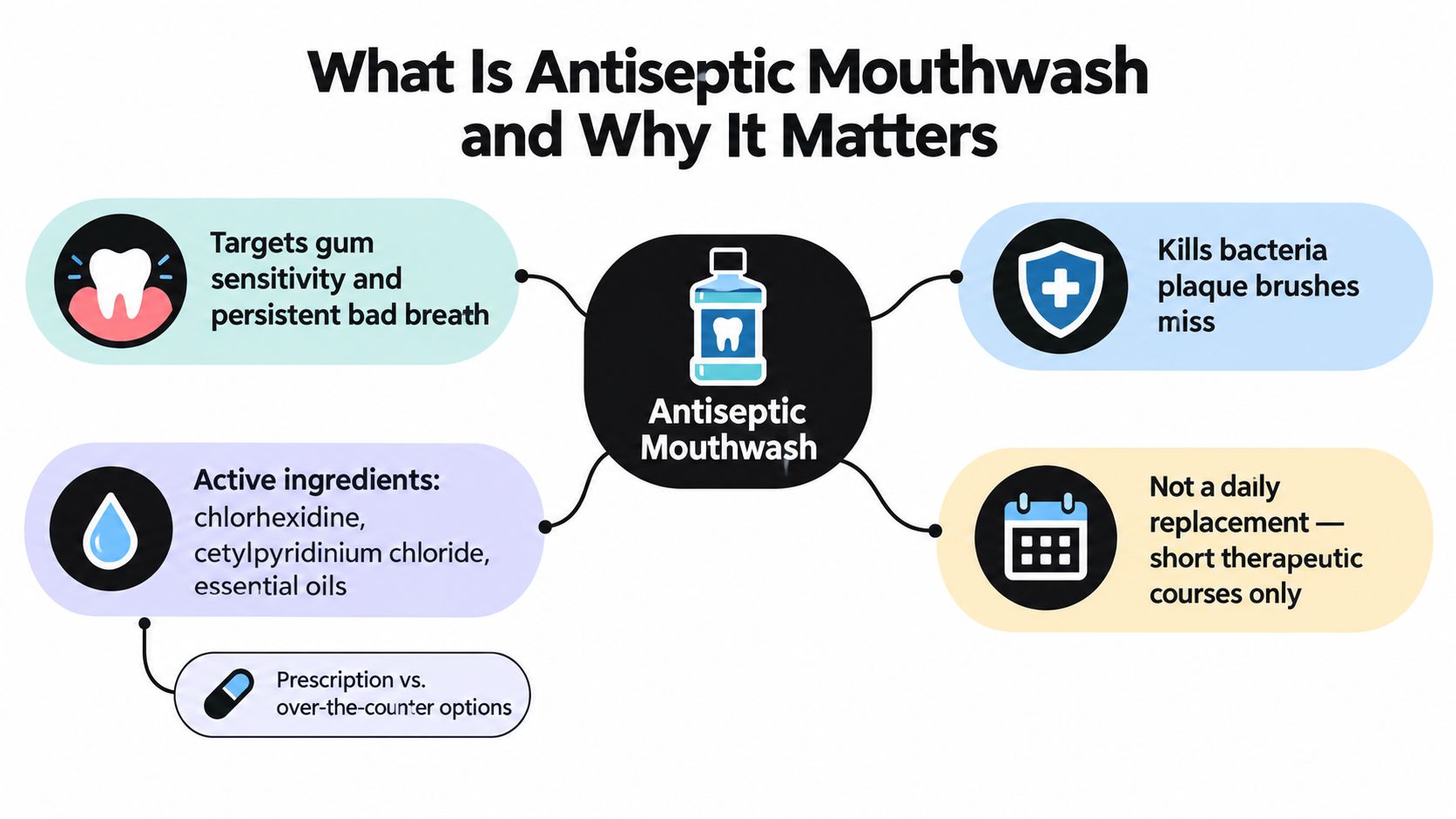
Have your gums started bleeding when you brush, or does bad breath return soon after you rinse? Those symptoms can make a bottle of mouthwash feel like an obvious answer. An antiseptic mouthwash contains active ingredients intended to reduce or suppress microorganisms associated with plaque, gingivitis, and oral odour. It isn't merely a mint flavour layered over the problem.
Think of it as a targeted rinse for surfaces your toothbrush and interdental cleaner may not reach easily. It can move around the teeth, gum margins, tongue, and other oral surfaces, but it doesn't physically scrape plaque from enamel or remove debris from tight spaces. A rinse can support cleaning, not replace it.
Antiseptic principles have a long history. In 1865, Joseph Lister used carbolic acid in a spray mixture to reduce microbial contamination during surgery, helping establish the broader antiseptic approach later applied to oral rinses. Phenolic compounds, including ingredients related to essential oils, became some of the longest-used active agents in commercial mouthrinses. The historical development and clinical evidence are reviewed in this peer-reviewed overview of antiseptic mouthwash research.
What the clinical evidence actually shows
Short-term studies published in the Journal of the American Dental Association in August 1994, lasting 7 to 60 days, found approximately 35% reductions in both plaque and gingivitis when antiseptic rinses were used with or without other oral-hygiene procedures, according to the same review. Longer studies designed around American Dental Association evaluation standards generally lasted 6 months. In those studies, twice-daily essential-oil rinsing after toothbrushing produced plaque reductions of approximately 20% to 34% and gingivitis reductions of approximately 28% to 34%.
Those figures describe group results, not a promise for every person. Your brushing technique, interdental cleaning, gum condition, diet, saliva flow, and the formulation itself all affect the outcome.
Practical rule: Use antiseptic mouthwash as an adjunct when you have a defined oral-health reason, not as permission to shorten brushing or skip cleaning between your teeth.
If you're comparing options for irritated tissues or a specific oral-care concern, the Vitamin Planet oral care range provides one place to review product information. Before buying, check whether a product is intended for antiseptic treatment, cavity protection, temporary cleansing, or breath freshening. Those purposes aren't interchangeable.
For a clearer distinction between products that reduce bacteria and products designed mainly to freshen breath, see what antibacterial mouthwash means. Persistent bleeding, swelling, or odour still deserves a dental assessment because a rinse may mask a symptom without treating its cause.
Key Antiseptic Ingredients and How They Work
The word antiseptic doesn't identify one medication. Different active ingredients behave differently on oral surfaces, remain active for different periods, and have different evidence behind them. Reading the active-ingredient panel is more useful than choosing by a label that promises a stronger clean.
Chlorhexidine
Chlorhexidine, often abbreviated CHX, is among the best-studied antiseptic rinses for short-term gingivitis control. It has high substantivity, meaning it can adsorb to oral mucosa, enamel, and plaque, then release gradually between rinses. That property helps explain why clinicians use it for targeted situations where plaque control is temporarily difficult.
A systematic review found that chlorhexidine reduced plaque scores by 33% and gingivitis scores by 26% compared with placebo or control rinses used alongside ordinary oral hygiene. The same review reported weighted mean differences of -0.68 for plaque index and -0.24 for gingival index, with 95% confidence intervals of -0.85 to -0.51 and -0.29 to -0.20, respectively. It also found a statistically significant increase in staining scores among chlorhexidine users. These findings are reported in the systematic review of chlorhexidine mouthrinses.
The trade-off is important. Chlorhexidine can reduce plaque and inflammation effectively, but it may stain teeth, tongues, fillings, and other restorations, and it can alter taste. That makes it a treatment tool rather than an automatic everyday rinse.
Cetylpyridinium chloride and chlorine dioxide
Cetylpyridinium chloride, or CPC, is another antimicrobial ingredient found in some consumer rinses. It can help reduce microorganisms and may suit people seeking an over-the-counter option, but evidence for plaque and gingivitis control is less consistent than for chlorhexidine. In some studies, CPC offered limited benefit compared with an inactive rinse.
Chlorine dioxide appears in formulations aimed at reducing oral odour and microbial compounds. Its performance depends on the concentration, exposure time, and the rest of the formulation. Don't assume that two bottles work alike because both use the word antiseptic.
Essential oils
Essential-oil formulations may contain eucalyptol, menthol, thymol, and methyl salicylate. These ingredients can provide clinically meaningful anti-plaque and anti-gingivitis effects, but they aren't pharmacologically identical to chlorhexidine. The formulation, contact time, and whether the rinse contains alcohol all affect the user experience and results.
A simple way to read the label is to ask three questions:
- What is the active ingredient? Identify CHX, CPC, chlorine dioxide, essential oils, or another stated agent.
- What is the intended use? A dentist-directed gingivitis treatment isn't the same as a cosmetic breath rinse.
- What are the likely trade-offs? Consider staining, taste alteration, dryness, irritation, and duration of use before deciding.
Alcohol vs. Alcohol-Free and Fluoride Inclusion
Alcohol and fluoride answer different questions. Alcohol affects the vehicle and mouthfeel of a rinse, while fluoride is primarily included to help protect against tooth decay. Neither ingredient alone tells you whether a product is the right choice.
Alcohol-containing formulas
Alcohol can help dissolve and deliver certain ingredients, and some users associate its burning sensation with effectiveness. That sensation isn't a reliable measure of antimicrobial performance. For people with dry mouth, irritated tissues, recurrent soreness, or sensitivity to strong flavours, an alcohol-containing rinse may feel harsh and may worsen discomfort.
Alcohol also doesn't turn a cosmetic rinse into a treatment for gum disease. If a product makes your mouth feel dry after use, that effect matters because saliva helps lubricate oral tissues and support normal oral protection.
Alcohol-free formulas
An alcohol-free antiseptic mouthwash may be more comfortable for a sensitive mouth or for someone who wants to avoid alcohol in oral-care products. It can still contain active antimicrobials, so alcohol-free doesn't mean non-antiseptic or risk-free. Check the label for CPC, essential oils, chlorhexidine, peroxide, or other active ingredients.
Use the following comparison when choosing:
| Formulation feature | Potential advantage | What to watch |
|---|---|---|
| Alcohol-containing | Can help dissolve and deliver certain ingredients | May feel drying or irritating |
| Alcohol-free | Often gentler for sensitive tissues | May still contain strong antimicrobials |
| Fluoride-containing | Adds cavity-focused protection | Doesn't replace brushing with fluoride toothpaste |
| Antiseptic without fluoride | Targets microbial activity | Doesn't provide the same cavity-prevention purpose |
Fluoride and antiseptic ingredients may serve complementary roles, but they aren't interchangeable. If cavities are your main concern, read how fluoride mouthwash supports cavity care. If gum inflammation is the concern, identify the antiseptic active and ask whether you need a short therapeutic course rather than a permanent daily habit.
Beyond Plaque Reduction, The Microbiome Question
Your mouth isn't a sterile room that needs every microorganism removed. It contains a living community of organisms, and oral microbiome health depends on balance as well as control of disease-associated bacteria. That makes the phrase “kills germs” incomplete.
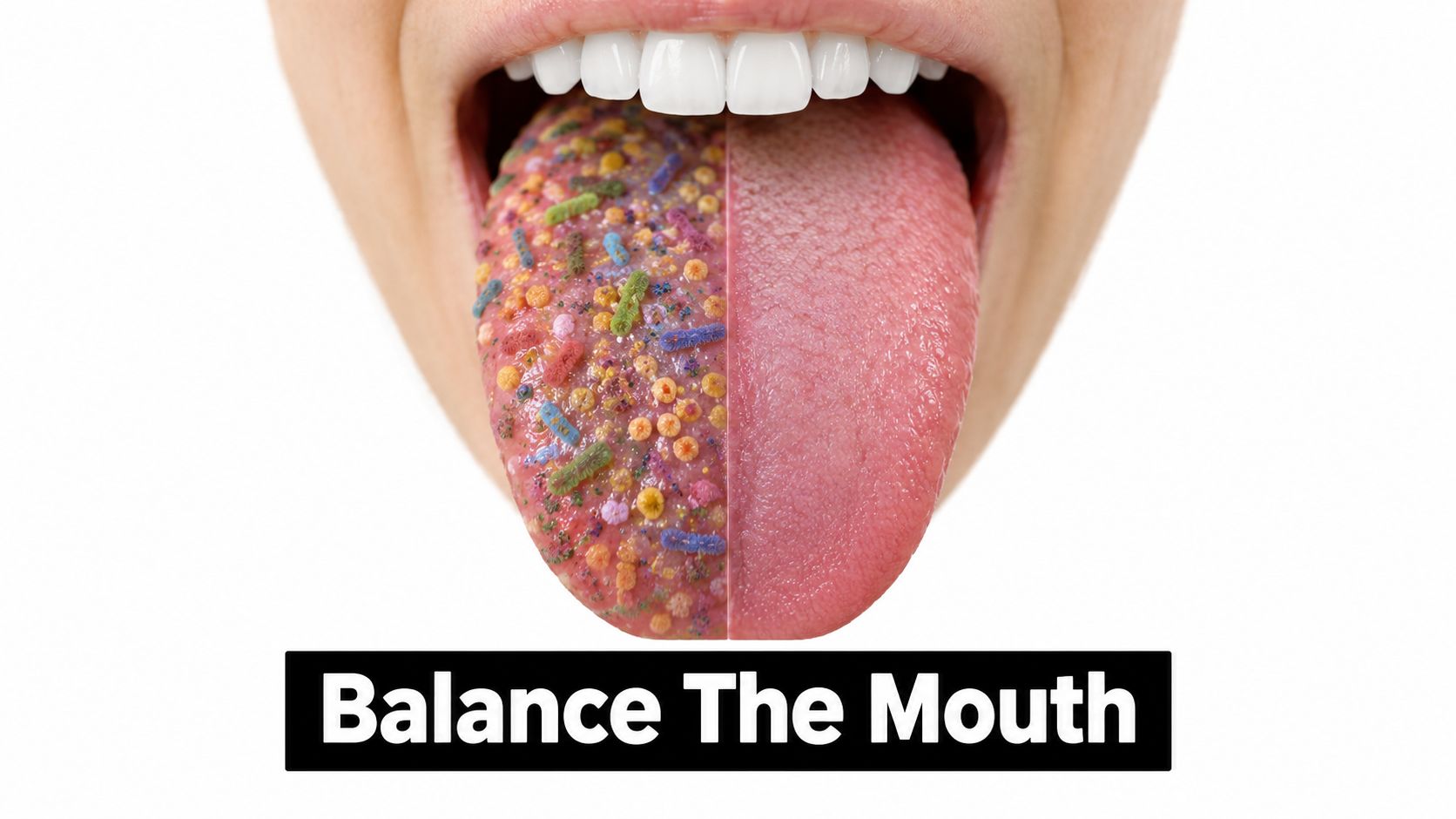
Recent evidence is more cautious about indefinite antimicrobial use than many product descriptions suggest. A 2025 review reported that chlorhexidine produced the largest microbiome shifts among antimicrobial rinses, including reduced microbial diversity and increased abundance of some Streptococcus species. The available studies were limited and heterogeneous, so they don't establish that every user will experience the same changes. The findings are discussed in the PubMed review on antimicrobial mouthwash and the oral microbiome.
A Nature review also described reductions in oral diversity after chlorhexidine exposure and reported selection for resistance-associated genes, including genes related to tetracycline resistance. A separate 2025 systematic review of mouthwash-associated antimicrobial resistance found increased minimum inhibitory concentrations and resistance genes in some oral bacteria, but assessed only 91 patients and 213 isolates. The authors couldn't establish a clear clinical risk from that evidence.
Stronger suppression isn't automatically better
Short-term chlorhexidine use may be useful when plaque control is compromised, such as during a defined phase of professional treatment. Long-term daily use raises a different question: does continuing broad microbial suppression provide enough benefit to justify staining, taste changes, and possible ecological disruption?
That doesn't mean you should stop a prescribed rinse without speaking to your dentist. It means you should know why you're using it, when the course ends, and what alternative habits might address the same concern. Mechanical plaque removal remains foundational because a liquid can't scrub a mature biofilm from tooth surfaces.
For readers who want broader context on how microbial communities influence health, you can browse the gut flora guide. The mouth and gut aren't identical ecosystems, but the general principle is useful: microbial balance matters, and indiscriminate suppression deserves careful thought.
This video offers another visual explanation of the issue:
How to Use Antiseptic Mouthwash Safely and Effectively
Safe use begins with the product's directions and your reason for using it. Chlorhexidine, in particular, should be treated as a targeted therapeutic rinse, not a stronger version of a daily breath freshener.
A practical routine
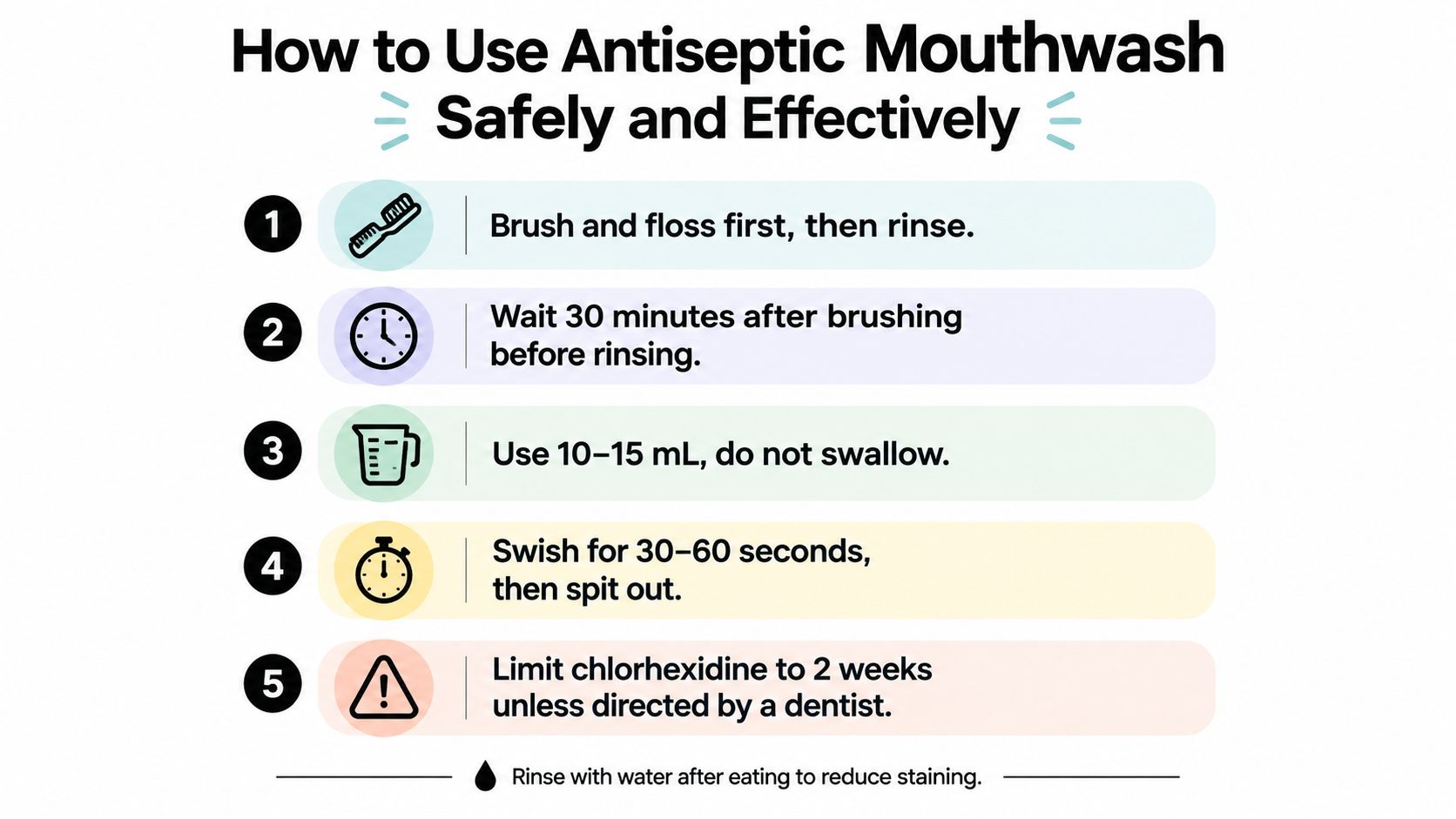
- Brush and clean between your teeth first. Use your toothbrush and interdental cleaner to disrupt plaque mechanically. Rinsing first won't remove the film that brushing and interdental cleaning can physically lift.
- Separate chlorhexidine from toothpaste. Toothpaste ingredients can interfere with chlorhexidine, so follow the product or clinician's timing instructions. U.S. government drug information advises avoiding brushing immediately after rinsing and avoiding water, food, another mouthwash, or other immediate activities after use. Many dental instructions place the rinse after brushing with a waiting interval, often around 30 minutes, but follow your own label or dentist's directions.
- Measure rather than guess. Commonly studied chlorhexidine regimens include 10 mL of 0.2% CHX, delivering 20 mg, or 15 mL of 0.12% CHX, delivering 18 mg, generally used twice daily with about 30 seconds of rinsing. Don't transfer those quantities to a different product unless its instructions use the same formulation.
- Spit it out. Don't swallow antiseptic mouthwash. Keep it away from children who may not reliably spit, and ask a dentist before using it for a child.
- Keep the course limited when appropriate. Chlorhexidine use for 4 weeks or more is associated with extrinsic tooth staining, so longer treatment should involve clinical supervision. A dentist may select a different duration based on surgery, gum inflammation, plaque control, or another diagnosis.
Side effects and situations that need advice
Staining can affect natural teeth, the tongue, restorations, and, in some cases, front-tooth fillings may develop staining that becomes permanent. Taste alteration and deposits on oral surfaces can also occur. If you notice a new reaction, stop and contact the prescribing clinician rather than switching repeatedly between products.
Discuss chlorhexidine with a clinician if you're pregnant, breastfeeding, have a history of periodontal treatment, or take medication that contributes to dry mouth. These circumstances don't automatically rule out a rinse, but they make individual advice more useful than shelf comparisons.
Seek dental evaluation for persistent bleeding, swelling, loose teeth, severe pain, or suspected infection. A mouthwash may reduce surface bacteria while leaving an abscess, advanced gum disease, decay, or another underlying problem untreated.
A rinse should make a defined treatment plan easier to follow, not postpone the appointment that identifies the problem.
Choosing the Right Antiseptic Mouthwash for Your Needs
Start with the indication, not the flavour. If you have a dentist-diagnosed gum problem, ask which ingredient, concentration, and duration match that diagnosis. If you only want fresher breath, a strong antiseptic may expose you to unnecessary trade-offs.
| Ingredient or category | Usually considered for | Main advantage | Main limitation |
|---|---|---|---|
| Chlorhexidine | Short-term, dentist-directed gingivitis control | Strong evidence and high substantivity | Staining, taste changes, deposits, and microbiome concerns |
| Cetylpyridinium chloride | Selected over-the-counter antimicrobial use | Convenient consumer formulations | More limited benefit in some comparisons |
| Essential oils | Plaque, gingivitis, and breath-related support | Evidence for anti-plaque and anti-gingivitis effects | Taste, irritation, and formulation-dependent tolerability |
| Chlorine dioxide | Selected odour-focused formulations | Intended to address some odour compounds | Product performance depends on formulation and exposure |
| Fluoride rinse | Cavity prevention | Adds fluoride-focused protection | Not a replacement for mechanical plaque removal |
Comparative evidence summarized by the American Dental Association indicates that chlorhexidine can provide better plaque control than essential-oil rinses, while gingivitis control may show no meaningful difference between them. The American Dental Association's clinical considerations for mouthrinse also emphasizes that product choice depends on the active ingredient and intended use, not the word antiseptic alone.
If you're unsure whether a product is appropriate, review its label with your dentist and consider guidance on ADA-approved mouthwashes. Keep brushing twice daily, clean between the teeth, and treat persistent symptoms rather than masking them. The right antiseptic mouthwash is the one that fits a specific need, has a clear endpoint, and supports your routine without replacing it.
DentalHealth.com offers professional-grade at-home dental-care products, including rinses, sensitivity care, whitening products, and remineralizing options from established brands. Visit DentalHealth.com to compare oral-care products and read practical guidance before choosing a rinse for your needs.