
Polar Night Tooth Whitening: A Complete Guide 2026
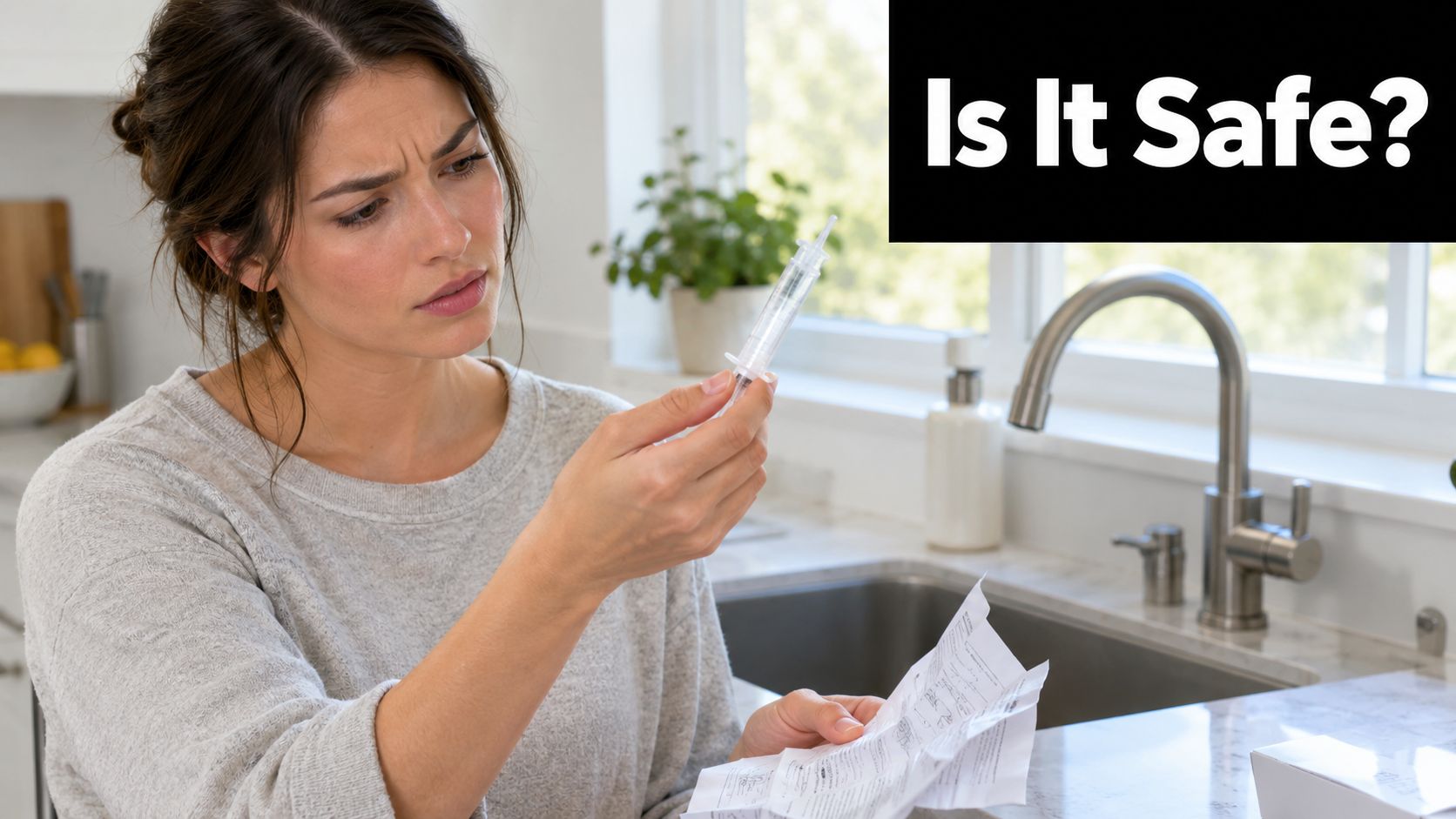
You're at the kitchen sink with a small syringe of clear gel in one hand and a tray in the other. The instructions mention carbamide peroxide, wear time, and sensitivity, but they don't quite answer the practical question: what are you putting in your mouth, and is it safe to wear while you sleep?
The product commonly searched as polar night tooth whitening is usually Pola Night, a professional take-home whitening gel made by SDI. It isn't whitening toothpaste, a generic drugstore gel, or an in-office light treatment. It's a carbamide peroxide formula designed for use in fitted dental trays, with the strength and wearing schedule selected according to the product instructions and your dental needs.
What Polar Night Tooth Whitening Actually Is
A buyer comparing whitening syringes may see research terms such as L*, a*, b*, and P values. Those measurements help researchers describe changes in tooth colour and judge whether findings are statistically meaningful. At the kitchen sink, however, the practical questions are simpler: how concentrated is the gel, how long does it stay in the tray, and how much sensitivity might it cause?
Pola Night is a take-home bleaching gel. Its active ingredient, carbamide peroxide, breaks down and releases peroxide. That peroxide can move through the tooth's outer structure and react with molecules responsible for some discoloration. The process differs from whitening toothpaste, which mainly helps remove certain surface deposits during brushing.
The tray acts as the delivery system. A fitted tray holds a thin layer over the visible tooth surfaces and limits contact with the gums when it is seated correctly. The manufacturer describes the product as a high-viscosity, neutral-pH gel containing water, and advises applying a small amount and removing overflow. The Pola Night product information and concentration guidance explains the available formulas and use instructions.
The word “night” refers to the extended wear format, not to an ingredient that becomes active only after dark. Carbamide peroxide releases peroxide more gradually than hydrogen peroxide, so the gel can remain in contact with the teeth for a longer period. The appropriate wear time still depends on the concentration and label directions.
What goes in the tray
A syringe holds gel, not mouthwash. Place a small drop in each tooth-shaped compartment, seat the tray over clean teeth, and wipe away material that reaches the gumline. More gel adds mess and soft-tissue contact rather than automatically improving the result.
Pola Night comes in several carbamide peroxide strengths and flavour options. Strength is a comfort and timing decision, not a guarantee of how white the teeth will become. Correct tray placement, sensitivity history, and the stated wear schedule all shape the experience.
The Nightguard Origin of Take-Home Whitening Gels
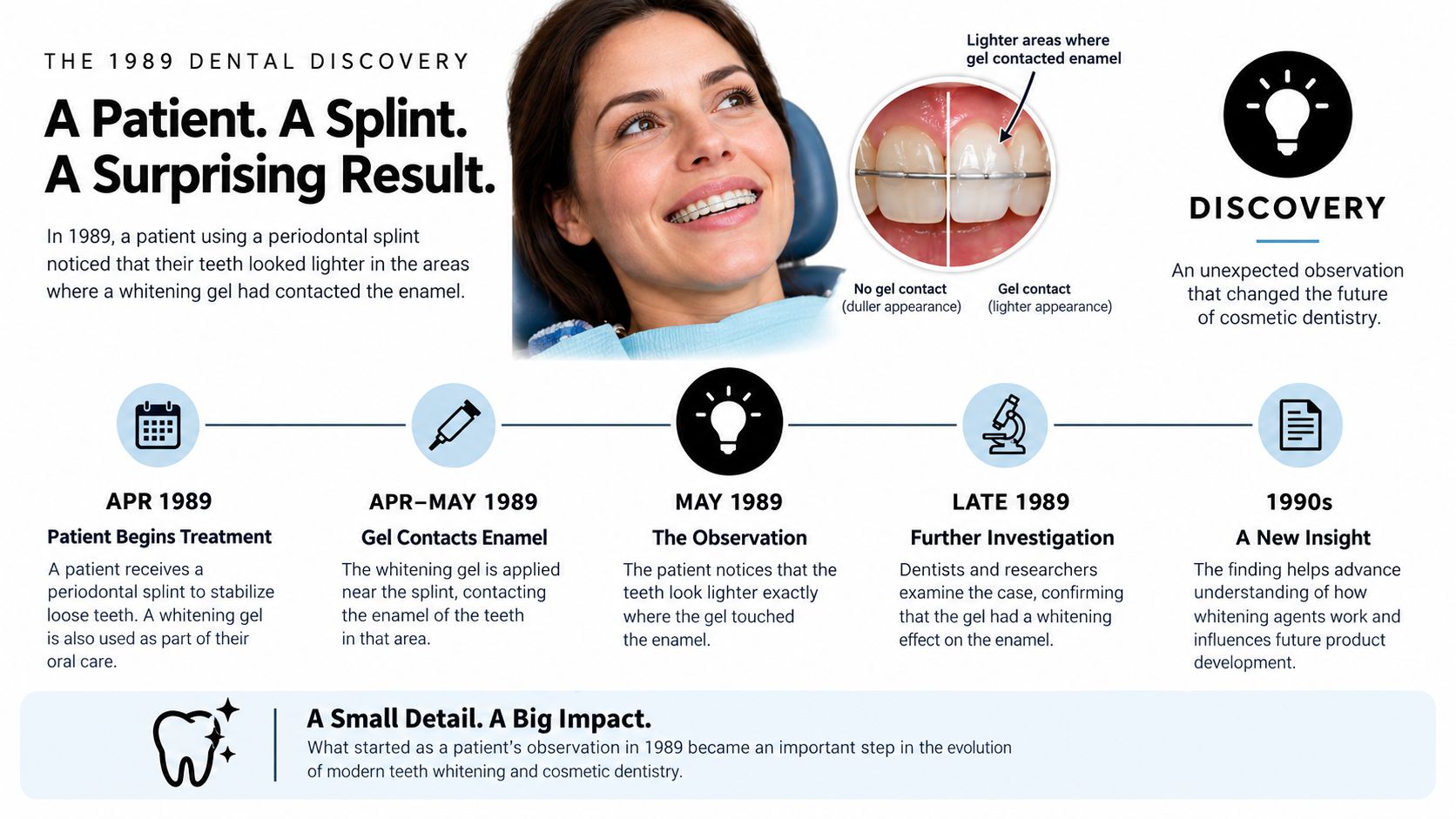
The overnight tray idea has a memorable beginning. In 1989, Haywood and Heymann described using a nightguard with a viscous whitening solution, an approach documented in Dentistry Today's review of nightguard whitening. The important discovery wasn't only that peroxide could lighten teeth. It was that a soft tray could keep a thicker gel in contact with enamel for a much longer period.
That changed the practical experience of whitening. Instead of relying only on brief, highly concentrated chairside treatment, dentists could use a fitted tray as a delivery system. The gel stayed where it was needed, and the patient could complete the routine at home.
Why extended contact matters
A tray gives the gel time to remain against the tooth instead of being immediately diluted and swallowed. During sleep, people also tend to talk, eat, and drink less, so the tray can stay seated without the interruptions of a daytime routine. That doesn't mean every product should be worn overnight. The concentration and manufacturer instructions still control the safe schedule.
The original nightguard concept also explains why delivery comes before branding. Pola Night is a modern branded gel, but the underlying format is a direct descendant of that earlier tray-based approach. The tray creates the controlled space. The peroxide does the chemical work.
Practical rule: The gel and the tray are a pair. A strong formula in a poorly fitting tray can create more gum exposure without producing a more even result.
The historical review notes that thickened gel improved retention in the tray, helping establish the night-application format used by many professional take-home systems. That's why a small syringe and a custom tray can deliver a different experience from a one-size-fits-all whitening strip.
Carbamide Peroxide Strengths and What They Mean for You
Carbamide peroxide is a relatively stable compound that breaks down in the mouth and releases hydrogen peroxide. The concentration on the syringe indicates the formula's relative intensity, while the wear time determines how long it stays against your teeth.
Pola Night is available in 10%, 16%, 18%, and 22% carbamide peroxide. Their approximate hydrogen peroxide equivalents are 3.3%, 5.3%, 6.0%, and 7.3%, respectively, according to the manufacturer's Pola Night concentration information.
| Carbamide peroxide | Approximate hydrogen peroxide equivalent | Best suited for |
|---|---|---|
| 10% | 3.3% | People prioritizing a gentler approach, including those concerned about sensitivity |
| 16% | 5.3% | People seeking a middle-ground option between intensity and comfort |
| 18% | 6.0% | People whose dental professional recommends a stronger intermediate formula |
| 22% | 7.3% | People who need a shorter wear window and tolerate whitening well |
Research papers may describe whitening with L*, a*, b*, and P values. Those measurements help researchers compare tooth colour and statistical differences. At the kitchen sink, the practical translation is simpler: a higher concentration can mean a shorter session, while a lower concentration may be easier to tolerate.
The manufacturer positions lower-concentration formulas for sensitive teeth and indicates wear times from 90 minutes to overnight. The 22% formula is typically limited to 45 minutes once daily, so a stronger syringe should not automatically be used while sleeping.
Strength is not a race
A stronger formula may feel more intensive, but it does not guarantee a whiter final result. Consistent use matters because discomfort can make you stop treatment. For a plain-language explanation of the chemistry, read how carbamide peroxide whitens teeth. If you have experienced sensitivity, a lower concentration chosen with dental guidance may be a more comfortable starting point than the strongest option.
How to Use Pola Night at Home Without the Guesswork
Start with the tray, not the syringe. A custom tray made from a dental impression is shaped to your teeth and should hold the gel evenly. Boil-and-bite alternatives may be less precise, so a loose or poorly sealed fit can allow gel to escape onto the gums.
A careful application routine
- Clean your teeth first. Brush and floss to remove plaque and food debris. Whitening gel works on the tooth surface, not on a layer of residue.
- Load each compartment lightly. Place a small drop in the front portion of each tooth well. Don't fill the entire channel with a line of gel. The manufacturer's Pola Night instructions specifically emphasize using a small amount and wiping away overflow.
- Seat the tray gently. Press it into place so the gel spreads across the tooth surface. If gel appears on your gums, remove it with a clean finger, cotton swab, or tissue.
- Follow the assigned wear window. Don't extend the session because you think extra time will compensate for too little gel. Avoid eating or drinking while the tray is in place.
- Remove, rinse, and clean. Rinse your mouth with lukewarm water, brush gently, and clean the tray with cool water and a soft brush. Hot water can distort plastic trays.
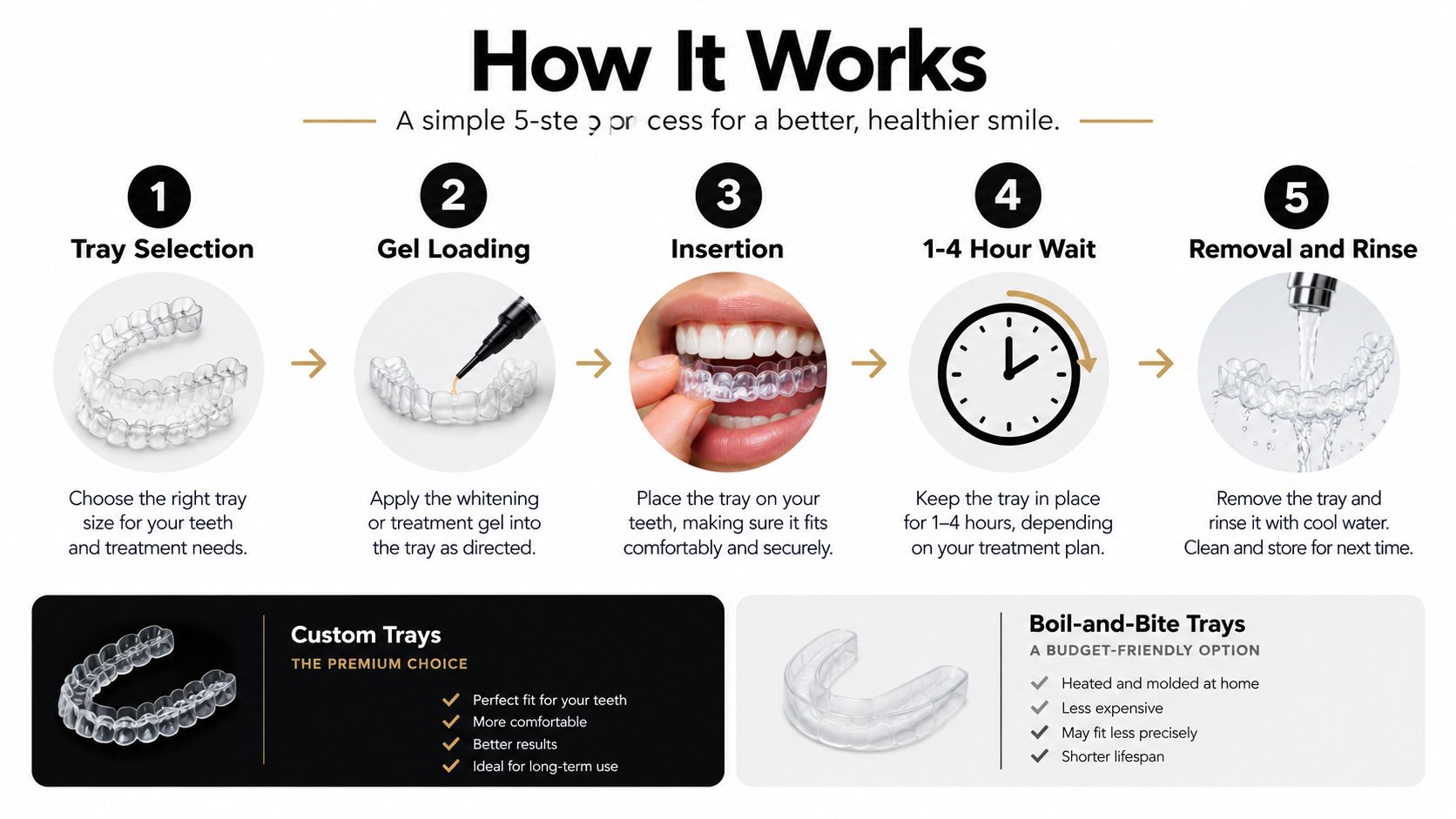
The most common mistake is overloading. A tray should contain enough gel to contact the tooth, not enough to squeeze over the gumline. The step-by-step guide to using carbamide peroxide gel can help you check your technique before the first session.
Cap the syringe after use and store it according to the label. If the instructions tell you to refrigerate it, keep it cool and away from direct heat. Don't use a hot tap to clean the tray, and don't leave uncapped gel exposed on the bathroom counter.
What Real Users Can Expect From the Results
Clinical researchers don't usually describe whitening only as “a few shades brighter.” They may measure the tooth using the CIE L*a*b* color system. In that system, L* represents lightness, while a* and b* describe color direction. For a shopper, the useful translation is simple: the researchers measure whether the tooth became lighter and whether its red-green and yellow-blue values shifted.
A 2005 split-mouth clinical study in Japan compared Polanight with Opalescence in 58 healthy volunteers aged 18 to 47. Participants used bleaching treatments for two weeks and were observed for another four weeks. For Polanight, the mean changes were ΔL* 4.00, Δa* −1.28, and Δb* −7.53, while the corresponding Opalescence values were 2.54, −0.99, and −5.56, as reported in the published Polanight clinical study.
Translating the measurements at home
You won't see a ΔL* number at the sink. You'll notice that the natural color looks lighter, particularly where darker yellow or brown staining has accumulated. The change may be uneven if the tray doesn't fit closely, if plaque remains on the surface, or if the original discoloration comes from something peroxide can't change.
| Strength | Wear time | What the evidence and instructions support | When visible change may be noticed |
|---|---|---|---|
| 10% | 90 minutes to overnight, according to product guidance | Gradual whitening with a lower-intensity format | Depends on starting shade, consistency, and tolerance |
| 16% | Follow the dental professional's schedule | A clinically studied concentration with repeatable treatment protocols | Depends on the assigned schedule |
| 22% | Typically 45 minutes once daily | A shorter, stronger schedule that requires careful adherence | Depends on starting shade and sensitivity |
The 2005 study found significant bleaching effects for both products, with Polanight more effective in the younger patient group and in women. A separate 2025 randomized clinical trial involving 72 patients compared 16% Pola Night use every 48 hours with use every 72 hours for six weeks. It found no statistically significant difference between those schedules, with P > .05, so a slightly less frequent routine may be clinically reasonable when directed by a dental professional.
Sensitivity, Comfort, and the Concentration Trade-Off
You place the tray over your teeth, notice a little gel at the gumline, and wonder whether a sharper cold sensation means the whitening is working. Peroxide can pass through tooth structure and temporarily affect the tissues inside the tooth. Some people feel brief “zingers” from cold water, air, or sweet foods. Others notice nothing. A history of sensitivity, exposed roots, cracks, cavities, or gum recession may matter more than the strength printed on the syringe.
Clinical papers may report changes in L*, a*, and b* values or discuss P values. At the kitchen sink, those measurements become a lighter-looking natural tooth shade, along with a practical choice between concentration, wear time, and comfort. A review of at-home bleaching research found that lower-concentration carbamide peroxide caused less sensitivity than higher-concentration or in-office hydrogen peroxide in some studies, while producing comparable color change in some protocols. Methods varied, so no concentration promises a symptom-free treatment. The review of bleaching effectiveness and adverse effects provides broader clinical context.
A comfort-first adjustment plan
If your teeth become uncomfortable, adding more gel is unlikely to solve the problem. Adjust one part of the routine at a time:
- Use less gel: Excess gel at the gumline can irritate soft tissue.
- Shorten the session: Ask your dental professional whether a shorter wear period fits your concentration.
- Space sessions apart: A rest night may make treatment easier to tolerate.
- Use sensitivity toothpaste: See how to reduce teeth sensitivity after whitening for potassium nitrate and fluoride options.
- Avoid temperature extremes: Very hot or cold drinks can feel sharper soon after treatment.
Whitening discomfort is a reason to adjust the routine, not a reason to push through pain.
Sensitivity is often temporary. Severe, persistent, or localized pain needs dental attention, especially if a tooth hurts without whitening, reacts strongly to biting, or has a known crack. Whitening should not conceal a separate dental problem.
A 2025 meta-analysis and 2026 umbrella review reported that violet-light-assisted bleaching with carbamide peroxide may improve color change without increasing sensitivity, although the evidence remains limited and varied. The review of violet-light-assisted bleaching and remineralization questions does not support assuming that every light or mineral product adds a proven benefit.
How Pola Night Stacks Up Against Other Whitening Gels
At checkout, shoppers often compare brands as if the name tells them everything. It doesn't. The more useful comparison is the delivery system, active ingredient, concentration, tray fit, wearing schedule, and instructions for managing sensitivity.
Pola Night belongs to the dentist-directed take-home category. It uses carbamide peroxide in a tray-based system and is designed around extended contact for selected concentrations. Opalescence PF also occupies the professional take-home space, but the exact strength, wear schedule, flavor, and formulation depend on the specific product.
Philips Zoom includes more than one type of whitening experience. A Zoom in-office treatment uses a different delivery approach from a take-home carbamide peroxide tray, so a shared brand name doesn't make the products interchangeable. Over-the-counter gels and LED kits may use different concentrations, disposable or one-size trays, and shorter sessions. Always read the individual label instead of comparing brand families alone.
| Product or category | Active strength | Wear time | Desensitizer | Dispensing |
|---|---|---|---|---|
| Pola Night | Carbamide peroxide, available in several strengths | From 90 minutes to overnight for lower concentrations, with a shorter schedule for 22% | Formulation and product instructions vary by version | Commonly supplied through dental channels |
| Opalescence PF | Carbamide peroxide formulas vary by product | Depends on concentration and instructions | Product-specific | Professional or dental-directed channels |
| Philips Zoom take-home | Product-specific whitening formula | Depends on the take-home kit | Product-specific | Professional or retail channels, depending on product |
| Philips Zoom in-office | Different delivery system from Pola Night trays | In-office protocol | Product-specific | Dental office |
| Standard OTC gel or LED kit | Varies by product | Usually follows the individual package directions | Varies | Retail purchase |
The practical distinction is control. A custom tray can place gel more precisely, while a generic tray may require more careful attention to overflow. A stronger concentration may shorten the session, but a lower concentration may be easier to continue if sensitivity interrupts treatment.
Choosing the Right Strength and Knowing When to Ask a Dentist
Choose the concentration by matching three things: your sensitivity history, how quickly you want to proceed, and whether a dental professional has checked your teeth and tray fit.
A simple starting checklist
- First-time user or sensitivity history: Ask whether 10% is an appropriate starting point. Its lower intensity may make the routine easier to tolerate.
- Moderate tolerance and a balanced schedule: Discuss 16% as a middle option. It has been studied in human clinical trials and is available in a defined take-home protocol.
- Comfortable with whitening and seeking shorter sessions: Ask about 22%, remembering that the manufacturer typically limits this version to 45 minutes once daily.
- Anything stronger: Don't select it from a marketplace listing alone. A dental professional should determine whether it fits your teeth, gums, and treatment goal.
Pola Night won't change the color of crowns, veneers, fillings, or bonding in the same way it changes natural enamel. If visible dental work sits beside natural teeth, whitening can make a pre-existing shade mismatch more noticeable. Your dentist can tell you whether whitening should happen before restorative work or whether another plan makes more sense.
A dental visit matters before treatment if you have gum disease, visible cracks, untreated tooth pain, cavities, or significant recession. Ask for professional advice if you're pregnant, have recently had dental work, or can't tell whether a sharp sensation is ordinary whitening sensitivity or pain from one specific tooth.
A custom tray and a confirmed concentration are safer starting points than choosing the strongest syringe because it appears to promise faster results. The best routine is the one you can follow accurately, stop when your mouth signals a problem, and review with a dental professional when your history is complicated.
DentalHealth.com offers professional-grade at-home whitening gels, including Pola Night options, along with sensitivity products and practical guidance for choosing compatible dental-care supplies. Visit DentalHealth.com to compare whitening products and find resources that can help you plan a more comfortable tray routine.