
Portable Toothbrush Sanitizer Guide for 2026
Does a portable toothbrush sanitizer earn space in your bag, or does it add another device to charge, dry, clean, and remember? That's the more useful question. A UV cycle can reduce microbes on a toothbrush under suitable conditions, but a wet brush, poor positioning, or an empty battery can turn a promising travel tool into a sealed container holding moisture.
The category deserves a careful look because it isn't just a passing bathroom gadget. The FDA has recognized a product code for toothbrush ultraviolet sanitation and sterilization, with a U.S. regulatory history reaching back to 2001 and a device summary in 2003 describing a significant reduction in bacterial contamination on toothbrushes. The FDA's device classification database still recognized the category by 2025, placing portable toothbrush sanitizers within a long-running medical-device and consumer-hygiene framework. (FDA device summary)
What a Portable Toothbrush Sanitizer Actually Does
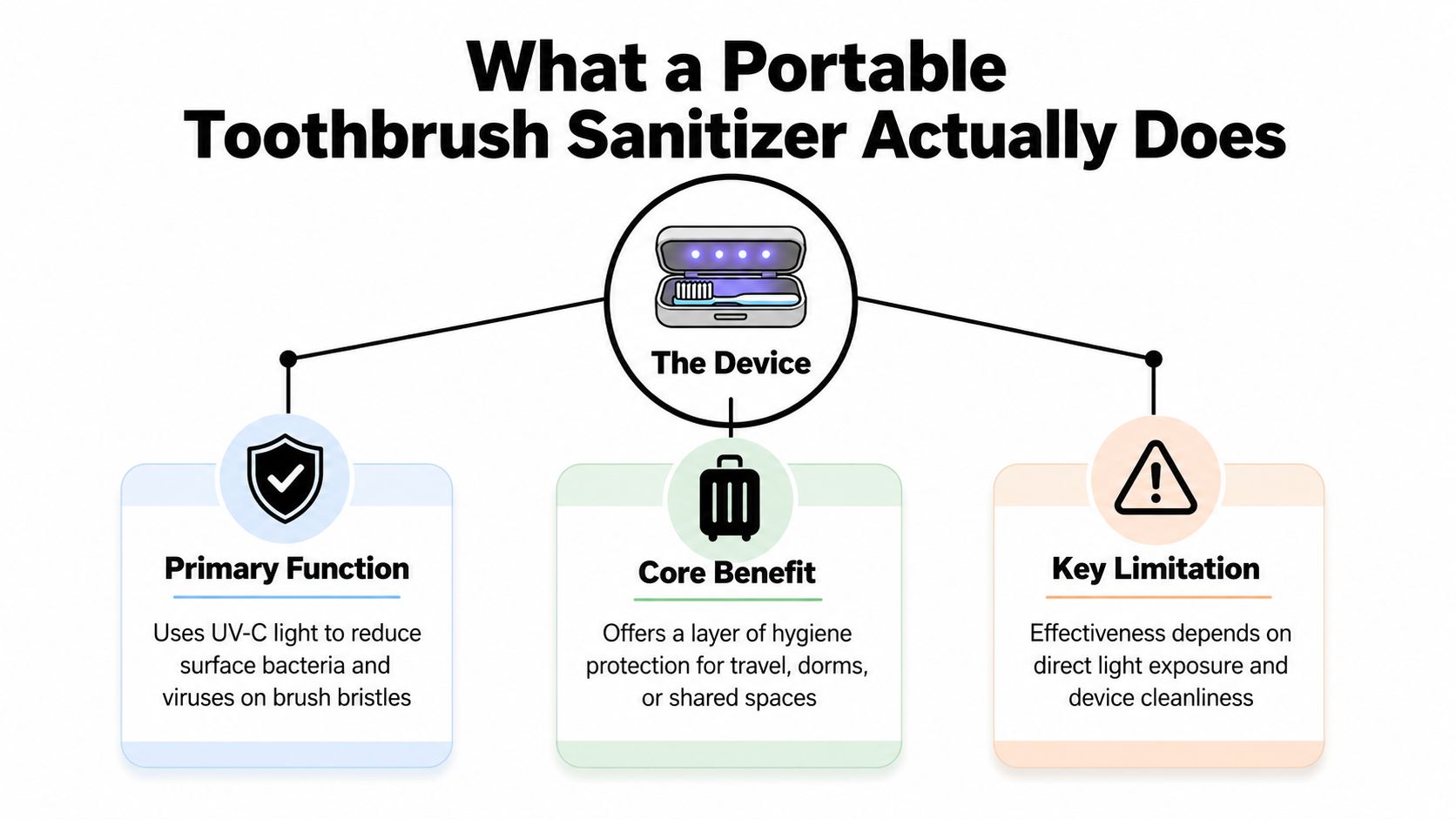
Does a portable toothbrush sanitizer earn space in your bag, or does it add one more item to charge, dry, clean, and remember? Its basic function is narrower than the marketing can suggest. The device encloses a toothbrush head and applies a sanitizing method between uses, most often UV-C light. Other models use ozone, antimicrobial materials, airflow, or a combination of features.
The practical target is exposed brush surfaces. A sanitizer may reduce microbial contamination there, but it does not replace brushing, flossing, rinsing, or replacing a worn toothbrush. It also cannot fix a brush that is stored wet inside a dirty case. Moisture and poor positioning can matter as much as the technology itself.
“Sanitizing” means reducing microorganisms. It does not automatically mean complete sterilization, and it does not establish that the device prevents illness or improves oral-health outcomes for healthy adults. The FDA device history supports reduced bacterial contamination, not a guarantee of better health outcomes. (FDA device summary)
Why people carry one
The reason to pack one is usually ordinary travel hygiene. You might need to store a damp toothbrush in luggage, share a bathroom, live in a dorm, or keep brush heads separated at home. A closed case creates a barrier between bristles and nearby surfaces, provided the case itself is cleaned and allowed to dry.
That trade-off deserves attention. A device that takes up little space can still become inconvenient if its battery dies, the brush does not sit directly in the light, or the case traps moisture. The value is therefore less about owning another germ-killing gadget and more about whether its routine fits your travel habits.
People with conditions affecting immune function may have a specific reason to review toothbrush-storage and sanitation choices with a dentist or clinician. A sanitizer can add a hygiene measure, but it should not be described as medical protection without professional guidance.
What the category can and can't promise
Independent academic evidence supports measurable bacterial reduction after UV treatment. A peer-reviewed study indexed by PubMed Central reported statistically significant reductions at multiple dilution levels. Those results support an effect under the study conditions, not an identical result from every portable case.
Set expectations accordingly. A properly positioned brush with exposed bristles may have less contamination after a cycle. The device will not make a damp case hygienic, sterilize every shaded surface, or compensate for poor storage. For many travelers, those real-world limits determine whether the sanitizer deserves room in the bag.
The Main Sanitizing Technologies Explained
A sanitizer earns space in a travel bag only if its technology fits the conditions around it. UV-C, ozone, and antimicrobial materials approach the problem differently, and each has limits that matter more than the feature list.
UV-C light
UV-C devices use short-wave ultraviolet light to damage microbial genetic material, preventing exposed organisms from reproducing. In a toothbrush case, a lamp or LED sits near the brush head. The cycle depends on dose, which combines light intensity, exposure time, and coverage. A shadowed section of bristles may receive far less light than the surface facing the source.
The academic evidence supports measurable bacterial reduction under tested conditions. A peer-reviewed study reported statistically significant reductions after UV exposure, including mean colony-forming-unit counts at separate dilution levels. Those findings show that UV can work in a controlled setup. They do not show that every portable case delivers the same dose, especially when the brush is crowded into a chamber or positioned away from the light.
For a plain-language explanation of device design, see this UV toothbrush cleaner guide.
Ozone and antimicrobial materials
Ozone-based units use a reactive gas rather than light. That creates a different safety concern because ozone should not be inhaled. The product also needs adequate containment and clear operating instructions. If a device emits an odor, requires ventilation, or warns against opening it during a cycle, follow the manufacturer's directions instead of treating it like an ordinary storage case.
Antimicrobial cases and bristle treatments work differently again. Treated plastics or infused bristles may inhibit microbial survival on or near a surface, but they are not necessarily active sanitizing systems. They also do not address residue, trapped moisture, or poor storage. A passive coating can serve as one design feature, yet it should not be compared directly with a powered UV cycle without product-specific testing.
A quick comparison
| Technology | How It Works | Typical Cycle | Best For |
|---|---|---|---|
| UV-C light | Exposes accessible bristle surfaces to germicidal ultraviolet light | A short programmed cycle | Travelers who can keep the brush dry and correctly positioned |
| Ozone | Uses contained reactive gas to treat the brush head | A programmed gas-treatment cycle | Users willing to follow ventilation and safety instructions closely |
| Antimicrobial materials | Uses treated surfaces or bristles to inhibit microbial survival | Passive, with no powered cycle | Buyers seeking a simpler storage layer rather than active treatment |
The practical choice is less about which method sounds most advanced. UV-C depends on exposure, ozone depends on containment and handling, and antimicrobial materials provide a passive layer. A device deserves room in your bag when its method matches your routine, the brush can be positioned properly, and you will keep the case clean and dry.
When These Devices Actually Work and When They Don't
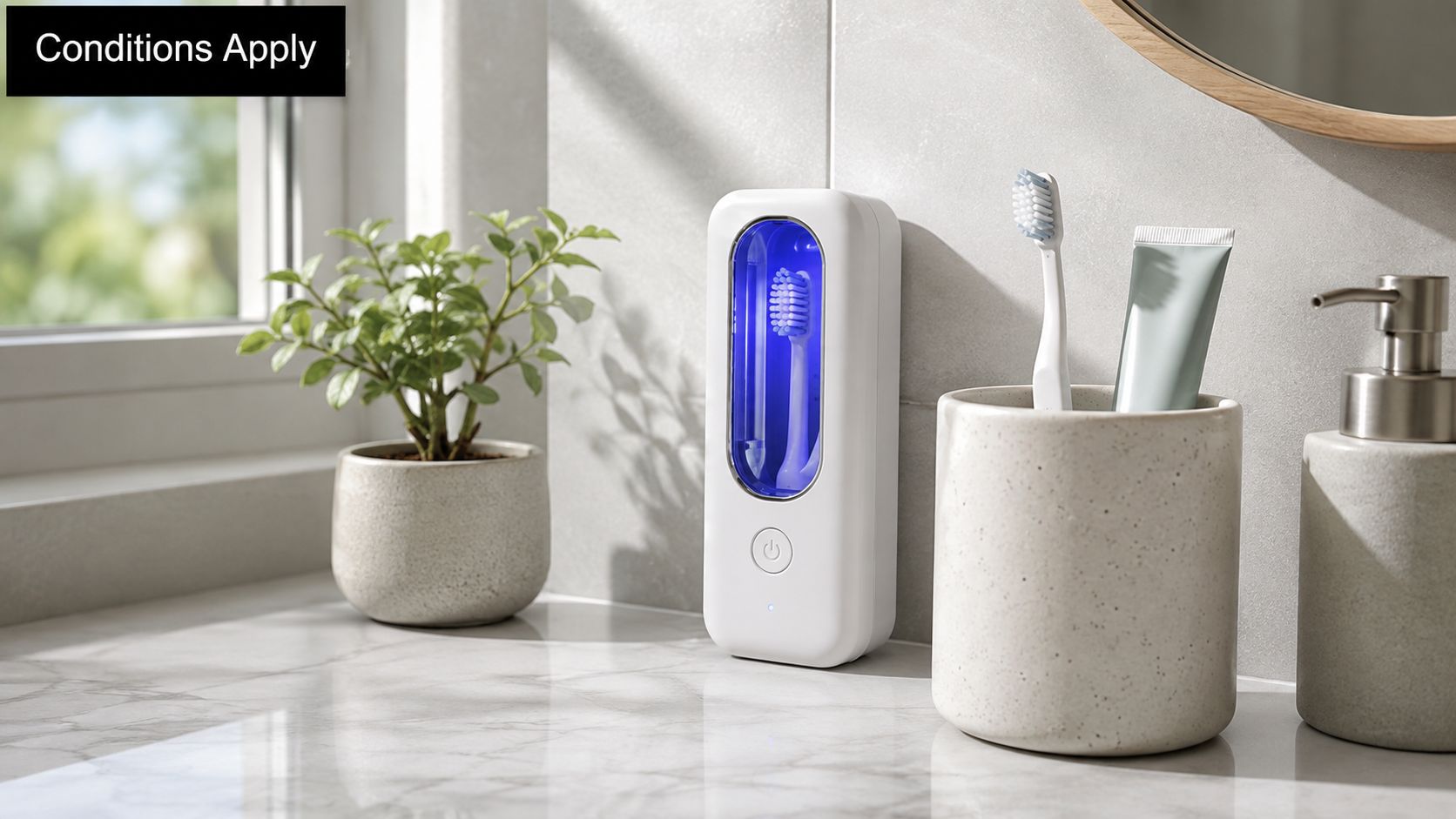
Does a portable toothbrush sanitizer earn space in your bag when the brush is still wet, the battery is low, or the bristles are poorly positioned? Its performance depends on those ordinary travel details. A UV-C unit works most predictably when the brush is reasonably dry, the bristles receive direct exposure, and the device has enough power to finish its cycle. Remove any one condition, and “does it kill germs?” becomes an incomplete question.
A study of a portable UV-C toothbrush sanitizer found that wet storage hindered performance and that the device did not fully remove Streptococcus mitis. A completely dry brush performed better.
The practical failure points
A brush placed straight from the sink into a closed case brings moisture into the treatment chamber. The case can shield the bristles from the room while also slowing evaporation. A fan or drying function may help manage that moisture, but it does not replace the product's instructions or give a wet brush the same conditions as a dry one.
Positioning matters just as much. UV light travels in straight lines, so bristles hidden behind one another, pressed against a wall, or crowded into a narrow compartment may receive less exposure. A closed lid improves containment and safety, yet it cannot make blocked surfaces equally reachable by light.
Battery condition creates a separate travel problem. Portability has little value if the battery cannot complete the cycle. If the unit stops early, treat the brush as untreated rather than assuming partial operation was enough.
Practical rule: Rinse the brush, shake off excess water, let it dry as much as your routine allows, then place the head so the bristles are not compressed against the chamber.
What the evidence does not establish
A broader review of toothbrush sanitation research found that UV can reduce bacterial counts, while simpler approaches such as chlorhexidine or air-drying produced comparable benefits in some settings. The research does not establish that routine sanitizing lowers illness rates for the general healthy population.
The trade-off is practical. UV-C provides a powered, enclosed treatment, while air-drying costs nothing but requires time and space. Ozone brings different handling requirements, and antimicrobial materials reduce dependence on a battery without necessarily treating every exposed surface. For a travel purchase, choose the condition you can control consistently. A device earns its place when you can keep the brush reasonably dry, position it correctly, and maintain enough power for the full cycle.
Using and Maintaining Your Sanitizer Step by Step
The most common mistake is treating the sanitizer as a self-cleaning box. It isn't. The toothbrush needs preparation, and the chamber needs attention because moisture, toothpaste residue, and debris can interfere with storage and possibly with exposure.
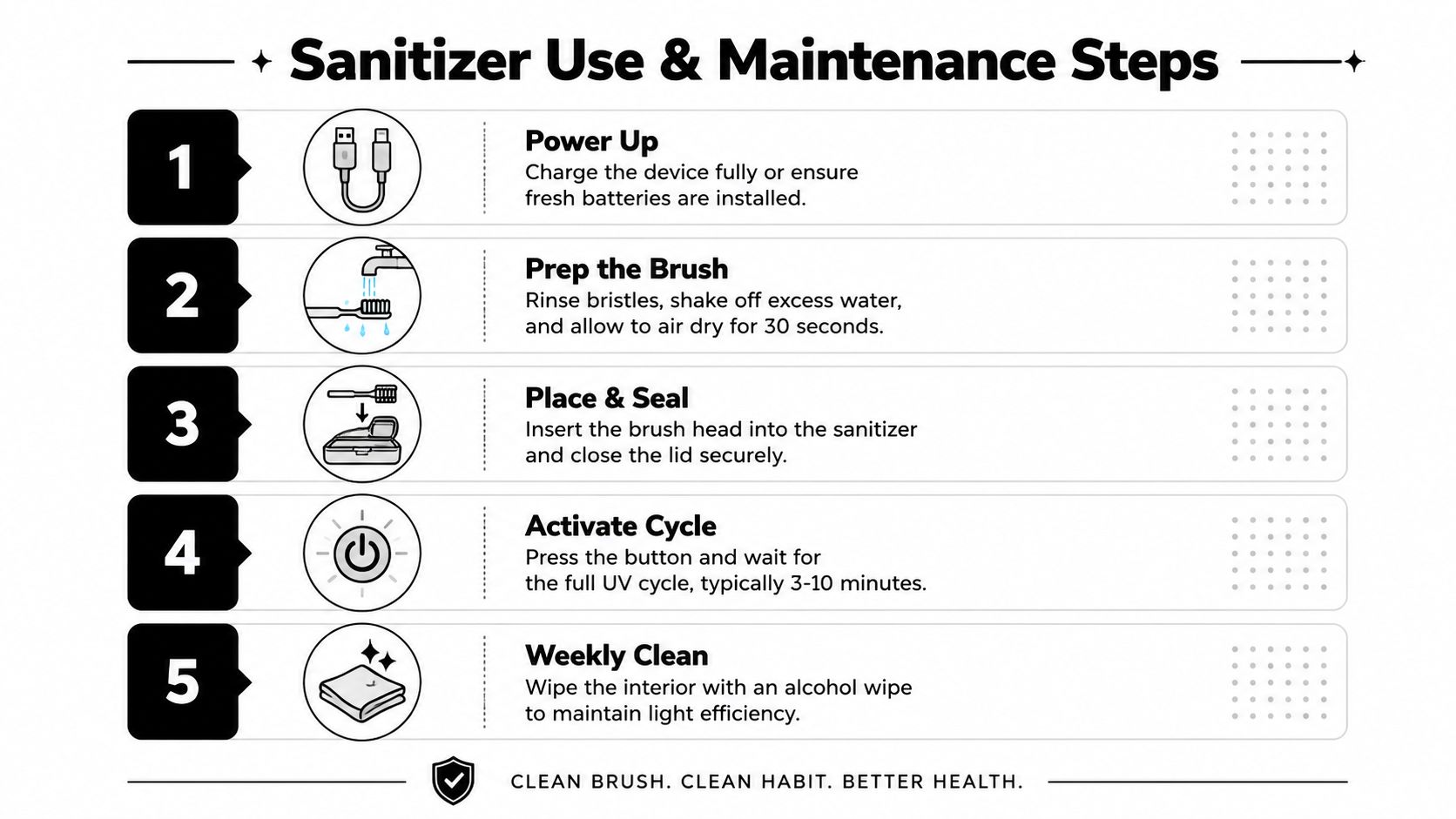
A reliable daily routine
- Power check: Charge the unit or confirm that its batteries have enough capacity for a complete cycle. On a trip, keep the charging cable with the device rather than assuming the battery indicator is accurate.
- Brush preparation: Rinse away toothpaste and loosened debris. Shake off excess water and let the brush air-dry as much as your schedule permits. The portable-device study linked earlier found that a completely dry brush performed better than a wet one.
- Correct placement: Put the brush head in the intended position. Don't force a large electric brush head into a narrow chamber, and don't let bristles fold against the walls.
- Complete the cycle: Close the lid securely and run the full programmed cycle. Opening the case early, moving the brush, or stopping the unit defeats the consistency you're trying to create.
- Clean the chamber: Wipe away visible residue and moisture according to the manufacturer's care instructions. If the interior remains damp or develops a persistent odor, address the moisture problem rather than repeatedly running cycles.
Moisture control applies to the rest of your oral-care kit too. A practical guide to preventing mold growth can help if you're storing a sanitizer, toothbrush, toiletry pouch, or other damp item in a confined travel bag.
When to stop trusting the device
Replace or retire a unit with a cracked housing, damaged seal, unreliable lid sensor, or cycle that stops unexpectedly. A dim indicator doesn't necessarily prove that UV output has fallen, but it does justify checking the manual, contacting the manufacturer, or replacing the device if performance can't be verified.
Don't use the sanitizer to extend the life of worn bristles. Sanitizing and brushing solve different problems. For related care habits, DentalHealth.com also explains how to clean your retainer, another routine where moisture and enclosed storage can create avoidable problems.
Buying Criteria That Matter and the Ones That Don't
Will this sanitizer still earn space in your bag when the brush is wet, the battery is low, or the head sits slightly off-center? The best choice fits your real routine. A compact case with poor bristle exposure can perform worse than a larger model that holds the brush head clearly and securely. A long battery claim also means little if the case is hard to dry or the lid fails to close.
Start with the chamber. Look for room around the bristles, a design that keeps the head away from dirty surfaces, and a lid that closes without pinching the brush. If the manufacturer provides wavelength, dose, exposure time, or independent testing details, examine the conditions behind those claims. “Kills germs” gives you little to assess. Test information shows more about how the device was evaluated.
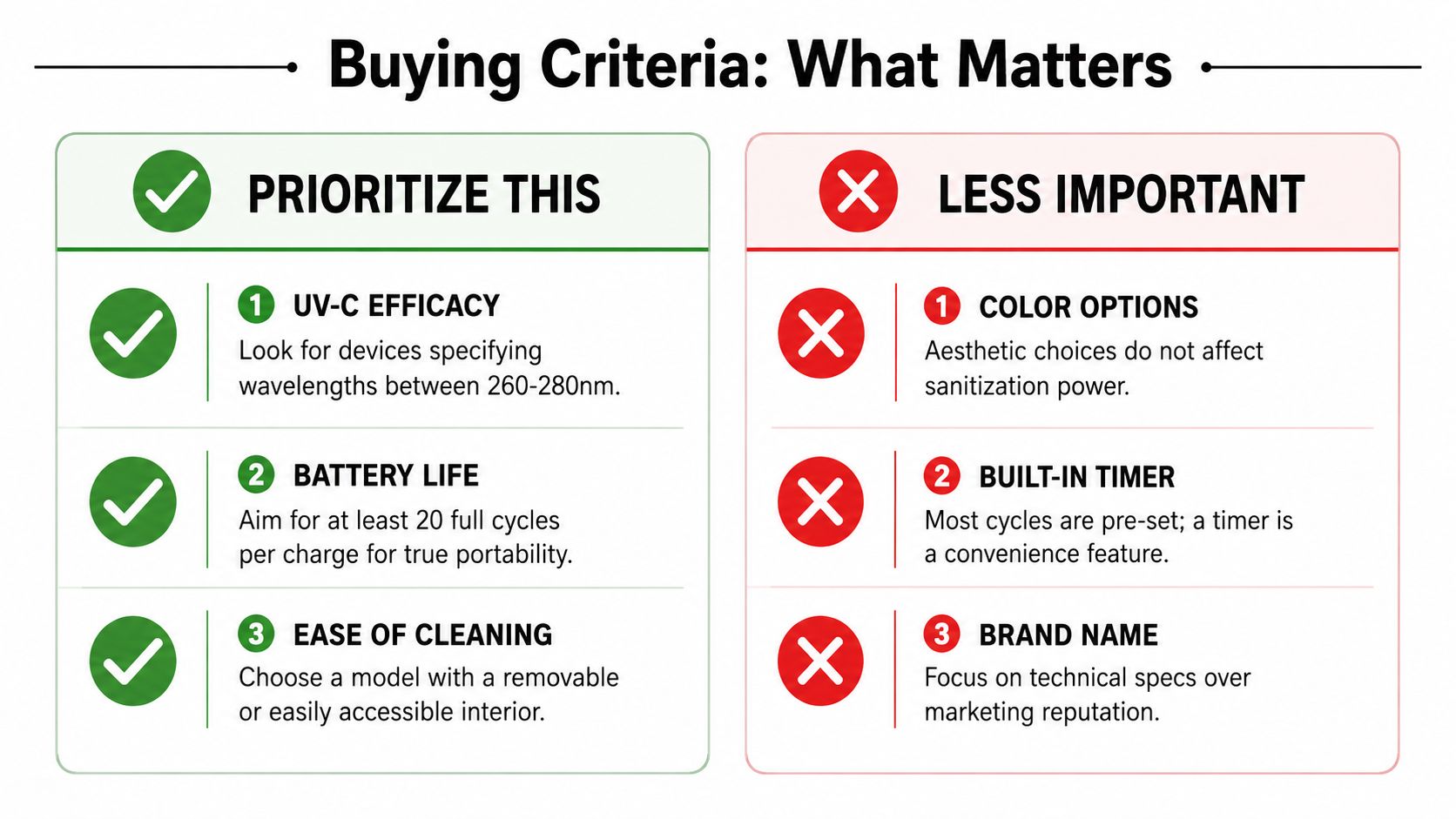
Prioritize the features that affect use
- Chamber geometry: The brush head should rest where light can reach the bristles directly. A universal fit helps only when it leaves enough space instead of crowding the head.
- Power reliability: Choose a device with a clear charging indicator, a usable cable, and battery capacity suited to your trips. Portability includes dependable operation, not only a small footprint.
- Cleaning access: A removable insert or reachable interior makes it easier to remove water and residue. Avoid designs that trap moisture behind seals you cannot inspect.
- Safety controls: A secure enclosure and automatic shutoff when opened are sensible for a UV device. Check the manufacturer's construction and safety information before buying.
Features that rarely decide the outcome
Color, metallic finishes, display animations, and numerous preset modes may improve appearance or convenience without improving bristle exposure. A built-in timer can help you follow the cycle, but it cannot correct poor positioning or replace a complete cycle. A familiar brand may provide better support or warranty service, yet clear technical information matters more than polished packaging.
Category growth shows commercial interest, not a reason for every traveler to buy one. The more useful question is whether the case can handle your brush, drying habits, charging routine, and available bag space without adding another unreliable task.
For regulatory wording and product claims, read DentalHealth.com's explanation of an FDA-approved toothbrush sanitizer. “FDA registered,” “FDA listed,” and “FDA cleared” are different terms. Read what each designation means, rather than treating any of them as proof of superior sanitizing performance.
Travel Realities, TSA Rules, and On-the-Road Use
Travel exposes every weakness in a portable toothbrush sanitizer. At home, you can leave the brush near an open window, recharge the case, and wipe the chamber whenever you notice residue. In a hotel, the brush may go from a wet sink to a packed toiletry bag while the device sits unused with a fading battery.
Check the current rules of the airline and airport before departure, especially if the sanitizer contains a lithium battery. Battery-powered electronics are generally easier to manage in carry-on luggage, while spare lithium batteries have specific packing requirements. Because rules can change and enforcement depends on the device and battery configuration, use the TSA official guidance for batteries and electronics rather than relying on a retailer's “TSA-friendly” label.
Pack for drying, not just protection
Place the sanitizer where you can access it before closing your luggage. If you seal a wet brush inside the case and then put that case in a packed toiletry pouch, you've created a moisture problem the UV cycle can't solve. A breathable interim location, a separate drying step, and a quick wipe of the case can matter more than a decorative travel sleeve.
Hotel bathrooms also vary. Humid air slows drying, shared counters increase contact with surrounding surfaces, and limited counter space can make accurate positioning awkward. If the chamber requires the brush to stand upright or remain a precise distance from the light source, test that arrangement at home before your trip.
Decide whether “portable” is real
A travel-ready model should have:
- A stable enclosure: The lid shouldn't open inside your luggage or press directly against the bristles.
- Simple power management: You should know how to charge it and how to tell whether a cycle completed.
- A cleanable interior: You need access to moisture and residue without damaging the lamp or seals.
- A compatible shape: The brush head must fit without forcing or crowding.
- A reasonable packing footprint: A small device isn't useful if its chamber can't expose the bristles.
Toiletries create a separate packing issue. Toothpaste and liquid oral-care products may fall under airline liquid restrictions, so consult practical carry-on liquid limit advice before packing your complete dental kit. The sanitizer itself doesn't remove the need to manage those other items.
Common Questions and Who Should Actually Buy One
Does sanitizing last all day? Not necessarily. A treatment changes the microbial load at that moment, but the brush can become contaminated again through handling, storage, moisture, or contact with a bathroom surface. Think of the cycle as a point-in-time hygiene step, not a permanent shield.
Does it help with braces or aligners? It may reduce microbes on accessible brush bristles, but it doesn't clean orthodontic appliances, remove plaque from brackets, or replace careful brushing around wires. Aligners and retainers need their own cleaning routine, and a sanitizer case should never become a substitute for washing the appliance as directed.
Should a healthy adult buy one? The evidence doesn't establish that routine antimicrobial toothbrush sanitizing improves health outcomes for healthy users. An independent industry analysis referencing the ADA position says routine sanitizing isn't supported for healthy users, and a 2026 investigation raised concerns about false confidence when devices failed to achieve advertised reductions across all tested strains. (Independent analysis of toothbrush sanitizer evidence)
Who may get practical value
Frequent travelers may appreciate a contained brush holder when they can keep the brush dry and the device charged. People in shared bathrooms may value separation from nearby items. A person with immune-related concerns should ask a dentist or clinician whether this added step makes sense for their specific situation.
You can probably skip the purchase if you already store your brush upright, allow it to dry, keep it away from other brush heads, and don't want another battery-powered item to maintain. The same applies if you're likely to put a wet brush into a sealed case and forget to clean the case. In that scenario, the device adds complexity without reliably addressing the main problem.
The clearest verdict is conditional. A portable toothbrush sanitizer can earn its space when you'll use it with a dry brush, complete the cycle, maintain the chamber, and accept that it reduces contamination rather than guaranteeing health protection. If those habits won't fit your travel routine, careful drying and clean storage may be the more dependable choice.
DentalHealth.com offers professional-grade at-home dental-care products and practical guidance for routines involving sensitivity, whitening, aligners, and retainers. Visit DentalHealth.com to compare oral-care options and read evidence-aware articles before adding another device to your hygiene kit.