
Retainer Cleaner Reviews: Top Picks for Clear, Fresh Aligners
Figuring out the best retainer cleaner can feel like a chore, but it really just comes down to what you need. Effervescent tablets are your best friend for simple daily cleanings, ultrasonic cleaners give you that deep, dentist-office level of clean, and sprays are perfect for a quick refresh when you're out and about. It all depends on your lifestyle, what you want to spend, and how clean you need that retainer to be.
Why Your Retainer Deserves a Dedicated Cleaner
If you just got your braces off, that retainer is now the single most important piece of gear you own for protecting your investment. And trust me, just rinsing it under the tap isn't going to do the job.
Your retainer is made of a porous material that acts like a sponge for invisible gunk. Before you know it, that buildup leads to ugly discoloration, bad odors, and a slimy feeling you definitely don't want in your mouth. Picking the right cleaner is key to keeping your retainer crystal clear and your mouth healthy.
This isn't a small problem, either. The market for aligner and retainer cleaners is booming, expected to hit an estimated $500 million by 2025. That growth is fueled by the more than 14 million people worldwide using clear aligners, plus all the new orthodontic patients every year who need a way to keep their retainers fresh.
Finding The Right Fit For Your Lifestyle
To cut through the confusion, think about your main goal. Do you need something powerful to blast away stubborn, cloudy buildup, or are you just looking for an easy daily habit?
Here’s a simple comparison of the most common types to get you started.
Quick Comparison of Retainer Cleaner Types
| Cleaner Type | Best For | Average Cleaning Time | Convenience Level |
|---|---|---|---|
| Effervescent Tablets | Daily maintenance, travel, ease of use | 15-20 minutes | High |
| Ultrasonic Cleaners | Deep cleaning, stain removal, odor elimination | 5-10 minutes | Medium |
| Sprays & Foams | On-the-go freshness, midday cleaning | 1-2 minutes | Very High |
| Enzymatic Solutions | Breaking down tough organic buildup (biofilm) | 30+ minutes | Low |
This table gives you a quick snapshot, but let's dig into what makes each one tick.
-
Effervescent Tablets: These are the most popular choice for a reason. They're incredibly simple. Products like Retainer Brite tablets are designed to kill bacteria and fizz away plaque with just a quick soak. They’re affordable, great for daily cleaning, and easy to pack for travel.
-
Ultrasonic Cleaners: When you want a truly deep clean, nothing else comes close. These little machines use high-frequency sound waves to create microscopic bubbles that power-wash grime from every nook and cranny. They can restore your retainer's original clarity and freshness in just a few minutes.
-
Cleaning Sprays and Foams: For those times you’re away from home and need a quick fix, sprays are a lifesaver. They're perfect for a quick clean after lunch, but think of them as a supplement to your main, deeper cleaning routine.
A huge mistake people make is using toothpaste or harsh mouthwash to clean their retainer. Toothpaste is abrasive and will create tiny scratches that actually attract more bacteria. And alcohol-based mouthwash? It can dry out the plastic, making your retainer brittle and prone to cracking over time.
This flowchart can help you visualize which path to take based on your cleaning needs.
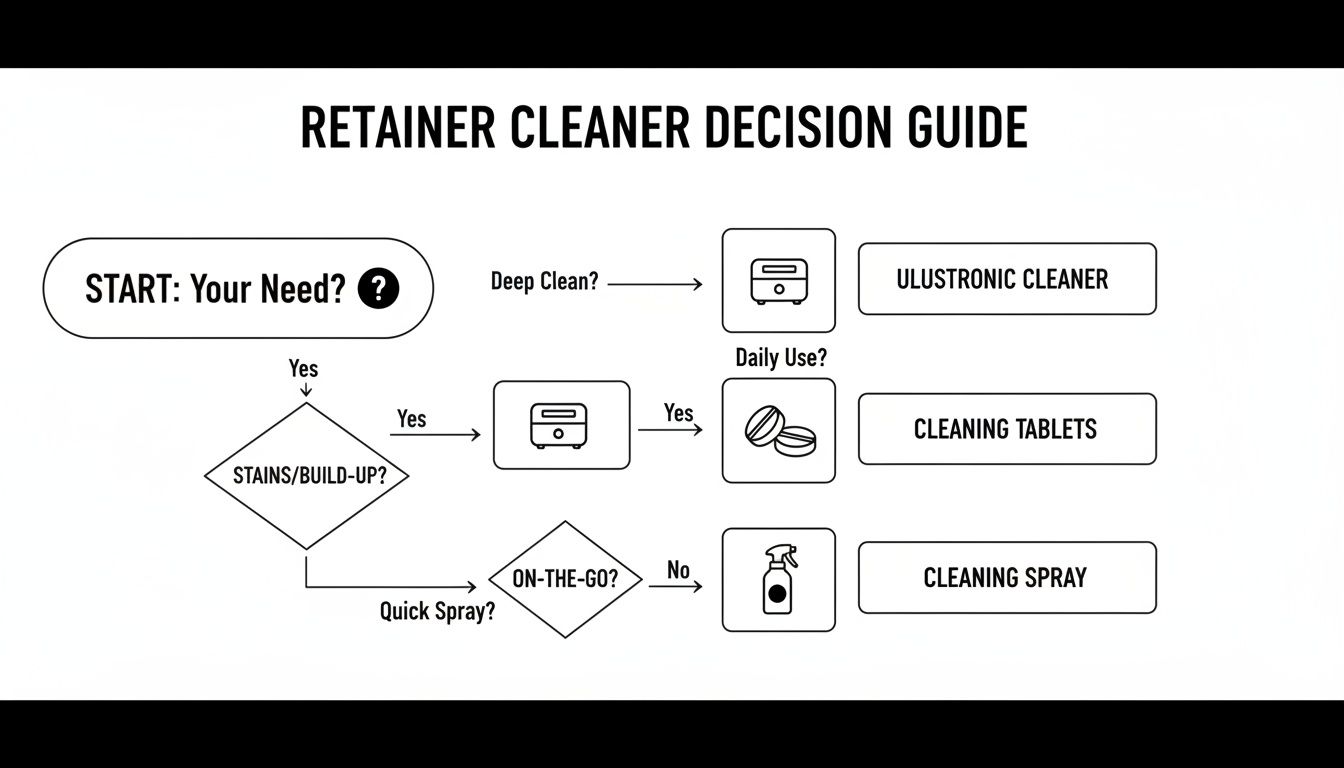
As you can see, if a deep clean is your top priority, an ultrasonic device is the way to go. For straightforward daily upkeep, tablets are the most practical choice. Thinking about your primary use case is the best first step to narrowing down all the options you'll see in retainer cleaner reviews.
Why Rinsing Your Retainer Is Not Enough
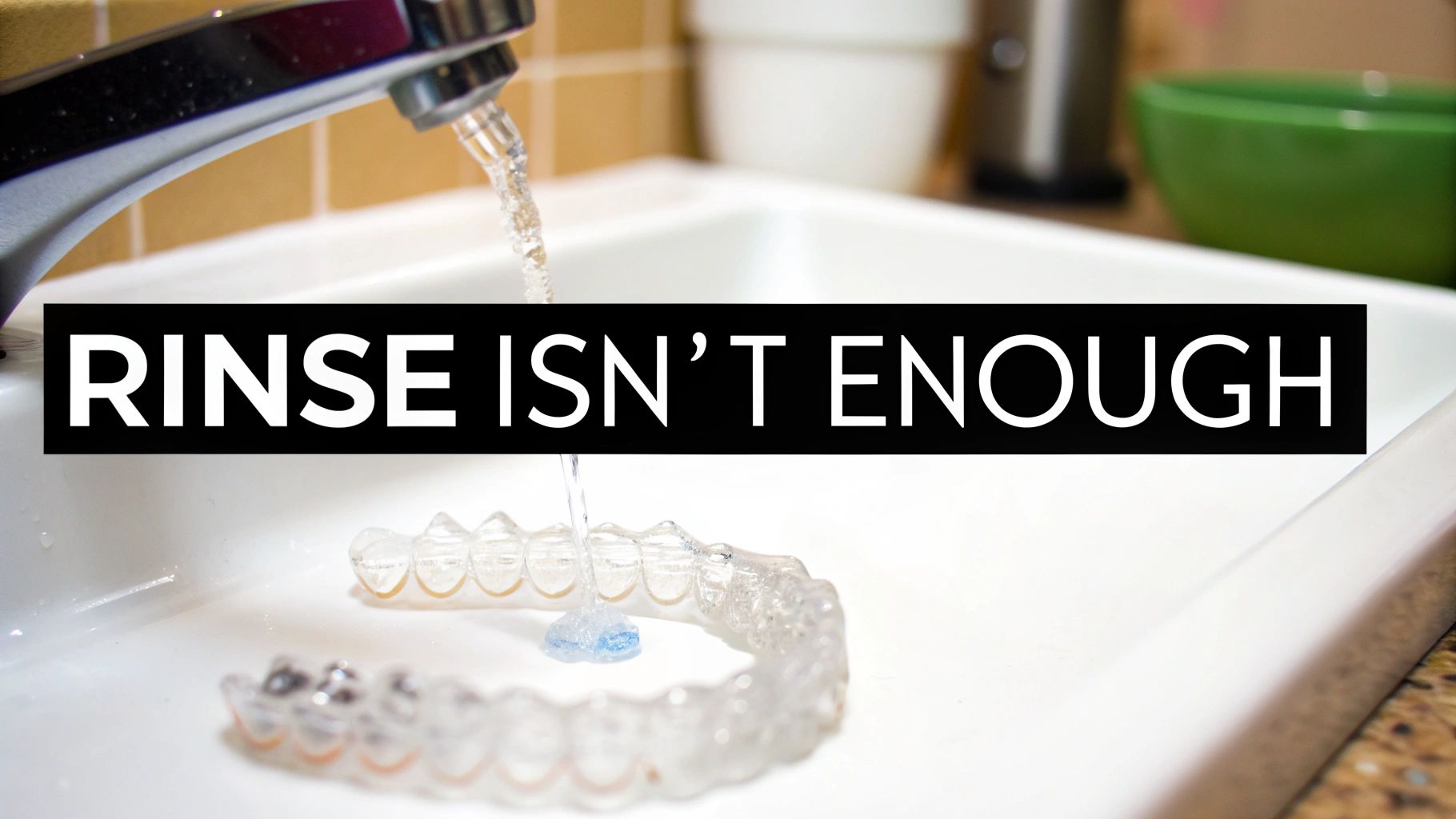
It’s a common habit: you take your retainer out and give it a quick rinse under the tap before tucking it away. That’s good enough, right? Unfortunately, that quick rinse does very little to combat the invisible army of germs setting up camp on the surface.
Think of your retainer like a kitchen sponge. You wouldn't just rinse a sponge with water after wiping down a messy counter and call it clean. Over time, that sponge starts to smell and becomes a haven for bacteria. Your retainer isn't much different. It’s made of a porous material that absorbs saliva, bacteria, and microscopic food particles all day (or night) long.
This buildup creates a stubborn, invisible layer called biofilm. Biofilm is a sticky, organized community of bacteria that latches onto surfaces. A simple water rinse is completely powerless against it, and this is what causes that funky smell, bad taste, and eventual discoloration.
The Hidden Dangers of an Unclean Retainer
Letting that gunk build up isn't just gross—it can actually impact your oral health. The bacteria thriving on your appliance, like Streptococcus, can contribute to plaque on your teeth, inflamed gums, and even new cavities. Every time you pop in a dirty retainer, you're reintroducing a concentrated dose of germs right back into your mouth.
This is where people often make things worse by reaching for the wrong cleaning tools. Many try using toothpaste or mouthwash, thinking they’re doing the right thing.
Using abrasive toothpaste on your retainer is one of the worst things you can do. It creates thousands of microscopic scratches on the surface, which makes it even easier for bacteria and stains to cling to the material, turning your retainer cloudy and yellow over time.
And that alcohol-based mouthwash? It can dry out the plastic or acrylic, making your retainer brittle and prone to cracking. Protecting your orthodontic investment means using products designed for the specific materials your appliance is made from.
Moving Beyond Rinsing to True Cleanliness
Proper retainer care is about more than just washing away the visible stuff. It's about breaking down that biofilm and neutralizing the bacteria that water alone can't touch. This is exactly why specialized retainer cleaners are so important—they're formulated to dissolve that stubborn film without damaging your appliance.
It’s also helpful to understand the difference between sanitizing and disinfecting. Sanitizing reduces bacteria to a safe level, while disinfecting kills nearly everything. The best retainer cleaners provide a level of sanitization that rinsing can't even begin to approach.
Let’s break it down:
- Rinsing: Removes loose bits and pieces but leaves biofilm completely intact.
- Brushing with Water: A tiny bit better, but still no match for established biofilm.
- Using a Retainer Cleaner: Chemically breaks down the biofilm and properly sanitizes your appliance.
Ultimately, just rinsing your retainer is like trying to wash your hands without soap. You might get the visible dirt off, but the germs are still there. To keep your retainer clear, hygienic, and fresh, a dedicated cleaning solution is a must-have.
Decoding the Different Types of Retainer Cleaners
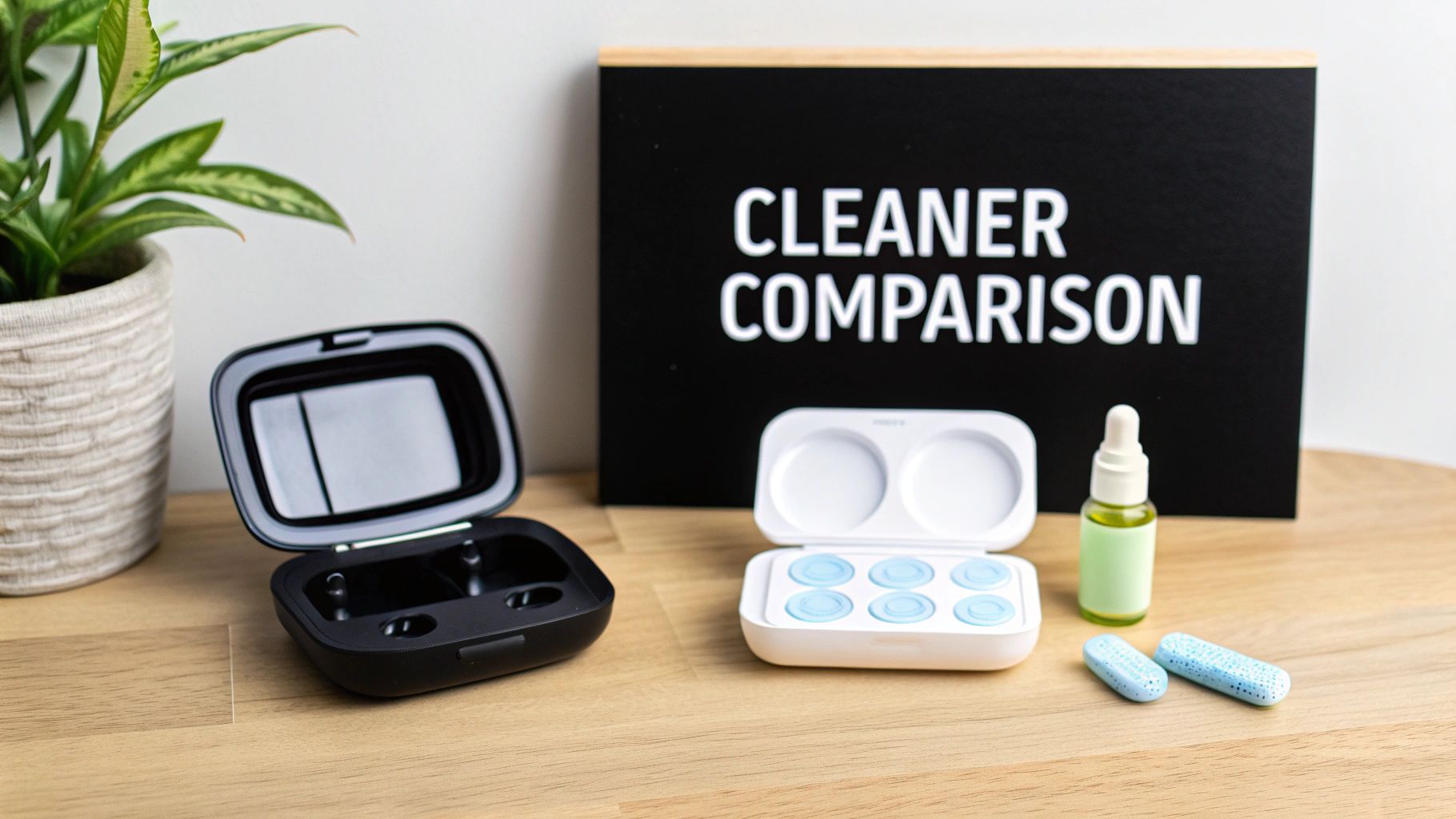
Walking down the dental care aisle can feel a little overwhelming. You'll find a whole range of retainer cleaners, all promising a perfectly clean appliance. So how do you choose? It helps to know what you're looking at. Most products fall into three main camps: the classic effervescent tablets, high-tech ultrasonic cleaners, and handy sprays or foams.
Each one has a different way of getting the job done, but the goal is always the same: to get rid of the gunk you can't see. Rinsing with water just isn't enough to tackle the invisible biofilm and bacteria that build up on your retainer. Let's break down how each type works so you can find the right fit for you.
Effervescent Tablets The Everyday Fizz
These are probably the most common and straightforward option you'll find. Think of them as a tiny, powerful bath bomb for your retainer. Just drop one in a glass of water, and it kicks off a fizzing, bubbling cleaning action.
That fizz is actually thousands of tiny oxygen bubbles hard at work. This chemical reaction, along with gentle cleaning agents like potassium persulfate, lifts away plaque, stains, and the bacteria that cause bad odors. It’s a super simple, effective way to get your appliance clean and sanitized every day without much fuss.
There's a reason these tablets are so popular. The global market for dental cleaning tablets was valued at a whopping $364.85 million in 2025 and is expected to more than double by 2034. Tablets own about 55% of the market because they're so easy to pack and use on the go. This lines up with user surveys where 94% of people said they got their retainers crystal-clear in less than five minutes a day. If you want to dive deeper into these numbers, you can discover more insights about the dental cleaning tablets market.
Key Takeaway: Effervescent tablets are the workhorse of retainer hygiene. They're affordable, easy to use, and perfect for travel, making them the go-to for daily maintenance.
Ultrasonic Cleaners The Deep-Cleaning Powerhouse
If you’re looking for a clean that feels like it came straight from the dentist's office, an ultrasonic cleaner is the way to go. These compact machines don't use chemicals; they use the power of physics to blast away grime from every last nook and cranny.
Here's how it works: the device sends high-frequency sound waves—we're talking 40,000 to 45,000 vibrations per second—through the water. These waves create millions of microscopic bubbles in a process called cavitation.
These tiny bubbles grow and then collapse with incredible force, creating shockwaves that act like a microscopic pressure washer. This action dislodges stubborn plaque, calculus (that's hardened plaque), and stains from places a brush or a simple soak could never reach.
To help you decide, let's compare the two most popular options side-by-side.
Feature Breakdown Effervescent Tablets vs. Ultrasonic Cleaners
Choosing between daily tablets and a deep-cleaning machine can be tough. The table below breaks down the key differences to help you figure out which method fits your routine and budget best.
| Feature | Effervescent Tablets (e.g., Retainer Brite) | Ultrasonic Cleaners |
|---|---|---|
| Cleaning Method | Chemical reaction and fizzing action | Physical high-frequency vibrations (cavitation) |
| Best For | Daily sanitizing and stain prevention | Deep cleaning, removing stubborn buildup and odors |
| Cleaning Time | 15-20 minutes | 3-10 minutes |
| Upfront Cost | Low | Higher (one-time investment) |
| Portability | Excellent | Limited (requires a power source) |
While tablets are fantastic for keeping things clean day-to-day, an ultrasonic cleaner is a game-changer for periodic deep cleans. It's especially useful if you notice plaque or calculus building up quickly, restoring your retainer's clarity in a way a simple soak can't match.
Cleaning Sprays and Foams The On-The-Go Solution
Last but not least, we have cleaning sprays and foams. These are all about one thing: convenience. They're your best friend when you can't do a full soak, like after lunch at the office or when you're traveling.
You just spray or pump the foam onto your retainer, let it sit for a minute, and give it a good rinse. They do a solid job of killing surface bacteria and freshening things up, but they aren't meant to replace your main cleaning routine.
Think of them as hand sanitizer for your retainer. They're perfect for a quick refresh, but they don't provide the deep "hand washing" that tablets or an ultrasonic cleaner can. When you read through retainer cleaner reviews, you'll notice most people use sprays as a backup, not their primary cleaner.
- Pro: Incredibly fast and easy to use when you're out and about.
- Con: Not designed to remove heavy plaque or deep-set stains.
- Best Use Case: As a partner to your main daily cleaning method.
Ultimately, the best cleaner comes down to what you need. Are you looking for deep-cleaning power, everyday convenience, or a quick refresh on the go? Once you understand how each type works, you can make a much more informed choice that will keep your retainer—and your smile—looking its best.
A Step-By-Step Guide to Cleaning Your Retainer
Having the right retainer cleaner is a great start, but how you use it is what really protects your investment. A consistent, proper cleaning routine is the only way to prevent that cloudy buildup, weird odors, and nasty bacteria from taking over. We'll walk you through the simple, effective methods for two of the most popular tools: effervescent tablets and ultrasonic cleaners.
Turning this into a daily habit is much easier than you might think. By following these straightforward instructions, you can make sure your retainer stays as clear and clean as the day you first got it. These steps are all about getting the most out of your chosen cleaner, keeping both your smile and your appliance in top condition.
How to Use Effervescent Cleaning Tablets
Effervescent tablets are the go-to for daily cleaning, mostly because they're so simple and effective. The whole process is quick, easy, and slots perfectly into any morning or evening routine.
- Initial Rinse: First thing, rinse your retainer under lukewarm water. This quick step washes away any loose saliva or food particles before you start the deep clean.
- Prepare the Solution: Grab a glass or retainer bath and fill it with enough lukewarm water to completely cover your appliance. Drop one cleaning tablet in and watch it start to fizz.
- Soak Your Retainer: Place your retainer right into that bubbling solution. For most tablets, like Retainer Brite, a soak time of about 15-20 minutes is perfect for a thorough sanitizing session.
- Gentle Brush (Optional): After it's done soaking, you can use the leftover blue solution and a soft-bristled toothbrush to gently scrub away any plaque or debris that the tablet loosened up.
- Final Rinse: This part is critical. Rinse your retainer completely under cool, running water. You want to wash off every bit of the cleaning solution before it goes back in your mouth or into its case.
Pro Tip: Never, ever use hot water when cleaning your retainer. The high temperature can easily warp the delicate plastic or acrylic, ruining its custom fit and making it useless.
How to Use an Ultrasonic Cleaner
If you want a truly deep clean that gets into every nook and cranny, almost like what you’d get at the dentist, an ultrasonic cleaner is your best bet. It uses high-frequency vibrations to blast away stubborn buildup from places a brush could never reach.
- Fill the Basin: Pop open the ultrasonic cleaner and fill the stainless steel basin with lukewarm water, right up to the "MAX" line. You can use plain water or add a specialized cleaning concentrate for some extra cleaning power.
- Submerge the Retainer: Place your retainer in the water, making sure it's completely underwater. Close the lid securely to get it ready for the cycle.
- Start the Cycle: Most of these devices have a simple one-button start. A typical cycle lasts anywhere from 3-10 minutes, using microscopic bubbles to powerfully, yet gently, scrub your appliance clean.
- Retrieve and Rinse: Once the cycle stops, carefully take your retainer out. Just like with the tablets, give it a final, thorough rinse under cool water to wash away any particles the machine dislodged.
- Clean the Device: Pour out the used water and give the basin a quick wipe so it's dry and ready for next time.
Best Practices for Retainer Hygiene
Beyond your daily cleaning, a few other habits can make a huge difference in keeping your retainer clean and extending its life. To learn more about setting up a solid routine, our guide on how often to clean retainers offers some great extra tips.
- Always Store It Properly: If it's not in your mouth, your retainer belongs in its case. This simple habit protects it from airborne germs, getting stepped on, or being accidentally thrown away.
- Clean Your Case Too: Don't let the case become a petri dish. Make sure you wash the retainer case itself with soap and water regularly to stop bacteria from building up inside.
- Avoid Harsh Chemicals: Stay away from bleach, harsh soaps, or abrasive toothpaste. These can easily damage the retainer's material and are not safe for something you put in your mouth every day.
Following these specific steps will help you master your cleaning routine. For those with clear aligners, the same general ideas apply, and you can check out a helpful guide on how to clean Invisalign aligners for more specific advice.
The Deep Cleaning Power of Ultrasonic Technology
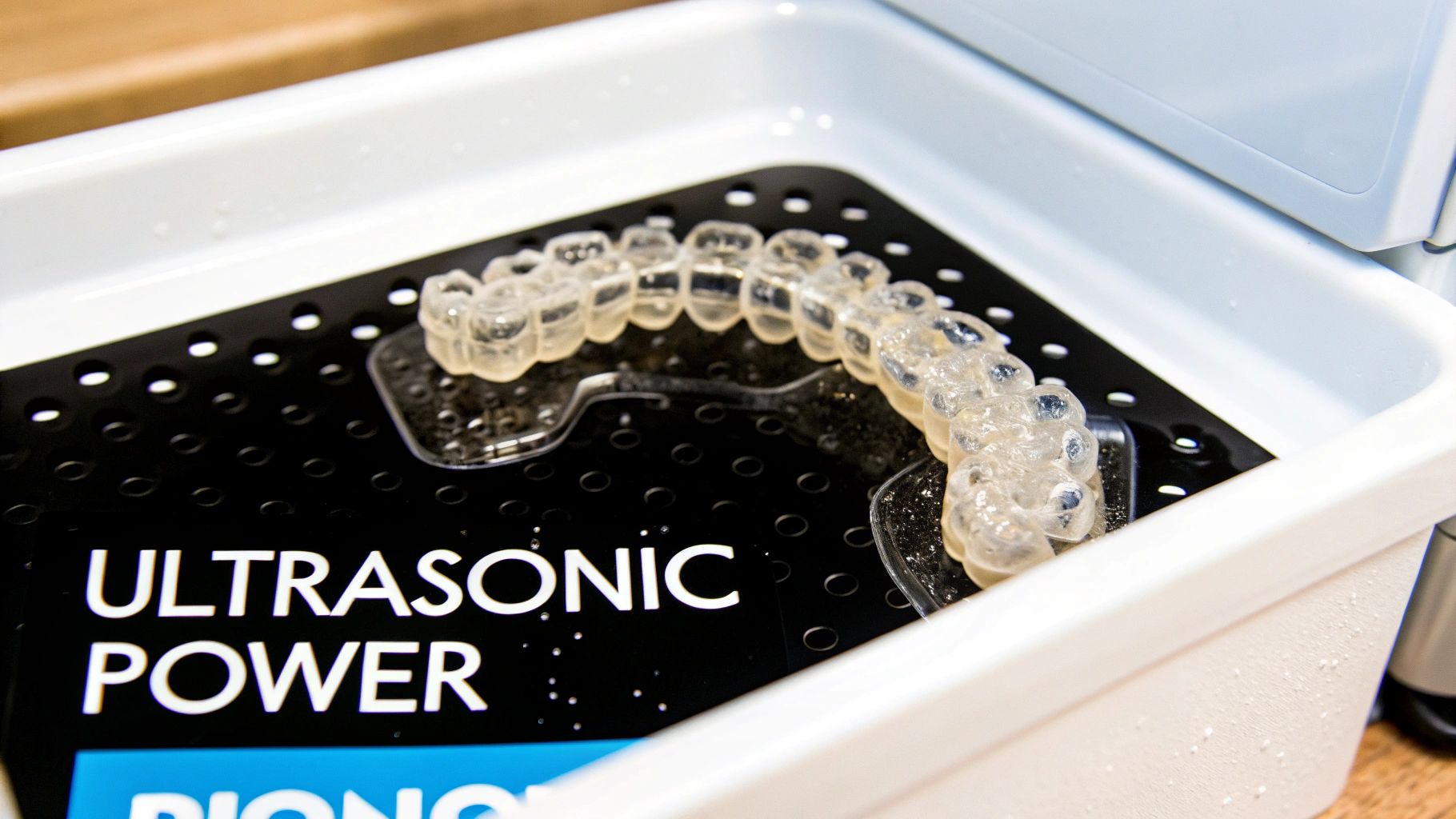
If you're looking for that professional, just-from-the-dentist level of clean at home, ultrasonic technology is the way to go. While tablets are fantastic for daily upkeep, these powerful devices deliver a much deeper, almost restorative clean that can eliminate stubborn buildup and bring your retainer back to its original, crystal-clear state.
Think of it as a microscopic power washer for your appliance. Instead of relying only on chemicals, these machines use pure physics to blast away grime from every single nook, cranny, and groove that simple brushing and soaking can never hope to reach.
It's a genuine game-changer for long-term retainer hygiene. It's no wonder the market for ultrasonic retainer cleaners is booming, with projections showing it could hit $520 million by 2032. These devices consistently pull 4.5-star reviews, and for good reason—studies have found they can slash calculus buildup by 88% compared to using tablets alone. You can dive deeper into these impressive market findings and user statistics.
How Ultrasonic Waves Create a Superior Clean
The magic behind it all is a process called cavitation. The device generates high-frequency sound waves—usually between 40,000 to 45,000 vibrations per second—and sends them pulsing through the water in its basin.
These sound waves are far too high-pitched for the human ear, but in the water, they create millions of microscopic bubbles. These tiny bubbles rapidly expand and then collapse with incredible force, releasing powerful little shockwaves.
This intense, vibrating action physically dislodges and blasts away everything in its path:
- Plaque and Biofilm: It completely obliterates that sticky, invisible film of bacteria.
- Calculus (Tartar): It's strong enough to break apart the hardened mineral deposits that make your appliance look cloudy and feel gritty.
- Stains and Odors: By removing trapped particles, it gets rid of the source of discoloration and funky smells.
The best part? This method is incredibly thorough yet surprisingly gentle. It cleans your appliance without any harsh chemicals or abrasive scrubbing that could scratch or damage it over time.
Why Invest in an Ultrasonic Device
Yes, the upfront cost is more than a box of tablets, but an ultrasonic cleaner is really an investment in the health and lifespan of your orthodontic appliance. It provides a clean that manual methods simply can't touch, making sure your retainer stays truly pristine.
For anyone serious about maintaining their orthodontic investment, an ultrasonic cleaner provides peace of mind. The ability to completely remove unseen buildup ensures your appliance is not just visibly clean, but truly sanitized every single day.
A popular strategy is to combine methods: use tablets for the quick daily soak and bring out the ultrasonic device for a weekly deep-cleaning session. This "best of both worlds" approach keeps your appliance in top condition. To round out your routine, you can explore our complete line of professional oral care products.
Frequently Asked Questions About Retainer Cleaners
Even after getting the rundown on retainer cleaners, a few questions might still be bubbling up. That's completely normal—getting the details right is how you protect both your orthodontic investment and your overall oral health. Let's dig into some of the most common questions we hear from people trying to pick the best cleaner.
Can I Use Toothpaste or Mouthwash to Clean My Retainer?
It’s tempting to just grab what's already on your bathroom counter, but we strongly advise against it. Toothpaste is abrasive, meaning it will etch microscopic scratches all over your retainer’s surface. It might seem clean at first, but those tiny grooves are the perfect place for bacteria to hide and multiply, eventually leading to a cloudy look and unpleasant odors.
Mouthwash isn't a great alternative, either. Many formulas contain alcohol, which can dry out the acrylic or plastic, making your retainer brittle and susceptible to cracking over time. Specialized retainer cleaners are formulated to be tough on germs but gentle on the materials orthodontists use.
How Often Should I Clean My Retainer?
For the best hygiene, you need to clean your retainer every single day. Plaque and bacteria begin to accumulate the moment you pop it in your mouth. A quick, daily cleaning—something that takes just 15 minutes with a product like Retainer Brite tablets—is all it takes to prevent stains, odors, and that nasty biofilm from building up.
Think of it this way: You wouldn't go a day without brushing your teeth, right? Your retainer needs that same level of daily attention. It's an essential part of the same hygiene routine that keeps your smile healthy.
This simple habit is the absolute key to keeping your appliance fresh and clean for the long haul.
Are Retainer Cleaning Tablets Safe for All Retainers?
For the most part, yes. Reputable effervescent cleaning tablets are specifically formulated to be safe for all common types of removable appliances, which is a big reason they're so popular in retainer cleaner reviews.
This includes a wide range of devices:
- Clear Plastic Retainers (like Essix retainers)
- Clear Aligners (such as Invisalign)
- Traditional Wire-and-Acrylic Retainers (Hawley retainers)
- Mouthguards and Nightguards
These tablets are designed to kill germs and break down stains without corroding metal wires or degrading the plastic. Still, it's always a smart move to glance at the product packaging just to be sure it's a match for your specific appliance.
What Is the White Buildup on My Retainer?
That cloudy, stubborn gunk is usually a mix of two things: calcium deposits (calculus) from your saliva and plaque biofilm. Once this stuff hardens onto the surface, it's incredibly tough to get off with just a brush.
The best way to deal with this is to prevent it from forming in the first place with a proper daily cleaning routine. The chemical reaction from an effervescent tablet helps dissolve these mineral deposits before they can harden. If you're already dealing with severe buildup, the high-frequency vibrations from an ultrasonic cleaner are powerful enough to literally shake the calculus apart, restoring your retainer's clarity.
Keeping your retainer in pristine condition is simple with the right products. At DentalHealth.com, we stock professional-grade cleaners like Retainer Brite to help you maintain your smile with confidence. Explore our full range of dentist-recommended oral care products, all with fast, free shipping in the USA. https://dentalhealth.com