
Teeth Whitening Gel Refills: How to Choose
The strongest syringe isn't automatically the best refill. If your whitening gel runs out halfway through a course, choosing a higher peroxide percentage can change the treatment you're doing, not just replenish it. A shorter session may sound convenient, but it can come with a greater chance of sensitivity.
The better way to choose teeth whitening gel refills is to match the original gel, tray, and wear schedule. Think of the refill as another dose of an established treatment, not an invitation to turn up the strength.
What a Refill Is and How Peroxide Sets the Clock
You're ready for a touch-up, or the syringe empties before your course is finished. The replacement listing has a familiar name, but several percentages appear beside it. It's easy to assume the larger number means better whitening.
A gel refill replaces the whitening material used in a compatible tray system. It isn't toothpaste, and it isn't a new treatment plan by itself. The syringe only makes sense alongside the instructions that determine how much gel you apply, where it sits, and when you remove it.
Match the chemistry before the packaging
Read these details from the old carton or syringe before shopping:
- Peroxide type: Look for carbamide peroxide or hydrogen peroxide, not just the word peroxide.
- Percentage: Match the concentration rather than choosing by package color or product-family name.
- Instructed wear time: Confirm the session length and treatment schedule for that exact formulation.
- Tray compatibility: Make sure the gel belongs in the take-home tray system you own.
The peroxide type matters because the chemicals release their whitening action differently. Hydrogen peroxide acts directly, while carbamide peroxide breaks down more gradually into hydrogen peroxide and urea.
A useful analogy is an immediately available medicine compared with a slow-release capsule. Both can deliver an active ingredient, but they don't deliver it on the same clock. That's why equal percentages of different peroxide types shouldn't be treated as interchangeable doses.
Peroxide also works differently from a stain-removing toothpaste. Toothpaste helps clean deposits from the surface; peroxide changes the color of natural tooth structure. Scrubbing harder and choosing stronger bleaching gel are therefore different decisions, neither of which should be used to compensate for an unidentified color problem.
Concentration and contact time belong together
The American Dental Association's whitening guidance describes home carbamide-peroxide systems commonly ranging from 10% to 38%, and summarizes treatment schedules lasting 6 to 28 days, with daily wear ranging from 2 to 10 hours. Those are ranges across treatment protocols, not instructions for every syringe.
Lower-concentration gels are often designed for longer contact. More concentrated formulations may require shorter exposure. You can't safely borrow the longer wear time from one product and combine it with the stronger gel from another.
Practical rule: The percentage and the timer are a pair. Don't change one while assuming the other stays the same.
Both peroxide systems can whiten teeth, but your response and comfort depend on the formulation and treatment schedule. Sensitivity and oral irritation are the most common adverse effects of home whitening; they're generally temporary, but stronger formulations can make them more likely.
Barrel size isn't strength
A larger syringe describes how much material the container holds, not how aggressively that material acts. It doesn't establish the number of treatments either, because tray design and product-specific dosing affect how much gel you use.
Say the old syringe was small and the replacement looks much larger. Before deciding that the new one is stronger or better value, read the concentration and dosing instructions. The container's appearance tells you very little about the exposure your teeth will receive.
If the label is missing, don't guess upward or choose an unidentified “gentle” substitute. Set the syringe aside and have the formulation and schedule confirmed. Even a lower-strength product needs an appropriate tray and a clear stopping time.
Strengths Wear Times and Sensitivity Side by Side
Refill strength, wear time, and sensitivity
| Gel band | Typical daily wear | Usual course | What changes |
|---|---|---|---|
| 10% carbamide peroxide | Use the printed long-wear schedule; overnight use must be specifically permitted | Complete the prescribed course, not an open-ended nightly routine | A lower-strength reference option, not a guarantee of no sensitivity |
| 16% carbamide peroxide | Use the exact formulation's instructions; don't borrow another gel's overnight schedule | Follow the original treatment plan | Session length may change; the final shade isn't guaranteed to improve |
| 22% to 35% carbamide peroxide | Use only the shorter contact schedule specified for the product | Stop at the prescribed endpoint | More concentrated exposure makes careful timing especially important |
| About 6% to 10% hydrogen peroxide | Follow the daytime formulation's printed timer | Follow its own course instructions | Direct-acting chemistry isn't interchangeable with carbamide peroxide |
| Higher than the original protocol | Only the time specifically prescribed for that replacement | Don't invent a shorter crash course | A change of treatment, not a routine refill |
Find the row that matches your finished syringe, not the largest percentage. The table is a label-checking guide, not a universal dosing chart. Products within a concentration band can have different instructions, so assigning every gel in a row the same minutes or course length would be misleading.
A shorter session isn't a better endpoint
A stronger formulation can make treatment fit a different daily routine. That doesn't mean it will necessarily leave your teeth whiter at the end of an appropriately completed course.
Lower-strength treatment also isn't sensitivity-free. A biological review of tooth bleaching compiled historical studies of 10% carbamide peroxide reporting sensitivity from 15% after a 28-day protocol to 64% after 14 nights. Those results came from different study conditions, so they aren't a personal risk calculator.
The useful lesson is that concentration alone doesn't predict comfort. Tray contact, exposure time, and your own dental history also matter. Someone who develops sharp “zingers” shouldn't move to a stronger band to make up for missed applications.
A refill you can use comfortably as directed is more useful than a stronger syringe you keep abandoning.
Compare labels before comparing brands
When browsing teeth-whitening gel brands, compare the full formulation name and its intended schedule. A familiar brand may sell both daytime and longer-wear gels, and the branding doesn't make those products substitutes.
Consider a person whose original gel fitted comfortably into an evening routine. Switching to a more concentrated syringe just because it advertises shorter sessions creates a new decision about exposure and tolerability. Staying with a successful protocol avoids that unnecessary change.
If sensitivity matters more than speed, discuss a gentler formulation with your dentist. Don't select a new concentration solely from a chart, particularly if the old treatment already caused discomfort.
How to Use a Gel Refill in Your Trays
A good session starts with controlled placement, not a tray filled to the edges. Have the syringe, clean trays, tissue or cotton swab, and a timer ready before opening the gel.
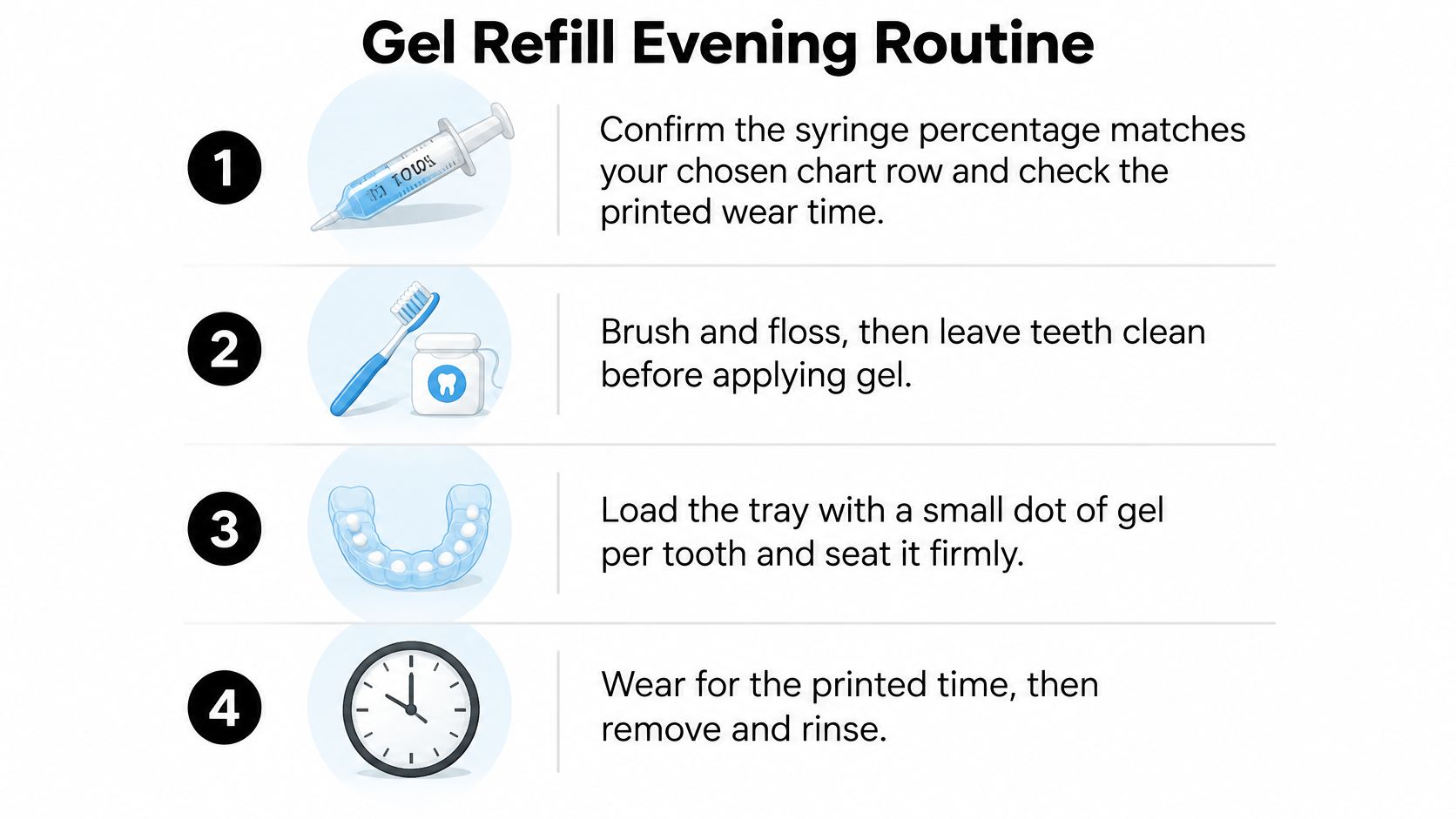
Prepare and load without overflow
- Read the syringe before uncapping it. Confirm the peroxide type, percentage, and printed wear time against your treatment instructions. Decide when the trays come out before they go in, rather than extending the session because you're distracted.
- Brush and floss gently. Remove debris that could interfere with even gel placement, and leave your teeth clean rather than dripping wet. Inspect the empty trays for residue, cracks, or distorted edges; an uncomfortable or damaged tray needs attention before you add peroxide.
- Load according to the tray design and syringe dose. With compartmented trays, place a drop into each tooth compartment being treated. With simpler trays, place a thin line along the tray channel. Where the syringe is dosed for a complete upper-and-lower treatment, use half for the upper tray and half for the lower; don't apply that division to every syringe regardless of its instructions.
- Seat gently and remove overflow. Guide the trays into place without forcing them hard against your teeth. Wipe away gel that squeezes onto the gums with a clean tissue or cotton swab. Overloading or pressing firmly isn't necessary and may irritate the gumline.
The right amount looks modest before you seat the tray. A thick ring of gel around the gums isn't evidence of better coverage, it's a sign that material has escaped the treatment area.
Time the treatment and clean up gently
- Wear for the exact instructed time. Use a timer for an awake session, and only sleep in a formulation specifically intended for overnight use. Don't add more gel during wear or extend contact to compensate for a missed application. Remove the trays if concerning discomfort develops.
- Rinse your mouth and clean the trays. After treatment, rinse with tepid water and brush gently with a mild toothpaste. Rinse the trays, remove remaining gel gently, and let them dry thoroughly before storing. Avoid hot water that could distort their fit.
- Close the syringe promptly. Replace its cap without touching the tip to a used tray or your mouth. Keep the product instructions with the remaining gel so the next session doesn't depend on memory.
If your particular formulation requires a soft-tissue barrier, apply it before treatment as instructed. Don't improvise a barrier after irritation begins and continue wearing the trays.
A well-loaded tray leaves a thin, even film against the intended tooth surfaces, without visible overflow along the gums. The goal is controlled contact, not using up the syringe.
When Another Refill Will Not Fix the Color
Dull-looking teeth don't always mean you need more gel. Before reordering, identify which surfaces have changed color and whether the last course produced the result you expected.
Start by listing visible crowns, veneers, bonding, sealants, and tooth-colored fillings. The ADA's discussion of whitening limitations and overuse explains that whitening chemicals may interact with restorative materials and won't make them respond like natural teeth; it also cautions against aggressive or frequent bleaching.
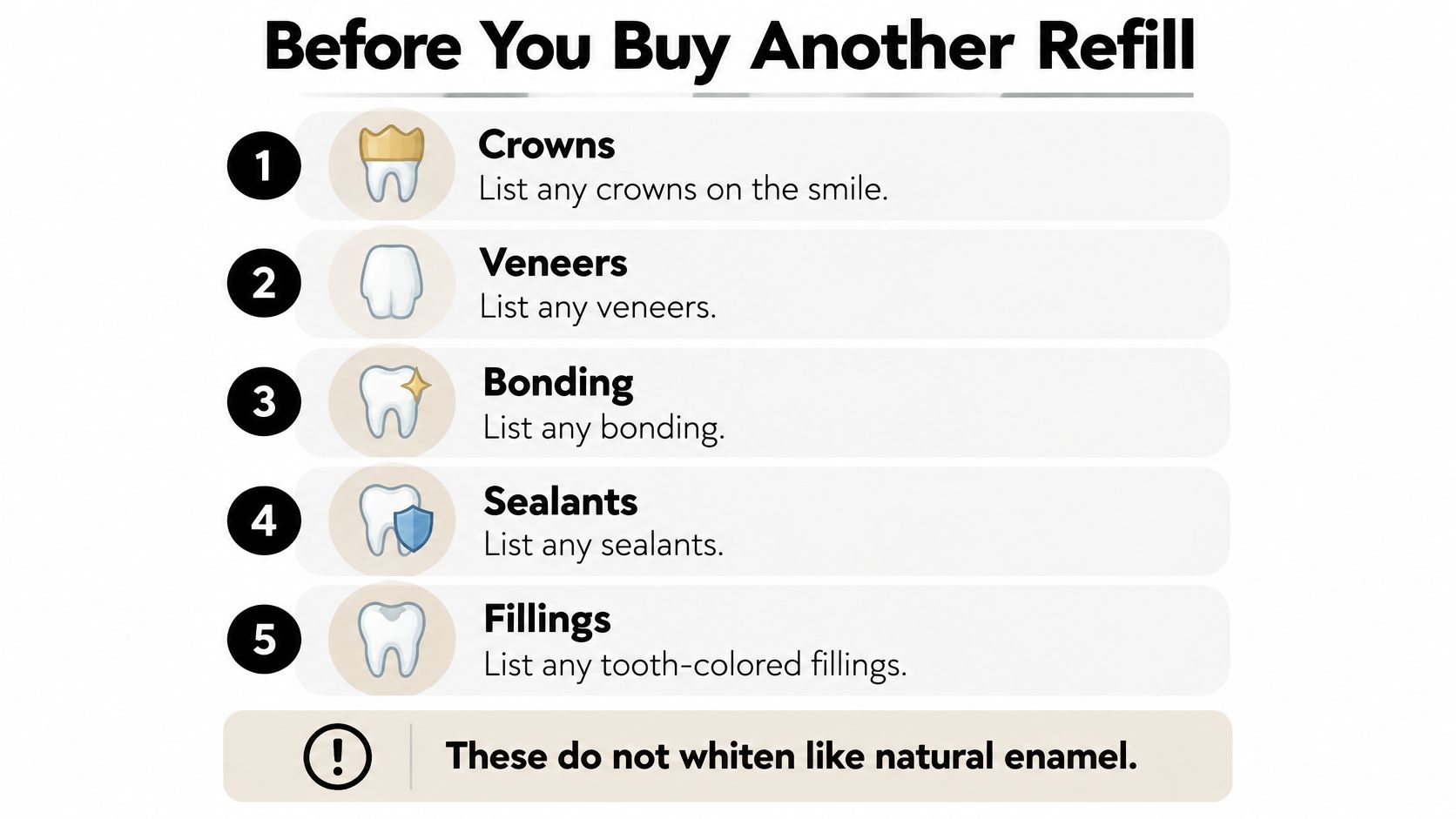
Match the next step to the color problem
When a gel refill is the wrong next step
| What you see | What more gel does | Better next step |
|---|---|---|
| Coffee, tea, or wine staining on natural teeth after a completed course | May lighten the natural teeth again if treatment remains appropriate | Confirm that a touch-up is due and use the previously tolerated protocol |
| Crowns, veneers, bonding, or tooth-colored fillings that no longer match | Can change the surrounding teeth without producing a matching restoration | Ask a dentist about coordinating the tooth and restoration shades |
| One dark tooth, antibiotic bands, or color that never changed | May not resolve the underlying cause or produce an even result | Get a dental examination before buying another refill |
| Very translucent teeth looking more yellow after repeated courses | Further treatment may worsen the appearance rather than conceal it | Pause bleaching and have the enamel assessed |
| Untreated decay, sore gums, or severe sensitivity | Can add irritation without addressing the dental problem | Stop and contact a dentist |
A coffee stain and a tooth that darkened after an injury aren't the same problem. Neither is a small patch of bonding that stayed its original shade while the surrounding enamel lightened. Understanding different teeth-whitening stains helps you describe the change accurately instead of treating every dark area with extra peroxide.
Check treatment frequency as well as shade
Repeated courses shouldn't become an automatic response to every disappointing mirror check. Aggressive bleaching can increase enamel permeability and contribute to erosion; very translucent teeth can also show more of the yellow dentin underneath.
Stop-use signal: Severe sensitivity or mouth sores mean stop whitening and contact a dentist, not finish the box.
Don't restart over untreated decay, a sore gumline, or an existing sensitivity problem that hasn't been discussed with your dentist. Those findings change whether whitening is appropriate at all.
A reasonable refill candidate has a completed, well-tolerated previous course, healthy-feeling gums, and renewed discoloration on natural teeth. Even then, maintenance should follow an established plan rather than become continuous bleaching.
Storing Gel and Reading Sensitivity
An opened whitening syringe is a chemical product with storage requirements, not a cream that remains suitable until the barrel is empty. Normal-looking gel doesn't prove that its peroxide activity or delivery properties are unchanged.
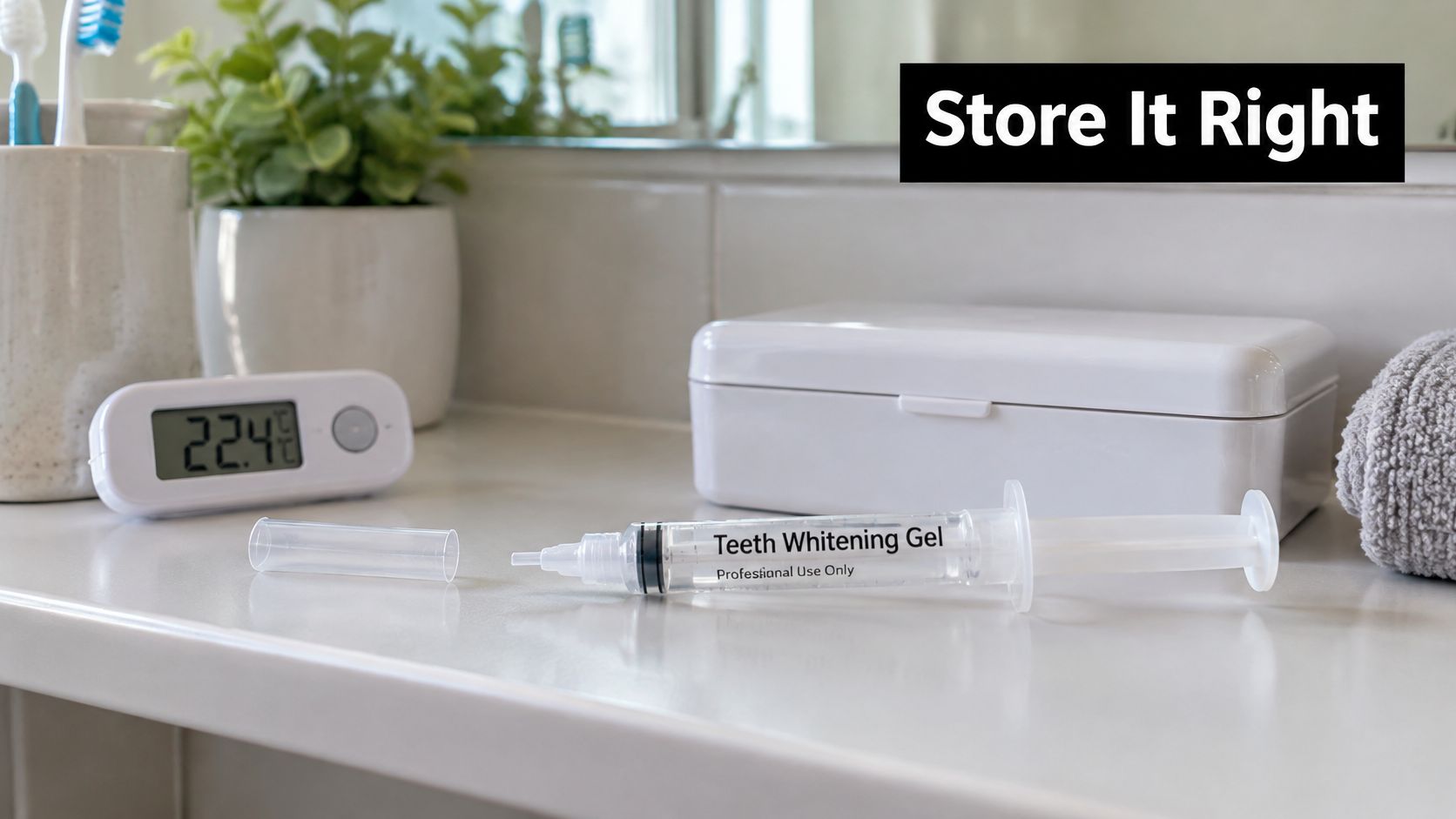
Storage history matters alongside the date
A controlled study of carbamide-peroxide gel storage found that a specific 10% formulation retained bleaching efficacy after three months at 25°C, 35°C, and 41°C, without increasing enamel surface roughness. That finding applies to the tested formulation and conditions, not every refill in a bathroom drawer.
It doesn't establish indefinite stability or make heat exposure harmless. A different gel can have different storage limits, and the study doesn't override the manufacturer's expiry or handling instructions.
- Cap tightly: Close the syringe after dispensing so the tip stays protected.
- Prevent contamination: Keep the dispensing tip away from saliva and used trays.
- Avoid heat and sunlight: Don't leave refills in a parked car or on a sunny windowsill.
- Follow the specified storage method: Don't assume refrigeration or freezing is appropriate.
- Reject questionable product: Set aside leaking, badly separated, or damaged syringes, and discard expired gel.
For an old syringe, use this guide to teeth-whitening gel expiration dates to distinguish the printed date from the product's opening and storage history. Don't try to compensate for suspected loss of activity by applying extra gel or wearing it longer.
Separate a pause from a stop
The ADA's overview of whitening options notes that transient mild-to-moderate sensitivity can affect up to two-thirds of bleaching users, often beginning within two to three days and resolving around the fourth day after treatment ends. That describes a common pattern, not a reason to dismiss persistent or localized pain.
For mild sensitivity, pause treatment and discuss shorter or less frequent exposure before restarting. A lower-concentration alternative may be appropriate, but it needs its own instructions.
Pain that disrupts sleep, ulcerated gums, or discomfort that keeps worsening after tray removal deserves prompt dental advice. Don't use a sensitivity product merely to mask symptoms so you can continue an uncomfortable course.
Storage check: A valid expiry date can't cancel out a damaged cap, unknown heat exposure, or an abnormal-looking refill.
Reorder the Gel That Matches Your Trays
A successful reorder should be a straightforward identification task. You're looking for the product that fits an established treatment, with no unexplained change in chemistry, exposure, or delivery.
Make the purchase from the label
- Keep the old packaging beside the listing. Compare the full formulation name, peroxide type, and percentage. A photograph of the original syringe is more reliable than remembering its color.
- Confirm the intended schedule. The replacement should support the wear time and course your dentist gave you. If the instructions differ, resolve that difference before ordering rather than adjusting the timer yourself.
- Check the tray system. Confirm that the gel is intended for the whitening trays you own. Physical fit alone doesn't establish compatibility, and a retainer or aligner isn't automatically a substitute for a whitening tray.
- Use your previous response to guide the decision. If treatment worked comfortably, there's no automatic reason to increase the concentration. If it caused zingers, discuss a gentler approach instead of trying to catch up with stronger gel.
- Review the syringe quantity and dose. Check how the product describes treatment amounts so you don't confuse a larger container with a stronger formulation or assume every syringe is emptied in a session.
- Plan storage before delivery. Choose an indoor location that meets the product's instructions, and keep the carton and leaflet with the refill. Record when you open it so its history doesn't become a guess.
Know when to leave the cart unfinished
An unresolved dental problem is a reason to delay the order. A newly dark tooth, unexplained color change, persistent soreness, or pain during the previous course needs assessment before another whitening session.
Missing information is another reason to pause. If you can't identify the old gel or find the replacement's wear instructions, don't select the closest-looking box and hope the schedule is equivalent.
The same applies to a tray that now rocks, pinches, or repeatedly leaks despite careful loading. Replacing gel won't repair the delivery system. Have the fit checked before buying material you may not be able to use properly.
The right refill matches both the written protocol and your current dental condition. Keep the label, tray instructions, and treatment record together so the next reorder is based on clear information rather than a search for the highest percentage.
We offer whitening products from Opalescence, Zoom, PolaNight, and PolaDay, alongside sensitivity-care options such as Fluoridex and MI Paste. Visit DentalHealth.com to compare product descriptions with your dentist's prescribed formulation before choosing your next refill. We offer free shipping on all USA orders.