
Teeth Whitening Stains: Types, Causes and What Works
Could the darker tooth you want to whiten be a filling, a crack, or a sign of a problem inside the tooth? Before choosing a whitening product, it helps to identify where the color comes from. Surface stains, changes within natural tooth structure, and dental restorations can look similar in the mirror, but they don't respond to the same treatment.
Stain Types and How Whitening Affects Each
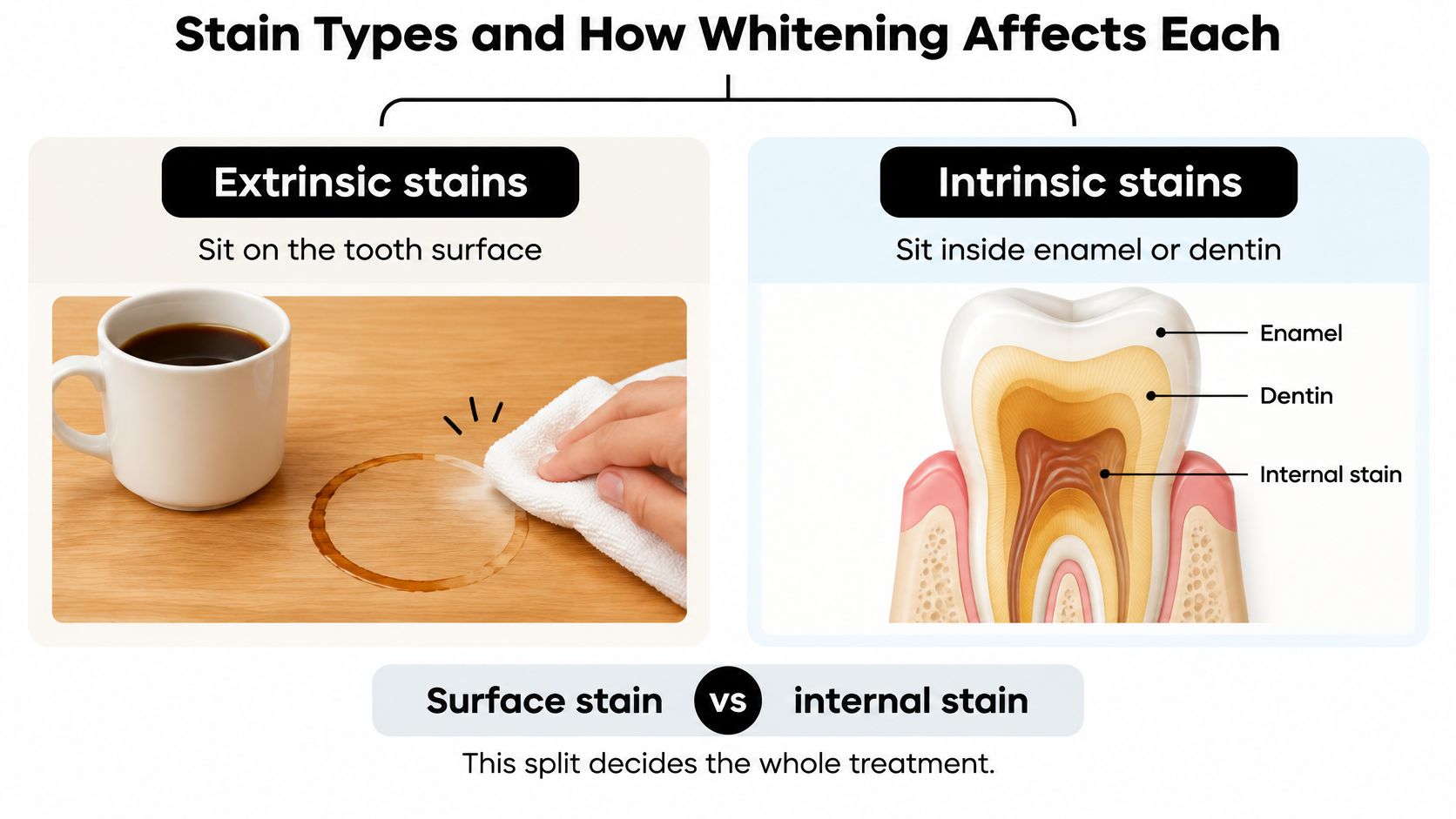
The first distinction is whether discoloration sits on the tooth or inside it. An extrinsic stain is like a mug ring on a tabletop: it's at the surface and may lift with cleaning. An intrinsic stain is more like color soaked into wood. Brushing harder won't reach it, and whitening may lighten it only partly.
Extrinsic stains commonly come from coffee, tea, red wine, tobacco, plaque, and calculus. Intrinsic stains occur within enamel or dentin. The American Dental Association's overview of tooth whitening explains that aging can make underlying dentin show through as enamel becomes thinner and more translucent. Other possible causes include fluorosis, childhood tetracycline exposure, trauma, and tooth decay. Some discoloration starts at the surface and penetrates through a crack or other defect; dental literature classifies this as internalized staining. A review of tooth discoloration and its treatment describes why the stain's location matters when choosing between cleaning and bleaching.
Use this table as a starting point, not a diagnosis:
| Stain type | Where it sits | Typical causes | Responds to whitening? |
|---|---|---|---|
| Extrinsic | Tooth surface and acquired pellicle | Coffee, tea, red wine, tobacco, plaque, calculus | Yes, usually with polishing or peroxide |
| Intrinsic | Inside enamel or dentin | Aging, fluorosis, childhood tetracycline, trauma, decay | Partly, depending on the cause |
| Internalized | Starts on the surface, enters through cracks | Pigments that penetrate surface defects | Partly; peroxide may be needed |
| Combination | Surface and inside together | Long-term coffee or tobacco on aging enamel | Partly; may need cleaning and whitening |
| Restorations | Dental material, not tooth structure | Fillings, crowns, veneers | No, the material's color stays the same |
Check the tooth, not just the shade
A darker-looking spot isn't always stain on natural enamel. Whitening can lighten natural teeth, but it won't change the color of tooth-colored fillings, crowns, or veneers. If a restoration already looks darker than the surrounding tooth, bleaching the natural teeth may make that difference more obvious.
Look at the tooth in daylight and compare it with the teeth beside it. Does the color seem to sit on the surface, or does the whole tooth look darker? A surface deposit may respond to a professional cleaning. A uniformly darker tooth, a patch inside the enamel, or a shade difference that traces the edge of dental work calls for a closer look before you start whitening.
Why Some Stains Ignore Whitening
In a clinical examination of 384 adolescents in southwestern Nigeria, researchers found tooth discoloration in 43.9% of participants, while 33.1% believed they had discolored teeth, according to the study of tooth discoloration in adolescents. That gap is a reminder that a mirror can't reliably tell you what caused a mark. The same study found plaque and calculus were leading causes of discoloration in many tooth locations, making a dental cleaning a sensible first step when the color looks like surface buildup.
Other stains can be less responsive because the color comes from a developmental change, an injury, decay, or dental work. The visible pattern offers clues, but it doesn't confirm the cause. Use the table to decide whether a dentist should assess the tooth before you try to bleach it.
| Cause | What it looks like | Whitening response |
|---|---|---|
| Dental restorations, such as fillings, crowns, or veneers | Tooth-colored material that stands out after bleaching | Does not change color |
| Childhood tetracycline exposure | Grey, brown, or banded teeth | Often partial; may need supervised treatment |
| Fluorosis | White streaks or mottled enamel | Variable; often incomplete |
| Enamel hypoplasia | Pitted or chalky patches | Limited; may need restorative care |
| Pulp necrosis, a non-vital tooth | One tooth turns grey or dark | May be treated with walking bleach or in-office care |
| Trauma to a tooth | One tooth darkens over time | Needs dentist evaluation |
| Decay or a leaking filling | Dark spot or shadow near the restoration | Don't bleach over decay |
Read the pattern before choosing a product
Banded grey or brown color across several teeth may fit a medication-related pattern, while white streaks or mottled enamel can point to fluorosis. A single tooth that darkens after a knock is different from a general yellowing across the smile. A dark shadow beside an old filling also deserves attention, since discoloration near dental work could reflect a problem that bleaching won't fix.
A non-vital tooth may need treatment aimed specifically at that tooth, rather than a whole-mouth whitening routine. A randomized study indexed by PubMed evaluated 50 discolored non-vital teeth, with half receiving in-office whitening and half receiving walking-bleach treatment. Walking bleach is a dentist-supervised approach in which whitening material is placed inside a treated tooth.
Before booking a whitening treatment, compare what you see with the table and note which rows might fit. If you're unsure whether a mark is a stain, a defect, or a restoration, that uncertainty is itself a good reason to have the tooth examined. For more on why a product may fail to change a stubborn mark, see why professional teeth whitening may not work as expected.
How Peroxide Lifts Stains and Where Sensitivity Starts
Peroxide doesn't whiten teeth by scrubbing them. It works through oxidation, changing colored molecules inside the tooth so they absorb less visible light. It is similar to fading the dye in a shirt, rather than lifting a spill from the fabric with a scrub brush.
The process happens in stages. Carbamide peroxide releases about one-third of its available peroxide as hydrogen peroxide. Hydrogen peroxide can move through pathways in enamel to reach dentin and the pulp within roughly 15 minutes of exposure. Reactive oxygen species then interact with colored organic molecules, breaking down structures that absorb visible light. The American Dental Association's whitening resource explains this process and why whitening can also cause temporary sensitivity.
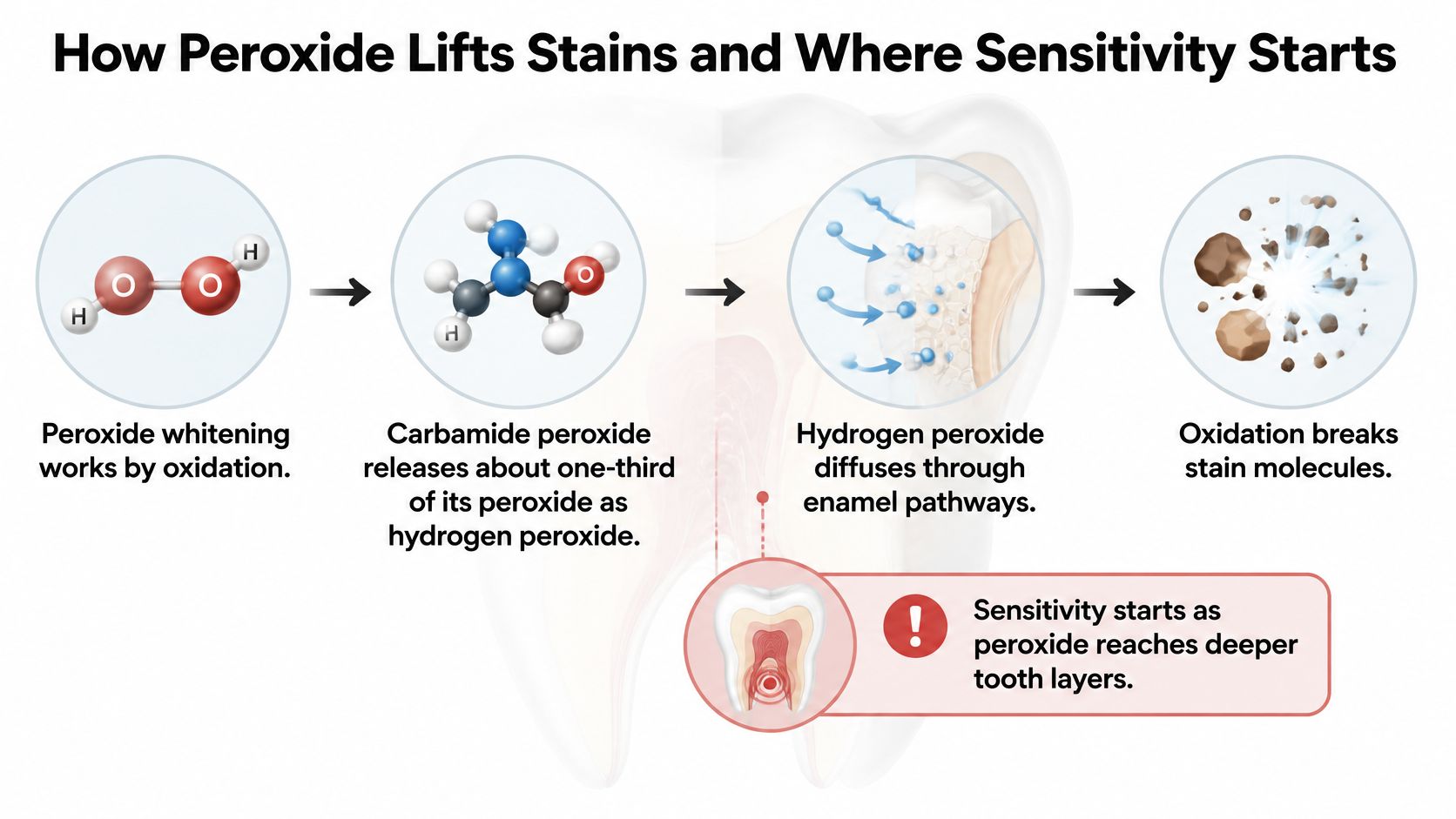
The response can change with the peroxide concentration, how long it stays on the teeth, and factors such as pH, temperature, and light. A stronger product or longer wear time isn't automatically more effective or more suitable. The same movement of peroxide that helps it reach stain molecules can irritate sensitive tooth structures; aggressive, high-concentration exposure may also affect the tooth's organic matrix.
Practical rule: Use the product for its specified wear time. Don't whiten over untreated decay or inflamed gums, and get professional guidance for severe internal discoloration.
Mild, brief sensitivity can happen during or after whitening and often settles. Sharp or severe pain, sensitivity that lingers, or sore gums is different: stop treatment and contact a dentist. For a closer look at how peroxide gels are used, read this guide to hydrogen peroxide gels.
In-Office and At-Home Whitening Options Compared
The useful comparison isn't “strong” versus “weak.” Consider how quickly you want a change, what type of whitening agent is used, and whether a dental professional will supervise treatment. These factors help match a method to the stain, rather than treating every dark spot as if it were the same.
| Option | Peroxide and strength | Time | Best for |
|---|---|---|---|
| In-office professional whitening | Professionally applied peroxide | A dental visit | Fast, supervised results on intense stains |
| Light- or laser-activated in-office whitening | Peroxide with light or laser activation | A dental visit | A professionally supervised treatment in one visit; sensitivity is still possible |
| Custom take-home trays | Carbamide peroxide, with strength selected for the plan | Worn at home on a dentist's schedule | Gradual whitening with a lower sensitivity risk than faster hydrogen peroxide |
| Over-the-counter strips and gels | Peroxide in a consumer product | Used at home according to the label | Mild surface stains and some light internal discoloration |
| Whitening toothpaste | Abrasives and polishers, no bleach | Regular brushing | Maintaining surface stain only |
Hydrogen peroxide acts faster, while carbamide peroxide works more slowly and may carry a lower sensitivity risk. That trade-off matters if you already have sensitivity or exposed roots. The quickest approach isn't necessarily the best fit if it makes your teeth uncomfortable or leaves a restoration more noticeable.
Match the method to the tooth
For surface residue, a professional cleaning may help before you decide whether bleaching is needed. Whitening toothpaste can help polish surface stains, but it won't substantially change a tooth's internal color. Strips and gels are home options for people with mild discoloration who can follow the product instructions and don't have signs of decay or gum problems.
Custom trays offer a more gradual route for someone whose dentist considers them a suitable candidate. In-office treatment provides professional supervision, which is particularly useful when discoloration is intense or the cause isn't clear. A single grey tooth is a different case from an evenly stained smile; it may call for treatment focused on that tooth rather than a general whitening product.
Start by identifying the stain type, then pick the row that fits. If the tooth is dark because of a filling, crown, injury, or possible decay, choosing a stronger product won't address the underlying issue.
Preventing New Stains and Easing Sensitivity
You don't have to give up coffee or tea to reduce surface staining. Rinse with water after coffee, tea, red wine, or strongly colored foods, and use a straw for drinks when practical. Brush gently twice a day with a mild toothpaste. Scrubbing harder can wear enamel and expose dentin, which is more vulnerable to discoloration.
After whitening, use this simple routine:
- Rinse gently. Use tepid water to clear your mouth.
- Brush carefully. Choose a mild toothpaste and avoid aggressive pressure.
- Clean your trays. Rinse them, then let them dry thoroughly before storing.
This aftercare order is also the routine recommended by DentalHealth.com. Keep brushing and flossing as usual, and continue regular dental cleanings. Avoiding staining foods doesn't replace daily oral care or an assessment of a tooth that may have decay or gum disease.
Respond to sensitivity, not just the shade
Mild, short-lived sensitivity can occur with peroxide. If it's uncomfortable, pause whitening until it settles rather than reaching for a stronger treatment or adding extra wear time. A desensitizing toothpaste may help with mild sensitivity, but it shouldn't be used to ignore severe pain, a new dark spot, or a sore area on the gums.
Stop whitening and contact a dentist if sensitivity becomes severe or sores develop. The ADA's advice on whitening and sensitivity also notes that hydrogen peroxide works faster but may carry more sensitivity risk than the slower-acting carbamide peroxide. Someone with gum recession or exposed roots may therefore prefer a lower-intensity approach, after a dentist checks that whitening is suitable. Exposed roots don't have enamel, so they won't whiten in the same way as the crown of a tooth.
For a practical routine to reduce recurring surface discoloration, see how to prevent teeth staining. After each whitening session, keep track of how your teeth feel. If sensitivity hasn't settled, pause before the next session rather than continuing on schedule.
When a Darker Tooth Needs a Dentist First
A darker tooth isn't always a cosmetic problem. Whitening can't change the shade of fillings, crowns, veneers, implants, or bonding, so natural teeth may lighten while the dental work stays the same. The ADA's explanation of whitening and restorations describes how that can leave a patchy appearance. A dark mark near a filling can also point to decay or a leaking restoration, which needs evaluation rather than bleaching.
Check for these signs before choosing a whitening product:
- One grey or black tooth. A single dark tooth, especially after an injury, needs assessment.
- Chalky white or brown patches. These may reflect a change in enamel, not removable surface residue.
- Visible fillings. Bleaching won't lighten the filling material.
- Crowns or veneers that would stand out after whitening. The surrounding natural teeth may change shade, but the restoration won't.
- Gum recession or exposed roots. The exposed part of the tooth won't whiten like enamel.
- Lingering pain or sensitivity. Get the cause checked before applying peroxide.
- A dark spot near an old filling. Don't try to bleach a possible cavity or defective restoration.
- Recent dental work. Confirm that whitening is appropriate for your current dental condition.
Use a simple decision rule
Coffee, tea, or tobacco residue on tooth surfaces may respond to cleaning and whitening. Internal yellowing, fluorosis, a tooth darkened by trauma, decay, and dental restorations are different problems. A dentist can help distinguish them and set realistic expectations before you spend time on a treatment that can't address the cause.
Follow these three steps:
- Identify the likely stain type using the first table.
- Run through the checklist and note any warning signs.
- Match the treatment to the appropriate row in the whitening-options table.
If you have two or more warning signs, book an exam before whitening. If none apply and the discoloration appears to be surface staining or mild internal yellowing, an at-home option may be a reasonable first step, as long as you follow the product instructions. If you're unsure, get the tooth checked rather than trying a stronger formula.
DentalHealth.com offers professional-grade at-home whitening products, including Opalescence, Zoom, PolaNight, and PolaDay, as well as sensitivity products such as Fluoridex and MI Paste. Explore the options and practical whitening guidance at DentalHealth.com to find an approach that fits your stain type and sensitivity needs.