
How to Prevent Teeth Staining: Simple Tips for a Brighter Smile
When it comes to preventing teeth stains, the game plan is surprisingly simple. It’s a two-part approach: you need to be diligent about clearing away daily plaque and food debris, while also paying attention to what you’re putting in your mouth.
What this really means is that your everyday brushing and flossing routine is just as critical as knowing which foods and drinks are the biggest staining culprits.
Understanding What Really Stains Your Teeth
To actually stop stains from setting in, you have to know your enemy. Discoloration isn't a one-size-fits-all problem; stains generally fall into two distinct categories. Figuring out which type you're dealing with is the first step toward building a solid prevention plan.
The most common offender is extrinsic staining. This is the stuff that happens on the surface of your enamel, which is the hard, protective outer layer of your teeth. Picture your enamel as a clean, white canvas. Every time you have coffee, red wine, or even a handful of dark berries, you're essentially splashing that canvas with color.
The Science of Surface Stains
So, what gives these foods and drinks their staining superpowers? It boils down to a few key players:
- Chromogens: These are highly pigmented compounds that have a knack for sticking right to your enamel. You'll find them in a lot of dark-colored foods and beverages.
- Tannins: Ever notice that dry feeling in your mouth after drinking red wine or tea? That's from tannins. These compounds actually make it easier for chromogens to latch onto your teeth, seriously boosting their staining potential.
- Acids: Acidic things like soda, citrus, and tomato sauce can temporarily soften and erode your enamel. This creates a rougher, more porous surface that stains can grab onto much more easily.
Everyone points the finger at coffee and red wine, but don't forget about other popular drinks. For example, understanding the different properties of the many types of Japanese tea can help you spot other potential stain-causers in your diet.
Before we dive deeper, let's take a quick look at the most common sources of tooth discoloration.
Common Causes of Teeth Staining at a Glance
This table breaks down the primary culprits behind tooth stains, categorizing them so you can easily identify what might be dimming your smile.
| Stain Source | Type | Common Examples |
|---|---|---|
| Dark Beverages | Extrinsic | Coffee, red wine, black tea, colas, dark fruit juices (grape, cranberry) |
| Certain Foods | Extrinsic | Berries (blueberries, blackberries), tomato sauce, soy sauce, balsamic vinegar, beets |
| Tobacco Use | Extrinsic | Cigarettes, chewing tobacco, cigars (nicotine and tar create stubborn yellow/brown stains) |
| Poor Oral Hygiene | Extrinsic | Plaque buildup creates a sticky surface for stains to adhere to and can harden into yellow tartar. |
| Medications | Intrinsic | Certain antibiotics (tetracycline), antihistamines, blood pressure medications |
| Aging | Both | Enamel thins over time, revealing the yellowish dentin underneath. Years of exposure also lead to more surface stains. |
| Trauma/Injury | Intrinsic | An injury to a tooth can cause it to darken as it produces more dentin in response. |
| Excessive Fluoride | Intrinsic | Fluorosis, often from exposure during childhood, can cause white or brown spots on the enamel. |
This quick reference helps pinpoint where stains might be coming from, which is the first step in creating an effective prevention strategy.
Now, for the second type of discoloration, which is a bit trickier: intrinsic staining. This happens inside the tooth, deep beneath the enamel layer. It's often caused by things like certain medications, trauma to a tooth, or even getting too much fluoride as a child. Because these stains are internal, they won’t budge with surface cleaning or typical whitening products.
“Aging also plays a significant role. As we get older, our enamel naturally thins, revealing more of the yellowish dentin layer beneath. This is a combination of extrinsic and intrinsic factors, creating a duller appearance over time.”
Building a strong defense starts with the fundamentals. Simple daily habits, like that morning cup of coffee, can lead to stains over time, but small adjustments can make a huge difference.
A consistent routine—brushing twice a day with a soft-bristled brush and flossing daily—is your first line of defense. This removes the plaque that pigments love to cling to. This basic foundation is non-negotiable for keeping your smile bright and makes your enamel a much less inviting target for stains. For more ways to keep that outer layer strong, you can also explore different ways to strengthen tooth enamel in our detailed guide.
Building Your Daily Stain-Fighting Routine
A bright smile isn't something you get from a one-off whitening treatment. It's the result of smart, consistent habits that you build into your day, every day. Preventing tooth stains is all about creating a simple, effective routine that defends your enamel from the moment you wake up until you go to bed. Think of it less like a chore and more like small, powerful actions that pay off big time.
This diagram breaks down how everyday foods and drinks can settle onto your tooth's enamel and eventually cause stains.
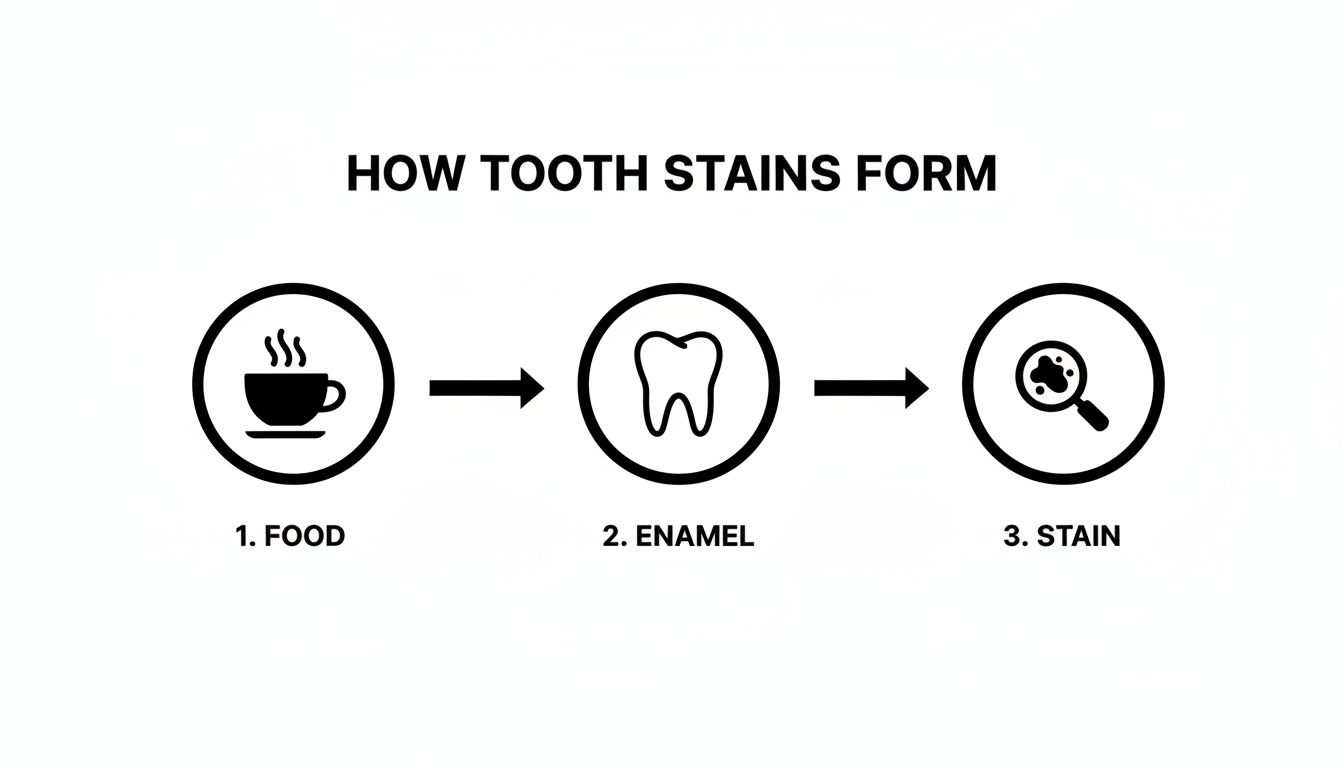
It really drives home a key point: stains don't just show up out of nowhere. They're the buildup of pigmented particles from what we eat and drink, latching onto our enamel over time.
Your Morning Kickstart
How you begin your day really sets the stage for your smile's defense. That morning brush is about more than just fresh breath; it’s your first move to gently clear away the plaque that built up overnight. Plaque is basically a sticky film that acts like a magnet for stain-causing particles.
For the best clean, grab a soft-bristled toothbrush. You'll want to hold it at a 45-degree angle to your gumline and use gentle, circular motions. Scrubbing aggressively back and forth can actually wear down your enamel, which ironically makes your teeth more likely to stain because you're thinning out their protective shield.
Smart Habits Throughout the Day
Let's be real—your daily routine is where the biggest battles against stains are fought, especially if you're a fan of coffee, tea, or dark sodas. The good news is you don't have to give up your favorite drinks. You just have to outsmart them.
- Rinse Immediately: Right after you finish that coffee or red wine, swish your mouth with plain water for about 30 seconds. It’s such a simple move, but it washes away a lot of the lingering pigments and acids before they get a chance to settle.
- Use a Straw: When you're sipping on iced coffee, tea, or soda, a straw is your best friend. It helps the liquid bypass your front teeth, dramatically cutting down on direct contact and potential staining.
- Stay Hydrated: Drinking plenty of water all day is fantastic for your oral health. It keeps saliva flowing, which is your body's built-in rinse cycle for washing away food bits and neutralizing acids. Keeping a water bottle handy is a cornerstone of any stain-fighting plan; checking out the reusable water bottle benefits for oral health might just convince you to make it a permanent habit.
There's a clear link between poor brushing habits and staining, and research backs it up. One study showed that people who brushed infrequently had a 67.7% higher rate of staining. Technique matters, too—using improper methods could actually double the risk.
The Evening Wind-Down
Your nighttime routine is your last chance to wipe the slate clean and stop stains from setting in while you sleep. This is crucial because your saliva production drops overnight, leaving your teeth more vulnerable.
First things first: floss. This is non-negotiable. Flossing gets into all the tight spots between your teeth where your toothbrush can't reach, clearing out trapped plaque and food debris. Those hidden areas are prime real estate for stains to form.
Next, follow up with another thorough brushing session, using that same gentle, circular motion from the morning. This final polish gets rid of any surface pigments that have built up during the day. If you want to give your enamel an extra boost, this is the perfect time to add a remineralizing paste into the mix. You can check out our guide on how to use MI Paste Plus to learn more about strengthening your smile's defenses.
To wrap things up, consider an antiseptic or fluoride mouthwash. A good rinse can help neutralize any leftover acids and give your enamel an extra layer of protection as you sleep. A complete evening routine like this ensures you wake up with a clean, fresh, and stain-resistant smile.
Eating Smarter to Keep Your Teeth White
We all know that what you eat and drink has a massive impact on the brightness of your smile. It's easy to get bogged down in a long list of "bad" foods to avoid, but frankly, that's not a very sustainable (or fun) way to live.
A much smarter approach is to understand how certain foods can actually help you in the fight against discoloration. With a few simple shifts, you can turn your meals into an active part of your stain-prevention strategy.

This isn’t about giving up everything you love. It’s all about balance and making smart choices—incorporating foods that act as natural cleansers while being mindful of the ones more likely to leave their mark.
Harnessing the Power of "Detergent" Foods
Some foods are fantastic for your teeth not just because of their nutritional value, but because of their physical texture. Think of crunchy fruits and vegetables as your smile’s personal little scrub brushes.
- Apples, carrots, and celery are often called "detergent foods," and for good reason. Their fibrous, crisp texture physically scrapes away plaque and food particles from the surface of your teeth as you chew.
- The extra chewing required also kicks your saliva production into high gear. Saliva is your body’s built-in rinse cycle, washing away staining particles and neutralizing the harmful acids that can soften your enamel.
Making these a go-to snack or part of your meals is a simple but powerful habit. A handful of celery sticks or a crisp apple after lunch can make a real, noticeable difference throughout the day.
Strengthening Your Enamel from the Inside Out
Your tooth enamel is your first line of defense against stains. The stronger and healthier it is, the more resistant it will be to discoloration. This is where calcium-rich foods become your best friends.
A strong, intact enamel surface has fewer microscopic pits and grooves for staining pigments to latch onto. Foods rich in calcium and phosphorus help to remineralize and fortify this protective layer, essentially making it a tougher shield.
Cheese is a standout example. It’s loaded with both calcium and phosphate, which help strengthen teeth and bones. It also helps balance the pH level in your mouth, creating a less acidic environment where stains have a much harder time forming.
Leafy greens like spinach and kale are also packed with calcium, fortifying your enamel with every bite.
Practical Tips for Everyday Eating
Knowing how to prevent teeth staining isn’t just about avoidance; it's about smart pairing and timing. You can absolutely still enjoy things like red wine or tomato sauce without letting them sabotage your smile.
Think of it this way: if you're having a glass of red wine, pair it with a cheese board or a salad with lots of leafy greens. The cheese creates a protective barrier on your teeth, while the fibrous greens help scrub away the pigments as you eat.
Having a pasta dinner with a rich tomato sauce? Finishing with a glass of milk or a piece of cheese can help neutralize the acid and minimize its staining effect. By eating smarter, you can enjoy your favorites while actively protecting your teeth.
Navigating the Oral Care Aisle Like a Pro
Walking down the oral care aisle can feel like a pop quiz you didn't study for. With countless tubes, bottles, and gadgets all promising a brighter smile, it's easy to get overwhelmed. But preventing tooth staining really just means choosing the right tools for the job, and it’s a lot simpler than you think once you know what to look for.
Your goal isn't just about aggressive whitening; it's about smart maintenance and daily protection. The right products work together to gently lift surface stains, strengthen your enamel against future discoloration, and keep your entire mouth healthy. It’s all about building a personalized toolkit that addresses your specific needs, whether that’s touching up after a professional treatment or defending your smile against a daily coffee habit.
Decoding Toothpaste Labels
Let’s start with the cornerstone of any routine: toothpaste. While pretty much all toothpastes will help remove surface plaque, certain types are specifically formulated to fight discoloration head-on.
- Whitening Maintenance Pastes: These are your daily drivers. They typically use mild abrasives like hydrated silica or calcium carbonate to gently polish away fresh surface stains without being harsh on your enamel.
- Remineralizing Pastes: Think of these as enamel superheroes. Products with ingredients like hydroxyapatite or specific fluoride compounds (like stannous fluoride) help patch up microscopic weak spots in your enamel. This makes the tooth surface smoother and much less likely to absorb stains.
- Sensitivity Formulas: If whitening products sometimes make your teeth feel a little zippy, don't worry. Many brands offer formulas with potassium nitrate or stannous fluoride that block those pain signals while still providing solid stain-fighting benefits.
Now, a quick word on fluoride. It's a key player in preventing cavities, but balance is essential. Too much can lead to a condition called fluorosis, which creates white or brown spots on the teeth. In fact, one survey found that by 2012, this condition impacted a surprising 61% of US teens, which just highlights the importance of using the right amount. You can read more about the research on dental fluorosis and its prevalence to understand the details.
Building Your Stain Prevention Toolkit
While your toothpaste is doing the heavy lifting, a few other products can seriously boost your stain-prevention efforts. These specialty items are designed to handle the things that a simple brush-and-paste routine might miss, giving you a more complete defense.
Think of your oral care routine like a team. Your toothbrush and toothpaste are the star players, but the supporting cast—gels, rinses, and specialty cleaners—is what wins the championship against stains.
Here's a quick rundown of the key players you might want to add to your lineup. Each one has a specific job to do in keeping your smile bright.
Your Stain Prevention Product Toolkit
| Product Category | Key Function | Best For | Example Product |
|---|---|---|---|
| Maintenance Gels | Targeted stain lifting | Occasional touch-ups between professional treatments | Opalescence Gel |
| Remineralizing Pastes | Enamel strengthening | Preventing future stains by smoothing tooth surfaces | MI Paste ONE |
| Sensitivity Toothpastes | Pain relief & stain removal | People with sensitive teeth who still want whitening | Fluoridex Sensitivity Relief |
| Appliance Cleaners | Preventing buildup on retainers | Keeping aligners/retainers clear and hygienic | Retainer Brite Tablets |
With these tools, you can create a routine that's perfectly suited to your lifestyle and dental needs.
For instance, at-home whitening maintenance gels that have a low concentration of carbamide peroxide or hydrogen peroxide are perfect for occasional touch-ups. A product like Opalescence gel can be used in a custom tray for a quick brightening boost, lifting minor stains before they have a chance to set in. You can explore more options in our guide to the best teeth whitening products for at-home use.
Finally, don’t forget about your dental appliances. Retainers and aligners are notorious for trapping bacteria and can start to yellow over time. Using a dedicated cleaner, like Retainer Brite tablets, is essential to keep them fresh, clear, and free from the plaque that could otherwise transfer right back onto your teeth. By choosing products with a clear purpose, you can turn a confusing shopping trip into a strategic move for a brighter, healthier smile.
Why Your Dentist Is Your Best Ally Against Stains
While your daily habits are the foundation of a bright smile, you can't go it alone. Think of your at-home routine as the daily upkeep, but your visits to the dentist? Those are the essential, deep-cleaning tune-ups that tackle problems you simply can't handle with a toothbrush and floss.
This partnership between your efforts and professional care is what truly locks in a stain-free smile for the long haul.
The biggest advantage of a professional cleaning is the hygienist's ability to remove tartar, also known as calculus. This is what happens when plaque is left undisturbed for too long and hardens into a cement-like substance on your teeth. Once it calcifies, no amount of brushing is going to budge it.
Tartar’s rough, porous surface is basically a magnet for stains from coffee, tea, and red wine. It often shows up as that stubborn yellow or brown line right along your gumline that you can never seem to scrub away.
Tackling What Your Toothbrush Can't
During a professional cleaning, your dental hygienist uses specialized scaling tools to gently and safely scrape away all that hardened tartar buildup. This is a game-changer for a few key reasons:
- It Removes Stain Magnets: By getting rid of the tartar, you’re removing the #1 surface where new stains love to set up shop.
- It Creates a Smoother Surface: After scaling, the hygienist polishes your teeth. This smooths out microscopic pits and grooves in your enamel, giving pigments fewer places to hide.
- It Uncovers Your Natural Color: Just getting rid of that yellowish tartar buildup can instantly make your teeth appear significantly brighter.
This professional reset gives you a clean slate, making your at-home routine far more effective at keeping stains at bay.
Professional Whitening and Expert Guidance
Sometimes, even with the best habits, you might want a more powerful boost. Professional whitening treatments offer a safe and highly effective way to lift deep-set, stubborn stains that daily care just can't touch. Your dentist has access to stronger, more effective whitening agents than anything you can buy over the counter, delivering much more dramatic results, much faster.
But it's not just about whitening. Regular check-ups are crucial to make sure your discoloration isn't a red flag for a more serious issue, like tooth decay or an underlying injury. Your dentist can properly diagnose the type of staining you have—whether it's on the surface (extrinsic) or inside the tooth (intrinsic)—and map out the safest, most effective plan for you.
When you combine diligent at-home care with regular professional cleanings and check-ups, you create a comprehensive defense. This two-pronged approach not only keeps your smile bright but also makes sure your overall oral health is on solid ground.
Got Questions About Preventing Tooth Stains? Let's Clear Them Up.
Even with the best routine, a few questions always pop up when you're trying to keep your smile bright. Getting the right answers can make all the difference, helping you fine-tune your approach and tackle any specific challenges with confidence. Here are some of the most common things people ask when they're working toward a whiter smile.
How Long Does It Really Take to See a Difference?
This is the big one, right? While you won't get a dramatically whiter smile overnight, the good news is you can stop new stains from forming immediately.
By just adopting a consistent, proper brushing and flossing routine, you'll likely notice an improvement in surface brightness within one to two weeks. This initial boost comes from simply clearing away the daily film of plaque and food debris that makes teeth look dull.
If you're trying to lift minor existing surface stains, you'll need a bit more patience. Using a good whitening toothpaste or a maintenance gel consistently can start showing results in a few weeks to a month. The real secret isn't some magic product—it's consistency. Those daily habits are what truly add up over time.
What's the Deal with Natural Whiteners Like Charcoal and Baking Soda? Are They Safe?
It's tempting to try DIY solutions, but many "natural" whitening methods can do more harm than good by being too abrasive. Think of it like using sandpaper on a finished piece of wood—it might remove the top layer, but it leaves the surface rough and damaged.
Baking soda, for instance, can help remove some surface stains. But using it too often will literally wear down your enamel, making your teeth more porous and more vulnerable to future stains and sensitivity.
Activated charcoal is another popular one, but it's also highly abrasive. Most dental professionals advise against it because it can cause irreversible enamel damage. It's always a safer bet to stick with products that have been professionally tested and formulated specifically for your teeth.
Abrasive substances work by scratching the surface of your teeth. This might lift a few stains at first, but it creates a rougher texture that gives new, deeper stains a perfect place to grab hold in the long run.
Is It Possible to Prevent Stains If I Have Braces?
Absolutely, but it definitely requires some extra work. The brackets and wires on braces create countless tiny hiding spots for plaque and staining culprits like coffee or tea. This makes the tooth surface around the hardware a prime target for discoloration.
To keep your smile even and bright with braces, you'll need to upgrade your cleaning game:
- Bring in the special tools: An interdental brush or a water flosser is a game-changer. These are essential for cleaning around brackets and getting under wires where your regular toothbrush just can't reach.
- Get meticulous with your flossing: Orthodontic floss threaders are your best friend here. They help you guide the floss around all the hardware to clear out trapped food particles and plaque.
- Don't forget removable gear: If you have retainers or clear aligners, they need daily cleaning with a dedicated cleaner. This prevents them from yellowing and stops bacteria from building up and transferring back to your teeth.
And of course, sticking to your schedule for professional cleanings is more important than ever. Your hygienist can get to all the tricky spots that are tough to manage at home while you have braces.
At DentalHealth.com, we provide the professional-grade products you need to build an effective stain-prevention routine, from maintenance gels to specialty cleaners for orthodontic appliances. Explore our curated selection and keep your smile bright and healthy.