
Hydrogen Peroxide Gels: Safe Teeth Whitening Tips You Can Trust
Hydrogen peroxide gels are your secret weapon for a truly brighter smile. They’re a professional-grade whitening agent that gets deep into the tooth enamel to break down tough, set-in stains. Think of them as a targeted deep cleaner that lifts years of discoloration from things like coffee, tea, and just the natural aging process.
What's great is that these gels offer a safe and incredibly effective way to get noticeable whitening results, all from the comfort of your own home.
How Hydrogen Peroxide Gels Safely Whiten Your Teeth
To get how these gels work, you first need to understand that your tooth enamel isn't a solid, sealed-off wall. It's actually a porous surface, full of microscopic channels. Over the years, staining molecules from food and drinks—what we call chromogens—find their way into these tiny passages, leading to deep discoloration that no amount of brushing can touch.
This is exactly where hydrogen peroxide comes into play. It’s a powerful oxidizing agent, and its molecules are small enough to travel through the enamel and confront those trapped stain particles head-on.
The Science of Oxidation
Once it’s inside the tooth, hydrogen peroxide kicks off a chemical reaction known as oxidation. During this process, it unleashes highly reactive oxygen molecules that go to work breaking the chemical bonds holding the staining chromogens together.
By essentially dismantling these discolored molecules, the gel neutralizes their color, rendering them colorless. The best part? This reaction doesn’t scrub away or harm your tooth structure. It just changes the stain on a molecular level, bringing back your teeth's natural brightness from the inside out.
The core principle is simple but incredibly powerful: Hydrogen peroxide doesn't just mask stains; it chemically dismantles and eliminates them. That's why professional gels deliver such effective, long-lasting results.
This oxidation process is fantastic at tackling the most common types of tooth discoloration, including:
- Extrinsic Stains: These are the stains sitting right on the surface of your enamel, caused by daily culprits like coffee, tea, red wine, and tobacco.
- Intrinsic Stains: These are the tougher, deeper stains that have settled into the dentin (the layer beneath your enamel), often resulting from aging or years of exposure to staining agents.
Surface Stains vs Deeper Discoloration
While your everyday whitening toothpaste mainly buffs away at extrinsic stains with mild abrasives, hydrogen peroxide gels are built to handle both. Their ability to actually penetrate the enamel is what truly sets them apart from basic surface treatments.
This means they can even lighten the yellowish tint that often develops as enamel naturally thins with age, which tends to reveal more of the naturally yellow dentin underneath.
Think of it this way: trying to clean a stained white t-shirt. Wiping the surface might handle a fresh spill, but for a stain that has truly soaked into the fabric, you need something that can get into the fibers and break down the discoloration. Hydrogen peroxide gel is that specialized cleaner for your teeth.
When you understand this process, you can feel confident that you’re using a scientifically proven method for achieving a whiter, more brilliant smile. The gel works methodically to undo years of staining, revealing the beautiful white teeth hidden just beneath the surface.
Choosing the Right Hydrogen Peroxide Gel Concentration
Picking the right hydrogen peroxide gel feels a lot like choosing the right tool for a job. You need enough power to get the job done effectively, but not so much that you cause damage. It's a common misconception that a higher percentage is automatically better; the real goal is finding that sweet spot between whitening speed and your own personal comfort.
The percentage you see on the package, like 6% or 14%, tells you the concentration of hydrogen peroxide in the gel. This number is directly tied to the gel's whitening power and how quickly you can expect to see a change in the mirror.
Finding Your Ideal Whitening Strength
Think about it like adjusting the settings on a pressure washer. A lower setting is gentle, perfect for delicate surfaces. A higher setting blasts away grime in seconds but requires a much more careful hand. The same idea applies to your teeth.
-
Lower Concentrations (e.g., 6% - 9%): These are the go-to options for anyone with a history of tooth sensitivity. They work by releasing oxygen molecules more gradually, which makes for a much gentler whitening process. You might need a few extra sessions to reach your goal shade, but the trade-off is a far more comfortable experience.
-
Higher Concentrations (e.g., 10% - 14%): If you're after faster, more dramatic results and haven't had issues with sensitivity before, gels in this range are designed for you. They work very quickly but come with a higher chance of temporary tooth sensitivity or gum irritation if you're not careful.
The key is to match the gel's strength to your dental history and your goals. If you're new to whitening or know your teeth are on the sensitive side, starting low is always the smartest move.
The whole point of teeth whitening is to get a brighter smile comfortably. If you choose a concentration that's too strong for your teeth, you might end up with sensitivity that forces you to stop the treatment, which ironically just slows down your progress.
Introducing a Gentler Alternative: Carbamide Peroxide
While hydrogen peroxide is a direct, fast-acting powerhouse, there's another major player in the at-home whitening game: carbamide peroxide. You can think of it as hydrogen peroxide's gentler, slow-releasing cousin.
Carbamide peroxide is a very stable compound that, once it mixes with your saliva, breaks down into hydrogen peroxide and urea. The important thing to know is the breakdown ratio: a 30% carbamide peroxide gel is roughly equivalent to a 10% hydrogen peroxide gel. This slow and steady release of the active ingredient makes it a fantastic choice for people who are prone to sensitivity or for those who like the convenience of whitening overnight.
Crafting these stable and effective dental gels is a precise science. The demand for high-purity hydrogen peroxide is actually booming in many high-tech fields, not just dentistry. For example, the market for electronic-grade hydrogen peroxide—used for cleaning delicate microchips—is projected to jump from $1.2 billion to $2.5 billion by 2036. The same intense purity standards required in electronics are mirrored in the formulation of safe, professional-grade dental products, highlighting the advanced chemistry behind that simple gel in your whitening tray.
Hydrogen Peroxide vs Carbamide Peroxide At a Glance
So, which one is right for you? Understanding their core differences will help you make a confident choice. Let's break it down.
| Characteristic | Hydrogen Peroxide Gels | Carbamide Peroxide Gels |
|---|---|---|
| Whitening Speed | Fast-acting; results appear quickly. | Slower, more gradual whitening. |
| Active Ingredient | Direct hydrogen peroxide. | Breaks down into hydrogen peroxide. |
| Typical Wear Time | Shorter sessions (e.g., 30-60 minutes). | Longer sessions (e.g., 2-8 hours or overnight). |
| Best For | Daytime use, quick results. | Sensitive teeth, overnight whitening. |
| Stability | Less stable; shorter shelf life. | More stable; longer shelf life. |
Ultimately, the choice comes down to your lifestyle and priorities. Are you looking for fast results and plan to whiten for short periods during the day? Hydrogen peroxide is probably your best bet. Or do you prefer a gentler, more gradual approach that you can even use while you sleep? Then carbamide peroxide might be your perfect match.
To see how these different formulas are used in the market's leading kits, take a look at our comprehensive guide on the best teeth whitening products.
How to Use Whitening Gels for the Best Results
Getting those professional-level whitening results at home with hydrogen peroxide gels really comes down to technique. It's all about a methodical approach that gets the gel right where it needs to be—on your teeth—while keeping it off your gums. A consistent routine is your ticket to the brilliant results you're looking for, without wasting gel or dealing with unnecessary irritation.
The whole process actually starts before you even open the gel. The first step, and honestly the most important, is creating a clean canvas for the gel to do its magic.
Preparing Your Teeth for Whitening
Think of it like priming a wall before you paint. If you want the whitening gel to penetrate your enamel evenly and effectively, your teeth have to be completely free of plaque and food debris.
Start by giving your teeth a thorough two-minute brushing with a non-whitening toothpaste. Follow that up by flossing carefully between every tooth to clear out any hidden buildup. This simple prep work is what ensures the gel makes direct, uniform contact with the entire tooth surface, which is key to avoiding splotchy or uneven results.
Proper preparation is non-negotiable for effective whitening. Skipping the initial brush and floss is like trying to whiten through a layer of plaque—the gel simply can't reach the enamel it needs to treat.
Once your teeth are sparkling clean and dry, you're ready to load up your custom whitening trays. This is where a little precision goes a long way.
This visual guide can help you figure out which gel is the right starting point based on your sensitivity and goals.
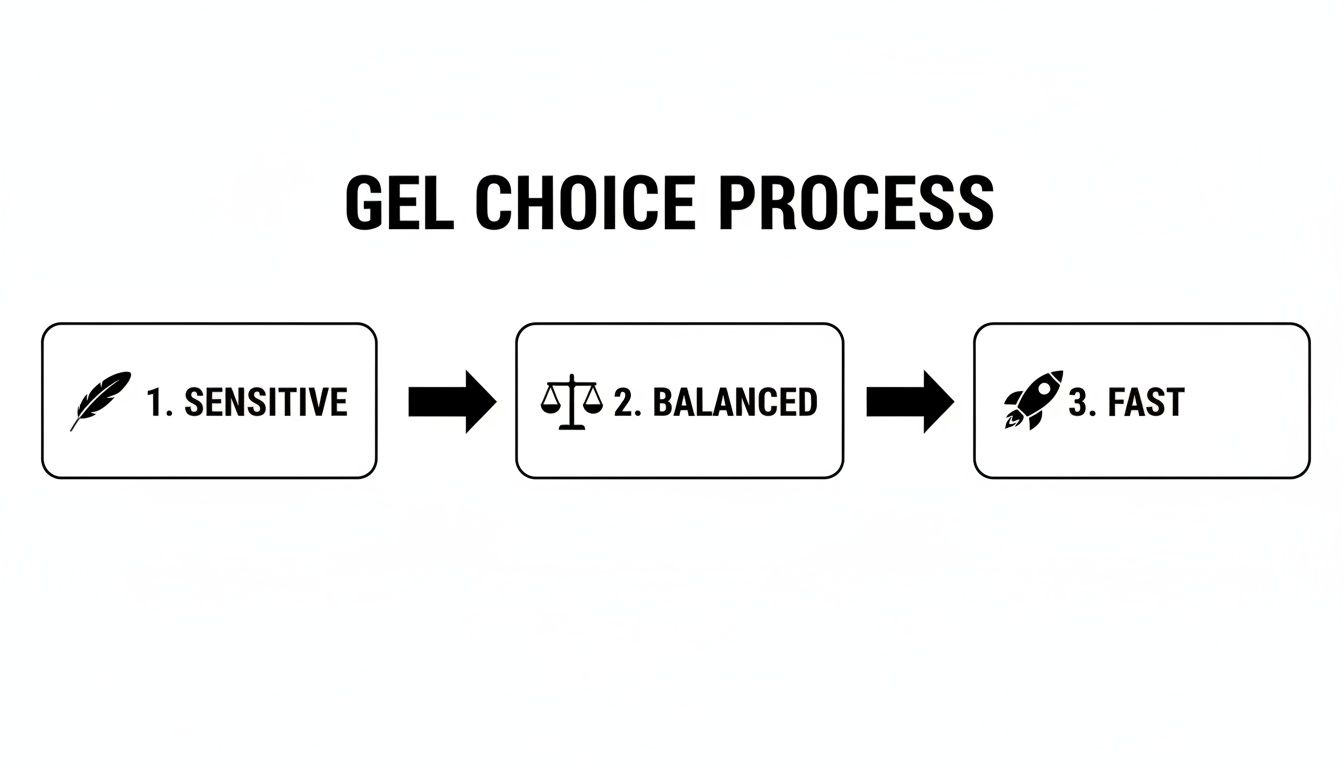
As you can see, there’s a clear path whether you need a gentle approach for sensitive teeth, a more balanced formula, or a high-strength gel for the fastest possible results.
Applying the Gel and Wearing Your Trays
If there's one golden rule for applying whitening gel, it's this: less is more. Overfilling the trays is probably the most common mistake people make. It doesn't just waste your expensive gel, it also pushes the excess directly onto your gums, which is the number one cause of irritation.
Follow these steps for a perfect application every single time:
- Dispense a Small Amount: Squeeze a single, small dot of gel on the front-facing inner surface of each tooth compartment in your tray. You only need to treat the teeth that show when you smile.
- Seat the Trays: Gently place the trays over your teeth until they fit snugly. Try not to push too hard, as that can squeeze the gel out onto your gums.
- Wipe Away Excess: Use a clean finger, a soft toothbrush, or a cotton swab to carefully wipe away any gel that has oozed out. This is a crucial step for avoiding gum sensitivity.
- Follow Wear Time: Stick to the recommended wear time for your gel’s specific concentration. For hydrogen peroxide gels, this is usually somewhere between 30 to 60 minutes. I always recommend setting a timer to stay on track.
Once your session is done, pop the trays out and rinse your mouth thoroughly with lukewarm water. It's best to avoid brushing your teeth right away, as your enamel can be a little more sensitive immediately after whitening. For product-specific tips, you can find more detailed Opalescence instructions right here on our blog.
Post-Whitening Care and Storage
Your routine isn't quite over when the trays come out. Taking proper care of your equipment and your gel is essential for making sure your treatment stays effective from start to finish.
After every use, clean your whitening trays with cool water and a toothbrush. Steer clear of hot water, as it can easily warp the custom-fit plastic. Let the trays air dry completely before putting them back in their case to keep bacteria from growing.
Finally, how you store your hydrogen peroxide gels is critical. These gels are sensitive to heat and light, both of which can break down the active ingredient and make it less potent. To keep your gel at maximum strength, always store the syringes in the refrigerator. This simple step ensures your gel will be just as powerful for your entire treatment and for any touch-ups you might need down the road.
Managing and Preventing Tooth Sensitivity from Whitening
While the brilliant results from hydrogen peroxide gels are something to smile about, the most common side effect is tooth sensitivity. That sudden “zing” you get from a cold drink is a well-known, though unwelcome, part of the whitening journey for many people.
The good news? This sensitivity is almost always temporary and completely manageable with the right game plan. It happens because the whitening process temporarily makes your enamel more porous, opening up microscopic channels (or tubules) that lead to the tooth's nerve. This can leave those nerve endings more exposed to temperature changes for a short time.
Fortunately, you don't have to grit your teeth and bear it. With a few simple steps, you can get that bright smile comfortably.
Proactive Strategies to Prevent Sensitivity
The best way to deal with sensitivity is to stop it before it starts. Prepping your teeth beforehand can fortify your enamel, making it much more resilient to the whitening process. It’s a simple strategy, but it’s incredibly effective.
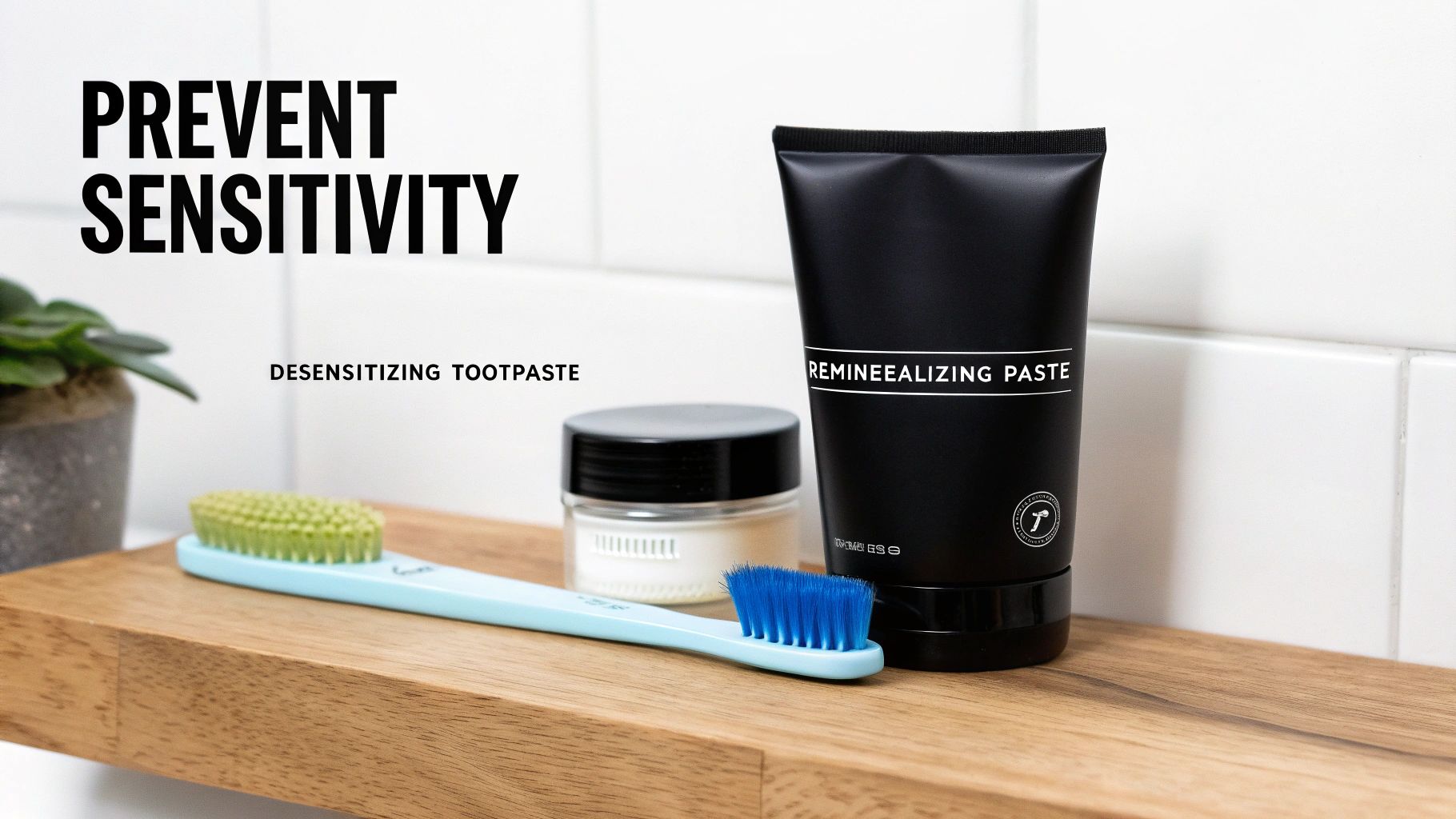
Start by switching to a desensitizing toothpaste about one to two weeks before you plan to begin your whitening treatment. These toothpastes work by blocking those tiny tubules in your enamel, building a protective barrier between outside triggers and your tooth's nerve.
Think of a desensitizing toothpaste as building a shield for your teeth. When you use it consistently before whitening, you strengthen that shield, making your nerves far less likely to overreact when the gel gets to work.
Another pro tip: make sure you're using the right amount of gel. Just a small dot per tooth is all it takes. Overfilling your trays can cause the hydrogen peroxide gels to seep onto your sensitive gums, leading to irritation that feels a lot like tooth sensitivity.
How to Manage Sensitivity During Your Treatment
Even with perfect prep, you might still feel a little sensitivity, and that’s perfectly okay. If you notice that familiar twinge, don't just push through it. The best thing you can do is listen to your teeth and adjust your routine.
Your first line of defense is simply to reduce your wear time. If the instructions suggest a 60-minute session, try cutting it back to 30 minutes. You'll still see fantastic results—it will just be a more gradual, comfortable journey.
Here are a few other easy adjustments you can make:
- Take a Break: You don’t have to whiten every single day. Taking a day or two off between sessions gives your teeth time to recover and remineralize, which dramatically reduces sensitivity.
- Use a Lower Concentration: If a higher-strength gel feels too intense, switch to a lower percentage. A gentler formula often strikes the perfect balance between powerful results and total comfort.
- Apply a Remineralizing Paste: Using a product like MI Paste right after you whiten can provide instant relief. These pastes are packed with calcium and phosphate, which help replenish minerals in your enamel and soothe nerve endings.
For an even deeper dive into these techniques, check out our guide on how to reduce teeth sensitivity after whitening for more expert tips.
Ultimately, managing sensitivity is all about being flexible. These practical, easy-to-implement strategies put you in control of your whitening experience, ensuring you can achieve that stunning smile without any unnecessary discomfort.
Who Is a Good Candidate for At-Home Teeth Whitening?
While professional-grade hydrogen peroxide gels can deliver some seriously impressive results, at-home teeth whitening isn't a magic wand for everyone. Knowing if you're the right person for the job is the first, most important step. It's all about making sure you can get a great result safely.
The perfect candidate for at-home whitening is someone with generally healthy teeth and gums who just wants to brighten things up a bit. We're talking about correcting the mild to moderate yellowing that happens from, well, living life.
The Ideal Candidates for Whitening
You're likely a fantastic candidate for at-home whitening gels if your main gripes are with stains on the surface of your teeth, what dentists call extrinsic stains. These are the discolorations that build up slowly over time from our daily habits.
At-home whitening is probably for you if you have:
- Stains from Food and Drinks: Your teeth have started to yellow from a love of coffee, tea, red wine, or dark sodas.
- Tobacco Stains: Discoloration has appeared from smoking or using other tobacco products.
- Age-Related Yellowing: Your smile has naturally lost some of its youthful brightness over the years. This is completely normal and very treatable.
For people dealing with these common issues, professional-grade gels are great at breaking down those stubborn stain molecules (chromogens) and revealing a much brighter, more confident smile.
When to Consult Your Dentist First
While tons of people can whiten at home with no problems at all, some situations call for a professional opinion before you start. Trying to whiten your teeth when you have underlying dental issues can lead to pain, sensitivity, or just plain disappointing results.
It's absolutely crucial to have a chat with your dentist before using hydrogen peroxide gels if any of these apply to you:
- Existing Dental Restorations: Got crowns, veneers, bonding, or fillings on your front teeth? They won't whiten. At all. Whitening the natural teeth around them could create a very noticeable color mismatch.
- Untreated Cavities or Gum Disease: The whitening agent can easily seep into untreated cavities or irritate inflamed gums, causing some serious pain and making the original problem even worse.
- Extreme Tooth Sensitivity: If you already find yourself wincing from sensitivity, jumping into whitening without a plan isn't a great idea. Your dentist can recommend specific protocols or gentler products to keep you comfortable.
It's not just about a bright smile; it's about a healthy one. Getting a dental check-up before starting any whitening regimen ensures you're building your beautiful smile on a strong, healthy foundation.
On top of this, whitening is generally not recommended for pregnant or nursing mothers, or for anyone under the age of 16. For those who might be better suited for professional care or are looking for specialized cosmetic advice, a reputable establishment like a Medical Spa Beverly Hills can offer more tailored solutions.
The demand for effective dental products you can use at home is huge, which is why the market for their key ingredients is so strong. To give you an idea, the U.S. hydrogen peroxide market was valued at $1.21 billion and is expected to hit $1.59 billion by 2034. This shows just how much people trust these safe and reliable bleaching agents. You can find more details about this market's growth over at imarcgroup.com.
By taking a moment to make sure you're a good candidate, you can move forward confidently and get the results you're looking for safely.
Common Questions About Hydrogen Peroxide Gels
Even after you understand the science behind how whitening works, it's totally normal to have a few more questions. Let's be honest, you're about to put this gel on your teeth, and you want to feel confident you're doing it right.
This last section is dedicated to answering the most common questions we hear from customers. Think of it as a final checklist to ensure you get a fantastic, satisfying result.
How Long Will My Whitening Results Last?
This is usually the first thing people ask once they see their brand-new, brilliant smile: "How long do I get to keep this?" The answer really comes down to your daily habits. With a little maintenance, your brighter smile can easily last for many months, and for some people, even a year or more.
A good analogy is to think of your teeth like a crisp white shirt. If you take care of it, it stays looking great. But if you spill coffee or red wine on it, you're going to see new stains pop up pretty quickly. It's the exact same principle with your tooth enamel.
Want to keep that smile bright for as long as possible? It's easier than you think. Just follow these tips:
- Watch Out for Staining Foods and Drinks: The usual suspects are coffee, tea, red wine, and dark berries. If you're going to enjoy them, try using a straw or just swish with some water afterward to rinse away the pigments.
- Keep Up Your Oral Hygiene: This one’s a no-brainer. Brushing twice a day and flossing daily is your first line of defense, removing the plaque that stains love to grab onto.
- Use a Whitening Maintenance Toothpaste: Swapping your regular toothpaste for a whitening one can make a huge difference. It helps gently polish away new surface stains before they get a chance to settle in.
- Plan for Occasional Touch-Ups: The good news is you don't need to do the whole treatment all over again. Usually, a single whitening session with your hydrogen peroxide gels every few months is all it takes to boost the brightness back up.
While your whitening results aren't permanent, they are absolutely maintainable. A little proactive care goes a long way in preserving that bright, confident smile you worked for.
Do Whitening Gels Work on Crowns, Veneers, or Fillings?
This is a critical question, and the answer is simple: hydrogen peroxide gels only whiten natural tooth enamel. They will have absolutely no effect on the color of your crowns, veneers, dental bonding, or fillings.
These dental restorations are made from materials like porcelain or composite resin. They're non-porous and simply don't react to bleaching agents the way your natural teeth do. This is why trying to whiten your teeth when you have restorations on your front teeth can lead to what we call a "color mismatch."
Imagine you have a crown on a front tooth that was perfectly matched to your teeth when they were a bit yellower. If you whiten all the natural teeth around it, that crown will suddenly look dark and out of place. This is precisely why it’s so important to talk to your dentist before starting any whitening treatment if you have dental work on your visible teeth. They can walk you through your options and help you avoid any unwanted surprises.
What Makes Professional Gels Different From Drugstore Strips?
It's a fair question. After all, both professional gels and the whitening strips you see at the drugstore use peroxide to whiten. The real difference comes down to three key things: strength, the delivery method, and the final results.
This is exactly why professional hydrogen peroxide gels, when used with custom-fit trays, deliver a far superior and more consistent outcome.
Here’s what sets a professional gel system apart:
- Stronger, More Effective Formulas: The gels you get from a dental professional have a higher concentration of the active whitening agent. This power allows them to penetrate deeper and break down stubborn, set-in stains that weaker drugstore products just can't lift.
- The Magic of Custom-Fit Trays: This is the real game-changer. Trays that are molded perfectly to your teeth ensure the gel makes complete, even contact with every single surface of every tooth. This includes all the curves and in-between spaces that flat strips almost always miss.
- Less Gum Irritation: Because custom trays fit so snugly against your teeth, they create a barrier that keeps the powerful gel where it belongs—on your enamel and away from your sensitive gums. This dramatically reduces the risk of gum irritation, which is a very common complaint with one-size-fits-all strips.
- A Beautifully Uniform Result: Strips can slip, slide, or not stick properly, often leading to splotchy or uneven whitening. The total coverage you get from a tray and gel system ensures a consistent, even shade across your entire smile.
When you put it all together, the combination of a more potent formula and a much more precise application is what makes all the difference. It’s a controlled, effective, and comfortable way to get true, professional-level results in your own home. For those interested in customized oral care solutions beyond whitening, learning about compounding and dental health can offer further insights.
Ready to achieve the brilliant smile you've always wanted with professional-grade products you can trust? Explore our complete collection of hydrogen peroxide gels, sensitivity solutions, and other dentist-recommended products at DentalHealth.com. Shop now and enjoy free, fast shipping on all USA orders from https://dentalhealth.com.