
Teeth Whitening Gel USA: A Buyer's Guide for 2026
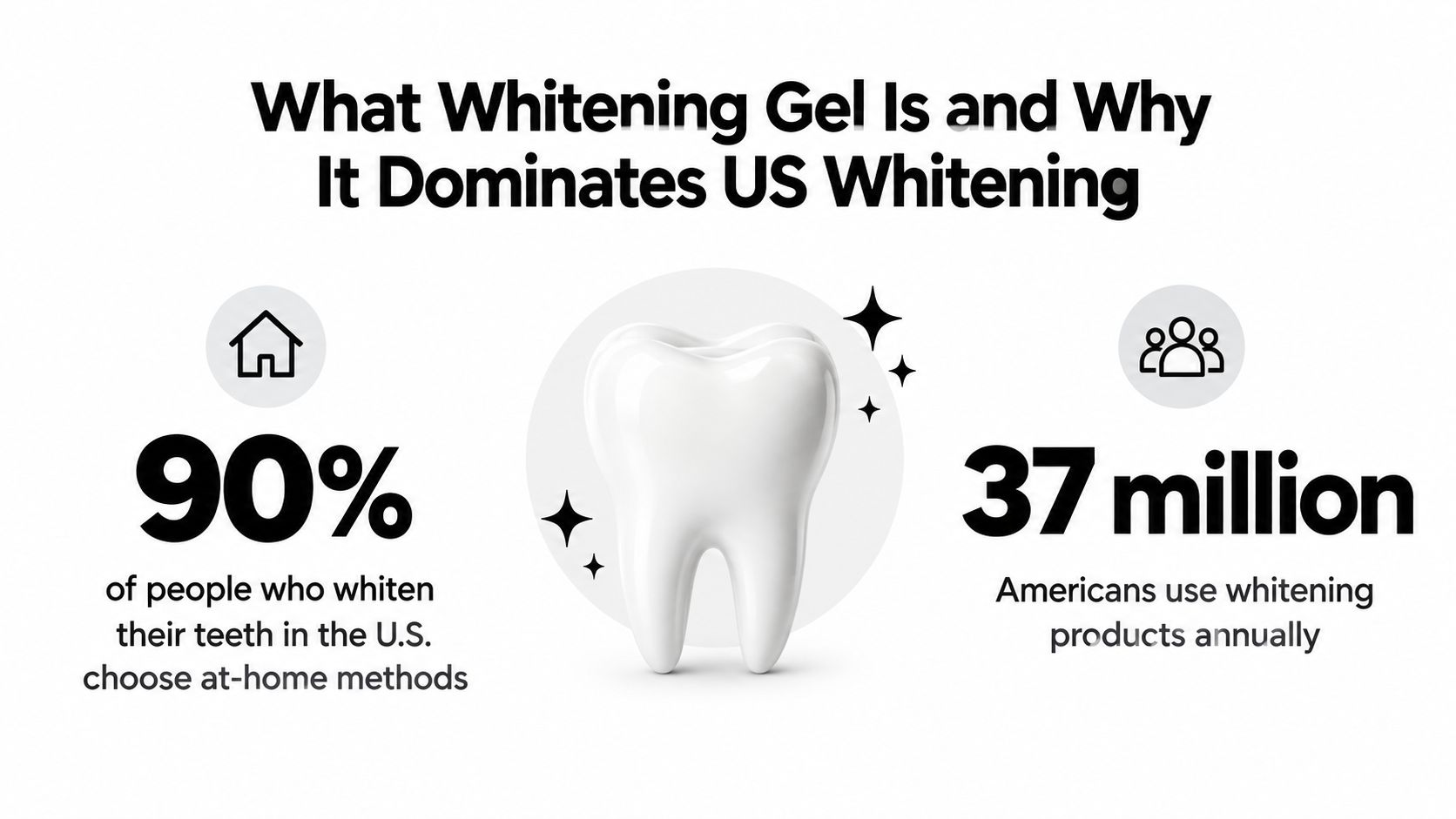
Roughly 90% of people who whiten their teeth choose at-home methods, and more than 37 million Americans use whitening products in a year. That makes at-home gel one of the most important ways U.S. consumers brighten their smiles.
The phrase teeth whitening gel USA covers several very different products, from dentist-dispensed tray gels to direct-to-consumer syringes and prefilled trays. The meaningful differences aren't limited to brand names. Peroxide type, concentration, tray fit, treatment time, packaging, and professional guidance all affect the balance between visible whitening and comfort.
This guide connects the U.S. market's regulatory history with practical buying decisions. You'll learn what whitening gel does, why carbamide peroxide and hydrogen peroxide behave differently, how to interpret concentration claims, where major brands fit, and how to shop without confusing a stronger formula with a better one.
What Whitening Gel Is and Why It Dominates US Whitening
At-home whitening is the standard choice for most U.S. consumers. About 90% of people who whiten their teeth choose methods such as strips, gels, or whitening toothpaste, while more than 37 million Americans use some type of tooth-whitening product in a single year, according to U.S. teeth-whitening market and consumer data.
What gel actually does
A whitening gel is a viscous peroxide-based formula. Most products use either carbamide peroxide or hydrogen peroxide. You apply the gel to a tray, place the tray over your teeth, and keep it in position for the wear period specified by the manufacturer or dentist.
Peroxide moves through the enamel and reacts with stain molecules. The gel doesn't paint the tooth white, and it doesn't remove natural tooth structure. It helps break down discoloration so the underlying tooth shade appears lighter.
A tray makes gel especially useful because it holds the active formula against the enamel for a controlled period. A custom tray can also limit contact with the gums when it fits properly. That combination gives shoppers more control over concentration and contact time than many simple touch-up products offer.
Gel compared with strips and pens
Whitening strips use a thin film coated with peroxide. They're convenient and can work well for surface discoloration, but the film has a fixed shape and may not contact every tooth evenly. Pens use a brush-on formula and suit quick touch-ups, though the application is less controlled and usually covers a smaller area.
Gel systems sit between convenience and customization. You can choose a lower or higher formulation, adjust the wear schedule, and use a tray designed for your teeth. That flexibility explains why professional-grade at-home gels remain common even though strips and pens are easy to find.
Practical rule: Choose the gel and tray combination you can use consistently. A moderate product used correctly is more useful than a stronger syringe that irritates your gums or sits unused.
How Whitening Gel Became a US Consumer Category
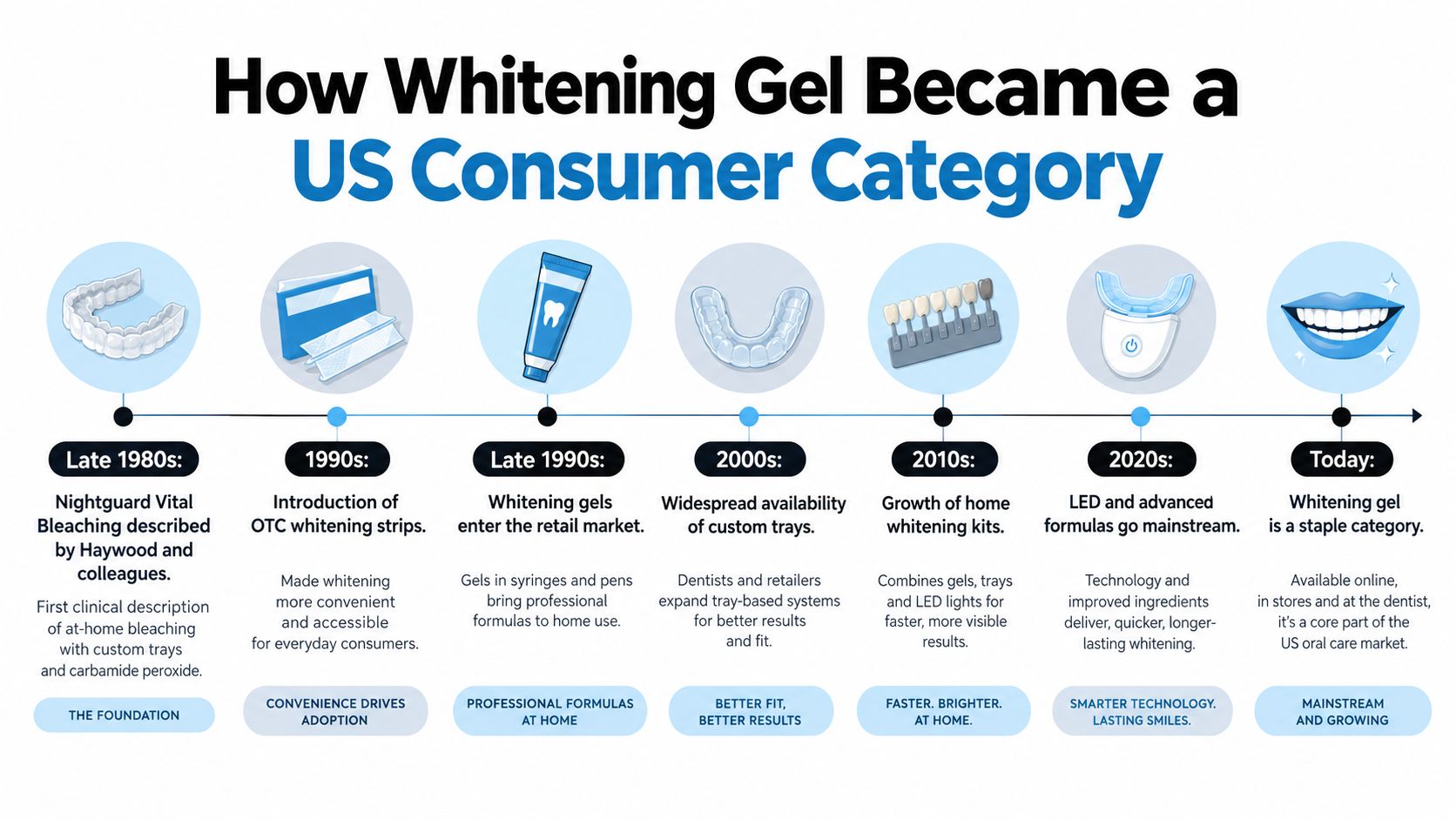
Modern at-home whitening gel began as a clinical technique, not a retail launch. In the late 1980s and early 1990s, nightguard bleaching helped establish dentist-supervised home whitening as a practical approach. A fitted tray held peroxide gel against the teeth, allowing dentists to manage treatment even when application happened outside the office.
The regulatory turning point
Peroxide products were already receiving regulatory attention as home whitening entered consumer awareness. The FDA approved hydrogen peroxide and carbamide peroxide as oral antiseptic agents in 1983. In 1991, it sent warning letters to manufacturers making whitening claims, arguing that peroxide bleaching products were unapproved new drugs. The European Commission background on home tooth whitening records this sequence and its role in the debate over peroxide products.
The history matters because whitening gel crosses several categories. A company may present it for cosmetic use, while language about treating a condition or delivering a therapeutic result can raise a different regulatory question. The formula alone does not explain how a product is treated. Its claims, labeling, and intended use also matter.
The question remained unsettled as the category expanded. The American Dental Association asked the FDA to clarify the classification of peroxide-containing tooth whiteners in 2009. The FDA declined to fully settle the issue in 2014, according to the regulatory history cited above.
Why the market looks concentrated
This background helps explain why U.S. shoppers often see established dental brands rather than an unlimited range of anonymous syringes. Peroxide products require attention to formulation, labeling, packaging, instructions, and marketing claims. Dentist distribution adds professional review, including assessment of the patient's teeth, gums, restorations, and tray fit.
For shoppers, the practical lesson is straightforward: product history affects what appears on the shelf. A familiar brand is not automatically suitable for every buyer, but traceable packaging and clear instructions make it easier to assess concentration, intended use, and responsible handling before purchase.
FDA Rules and ADA Standards Buyers Should Know
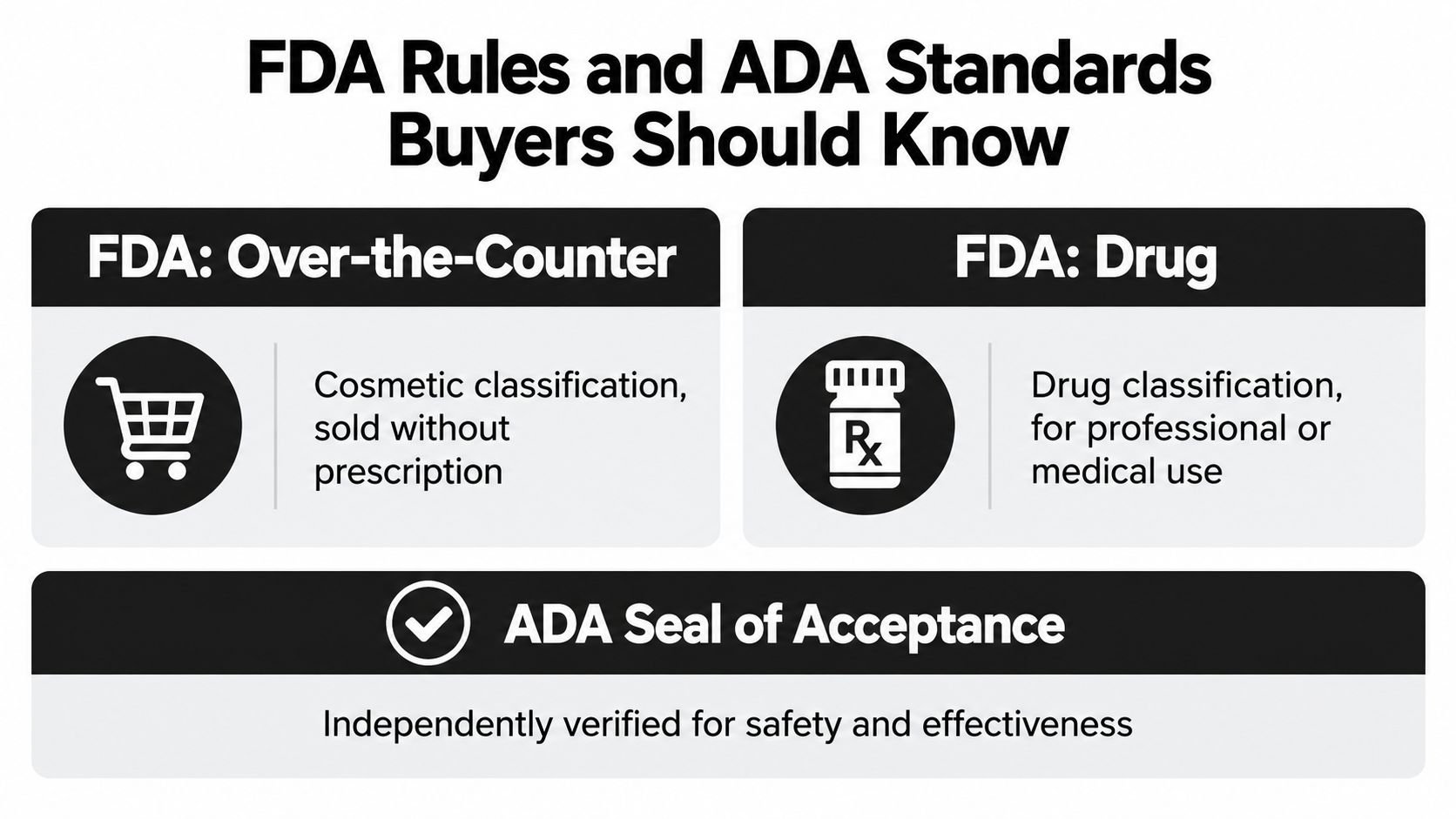
In the United States, whitening gel may be sold OTC, without a prescription or dental visit, or through a dentist-supervised process in which a dental professional evaluates the patient and directs product use. Those routes are not interchangeable. The same peroxide family can appear in both, while the tray, instructions, claims, and clinical oversight differ.
Peroxide whitening has a complicated regulatory history. The FDA approved hydrogen peroxide and carbamide peroxide as oral antiseptic agents in 1983. Later warning letters challenged some whitening claims, while requests for clearer classification continued. The FDA and ADA regulatory history of tooth whiteners helps explain why ingredient names alone cannot tell you how a product is regulated.
What to inspect on the package
Treat the label as a screening tool, not proof that the formula fits your teeth or gums.
- Active ingredient: Confirm whether the gel contains carbamide peroxide or hydrogen peroxide.
- Concentration: Find the percentage rather than relying on phrases such as “professional strength.”
- Lot and expiration details: Sealed, dated packaging helps you trace the product and avoid using degraded gel.
- Instructions: Check wear time, storage, warnings, and directions for preventing gum contact.
- Seller identity: A business address and reachable customer support provide more accountability than a vague marketplace listing.
FDA oversight and the ADA Seal of Acceptance address different questions. FDA oversight relates to regulatory status, manufacturing, labeling, and product claims. The ADA seal indicates that a product met the applicable program's requirements for safety and effectiveness, supported by evidence. Neither label replaces attention to fit, sensitivity, restorations, or professional advice when those concerns apply.
DentalHealth.com's FDA-approved toothbrush sanitizer guide offers related oral-care guidance and reinforces the need to distinguish regulatory wording from broad advertising language.
Read the claim, not just the badge: “Professional strength” means little unless the package also states the active ingredient, concentration, intended use, and seller.
Carbamide vs Hydrogen Peroxide and the 10% Sweet Spot
Carbamide peroxide and hydrogen peroxide both whiten teeth, but they don't release peroxide in the same way. Carbamide peroxide breaks down gradually into hydrogen peroxide and urea. That slower release makes carbamide peroxide common in tray systems designed for longer wear, while hydrogen peroxide generally acts more directly and is often used in shorter protocols.
The practical question isn't “Which ingredient is strongest?” It's “Which release pattern fits your tray, schedule, and sensitivity?” Clinical literature tied to the American Dental Association's evidence on at-home whitening identifies a useful take-home benchmark around 10% carbamide peroxide. The literature also reports similar end-of-treatment color improvement with 10% and 16% carbamide peroxide protocols, so a higher concentration doesn't automatically deliver proportionally better results.
Why concentration has limits
Peroxide drives both stain removal and irritation. As concentration increases, treatment may become faster or require a shorter wear period, but sensitivity can become more likely. Fit and contact time matter just as much. A tray that presses gel into the gums can create a poor experience even when the concentration itself looks reasonable.
Evidence summarized in a systematic review of peroxide concentration and sensitivity indicates that moderate hydrogen peroxide concentrations around 25% to 35% can achieve whitening outcomes comparable to higher concentrations while reducing sensitivity risk. Those concentrations are more relevant to controlled professional treatment than to casual retail use.
| Concentration | Active H2O2 equivalent | Typical wear time | Best for |
|---|---|---|---|
| 10% carbamide peroxide | Gradual peroxide release | Longer tray sessions | First-time users and routine home whitening |
| 16% carbamide peroxide | Gradual peroxide release | Moderate to longer sessions | Users seeking a stronger tray protocol |
| Moderate hydrogen peroxide | Direct peroxide release | Shorter, controlled sessions | Dentist-guided treatment plans |
| Higher peroxide formulas | Faster, more aggressive release | Short sessions under guidance | Time-sensitive professional treatment |
For a plain-language explanation of the chemistry, see how carbamide peroxide whitens teeth. In practice, buyers with sensitive teeth or flexible schedules often have more to gain from a moderate formula and well-fitting tray than from the highest number on the label.
Popular Whitening Gel Brands Sold in the USA
U.S. shoppers commonly see a few established professional lines alongside boutique direct-to-consumer products. The product names can look similar, but the delivery format and sales channel change how you should interpret the concentration.
Opalescence PF from Ultradent is widely associated with dentist-dispensed take-home whitening. Its range includes carbamide peroxide formulations at 10%, 15%, 20%, and 35%, while the 10% version carries the ADA Seal of Acceptance. The line is typically used with trays, and the appropriate wear period depends on the formulation and professional instructions.
Philips Zoom NiteWhite and DayWhite extend the Zoom name into take-home systems. These products use hydrogen peroxide formulations, with commonly encountered versions ranging from 6% to 16%. Day products generally suit shorter daytime use, while NiteWhite is designed around a nighttime tray routine.
PolaDay and PolaNight from SDI are also familiar in dental offices. PolaDay includes hydrogen peroxide day gels, while PolaNight uses carbamide peroxide options that can support longer tray wear. Availability and exact instructions vary by product, so shoppers should verify the package rather than rely on the family name alone.
A practical comparison
| Brand | Active ingredient range | Typical wear time | How sold in U.S. |
|---|---|---|---|
| Opalescence PF | Carbamide peroxide, including 10%, 15%, 20%, and 35% options | Varies by concentration | Commonly dentist-dispensed |
| Philips Zoom DayWhite | Hydrogen peroxide formulations | Daytime sessions | Dentist channels and selected retail channels |
| Philips Zoom NiteWhite | Hydrogen peroxide formulations | Night-oriented tray use | Dentist channels and selected retail channels |
| PolaDay | Hydrogen peroxide day gels | Daytime sessions | Dental offices and professional retailers |
| PolaNight | Carbamide peroxide night gels | Longer tray sessions | Dental offices and professional retailers |
| GLO Science | Brand-specific whitening systems | Product-dependent | Direct-to-consumer and retail |
| Hello Whitening | Consumer whitening products | Product-dependent | OTC and direct-to-consumer |
Boutique systems such as GLO Science and Hello Whitening appeal to shoppers who want delivery without a dental visit. Some fluoride-focused systems and adjacent products pair whitening with ingredients intended to support enamel care, but those additions don't remove the need to follow the whitening directions.
For shoppers comparing alternative presentation formats, the white intense Musamam product offers another resource to review alongside established tray-based brands. Compare its ingredient disclosure, concentration, tray or applicator instructions, expiration information, and return terms with the products above before ordering.
Managing Sensitivity with Whitening Gels
Sensitivity is the side effect that most often changes a shopper's plan. Peroxide can pass through enamel and affect the dentin area beneath it, briefly irritating the tooth's nerve. The result may feel like a sharp response to cold air, water, or food.
People with receding gums, cracked enamel, existing sensitivity, or exposed root surfaces deserve extra caution. Long wear periods and high-concentration formulas can also increase discomfort. A dentist should evaluate persistent pain, untreated decay, gum disease, or a visibly damaged tooth before whitening.
Build a gentler routine
Start with a moderate product and test how your mouth responds. Potassium nitrate can help reduce nerve response, while fluoride and hydroxyapatite are used in oral-care formulas to support enamel care between sessions.
Try this approach:
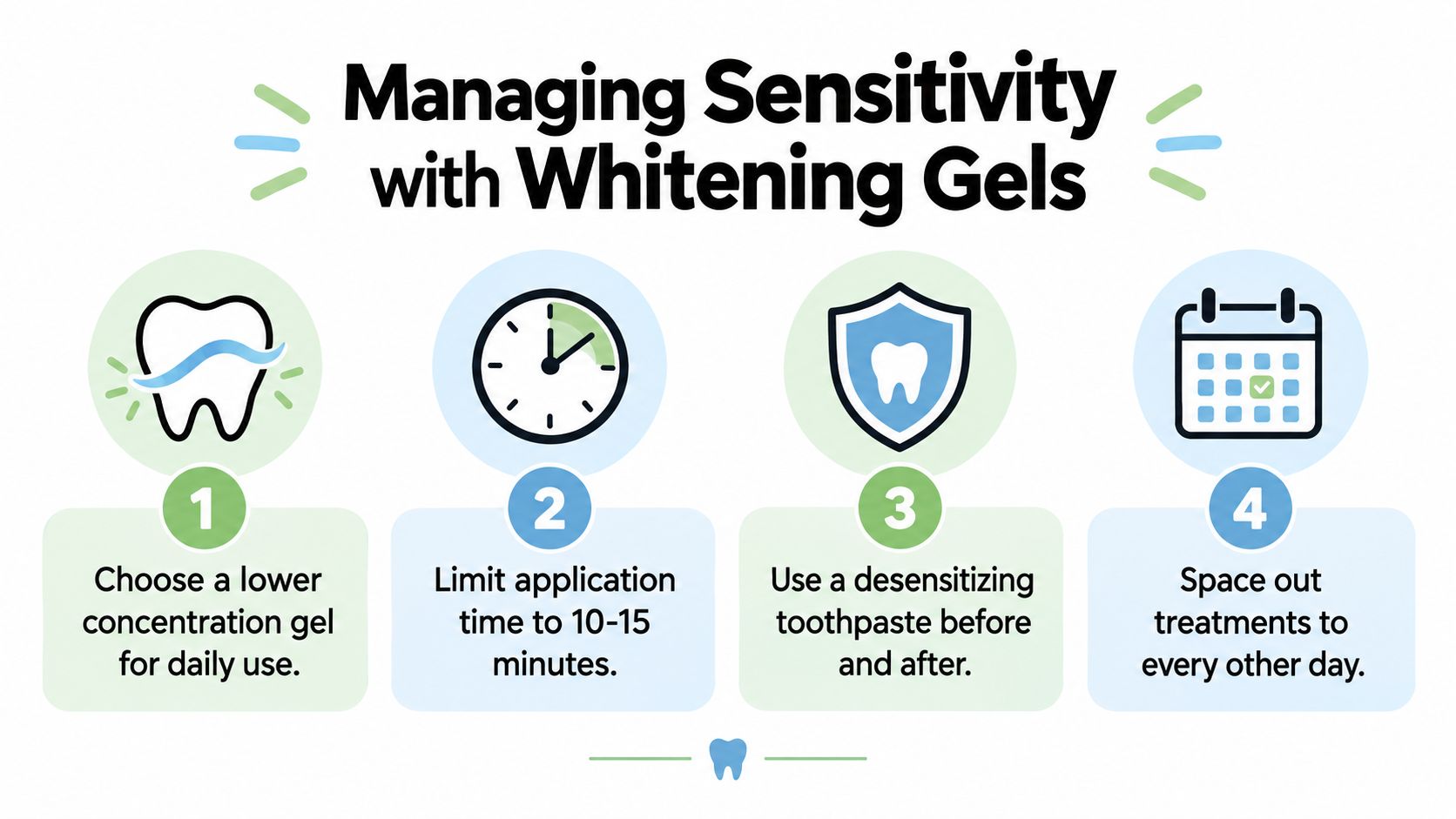
- Use a lower starting concentration: A 10% carbamide peroxide tray gel is a reasonable benchmark for many first-time users.
- Shorten the first sessions: Don't begin with the maximum wear period. Increase only if the product directions and your comfort allow it.
- Space treatments apart: Whitening every other day gives you a chance to assess sensitivity before applying more gel.
- Prepare with sensitivity toothpaste: Use a desensitizing toothpaste before and during the routine, following its instructions.
- Limit temperature extremes: Avoid very hot or very cold drinks immediately after removing the trays.
A clinical trial comparing low-concentration carbamide and hydrogen peroxide gels found that both whitened effectively, while the 8% carbamide peroxide gel produced statistically lower sensitivity and less enamel alteration than the 3% hydrogen peroxide gel. Both caused only mild sensitivity overall, but the finding reinforces why ingredient type matters alongside the percentage.
This video provides a visual overview of sensitivity considerations:
A guide to reducing sensitivity after whitening can help you adjust your routine if discomfort appears. Recent review evidence also indicates that sensitivity is usually temporary and that potassium nitrate or sodium fluoride can reduce the side effect without compromising whitening outcomes. Stop and seek dental advice if pain persists, becomes severe, or affects one tooth disproportionately.
Buying and Shipping Whitening Gel in the USA
A safe purchase starts with traceability. Whether you buy from a dentist, a brand-direct store, or a marketplace, you should know who made the gel, who sold it, how it was stored, and when it expires.
Check the seller's business identity before comparing prices. A verifiable U.S. address, reachable support team, clear return policy, and sealed packaging are practical signs that the retailer expects to stand behind the order. The syringe or box should show the exact peroxide type and concentration, along with lot information, expiration data, storage directions, and warnings.
A simple retailer check
Use the product page and the delivered package together. A polished product page isn't enough if the shipment arrives without dates or with labels that don't match the listing.
- Confirm the formula: Look for carbamide peroxide or hydrogen peroxide and a stated percentage.
- Inspect the package: Reject products with broken seals, missing dates, damaged syringes, or unclear storage instructions.
- Ask for documentation: A Safety Data Sheet, when available, can provide useful handling and ingredient information.
- Review the channel: Dentist offices, established brand websites, and recognized dental retailers provide more accountability than anonymous listings.
- Check the tray instructions: The gel must match the tray type and the stated wear schedule.
Domestic ordering generally makes it easier to resolve a damaged shipment or question a missing expiration date. International orders can add customs delays and heat exposure during transit, and the formulation may not match U.S. labeling expectations. A product's availability on an overseas website doesn't establish that its concentration or claims comply with the U.S. market.
Don't assume a marketplace listing is authentic because it uses a familiar product name. Compare the seller, packaging photographs, active ingredient, lot information, and expiration details with the manufacturer's information. A legitimate product should arrive sealed, dated, and accompanied by storage instructions.
Putting It All Together Before You Buy
The right purchase comes from matching four details, regulatory category, concentration, sensitivity profile, and seller reliability. Start by deciding whether you want an OTC product or a dentist-dispensed formula. OTC products suit shoppers who want direct access, while stronger professional systems require more careful control of fit, contact time, gum protection, and dental condition.
Next, match the formula to your tolerance. A shopper with sensitive teeth may prefer moderate carbamide peroxide with potassium nitrate or fluoride support, a well-fitting tray, and a gradual schedule. Someone seeking a faster result should discuss a short, dentist-supervised course rather than ordering the strongest gel available.
Before checkout, verify:
- The active ingredient and percentage are printed clearly.
- The lot number and expiration date are visible on the actual package or confirmed by the seller.
- The tray and wear instructions match your intended routine.
- The seller offers traceable support and explains storage and returns.
Custom trays offer closer adaptation and more control, while prefilled trays reduce preparation and handling. Neither format replaces an oral examination when you have pain, cavities, gum problems, restorations, or pronounced recession.
The most useful gel is the one you'll tolerate and use consistently for the complete instructed course, not necessarily the strongest tube on the shelf.
DentalHealth.com offers professional-grade at-home whitening gels and kits from brands such as Opalescence, Philips Zoom, PolaDay, PolaNight, and GLO, along with sensitivity and remineralizing products. Review the product details, concentration, tray format, and shipping information at DentalHealth.com before choosing a gel for your routine.