
Tooth Sensitivity After Cleaning: Causes and Relief
You've just left the dental chair with smooth teeth and a fresh, clean feeling. Then you take a sip of cold water, breathe in through your mouth, or bite into something sweet, and one or more teeth responds with a sudden electric jolt.
Tooth sensitivity after cleaning is often temporary, especially when the discomfort is sharp, brief, and linked to a clear trigger. It can also reveal an underlying problem that the cleaning didn't cause, but made easier to notice. The difference lies in the pattern, intensity, and direction of your symptoms.
Why Teeth Feel Sensitive Right After a Cleaning
A patient may sit up after a routine cleaning and notice sensitivity when the hygienist sprays water or when cool air reaches the teeth. The sensation can feel alarming because it starts immediately after a procedure intended to improve oral health. In many cases, however, the cleaning has removed plaque or calculus that was covering already-exposed or vulnerable tooth surfaces.
This reaction belongs to the broader condition called dentin hypersensitivity, which causes short, sharp pain in response to cold, touch, air, or other stimuli when dentin is exposed. The American Dental Association's overview of toothpastes and dentin hypersensitivity reports that the condition affects approximately 11.5% of patients. Published reviews report broader estimates because researchers use different definitions and testing methods. General dental practice estimates commonly range from 10% to 25%, while some surveys report prevalence as high as 57%, according to the same ADA reference.
Practical rule: A brief reaction to cold or air usually tells us more about exposed dentin than about damage caused by the cleaning.
Why the procedure matters
A light cleaning above the gumline usually produces less sensitivity because the hygienist instruments less root surface. Treatment below the gumline is different. After periodontal treatment or surgery, reported sensitivity has ranged from 65% to 98% in some studies, as described in the ADA reference.
That doesn't mean every patient will experience discomfort, or that a painful response proves something went wrong. Gum recession, periodontal disease, enamel wear, brushing pressure, exposed roots, and the way a study measures sensitivity all affect the result. If you want to record which teeth reacted, what triggered the pain, and how long it lasted, a dental scribe for organized patient notes can help preserve useful details for your next dental discussion.
For a plain-language explanation of other possible causes, see why teeth can become sensitive. The important first step is to observe whether the discomfort is fading and remains tied to a specific stimulus.
The Science Behind Post-Cleaning Discomfort
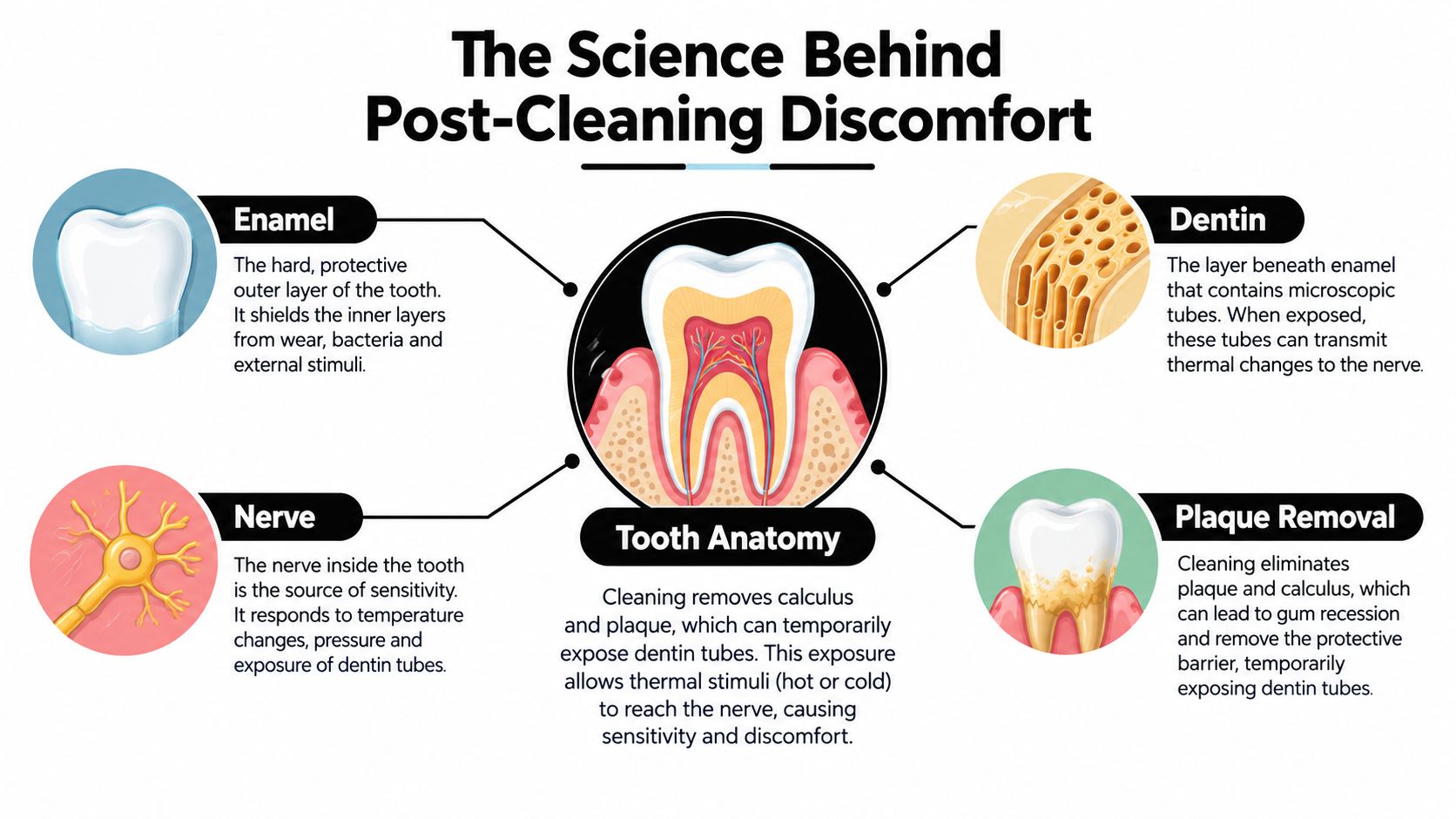
The visible crown of a tooth is protected by enamel. The root is covered by a thinner protective layer called cementum, and beneath these outer layers lies dentin. Dentin contains microscopic tubules that connect toward the nerve-rich pulp.
When a cleaning removes calculus from the root, particularly below the gumline, the procedure can expose or disturb the cementum covering. The newly accessible dentin may then respond to cold drinks, air, touch, or changes in the concentration of fluids around the tooth.
Why cold air causes a sharp jolt
The leading explanation is often called the hydrodynamic mechanism. Fluid sits inside the dentinal tubules. When cold air, a cold drink, drying, or touch changes conditions at the exposed surface, that fluid can move. The movement stimulates pulpal A-delta nerve fibers, producing the familiar quick, sharp sensation described in the systematic review of dentin hypersensitivity mechanisms.
The pain is usually brief because the stimulus lasts briefly. A sip of iced water may hurt for a moment, then stop when the tooth warms. That pattern is different from pain that lingers after the drink is gone, starts without a trigger, or feels deep and throbbing.
Exposure isn't the same as injury
Scaling and root planing can move the gum margin apically as inflamed tissue settles and can remove deposits that had physically covered a root surface. These changes may make dentin more responsive without indicating automatic pulpal damage. The same review describes sensitivity as commonly increasing during the first stage after periodontal treatment and then declining as the tooth and surrounding tissues adapt.
A useful distinction is that the cleaning may uncover a pathway for sensation without creating a new disease. This is also why products marketed for remineralization address a different concern from products intended mainly to block sensitivity. Learn more about the difference in tooth remineralization, particularly if you're considering a paste for exposed or worn surfaces.
Expected Timeline and Severity by Procedure Type
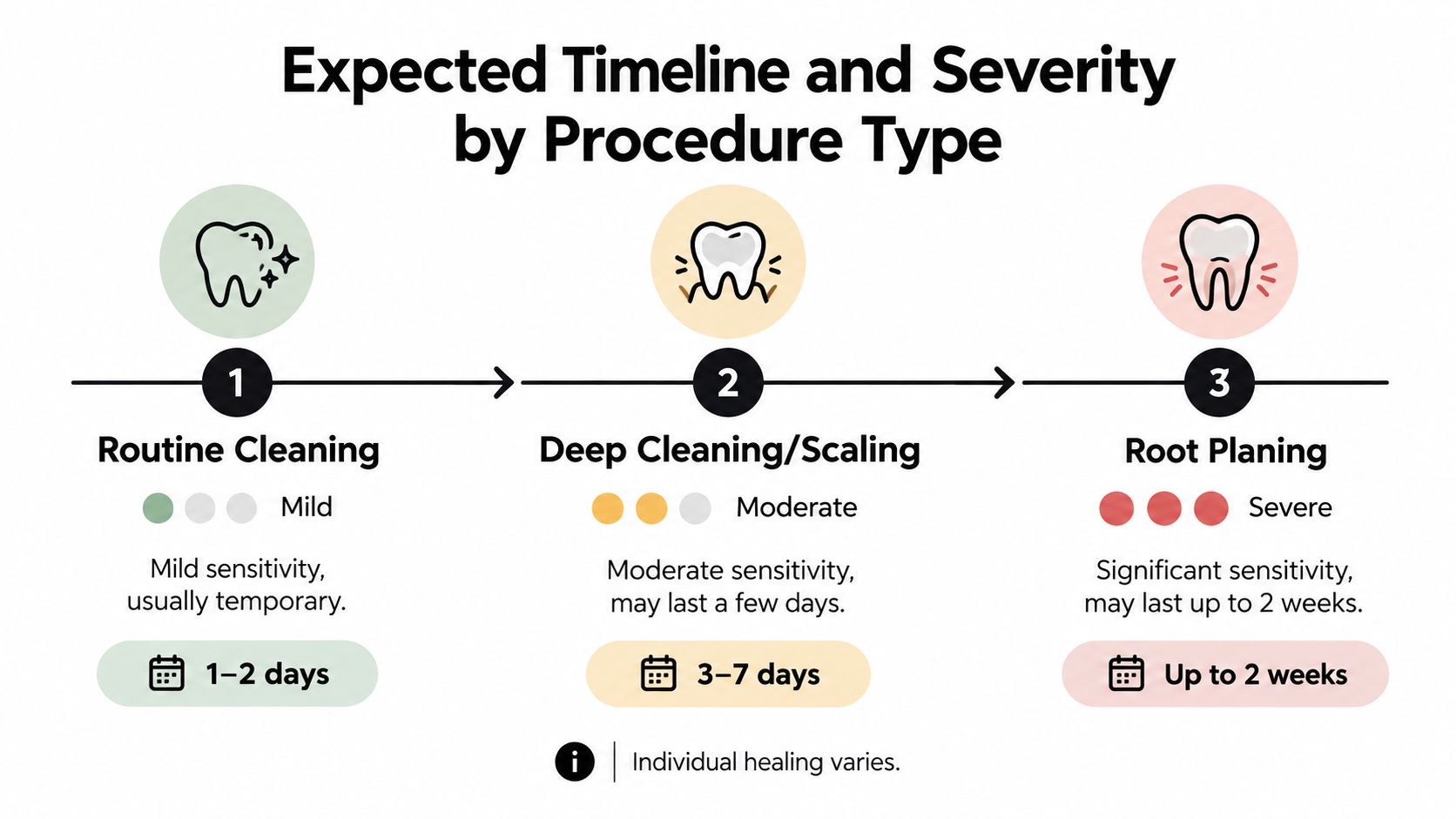
The phrase “dental cleaning” covers procedures with very different levels of instrumentation. A routine prophylaxis removes deposits mainly around the visible tooth surfaces and gumline. Scaling and root planing reaches below the gumline and along root surfaces affected by periodontal disease.
| Procedure | Typical experience | What matters most |
|---|---|---|
| Routine above-gumline cleaning | Usually milder, shorter discomfort | Less root surface is instrumented |
| Subgingival scaling | More noticeable cold or touch sensitivity | Deposits and inflamed tissue lie below the gumline |
| Scaling and root planing | Can produce stronger, longer-lasting sensitivity | Exposed roots and changes in the gum margin may contribute |
Reading the recovery pattern
After deeper periodontal treatment, one cited systematic review found root sensitivity rising from approximately 9% to 23% before therapy to approximately 54% to 55% afterward, as summarized in the clinical review of sensitivity after periodontal treatment. Symptoms often peak between one and three weeks after treatment before gradually declining, and clinical observations describe natural desensitization around two weeks after subgingival debridement.
That timeline can surprise patients. Sensitivity doesn't always reach its maximum immediately after the appointment, particularly when gum inflammation settles and root surfaces become more exposed. A light cleaning generally follows a gentler course, while deeper treatment deserves more patience and closer monitoring.
A clinical dentistry review reports that sensitivity commonly takes two to four weeks to decrease and that topical sodium fluoride reduced sensitivity during a four-to-eight-week observation period, according to the same source. These figures describe reported patterns, not a promise for every person. A steadily improving response is reassuring. A response that grows stronger, spreads, or changes character deserves attention.
The procedure also affects the financial and planning side of care. If you're comparing appointment types, professional teeth cleaning costs can help you prepare questions for the dental office, including whether the planned treatment is routine cleaning or periodontal therapy.
Effective Home Remedies and OTC Treatments
Home care should reduce triggers without allowing you to neglect the areas that need cleaning. Stopping brushing or flossing completely can leave plaque around healing gums and may prolong irritation. The better approach is gentle, consistent care while you watch the symptom pattern.
Use desensitizing toothpaste consistently
The ADA supports desensitizing toothpastes containing stannous compounds, potassium-based agents, or arginine for twice-daily use. These ingredients work through different pathways, but none should be judged after one brushing. Their effect depends on repeated application over days to weeks.
Brush with a soft-bristled brush and light pressure. Spreading a small amount of sensitivity toothpaste over the affected teeth and leaving it in place briefly before rinsing may be useful, but follow the product directions and don't scrub harder because a tooth feels sensitive.
Reduce avoidable stimulation
For a short recovery period, choose lukewarm foods and drinks if temperature triggers pain. Acidic foods and beverages can make exposed or worn tooth surfaces feel more reactive, so reducing them while symptoms settle is sensible. Don't use sensitivity as a reason to start whitening immediately. Whitening products can add another source of sensitivity and make it harder to tell whether recovery is progressing.
A soft brush helps limit mechanical irritation at the gumline. Use small, controlled movements rather than aggressive horizontal scrubbing, especially if recession or exposed roots are already present.
Know when OTC care isn't enough
Professional fluoride treatment may be appropriate when exposed roots remain sensitive despite careful home use. A dental team can also examine whether the discomfort comes from a single lesion, a restoration, a crack, or periodontal changes rather than uncomplicated dentin sensitivity.
Trade-offs matter. A desensitizing toothpaste is convenient and noninvasive, but it may take consistent use and won't repair a cracked tooth or treat decay. A professional coating or fluoride application can target a specific area, but it requires an examination and may not address the underlying cause if the diagnosis is wrong.
What works best: Match the treatment to the pattern. Use gentle daily care for brief, trigger-linked pain, and seek an examination when the symptoms don't follow that pattern.
When to Contact Your Dentist About Persistent Pain
Not every painful tooth after a cleaning needs urgent treatment, but “it started after the appointment” isn't a diagnosis. Dentin hypersensitivity is a diagnosis of exclusion. A dentist needs to consider the tooth's history, the exact stimulus, recent restorations or whitening, gum recession, enamel loss, periodontal inflammation, decay, cracks, and pulp health.
Use the symptom pattern as a decision guide
| Symptom pattern | More consistent with | Appropriate response |
|---|---|---|
| Brief, sharp pain from cold, air, or touch | Exposed dentin after cleaning | Continue gentle care and monitor improvement |
| Pain that lingers after the trigger is gone | Possible pulpal or structural problem | Arrange a dental assessment |
| Pain without a trigger | Decay, pulp inflammation, or another condition | Contact your dentist |
| Pain when biting | Crack, defective restoration, or inflammation | Arrange an examination |
| One tooth becoming progressively worse | Localized dental problem | Don't assume the cleaning caused it |
| Swelling, severe pain, heavy bleeding, or fever | Possible infection or significant tissue problem | Seek prompt dental care |
The clinical guidance on tooth sensitivity after cleaning also identifies severe or worsening pain, swelling, heavy bleeding, pain on chewing, and sensitivity that doesn't improve as reasons to contact a dentist. These signs don't prove a specific diagnosis, but they make passive waiting a poor choice.
Track direction, not just duration
A tooth that reacts briefly but improves is behaving differently from a tooth that hurts more each day. Spontaneous pain, lingering pain after cold or heat, swelling, and biting pain can point toward decay, a cracked tooth, a defective restoration, or pulpal inflammation. A dentist may need to isolate the tooth, test its response, inspect the restoration, and take imaging before recommending treatment.
You can help by noting whether the pain is localized, what triggers it, how long it lasts, and whether it interrupts sleep or eating. That information is more useful than reporting that the tooth “feels sensitive.”
Prevention Strategies for Future Cleanings
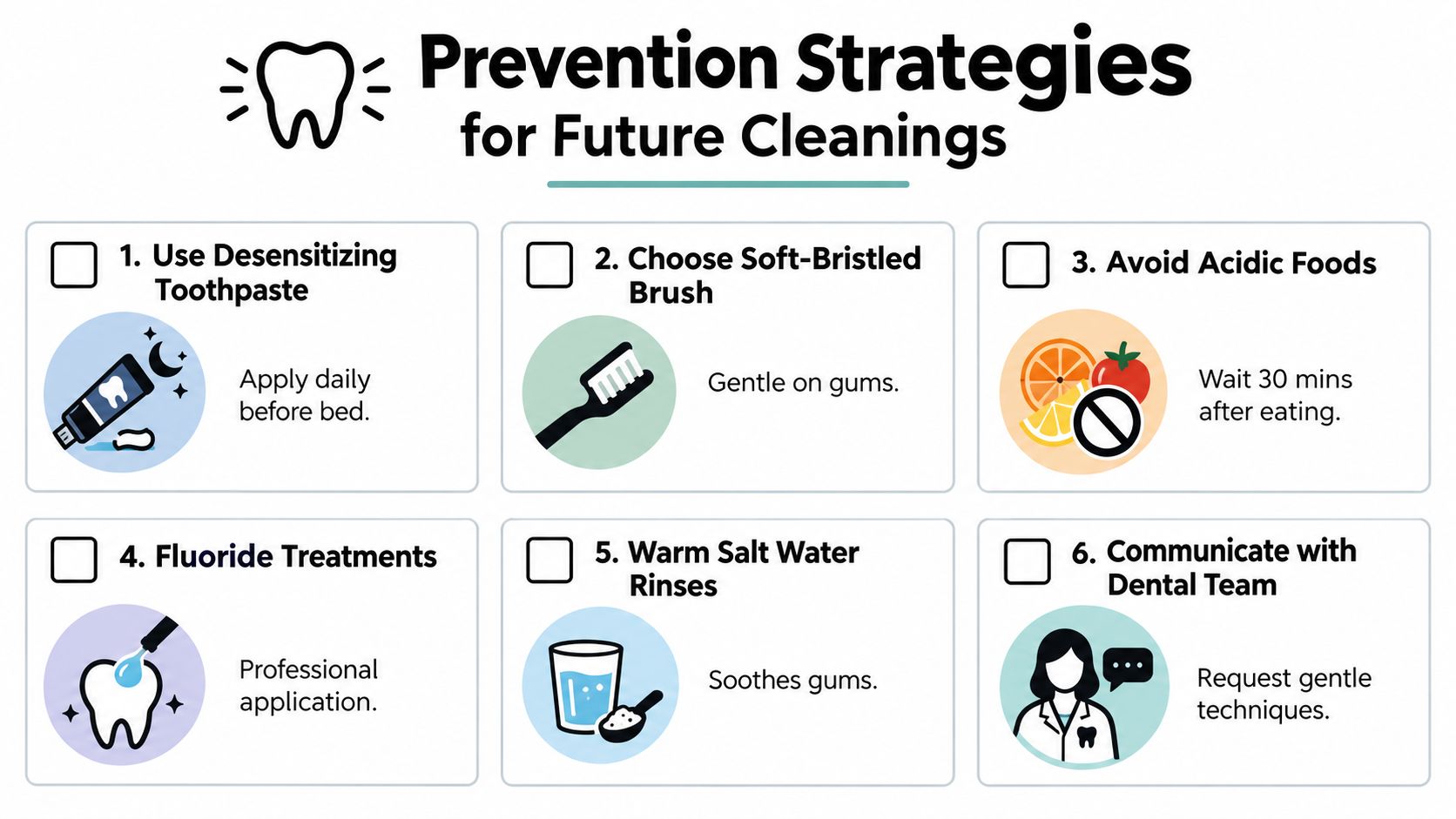
The most effective prevention plan starts before the next appointment. Tell the dental team that you experienced sensitivity, identify the teeth involved, and explain whether cold, air, touch, or biting caused the reaction. This gives the hygienist and dentist a chance to adjust the approach and decide whether a topical product or fluoride treatment is appropriate.
Prepare your teeth and gums
Continue regular brushing with a sensitivity toothpaste rather than waiting until the appointment day. A soft-bristled brush and gentle pressure help reduce the chance that brushing itself will contribute to exposed dentin or irritated gums.
Avoid aggressive brushing and don't use whitening products immediately before or after periodontal treatment unless your dentist specifically advises it. Whitening can create a separate sensitivity response, which makes post-procedure symptoms more difficult to interpret.
Build a shared plan with the dental team
Ask whether the visit involves routine cleaning, subgingival scaling, or root planing. That distinction helps you anticipate the likely level of tenderness and plan softer, lukewarm foods if needed. If you've previously reacted strongly, ask whether fluoride varnish, a desensitizing application, or a staged appointment would make sense.
At home, keep the environment supportive of good oral care. For people reviewing oral hygiene equipment and routines, EcoQuest Purifiers oral hygiene resources provide another place to explore related products, but no device replaces brushing, interdental cleaning, or professional assessment.
The aim isn't to avoid cleanings because sensitivity is possible. It's to give your dental team accurate information so they can protect comfort while still removing the deposits and inflammation that threaten tooth and gum health.
Frequently Asked Questions About Post-Cleaning Sensitivity
Is sensitivity after cleaning permanent?
Usually, no. Brief, stimulus-linked sensitivity often settles as the tooth adapts, particularly when symptoms are gradually becoming less intense. Persistent or worsening pain needs an examination because it may reflect decay, a crack, gum recession, or pulp inflammation rather than simple post-cleaning sensitivity.
When can I whiten my teeth again?
Wait until the sensitivity has settled and ask your dentist if you've had deep cleaning, exposed roots, or a history of strong reactions. Starting whitening while teeth are already reactive can add another trigger and make recovery harder to judge.
Can mouthwash make sensitivity worse?
Some rinses may sting irritated gums, especially if they contain ingredients that feel harsh to you. Use products as directed, avoid treating discomfort by abandoning brushing and flossing, and ask your dentist whether a fluoride or sensitivity-focused rinse fits your situation.
Should I use warm salt water?
A lukewarm saltwater rinse may soothe tender gum tissue, but it won't diagnose or repair a painful tooth. Stop relying on home care alone if pain lingers, occurs spontaneously, hurts when biting, or comes with swelling.
DentalHealth.com offers professional-grade at-home dental care products, including sensitivity toothpastes, rinses, and targeted options such as desensitizing gel. Visit DentalHealth.com to compare sensitivity-care products and read practical guidance, then contact your dentist if your symptoms don't steadily improve.