
Tooth Sensitivity from Grinding: Causes and Relief
You take the first sip of coffee and feel a sudden electric jolt in one or two teeth. Later, cold water causes the same reaction, and brushing near the gumline feels strangely uncomfortable. If you also wake with a tight jaw, tender facial muscles, or a headache, nighttime teeth grinding may be contributing to the problem.
Tooth sensitivity from grinding isn't only a story about worn enamel. Grinding can alter several parts of a tooth, including the outer enamel, the underlying dentin, the tooth's supporting structures, and the tissues connected with its nerve. Understanding which part is causing the pain makes treatment more precise and helps explain why a night guard alone doesn't always make sensitivity disappear.
Why Your Teeth Feel Sensitive After Grinding
Bruxism is the dental term for repeated clenching or grinding, whether it happens during sleep or while you're awake. You may not remember doing it. A partner might hear the sound at night, or your dentist might notice flattened biting surfaces, small cracks, or changes around the gumline during an examination.
The pressure and friction don't usually create a problem after one isolated episode. Instead, repeated force can gradually change the tooth surface and expose areas that were previously protected. That process may leave teeth more reactive to coffee, ice water, sweet foods, brushing, or even light contact.
Why the problem is more common than many people realize
A 2022 British Dental Journal review of bruxism reports that global incidence is commonly estimated at 5% to 30%. The review also identifies hypersensitive teeth as a common associated symptom. Bruxism tends to peak in adolescence and younger adulthood, then declines to about 3% in people older than 60, according to the same review.
That doesn't mean every person who grinds will develop painful sensitivity. It does mean grinding is a widespread mechanical stressor, and many people may be exposing their teeth to it without recognizing the habit.
Practical rule: A sharp response to temperature is a symptom, not a diagnosis. Grinding may be involved, but decay, a crack, gum recession, erosion, or an irritated nerve can create similar pain.
The most useful first step is to look for a pattern. Pain that appears after waking, occurs in several teeth, and accompanies jaw tightness points in a different direction from pain that stays in one tooth and lingers after a trigger. A dental examination can separate these possibilities before you spend time treating the wrong cause.
The Mechanics Behind Grinding-Induced Sensitivity
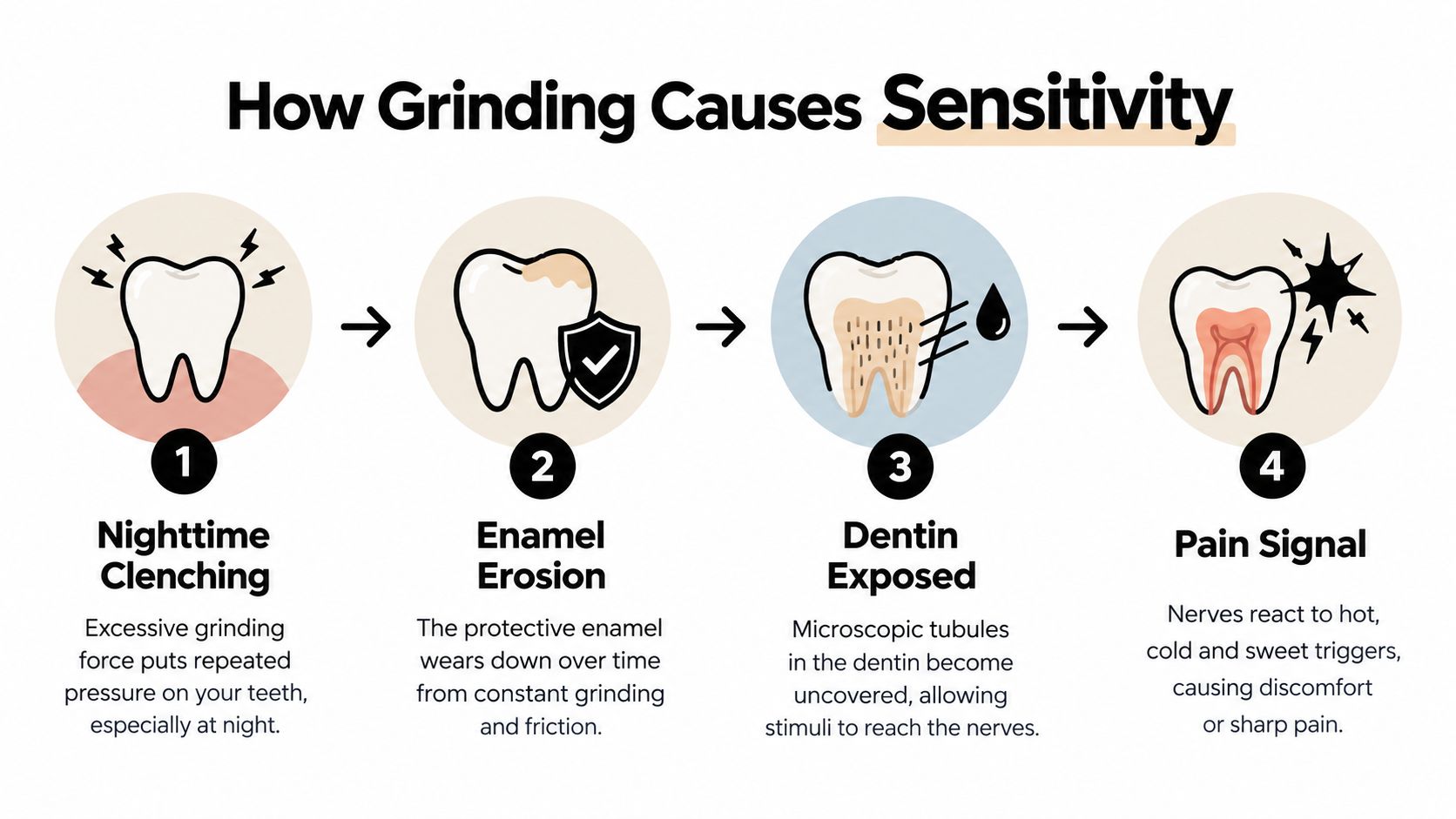
Think of enamel as the hard outer shell that shields the more reactive layers inside a tooth. Grinding applies repeated contact and pressure to that shell. Over time, the biting surface may flatten, the edges may chip, or the area near the gumline may develop wear. Clenching can also stress a tooth without producing obvious surface loss.
Under enamel lies dentin, a less protective layer containing microscopic channels called dentinal tubules. When wear or another form of damage exposes those channels, hot, cold, sweet, or tactile stimulation can affect the fluid within them. The resulting fluid movement can activate sensory structures connected with the tooth nerve, producing the familiar short, sharp pain of dentin hypersensitivity.
Four linked changes can turn force into pain
- Repeated force affects the tooth surface. Grinding brings opposing teeth together again and again, creating mechanical stress at the biting surfaces and sometimes at the neck of the tooth.
- Protective enamel becomes thinner or interrupted. Flattening, cupping, notching, and small fractures can reduce the distance between an external trigger and the dentin beneath.
- Dentin becomes more exposed. Once dentin is uncovered, its tubules provide a route through which temperature, touch, and dissolved substances can influence the deeper tissues.
- The nerve responds to the stimulus. The pain may be brief and intense rather than dull and constant, especially when the trigger is removed quickly.
Wear is important, but it isn't the whole explanation
A systematic review of tooth wear and dentin hypersensitivity found sensitivity in 42.1% of people with tooth wear, compared with 18.7% of people without tooth wear. The review linked wear with exposure of dentinal tubules and with hydrodynamic pain responses to thermal or tactile triggers.
That association helps explain why visible wear matters, but it shouldn't encourage a simplistic conclusion that every sensitive tooth has merely “lost enamel.” Grinding can also place stress on the tooth's internal structure and supporting tissues. A tooth with a crack, a heavily loaded filling, or inflammation around the root may need a different response from a tooth with straightforward surface wear.
Sensitivity can therefore be understood as the final signal in a chain, not as proof of one specific type of damage. The right treatment depends on whether the main trigger is exposed dentin, a structural defect, inflammation, or a combination of these problems.
Recognizing the Symptoms and Diagnostic Cues
A cold drink may cause a brief, sharp jolt, while chewing or brushing may trigger tenderness in the same area. Grinding-related sensitivity often affects several teeth and may feel worse after sleep, especially when the jaw muscles are tired, tight, or sore. The timing offers a useful clue, but it does not identify the damaged structure by itself.
During an examination, your dentist may look for flattened cusps, polished wear facets, shallow depressions, chipped edges, grooves near the gumline, cracks, and changes in fillings. These marks are like evidence of repeated force. They support a grinding contribution, but they do not prove that grinding is the only source of pain.
Signs that point toward a grinding contribution
- Morning discomfort: A sore jaw, tight facial muscles, or a headache after waking may support nighttime clenching.
- Multiple sensitive teeth: Similar reactions across several teeth can fit a shared pattern of mechanical stress or exposure better than a problem confined to one tooth.
- Visible flattening: Teeth with distinct ridges may look smoother or shorter after repeated contact.
- Cervical notching: A groove near the gumline can reflect localized stress or wear, although brushing technique and other factors may also contribute.
- A partner's observation: Someone who hears grinding during sleep can provide information that you may not remember yourself.
How dentists separate similar problems
Decay often causes a localized complaint and may react to sweets. A cracked tooth may hurt when you bite down or release pressure. Gum recession can expose a root surface and produce sensitivity without the broad wear pattern associated with grinding. Pain that lingers, throbs, starts without a clear trigger, or wakes you from sleep needs prompt professional assessment because the pulp may be involved.
Because surface wear and deeper irritation can feel similar, your dentist may test individual teeth with cold, gentle tapping, or pressure. These tests help compare one tooth with its neighbors and clarify whether the main issue is exposed dentin, a crack, inflammation, or another structural problem. The systematic review of tooth wear and sensitivity supports considering the visible tooth surface alongside the pain response, rather than treating temperature sensitivity in isolation.
A 2025 study published in BMC Oral Health found that people with bruxism had significantly higher cervical and percussion sensitivity than controls, along with a high rate of positive cold-test responses. Measures such as gingival recession, mobility, and clinical attachment loss were not significantly different. The clinical findings on bruxism and sensitivity show why pain near the tooth neck or pain on tapping may change the diagnostic path.
Effective Treatments and Prevention Options
Treatment works best when it addresses both the force and the damaged tooth. A guard can separate or cushion the teeth, but it may not repair exposed dentin, seal a crack, or calm an inflamed nerve. Conversely, a desensitizing product may reduce symptoms while the grinding continues to create new stress.
Choosing an appliance
A dentist-made night guard is shaped for your bite and can provide more controlled contact than a generic appliance. A soft guard may feel comfortable and can cushion contact, while a harder appliance may offer a more stable biting surface for some patients. Neither option is automatically appropriate for every person. Fit, bite, symptoms, existing restorations, and the type of bruxism all matter.
An appliance primarily protects against the effects of clenching and grinding. It doesn't necessarily remove the habit, and it shouldn't be assumed to cure sensitivity by itself. A systematic review of oral splints found insufficient evidence to conclude that splints reduce tooth wear because the included studies didn't measure tooth wear adequately. Mouth guards can still help limit mechanical stress, but symptom relief varies by the condition of the individual teeth.
For a broader explanation of appliance choices and nighttime habits, see this guide to how to stop teeth grinding at night.
Matching treatment to the tooth
A dentist may recommend a desensitizing toothpaste, topical fluoride, or another product when exposed dentin is the main concern. These measures aim to reduce the tooth's response to ordinary triggers, but they won't stabilize a cracked tooth or rebuild significant lost structure.
Bonding can cover a localized worn or exposed area. More extensive damage may require a restoration that protects the remaining tooth and restores its shape. Crowns or other restorative procedures should be considered only after the dentist identifies the extent and cause of the damage. Restoring a tooth without managing the force that damaged it can leave the new work under continuing stress.
A practical plan may combine:
- Mechanical protection: An appropriately fitted appliance for sleep-related grinding.
- Symptom control: A desensitizing or fluoride product selected for the exposed area.
- Structural care: Bonding or another restoration when wear, fracture, or loss of tooth structure requires repair.
- Trigger management: Attention to daytime clenching, stress, sleep quality, and any medical factors your clinician identifies.
The video below can provide another visual explanation of treatment and prevention considerations.
Don't wait for severe pain before arranging an examination. A dentist can determine whether the appliance is protecting the teeth, whether the bite needs adjustment, and whether a painful tooth requires separate treatment.
Managing Daily Sensitivity with Home Care
Home care can make ordinary activities more comfortable, but it should support diagnosis rather than replace it. The aim is to reduce stimulation of exposed or reactive areas while you address the grinding pattern and check for structural damage.
A simple routine is easier to follow when each step has a reason behind it.
Use a gentle cleaning routine
Choose a soft-bristled toothbrush and clean with light pressure. Scrubbing harder at a sensitive gumline can irritate the area and may add to surface wear. Use a toothpaste formulated for sensitivity consistently rather than switching products after only one uncomfortable brushing session, unless your dentist tells you to stop.
After brushing, avoid rinsing away every trace immediately if the product instructions recommend leaving active ingredients in contact with the teeth. Don't place aspirin directly against a tooth or gum, and don't use highly acidic home remedies to “clean” a sensitive area.
Consider desensitizing and remineralizing products
Products containing ingredients such as potassium nitrate or remineralizing formulations such as casein phosphopeptide-based pastes are commonly used in sensitivity routines. The appropriate choice depends on your dental history, allergies, restorations, and the location of the exposed surface. Your dentist or hygienist can advise whether a toothpaste, gel, paste, or fluoride treatment fits your needs.
For an option designed specifically for targeted application, review tooth desensitizing gel and follow the product directions rather than applying more frequently than recommended. A topical product can calm a reactive surface, but it won't correct a fracture or prevent force from reaching a damaged tooth.
Reduce avoidable triggers
- Change the temperature: Let very hot drinks cool slightly and avoid moving directly from an icy drink to a hot one.
- Limit contact time: Sip acidic or sweet drinks with meals instead of holding them in the mouth.
- Delay brushing after acidic exposure: Rinse with water first and follow your dental professional's advice about timing.
- Notice daytime clenching: Keep your teeth slightly apart when you're not speaking or eating, with your jaw relaxed.
- Protect the routine: If you use a night guard, clean and store it as directed, and report changes in fit or new jaw pain.
Population evidence supports taking the symptom seriously. In a study of 12,062 adults, clinically examined thermal hypersensitivity was 14.57%, while self-reported thermal sensitivity was 84.2%. The same study found that bruxism increased the odds of thermal hypersensitivity 4.677-fold, with a 95% confidence interval of 1.45 to 15.08 and p=0.010. These findings are reported in the adult study of bruxism and dentin hypersensitivity.
The difference between clinical testing and self-reported symptoms also explains why an examination matters. Your perception is valid, but the source may be more complex than the most obvious trigger.
Taking Control of Your Dental Health
Tooth sensitivity from grinding is manageable, but relief usually comes from combining several targeted decisions. First, identify whether bruxism is present and whether the tooth has surface wear, a crack, a restoration problem, or irritation around the nerve. Next, protect the teeth from continued force while using daily products that suit the exposed or reactive areas.
A guard may reduce mechanical contact without eliminating the grinding habit. A desensitizing product may make coffee or brushing more comfortable without repairing structural damage. Professional treatment becomes especially important when pain lingers, one tooth reacts differently from the others, chewing hurts, a tooth is cracked, or symptoms continue despite careful home care.
Early assessment also helps prevent a common mistake, which is treating every sharp sensation as ordinary enamel wear. Deeper structural or periodontal signs can change the recommended treatment, so tell your dentist about morning jaw soreness, headaches, daytime clenching, sleep grinding, damaged fillings, and the exact triggers that cause pain.
For a remineralizing care option, you can learn about MI Paste and discuss whether it belongs in your routine with a dental professional. A calmer morning starts with finding the actual source of the pain, then protecting the tooth while that source is addressed.
DentalHealth.com offers professional-grade at-home dental care products, including sensitivity-focused options such as UltraEz Desensitizing Gel and MI Paste Plus. Visit DentalHealth.com to compare products that may support your daily sensitivity routine alongside advice from your dentist.