
A Complete Guide to Tooth Desensitizing Gel
That sudden, sharp zing from a cold drink is a feeling millions of us know all too well. When that happens, a tooth desensitizing gel is your best friend. Think of it as a powerful spot treatment for your smile, designed to deliver fast, targeted relief right where you need it most. It goes way beyond what your daily toothpaste can do to calm nerve pain and protect those sensitive spots.
Your Guide to Lasting Tooth Sensitivity Relief
If you’ve ever had to brace yourself before a meal or felt that familiar jolt after a teeth whitening session, you know just how much tooth sensitivity can throw you off your game. It’s not just a small inconvenience—it can stop you from enjoying simple things, like your morning coffee or a scoop of ice cream. This guide is here to show you how a desensitizing gel can be a powerful and easy way to get your comfort back.
We're going to break down the science behind that sting and explain why these gels are so effective. The goal is to get you past the pain and back to enjoying your favorite foods and a bright smile without a second thought.
What Makes Tooth Desensitizing Gel Different?
Unlike a sensitivity toothpaste that works gradually over time, a desensitizing gel gives you a concentrated dose of active ingredients right at the source of the problem. It’s made for those moments when you need relief, and you need it now.
The real magic of a gel is its targeted application. It’s designed to stay put, giving active ingredients like potassium nitrate time to soothe the tooth’s nerve or letting minerals physically block the tiny tubes that send pain signals to your brain.
This direct approach is a lifesaver in a few common situations:
- Post-Whitening Soothing: Teeth whitening is notorious for causing temporary but intense sensitivity. A gel offers immediate calming action, making the whole process a lot more comfortable.
- Managing Chronic Discomfort: For anyone dealing with ongoing sensitivity from issues like gum recession or enamel wear, a gel is perfect for handling flare-ups with a stronger defense than toothpaste alone.
- Orthodontic Adjustments: The pressure from getting braces or aligners adjusted can make teeth sore for a bit. A desensitizing gel can help take the edge off.
Moving Beyond Temporary Fixes
In this guide, we won’t just tell you how to use a tooth desensitizing gel; we’ll get into the why. We'll look at the common active ingredients, see how gels stack up against other treatments, and give you a step-by-step on how to apply them like a pro for the best results. Our aim is to give you the confidence to pick the right product for your needs and finally take control of your sensitivity, so pain is no longer calling the shots.
Understanding How Desensitizing Gels Work
To really get why a desensitizing gel can be such a game-changer, you first need to know what’s causing that sharp, sudden pain. Imagine your teeth have a tough, protective outer layer called enamel. Underneath it is a softer, more porous layer called dentin.
The dentin is full of thousands of microscopic channels, called dentin tubules, that are like tiny straws leading straight to the tooth's nerve. Normally, your enamel and gums cover these tubules up. But if your enamel wears thin or your gums recede, those little channels are left exposed.
Now, things like an ice-cold drink, hot soup, or sweet candy have a direct line to your nerve. That immediate stimulation is what triggers that familiar, painful zing known as dentin hypersensitivity. A good desensitizing gel attacks this problem from two different angles, offering both quick relief and lasting protection.
This simple map shows how sensitivity happens—from the cause to the painful symptoms—and how we can find relief.
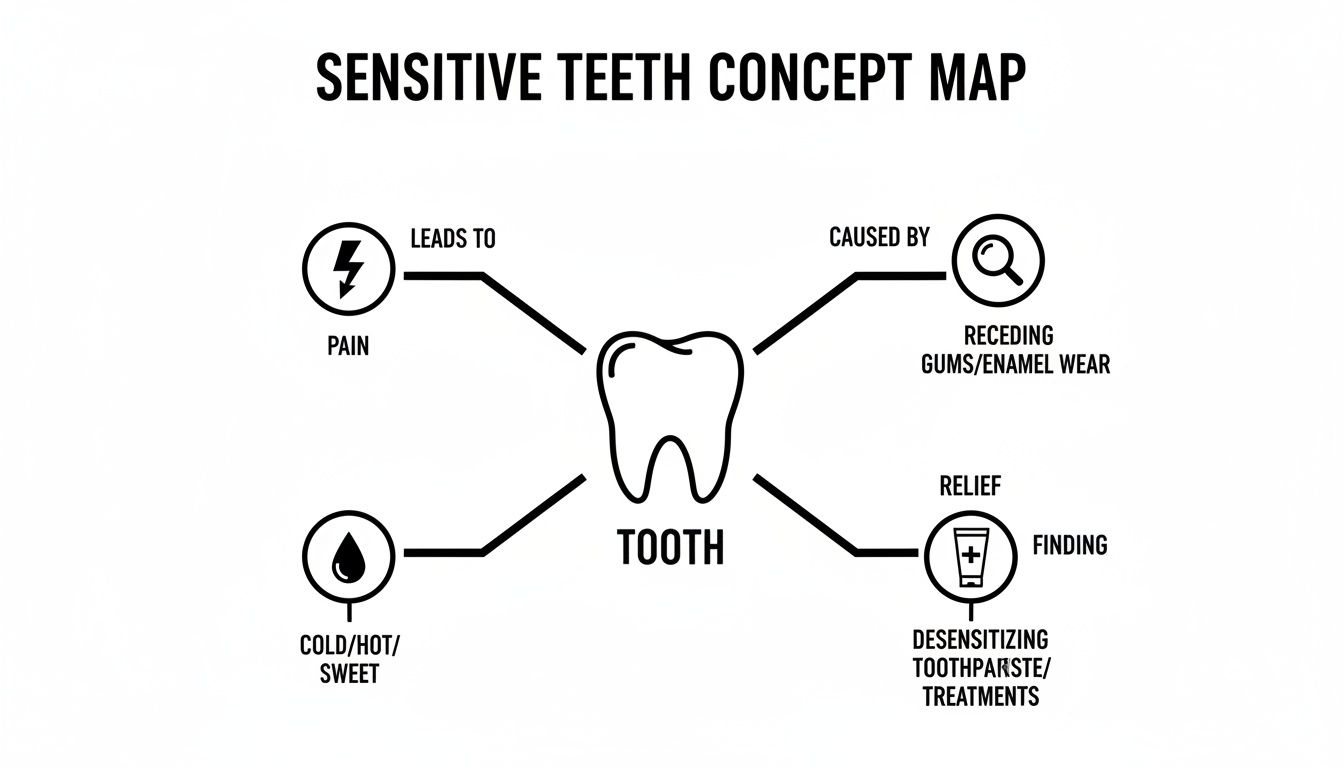
As you can see, the best approach is to tackle both the pain itself and the root cause—those exposed dentin tubules.
The Two Main Pathways to Relief
Most desensitizing gels use one of two main strategies, and the best formulas cleverly combine both for the most powerful effect. They either calm the nerve itself or they physically block the tubules.
- Nerve Calming Agents: Think of these ingredients as turning down the volume on the pain signal. They get inside the tooth and interrupt the nerve's ability to fire off those zinging messages to your brain.
- Tubule Blocking Agents: These work by creating a physical barrier over the exposed dentin. It’s like putting a cap on all those tiny straws, stopping triggers from ever reaching the nerve.
The most effective approach often involves both strategies. By calming the nerve for fast relief and blocking tubules for lasting protection, a tooth desensitizing gel doesn't just mask the pain—it actively works to prevent it at its source.
This targeted approach is a big reason why gels have become so popular in oral care. The market for tooth desensitizers, which is dominated by gels, was valued at USD 2.5 billion in 2025 and is expected to hit $4 billion by 2033. People love the precise, no-drip application of a gel, which is a huge plus if you have braces or a retainer that can increase sensitivity.
Unpacking the Key Active Ingredients
What's inside your desensitizing gel is what really matters. Knowing the active ingredients helps you pick the right product for your specific kind of sensitivity.
Here’s a look at the most common power players you’ll find in a tooth desensitizing gel and how they get the job done.
Key Active Ingredients in Desensitizing Gels
| Ingredient | How It Works | Best For |
|---|---|---|
| Potassium Nitrate | This is a nerve-calming agent. It seeps through the enamel and dentin to soothe the nerve, essentially stopping it from sending pain signals to the brain. | Getting fast relief from sharp, sudden sensitivity, especially the kind you might feel after a teeth whitening session. |
| Fluoride (Stannous or Sodium) | Fluoride is a tubule blocker and an enamel superhero. It creates a barrier on the tooth and helps rebuild weakened enamel, making it tougher against acid attacks. | Daily, long-term management of sensitivity and strengthening your teeth to prevent future problems. |
| Strontium Chloride | This ingredient works by forming a durable plug over exposed dentin, physically blocking triggers from getting to the nerve. | People whose sensitivity comes from significant gum recession or enamel wear. |
| Arginine and Calcium Carbonate | This pair works together to plug and seal the open dentin tubules, using a method that mimics your body's own natural protective processes. | A natural yet powerful way to block the tubules and achieve lasting relief from sensitivity. |
Each of these ingredients brings something different to the table, and many top-tier products combine them for a comprehensive solution. For instance, a gel might use potassium nitrate for that immediate "ahhh" of relief, while fluoride works behind the scenes to build up your tooth's long-term defenses.
If you're not sure what's causing your discomfort, it helps to read up on the common causes of tooth sensitivity to cold. Armed with that knowledge, you can choose the right tooth desensitizing gel and finally get back to enjoying your favorite foods and drinks without fear.
How to Choose the Right Desensitizing Gel
Walking down the dental care aisle can feel like a pop quiz you didn't study for. With a dizzying number of options for **tooth desensitizing gel**, how do you pick the right partner for your smile? The secret is to match the product's active ingredients to your specific type of sensitivity.Let's get one thing straight: not all tooth sensitivity is created equal. The sharp, temporary sting you get after a whitening session is a world away from the dull, persistent ache caused by gum recession that's been developing for years. Choosing the right gel starts with understanding what’s causing your discomfort.
Identify Your Sensitivity Profile
Before you can grab the right tool for the job, you have to know what you're fixing. Think about when and how your sensitivity acts up. Did it just show up after a dental appointment, or has it been a slow burn over time?
- Acute Sensitivity (Short-Term): This is usually a sudden, intense sensitivity. It's often tied to a specific trigger, like a dental procedure or using an at-home teeth whitening kit.
- Chronic Sensitivity (Long-Term): This is more of a constant companion. It's typically caused by ongoing issues like enamel erosion from acidic foods or exposed tooth roots where your gums have pulled back.
Figuring out which camp you're in is the most important first step. It's the key to finding a tooth desensitizing gel that will actually work for you.
Matching Ingredients to Your Needs
Once you know your sensitivity profile, you can flip over the box and look at the ingredient list with confidence. Different active ingredients are designed to tackle different problems, which makes your choice a lot clearer.
Think of it this way: potassium nitrate is a sprinter, perfect for fast, short-term relief. Fluoride, on the other hand, is a marathon runner, building up protection over the long haul.
For Post-Whitening Sensitivity (Acute) If your teeth are zinging after a whitening treatment, you need something that acts fast to calm things down.
For this, your best bet is a gel with potassium nitrate. This ingredient gets to work quickly, soothing the tooth's nerve and providing immediate comfort right when you need it most. It’s the go-to solution for that temporary but sharp sensitivity that whitening can cause.
With at-home whitening being so popular, this has become a really common issue. In fact, whitening procedures can lead to temporary sensitivity in up to 60-70% of users, making these fast-acting gels a bathroom cabinet essential. When using top whitening brands like Zoom or GLO from DentalHealth.com, having a desensitizing gel on hand is a must for a comfortable experience. You can even explore a full report on desensitizing gels to see market trends.
For Everyday Sensitivity (Chronic) If your sensitivity is a daily battle against worn enamel or receding gums, you need a solution that focuses on long-term repair and protection.
In this case, you'll want to look for gels with ingredients that block tubules and remineralize your enamel. These work by building a lasting shield over the sensitive parts of your teeth.
- Fluoride (Stannous or Sodium): This is the undisputed champion for strengthening enamel and creating a protective layer over exposed dentin.
- Arginine and Calcium Carbonate: This powerful duo works together to physically plug the microscopic pathways that lead to your tooth's nerve, blocking pain triggers from getting through.
- CPP-ACP (Casein Phosphopeptide-Amorphous Calcium Phosphate): Found in fantastic products like MI Paste, this ingredient is a powerhouse. It delivers a payload of calcium and phosphate directly to your teeth to help rebuild and fortify their structure.
These ingredients don't just put a band-aid on the pain; they actively work to fix the underlying problem, offering real, sustainable relief. If this sounds like your situation, you should check out our complete guide on top products specifically designed for sensitive teeth. Choosing the right desensitizing gel with these ingredients can help you finally get your chronic sensitivity under control.
A Step-by-Step Guide to Using Desensitizing Gel
To really get the most out of your tooth desensitizing gel, it all comes down to how you apply it. Think of it like priming a wall before you paint—a little prep work and the right technique make all the difference for a flawless, lasting result. This simple guide will walk you through the process, step by step, so you can achieve fast, powerful relief without any guesswork.
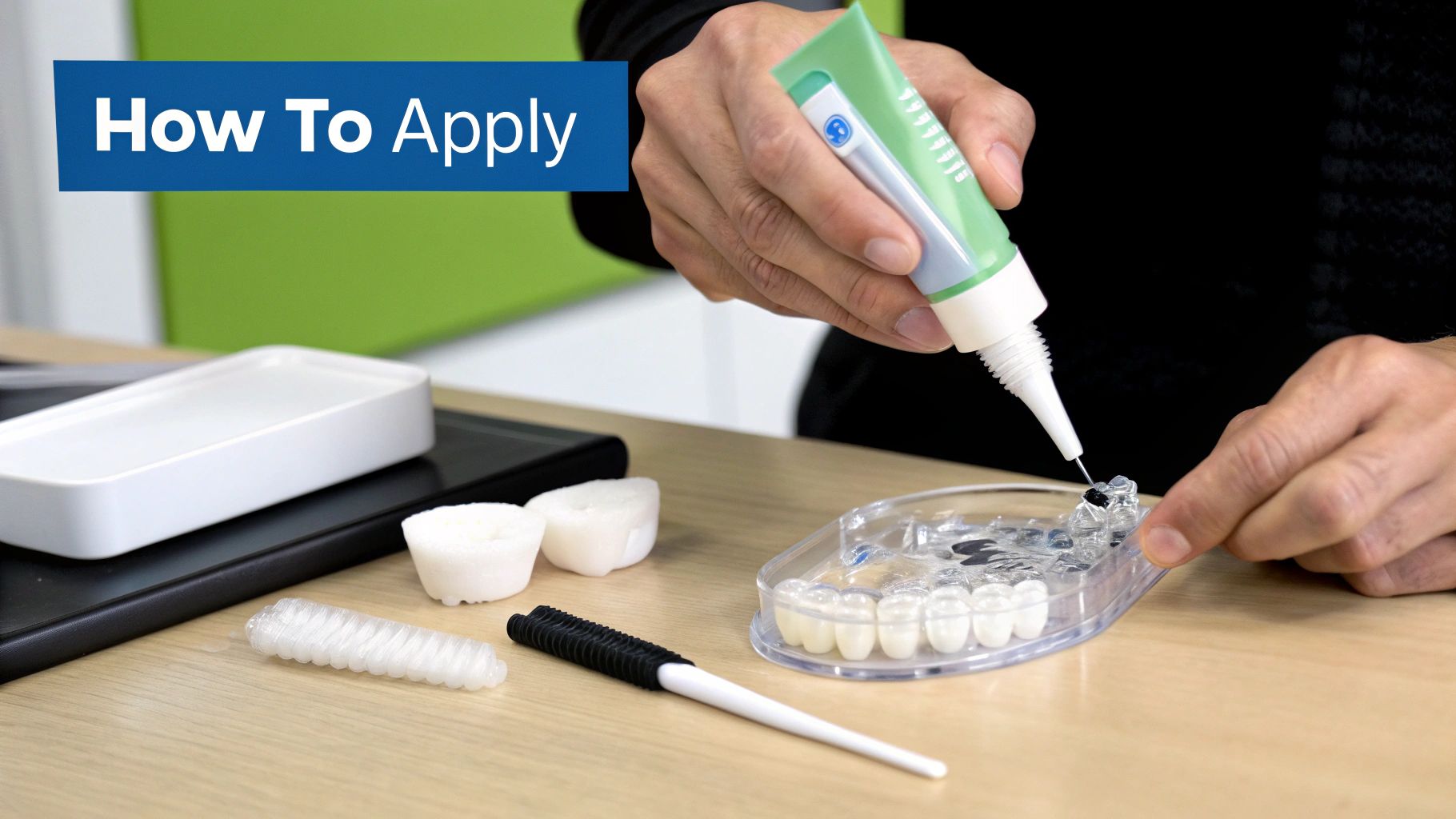
Following these instructions helps create the perfect environment for the active ingredients to do their job: soothing nerves and blocking pain right at the source.
Step 1: Prepare Your Teeth
Before you even think about applying the gel, you need to start with a clean slate. Your teeth must be free of plaque and food particles so the gel can make direct contact with your tooth enamel and any exposed dentin.
- Brush Gently: Grab a soft-bristled toothbrush and a non-abrasive toothpaste. Brush thoroughly for two full minutes, making sure to focus on the areas where you feel the most sensitivity.
- Rinse and Dry: Give your mouth a good rinse with water. For the best outcome, gently pat your teeth dry with a clean, soft cloth or tissue. A drier surface helps the gel stick better and keeps your saliva from immediately diluting it.
This quick prep work only takes a few minutes, but it makes a huge difference in how well the gel performs.
Step 2: Choose Your Application Method
There isn’t just one "right" way to put on desensitizing gel. The best method really depends on the specific product you’re using and where your sensitivity is. Here are the three most common and effective techniques.
- For Widespread Sensitivity (Using a Tray): If you're dealing with generalized sensitivity, maybe after a professional whitening treatment, a dental tray is your best bet. Just place a small bead of gel into each tooth impression in the tray and gently pop it over your teeth for even, consistent coverage.
- For Targeted Spots (Using a Swab): If your sensitivity is zeroed in on just one or two teeth, a cotton swab or a micro-brush gives you the precision you need. Squeeze a tiny dot of gel onto the tip and dab it directly onto the sensitive spot, like along the gumline where roots might be showing.
- For Quick Application (Using a Fingertip): In a pinch, a clean fingertip works just fine. Squeeze a small amount onto your finger and gently rub it over the affected teeth. It's a great method for fast, on-the-go relief.
No matter which technique you go with, the goal is always a thin, even layer. Piling on extra gel won't make it work any better and just leads to waste.
Step 3: Let the Gel Work and Follow Post-Care
Once the gel is on, the final step is simply giving it time to work its magic. This is the most crucial part of the process, as it ensures the active ingredients can either penetrate the tooth structure or form that all-important protective barrier.
Pro Tip: Try to avoid eating, drinking, or rinsing your mouth for at least 30-60 minutes after you apply the gel. This "soaking" period allows active ingredients like potassium nitrate or fluoride to be fully absorbed without getting washed away.
Always check your product's packaging for the recommended duration. Some gels are meant to be left on for a short time, while others are designed to be worn in a tray overnight. When the time is up, you can usually spit out any excess gel, but hold off on rinsing right away unless the instructions specifically tell you to.
These gels are a go-to for managing dentin hypersensitivity, a condition that impacts nearly 30% of adults globally. Their popularity comes from this targeted approach, with key ingredients like 5-10% potassium nitrate effectively blocking nerve signals to offer relief in minutes. In North America, where dental health awareness is high, these products hold a 38% market share. If you're interested in the numbers, you can explore detailed market insights on tooth desensitizers.
Comparing Gels to Other Sensitivity Treatments
When you're dealing with tooth sensitivity, a tooth desensitizing gel is a powerful ally, but it’s certainly not your only option. Figuring out where it fits in with all the other sensitivity treatments helps you build a smarter, more effective oral care routine. The best choice really comes down to your specific needs, balancing things like how fast you need relief, how strong the product is, and what fits into your daily life.
Think of it like this: sensitivity toothpaste is your daily shield, while a desensitizing gel is your specialized tool for flare-ups. Each one has a distinct and valuable role to play. Let's break down the most common options to see where gels truly shine.
Gels Versus Sensitivity Toothpastes
The first alternative most people reach for is a desensitizing toothpaste. These are made for everyday use and work by slowly building up a protective layer or calming down nerve activity over a longer period.
- Toothpaste Advantage: It’s incredibly convenient. You just swap out your regular toothpaste, and it becomes a seamless part of your brushing routine. It provides a consistent, low-level dose of ingredients like potassium nitrate or stannous fluoride for long-term maintenance.
- Gel Advantage: A tooth desensitizing gel delivers a much more concentrated and potent dose of those same ingredients. Because you apply the gel directly and let it sit on your teeth, the active ingredients have more time to work their magic, giving you faster and more powerful relief for acute sensitivity, like the kind you feel after a teeth whitening session.
Think of toothpaste as your daily vitamin for sensitivity prevention, while a gel is the targeted treatment you use when you need immediate and robust relief. It tackles the problem with greater intensity, right when you need it most.
Gels Versus Desensitizing Mouthwashes
Desensitizing mouthwashes are another common choice for managing widespread sensitivity. They offer a quick way to coat your teeth with active ingredients right after you brush.
The catch, however, is that their contact time with your teeth is incredibly brief—usually just 30 to 60 seconds before you spit it out. This really limits how effective they can be compared to a gel that stays on your teeth for 30 minutes or more, allowing for much deeper penetration and more significant barrier formation.
Gels Versus Professional In-Office Treatments
When sensitivity becomes severe or just won't go away, your dentist might suggest professional treatments. These are the heavy hitters—the most powerful options available, but also the most intensive and costly.
These in-office treatments could include:
- Fluoride Varnish: A highly concentrated fluoride solution that your dentist paints directly onto your teeth.
- Bonding Agents: Applying a special resin to seal off the sensitive dentin surfaces.
- Surgical Grafts: A procedure used to cover exposed roots in cases of severe gum recession.
Professional treatments are designed to fix underlying structural problems that at-home products simply can't. A tooth desensitizing gel acts as an excellent first line of defense and a perfect bridge between daily care and professional intervention. It’s often the ideal choice for managing moderate sensitivity effectively and affordably right from home.
For those interested in powerful, remineralizing at-home options, learning about products like MI Paste can be very insightful. You can read more about what MI paste is used for to see how it complements a sensitivity management plan. Ultimately, gels provide a perfect balance of potency, convenience, and affordability for most common sensitivity issues.
When to See a Dentist About Tooth Sensitivity
A good tooth desensitizing gel is a fantastic tool for managing everyday, nagging sensitivity. It’s perfect for providing quick, targeted relief for things like post-whitening discomfort or the mild irritation you get from slight gum recession. But it's important to remember that the gel is treating the symptom—not always the underlying cause.
Think of tooth sensitivity as your body’s smoke alarm. A desensitizing gel can quiet the beep, which is great if the "smoke" is just from something minor. But if that alarm is signaling a bigger fire, you need a professional to find the source.
Red Flags That Mean It's Time for a Dental Visit
While at-home products are incredibly effective for common issues, some symptoms are clear signs that you should book an appointment. Simply masking these problems with a gel could let something more serious get worse.
Give your dentist a call if you experience any of these:
- Pain That Just Won't Quit: Your sensitivity is severe, constant, or hasn’t improved after 2-3 weeks of consistently using a desensitizing gel.
- One Specific Tooth Hurts: Pain that is sharp and isolated to a single tooth can point to a cavity, a crack, or a problem with an old filling.
- Pain When You Bite Down: If you get a sharp pain when you chew or put pressure on a tooth, it could be a sign of a cracked tooth or a dental abscess, which needs immediate attention.
When sensitivity comes with other symptoms, it’s a definite sign to get professional care. Your dentist has the tools to see what's really going on beneath the surface and pinpoint the true source of your discomfort.
Other Warning Signs to Watch For
Beyond the type of pain you're feeling, other red flags can pop up alongside sensitivity that absolutely need a professional eye. Using a tooth desensitizing gel won't solve these underlying issues.
Be on the lookout for:
- Swollen, red, or bleeding gums near the sensitive tooth.
- A visible hole, pit, or dark spot on the tooth's surface.
- A filling or crown that feels loose.
- A strange or bad taste in your mouth that won't go away.
These symptoms often point to conditions like advanced gum disease, significant tooth decay, or an infection. All of these require treatment from your dentist. Using at-home gels safely means knowing their limits and working with your dentist to keep your mouth truly healthy.
A Few Common Questions About Desensitizing Gels
Even after you understand how these gels work, it's perfectly normal to have a few questions floating around. Getting those cleared up is the key to using these products confidently and getting the best possible relief.
Let’s walk through some of the most common questions we hear to help you get started on the right foot.
How Quickly Will I Feel Relief?
This is usually the first thing people want to know, and the answer really comes down to what's inside the gel and just how sensitive your teeth are.
Gels built around potassium nitrate are known for getting to work fast. This ingredient’s job is to calm down the tooth's nerve, and you can often feel a noticeable difference within just a few minutes of your first use. It’s a fantastic choice for that sharp, sudden sensitivity you might get after a whitening treatment.
On the other hand, for gels that use tubule-blocking ingredients like fluoride or strontium chloride, you might notice some initial comfort, but their real strength is in building a lasting barrier over time. The full effect really kicks in after several days of consistent application as that protective layer gets stronger.
Can I Use This Gel While Whitening My Teeth?
Yes, you absolutely can. In fact, it’s one of the best and most popular ways to use a tooth desensitizing gel. It’s no secret that whitening can cause temporary but intense sensitivity, and a good gel is the perfect partner to keep that discomfort in check.
You have a few options for working it into your whitening routine:
- Before You Whiten: Apply the gel for about 10-30 minutes before your whitening session. This helps calm the nerves ahead of time.
- Right After Whitening: As soon as you finish a whitening treatment, use the gel to soothe any zings or aches that pop up.
- On Off Days: If you're whitening every day, give your teeth a break and just use the desensitizing gel on its own on alternate days.
Just be sure to double-check the instructions for your specific products. Brands like Opalescence and Pola often have their own desensitizing formulas that are made to pair perfectly with their whitening kits.
Think of it this way: using a desensitizing gel with your whitening treatment is a proactive step. It can turn an uncomfortable experience into a totally manageable one, so you can get that brighter smile without the pain.
Is It Safe to Use Every Day?
For the vast majority of over-the-counter desensitizing gels, daily use is not only safe but often recommended, especially if you're dealing with chronic, long-term sensitivity. The most important rule here is to simply follow the manufacturer's directions on the package.
Some gels, particularly those with higher concentrations or the ones you get from your dentist, might have different instructions. Here's a good rule of thumb: if you find yourself needing the gel every single day for more than four weeks without much improvement, that's your cue to schedule a dental visit. Your dentist can make sure there isn't an underlying issue causing the persistent sensitivity.
Will the Gel Affect My Crowns or Fillings?
You can relax on this one. Tooth desensitizing gel is completely safe to use with existing dental work like crowns, fillings, veneers, or bonding.
The ingredients are designed to target your natural tooth structure—the enamel and the dentin underneath—and they won't cause any harm to restorative materials. The gel is meant to treat sensitivity coming from your actual teeth, not the dental work itself. It can be especially helpful if you feel sensitivity right at the edge where a crown or filling meets the tooth. Of course, if you have a lot of complex dental work, a quick chat with your dentist before starting any new product is always a smart move.
Ready to find the perfect solution for your tooth sensitivity? At DentalHealth.com, we offer a curated selection of professional-grade desensitizing gels from top brands recommended by dentists. Shop our sensitivity relief products today and get back to enjoying life without the sting.