
Toothpaste for Sensitive Teeth Without Fluoride: 2026 Guide
You're standing in the toothpaste aisle, or scrolling product pages late at night, because cold water just hit one tooth and sent that quick electric sting through your jaw. You want relief, but you don't want fluoride. That puts you in a category most articles handle poorly. They either tell you fluoride-free options are all “natural” and therefore interchangeable, or they throw ingredient names at you without explaining which one fits your actual problem.
That's the wrong way to shop for sensitivity toothpaste.
The better question is simple: what's causing the pain in your mouth right now? Receding gums call for a different strategy than enamel erosion. Post-whitening zing is different again. If you separate the source of sensitivity from the fluoride question, toothpaste for sensitive teeth without fluoride becomes much easier to choose.
Understanding the Sensitive Tooth Dilemma
A common pattern goes like this. Someone switches to a whitening paste, starts brushing a little harder because the teeth “don't feel clean enough,” and within days cold drinks become a problem. Another person notices the sting along the gumline after years of gum recession. Someone else wants to avoid fluoride for personal reasons and assumes that means giving up real sensitivity relief.
It doesn't.
Dentin hypersensitivity is common enough to be a routine clinical issue, not a fringe complaint. The ADA notes clinical estimates around 11.5% of patients, while broader reviews report ranges from 4% to 74% depending on how sensitivity is measured, and a later review estimated 33% to 61% of adults in some settings (ADA overview of toothpastes and dentin hypersensitivity). That wide range matters for one reason. It tells you sensitive-teeth toothpaste exists because a large number of people repeatedly need it.
Why fluoride-free can still be legitimate
The mistake is assuming sensitivity relief and cavity prevention are the same job. They overlap in some products, but they're not identical goals.
A toothpaste can help sensitive teeth by calming the nerve response or by physically sealing exposed dentin surfaces. That pain-relief effect does not depend on fluoride alone. In fact, the modern sensitivity category has long included actives that sit outside a standard fluoride-centered approach.
Practical rule: If your main complaint is pain from cold, air, or touch, judge the toothpaste first by its desensitizing ingredient, not by whether the front label says fluoride-free or fluoride-containing.
What readers usually need most
Don't need another giant ingredient list. They need shelf-level guidance.
- If cold sets you off suddenly: Think about exposed dentin after whitening, abrasion, or gum recession.
- If sweets or acidic drinks trigger pain: Think more about enamel wear and mineral loss.
- If the gumline is the problem: Root exposure changes which formula tends to feel better in daily use.
That's why the best toothpaste for sensitive teeth without fluoride isn't one universal pick. It's the formula that matches the mechanism behind your pain.
How Sensitivity Actually Works
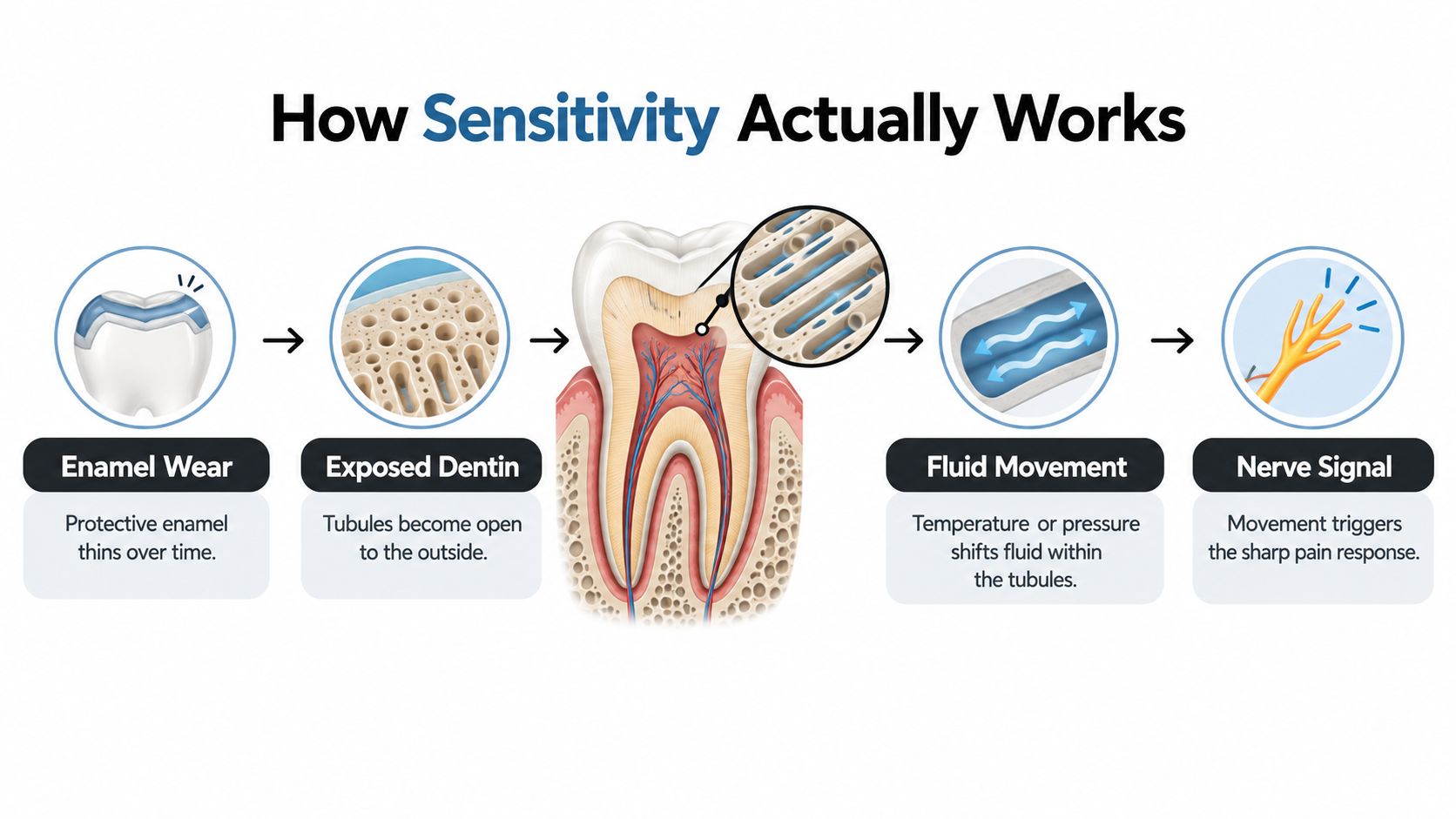
Sensitivity feels random, but the pathway is mechanical. The pain usually starts when the protective surface over the tooth is thinned, worn, or no longer covering the root area. Under that surface sits dentin, and dentin contains microscopic tubules that connect outward stimuli to the inner nerve response.
The short biological chain
When those tubules are exposed, temperature change, air, touch, or osmotic shifts can move fluid within them. That movement stimulates the nerve and produces the familiar sharp, brief pain.
Here's the useful part for shopping:
- Open tubules create the access point
- Triggers move fluid in the tubules
- The nerve reacts
- A desensitizing toothpaste helps either by sealing the tubules or reducing the nerve response
If you've ever wondered why one toothpaste seems to “coat” the tooth while another takes longer to work, that's the reason. Different active ingredients are solving different parts of the chain.
Why the mechanism matters at the sink
A patient with receding gums may have highly localized root sensitivity near the gumline. A patient after whitening may have more generalized sensitivity to cold. A person with enamel erosion from acidic drinks may need a formula that does more surface rebuilding work than pure nerve calming.
That's why ingredient matching matters more than branding.
For a plain-language overview of common triggers, this explanation of why teeth become sensitive is a useful companion read.
Open dentin is the problem. The trigger is just the messenger.
The two ways fluoride-free formulas usually work
Tubule-occluding formulas
These aim to block or narrow the exposed channels. Hydroxyapatite and tricalcium phosphate fit this logic. They're often more appealing when the history suggests enamel wear, roughened surfaces, or post-whitening irritation.
Nerve-desensitizing formulas
These aim to reduce how strongly the nerve responds to stimulation. Potassium nitrate is the classic example in this category. It doesn't rebuild enamel, but it can be a very practical choice when the pain pattern is quick, sharp, and stimulus-driven.
What this means in practice
If your sensitivity comes from root exposure or overbrushing, a nerve-calming formula may be enough. If your enamel has taken a beating from acids, abrasion, or whitening, a remineralizing or tubule-sealing formula usually makes more sense.
That distinction keeps you from buying a toothpaste that sounds advanced but doesn't address the reason your teeth hurt.
Comparing Top Fluoride-Free Active Ingredients
You're standing in the toothpaste aisle with three boxes making similar promises. One says it calms sensitivity. Another says it repairs enamel. A third says it remineralizes. The useful question is simpler: which active fits the reason your teeth hurt?
That is the decision point for fluoride-free sensitivity toothpaste. Potassium nitrate mainly reduces nerve response. Nano-hydroxyapatite and tricalcium phosphate aim more at exposed dentin surfaces and mineral support. If you match the active to the cause, shelf choices get much easier.
Fluoride-Free Active Ingredients Comparison
| Active Ingredient | Primary Mechanism | Best Fit in Practice |
|---|---|---|
| Potassium nitrate | Helps reduce nerve excitability | Sharp cold sensitivity, post-whitening tenderness, generalized trigger-based pain without obvious enamel loss |
| Nano-hydroxyapatite | Helps seal tubules and supports enamel-like mineral deposition | Sensitivity linked to enamel wear, post-whitening irritation, roughened surfaces, or acid exposure |
| Tricalcium phosphate | Calcium-phosphate tubule sealing and surface remineralization support | Surface-exposure patterns where you want a fluoride-free mineral-based option, especially if the label is otherwise low-abrasion and plain |
Potassium nitrate
Potassium nitrate is still the most practical starting point for people whose pain is quick, stimulus-driven, and not clearly tied to visible enamel breakdown. In practice, this is the person who winces at cold water, then feels normal again once the stimulus is gone.
Its strength is symptom control. It does not rebuild enamel or claim to reverse wear. That trade-off matters.
Choose it when:
- Cold drinks or cold air trigger short, sharp pain
- Sensitivity started after whitening
- Several teeth are sensitive, but the surfaces do not look obviously worn
Skip it as a first choice when the main story is erosion, cupping, or rough enamel near the gumline. In those cases, symptom relief alone may leave the underlying surface issue untouched.
For a product-label view of how these actives differ, see this guide to sensitive-teeth toothpaste active ingredients.
Nano-hydroxyapatite
Nano-hydroxyapatite is the fluoride-free active I look at more closely when the sensitivity pattern suggests a surface problem, not just an overreactive nerve. That includes whitening aftermath, acid wear, and early enamel roughening. A clinical review reported lower cold-air sensitivity, tactile sensitivity, and subjective pain in randomized testing, with additional evidence showing benefit without worsening erosive wear (clinical review of hydroxyapatite evidence).
The attraction here is the dual role. Relief is one goal. Surface support is the other.
Choose it when:
- Sensitivity followed whitening
- You drink acidic beverages often
- The enamel looks worn, chalky, or less glossy
- You want a fluoride-free option that does more than blunt pain
The trade-off is product variability. Hydroxyapatite sounds impressive on a carton, but formulas differ in concentration, particle design, and abrasivity. A weak formula can underperform even if the active itself is promising.
Tricalcium phosphate
Tricalcium phosphate belongs in the same conversation, but with more modest expectations. It also aims at tubule sealing and mineral support, and a randomized trial found that a fluoride-free tricalcium phosphate toothpaste improved air-stimulus sensitivity compared with a fluoride-free placebo (randomized trial on tricalcium phosphate toothpaste).
I see it as a reasonable shelf option for people who want a calcium-phosphate formula but cannot find a hydroxyapatite product they like or tolerate. It can make sense for mild to moderate sensitivity tied to exposed surfaces.
Choose it when:
- The pain pattern suggests exposed dentin rather than deep structural damage
- You want a fluoride-free mineral-based paste
- You prefer a simpler formula and are willing to judge it by comfort over several weeks
The limitation is the evidence depth and consumer clarity. Labels rarely explain how much benefit comes from the tricalcium phosphate itself versus the rest of the formula, brushing habit changes, or a gentler abrasive system.
A practical way to choose
Use the cause, not the marketing claim.
- Receding gums or exposed root surfaces: potassium nitrate is often the cleaner first try if the pain is sharp and trigger-based.
- Enamel erosion or acid wear: nano-hydroxyapatite usually makes more sense because it addresses the surface side of the problem.
- Sensitivity after whitening: potassium nitrate can help calm the nerve response, while nano-hydroxyapatite is often the better fit if the teeth also feel rough or look dull afterward.
- You want a fluoride-free remineralizing option and cannot find hydroxyapatite: tricalcium phosphate is a reasonable alternative.
The main distinction is simple. Some fluoride-free pastes mainly desensitize. Others try to desensitize while supporting the worn surface. Those are not the same benefit, and treating them as interchangeable is where many buying mistakes start.
Maximizing Relief Through Proper Usage
A good formula can still disappoint if you use it like ordinary cosmetic toothpaste. Sensitivity pastes work better when you treat them like a daily therapeutic product.
Brushing technique matters more than people expect
The first correction is mechanical. If you scrub hard with a medium or firm brush, you keep irritating the same exposed areas you're trying to calm.
Use a soft brush. Keep pressure light. Spend extra time along the sensitive area without sawing back and forth aggressively.
Chairside advice: The patient who says, “I brush really well,” is often brushing too hard.
How to use sensitivity toothpaste more strategically
Try this routine for toothpaste for sensitive teeth without fluoride:
- Brush gently for full coverage. Don't rush, but don't overwork one spot either.
- Smear a small amount on the sensitive tooth or gumline area after brushing. This gives the active longer contact where it's needed most.
- Let it sit briefly before spitting. The goal is contact time, not immediate rinse-out.
- Avoid a strong rinse right away. If you flood the mouth immediately, you wash away what you just placed.
This approach is especially useful with localized gumline sensitivity or one or two specific cold-sensitive teeth.
Match your expectations to the active
Different actives don't feel the same in the first week.
- Potassium nitrate: Often feels more gradual because it's working on the nerve response over repeated use.
- Hydroxyapatite or tricalcium phosphate: May feel better when the tooth benefits from a surface-sealing effect, but consistency still matters.
- Any formula: Works worse if you keep whitening aggressively, drink acidic beverages constantly, or brush with too much force.
Common reasons people think the toothpaste “didn't work”
- They changed too many things at once. Whitening strips, a new electric brush head, and a sensitivity paste make it hard to tell what's helping.
- They used it inconsistently. Skipping days is enough to blur the effect.
- They expected cavity protection and desensitization to be identical. Some formulas are stronger on one side than the other.
- The trigger was structural. A cracked tooth, leaking filling, or deep recession won't be solved by toothpaste alone.
If one tooth is dramatically more sensitive than the rest, or sensitivity lingers instead of staying brief and trigger-based, that's the point to stop self-managing and get it examined.
Choosing Based on Your Specific Cause of Sensitivity
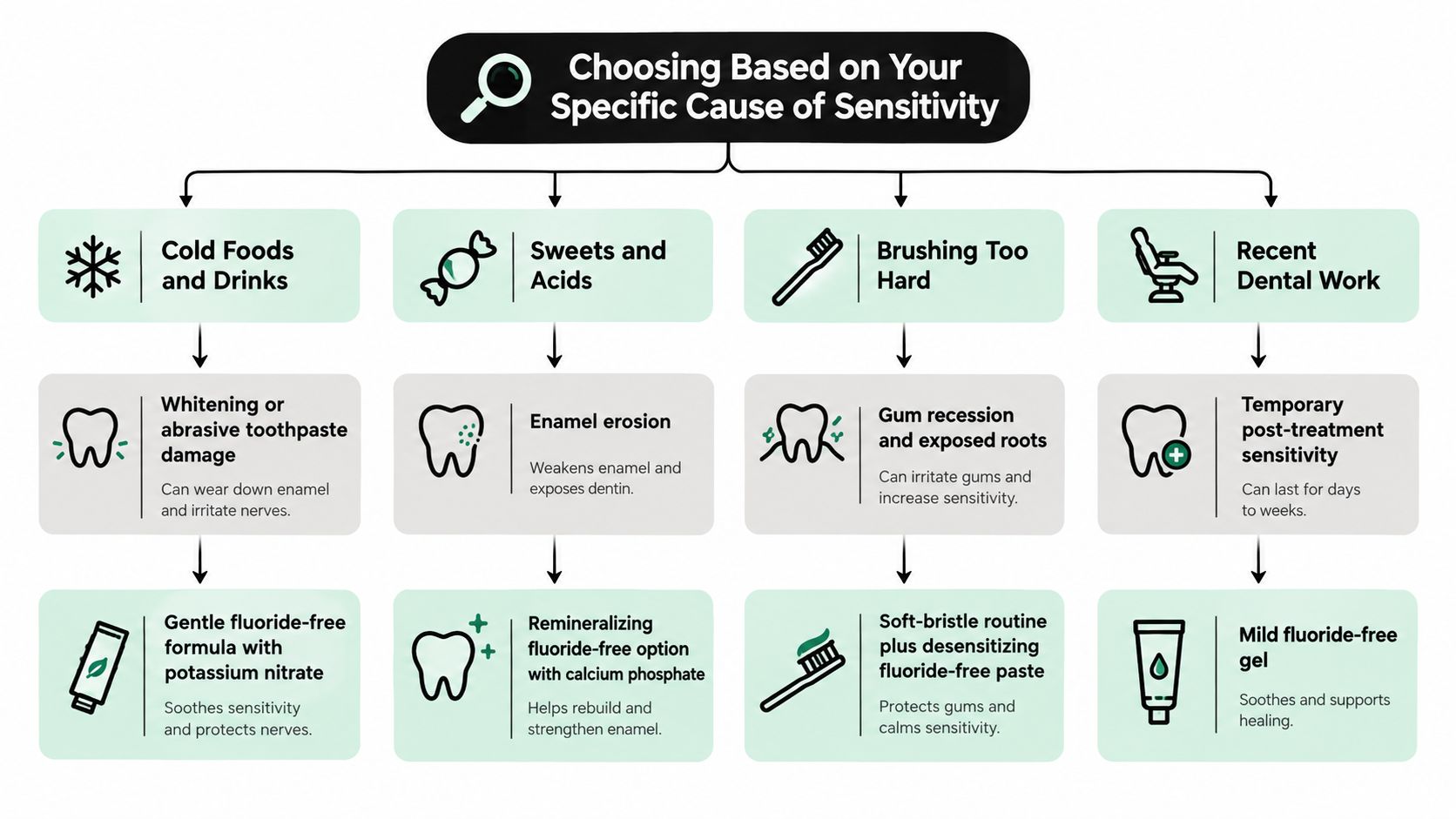
The right fluoride-free toothpaste depends less on the label and more on the pattern behind your pain.
If you have receding gums
Gum recession exposes root surfaces, and roots tend to react quickly to cold air, toothbrushing, and touch. In that situation, a potassium nitrate formula often makes practical sense because the complaint is usually stimulus-driven and localized near the gumline.
Also fix the behavior that keeps the area inflamed. Use a soft brush, lighten pressure, and avoid abrasive whitening pastes.
Best fit:
- Potassium nitrate first
- Hydroxyapatite can still help if the exposed area also feels rough or worn
If enamel erosion is the bigger issue
This pattern often shows up in people who sip acidic drinks, grind, use abrasive products, or have generalized edge and surface sensitivity. Here the tooth doesn't just need the nerve calmed. It needs help at the surface.
A hydroxyapatite or tricalcium phosphate formula is usually the smarter fluoride-free starting point because these actives align better with surface repair and tubule sealing.
Signs this profile fits you:
- Pain from acids or sweets
- Multiple teeth feel touchy
- Teeth look worn, flattened, or more translucent
- Whitening products started to sting badly
If sensitivity started after whitening
Whitening aftermath is its own category. The teeth may not be decayed or structurally damaged, but they can become temporarily reactive.
A potassium nitrate formula can be useful when the feeling is a generalized cold zing. If the teeth also feel dry, rough, or overprocessed, hydroxyapatite is often the better fluoride-free choice because it addresses the surface side as well.
Don't keep pushing whitening through active sensitivity. Pause the whitening first, then stabilize the teeth.
If you have white-spot concerns or patchy enamel
Hydroxyapatite has a particularly interesting place. A review focused on calcium-phosphate oral care noted that hydroxyapatite formulas are the most clinically studied fluoride-free option for sensitivity, caries prevention, and whitening-related concerns, while the literature still lacks clear head-to-head consumer guidance among hydroxyapatite, tricalcium phosphate, and older strontium-based approaches (review of calcium-phosphate oral care evidence).
That doesn't make hydroxyapatite automatically best for everyone. It does make it the most logical fluoride-free starting point when sensitivity overlaps with enamel appearance concerns.
If you're not sure what category you fit
Use the trigger itself:
- Cold only, especially near the gumline: start with potassium nitrate
- Cold plus visible wear or acid history: start with hydroxyapatite
- You want a calcium-phosphate option but not hydroxyapatite specifically: consider tricalcium phosphate
- One tooth hurts much more than the rest: don't guess for long
Balancing Cavity Protection and Sensitivity Relief
This is the trade-off most fluoride-free articles blur. Sensitivity relief and cavity prevention aren't interchangeable claims. Some fluoride-free formulas may help both, but you shouldn't assume all of them do.
What the current evidence supports
Clinical summaries support the idea that fluoride-free hydroxyapatite toothpastes can reduce dentin hypersensitivity. At the same time, a narrative review noted there is no clear overall superiority between hydroxyapatite and fluoride across the available evidence, and the same discussion highlights that even a fluoride-free control without active desensitizers reduced pain in one randomized trial over several weeks (narrative review on hydroxyapatite, fluoride, and dentin hypersensitivity).
That means two things:
- Some fluoride-free products are doing real work.
- Some reported improvement comes from behavior change, gentler brushing, placebo response, or non-fluoride formulation features rather than the simple absence of fluoride.
The honest trade-off
If you choose toothpaste for sensitive teeth without fluoride, ask two separate questions:
Does it reduce pain?
Hydroxyapatite, tricalcium phosphate, and potassium nitrate each have a role here.
Does it provide enough long-term caries support for me?
That depends on your risk profile. If you get frequent cavities, snack often, have dry mouth, wear orthodontic appliances, or have a history of enamel breakdown, the cavity-prevention side deserves extra attention.
A topical remineralizing product may also be useful in some routines. For example, remineralizing toothpaste and paste options without fluoride can help you think through where a paste fits versus a daily toothpaste. DentalHealth.com also carries MI Paste, which is a fluoride-free topical paste used for remineralization support and sensitivity management, though it isn't a toothpaste.
How to protect yourself if you go fluoride-free
- Use a low-abrasion formula. Don't trade fluoride for a harsh polishing paste.
- Control the acidic exposures. Frequent acid contact can undo the benefit of a good sensitivity formula.
- Watch your cavity pattern. If you're high risk for decay, fluoride-free may still be workable, but it needs more deliberate planning.
- Reassess if sensitivity improves but new decay becomes a concern. Those are separate outcomes.
For some people, fluoride-free is an easy fit. For others, it works best as part of a mixed routine or under closer dental guidance. The right answer isn't ideological. It's based on what your teeth have been doing.
DentalHealth.com carries professional-grade at-home oral care products and publishes practical guidance for people dealing with sensitivity, whitening aftercare, and remineralization questions. If you're trying to sort out whether you need a sensitivity toothpaste, a remineralizing paste, or a different at-home dental product entirely, visit DentalHealth.com for product information and education built around real oral-care decisions.