
Whitening Strips While Pregnant: What Experts Advise
Major dental and health bodies advise postponing whitening strips while pregnant because cosmetic bleaching products haven't been adequately studied in pregnant patients.
If a box of over-the-counter strips sits on a drugstore shelf without a prescription, why does "not recommended" sound to many readers like "proven dangerous"? That gap in everyday thinking causes a lot of unnecessary stress. Online advice routinely blurs missing safety evidence with documented fetal harm, leaving anyone considering a brighter smile confused and anyone who already wore a strip panicked.
Separating those two ideas makes the decision much clearer. Looking closely at what whitening strips contain, why dental organizations lean toward caution, which routine visits still matter, and what to do if you already used a strip gives you a calm, practical plan you can take straight to your care team.
Whether Whitening Strips Are Safe During Pregnancy
A drugstore strip can look harmless because it is thin, familiar, and used at home. So why does "not recommended" sound to many readers like "proven dangerous"? The difference matters. Missing safety evidence means researchers do not have enough pregnancy-specific data to establish safety. Documented fetal harm means a product has been shown to cause harm. Those are separate ideas, and mixing them can leave readers either falsely reassured or needlessly alarmed.
Major dental and medical authorities recommend holding off on whitening strips while pregnant because cosmetic bleaching agents have not been studied in pregnant patients. Rather than guessing which headline to trust, compare how five leading organizations frame the issue.
What major health and dental sources say about whitening in pregnancy
| Source | Position on whitening | What it means for you |
|---|---|---|
| American Academy of Pediatric Dentistry | Postpone whitening during pregnancy | Bleaching has not been studied in pregnant patients |
| UK National Health Service | Not recommended during pregnancy or breastfeeding | No safe week, strength or duration is given |
| Australian Dental Association | Not recommended | Evidence shows neither harm nor safety |
| American Dental Association | No whitening-specific statement; preventive, diagnostic and restorative care is safe | Needed dental care should continue |
| MotherToBaby (U.S.) | Most whitening products contain ingredients not well studied in pregnancy | Check with a clinician before any use |
Every recommendation against bleaching in that comparison rests on precaution, not proof that whitening strips cause pregnancy complications. Picture a medicine whose label has no pregnancy dosing study. The absence of a warning can reflect absent research, not a green light. Researchers have not run controlled clinical trials measuring how cosmetic peroxide gels behave in pregnant people.
Why There Is No Safe Trimester Window
Shoppers often look for a loophole, hoping the second trimester or a gentler strip solves the problem. None of the organizations above identifies a safe gestational week, a permitted peroxide percentage, or a maximum number of strip applications during pregnancy. Because no threshold exists in clinical guidance, there is no verified "safe window" to rely on.
Practical rule: When an elective product lacks pregnancy safety data, treating it as a pause rather than hunting for a lower-strength workaround removes guesswork.
Pregnancy also means sorting elective choices from medically needed care across your whole routine. For example, safe acupuncture while pregnant is a separate supportive-care topic, not a whitening comparison. The same habit still applies: look at what is clinically studied, then run the specifics past your care team.
For now, the clearest step is simple. Leave cosmetic whitening strips in the cabinet and bring up your shade goals with your dentist or obstetric clinician at your next scheduled visit.
What Whitening Strips Contain and What Is Unknown
Over-the-counter strips feel casual because they're thin pieces of flexible plastic you peel and press onto your teeth at home. Chemically, though, they deliver active bleaching agents designed to pass into enamel and break down stain molecules. In 2023, MotherToBaby, a service supported by the U.S. Health Resources and Services Administration, reported that most whitening products contain ingredients that haven't been well studied during pregnancy or lactation.
Most whitening strips and at-home bleaching gels rely on a few core ingredient groups:
- Peroxide bleaching agents: Hydrogen peroxide or carbamide peroxide does the actual color change by oxidizing dark pigment compounds beneath the enamel surface.
- Desensitizing agents and fluoride: Manufacturers often add comfort and enamel-supporting ingredients to reduce zings during treatment. For instance, professional tray gels we carry, such as PolaNight, include a desensitizing ingredient, fluoride, a high water content, a thickening agent, a neutral pH, and soothers and conditioners.
- Thickeners, water, and flavorings: These supporting ingredients keep the gel clinging to the plastic strip instead of running immediately into saliva, while masking the sharp chemical taste.
Seeing fluoride or a soothing agent on the ingredient panel doesn't make a strip pregnancy-cleared. The research gap applies to the finished bleaching product as a whole, not just one additive. If you want a deeper breakdown of how these formulas work outside of pregnancy, our guide to what is in teeth whitening products walks through each active and inactive component.
Three Unanswered Questions About Strip Exposure
Even when you know every ingredient on the box, three practical questions remain unanswered for pregnant users. First, researchers haven't established exactly how much peroxide transfers into the soft tissues a strip touches during normal wear. Second, strips rarely seal perfectly along every curve of the teeth, so gel frequently contacts the gumline and inner lips, changing how exposure occurs compared to enamel alone.
Third, whitening strips aren't designed as a single application. Most boxes call for repeated daily sessions over one to two weeks, and scientists haven't measured whether repeated low-level mucosal contact shifts the picture over time.
Because no health authority defines an acceptable pregnancy peroxide concentration, reaching for a "gentle" or lower-percentage strip doesn't turn it into a verified safe choice. Read the full ingredient panel on any product you're curious about, snap a photo of the box, and bring it to your next appointment so your clinician can review the exact formula with you.
Why Health Experts Advise Waiting Until After Delivery
Using cosmetic bleaching during pregnancy works like trying a new skincare active that's only ever been tested on non-pregnant adults. You aren't looking at a known hazard, yet you're taking on an untested variable solely for an aesthetic change.
Many expectant parents pause right in the bathroom mirror, box in hand, wondering whether waiting a few months really makes a difference. The honest answer is that nobody can promise the exposure is risk-free, and nobody can prove it harmful either. That gap is the whole point of the guidance.
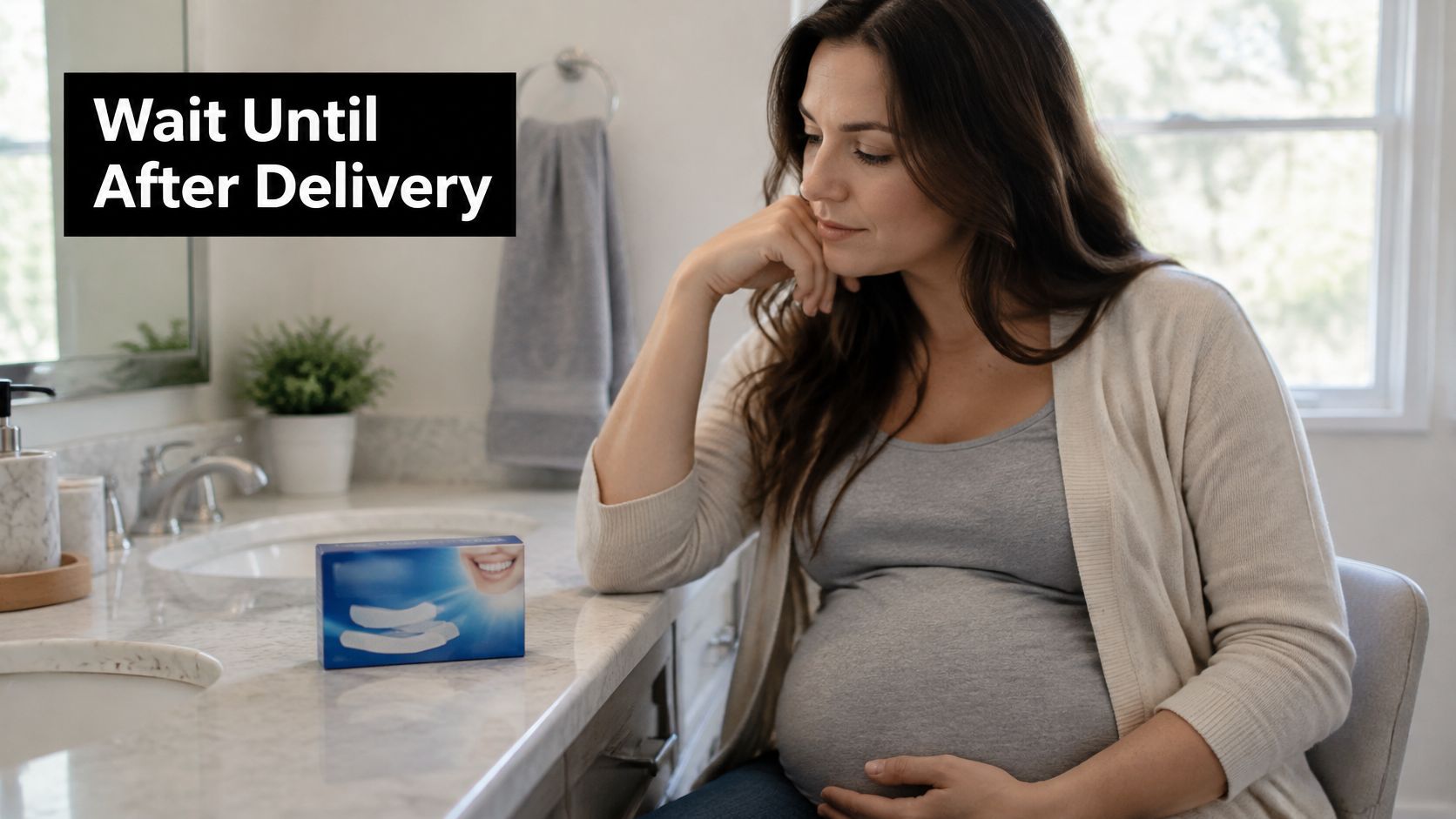
In its pregnancy oral health policy, the American Academy of Pediatric Dentistry notes that dental bleaching causes known side effects in the general population, including tooth sensitivity and tissue irritation, and states plainly that it "has not been studied in pregnant patients." On that basis, the organization advises postponing whitening during pregnancy due to potential safety concerns involving bleaching agents, and recommends deferring elective, non-medically necessary procedures until after delivery to minimize potential risks to both patient and fetus. Consumer-health reviewers have reached similar conclusions, finding evidence that neither proves whitening dangerous nor proves it safe during pregnancy.
Pregnancy also changes how your mouth feels from week to week. Hormonal shifts often leave gums puffier, more tender, and quicker to bleed during ordinary brushing. Placing a peroxide-coated strip against already reactive gum tissue can sting sharply or aggravate local soreness, even if you used the exact same brand comfortably before pregnancy. Dry mouth, nausea, and acid exposure from reflux can make lingering gel taste and enamel sensitivity much harder to tolerate, too.
So even a routine whitening habit can feel completely different for nine months.
Weighing a Temporary Cosmetic Gain Against Unknowns
None of this establishes that whitening strips cause miscarriage, birth defects, or pregnancy complications. No evidence of safety is not the same as proof of harm, and it helps to hold those two ideas apart. What the evidence does show is simple: the studies needed to clear bleaching for pregnant patients have never been run, while the side effects documented in everyone else, sensitivity and irritation, become harder to ignore when gum tissue is already inflamed. It also doesn't create a secret tier of "approved" over-the-counter strips versus in-office treatments. Health bodies like the UK National Health Service apply the same postponement guidance across pregnancy and breastfeeding without naming a safe strength or week.
For a quick visual walkthrough of how clinicians think about whitening safety and timing during pregnancy, watch this brief overview.
Look at the trade-off calmly. A brighter shade from strips is temporary and strictly cosmetic, while the data gap around bleaching in pregnancy is real and soft-tissue irritation is far more likely when gums are swollen.
Postponing cosmetic whitening isn't a verdict that strips are toxic. It's a practical way to avoid an untested exposure when waiting costs very little.
Delaying bleaching until after pregnancy protects comfort today and keeps an unnecessary unknown off the table, and the shade you want will still be there to work toward once delivery is behind you.
Which Dental Care to Keep During Pregnancy
Keep your dental appointments even if you're putting whitening strips away. Pregnancy guidance separates treatment that protects oral health from treatment that changes tooth colour: medically necessary dental care stays on schedule, while elective cosmetic bleaching waits. A cleaning, a cavity repair, and a whitening session serve different purposes, so they shouldn't all go on the same waiting list.
The UK National Health Service advises against whitening during pregnancy and breastfeeding, even though dentist-supervised whitening is the safest approach in general. That precaution doesn't mean routine dental care needs to stop. Preventive, diagnostic, and restorative dental treatment remains part of pregnancy care, with your dentist deciding what is needed and how to proceed.
Dental care during pregnancy by type
| Care type | Pregnancy guidance | What to do |
|---|---|---|
| Routine cleaning and check-up | Continue preventive care during pregnancy | Keep the appointment and mention the pregnancy |
| Treating a cavity or infection | Needed treatment should not be ignored | Book when needed and agree timing with the dentist |
| Urgent extraction | Needed treatment continues when clinically required | Treat promptly, with the dentist informed of the pregnancy |
| Elective whitening with strips, gels or trays | Postpone until after delivery and breastfeeding | Do not start during pregnancy |
| Whitening toothpaste | Pregnancy-specific guidance is limited, so treat it with the same caution as other whitening products | Ask the dentist before switching |
| Dental X-rays | Only when clinically needed | Discuss the need with your dentist and involve your obstetric clinician as appropriate |
Tell your dental team you're pregnant before an exam or procedure. Include how far along you are and which prenatal vitamins or medications you take. That gives them useful information for planning your care rather than leaving them to assume your circumstances haven't changed.
Tooth pain deserves attention.
Delaying care can allow a cavity, gum problem, or infection to worsen. If you're unsure whether an appointment is cosmetic or necessary, explain the symptoms and ask the dentist rather than cancelling it yourself.
Use this simple checklist when sorting your calendar:
- Book and keep now: Routine cleanings, gum health checks, evaluations for toothaches or dark spots, and fillings or urgent repairs your dentist recommends.
- Postpone until later: Over-the-counter whitening strips, custom take-home bleaching trays, and in-office cosmetic bleaching sessions.
Managing Surface Stains Safely While You Wait
A professional cleaning removes plaque and surface stains from coffee, tea, and everyday foods without using peroxide bleaching gel. It works on the buildup covering your teeth rather than changing their deeper natural shade. That distinction helps set realistic expectations: cleaner teeth may look brighter without being bleached.
At home, keep brushing gently with a soft-bristled brush and fluoride toothpaste. Our guide to fluoride toothpaste during pregnancy explains how it fits into daily care.
Check before swapping your usual toothpaste for one labelled “whitening.” Some use polishing abrasives, while others contain peroxide, so the label alone doesn't tell you how the product works. Ask your dentist which option suits your teeth and gums. Keeping up basic care lets you address surface buildup while leaving cosmetic bleaching for later.
What to Do If You Already Used Whitening Strips
If you wore a whitening strip before you knew you were pregnant, or used one before checking the guidelines, take a breath. One past use doesn't mean harm has occurred. Dental organizations recommend postponing whitening out of caution because pregnancy-specific studies are lacking, not because brief contact has been shown to injure a baby.
Following a clear sequence keeps you grounded and gives your care team the exact details they need to advise you.
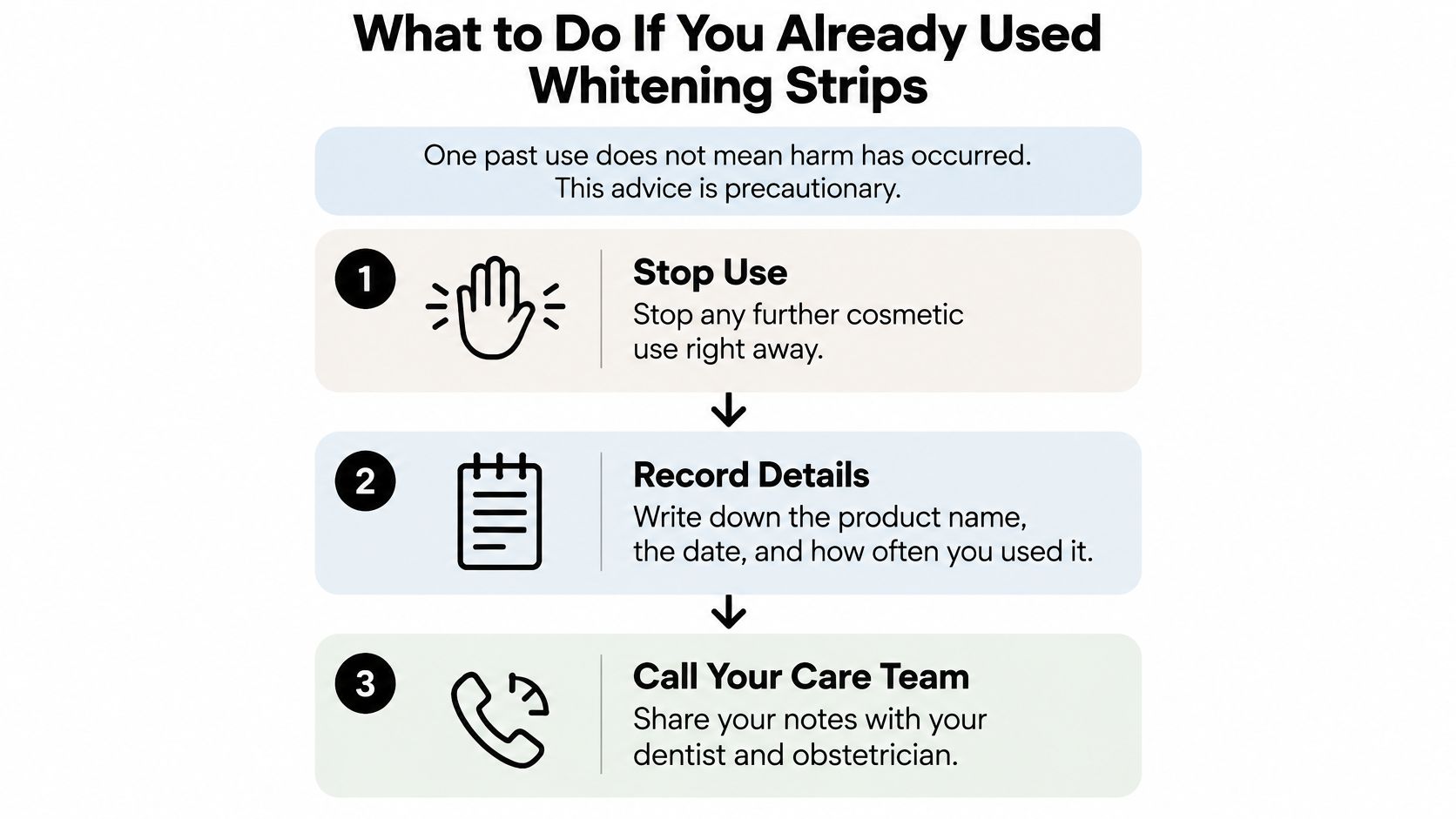
Work through these four steps in order:
- Stop any further cosmetic use right away. Put the remaining strips away so you don't add extra sessions while waiting for clinical input.
- Record the exposure details. Jot down the exact brand and product name, how many strips you applied, the approximate dates, and whether you think you swallowed any gel.
- Check your mouth over the next few days. Watch for sore spots along the gumline, mild burning, or aching teeth. If your enamel feels tender after an accidental strip, our breakdown of tooth sensitivity after whitening explains what temporary sensitivity usually feels like so you can describe it accurately to your dentist.
- Contact your obstetric clinician or dentist for advice suited to your situation. Reach out right away rather than waiting for a routine appointment if you used strips multiple times, swallowed noticeable gel, developed significant gum irritation, or noticed any unusual symptoms.
Matching Your Situation to the Right Next Step
Not every accidental exposure calls for the same urgency. Use this quick reference to match what happened to your first move.
Accidental whitening strip use: situation, first action and who to contact
| Situation | First action | Who to contact |
|---|---|---|
| One use, no symptoms | Stop further use and record the details | Mention it at the next prenatal or dental visit |
| Gel swallowed | Rinse the mouth with water and stop use | Contact the obstetric clinician promptly |
| Significant gum irritation or lasting sensitivity | Stop use and rinse gently | Contact the dentist within a few days |
| Repeated use or unusual symptoms | Stop use and note the product and dates | Contact the obstetric clinician or dentist the same day |
Keeping the science in perspective helps quiet anxious spirals. The Australian Dental Association explains that whitening isn't recommended because there's evidence neither of harm nor of safety. In clinical terms, "no evidence of safety" isn't the same thing as evidence that a brief exposure causes fetal harm.
Professional assessment beats online guessing. Sharing your product label and dates with your obstetric clinician or dentist gives you real context based on your health history, without false reassurance or unnecessary alarm.
Once you've logged the details and checked in with your care team, you can move forward calmly and focus on comfortable daily oral care.
Questions to Ask Your Dentist and Obstetrician
General health guidance gives you a sensible starting point, yet every pregnancy has its own medical history, medication list, and gum health baseline. Bringing a short written checklist to your appointments turns broad caution into a clear personal plan.
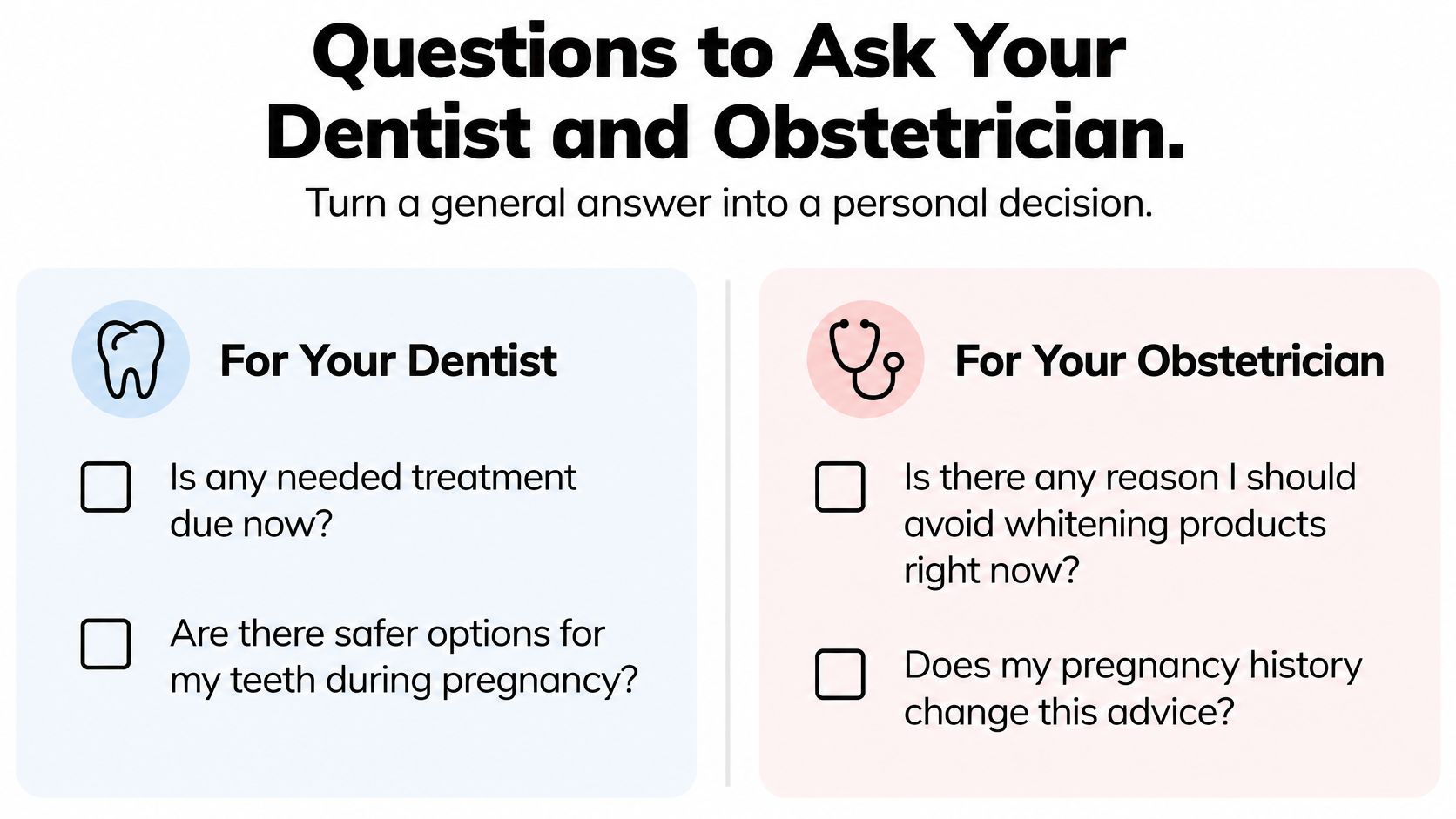
Split your questions by who can give you the most accurate answer.
Questions for Your Dentist
- Is any needed dental treatment due now? Confirm whether you have gum inflammation, plaque buildup, or a small cavity that should be treated during pregnancy rather than delayed.
- Is a whitening toothpaste acceptable for my routine? Show a photo of the ingredient list so your dentist can tell whether it's a surface-polishing paste or a peroxide formula, and check that it won't replace needed fluoride.
- Are any dental X-rays needed right now, and why? Ask how urgent any imaging is and whether it can safely wait or should happen now with standard precautions.
Questions for Your Obstetric Clinician
- Is there any reason to avoid cosmetic oral products beyond standard guidance? Your prenatal history may introduce specific preferences around ingredients or timing.
- What symptoms should I watch for if I already used a strip? Ask what would warrant a same-day call versus a routine mention at your next checkup.
- How should I contact your office if irritation or questions come up between visits? Knowing whether to use the patient portal or nurse line saves stress later.
Questions for Both Clinicians
- How long should I wait after delivery and breastfeeding before starting cosmetic whitening? Aligning both answers prevents conflicting timelines once the baby arrives.
- Does any medical condition or prescription change my oral care plan? Gestational diabetes, reflux medications, or high cavity risk can shape what your team recommends.
Write the answers directly in a notebook or your phone's notes app during the appointment. Clear, personalized guidance from clinicians who know your chart matters far more than comparing drugstore boxes, and their advice always takes priority over any general guide.
Plan Whitening Around Delivery and Breastfeeding
Postpone cosmetic whitening throughout pregnancy and plan to extend that pause through breastfeeding, because clinical guidance treats both stages under the same precautionary wait. Thinking of the timeline as ending when breastfeeding wraps up, rather than circling a single postpartum calendar date, removes guesswork and keeps expectations realistic.
Before you open a box of strips or schedule in-office bleaching after nursing ends, confirm your restart point with your dentist. Pregnancy can leave gums sensitive or expose minor wear and decay that's much easier to fix before peroxide touches your teeth. If you want a fresher look while you're still pregnant or nursing, ask your dentist which non-bleaching steps make sense right now, such as a thorough professional cleaning to clear surface buildup.
Keep your next moves simple:
- Write down the checklist questions that fit your situation and bring them, along with any product photos, to your next dental or prenatal visit.
- Book a post-delivery dental review once breastfeeding ends so your dentist can check your gums and enamel and help you choose a comfortable whitening method.
Ultimately, the timing belongs to you and your care team. Use this guidance as a calm foundation for those conversations, not a replacement for individualized medical and dental advice.
When you're focused on gentle preventive care during pregnancy, or once your dentist gives you the green light to whiten after delivery and breastfeeding, DentalHealth.com stocks dentist-recommended sensitivity toothpastes, remineralizing pastes, and professional-grade at-home whitening systems shipped directly across the U.S. Explore our practical oral care guides and clinical-grade brands anytime at DentalHealth.com to support a healthy, comfortable smile at every stage.