
Tooth Sensitivity After Whitening: Causes and Relief
You finish a whitening session, take a sip of cold water, and feel a sharp twinge in one or more teeth. That can be unsettling, especially if your teeth felt fine before treatment. Mild, short-lived sensitivity is a known response to peroxide whitening, but the right next step depends on how intense the discomfort is, how long it lasts, and what product and schedule you used.
Lowering peroxide strength can reduce the risk of sensitivity, but it won't necessarily prevent it or guarantee faster comfort. Contact time, tray fit, your teeth's condition, and your baseline sensitivity all matter. The practical aim is to find a whitening approach you can tolerate, rather than choosing the strongest formula or switching products without a reason.
Why Whitening Causes Tooth Sensitivity
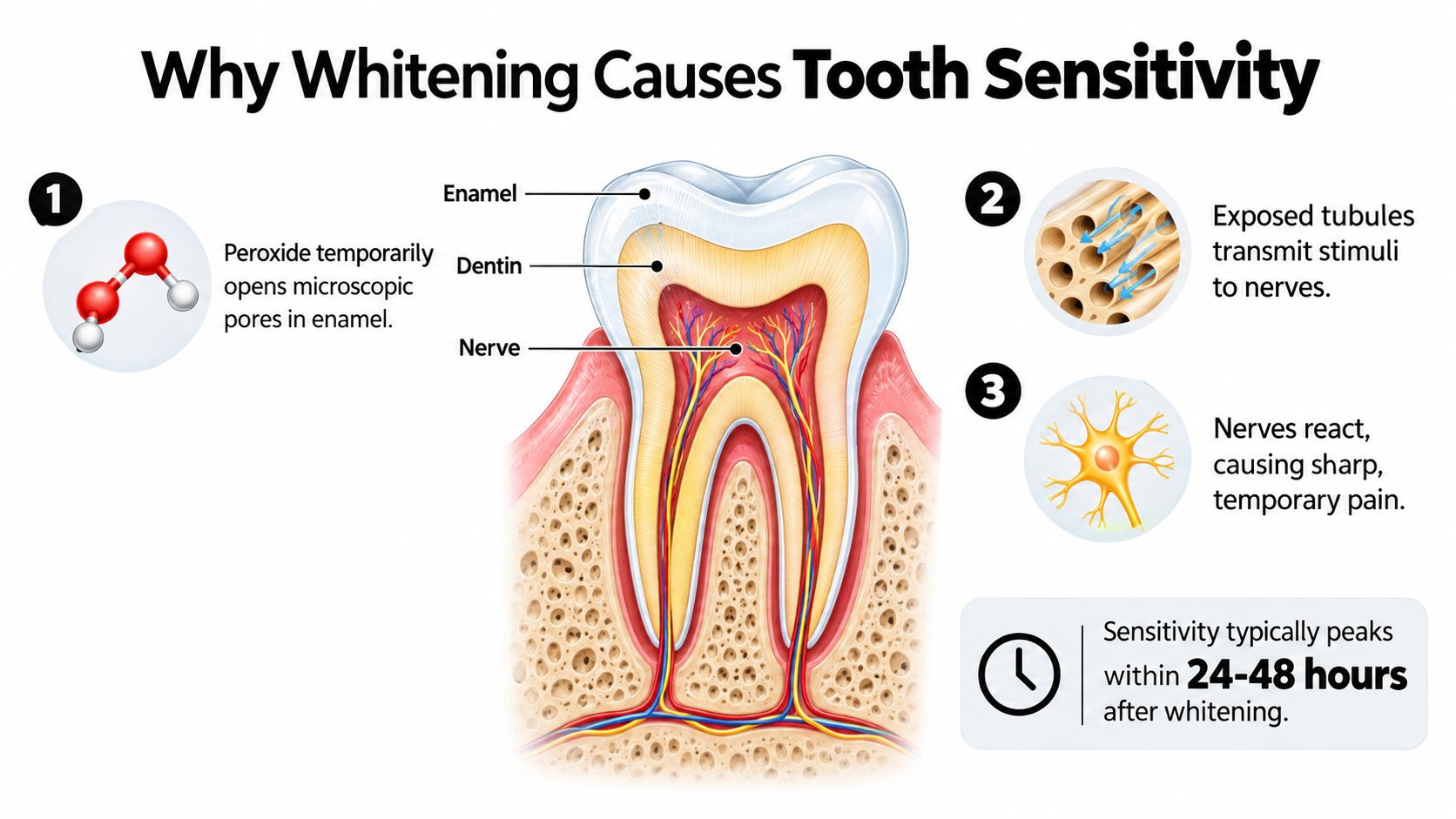
Peroxide whitens by diffusing through enamel and breaking down stain molecules. Some of it reaches dentin, where microscopic tubules carry fluid toward the nerve. Cold air, a hot drink, or pressure can move that fluid and produce a short, sharp zing. The sensation usually reflects treatment irritation and settles as the tooth rehydrates.
Reported sensitivity rates vary because studies test different products, concentrations, schedules, and pain scales. A British Dental Journal study found that 85.2% of participants reported sensitivity at some point after whitening. These figures shouldn't be treated as a single universal rate (clinical findings on whitening-related sensitivity). Dental association summaries also describe sensitivity as common with tray-based carbamide peroxide, especially when trays keep gel against the tooth for hours.
Why strength matters, but doesn't tell the whole story
Concentration changes the speed of exposure: stronger gels push more peroxide toward dentin in less time, while weaker gels usually need longer wear or more sessions for similar shade change. Evidence comparing carbamide peroxide strengths associates higher concentrations with greater sensitivity risk, even when average intensity is described as mild. Dropping from a stronger formula to a lower one can lower the odds of a flare, yet it can stretch treatment out and still bother teeth with exposed root surfaces, recession, cracks, or a history of sensitivity.
Use symptoms to steer the choice. If cold water already triggers you before whitening, choose lower strength, shorter contact, and rest days. If you tolerate whitening well and want fewer applications, a higher strength may be reasonable only with a well fitted tray and a stop rule for pain. For a second opinion on gentler options, sensitive teeth whitening advice from Seven Oaks outlines how shade goals, enamel condition, and schedule affect the pick.
Fast Relief You Can Start Today
If your teeth are sensitive now, pause whitening rather than pushing through the next application. Give the discomfort time to settle, and avoid very hot or cold food and drinks for now. Room-temperature water and food that doesn't trigger pain can make the next day more comfortable.
Use a soft-bristled toothbrush and a gentle touch. Scrubbing harder won't settle sensitivity and may irritate already tender teeth or gums. A sensitivity toothpaste may be worth trying, but it isn't an instant fix for every person or whitening schedule.
Use desensitizing gel carefully
For people using bleaching trays, a potassium nitrate and sodium fluoride gel may be an option when advised for their situation. In a triple-blind split-mouth randomized trial, gel containing either 10% or 35% potassium nitrate and 2% sodium fluoride was applied for 10 minutes before 35% hydrogen peroxide bleaching. Both concentrations reduced sensitivity prevalence and intensity without reducing color change (randomized trial of desensitizing gel before bleaching).
That trial tested a specific protocol, so don't assume any gel, tray, or application schedule will have the same effect. Keep bleaching gel away from the gums, follow the product directions, and stop if discomfort interferes with eating, drinking, or sleep. If you use a desensitizing gel, check its label and ask your dentist whether it's appropriate for your tray and whitening product.
A short video may help you think through practical comfort measures alongside your product instructions:
Product-Based Remedies That Actually Work
Sensitivity products aren't interchangeable, and evidence from one bleaching routine doesn't guarantee the same result with another. Choose based on your whitening method and symptoms, and follow directions from your dentist or the product label.
A 2024 systematic review of randomized trials found that desensitizing toothpastes helped after home bleaching with 22% carbamide peroxide and after a single-session, in-office treatment with 35% hydrogen peroxide. They weren't effective in the reviewed protocols using 16% carbamide peroxide or repeated in-office sessions with 35% or 38% hydrogen peroxide (review of desensitizing toothpaste after bleaching). In other words, toothpaste can help in some settings, but it's not a reliable substitute for adjusting a whitening plan that's causing too much discomfort.
| Product type | Active ingredients | Best for | Evidence notes |
|---|---|---|---|
| Sensitivity toothpaste | Potassium nitrate, sodium fluoride, or another desensitizing ingredient | Daily brushing before and after whitening | Results depend on the bleaching protocol. The reviewed trials found benefit in some protocols, not all. |
| Remineralizing paste | Calcium- and phosphate-based ingredients, such as those in MI Paste products | People looking for a paste to use as part of an advised care routine | Ask a dental professional whether the formula is suitable for you, particularly if you have a milk-protein allergy. |
| Fluoride rinse | Fluoride | People who want a rinse as part of their regular oral-care routine | It may support enamel care, but don't assume it will stop whitening-related pain or replace a sensitivity toothpaste. |
Match the product to the treatment
For tray users, check whether the tray fits well and whether the gel is leaking onto the gums. An ill-fitting tray can make irritation worse, and changing toothpaste won't fix the fit. For in-office whitening, ask the dental team what aftercare they recommend for the specific procedure you received.
If you're comparing formulas, this guide to toothpastes for sensitive teeth can help you understand common product options. DentalHealth.com also carries sensitivity toothpaste, fluoride rinses, and MI Paste products, so you can compare those categories with the care advice you've received.
How to Prevent Sensitivity Next Time
Before whitening again, find out whether the sensitivity came from the product itself or from a problem the bleaching exposed. Untreated decay, cracks, exposed dentin, defective restorations, or gum injury can all make whitening a poor choice until a dentist has assessed the area. Whitening won't repair those problems, and continuing may make the discomfort harder to interpret.
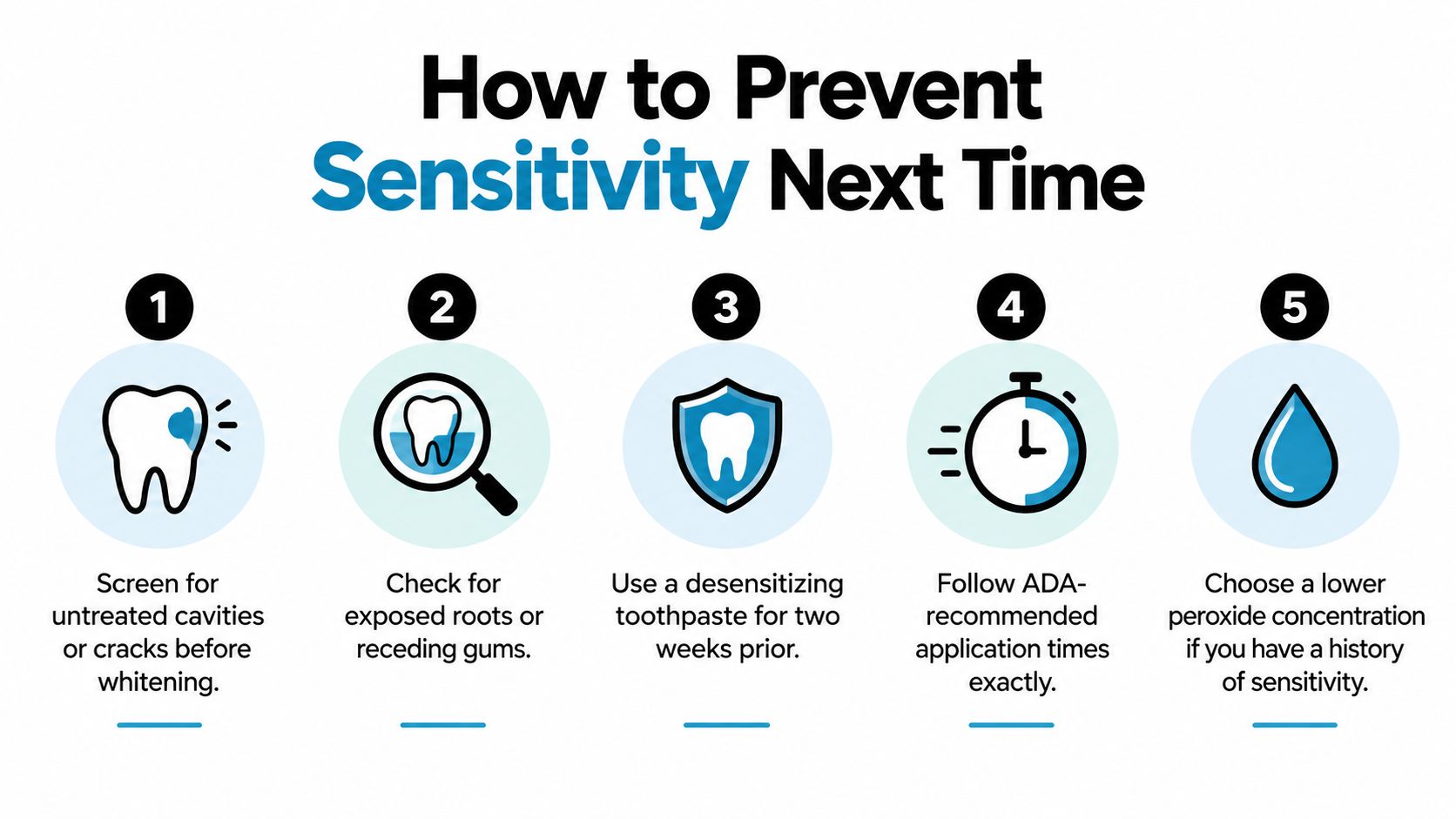
The American Dental Association notes that transient mild-to-moderate sensitivity can affect up to two-thirds of users early in bleaching. With strips or trays, it commonly begins 2–3 days after treatment starts and generally resolves by about the fourth day after treatment. Higher peroxide concentration, longer contact time, and greater light intensity or duration can increase risk (ADA guidance on teeth whitening).
Adjust the parts you can control
- Get a dental check first. Ask about cavities, cracks, exposed roots, and restorations that may be leaking or defective.
- Choose a tolerable strength. If you've had sensitivity before, discuss whether a lower concentration is a sensible starting point. It may reduce risk, but it can't promise a symptom-free experience.
- Follow the exact schedule. Don't leave whitening gel on longer or repeat applications sooner than directed. Avoid unnecessary light activation.
- Check tray fit and gel placement. A tray should stay in place without pushing excess gel onto your gums.
- Reassess before repeating. If discomfort hasn't settled, don't restart just because the next application is scheduled. For more guidance on whitening safely at home, review the instructions and consult your dentist about changes to your routine.
A lower concentration is one adjustment, not the whole prevention plan. The better choice depends on your dental health, the whitening method, and how your teeth respond.
What to Expect During Recovery
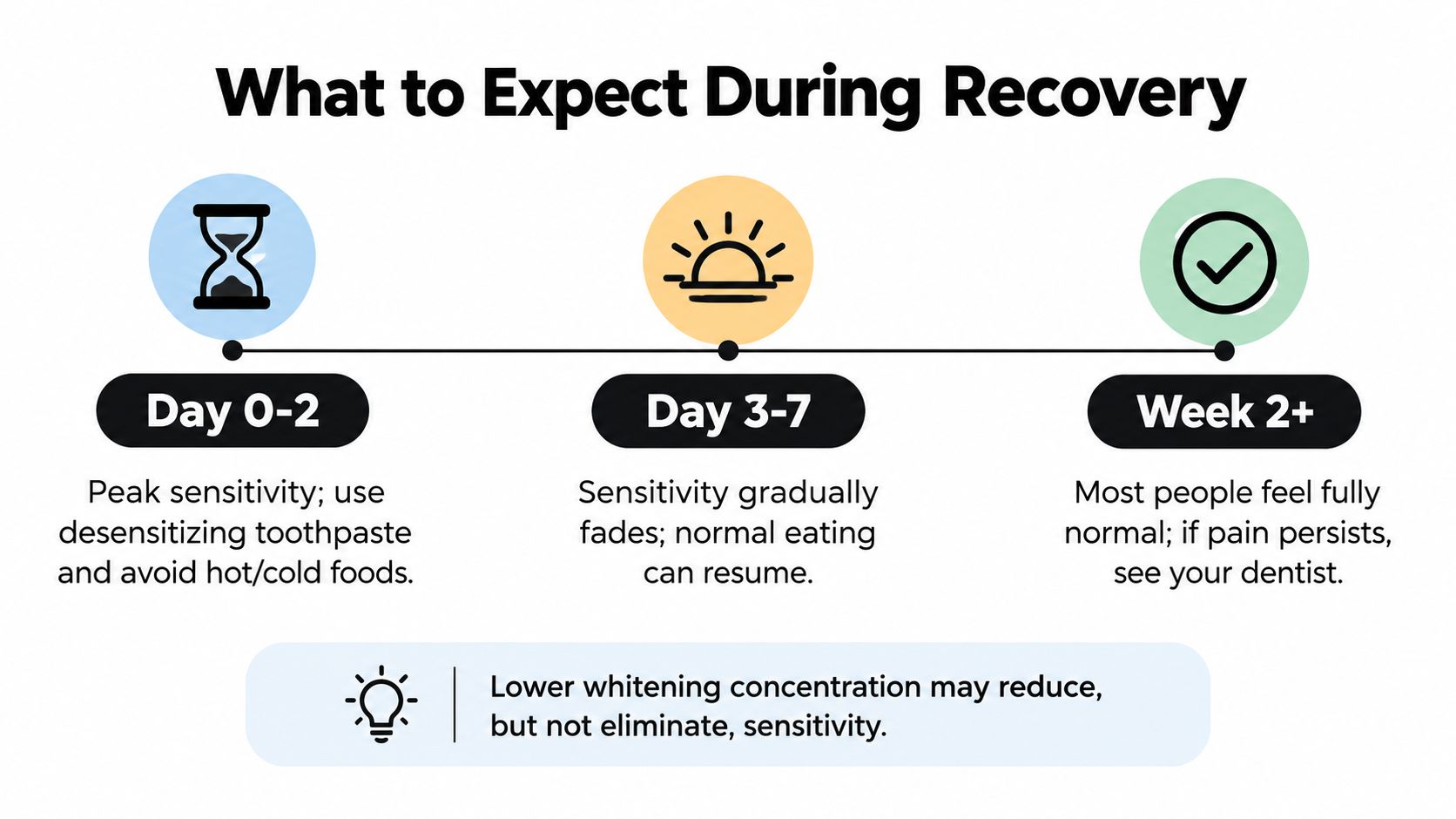
Recovery from whitening sensitivity is usually gradual. Twinges tend to get shorter and further apart over a few days rather than stopping all at once. If each day feels a little easier than the last, that is the pattern I want to see.
A flat or worsening trend is a different story.
Should you step down in concentration?
Patients ask this more than almost anything else, and the honest answer is that it depends on what problem you are solving. Lowering peroxide strength reduces the chemical load on the nerve, so it often takes the edge off. What it cannot do is guarantee comfort, because gel chemistry, contact time, and pre-existing enamel or dentin defects all feed into symptoms. A 2025 review of the at-home whitening evidence found that higher-concentration products carried greater sensitivity risk, while rating the overall evidence quality as low because study protocols varied so widely. That lines up with the concentration-versus-risk findings covered earlier.
So work through a simple framework. If your sensitivity is mild, stimulus-linked, and improving, stepping down one strength or adding rest days is a reasonable way to finish a course. If symptoms stay the same or intensify at a lower strength, concentration was never the driver. Stop and reassess rather than pushing through.
For help sorting expected reactions from unusual ones, see a detailed breakdown of professional teeth-whitening side effects.
When to Call Your Dentist
Don't assume every toothache after whitening is just part of the process. Sensitivity that continues beyond several days, pain that appears without hot or cold food, or discomfort that lingers after a temperature trigger has passed deserves attention. Stop whitening while you arrange an examination, especially if pain interferes with eating, drinking, or sleep.
A common mistake is to shorten the gap between applications and keep going without checking why the teeth hurt. If a tray leaks, if a tooth has a crack or decay, or if a restoration is defective, changing the schedule won't address the cause. Exposed dentin and problems involving the tooth's nerve may also be aggravated by whitening rather than relieved by it.
Stop and get checked if you have spontaneous pain, lingering thermal pain, worsening symptoms, or sensitivity that isn't settling. Don't respond by adding more desensitizer or increasing the whitening interval without first identifying the source.
Your dentist can examine the teeth and gums, check the tray and treatment history, and advise whether you should restart with a different approach or avoid whitening until another issue is treated.
DentalHealth.com offers professional-grade at-home whitening products alongside sensitivity toothpastes, rinses, and remineralizing pastes. Visit DentalHealth.com to compare options and review practical guidance before adjusting your whitening routine.