
Zoom Whitening Hurts: Why It Happens and What to Do
You're reclined in the whitening chair when a sudden electric zing shoots through one of your front teeth. The gel is fresh, the light is on, and you immediately wonder whether something has gone wrong. Later, even a sip of cold water may trigger another quick jolt, leaving you searching for answers to “Zoom whitening hurts.”
That reaction can be unsettling, but tooth sensitivity is a known effect of peroxide-based whitening. The important question isn't just whether you feel discomfort. It's what the pain feels like, where it occurs, and whether it fades as expected. Routine whitening sensitivity is usually mild and temporary, while localized or worsening pain can point to a dental problem that needs attention.
What Zoom Whitening Pain Actually Feels Like
The first sensation may be a brief, sharp sting that seems to come from nowhere. Some patients describe it as a tiny electric spark in one tooth. Others feel several quick zingers across the front teeth when the peroxide gel is active, followed by sensitivity when cool air moves across the enamel between gel cycles.
A different pattern feels less dramatic but more persistent. You might notice a low-grade ache spreading across several treated teeth after the light is removed. The teeth can feel unusually reactive to cold drinks, room-temperature water, or even breathing through your mouth. These sensations can overlap, but they don't all mean the same thing.
The usual pattern
The most common whitening response has three features:
- It's brief: A cold-triggered sting fades quickly instead of continuing long after the trigger disappears.
- It's widespread: Several teeth may react rather than one clearly identifiable tooth.
- It settles: Discomfort is strongest soon after treatment and then declines.
The American Dental Association's whitening guidance identifies tooth sensitivity and oral irritation as the most common adverse effects of home-based whitening. It also explains that sensitivity can be more prevalent at higher peroxide concentrations and is usually mild and transient. The ADA states that transient mild-to-moderate sensitivity can occur in up to two-thirds of users during the early stages of bleaching, often beginning within 2 to 3 days and usually resolving by the fourth day.
Practical rule: A quick, cold-triggered zing across multiple teeth is usually a sensitivity pattern. Pain that chooses one tooth, continues without a trigger, or grows stronger deserves a different response.
Your experience may still be uncomfortable, even when it's normal. The goal isn't to dismiss the pain. It's to recognize the pattern early, tell the clinician during treatment, and use measures that calm the teeth afterward.
Why Zoom Whitening Hurts at the Tooth Level
Hydrogen peroxide in the whitening gel breaks down stain molecules within the tooth. The peroxide travels through microscopic spaces in the enamel and reaches the dentin beneath. Dentin is less dense than enamel and contains tiny channels called dentinal tubules.
Those tubules hold fluid that can move when peroxide or temperature changes disturb it. The movement may stimulate nerve fibers near the pulp, the living tissue at the tooth's center. Your brain can register that sudden fluid shift as a sharp “zing.”
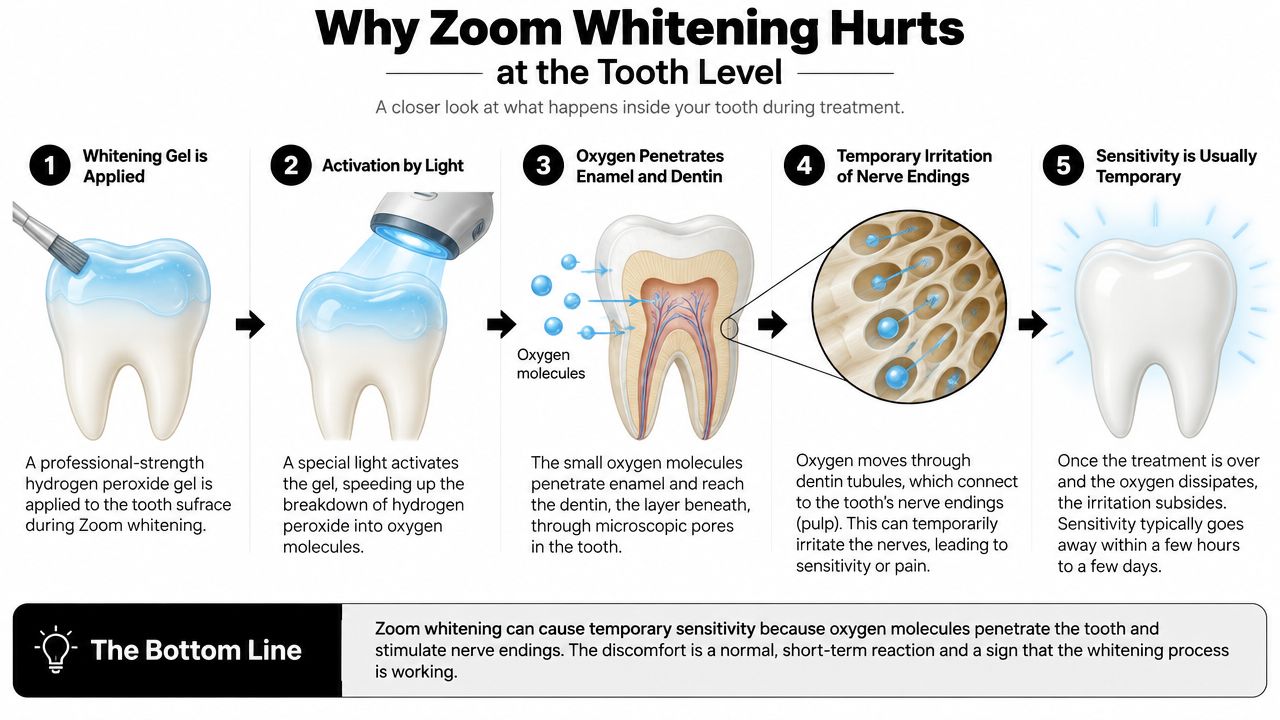
What each sensation means
The sharp sting usually comes from rapid stimulation inside the tubules. It appears suddenly and often fades just as quickly. The whitening light accelerates the peroxide reaction rather than creating a nerve signal directly, so the peroxide effect may feel more noticeable for some patients.
A dull ache reflects temporary irritation in the pulp. Bleaching can make this living tissue more reactive after treatment, particularly when several teeth are whitened together. The result is usually a lower-level ache rather than a brief, isolated zing.
Gum discomfort has a separate source. Peroxide that contacts soft tissue can cause irritation or a burning sensation along the gumline. A fitted barrier and careful gel placement help protect the gums. Tell the clinician immediately if the tissue feels hot or painful.
The process does not mean the enamel has been burned away. Peroxide-related sensitivity is associated with the bleaching reaction, especially with stronger concentrations, rather than permanent enamel damage. The clinical guidance on peroxide whitening sensitivity describes temporary irritation linked to peroxide movement through the tooth. The pattern matters: brief, widespread sensitivity commonly settles, while persistent pain in one tooth needs dental assessment.
Who Is Most Likely to Feel It
Consider a coffee drinker with gum recession. The visible crown may still look healthy, but recession can expose root surfaces near the gumline. Those surfaces don't have the same enamel protection as the crown, so peroxide and cold air can reach sensitive areas more easily. If the person also has thin enamel or acid erosion from a frequent acidic diet, the response may be stronger.
Now consider someone who already reaches for sensitivity toothpaste every morning. That baseline sensitivity is useful information, not a reason for embarrassment. A history of cracked fillings or worn restorations also matters because peroxide can irritate a tooth around a compromised filling, even if the problem wasn't painful before whitening.
A third patient may have whitened repeatedly without allowing the teeth to settle. Frequent bleaching can leave the pulp more reactive, especially when combined with teeth grinding. Bruxism places extra stress on enamel and fillings, so the patient may interpret a crack-related ache as ordinary whitening sensitivity.
Your personal risk checklist
You're more likely to notice discomfort if you have:
- Cold sensitivity: Teeth already react before treatment begins.
- Gum recession: Root surfaces are exposed near the gumline.
- Cracks or failing fillings: Peroxide may reach an irritated area.
- Untreated decay: A cavity can respond sharply once whitening starts.
- Acid erosion: Enamel has lost some of its protective thickness.
- Grinding or clenching: Repeated pressure can aggravate enamel and pulp.
- Active gum inflammation: Peroxide contact may sting already irritated tissue.
Age and sex have also been discussed in patient and clinical guidance as possible factors associated with sensitivity, but your dental condition matters more than a category on a demographic checklist. Tell the clinician about previous whitening reactions, cold sensitivity, grinding, dental work, and any tooth that has felt unusual recently.
Normal Sensitivity vs a Real Toothache
A brief electric twinge after Zoom whitening can be normal. The pattern matters more than the word “pain.” Because the gel reaches several teeth, routine sensitivity often affects multiple teeth in a fairly even way. A tooth that throbs by itself, hurts when you bite, or keeps worsening deserves a different response.
Use the table below to compare common post-treatment sensations against warning signs.
| Sensation pattern | More consistent with | What to do |
|---|---|---|
| Brief sting from cold air or water | Temporary whitening sensitivity | Use desensitizing care and monitor it |
| Generalized dull ache across treated teeth | Short-term inflammatory response | Follow aftercare instructions |
| Sharp, localized pain in one tooth | Possible crack, decay, or restoration problem | Contact your dentist if it persists |
| Pain with chewing or tapping | Possible underlying tooth issue | Arrange a dental evaluation |
A clinical comparison of Zoom2 and Boost found no statistically significant difference in postoperative sensitivity immediately after treatment, at six hours, or at twenty-four hours. Sensitivity was highest immediately and at six hours, then declined by twenty-four hours. The same report described average sensitivity in the mild pain range in a Philips Zoom study, with no significant difference between light and no-light groups at day seven. Read the clinical comparison of Zoom2 and Boost for the study details.
Observe the pattern safely
If it feels comfortable, gently tap near the teeth. You can also breathe cool air across the front teeth. A normal response is brief and fades when the trigger stops. Pain that lingers, stays sharply focused, or appears during chewing is more concerning. Track where it occurs, how long it lasts, and whether it is improving.
The guide to professional teeth whitening side effects reviews common reactions. Use it for orientation, not as a substitute for an examination when pain is isolated, persistent, or triggered by biting.
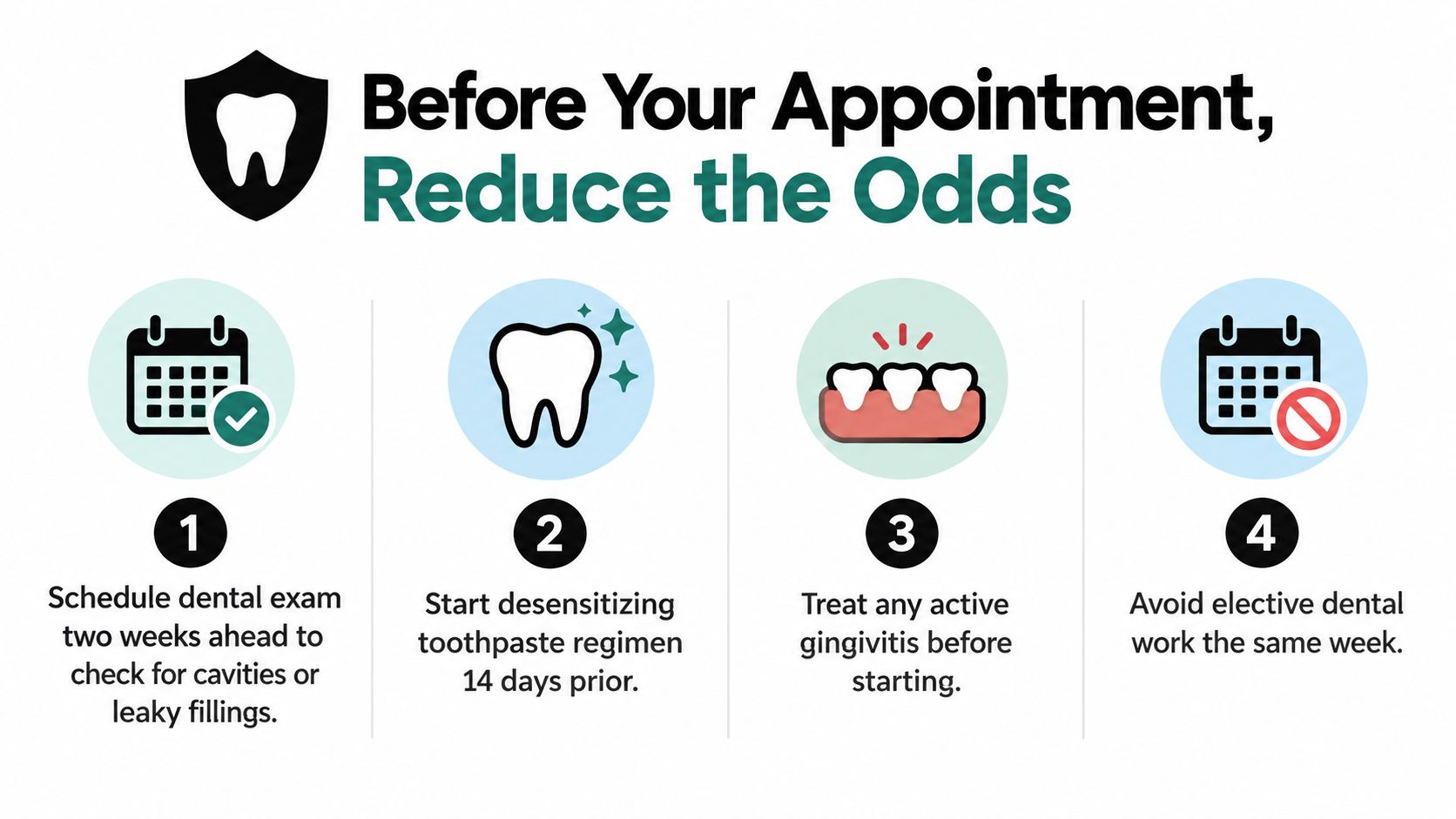
Before Your Appointment, Reduce the Odds
Preparation starts with an honest dental history, not with the whitening gel. Arrange an examination before treatment if you've had recent sensitivity, a suspicious filling, gum recession, a chipped tooth, or pain when chewing. A clinician can check for cavities, leaking restorations, cracks, and gum inflammation before peroxide reaches those areas.
Build a calm starting point
Begin using a desensitizing toothpaste with potassium nitrate well before the appointment. Sensodyne is one familiar example, but the key feature is the active ingredient and consistent use. Brush gently, because aggressive pressure can worsen recession and expose more sensitive surface.
Ask your dentist whether an over-the-counter pain reliever is appropriate for you. Some clinicians may recommend ibuprofen before treatment, but the right choice depends on your medical history, medications, allergies, stomach health, kidney health, pregnancy status, and other factors. Don't take a specific dose unless your dentist or another qualified clinician has confirmed that it's safe for you.
On the morning of treatment, avoid extremes such as very hot coffee or ice-cold drinks. That won't change the whitening chemistry, but it may keep already reactive teeth from starting the appointment irritated.
Ask about protection
Before the light cycle, ask whether the practice uses a topical desensitizing product or fluoride treatment. The clinician can also check the gum barrier and adjust the treatment plan if you're uncomfortable. You're allowed to ask for a pause or tell the team that the intensity is too high.
For patients considering remineralizing products, this explanation of what MI Paste is used for provides background on how those products fit into an oral-care routine. Your dentist should decide whether a product is suitable for your teeth and medical needs.
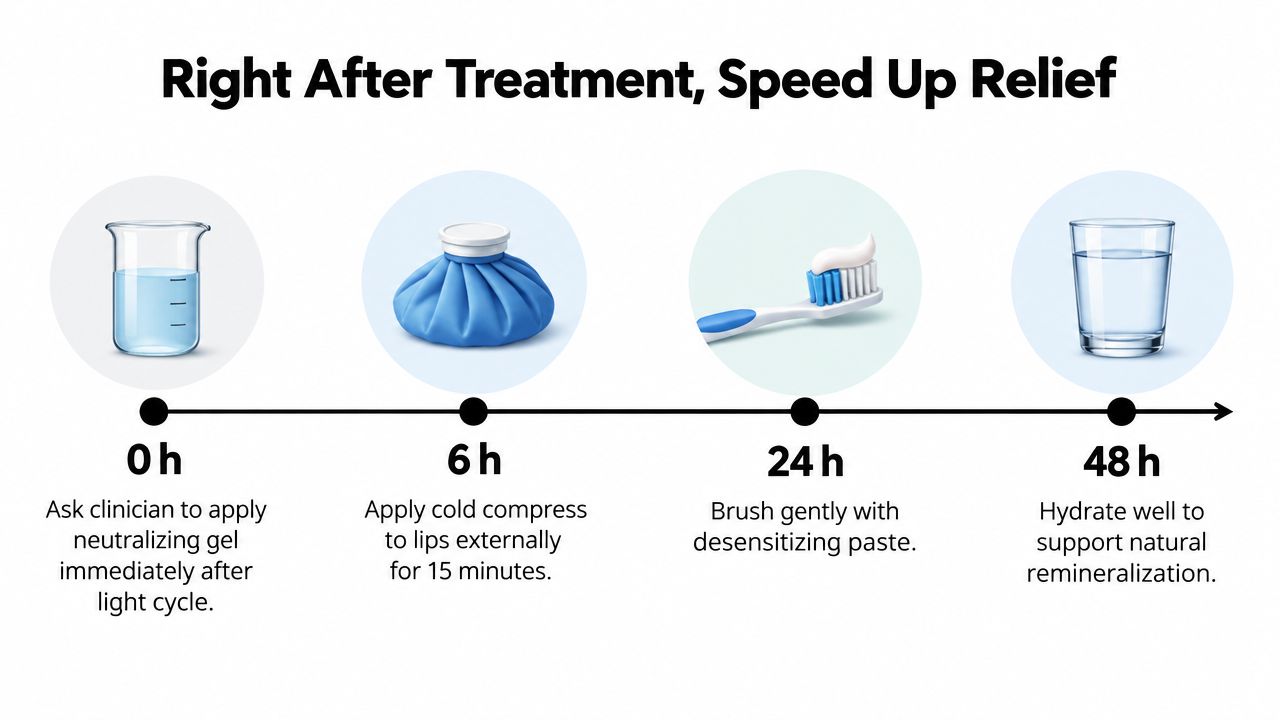
Right After Treatment, Speed Up Relief
The first hours after Zoom are a good time to protect the work your clinician has done and give reactive teeth a quieter environment. Ask whether the practice applies a neutral fluoride gel or a casein phosphopeptide-amorphous calcium phosphate product after treatment. These materials may help reduce sensitivity by supporting the tooth surface and limiting fluid movement through exposed pathways.
For the rest of the day, choose foods and drinks that aren't extreme in temperature. Coffee, ice water, red wine, and dark berries can be uncomfortable and may stain a freshly treated smile. You don't need to panic over one accidental sip, but avoiding obvious triggers makes recovery easier.
Keep the routine gentle
Continue the desensitizing toothpaste you started before your appointment. Use a soft brush and light pressure. If your clinician has supplied a potassium nitrate gel for a custom tray, follow the product instructions rather than leaving it in longer or applying more often than directed.
Acidic drinks deserve special attention. Soda and citrus juice can make sensitive teeth feel sharper because acids affect the tooth surface and can reopen pathways that react to temperature. Water is a simpler choice while the teeth settle.
The whitening sensitivity relief guide offers additional product and routine considerations. Pain medication may be appropriate for some people, but don't alternate ibuprofen and acetaminophen on a schedule without professional advice. Each medication has different risks, and combination use should account for your health history and other medicines.
A clinical comparison of whitening systems found that sensitivity was highest immediately after treatment and at six hours before declining by twenty-four hours, while another Philips Zoom report described average sensitivity as mild and found no significant light-versus-no-light difference at the later assessment. That pattern supports monitoring the direction of symptoms. Pain that steadily eases is reassuring; pain that intensifies needs a call.
When to Call the Dentist Instead of Waiting
Routine sensitivity usually has a trigger and a pattern. Cold air or water produces a short sting, several treated teeth may respond, and the reaction gradually becomes less noticeable. A toothache often behaves differently.
Call your dentist when pain is:
- Isolated: One tooth hurts while the surrounding teeth feel normal.
- Spontaneous: It starts without cold, air, touch, or another clear trigger.
- Persistent: The pain lingers rather than stopping shortly after the trigger ends.
- Pressure-related: Biting or tapping causes the main discomfort.
- Worsening: Each day feels more painful instead of calmer.
A cracked cusp, deep cavity, or failing restoration can be irritated by whitening. The bleaching did not cause the underlying problem. It likely made a previously quiet tooth noticeable.
Red flags need prompt attention
Don't wait for routine recovery if pain wakes you at night, the gum or face swells, or a pimple-like bump appears on the gum near a treated tooth. Also contact the practice if discomfort continues beyond the expected recovery period or becomes stronger after the early post-treatment window.
Patient guidance on post-Zoom sensitivity and warning signs describes short-lived zingers and thermal sensitivity as common patterns, while localized or lingering symptoms may suggest another dental issue. A clinical discussion of in-office and at-home whitening concerns also reflects why patients need clear guidance about how long discomfort should last and when evaluation is appropriate.
Keep the practice's after-hours number available. Early advice can prevent you from guessing whether a painful tooth needs treatment.
Key Takeaways Before You Book
Zoom whitening pain is usually a manageable side effect of peroxide exposure, not a reason to assume the treatment has damaged your teeth. Peroxide travels through microscopic pathways in enamel and dentin, where fluid movement can stimulate the nerve and create brief zingers. Gum irritation has a separate source and should be reported during the appointment.
Your starting condition affects the experience. Recession, thin or eroded enamel, existing cold sensitivity, cracks, grinding, decay, and aging restorations can all make one or more teeth react more strongly. A dental examination before whitening gives the clinician a chance to identify those issues instead of treating unexplained pain as routine sensitivity.
Keep this consultation checklist with you:
- Share your history: Mention cold sensitivity, previous whitening pain, grinding, recession, cracks, fillings, and gum problems.
- Set expectations: Ask which sensations are normal for the specific product and treatment plan.
- Plan aftercare: Confirm which toothpaste, gel, fluoride product, and pain-relief options are appropriate for you.
- Define the warning signs: Ask when the practice wants you to call if pain becomes localized, spontaneous, or persistent.
- Save support details: Keep the provider's daytime and after-hours contact information accessible.
The evidence points to a consistent pattern. Sensitivity commonly peaks soon after treatment and declines, while the exact intensity varies from person to person. Generalized, brief, cold-triggered zingers are usually expected. Localized throbbing, chewing pain, swelling, night pain, or worsening symptoms aren't symptoms to tough out.
DentalHealth.com offers professional-grade at-home whitening products, sensitivity toothpastes, rinses, and remineralizing options from brands such as Philips Zoom, Opalescence, Fluoridex, and MI Paste. Review the products and practical whitening-care guidance at DentalHealth.com, then discuss the right option with your dental professional before starting.